Jon, my former virtual landlord sent along an interesting link:
An introduction by David and Ben Crystal to the ‘Original Pronunciation’ production of Shakespeare and what they reveal about the history of the English language.

Jon, my former virtual landlord sent along an interesting link:
An introduction by David and Ben Crystal to the ‘Original Pronunciation’ production of Shakespeare and what they reveal about the history of the English language.
An interesting article that starts and ends talking about Thomas Piketty’s new book, but in the middle goes a long way to explain what happened to English aristocracy over the last few hundred years:
Extravagances like the stately homes of England made economic sense before the 19th century because the relative wages of servants and construction workers mostly fell from 1500 to 1800 as the supply of English workers slowly recovered in size from the Black Death of the 1340s.
But, outside of economic theory, the rich have often tended to get poorer, especially when they spend more than they make. It’s a common theme in English literature (Evelyn Waugh’s A Handful of Dust) and television (Downton Abbey). For instance, by the time of Winston Churchill’s birth in 1874, the English ultra-rich weren’t getting richer.
[…]
The long agricultural depression of 1873-1896 meant the great houses of England began falling apart. Wings had to be shut as servants found higher paying jobs in factories. Repairs could not be paid for.
The usual solutions were to first auction off the art collection, then marry American heiresses, as in Downton Abbey, where Countess Cora, played by Elizabeth McGovern, is from the Chicago Levinsons. Winston’s mother Jenny was from the Jeromes of Wall Street.
[…]
Servants had steadily become more expensive in England. One reason was the increase in jobs elsewhere in a modernizing economy. On Downton Abbey, to illustrate, a maid applies for a job in town as a secretary, which is a much better post.
A forgotten reason, though, was that the massive emigration from the British Isles reduced the supply of workers and thus raised their wages. While Tony Blair’s Labor Government liked to claim that Britain had always been a nation of immigrants, it was in truth a nation of emigrants. Today, there are perhaps two or even three times as many people descended from the British Isles living in the United States, Canada, Australia, New Zealand, South Africa, and Argentina as there are in Britain and Ireland. Without all that outflow, wages in Britain would be lower and land prices astronomical.
H/T to Kathy Shaidle for the link.
Lorraine McBride talks to Rick Wakeman about his career.
Has there ever been a time when you worried how you were going to pay the bills?
Yes, there have always been times like that. In the late Sixties, when I played at the Top Rank ballroom, being an organist meant carting my organ around to sessions, which cost two thirds of my earnings, on top of running a car, which was when I learnt the word “expenses”.
My rent cost £8 a week and I can remember being really short. In 1970, I was up in London looking for session work and Marc Bolan who was a great mate, gave me a session for Get It On. All I had to do was a glissando on the piano. I said to him afterwards, “You could have done that,” and he replied, “Well, you want your rent money don’t you?” Tough times, but when I joined Yes, I went from £18 a week to £50 a week.
Yes made a fortune, what did you spend it on?
We were all told to go out and buy a nice house, which was an eye-opener because I’d only known a two-up, two-down and a Ford Anglia. Suddenly we were talking five-bed, des-res. I remember looking around one house for sale in Gerrards Cross and the lady said, “This is the breakfast room.” I said: “What, just for breakfast?” because it was just a different world.
Lots of rock stars get ripped off, did you learn any tough lessons?
Yes, everybody in the business did. One thing you start to learn, usually too late, is that being top of the tree doesn’t last forever. You drop down a few branches and find your position but you set yourself a lifestyle that requires “top of the tree” earnings to pay for it. Then of course, you have the unexpected events like a divorce of which I’ve had three.
Suddenly you grow up very quickly and certainly when a problem hits, you back-pedal to try and work out how to sort it out. I was lucky. I had a very good accountant who helped tremendously and I learnt to listen but it took a long time. It probably wasn’t until the turn of the millennium when I found myself in yet another divorce, when the situation seems unbelievable, you really start to listen.
[…]
What’s been your best financial move?
Undoubtedly listening to David Bowie who said: “Be your own man and don’t listen to people who don’t know a hatchet from a crotchet and try to fulfil their own ideas through you because they haven’t got any.” I wanted to do Journey to the Centre of the Earth with an orchestra but there wasn’t enough money from the record company. I ended up mortgaging my house, selling everything I owned. I begged, borrowed and stole to do it. But the record company didn’t want it and I faced losing everything because I was so heavily in debt.
Eventually my record company in America loved it, insisted it was released and it sold 15 million copies and that really taught me to be my own man. Spending money I didn’t have was simply my best financial decision because if I hadn’t done it, 40 years on, I wouldn’t be doing my shows now.
Here’s Tim Worstall’s counter-intuitive post at the Adam Smith Institute blog from last week:
… Note “family foundation” there. Because of that inheritance tax rich people do tend to (and they have to be very rich for it to work) stick all of the money into a foundation. This wealth can then be maintained by professional money managers down the generations. Tax free, of course, as it’s inside a foundation. The stipulation is that said foundation must give away 5% of its assets each year. But such “giving away” obviously includes employing family members to run it. At pretty much any salary desired.
This obviously wouldn’t happen if the money could just be left directly to children without tax being due. And the effect of it going into such a foundation where the professional money managers can maintain it, rather than the heirs blow it, is that we’ve lost one of the major forces that disperses wealth through the society. The feckless heir.
So, we end up with the imposition of the tax leading to the continued concentration of old wealth, as the avoidance of the tax reduces the ability of the inheritors to waste it.
As an example, who thinks that any of the Kennedys would still be rich if they’d been able to get their hands on old Joe’s money directly?
I rest my case.
As one of the comments on that post points out, it’s not just the inheritance tax: it’s the interaction between the tax and the rules governing family foundations that create this unexpected-to-most-of-the-99% situation. I’m sure the 1% who can benefit from this are fully aware of it. This could be fixed either way, but the very people who benefit are the ones who would be pivotal in whether the changes could be made. So, it’s technically possible but not at all likely.
For some reason, every decade or so a new moral panic sweeps the land (in this case, it’s showing up in multiple Western countries). Everyone gets their collective knickers in a twist over some horrible outrage which requires, nay, demands that something must be done. The panic de jour is organized gangs of pedophiles (it’s been the panic de jour several times in the last forty years). Kathy Shaidle looks at the most recent eruption of out-of-control morality:
One particularly distasteful breed of conspiracy theory that stubbornly refuses to die, however, is that which posits the existence of local, national, or even international pedophile rings.
Does pedophilia exist? Sure. However, it doesn’t follow that perverts have semiorganized themselves into some kind of parody of Freemasonry, a Bilderberg of diaper snipers.
For whatever reason — a quirk of the collective unconscious; individual shame and guilt; profound resentment of the ruling elite — the modern mind wants to believe in these vast pederast conspiracies, even though, again and again, investigations into their existence come up embarrassingly empty.
Yes, we can argue that this is because “the authorities” are members of the ring, too, but lots of “authorities” were in on Mafia and KKK malfeasance; this made prosecution difficult, but certainly not impossible. There are museums packed with primary source evidence of the Klan’s existence, and the Mob’s; contrast that with this utterly bizarre example of what can only be described as anti-journalism that appeared in the UK’s Islington Tribune earlier this month:
Despite recognition that a huge paedophile ring preyed on Islington children’s homes in the 1970s and 1980s no one has ever been prosecuted and all the records of the homes and the names of the children who went to them have been “lost.”
Behold: After the longest and most expensive trial in American history, all charges were dropped in the McMartin Preschool child abuse case, during which an archeologist testified to the existence of “secret tunnels” on the school’s grounds, and children claimed they’d been raped at orgies at car washes.
Here in Canada, a $53 million inquiry failed to uncover a widely rumored pedophile ring in Cornwall, Ontario. (The Ontario Provincial Police had already reached the same conclusion eight years earlier.) At the end of the day — or, rather, the decade and counting — only one individual was ever convicted of any crime.
Theodore Dalrymple observed a decade ago that the people most likely to express outrage about pedophiles are actually those whose own kids tend to be neglected:
On no subject is the British public more fickle and more prone to attacks of intense but shallow emotion than childhood. Not long ago, for example, a pediatrician’s house in South Wales was attacked by a mob unable to distinguish a pediatrician from a pedophile. The attackers, of course, came from precisely the social milieu in which every kind of child abuse and neglect flourishes, in which the age of consent has been de facto abolished, and in which adults are afraid of their own offspring once they reach the age of violence. The upbringing of children in much of Britain is a witches’ brew of sentimentality, brutality, and neglect, in which overindulgence in the latest fashions, toys, or clothes, and a television in the bedroom are regarded as the highest — indeed only — manifestations of tender concern for a child’s welfare.
An earlier example happened in my home town in the late 1980s, although fortunately for Middlesbrough’s reputation the name of the county was the usual label for the moral panic: the Cleveland child abuse scandal.
The Cleveland child abuse scandal occurred in Cleveland, England in 1987, where 121 cases of suspected child sexual abuse were diagnosed by Dr Marietta Higgs and Dr Geoffrey Wyatt, paediatricians at a Middlesbrough hospital (in the now abolished county of Cleveland). The children were subject to place of safety orders, and some were removed from their parents’ care permanently. While in foster care, the children continued to be regularly examined by Dr. Higgs who subsequently accused foster parents of further abuse leading to them too being arrested.
After a number of court trials, cases involving 96 of the 121 children alleged to be victims of sexual abuse were dismissed by the courts, and 26 cases, involving children from twelve families, were found by judges to have been incorrectly diagnosed.
Despite the judicial results, the bureaucrats believed (and apparently still do believe) that the sexual abuse of all those children really did occur and that even that large number was less than a tenth of the actual problem.
We are all familiar with the basic difference between English and French parliamentary institutions; copied respectively by such other assemblies as derive from each. We all realize that this main difference has nothing to do with national temperament, but stems from their seating plans. The British, being brought up on team games, enter their House of Commons in the spirit of those who would rather be doing something else. If they cannot be playing golf or tennis, they can at least pretend that politics is a game with very similar rules. But for this device, Parliament would arouse even less interest than it does. So the British instinct is to form two opposing teams, with referee and linesmen, and let them debate until they exhaust themselves. The House of Commons is so arranged that the individual Member is practically compelled to take one side or the other before he knows what the arguments are, or even (in some cases) before he knows the subject of the dispute. His training from birth has been to play for his side, and this saves him from any undue mental effort. Sliding into a seat toward the end of a speech, he knows exactly how to take up the argument from the point it has reached. If the speaker is on his own side of the House, he will say “Hear, hear!” If he is on the opposite side, he can safely say “Shame!” or merely “Oh!” At some later stage he may have time to ask his neighbor what the debate is supposed to be about. Strictly speaking, however, there is no need for him to do this. He knows enough in any case not to kick into his own goal. The men who sit opposite are entirely wrong and all their arguments are so much drivel. The men on his own side are statesmanlike, by contrast, and their speeches a singular blend of wisdom, eloquence, and moderation. Nor does it make the slightest difference whether he learned his politics at Harrow or in following the fortunes of Aston Villa. In either school he will have learned when to cheer and when to groan. But the British system depends entirely on its seating plan. If the benches did not face each other, no one could tell truth from falsehood — wisdom from folly — unless indeed by listening to it all. But to listen to it all would be ridiculous, for half the speeches must of necessity be nonsense.
In France the initial mistake was made of seating the representatives in a semicircle, all facing the chair. The resulting confusion could be imagined if it were not notorious. No real opposing teams could be formed and no one could tell (without listening) which argument was the more cogent. There was the further handicap of all the proceedings being in French — an example the United States wisely refused to follow. But the French system is bad enough even when the linguistic difficulty does not arise. Instead of having two sides, one in the right and the other in the wrong — so that the issue is clear from the outset — the French form a multitude of teams facing in all directions. With the field in such confusion, the game cannot even begin. Basically their representatives are of the Right or of the Left, according to where they sit. This is a perfectly sound scheme. The French have not gone to the extreme of seating people in alphabetical order. But the semicircular chamber allows of subtle distinctions between the various degrees of tightness and leftness. There is none of the clear-cut British distinction between rightness and wrongness. One deputy is described, politically, as to the left of Monsieur Untel but well to the right of Monsieur Quelquechose. What is anyone to make of that? What should we make of it even in English? What do they make of it themselves? The answer is, “Nothing.”
C. Northcote Parkinson, “The Will of the People, or Annual General Meeting”, Parkinson’s Law (and other studies in administration), 1957.
This wasn’t in the Torygraph, it was actually reported in the Guardian:
More of Surrey is now devoted to golf courses than housing, according to provocative new research that claims to dispel many of the myths associated with Britain’s housing boom.
A study by the Centre for Economic Performance at LSE suggests soaring house prices are not caused by an influx of foreign buyers but are down to restrictive planning policies that have ensured the country’s green belt is a form of “discriminatory zoning, keeping the urban unwashed out of the home counties”.
Paul Cheshire, professor emeritus of economic geography at LSE and a researcher at the Spatial Economics Research Centre, has produced data showing that restrictive planning laws have turned houses in the south-east into valuable assets in an almost equivalent way to artworks. He points out that twice as many houses were built in Doncaster and Barnsley in the five years to 2013 than in Oxford and Cambridge.
As a result of the policy that specifically safeguards green belts, Cheshire claims houses have not been built where they are most needed or most wanted – “in the leafier and prosperous bits of ex-urban England”.
[…]
“We have a longstanding and endemic crisis of housing supply and it is caused primarily by policies that intentionally constrain the supply of housing land,” Cheshire claims. “It is not surprising to find that house prices increased by a factor of 3.36 from the start of 1998 to late 2013 in Britain as a whole and by a factor of 4.24 over the same period in London.”
Once inflation is discounted, house prices have gone up fivefold since 1955. But the price of the land for houses has increased in real terms by 15-fold over the same period.
As a result, houses are becoming like investment assets, creating incentives to hold on to them in expectation of future price rises.
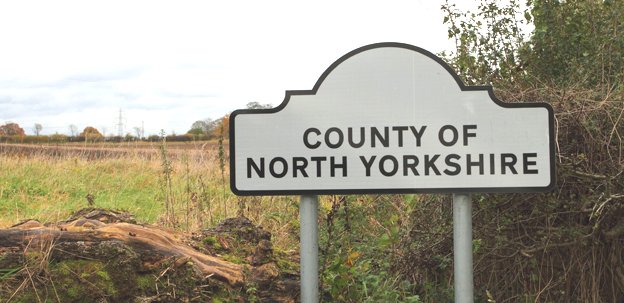
I was born in Yorkshire. If anyone ever asked, that’s what I’d say. But there’s Yorkshire and then there’s “Yorkshire”. At some point shortly after my family emigrated to Canada, they moved my hometown out of Yorkshire and into a new county-like entity. Then they moved the boundaries again. And again. And again. I’ve long since lost track of which county Middlesbrough is officially located in … I think it was now part of Durham (which is nice, because I currently live in a different county-like entity also called Durham). As this BBC News Magazine post illustrates, the counties of England are very confusing and in some cases bear almost no relationship to the historical counties most of us still think of as being “the real counties”:
Middlesex dates back to the 8th Century but Middlesex County Council was abolished in 1965. Middlesex County Cricket Club and Middlesex University live on. So too does the historic county of Middlesex even though most of its inhabitants now live in the ceremonial county of Greater London.
Still following?
England’s counties are the source of much regional pride, not least on cricket pavilions. To identify as a Yorkshirewoman or a Devonian or a Northumbrian is to invite certain expectations about the forthrightness of one’s views or one’s tolerance for cider and clog-dancing.
But successive waves of local government reform have left many people deeply unclear as to which county they live in – the answer to which depends on exactly what you mean by the word “county”.
Now, in an effort to support the “tapestry” of ancient place names, the government has changed its rules allowing councils to put up boundary signs marking traditional English counties – including the likes of Cumberland and Huntingdonshire, names which no longer have any connection to local authorities.
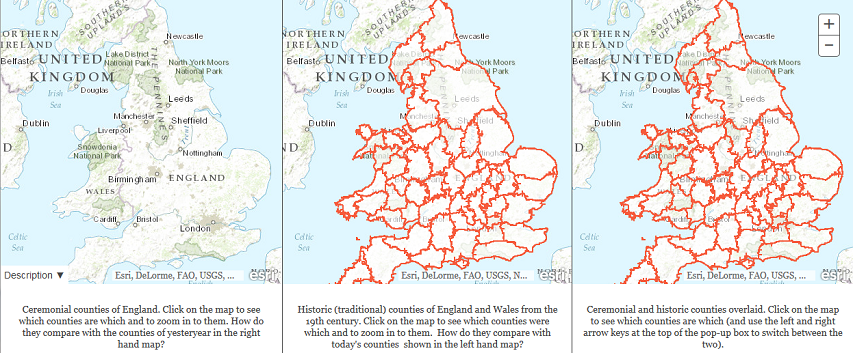
If you’re attempting to keep score at home, here are the different kinds of “county” you need to track for historical purposes:
First there are the historic counties, which date as far back as the mid-Saxon period. Some, like Westmorland, no longer exist in an administrative sense. But especially in places like Yorkshire, Durham and Cornwall, they are important expressions of geographic and cultural identity.
Then there are administrative counties and unitary authority areas created by the 1972 Local Government Act. These include non-metropolitan county councils like Oxfordshire and Surrey (where some services are also provided by districts). Others, like Northumberland, are single-tier unitary councils. Some areas like Berkshire have no county council and the districts are the sole local authorities.
And finally there are the ceremonial counties, established by the 1997 Lieutenancies Act, each of which has a Lord Lieutenant. Bedfordshire and Cheshire, for instance, do not exist as councils but do as ceremonial counties. In metropolitan counties like Merseyside, Tyne and Wear and Greater Manchester, county councils were scrapped in the 1980s, but some services including transport and the police are run jointly by groups of councillors within the old boundaries.
If you’ve followed that, well done. Catherine Staite, director of the Institute of Local Government at Birmingham University, says there was no consistency to the way these overlapping boundaries were drawn. “We’ve ended up with a patchwork of arrangements for which there is no logic.”
There is a new website to attempt to resolve the confusion, but I’m not sure it will do much:
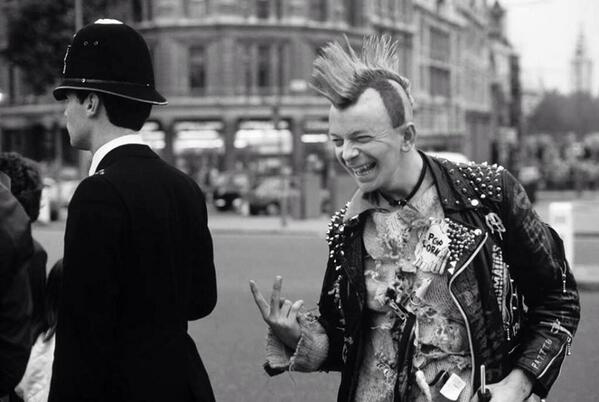
The Torygraph‘s Tom Chivers has unearthed a photo that will shake the very foundations of the British political scene!
Prepare to be AMAZED. The photo of Nigel Farage that the Ukip ESTABLISHMENT didn’t want you to see:
It’s not so much the fact that he’s such an awful rebel, with no respect for the great British institution of the police, that’s embarrassing for the Ukip leader. The real problem is that this photo was apparently taken in 1983 and Mr Farage still looks about 40.
Of course, it’s not just this damning and clearly not at all Photoshopped photo, which has been doing the rounds on Twitter because of its obvious veracity. There are dozens of equally upsetting Farage photos which his party apparatchiks have been desperately trying to ban.
Patrick West believes that Scotland should include Northern Ireland in its new country if the separation vote succeeds:
[A union] between England and Wales could, possibly [succeed]. Despite the wishes of Welsh (and indeed English) nationalists, the two countries are physically and economically linked – just have a look at the commercial relationship between Bristol and Cardiff or Liverpool and north Wales. But Northern Ireland would resemble a very odd third partner in this hypothetical, slimmed-down UK, cut off by the sea and by culture (there are no peace walls in England and only Southport has annual Orange Order parades).
So, I have a better suggestion: if Scotland declares independence, shouldn’t Northern Ireland go with it? No, let me rephrase that: if Scotland becomes independent, it has a moral obligation to take Northern Ireland with it. Ulster is, after all, far more of a Scottish colony than an English one, demographically speaking. From the reign of King James VI of Scotland (who also became James I of England in 1603), Ulster was disproportionately colonised by Scots (many of whom later left for America to become ‘Scotch-Irish’), which explains why Presbyterianism was always a more popular denomination in Ulster than the Church of Ireland. The Scottish legacy is also reflected in efforts in recent decades among Protestants to cement an ‘Ulster-Scots’ culture and language. While you will see the Scottish saltire at Orange Order marches, you won’t see an empty-handed Cross of St George.
The two lands are united in their love of and hatred of Glasgow’s two football teams and by simmering sectarianism. The Scottish National Party (SNP) was very keen to jump on the Braveheart bandwagon. Why not go even further back in time? Parts of Ulster and Scotland were once united in the sixth and seventh century in the kingdom of Dalriada. The revival of this ancient kingdom, should Scotland vote ‘Yes’, would make much more sense than Northern Ireland’s continued bondage to England. After all, most English people are notoriously ignorant about Ulster. During the Troubles, the English regarded the province with a mixture of irritation and indifference, which is why the IRA in the 1970s knew that England would only take notice if there were bombs on the mainland. ‘They’re both as bad as each other’ and ‘fancy fighting about religion’ were the two common reactions. To the English, the Northern Irish are a foreign people, which is why they found the grating, mangled accents of John Cole and Ian Paisley so amusing – so otherish, so strange.
There has been little love in the opposite direction. To Irish republicans, England was always the occupier, and most Ulster Catholics had good reason to come to dislike the English after 1969. It was with English accents that they heard their houses raided, their husbands and brothers interned and shot. Meanwhile, Ulster Protestants have always – with fair reason – suspected that London wanted to rid itself of the Six Counties, hence the actions of 1974 and 1985 (even 1912), when ‘loyalists’ rebelled against a perceived perfidious London government.
At the Adam Smith Institute blog, Daniel Pryor discusses the reasons for “Silk Road” continuing despite police crackdowns:
Growing up in Essex has made me appreciate why purchasing illegal drugs online is a far more attractive option. I have experienced the catastrophic effects of drug prohibition first-hand, and it is part of the reason that the issue means a great deal to me. Friends and acquaintances have had terrible experiences due to contamination from unscrupulous dealers with little incentive to raise their drugs’ quality, and every reason to lace their products with harmful additives. The violence associated with buying and selling drugs in person has affected the lives of people close to me.
As a current university student, I now live in an environment populated by many people who use Silk Road regularly, and for a variety of purchases. From prescription-only ‘study drugs’ like modafinil to recreational marijuana and cocaine, fellow students’ experiences with drugs ordered from Silk Road have reinforced my beliefs in the benefits of legalisation. They have no need to worry about aggressive dealers and are more likely to receive safer drugs: meaning chances of an overdose and other health risks are substantially reduced.
Their motivations for using Silk Road rather than street dealers correlate with the Global Drug Survey’s findings. Over 60% of participants cited the quality of Silk Road’s drugs as being a reason for ordering, whilst a significant proportion also used the site as a way to avoid the potential violence of purchasing from the street. Given that payments are made in the highly volatile Bitcoin, it was also surprising to learn that lower prices were a motivation for more than a third of respondents.
In the Telegraph, Michael White explains why Handel’s Messiah really was the 18th century equivalent of Live Aid:
Every year, his masterpiece reliably comes round, filling musicians’ diaries with unending renditions of the Hallelujah Chorus and “Surely he hath borne our griefs” (or “worn our briefs” as choirboys have it), like a tonic for the flagging bank balance. And it will be the same this week, with a performance of some kind or other guaranteed to come your way, unless you’re living in the Outer Hebrides without a choir in sight or sound.
But for good measure, there’s also a BBC TV programme on Saturday in which the historian Amanda Vickery is looking at Messiah’s back story. And it seems her interest isn’t in the piece as a gift to musicians but as a gift to the poor — focusing on a London performance in 1750 that was, as she says, an 18th-century precedent for Live Aid.
This performance took place at the Foundling Hospital in London, which these days is a museum but was then a children’s home attracting the support of celebrated figures in the arts world. Painters including Hogarth gave it canvases to exhibit; composers such as Handel gave it music to perform. And the funds raised helped keep it going — in something like the manner of that other famous children’s home, the Ospedale della Pietà, Venice, where Vivaldi gave his services.
[…]
The only problem was that Handel depended for commercial success on operatic ventures that proved disastrously expensive and went sour when public tastes changed (as they always do). Hence his interest in writing English oratorios: they were cheaper to produce than opera, avoided over-priced Italian singers and attracted decent audiences.
Hence Messiah, which was written not for London but for Dublin, where it was premiered in April 1742. A large crowd was clearly expected because notices published in advance begged gentlemen to leave their swords at home and ladies to attend “without Hoops”. The critical information on those notices, though, was that making room for more people would “greatly increase the Charity”; because even this initial Dublin try-out was a fundraiser, designed for the relief of prisoners and an infirmary.
So it was good causes that helped swell the turnout. And from what we know of how it went, the audience was high-minded, entering into the spirit of an entertainment that was happening in a concert hall but none the less used sacred texts.
Jonathan Swift, the Dean of Dublin’s Anglican Cathedral, had initially tried to stop his choir being involved, on the grounds that a concert hall wasn’t the right place for such things, and that one of the soloists, Susannah Cibber, was a woman of loose morals. But when she sang “He was despised” she did so with such beauty that another clergyman in the audience stood up and shouted “Woman, thy sins be forgiven”: the kind of engagement you might wish of modern audiences, if only they could be distracted from their iPhones.
BBC News on the apparent diplomatic incident taking place at M&M Hair Academy in South Ealing:
North Korean officials paid a visit to a London hair salon to question why it had used their leader Kim Jong-un’s picture in a poster offering haircuts.
The poster in M&M Hair Academy in South Ealing featured the words “Bad Hair Day?” below the leader’s picture.
Barber Karim Nabbach said embassy officials were shown the door and the salon’s manager spoke to the police.
The Met Police said: “We have spoken to all parties involved and no offence has been disclosed.”
The salon put up the poster on 9 April and the next day two men claiming to be officials from the North Korean embassy visited the salon and demanded to meet the manager, Mo Nabbach.
Karim Nabbach said: “We put up posters for an offer for men’s hair cuts through the month of April. Obviously in the current news there has been this story that North Korean men are only allowed one haircut.
H/T to Eric for the link.



Powered by WordPress