Quotulatiousness

June 2, 2021

Media Fearmongering

Filed under: Books, Britain, Government, Health, Media — Tags: , , , , , — Nicholas @ 03:00

Laura Dodsworth on how the BBC and other British media outlets turned all the dials to 11 to ramp up fear over the spread of the Wuhan Coronavirus:

The media have served us a cornucopia of frightening articles and news items about Covid-19 in 2020 and 2021. While writing my new book, A State of Fear: How the UK Government Weaponised Fear During the Covid-19 Pandemic, I encountered a panoply of doom-mongering headlines. These were an indication of the significant role the media have played in creating our state of fear.

Of course, news media should not shy away from reporting frightening news during a pandemic. They should make us aware of the numbers of deaths, the policies being implemented to tackle the pandemic and the latest scientific developments. But during Covid, the media went beyond reporting on the pandemic. Instead, they appeared beholden to the old commercial imperatives, “If it scares, it airs”, and “If it bleeds, it leads”. It seems fear does sell.

The anxious, frightened climate this has helped to create has been suffocating. Death tolls were constantly brandished without the context of how many people die every day in the UK, and hospital admissions were reported while recoveries were not. As a result, Covid often appeared as a death sentence, an illness you did not recover from – even though it was known from the outset that Covid was a mild illness for the majority of people.

Given the wall-to-wall doom, it is therefore no surprise that the British were one of the most frightened populations in the world. Various studies showed that we were more concerned than other countries about the spread of Covid and less confident in the ability of our government to deal with it. One survey in July 2020 showed that the British public thought between six and seven per cent of the population had died from Covid – which was around 100 times the actual death rate at the time. Indeed, if six or seven per cent of Brits had died from Covid, that would have amounted to about 4,500,000 bodies – we’d have noticed, don’t you think?

While researching A State of Fear, I interviewed members of the general public about how they were impacted by the “campaign of fear” during the epidemic. Many talked of how the media had elevated their alarm.

“There wasn’t much to do”, Darren told me, “so we’d watch TV and we saw programmes about disinfecting your shopping when it arrives, and having a safezone in the kitchen. The nightly bulletins on the TV about death tolls, the big graphs with huge spikes on them, came at us ‘boom, boom, boom!’. It was a constant barrage of doom and gloom. My fear of the virus went through the roof.”

Sarah told me she had to stop watching the BBC. As her daughter put it, “If you just watched or listened to the BBC every day, what hope would you have had?”. Jane, meanwhile, described the “gruesome headlines” that came at her “thick and fast”.

The fearmongering about Covid began even before the pandemic hit the UK. We were primed by videos from Wuhan in China, which were then widely circulated by UK-based media outlets. These painted an apocalyptic picture, featuring collapsed citizens, medics in Hazmat suits, concerned bystanders and a city grinding to a halt. In one memorable video, which went viral, so to speak, a woman fell, stiff as a board, flat on her face, on a pavement. The split second where she falters is a giveaway – this was a set-up. If the rest of the world had Covid, China had “Stunt Covid”.

June 1, 2021

What Orwell wrote about in The Road to Wigan Pier applies just as well to the modern Labour Party

Filed under: Books, Britain, History, Politics — Tags: , , , , , — Nicholas @ 09:55

David Starkey points out that while the best contemporary analysis of the collapse of the Labour vote may come from Rod Liddle, he is in many ways just echoing the words of George Orwell in The Road To Wigan Pier:

“The first thing that must strike any outside observer,” Orwell’s analysis begins, “is that Socialism in its developed form is a theory confined entirely to the middle classes.” “The typical Socialist is not”, he explains, “a ferocious-looking working man with greasy overalls and a raucous voice. He is either a youthful snob-Bolshevik … or, still more typically, a prim little man with a white-collar job … [and] a social position which he has no intention of forfeiting.”

He — and even more it must be said she — is also likely to be odd. Here Orwell is unsparing. And spot on. “There is,” Orwell declares, “the horrible — the really disquieting — prevalence of cranks wherever Socialists are gathered together.” “One sometimes get the impression,” he continues, “that the mere words ‘Socialism’ and ‘Communism’ draw towards them with magnetic force every fruit-juice drinker, nudist, sandal-wearer, sex-maniac, Quaker, ‘Nature Cure’ quack, pacifist, and feminist in England.”

Oh and vegetarians. And beards. And “high-minded women”. And homosexuals, like the two “dreadful-looking old men”, clad “in pistachio-coloured shirts and khaki shorts into which their huge bottoms were crammed so tightly that you could study every dimple”, whom Orwell encountered on a bus in Letchworth. And so — effortlessly out-Liddling Liddle — on.

Above all, Orwell identified the same disdain for the working class. “Are these mingy little beasts,” he reflected after attending one Socialist conventicle, “the champions of the working class?”

“For every person there”, he recalled, “bore the worst stigmata of snobbish middle-class superiority. If a real working man, a miner dirty from the pit, for instance, had suddenly walked into their midst, they would have been embarrassed, angry and disgusted; some, I should think, would have fled holding their noses”.

“The truth is,” Orwell concludes, “that to many people calling themselves Socialists, revolution does not mean a movement of the masses with which they hope to associate themselves; it means a set of reforms which ‘we’, the clever ones, are going to impose upon ‘them’, the Lower Orders.”

But Orwell was writing in 1937. Not 2021. So how on earth did the Labour party, with even then such a freakish, repellent cadre at its core, survive and thrive as the great mass movement that, for a time, it became and whose passing Liddle laments?

May 30, 2021

The Stanford Prison “Experiment”

Filed under: Books, Health, History, Media — Tags: , , , , — Nicholas @ 03:00

In another of the anonymous book reviews at Scott Alexander’s Astral Codex Ten, a look at the infamous Stanford Prison Experiment:

The second most famous psychology experiment in history is the Stanford Prison experiment. Philip Zimbardo split a group of undergrads at random into prisoners and guards. The guards were left free to choose how they would manage the prisoners, and within days the whole thing had to be called off as it had descended into a sadistic torture camp. At least that’s how Zimbardo has described it for the last 50 years. In fact, everything I just said is completely false. The undergrads were not split at random — the scheme had actually been dreamt up by an undergrad called David Jaffe who had run a previous experiment himself on abusing prisoners in a fake jail. He was carefully placed into the guards group. Nor were the guards left to choose their methods, instead they were briefed by Zimbardo and Jaffe that the purpose of the experiment (for which they were being well renumerated) was to see how people cracked under pressure. The experiment would be a failure unless they could put the prisoners under terrible stress. Even Douglas Korpi’s prisoner breakdown on day two, which, captured on camera, became the cinematic face of the experiment, was a fake he put on after discovering he wouldn’t be able to spend the time in jail revising, and being told he would only be allowed to quit if he suffered some sort of serious mental or physical breakdown.

Despite the pressure from Zimbardo and Jaffe, two thirds of the guards refused to take part in sadistic games, and much to their frustration a third continued to treat the prisoners with kindness. Nonetheless when Zimbardo came to write up the experiment about the effects on the prisoners, he realised it would be a much more compelling story if he turned it on its head, and made it about the guards instead. The truth of guards carefully drilled to be sadistic was swept away with a lie of ordinary people spontaneously becoming cruel when dressed in a uniform and given a position of power.

For years no one replicated the experiment — given the results first time round it was thought unethical, but in 2001 the BBC in search of new reality television commissioned a repeat (turns out reality television runs to different ethics than the average psychology department). Now unlike normal reality TV they didn’t bother manipulating the participants to be at each other’s throats — there was no need, in days it was going to be a bloodbath.

The result is the four most boring hours of television ever recorded. Nothing happens. The guards sit around chatting. When tensions arise with the prisoners, they defuse them by talking to them nicely. On day 6 some prisoners escaped. They headed over to the guards’ canteen and all had a smoke together. On day 7 they voted in favour of turning the whole thing into a commune.

May 27, 2021

Charles Darwin “was 19th century euro upper class. It’d be stranger if he WASN’T ‘problematic’ by today’s standards”

Filed under: Books, Britain, History, Science — Tags: , , — Nicholas @ 03:00

Robert Wright argues that Charles Darwin is not guilty of the most recent set of sins alleged in an editorial in the journal Science:

Charles Darwin, circa 1874.
Photo by Leonard Darwin via Wikipedia Commons.

The author of the Science piece (which ran under the heading “editorial”) was Agustin Fuentes, an anthropologist at Princeton. He contended that Darwin’s 1871 book The Descent of Man “offers a racist and sexist view of humanity” and is “often problematic, prejudiced, and injurious”. So students who are taught that Darwin was a great scientist “should also be taught Darwin as an English man with injurious and unfounded prejudices that warped his view of data and experience”.

There are things about this essay I like. For example: I understood it, which distinguishes it from many things written by contemporary anthropologists. Also, it’s hard to argue with its claim that Darwin said things about race and gender that would get a guy canceled today. (As one person put it on Twitter, Darwin, “was 19th century euro upper class. It’d be stranger if he WASN’T ‘problematic’ by today’s standards”.)

Still, Fuentes does seem to have gotten one important thing about Darwin wrong. And in the process he demonstrated a kind of confusion I consider so pernicious that I’ve decided to add it to my list of “existential psychological threats”, along with such cognitive biases as attribution error and confirmation bias (“existential” in the sense of grave threats to Planet Earth, a subject pondered often in this newsletter).

Here’s the confusion: In reading Darwin, Fuentes fails to distinguish between an explanation of something and a justification of something.

I want to emphasize that, though Fuentes seems to be on the left, this conflation of explanation and justification is common on both sides of the political spectrum. If you suggest that some terrorist act committed in America was a response to America’s bombing of majority-Muslim countries, someone on the right may respond to this attempt to explain why the terrorism happened by saying, “Oh, so you’re justifying the slaughter of Americans? You’re excusing the terrorists?”

The fact that I’m often on the receiving end of this kind of question may be one reason I’ve come to see this conflation — let’s call it the “explain/excuse conflation” — as something whose extinction would be a wonderful thing. But there’s another reason: I believe this conflation is a genuine impediment to solving some of the world’s biggest problems. If people get shouted down every time they start a sentence with, “I think the reason bad thing X happened is …” then we’ll have trouble understanding enough about bad things to reduce their frequency.

Here’s the assertion by Fuentes that, so far as I can tell, is flat-out wrong. After (accurately) writing that Darwin “asserted evolutionary differences between races,” he adds: “He went beyond simple racial rankings, offering justification of empire and colonialism, and genocide, through ‘survival of the fittest.'”

H/T to Colby Cosh for the link.

QotD: Billy Clinter and the Philosophers Stoned

Filed under: Books, Government, Humour, Politics, Quotations, USA — Tags: , , , — Nicholas @ 01:00

It’s hard to imagine now, but just a few years ago [author J.K.] Rodham was financially dependent on the government, living in dreary public housing in an obscure part of Little Rock, and separated from her husband for a few hours while he was over at his brother’s testing the new hot tub with a couple of cocktail waitresses. It was then that the soon to be world-famous author came up with her incredible plot: the story of an adolescent with magical powers who saves the world from the dark forces.

The result was Billy Clinter and the Philosophers Stoned, in which young Billy attends a party at Oxford and discovers his amazing ability to smoke but not inhale. With that first fantastic adventure of the shy misunderstood boy blessed — and burdened — with the awesome power to feel your pain with just one touch, young Billy Clinter became the world’s most popular schoolboy.

Then came Billy Clinter and the Gusset of Fire, in which the vast right-wing conspiracy led by the sinister Lord Newt and Doleful Bob plant a hogtail disguised as a house elf in his hotel room in Little Hangleton. The elf tricks Billy into revealing his pocket sneakoscope and she glimpses its remarkable distinguishing characteristics, the strange lightning bolt along the side that signals the tremendous potency of his Slytherin Beaubaton. After this narrow escape, the young wizard gets into yet more scrapes in Billy Clinter and the Prisoner of Azkansas, in which Rodham tells the story of how young Billy and his much brainier friend, Hillary Granger, finally escape the hideous swamp of Azkansas after being trapped there for far longer than Hillary had expected to be.

But in the fourth volume events take a grim turn, as the careless schoolboy becomes aware that Professor Starr has in his laboratory a magic dress that could destroy all his and Hillary’s plans. In Billy Clinter and the Chamber of Semen, Billy realises that he splinched while he was apparating, which had never happened before. This is all the fault of Moaning Monica, the intern who haunts the anteroom at Housewhites and has the rare power of Parcelmouth, the ability to look into the eye of the Basilisk, the world’s smallest snake, without being petrified. Is she a Niffler or a Death Eater? Billy cannot be sure. He looks to Housewhites’ giant shambling groundskeeper Reno to protect him, but she’s busy raining down fire on strange cults. As the book ends, their old friend Albus Bumblegore fails to become Headmaster of Housewhites after insufficient chads are found in his sorting hat.

With each new adventure, critics have predicted that the eternal schoolboy has run his course. But he keeps coming back. None the less, there were strange rumours this time that J.K. Rodham was preparing to kill off the most popular character. It’s been known for a while that she sees the series’ future depending more on the much brainier though somewhat unlikeable Hillary Granger and the four female ghosts who write all her words.

Mark Steyn, “Splinching while you’re apparating”, The [Un]documented Mark Steyn, 2014.

May 26, 2021

The not-so-hidden subtext of One Thousand And One Nights

Filed under: Books, Middle East — Tags: , , , , , , , — Nicholas @ 05:00

At least, that’s how Scott Alexander at Astral Codex Ten opens this review of (an abridged version) of One Thousand And One Nights:

One of many different covers of various editions of this book, but almost certainly not the edition reviewed here.

One Thousand And One Nights is a book about love, wonder, magic, and morality. About genies, ape-people, and rhinoceroses who run around with elephants impaled on their horns. About how to use indexical uncertainty to hack the simulation running the universe to return the outcome you want. But most of all, it’s a book about how your wife is cheating on you with a black man.

Nights stretches from Morocco to China, across at least four centuries — and throughout that whole panoply of times and places, your wife is always cheating on you with a black man (if you’re black, don’t worry; she is cheating on you with a different black man). It’s a weird constant. Maybe it’s the author’s fetish. I realize that Nights includes folktales written over centuries by dozens of different people — from legends passed along in caravanserais, to stories getting collected and written down, to manuscripts brought to Europe, to Richard Burton writing the classic English translation, to the abridged and updated version of Burton I read. But somewhere in that process, probably multiple places, someone had a fetish about their wife cheating on them with a black man, and boy did they insert it into the story.

Our tale begins in Samarkand. One day the king, Shah Zaman, comes home unexpectedly and sees his wife cheating on him with a black man. He kills her in a rage, then falls sick with grief, and is taken to the palace of his brother, King Shahryar of Persia. While there, he sees King Shahryar’s wife cheat on him with a black man. He tells King Shahryar, who kills his wife in a rage too, then also falls sick with grief. The two grief-stricken kings decide to wander the world, expecting that maybe this will help in some way.

They come across a mighty king of the genies, and the brothers hide lest he see them and kill them. The genie falls asleep, and the genie’s wife finds them and demands they have sex with her or she’ll kill them. They have sex, and all the while, the genie’s wife is boasting about how even the king of the genies can’t prevent his wife from cheating. The two kings find this experience salutary — apparently the problem isn’t specific to them, it’s just an issue with the female sex in general. So they go back to the palace and everyone lives happily ever … no, actually, King Shahryar vows that he will bed a new woman every night, then kill her the following morning, thus ensuring nobody can ever cheat on him again.

So for however many years, King Shahryar beds a new woman every night, then kills her in the morning. After a while the kingdom begins to run dangerously low on women. The vizier frets over this, and his daughter Scheherazade hears him fretting. She develops a plan, and volunteers to be the king’s victim that night. After having sex, she tells the king a story. At the end, she says it’s too bad she’s going to die the next morning, because she knows other stories which are even better. Perhaps if the king spared her life for one night she could tell some of those too.

(I’d always heard that she leaves him at a cliff-hanger and makes him spare her to find out how it ends, which I think makes a better story, but this isn’t how the real Arabian Nights works).

Scheherazade’s stories are set in an idealized Middle East. The sultans are always wise and just, the princes are always strong and handsome, and almost a full half of viziers are non-evil. Named characters are always so beautiful and skilled and virtuous that it sometimes gets used it as a plot device — a character is separated from his family member or lover, so he wanders into a caravanserai and asks for news of someone who is excessively beautiful and skilled and virtuous. “Oh yes,” says one of the merchants, “I talked to a traveler from Cairo who said he encountered the most beautiful and skilled and virtuous person he’d ever seen in a garden there, he couldn’t shut up about them for days” — and now you know your long-lost brother must be in Cairo. In one case, a woman went searching for her long-lost son, tasted some pomegranate jam in Damascus, and immediately (and correctly!) concluded that only her son could make pomegranate jam that good. She demanded to know where the merchant had gotten the jam, and the trail led to a happy reunion.

The most common jobs in Idealized Middle East are sultan, merchant, poor-but-pious tailor, fisherman, merchant, evil vizier, sorcerer, merchant, thief, person who gets hired to assist a sorcerer because they have the exact right astrological chart to perform some otherwise-impossible ritual, and merchant. Of these, merchant is number one. Whatever else you’re doing — sailing, stealing, using your perfect astrological chart to enter a giant glowing door in the desert mysteriously invisible to everyone else — you’re probably also dealing goods on the side. The only exceptions are Moroccans (who are all sorcerers), Zoroastrians (who are all demonic cannibals), and Jews (who are all super-double merchants scamming everyone else). Also maybe the 5 – 10% of the Middle Eastern population who witches have turned into animals at any given time.

May 25, 2021

John McWhorter’s new book announced

Filed under: Books, Media, Politics, USA — Tags: , — Nicholas @ 05:00

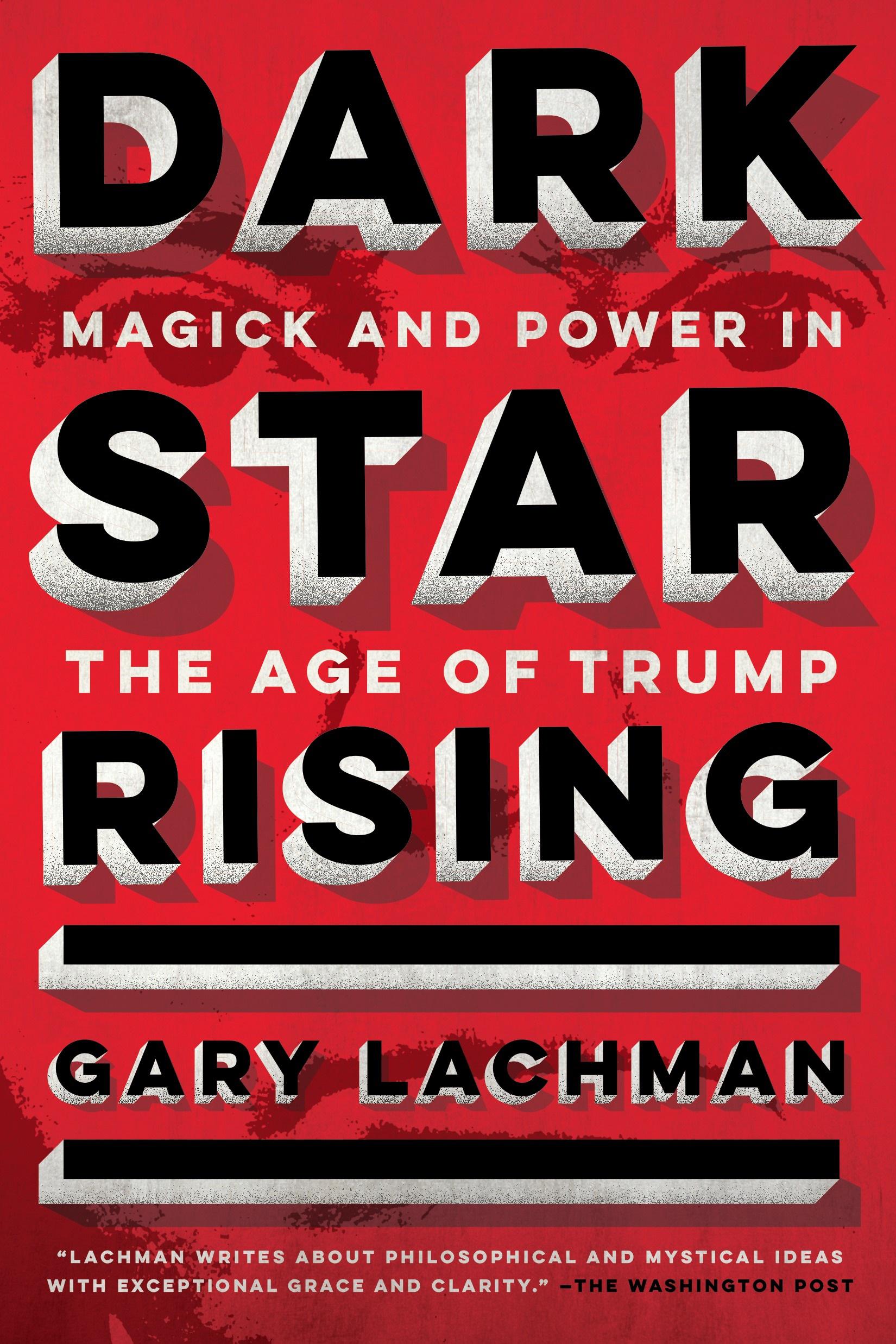
Following on to his Nine Nasty Words, which just became a New York Times best-seller (somewhat to his surprise), John McWhorter’s next book will be Woke Racism: How a New Religion Has Betrayed Black America from Random Penguin:

That manuscript will be released as a book by Portfolio (also a Penguin Random House imprint) in October. It will be published under a new title: Woke Racism: How a New Religion Has Betrayed Black America.

I should mention that the often sharp and insightful subscriber comments, as well as the brilliant editorial counsel of Bria Sandford at Portfolio, have already made Woke Racism significantly different from the The Elect excerpts. Woke Racism will express what the Substack excerpts did and then some. It will still analyze Third-Wave Antiracism as a religion. It will still make legions of black people see me as a race traitor. It will still make legions of white people see me as a tragically deluded white supremacist with brown skin who merits dismissal and ostracization.

And amidst all of that, it will still represent what I consider the most pro-black book I have ever written.

But this does mean that from now on, my Substack “newsletter” will be exactly that. I am glad many of you have enjoyed my posts here beyond the The Elect excepts, and they will continue, at the rate of once or twice (and I hope, more often, twice) a week. I have loved communicating to you as well as the feedback I get. Let’s keep this going.

Only: get “The Elect” as a real book, Woke Racism, around Halloween. Here, get my take on things as they happen, unfiltered.

May 23, 2021

Peter Zeihan’s geographic-based perspective on world history

Filed under: Books, Economics, History — Tags: , , , — Nicholas @ 03:00

In another of the reader-contributed book reviews for Scott Alexander’s Astral Codex Ten, a look at The Accidental Superpower: The Next Generation of American Preeminence and the Coming Global Disorder by Peter Zeihan:

Zeihan’s primary models are influenced by his geographic-based perspective on how our world works. As he puts it in the introduction, “Geopolitics is the study of how place [rivers, mountains, etc.] impacts … everything.” Early chapters discuss what he calls the balance of transport, which is roughly easy transport within a country (for economic development and forming political and cultural ties) and hard transport from outside of it (for defense). These transport issues are inherently tied to geography. What’s the best way to move things? Water-based transportation is extremely cheap. Think 17 cents per container mile vs. $2.40 for semis on an American highway, with a more extreme disparity for other countries, trade between continents, and populations in hard-to-access places. On the defensive side of that equation, geographic features on borders such as deserts, mountains, and oceans get Zeihan’s attention.

He uses ancient Egypt to illustrate a great balance of transport. The reliable water and rich soil of the Nile’s floodplains created near-perfect farming conditions, and the Nile itself allowed easy travel and trade throughout the valley. Combined with impenetrable desert borders, this geography “was one of the few places in the world where there was enough water to survive, and enough security to thrive.” Because of that, the “geography nearly guaranteed that the Egyptians would be on the road to civilization.” He gives us a quick run through Egyptian history to tell a story of that road, beginning with the settlement of the area about eight thousand years ago, consolidation into a single kingdom more than five thousand years ago, and then stagnation as the increasingly centralized government devoted more labor to monument building rather than technological progress, eventually being conquered by seafaring people seeking to rule the Mediterranean.

*****

To escape our pre-civilization/hunter-gatherer days – Zeihan refers to this as “when life sucked” – the mechanism that he identifies is basically a typical economist’s story. Sedentary agriculture as invented by the Egyptians and other ancient cultures became a transformative technology, letting populations grow and devote labor and resources to non-farming purposes. From this, we got specialization, increased production, trade (particularly where there was easy transportation – population centers were always near water) and capital formation in a self-reinforcing cycle. For thousands of years after this transformative technology was introduced, incremental improvements in agriculture and other areas followed, but “a robust, secure, and sustainable food supply” was the base of any civilization.

This cycle accelerated when we harnessed a couple of new packages of technologies over the last six-hundred years. He lumps the source of much progress together with the terms deepwater navigation and industrialization. The first is everything needed to sail the seas, from shipbuilding capabilities to compasses to weapons. Industrialization is exactly what you’re thinking of. He simplifies it as the combination of labor and capital with higher-output energy sources like oil and coal to put productivity on steroids.

Zeihan gives us a story of the Ottoman Empire entering a prolonged decline as deepwater navigation technologies took off in the fourteenth century. These technologies enabled the European powers (first Portugal and Spain, and then England) to capture increasing shares of trade with Asia, dropping prices in Europe and depriving the Ottomans of much of the income to which they had grown accustomed. Most significantly, they turned “the ocean from a death sentence to a sort of giant river.” Trade became global, but it was still mostly among people with nearby water-based transportation.

Industrialization technologies changed that. Steam and coal brought power to mining and transportation, and along with interchangeable parts, improved manufacturing. Chemical breakthroughs led to fertilizers (improving crop yields), and with more transportation options, more land was brought into cultivation. Improvements in cements in the 1820s enabled larger buildings and infrastructure. These technologies continually improved the productivity cycle that began with agriculture.

Zeihan concludes a chapter on America with the “nuts and bolts” of how countries rule the world. “The balance of transport determines wealth and security. Deepwater navigation determines reach. Industrialization determines economic muscle tone. And the three combined shape everything from exposure to durability to economic cycles to outlook.” As we’ll see shortly, he really likes America’s position on all of these factors. But first, we need to understand the other analytical tool that informs Zeihan’s model.

May 20, 2021

The Birth Control Movement and Eugenics – A Curious Link | B2W: ZEITGEIST! I E.18 – Winter 1923

Filed under: Books, Britain, Europe, Greece, Health, History, Law, Media — Tags: , , , , , — Nicholas @ 04:00

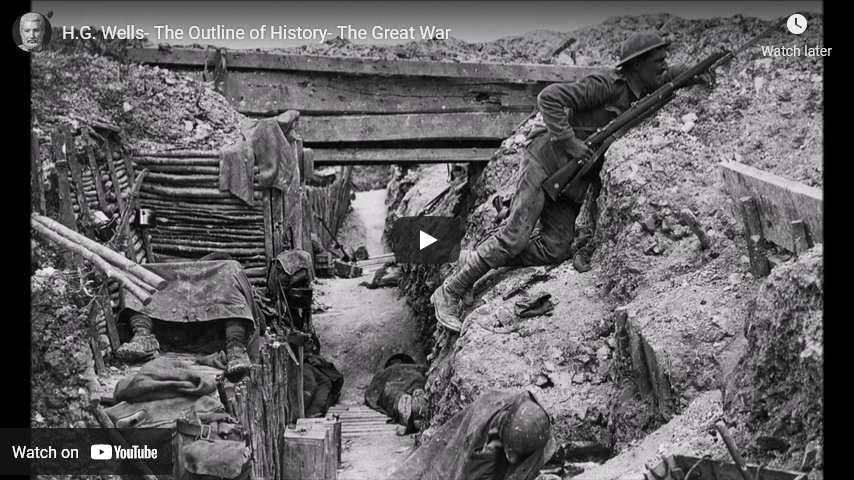
TimeGhost History
Published 19 May 2021

In the winter of 1923, a controversial activist takes a Catholic doctor to trial for libel. The proceedings capture a much bigger moment in the history of the interwar period: the controversial — but inherent — link between birth control and eugenics.
(more…)

May 17, 2021

Christopher Hitchens – On EconTalk discussing George Orwell [2009]

Filed under: Asia, Books, Britain, History, Politics — Tags: , , , , , — Nicholas @ 04:00

CaNANDian
Published 25 Sep 2012

Christopher Hitchens talked with EconTalk host Russ Roberts about George Orwell. Drawing on his book Why Orwell Matters, Hitchens talked about Orwell’s opposition to imperialism, fascism, and Stalinism, his moral courage, and his devotion to language. Along the way, Hitchens made the case for why Orwell matters.

Download audio: http://www.econtalk.org/archives/2009…

May 16, 2021

Gambling machines have come a long way from the “one-armed bandit” days

Filed under: Books, Business, Gaming, Health, USA — Tags: , , , , — Nicholas @ 03:00

This is another reader book review for Scott Alexander’s Astral Codex Ten, looking at Addiction by Design: Machine Gambling in Las Vegas by Natasha Dow Schüll. I’m incredibly risk-averse, so I’ve never even set foot in a casino, but from this review I do not regret my aversion one tiny little bit:

“Hiking the Las Vegas casinos” by davduf is licensed under CC BY-ND 2.0

    Sometimes employees at Netflix think, “Oh my god, we’re competing with FX, HBO, or Amazon” … [W]e actually compete with sleep.

    Reed Hastings

Randomness is addictive, in rats. B. F. Skinner learned that when he created his eponymous rat boxes. The boxes had levers that, when pressed, dispensed food pellets. Rats in boxes where one press resulted in one pellet pressed the lever when hungry. But rats in boxes where one press randomly resulted in no, one, or many pellets, became addicted to pressing the lever. That mammalian attraction to randomness lies at the heart of all gambling.

But machine gambling is not like other kinds of gambling. The book overflows with metaphors straining to describe how machine gambling is the supercharged version of table games like poker, blackjack, and roulette. Machine gambling is deforestation ruining the rainforest of diverse table games. Machines are invasive kudzu outcompeting and killing the native table games. Machine gambling is the crack cocaine to table games’ cocaine.

In about two decades, machine gambling went from being a side attraction to keep wives busy while their husbands played table games to the source of 85% of casino profits. You know how shopping malls have benches for husbands to sit on while their wives shop in stores? Imagine that those benches became the mall. (If you’re reading this in 2025, shopping malls were, uh, a collection of permanent pop-up stores under the same roof.)

The first time I went to Vegas, I knew a few tricks casinos would use to encourage me to gamble too much. I knew the hotel rooms were purposefully cheap, to entice me to visit Vegas. I knew casinos would have neither windows nor clocks, to help me lose my sense of time. I knew they would be full of bright lights and loud sounds, to overstimulate me. I knew nothing. Those tricks are old hat, as quaint as doilies. Machine gambling is a brave new world.

Machine gambling comes in the form of many games, but one example is enough to illustrate the pattern, so let’s discuss slot machines. Slot machines are games with reels with a variety of symbols on them, like cherries, diamonds, or the number 7. (Fun fact: fruit symbols were initially used on slot machines during the prohibition era to disguise them as gum vending machines.) The game is simple. The player spins the reels. If they land to show symbols in a row, the player wins. Because of their simplicity, these machines are favored by new gamblers and tourists.

Back when Moore’s Law was just Moore’s Prediction, slot machines were mechanical devices. The player would pull on a mechanical lever, which caused reels to spin. The reels would eventually slow down and then stop. The symbols in the middle of the screen when the reels stopped dictated whether the player won or lost.

Now, slot machines are digital. The lever, the reels, the symbols — they are all ones and zeros untethered from reality. This gives machine designers a terrifying amount of flexibility. They can optimize the game to maximize its addictivity.

QotD: Emmanuel Goldstein’s Theory and Practice of Oligarchal Collectivism as applied in Afghanistan

Filed under: Asia, Books, Government, Military, USA — Tags: , — Nicholas @ 01:00

Orwell/Goldstein’s “main point” is the permanent emergency and the advantages that gives the state. The Afghan war can never end because it has no war aims, which means the conditions of victory and defeat are unknown and unknowable, and can never be met. Why America chooses to wage war that way is a question for another day, but there are certainly economic elements at play: Many people have grown rich on an outmoded model of national strength that puts carrier groups in every pond around the globe — the “Floating Fortresses” of Orwell’s vision — while China takes over the planet unencumbered by such things.

Mark Steyn, “Essential Structure and Irreconcilable Aims”, Steyn Online, 2021-01-31.

May 15, 2021

QotD: Military history

Filed under: Books, History, Military, Quotations — Tags: , , , — Nicholas @ 01:00

Things have changed little today in terms of the exclusive Western monopoly of military history. Six billion people on the planet are more likely to read, hear, or see accounts of the Gulf War (1990) from the American and European vantage points than from the Iraqi. The story of the Vietnam War is largely Western; even the sharpest critics of America’s involvement put little credence in the official communiqués and histories that emanate from communist Vietnam. In the so-called Dark Ages of Europe, more independent histories were still published between A.D. 500 and 1000 than during the entire reigns of the Persian or Ottoman Empire. Whether it is history under Xerxes, the sultan, the Koran, or the Politburo at Hanoi, it is not really history — at least in the Western sense of writing what can offend, embarrass and blaspheme.

Victor Davis Hanson, Carnage and Culture: Landmark Battles in the Rise of Western Power, 2001.

May 10, 2021

They don’t make politicians like Lyndon Johnson anymore … thank goodness

Filed under: Books, History, USA — Tags: , , , , , — Nicholas @ 05:00

Another of the reader-contributed book reviews at Astral Codex Ten considers the personal history and astounding political career of LBJ, as told by biographer Robert Caro:

2: LBJ’s guide to amassing power

(i) Seduce older men

(Eww, not like that.) LBJ had a gift for becoming a “professional son” to any powerful man. At college, LBJ sat at professors’ feet and stared at them as if they were God’s gift to the educational system. LBJ constantly ran errands for the college president, Prexy Evans, and wrote glowing editorials about him.

LBJ’s fellow students were not amused. One said:

“Words won’t come to describe how Lyndon acted toward the faculty — how kowtowing he was, how suck-assing he was, how brown-nosing he was.”

But this flattery paid off. Evans put LBJ in charge of the financial aid program. Yes, really. And when other students wrote nasty comments about LBJ in the yearbook (e.g. the time he stole the Student Council elections), Evans ordered professors to cut out those pages with razors.

LBJ would repeat this flattery with President (Franklin) Roosevelt, Speaker Rayburn, and Senator Russell.

(ii) Treat your employees like dirt

LBJ wanted his staff to be absolutely loyal, so he could direct them like chess pieces. He found their weak points — their weight, their divorce — and mercilessly taunted them. I’m not going to describe the crude things he did.

Before his marriage, LBJ treated Lady Bird like an angel; once they were married, he treated her like one of his employees.

[…]

(v) Use money in new and exciting ways

LBJ funneled government contracts to Brown & Root, a construction company. In return, they gave his campaign gobs of money. During the 1948 election, two of his campaign staff ate at a cafe and then accidentally left behind a brown paper bag containing $50,000 in cash (more than $500,000 in today’s money). Luckily no one stole it.

Using all of this money, LBJ was able to make the media say whatever he wanted about his opponent, Coke Stevenson. He hired “missionaries” to hang out in bars and spread rumors about Stevenson. Thousands of federal workers also repeated LBJ’s talking points.

(vi) Cheat

But Stevenson was a storybook character, so money couldn’t defeat him. He simply told the people of Texas that he would continue to do the right thing, and they believed him. LBJ had lost the 1941 Senate election because Pappy O’Daniel had cheated better than he did. Now LBJ would cheat, and he would cheat big.

In 1940s Texas, basically every type of election fraud was real: Dead people voting, county bosses writing down whatever numbers they wanted, Mexicans being hired to cross the border and vote, etc. By buying tens of thousands of votes, LBJ was almost able to close the gap between him and Coke Stevenson. That wasn’t enough, so six days after the election, Luis Salas “found” 200 more votes for LBJ, giving him a margin of victory of 0.01%.

May 7, 2021

Scott Alexander reviews David Harvey’s A Brief History Of Neoliberalism

Filed under: Books, Economics, History, USA — Tags: , , , , , , — Nicholas @ 03:00

[Update: In the comments, “gunker” explains that this is another of Scott’s reader-contributed book reviews, not one of his own work. My apologies for the mistake.] After a quick rundown of the conventional explanation for the decline and fall of the comfortable post-WW2 US economy in the 1970s, Scott gives an overall appreciation of Harvey’s arguments:

… This treatment is almost the opposite of the way ABHoN describes events. Telling the story this way makes me feel like Jacques Derrida deconstructing some text to undermine the author and prove that they were arguing against themselves all along.

Harvey is an extreme conflict theorist. The story he wants to tell is the story of bad people destroying the paradise of embedded liberalism in order to line their own pockets and crush their opponents. At his best, he treats this as a thesis to be defended: embedded liberalism switched to neoliberalism not primarily because of sound economic policy, but because rich people forced the switch to “reassert class power”. At his worst, he forgets to argue the point, feeling it so deeply in his bones that it’s hard for him to believe anyone could really disagree. When he’s like this, he doesn’t analyze any of the economics too deeply; sure, rich people said something something economics, to justify their plot to immiserate the working classes, but we don’t believe them and we’re under no obligation to tease apart exactly what economic stuff they were talking about.

In these parts, ABHoN‘s modus operandi is to give a vague summary of what happened, then overload it with emotional language. Nobody in ABHoN ever cuts a budget, they savagely slash the budget, or cruelly decimate the budget, or otherwise [dramatic adverb] [dramatic verb] it. Nobody is ever against neoliberal reform — they bravely stand up to neoliberal reform, or valiantly resist neoliberal reform, or whatever. Nobody ever “makes” money, they “extract” it. So you read a superficial narrative of some historical event, with all the adverbs changed to more dramatic adverbs, and then a not-very-convincing discussion of why this was all about re-establishing plutocratic power at the end of it. This is basically an entire literary genre by now, and ABHoN fits squarely within it.

Harvey’s theses, framed uncharitably, are:

1. Embedded liberalism was great and completely sustainable. The global economic system collapsing in 1971 was probably just coincidence or something, and has no relevance to any debate about the relative merit of different economic paradigms.

2. Sure, some people say that the endless recession/stagflation/unemployment/bankruptcy/strikes of the 1970s were bad, but those people are would-be plutocrats trying to seize power and destroy the working class.

3. When cities, countries, etc, ran huge deficits and then couldn’t pay any of the money back, sometimes the banks that loaned them that money were against this. Sometimes they even asked those places to stop running huge deficits as a precondition for getting bailed out. This proves that bankers were plotting against the public and trying to form a dystopian plutocracy.

4. Since we have proven that neoliberalism is a sham with no advantages, we should switch back to embedded liberalism.

Let’s go through these one by one and see whether I’m being unfair.

« Newer PostsOlder Posts »

Powered by WordPress