
Tasting History with Max Miller
Published 6 Sep 2022
(more…)
September 7, 2022
The Original Caesar Salad from Mexico
Comments Off on The Original Caesar Salad from Mexico
September 2, 2022
QotD: Historical parallels between the British and American empires
… let us compare the US imperial experience to its British model. A whimsical exercise in comparative dates.
England was colonised by the Norman Empire (a tribe that spread across France, Britain, Italy, and the Middle East can be referred to as an empire I believe), in 1066. After some initial fierce resistance, they settled well, integrated with the local economy, and started developing a more advanced economic society.
North America was colonised by the British Empire (and Spanish and French of course), in the sixteenth century. After some initial fierce resistance, they settled well, integrated with the local economy, and started developing a more advanced economic society.
Norman England spent the next few centuries gradually taking out its neighbours. Wales, Ireland, and eventually Scotland (though the fact that the Scottish King James I & VI actually inherited England confuses this concept a bit). The process was fairly violent.
The North American “English” colonies spent the next few centuries taking out their neighbours. Indian tribes, Dutch, Spanish and French colonists, etc. The process was fairly violent.
England fought a number of wars over peripheral areas, particularly the Hundred Years war over claims to lands in France.
The North American colonies enthusiastically joined (if not blatantly incited) the early world wars, with the desire of taking over nearby French and Spanish colonies
The English fought a civil war in the 1640s to 50s over the issue of how to share power between the executive government, the oligarchs, and the commons. It appears that the oligarchs incited the commons (which was not very common in those days anyway). It was extremely bloody, and those on the periphery — particularly the Scots and Irish — came out badly (and with a long term bad taste for their over-mighty neighbour).
The Colonies fought their first civil war over the issue of how to share power between the executive, the oligarchs and the commons in the 1770s to 80s. It is clear that the oligarchs incited the commons (who in the US were still not very common — every male except those Yellow, Red or Black. An improvement? Certainly not considering the theoretical philosophical base of the so-called Revolution!). It was not really so bloody, but those on the periphery — particularly the Indians and slaves (both of which were pro-British), and the Loyalists and Canadians — came out badly. (60-100,000 “citizens” were expelled or forced to flee for being “loyalists”, let alone Indians and ex-slaves). Naturally the Canadians and their new refugee citizens developed a long term bad taste for their over-mighty neighbour — who attempted to attack them at the drop of a hat thereafter.
The British spent the next century and a half accumulating bits of empire — the Dominions, the Crown Colonies, and the Protectorates — in a haphazard fashion. Usually, but not always, troops followed traders and settlers.
The United States spent the next century and a half accumulating bits of empire — conquests from the Indians, purchases from France and Russia, conquests from Mexico and Spain, annexations of places like Hawaii, etc. — in a haphazard fashion. Usually, but not always, troops followed traders and settlers.
Nigel Davies, “The Empires of Britain and the United States – Toying with Historical Analogy”, rethinking history, 2009-01-10.
Comments Off on QotD: Historical parallels between the British and American empires
August 28, 2022
Why do millions of people try to get into the US from Central and South America?
Elizabeth Nickson on what is driving so many people to leave their homes and trek north to the US (and, to a much lesser extent, Canada):
Mostly they are coming because Black Rock, the UN, the WEF are grabbing their lands, the more fertile the better, driving them from those lands and sticking them into tenement cities where they have to scratch like chickens for a living. Agenda 2030 is ravening under the radar in the US and Canada, where “civil society” in the pay of the government and environmental NGOs funded by oligarchs, is taking as much land and as many resources as possible out of the productive economy and shoving it into the land banks of BlackRock.
In the south, it’s not surreptitious. It is state policy to destroy their lives, to take their ancestral lands, whether it’s 40 acres or a half acre and leave them begging by the side of the road.
This piece was removed from the UN website within a day
Climate Change is a complex financial mechanism which under the guise of “saving the planet”, is meant to save the predator class.
Which is not only morally bankrupt, but is dealing with a level of government and corporate debt that they know they cannot sustain. In the healthiest economy in the world, the US, all profits now are coming from either some mechanism of government subsidy – the $6 Trillion of the Covid catastrophe – or Collateralized Default Obligations. For instance right now Penguin is in court attempting to buy Random House. Why? Because they can borrow money to do that, buy back some of their stock and pay their shareholders. It will mean middle managers will lose their jobs, and marginal books will not be published, but the ravening maw of Jamie Diamond and Larry Fink will be satiated. For the moment. There is no other reason. Growth, real growth has stalled in every single enterprise.
This is how it works at the top of the class pyramid:
Last week on my island we were treated to the spectacle of well-heeled, highly educated, well-spoken older men and women arguing that the impoverished elderly, the young, and families starting out should not have housing because of climate change. Our island is 74 square miles with 10,000 residents. That means we have one resident per five acres.
Our government, the trust, had proposed the use of accessory buildings, brought up to code, for long-term rentals.
The extreme form of land conservation we practice has meant that housing prices have skyrocketed, so only the rich and the well-pensioned can afford to live here. A thousand or so working age people manage to make a living, generally via remote work. We have no staff for the schools, hospitals, businesses, restaurants. They cannot afford to live here.
About 200 people on our islands, mostly in their 70s and 80s, tightly aligned with the hysterical wing of the environmental movement work the process to stop any growth. Every new resident who pulls a permit is visited and threatened by a by-law officer. The woman who instigated this specific weapon, a former enviro bureaucrat from LA, demanded full time by-law officers for years until she won, after which she fought for aggressive enforcement.
With this one act, she set islanders against each other, creating conflict where there was none. This too is deliberate. A community divided is easily controlled.
Ring any bells?

Comments Off on Why do millions of people try to get into the US from Central and South America?
July 30, 2022
QotD: The advent of horses and firearms on the North American plains
Horses arrived in the Great Plains from the south via the Spanish and moving through Native American peoples west of the Rocky Mountains by both trade and eventually raiding in the early 1700s. Notably firearms also began moving into the region in the same period, but from the opposite direction, coming from British and French traders to the North and West (the Spanish had regulations against trading firearms to Native Americans, making them unavailable as a source). Both were thus initially expensive trade goods which could only be obtained from outside and then percolated unevenly through the territory; unlike firearms, which remained wholly external in their supply, horses were bred on the plains, but raiding and trade were still essential sources of supply for most peoples on the plains. We’ll get to this more when we talk about warfare (where we’ll get into the four different military systems created by this diffusion), but being in a position where one’s neighbors had either the horse or the gun and your tribe did not was an extreme military disadvantage and it’s clear that the “falling out” period whereby these two military innovations distributed over the area was very disruptive.
But unlike guns, which seem to have had massive military impacts but only minimal subsistence impacts (a bow being just as good for hunting bison as a musket, generally), the arrival of the horse had massive subsistence impacts because it made hunting wildly more effective. But the key thing to remember here is: the horse was introduced to the Great Plains no earlier than 1700, horse availability expanded only slowly over the area, but by 1877 (with the end of the Black Hills War), true Native American independence on the Great Plains was functionally over. Consequently, unlike the Steppe, where we have a fairly “set” system that had already been refined for centuries, all we see of the Plains Native American horse-based subsistence system is rapid change. There was no finally reached stable end state, as far as I can tell.
Though there is considerable variation and also severe limits to the evidence, it seems that prior to the arrival of the horse, most Native peoples around the Great Plains practiced two major subsistence systems: nomadic hunter-gathering on foot (distinct from what will follow in that it places much more emphasis on the gathering part) on the one hand and a mixed subsistence system of small-scale farming mixed seasonally with plains hunting seems to have been the main options pre-horse, based on the degree to which the local area permitted farming in this way (for more on those, note Isenberg, op. cit., 31-40). Secoy (op. cit.) notes that while there is some evidence that the Plains Apache may have shifted through both systems, being hunter-gatherers prior to the arrival of horses, by the time the evidence lets us see clearly (which is shortly post-horse) they are subsisting by shifting annually between sedentary agricultural racheirias (from the Spring to about August) and hunting bison on the plains during the fall. Isenberg notes the Native Americans of the Missouri river combining corn agriculture with cooperative bison hunting in the off-season (in that case, in the summer). Meanwhile, the Comanches and Kiowas seem to have mostly subsisted on pedestrian bison hunting along with gathering fruit and nuts, with relatively little agriculture, prior to going fully nomadic once they acquired horses. Bison hunting on foot required a lot of cooperation (so a group) and it seems clear that it was not enough to support a group on its own and had to be supplemented somehow, at least before the arrival of the horse. Some mix of either bison+gathering or bison+horticulture was required.
Isenberg argues (op. cit.), that at this point the clear advantage was to what he terms the “villagers” – that is the farmer-hunters who lived in villages, rather than the nomadic hunter-gathers. These horticulturists were more numerous and seem quite clearly to have had the better land and living conditions. Essentially the hunter-gatherers stuck on marginal land were mostly hunter-gatherers because they were stuck on marginal land, which created a reinforcing cycle of being stuck on marginal land (the group is weak due to small group size because the land is marginal and because the group is weak, it is only able to hold on to marginal lands). That system was stable without outside disruption. The horse changed everything.
A skilled Native American hunter on a horse, armed with a bow, could hunt bison wildly more effectively than on foot. They could be found more rapidly, followed at speed and shot in relative safety. It is striking that while pedestrian bison hunting was clearly a team effort, a hunter on a horse could potentially hunt effectively alone or in much smaller groups. In turn, that massively increased effectiveness in hunting allowed the Native Americans of the region, once they got enough horses, to go “full nomad” and build a subsistence system focused entirely on hunting bison, supplemented by trading the hides and other products of the bison with the (increasingly sedentary and agrarian) peoples around the edges of the Plains. Many of the common visual markers of Plains Native Americans – the tipi, the travois, the short bow for use from horseback – had existed before among the hunter-gathering peoples, but now spread wore widely as tribes took to horse nomadism and hunting bison full time. At the same time, Isenberg (op. cit. 50-52) has some fascinating paragraphs on all sorts of little material culture changes in terms of clothing, home-wares, tools and so on that changed to accommodate this new lifestyle. The speed of the shift is quite frankly stunning.
We’ll come back to this later, but I also want to note here that this also radically changed the military balance between the nomads and the sedentary peoples. The greater effectiveness of bison hunting meant that the horse nomads could maintain larger group sizes (than as hunter-gatherers, although eventually they also came to outnumber their sedentary neighbors, though smallpox – which struck the latter harder than the former – had something to do with that too), while possession of the horse itself was a huge military advantage. Thus by 1830 or so, the Ute and Comanche pushed the Apache off of much of their northern territory, while the Shoshone, some of the earliest adopters of the horse, expanded rapidly north and east over the Northern Plains, driving all before them (Secoy, op. cit., 30-31, 33). Other tribes were compelled to buy, raise or steal horses and adopt the same lifestyle to compete effectively. It was a big deal, we’ll talk about specifics later.
Bret Devereaux, “That Dothraki Horde, Part II: Subsistence on the Hoof”, A Collection of Unmitigated Pedantry, 2020-12-11.
Comments Off on QotD: The advent of horses and firearms on the North American plains
July 13, 2022
The Irish Fighting for Britain, Mexico’s Role in the War, and Chuikov in Uranus – WW2 – OOTF 27
World War Two
Published 12 Jul 2022How many Irishmen are fighting for Britain and why? And what did Chuikov do during Operation Uranus? And what role has Mexico played in the fighting so far? Find out the answers to these fascinating questions in our latest edition of Out of the Foxholes!
(more…)
June 11, 2022
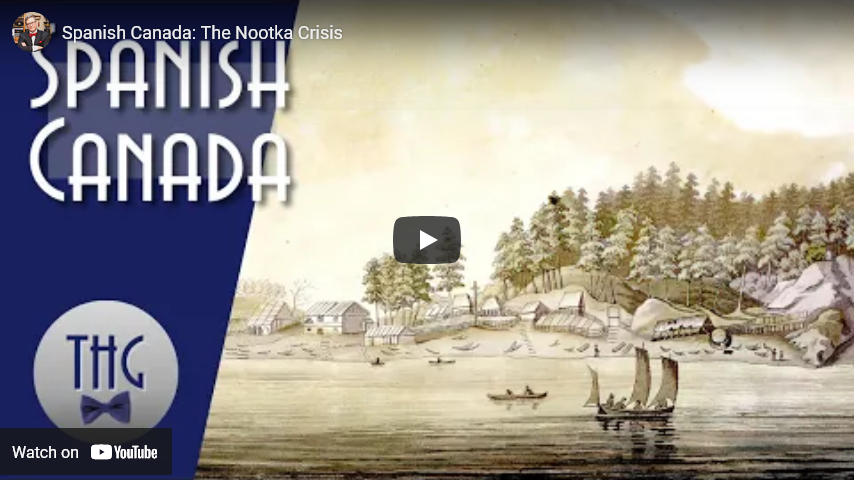
Spanish Canada: The Nootka Crisis
The History Guy: History Deserves to Be Remembered
Published 10 Jun 2022In 1789, the Spanish empire prepared to enforce their territorial claims far to the North of what they nominally controlled, and instigated a crisis that threatened to bring the great European powers to war.
Check out our new community for fans and supporters! https://thehistoryguyguild.locals.com/
This is original content based on research by The History Guy. Images in the Public Domain are carefully selected and provide illustration. As very few images of the actual event are available in the Public Domain, images of similar objects and events are used for illustration.
You can purchase the bow tie worn in this episode at The Tie Bar:
https://www.thetiebar.com/?utm_campai…All events are portrayed in historical context and for educational purposes. No images or content are primarily intended to shock and disgust. Those who do not learn from history are doomed to repeat it. Non censuram.
Find The History Guy at:
New community: https://thehistoryguyguild.locals.com/
Please send suggestions for future episodes: Suggestions@TheHistoryGuy.netThe History Guy: History Deserves to Be Remembered is the place to find short snippets of forgotten history from five to fifteen minutes long. If you like history too, this is the channel for you.
Awesome The History Guy merchandise is available at:
teespring.com/stores/the-history-guyScript by JCG
#history #thehistoryguy #Canada
Comments Off on Spanish Canada: The Nootka Crisis
June 5, 2022
Banzai Charges in Alaska – WW2 – 197 – June 4, 1943
World War Two
Published 4 Jun 2022The Chinese defeat the Japanese at Shipai Fortress and the Americans maul the Japanese in the Aleutians. The Japanese are also worried about the possibility of the USSR joining the war against them. Meanwhile the Allies still plan to invade Sicily, but have no idea what they’ll do after that.
(more…)
Comments Off on Banzai Charges in Alaska – WW2 – 197 – June 4, 1943
June 4, 2022
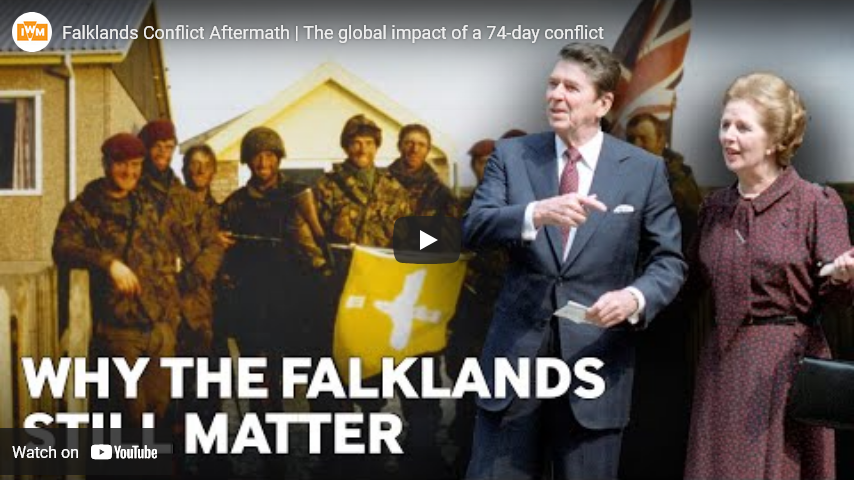
Falklands Conflict Aftermath | The global impact of a 74-day conflict
Imperial War Museums
Published 1 Jun 2022The Falklands Conflict of 1982 only lasted for 74 days, but it had lasting consequences which continue to be felt today. Prior to 1982, Margaret Thatcher’s government was planning major defence cuts including withdrawing the military from the South Atlantic. Instead, they spent nearly £3 billion defending British sovereignty of the Falkland Islands, and to this day maintain a garrison there. What was the effect of this short conflict for Argentina, Britain and the Falkland Islands, and what impact did it have around the world?
Correction: The video states that Port Stanley was granted city status in 2002, this should be 2022.
Thanks for watching IWM’s 5 part series on the Falklands Conflict. Please like and subscribe for more, and let us know in the comments below what you’d like to see next.
Explore and licence the archive films in this video: https://film.iwmcollections.org.uk/c/…
CREDITS
Mount Pleasant images, Crown copyright, April 2022
Margaret Thatcher images © University of Salford Press Office
Landmine clearance photos via Safe Lane Global
Sound effects via ZapSplat
May 1, 2022
Sinking of the General Belgrano – Falklands War Documentary
Historigraph
Published 30 Apr 2022Go to https://squarespace.com/historigraph to get a free trial and 10% off your first purchase of a website or domain.
Falklands War series:
[1] Invasion of the Falklands https://youtu.be/BUYp3Wqz00A
[2] Recapture of South Georgia https://youtu.be/4mCZBpX4pxsTo help support the creation of more videos, consider supporting on Patreon:
https://www.patreon.com/historigraph#FalklandsWar #Historigraph #Belgrano
Come join the historigraph discord: https://discord.gg/ygypfs3BEB
Buy Historigraph Posters here! historigraph.creator-spring.com
This video was sponsored by Squarespace.
► Twitch: https://www.twitch.tv/historigraph
► Second Channel: https://www.youtube.com/channel/UCpIj…
► Twitter: https://twitter.com/historigraph
► Instagram: https://www.instagram.com/historigraphSources for the Falklands War Series (so far):
Max Hastings & Simon Jenkins, Battle for the Falklands
https://archive.org/details/battlefor…
Martin Middlebrook, Operation Corporate
Martin Middlebrook, Battle for the Malvinas
Mike Norman, The Falklands War There and Back Again: The Story of Naval Party 8901
Kenneth Privratsky, Logistics in the Falklands War
Sandy Woodward, One Hundred Days
Paul Brown, Abandon Ship
Julian Thompson, No Picnic
John Shields, Air Power in the Falklands Conflict
Edward Hampshire, The Falklands Naval Campaign 1982
Hugh McManners, Forgotten Voices of the Falklands
Cedric Delves, Across an Angry Sea: The SAS in the Falklands War
Rowland White, Vulcan 607
Vernon Bogdanor, “The Falklands War 1982” lecture https://www.youtube.com/watch?v=a9bWw…
Arthur Gavshon, The sinking of the Belgrano https://archive.org/details/sinkingof…
Gordon Smith, Battle Atlas of the Falklands War 1982 by Land, Sea and Air
http://www.naval-history.net/NAVAL198…
Hansard- https://api.parliament.uk/historic-ha…
Recording of Thatcher’s statement to the Commons is from https://www.youtube.com/watch?v=HvbhV…Music Credits:
“Rynos Theme” Kevin MacLeod (incompetech.com)
Licensed under Creative Commons: By Attribution 4.0 License
http://creativecommons.org/licenses/b…“Crypto” Kevin MacLeod (incompetech.com)
Licensed under Creative Commons: By Attribution 4.0 License
http://creativecommons.org/licenses/b…“Stay the Course” Kevin MacLeod (incompetech.com)
Licensed under Creative Commons: By Attribution 4.0 License
http://creativecommons.org/licenses/b…Other music and SFX from Epidemic Sound

Comments Off on Sinking of the General Belgrano – Falklands War Documentary
April 28, 2022
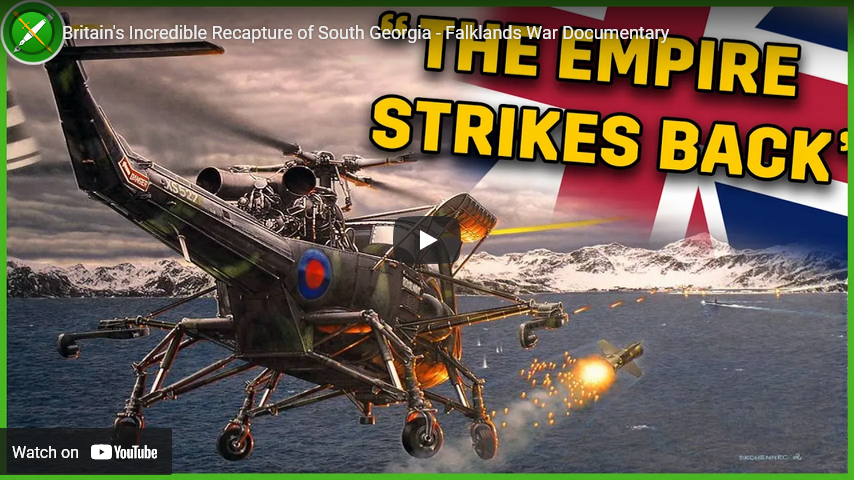
Britain’s Incredible Recapture of South Georgia – Falklands War Documentary
Historigraph
Published 27 Apr 2022Go to https://squarespace.com/historigraph to get a free trial and 10% off your first purchase of
a website or domain.In just three weeks after the Argentinian invasion of the Falkland islands, Britain threw together a task force out of thin air, sailed it 8000 miles around the world and started taking its territory back. This is how it happened.
Made with thanks to the Fleet Air Arm Musuem in Yeovilton, Somerset. https://www.fleetairarm.com/
To help support the creation of the rest of the Falklands series, consider supporting on Patreon:
https://www.patreon.com/historigraph#Falklands40 #Historigraph
Come join the historigraph discord: https://discord.gg/ygypfs3BEB
Buy Historigraph Posters here! historigraph.creator-spring.com
► Twitch: https://www.twitch.tv/historigraph
► Second Channel: https://www.youtube.com/channel/UCpIj…
► Twitter: https://twitter.com/historigraph
► Instagram: https://www.instagram.com/historigraph
Thumbnail credit Daniel Behennec: https://www.naval-history.net/FxDBMis…Sources for the Falklands War Series (so far):
Max Hastings & Simon Jenkins, Battle for the Falklands
https://archive.org/details/battlefor…
Martin Middlebrook, Operation Corporate
Martin Middlebrook, Battle for the Malvinas
Mike Norman, The Falklands War There and Back Again: The Story of Naval Party 8901
Kenneth Privratsky, Logistics in the Falklands War
Sandy Woodward, One Hundred Days
Paul Brown, Abandon Ship
Julian Thompson, No Picnic
John Shields, Air Power in the Falklands Conflict
Edward Hampshire, The Falklands Naval Campaign 1982
Hugh McManners, Forgotten Voices of the Falklands
Cedric Delves, Across an Angry Sea: The SAS in the Falklands War
Rowland White, Vulcan 607
Vernon Bogdanor, “The Falklands War, 1982” lecture https://www.youtube.com/watch?v=a9bWw…
Arthur Gavshon, “The sinking of the Belgrano” https://archive.org/details/sinkingof…
Gordon Smith, Battle Atlas of the Falklands War 1982 by Land, Sea and Air
http://www.naval-history.net/NAVAL198…
Hansard- https://api.parliament.uk/historic-ha…
Recording of Thatcher’s statement to the Commons is from https://www.youtube.com/watch?v=HvbhV…Music Credits:
“Rynos Theme” Kevin MacLeod (incompetech.com)
Licensed under Creative Commons: By Attribution 4.0 License
http://creativecommons.org/licenses/b…“Crypto” Kevin MacLeod (incompetech.com)
Licensed under Creative Commons: By Attribution 4.0 License
http://creativecommons.org/licenses/b…“Stay the Course” Kevin MacLeod (incompetech.com)
Licensed under Creative Commons: By Attribution 4.0 License
http://creativecommons.org/licenses/b…Other music and SFX from Epidemic Sound
Comments Off on Britain’s Incredible Recapture of South Georgia – Falklands War Documentary
April 4, 2022
The Falklands War — the first postmodern war or the last colonial war?
Dominic Sandbrook in UnHerd says Britain “needed the Falklands War”:
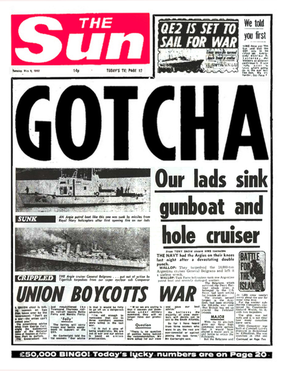
On the morning of Monday, 5 April 1982, the aircraft carrier Invincible slipped its moorings and eased into Portsmouth Harbour, bound for the South Atlantic. It was barely ten o’clock, yet the shoreline was packed with tens of thousands of flag-waving onlookers, singing and cheering for all they were worth, many of them in tears. From every building in sight flew the Union Jack, while well-wishers brandished dozens of homemade banners: “God Bless, Britannia Rules”, “Don’t Cry for Us, Argentina”. In the harbour, a flotilla of little boats, crammed with spectators, bobbed with patriotic enthusiasm. And as the band played and the ship’s horn sounded, red flares burst into the sky.
It is 40 years now since the outbreak of the Falklands War, one of the strangest, most colourful and most popular conflicts in British military history. Today this ten-week campaign to free the South Atlantic islands from Argentine occupation seems like a moment from a vanished age. But that was how it felt at the time, too: a scene from history, a colossal costume drama, a self-conscious re-enactment of triumphs past.
On the day the Invincible sailed, Margaret Thatcher quoted Queen Victoria: “Failure? The possibilities do not exist.” In the Sun, executives put up Winston Churchill’s portrait. And as the travel writer Jonathan Raban watched the departure of the Task Force on television, he thought it was like a historical pageant, complete with “pipe bands, bunting, flags, kisses, tears, waved handkerchiefs”. He regarded the whole exercise with deep derision, until the picture blurred and he realised that, despite himself, he was crying.
For many people the Falklands War was only too real. There were serious issues and genuine lives at stake, not just for the 1,813 islanders who had woken to find military vehicles roaring down their little streets, but for the tens of thousands of Argentine conscripts and British servicemen who were soon to be plunged into the nightmare of combat. And although polls suggest that about eight out of ten Britons strongly supported it, there were always those who considered it a mistake, a tragedy, even a crime. A certain Jeremy Corbyn thought it a “Tory plot to keep their money-making friends in business”. The novelist Margaret Drabble considered it a “frenzied outburst of dying power”. A far better writer, Argentina’s Jorge Luis Borges, famously called it “two bald men arguing over a comb”. That seems an odd analogy, though, for almost 2,000 blameless sheep farmers, who had no desire to be ruled by a junta that threw dissenters out of helicopters.
One common view of the Falklands campaign is that it was Britain’s last colonial war. But this strikes me as very unpersuasive. When we think of colonial wars, we think of wars of conquest by white men in pith helmets against brown-skinned underdogs. We think of embattled imperialists struggling to stave off a nationalist uprising, or fighting in defence of white settlers against a native majority. But the Falklands War was none of those things. There was no oppressed indigenous majority — except perhaps for the islanders themselves, some of whom had been there since the 1830s. As for the Argentines, their Spanish and Italian surnames were a dead giveaway. Indeed, few countries in the Americas had done a more thorough job of eliminating their original inhabitants.
Comments Off on The Falklands War — the first postmodern war or the last colonial war?
April 2, 2022
Falklands War 82: How Argentina Seized the Islands
Historigraph
Published 31 Mar 2022For up to 60% off a subscription to Babbel, head over to https://bit.ly/historigraph_babbel
To help support the creation of the rest of the Falklands series, consider supporting on Patreon:
https://www.patreon.com/historigraphCome join the historigraph discord: https://discord.gg/ygypfs3BEB
Buy Historigraph Posters here! historigraph.creator-spring.com
This video was sponsored by Babbel.
► Twitch: https://www.twitch.tv/historigraph
► Second Channel: https://www.youtube.com/channel/UCpIj…
► Twitter: https://twitter.com/historigraph
► Instagram: https://www.instagram.com/historigraphSources for the Falklands War Series (so far):
Max Hastings & Simon Jenkins, Battle for the Falklands
https://archive.org/details/battlefor…
Martin Middlebrook, Operation Corporate
Martin Middlebrook, Battle for the Malvinas
Mike Norman, The Falklands War There and Back Again: The Story of Naval Party 8901
Kenneth Privratsky, Logistics in the Falklands War
Sandy Woodward, One Hundred Days
Paul Brown, Abandon Ship
Julian Thompson, No Picnic
John Shields, Air Power in the Falklands Conflict
Edward Hampshire, The Falklands Naval Campaign 1982
Hugh McManners, Forgotten Voices of the Falklands
Cedric Delves, Across an Angry Sea: The SAS in the Falklands War
Rowland White, Vulcan 607
Vernon Bogdanor, “The Falklands War 1982” lecture https://www.youtube.com/watch?v=a9bWw…
Arthur Gavshon, The sinking of the Belgrano https://archive.org/details/sinkingof…
Gordon Smith, Battle Atlas of the Falklands War 1982 by Land, Sea and Air
http://www.naval-history.net/NAVAL198…
Hansard – https://api.parliament.uk/historic-ha…
Recording of Margaret Thatcher’s statement to the commons is from https://www.youtube.com/watch?v=HvbhV…Music Credits:
“Rynos Theme” Kevin MacLeod (incompetech.com)
Licensed under Creative Commons: By Attribution 4.0 License
http://creativecommons.org/licenses/b…“Crypto” Kevin MacLeod (incompetech.com)
Licensed under Creative Commons: By Attribution 4.0 License
http://creativecommons.org/licenses/b…“Stay the Course” Kevin MacLeod (incompetech.com)
Licensed under Creative Commons: By Attribution 4.0 License
http://creativecommons.org/licenses/b…Other music and SFX from Epidemic Sound
From the comments:
Historigraph
1 day agoThis series has been about four months in the making, and is by far the most ambitious project I’ve set out to complete on Historigraph. It’s going to be 8 (possibly 9) videos over the next three months, charting the course of the Falklands War as it happened 40 years ago.
If you liked this video and want to help support the creation of the remaining seven videos, it would meant the world to me if you could consider supporting on Patreon https://www.patreon.com/historigraph, become a channel member, or even just share this video far and wide.
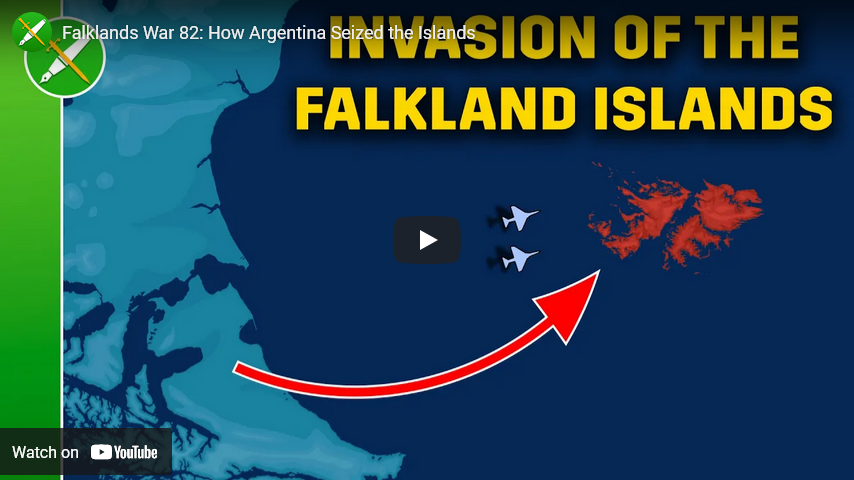
Comments Off on Falklands War 82: How Argentina Seized the Islands
February 15, 2022
Total War on Valentine’s Day – WW2 – Reading Comments
World War Two
Published 14 Feb 2022Another installment of Across the Airwaves, where we highlight some of the best viewer comments under our videos. It’s Valentine’s Day and we’re feeling pretty romantic, so Indy and Spartacus will be reading comments that are all about love, humanity, and relationships.
(more…)
Comments Off on Total War on Valentine’s Day – WW2 – Reading Comments
January 26, 2022
Three generations of the OG Puritans
At Founding Questions, Severian considers the New England Puritans and the world they inhabited:
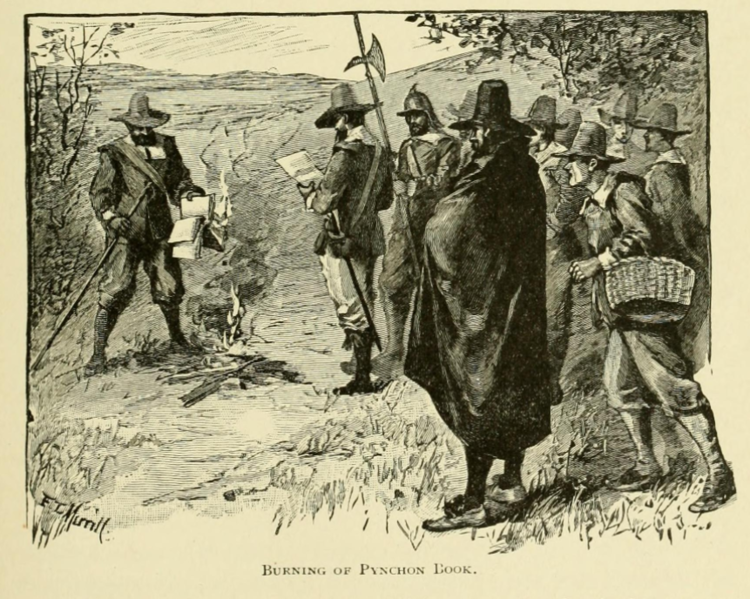
Portrayal of the burning of copies of William Pynchon’s book The Meritous Price of Our Redemption by early colonists of the Massachusetts Bay Colony, who saw his book as heresy; it was the first-ever banned book in the New World and only 4 original copies are known to survive today.
Engraving by F.T. Merrill in The History of Springfield for the Young by Charles Barrows, 1921.
Total cultural and intellectual uniformity, constantly reinforced. If those Puritans were going to go crazy, in other words, they’d do it within very carefully circumscribed boundaries. The only thing close to that level of mental control is Twitter … and I suppose I must put the disclaimer out front, so that you can factor it in if you disagree with me: I hate the Puritans. They’re just SJWs with balls and a slightly less tedious prose style. When they’re not obsessing over the tiniest motions of their pwecious widdle selves, they’re screwing you over for the hellbound heathen you are.
Credit where it’s due, though: If you need to go sodbusting in an unexplored continent, the Puritans are your guys. The original Plymouth Bay colony was thoroughly militarized, and they didn’t fuck around — when the local Indian tribes were beginning to wonder if they shouldn’t do something about these White devils they’d let loose, the Puritans attacked the fiercest tribe and wiped them out, as a show of force. Life was hard in the OG Plymouth Colony, but it was about as good as you were going to get in that era.
But the typical inheritance pattern soon took over. “Regression to the mean” is a behavioral phenomenon, too, not just an IQ one. Puritanism is an obsessive, paranoid creed; it can only flourish in times of high stress and dire insecurity. But by the 1690s, Plymouth Colony was arguably the healthiest, wealthiest, safest place per capita in Christendom (not a high bar, obviously, but still). The OG settlers were all gone by that time, of course — the original settlement, you’ll recall, was 1620 — and so were most of their almost as hardcore kids. The third generation was coming up fast …
… but finding their way blocked by the old men of the previous generation, who were as tediously, dogmatically Puritan as the OGs, but without the stones. This made them — the 2nd generation — enormous hypocrites, but even without the hypocrisy, imagine living in a world where the ultra-wealthy who control everything in society tell you that they deserve it all, because they’re God’s Elect, while you, sinner, deserve to live in a rented box and eat bugs and own nothing, because God hates you.
History’s full of weird stuff like that, and that was the situation circa 1690. One example will have to do: Since we probably all got to experience Nathaniel Hawthorne’s existential angst back in high school, consider that the ancestor who caused him so much grief, Judge John Hathorne, was born in 1641. He would’ve been 51, then, during his trial service – a ripe old age by 17th century standards.
Not only that, but the 2nd generation — the one that stubbornly refused to move on and let the kids take their place in the sun — had spent the previous twenty years grievously fucking things up. King Philip’s War nearly ruined the colony, there’d been widespread plague, and oh yeah, that whole Restoration thing back in England — the hardest of hardcore Puritan thinkers in the run-up to the Civil War had been colonials; guys like Col. Rainsborough were closely associated with Massachusetts, etc. Lots of bad blood on the other side of the water, and while the third generation was willing to let bygones by bygones, the 2nd generation wasn’t.
So: Hypocritical old throwbacks and cavemen, with a decades-long track record of dumbfuckery, who just wouldn’t get out of the way. As they got older, they got more insular and inward-looking, as old people tend to do … and “more inward looking” for a Puritan is a near-BCG level of narcissism. Meanwhile, the new generation is eager to take their place in the burgeoning Atlantic world, especially after the Glorious Revolution (1688) … but can’t.
Comments Off on Three generations of the OG Puritans
January 16, 2022
QotD: Once “discovered”, colonization of the Americas was inevitable
This is not a joke. Political reality has a way of crashing in on the pipe dreams of liberal academics. The reality is, if the English had not colonised, then the French or the Dutch would have. If the Spanish had not colonised, the Portuguese would have. This would have shifted the balance of power at home, and any European country which had not colonised, would have been relegated to secondary status. And it is easy to overestimate the amount of control that European governments actually had. As soon as the New World was discovered, many fisherman and traders sailed across the Atlantic on their own, in hopes of circumventing tax authorities and scoring a fortune. Long before colonies were established in most regions, the New World was crawling with Europeans whose superior technology gave them an edge in combat. Nonetheless, it was extremely dangerous for Europeans to provoke fights with Native Americans, and most of them tried to avoid this when possible. In retrospect, one could in theory be impressed that so many European governments showed a genuine concern to rein in the worst excesses of their subjects, with an express eye to protecting the Indians from depredation. The logic was simple: they attempted to protect their subjects at home, in order to secure good order and a better tax base. So they would do the same to their subjects in the New World. For a long time, few Europeans harboured any master plan of pushing the Native Americans out of their own lands. In more densely populated regions such as Mexico, such an idea must have seemed an absurdity. Reality tends to occur ad hoc. Boundaries often took generations to move, and would have seemed fixed at the time. For several centuries, many Europeans assumed that they would long be a minority on the North American continent. In Mexico and Peru, they always have been.
Population density mattered, a lot, when it came to pre-modern global migrations. China and India were “safe” from excessive European colonisation because they had the densest populations in the world, and they were likewise largely immune to any diseases brought by Europeans. SubSaharan Africa had a lower population density depleted by slave raiding, but they still outnumbered European colonists by a large margin throughout the colonial era — again because European contact did not decimate their numbers through disease the way it did in the Americas. It is worth noting that no one claims that Europeans committed genocide in India, Asia or even Africa, although their technological advantages gave them every opportunity had they actually been of a genocidal mindset (as were for example the Mongols). In fact, the European track record shows them to be almost shockingly un-genocidal, given their clear technological advantages over the rest of the world for a period of several centuries. Few other civilisations, given similar power over so much of the world’s people, would have behaved in a less reprehensible manner. This is not to give Europeans a pat on the back. Rather it is to point out that Europeans are regularly painted as the very worst society on Earth, when in fact they had the power to do far, far more evil than they actually did. Let us at least acknowledge this fact.
Jeff Fynn-Paul, “The myth of the ‘stolen century'”, Spectator Magazine, 2020-09-26.
Comments Off on QotD: Once “discovered”, colonization of the Americas was inevitable


