A new post at the Operational Art of War considers the amazing achievements in logistical support that allowed the British to re-take the Falkland Islands so soon after the Argentine invasion in 1982:
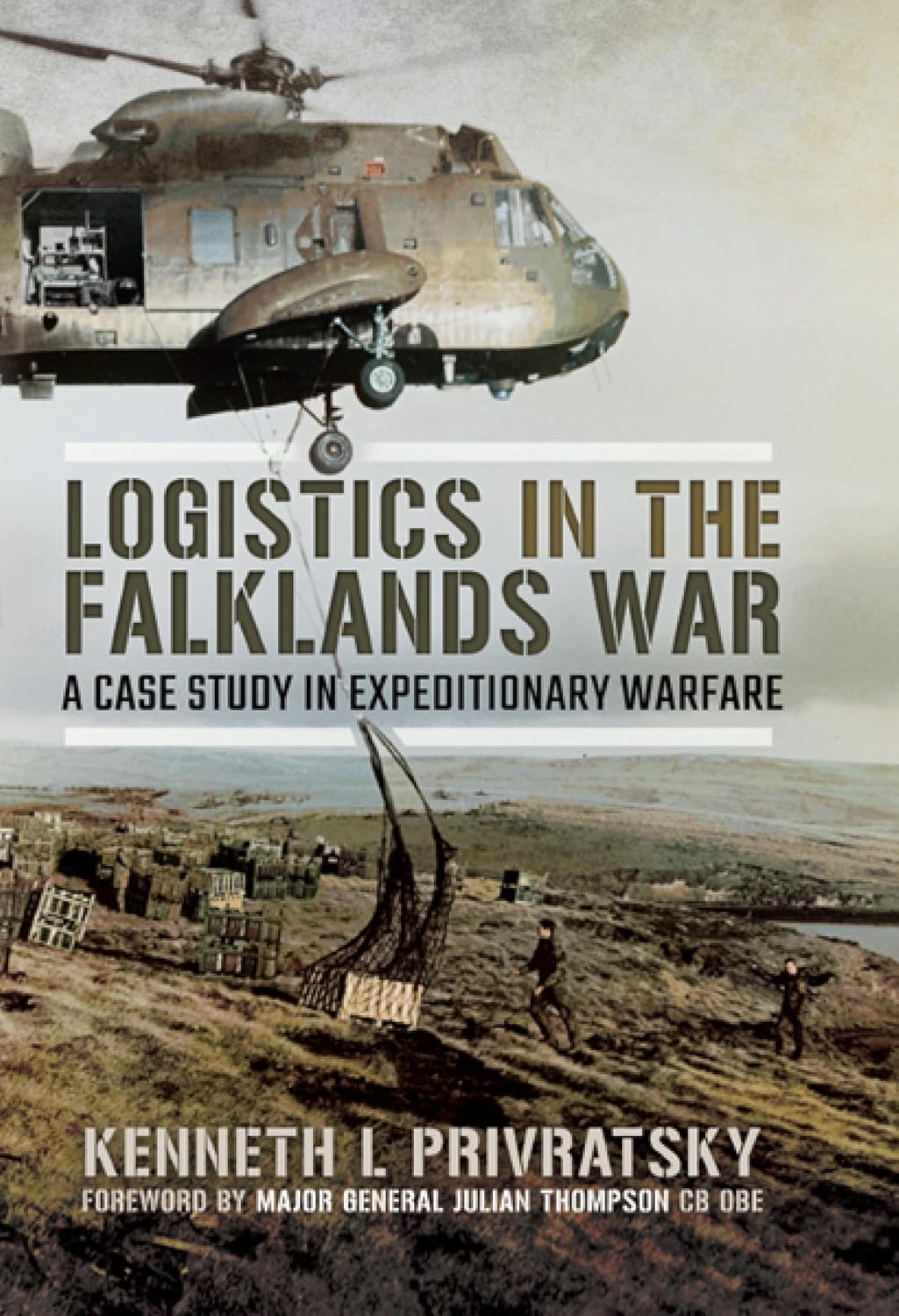
This post is largely highlights from a book I think everyone should buy, called Logistics in the Falklands War: A Case Study in Expeditionary Warfare by US retired MGen Privratsky.
[…]
I read the book as part of a long term project on the history of command and communications in the Falkland War. I couldn’t figure out how the British managed to pull off victory given the logistical challenges, so I purchased this book hoping to find answers.
Having now read the book I know WHAT the British did to win the war, but I have ZERO clue how they managed to make it work. The conditions and limitations they faced were so much worse than I thought.
I can honestly say this is the most interesting book I have read in years, which is a shock to me as I’m typically as bored by logistics as the next non-logistician. It was genuinely more engaging and entertaining than the battlefield accounts of that war.
The Logistics Challenges of the Falklands War
The task eventually given to the British task force was to retake the Falkland islands from the Argentines. This was a daunting task, both logistically and in terms of the actual ground combat.
Strategic Logistics
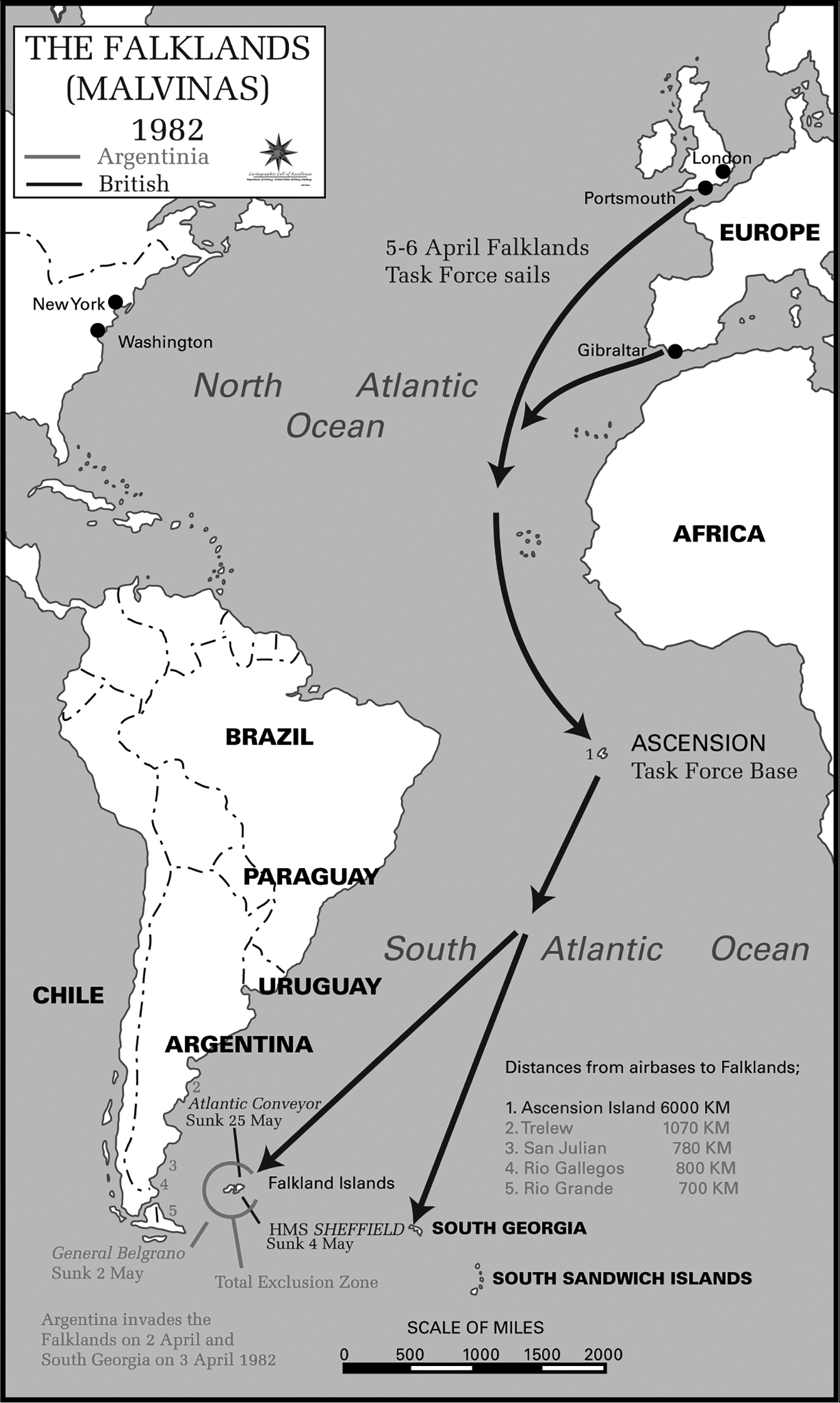
Strategic logistics is providing the lifeline of supplies, personnel, maintenance and health care between the home country and a staging area about 300km outside the combat zone. British strategic logistics involved a link from England to a small British held island half way between Brazil and Africa called Ascension. This link was 4,300 miles (6,900 km) by sea from Portsmouth. It had an airport and one jetty capable of handling one or two small commercial ships.
The next link was a further 3,600 miles (5,800 km) from Ascension to a logistics loitering area about 200 miles (320 km) short of the Falkland Islands. This was just a box drawn on a map in the middle of the ocean where the larger supply ships would loiter, outside the range of the Argentine air force.
[…]
Tactical Logistics
Tactical Logistics holds a few days’ supply (eventually the BSA/DSA held about 30 days supply ashore at San Carlos) but it’s main job is to move supplies, broken equipment, replacements and injured personnel between the BSA/DSA and the manoeuvre units.
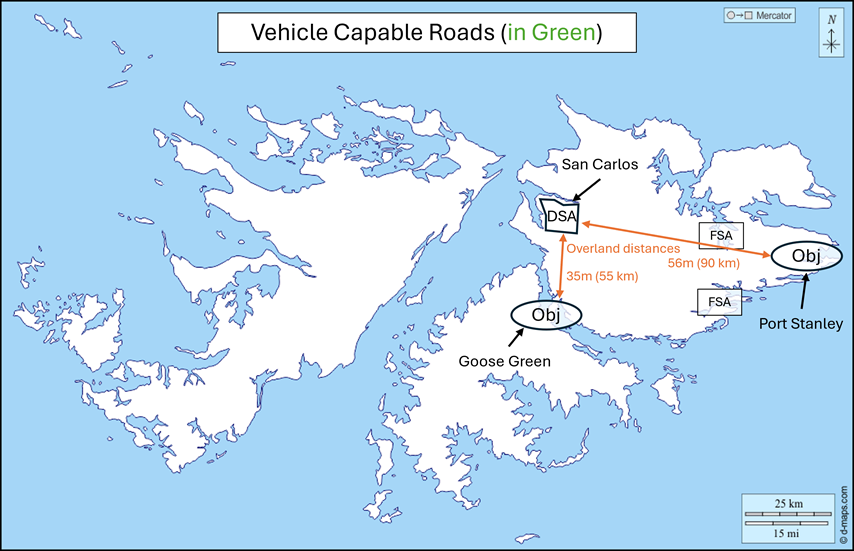
Normally the backbone of Tactical Logistics is trucks. Here there was a problem, as the image below is a comprehensive of all the paved and unpaved vehicle capable roads in the Falklands, excluding those in the vicinity of Port Stanley.
“Roads? Where we’re going Marty we don’t need roads.”
The details of tactical logistics take up several chapters of the book. The brief version is:
- The troops marched from the DSA to the Objective;
- For the attack on Port Stanley two days supply of Ammunition, Shells, fuel and shells were brought to the two Forward Support Areas (FSAs) along with skeletal field hospitals;
- Helicopters spent about 2 weeks bringing the artillery from the DSA to outside Port Stanley; and
- Limited emergency resupply of ammunition and casualty evacuation was available from the FSA to the troops in combat. However, most of the ammunition going brought and casualties evacuated rearward was done on foot over what can charitably be described as walking tracks.
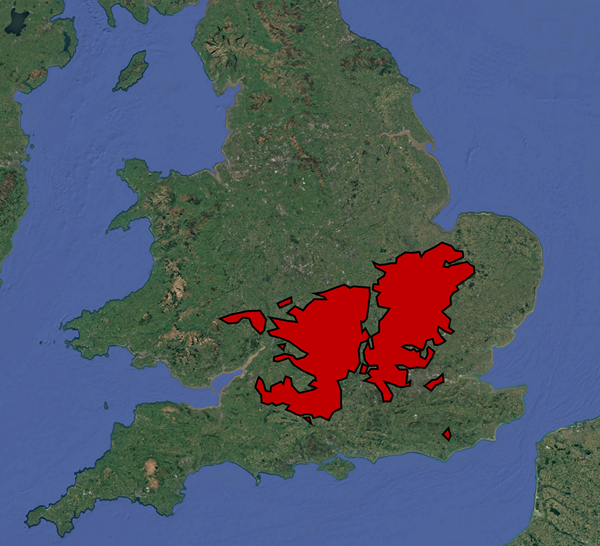
Tactical Logistics in the Falklands was so difficult because there were no roads and the distances involved were enormous. While the orange arrows above give a sense of the distances involved, the image blow shows the size of the Falkland Islands superimposed over England.
[…]
Conclusion
Prior to reading Logistics in the Falklands I couldn’t quite figure out how the British managed to pull a victory out the hat, given the challenges of projecting power literally on the opposite end of the globe. Having read the book I am now convinced the British military in 1982 was either the best improvisational armed force in history or under some kind of Divine mandate.1
- Maybe both.