
Adrian Goldsworthy. Historian and Novelist
Published 18 Sept 2024Continuing series looking at the HBO/BBC co production drama series ROME. We will look at how they chose to tell the story, at what they changed and where they stuck closer to the history.
April 10, 2025
HBO’s Rome – Ep 5 “The Ram has touched the wall” – History and Story
Comments Off on HBO’s Rome – Ep 5 “The Ram has touched the wall” – History and Story
QotD: Epicurus on death
If it is to succeed, Epicureanism must deliver us not only from physical pain but also from anxiety and mental anguish. The prospect of death, Epicurus knew, upset many people. Hence he and his followers expended a great deal of effort trying to remove the sting, the fear, from the prospect of death.
Epicurus offered two things to battle the fear of death: an attitude and an argument. The attitude was one of mild contempt: the right sort of people, he implies, do not get in a tizzy about things, not even about death. The argument is equally compelling. “Get used to believing,” he says, “that death is nothing to us.”
Why?
Because all good and bad consist in sense experience. Death is the absence of sense experience. Therefore, “when we exist, death is not yet present, and when death is present, then we do not exist. Therefore it is relevant neither to the living nor to the dead, since it does not affect the former, and the latter do not exist.”
How convincing is this?
Not very. Even if one were to grant the materialism that Epicureanism assumes, one might object that what one resents about death is not the simple absence of sense experience but the loss of the world: one’s friends, engagements, duties, involvements, as well as the panoply of sense experience that attends living.
Death also brings with it the prospect of pain and suffering: few of us can count on a pain-free exit, and that fact also helps to account for the bad reputation death has among non-Epicureans.
Finally, Epicurus and his followers say “death is nothing to us,” but they leave out of account the fact that human beings exist not simply as individuals but as part of a network of family, friends, and a larger community.
Epicurus taught that “self-sufficiency is a great good”. But who, really, is self-sufficient? Let’s say you are married with young children. Your death, quite apart from the inconvenience it might be thought to cause you, would also gravely affect your spouse and children.
There is not much room from children or spouses in the Epicurean philosophy. Why? Because they threaten to compromise the ideal of self-sufficiency. At bottom, Epicureanism is a workable philosophy only for a small subset of people. You must be unafflicted by life’s tragedies: grave poverty or illness or oppression makes being an Epicurean difficult. You must also be largely unafflicted by deep passions. A profound love of life is incompatible with Epicureanism, as is a profound love of one’s children.
The true Epicurean is more of a spectator of than a participant in life. The Roman poet Lucretius (c. 99-c. 55 BC) was one of Epicurus’ greatest disciples. In his long paean to Epicureanism “De Rerum Natura” (“On The Nature of Things”), Lucretius extolled the great sweetness of disengagement, of becoming a spectator rather than a participant in life. In a famous passage, Lucretius warns that “medio de fonte leporum surgit aliquid amari quod in ipsis floribus angat” — “even in the midst of the fountain of pleasure there is something bitter that torments us in the midst of our flowering”. Hence it is better to step back, to watch “the clash of battle / Across the plains, yourself immune to danger”.
One is left with two questions. The first is whether the immunity that Lucretius (like Epicurus) promises is real or illusory. Can we really remain mere spectators of our lives? The second question is whether, even if possible, such disengagement is finally desirable. Perhaps some battles can only be won by engaging with the enemy.
Roger Kimball, “Coronavirus, Flynn and Epicureanism”, American Greatness, 2020-05-02.
Comments Off on QotD: Epicurus on death
April 9, 2025
Stretching the RCN’s limited number of AOPS too thin?
I admit that I doubted the overall utility of the Harry DeWolf-class of Arctic/Offshore Patrol Ships when they were announced, but aside from the typical teething troubles of new ship designs they seem to be doing a good job at their initial taskings. Noah, on the other hand, proudly describes himself as “perhaps their [the AOPS] biggest online defender“, but he’s raising concerns that the Harry DeWolf class will soon be expected to pick up the slack as the Kingston-class Maritime Coastal Defence Vessels come to the end of their working lives with no obvious replacements under construction:
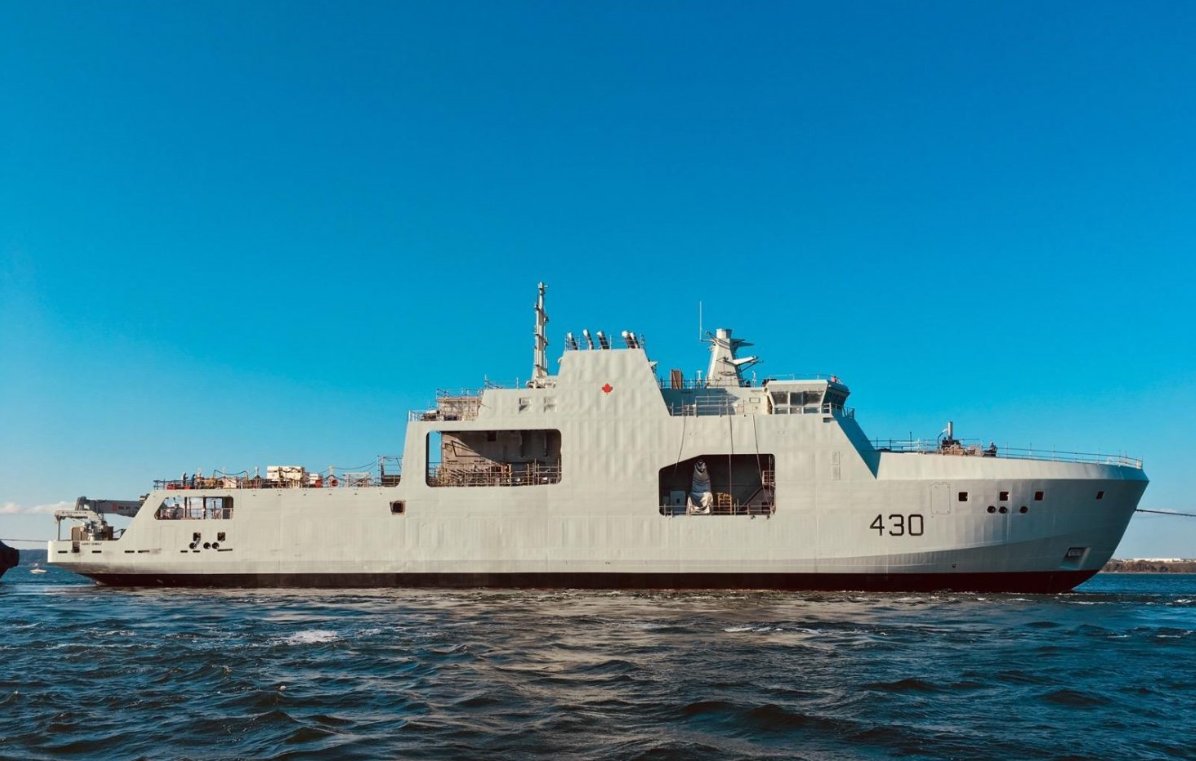
Arctic Offshore Patrol Ship HMCS Harry DeWolf shortly after launch in 2018. The ship was commissioned into the Royal Canadian Navy in June, 2021.
It’s a common fact that I love the AOPS.
I am perhaps their biggest online defender, despite the hate, the early issues, and the slander. They, to me, are the perfect vessel for what we require up North, modular, flexible, with a whole world’s of potential.
The six vessels that make up the DeWolfe-class have kept themselves busy, so busy that you often forget that they are, primarily, Arctic vessels. Now that isn’t to say they can’t take other tasks, nor should they be limited.
OP CARRIBE, a trip to Antarctica, hosts of exercises. The AOPS manage to be kept busy, while still finding time for trips up North, although not nearly as much as many would seem to like.
Their ability to hold containerized payloads has also seen them used as testbeds for various capabilities, including towed arrays for ASW, submarine rescue equipment, and in the future, RMDS and unmanned systems like Cellula Robotics’ Guardian AUV.
Indeed, the AOPS are slowly, though surely coming into their own. Yet it is those things it does well, that potential, that puts them in the spotlight among a fleet that is aging and soon set to dwindle in numbers over the next decade.
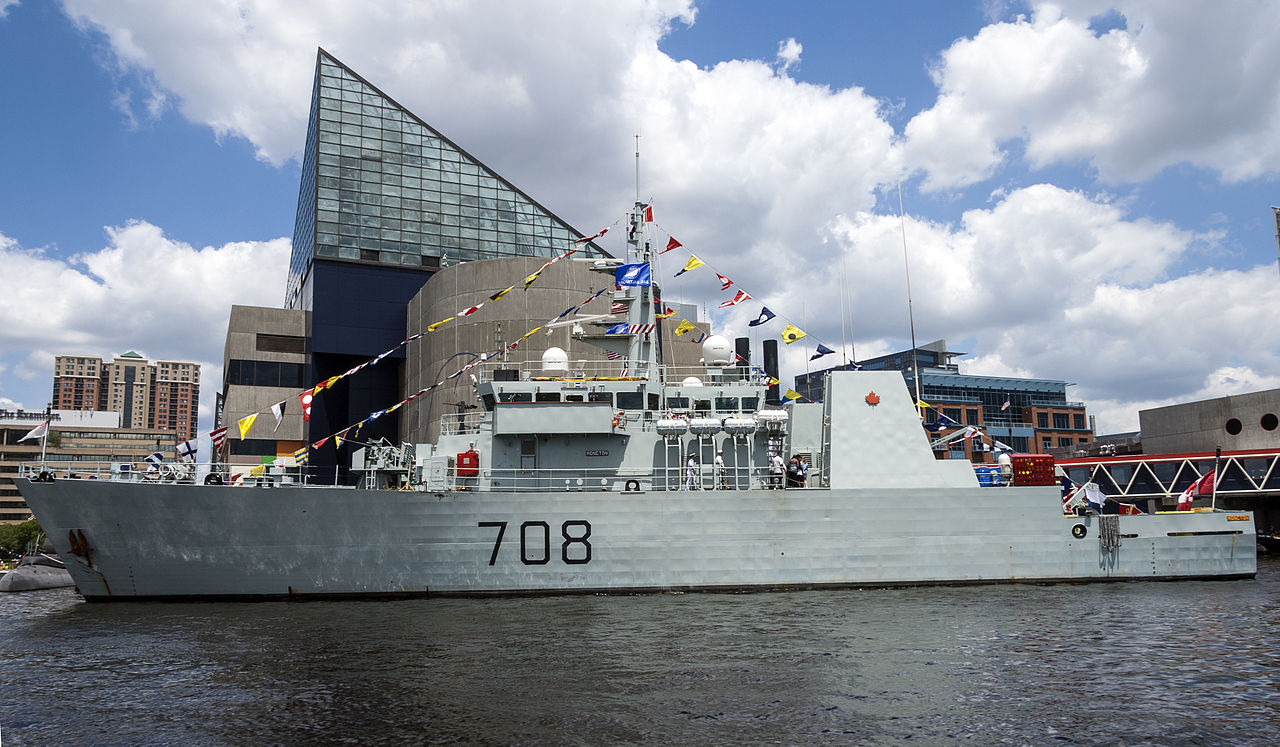
The looming writing off of the Kingston-class is coming faster and faster everyday, and soon, they will be gone. The little workhorses, whom performed far more than anyone could have asked of them.
The Kingston-class Maritime Coastal Defence Vessel (MCDV) HMCS Moncton in Baltimore harbour for Sailabration 2012.
Photo by Acroterion via Wikimedia Commons.The Kingstons have been a backbone, beyond the littoral-patrolling minesweeper they were envisioned as when the MCDV project was first stood up.
Yet the Kingstons as we know them are to be retired with no true replacement, their original tasks overtaken by other systems and automation.
Their original replacement, as part of the OPV project has evolved into the Canadian Multi-Mission Corvette, a vessel envisioned to one day be a true second-line combatant to complement the River-class destroyers.
Instead the tasks of the Kingstons shall fall onto the small number of AOPS in service. They will be tasked, not only to fulfill their role as Arctic Patrol ships, but now take the mantle of fulfilling a host of growing secondary tasks that has been filled by these cheaper, smaller vessels.
Add on a Halifax-class that is struggling to stay afloat, bouncing around various states of condition and expected to keep sailing for another decade. Even as the River enter service, the tasks of the Kingstons will not be filled by them.
It’s a lot of strain and demand to put on vessels that are not only significantly larger than the Kingstons, but also significantly more expensive to operate on fulfilling tasks like OP CARRIBE, where while they may be very valuable assets, might not be optimal in lieu of smaller vessels that can easily fill the same role just as efficiently.
On that note it also can’t be understated that the more we put on the AOPS, the more we take it away from its Arctic taskings, and the more we expect of these six vessels to do almost every secondary task, the more we create gaps in our continental defence.
Six AOPS not only for Arctic Patrol, but MCM, Submarine Support, Seabed Warfare, things like OP CARRIBE … How can we expect these vessels to remain in service for the next quarter-century with all this strain?
We don’t talk about these vulnerabilities a lot, but as it stands Canada is severely vulnerable to adversaries and foreign actors ability to leverage asymmetric methods to limit our ability to respond abroad and severely harm Canada’s strategic infrastructure.
Comments Off on Stretching the RCN’s limited number of AOPS too thin?
The Korean War Week 42 – Seize Hwacheon Reservoir? A Dam Good idea – April 8, 1951
The Korean War by Indy Neidell
Published 4 Apr 2025Operation Rugged is in full swing, and it’s taking a decent amount of territory, but Matt Ridgway is worried about the possibility of the enemy blowing the dam at the Hwacheon Reservoir and flooding his army, so he gets set to try and soon take it. Meanwhile there’s an explosion in Congress in Washington DC, when the Minority Leader openly reads Douglas MacArthur’s letter of his plans for the war that are diametrically opposed to those of President Harry Truman. Truman realizes that he’s going to have to remove MacArthur from UN command.
Chapters
00:57 Recap
01:31 When to Fire MacArthur?
03:53 Joe Martin Speaks
07:11 Operation Rugged
09:23 The Hwacheon Reservoir Dam
13:35 Summary
13:51 Conclusion
(more…)
Comments Off on The Korean War Week 42 – Seize Hwacheon Reservoir? A Dam Good idea – April 8, 1951
“South Africa is what happens when a country becomes ungovernable”
Niccolo Soldo’s weekend roundup includes some quotes from Lawrence Thomas on what he terms a “racketeer party state“, what the “Rainbow Nation” of South Africa has degenerated into since the end of Apartheid:

South Africa is what happens when a country becomes ungovernable. From endemic sexual crime to farm murders, rolling blackouts, and expropriation, the rest is just the details. What has come to be termed “South Africanization” is not the failed development of a Third-World nation such as Afghanistan or Somalia, but the structural de-development of a once fully modern state that had its own nuclear weapons program. President Trump’s support of Afrikaner farmers has brought global attention to the decaying state of the country and is perhaps the most high-level recognition yet that the 1990s “Rainbow Nation” dream is dead. What’s strange about it all is how much of it happened on purpose.
What may be worse is that the very system of law and government itself has become an instrument to be captured and used to further the mass looting of the country. South Africans of all races inherit a Western political culture and economy. The average South African experiences a strong civic identity, highly active political parties, popular national media networks, a market economy, and a parliamentary constitutional order. The last thirty years saw a coalition of political actors, patronage networks, and organized criminal gangs seize control of and use all the infrastructure of modern government for their own ends.
[…]
While songs like “Kill the Boer” at rallies tend to grab headlines, the most consequential development of late is the passing of expropriation without compensation into law by the supposedly moderate President Cyril Ramaphosa. In addition to further eroding property rights, it emboldens a widespread movement that sees land redistribution as the sole resolution to the country’s racial conflict and views the presence of any white population as fundamentally illegitimate. The radicalization of race politics is the means through which political fights are won, since it plays on the country’s major divides and wins over those who feel left out of the spoils.
On the ground, reports tell of ANC officials tacitly allowing invasions of private and public land by squatters. Occupations of this sort have sometimes preceded the farm murders which have gained media attention internationally, and squatters have now begun to invoke the Expropriation Act. Such groups become the shock troops of political pressure: they can harass and pressure the occupants of the lands they occupy, or worse, while becoming a media story about the “landless oppressed” used to justify broader government action. The broad facilitation of ground-level conflict and crime by those with political power is the defining feature of South Africanization.
[…]
In other words, decay is a burden without benefit. There is no “rock bottom”. Business, political organization, social fabric, and all other forms of Western cultural life just face increasing costs. Some are direct, while others are opportunity costs: how much doesn’t happen because almost no one can guarantee electricity? In a relatively developed country, there’s still much more to break down and expropriate.
The combination of social progressivism with an economic model of managed decline has become orthodoxy in many establishment parties across the developed world. South Africa is a study of the political phenomenon in its advanced stage and a demonstration of what is at stake in defeating it in the rest of the Western world. Flip Buys, leader of the Afrikaner trade union Solidariteit, was likely prophetic when he foresaw that South Africa would become home to the “first large grouping of Westerners living in a post-Western country”.
Emphasis from Niccolo’s excerpts.
Battle of Saipan 1944: Total War in the Pacific
Real Time History
Published 15 Nov 2024In June 1944, an armada of warships and landing craft is getting ready for D-Day. Thousands of American soldiers are about to attack a prepared enemy with formidable defenses. But this isn’t Normandy, this is the island of Saipan. And the bloody battle there will bring total war to the Pacific.
Chapters:
00:00 Why the US Landed on Saipan
01:46 American Plan for Saipan
03:38 Japanese Defenses on Saipan
05:08 Preparations for D-Day on Saipan
06:39 D-Day on Saipan
08:46 Marine Combat Shotguns on Saipan
14:48 Japanese Counterattack
16:30 D-Day Plus 3 on Saipan
17:01 Battle of the Philippine Sea
20:45 D-Day Plus 7-9 on Saipan
22:33 D-Day Plus 11-15 on Saipan
24:10 Japanese Banzai Charge on Saipan
26:46 Civilian Casualties on Saipan
27:57 End of the Battle of Saipan
28:48 Battles of Tinian and Guam
30:04 Epilogue
(more…)
Comments Off on Battle of Saipan 1944: Total War in the Pacific
QotD: Legitimacy and revolution
But though the English Civil War produced the first truly revolutionary regime, they were able to effectively co-opt most of the old regime’s symbols …
Let’s back up for a sec: As you recall, a revolution seeks to replace a people’s entire mode of living, whereas rebellions are just attempted changes of government. England had faced many rebellions before 1642, some of them successful, by which I mean they replaced one ruling faction with another. The usurpation of Richard II’s throne by Henry IV was extremely problematic, political theory-wise, but nobody was openly challenging the institution of monarchy as such. So too with the Wars of the Roses, the Peasants’ Revolt, the Pilgrimage of Grace, and so on: Those were all about the person of the king and his methods of rule, not about the legitimacy of his government.
The English Civil War was different. Charles I wasn’t the first English king executed by rebels (the aforementioned Richard II was starved to death; Henry VI died under extremely suspicious circumstances in the Wars of the Roses), but he was the first one found guilty of treason. To the kingdom he was king of. That’s a far different thing than “oopsie, I guess we forgot His Majesty’s lunch for two months running” or “we sent a whole bunch of goons with knives to the Tower, only to find His Majesty dead of melancholy”. A king who is guilty of treason is necessarily somehow inferior to his own kingdom, which forces us to confront the questions of 1) what, exactly, IS the kingdom? and 2) where does its legitimacy come from?
That’s why the rule of first the Council of State, then Lord Protector Cromwell, was a true revolution. In both cases, it was all too obvious where their legitimacy came from: out of the barrel of a gun, as Mao would so pithily put it 300 years later. And thanks to that power, they were free to remake the “lifeways” (as anthropologists say) of the people how they saw fit. Puritan England was as close to a totalitarianism as 17th century technology and information velocity would allow …
… but that wasn’t very close at all, as it turns out, and so most people in most places could get on with their lives pretty much as before. And even for those people directly under the State’s gaze, the Protectorate looked enough like the old monarchy that if you squinted and tilted your head sideways, you couldn’t really see the difference.
Severian, “Repost: National Symbols”, Founding Questions, 2021-10-27.
Comments Off on QotD: Legitimacy and revolution
April 8, 2025
Free trade, the once-and-future left wing cause
Let’s join Tim Worstall on a brief trip into economic history, when free trade was a pet issue for the left (because it helped the poor and the working class) and protectionism was the position of the right (because it helped the wealthy and the aristocracy):
The people who suffer here are the consumers in the US. The people who benefit are the capitalists in the US. Which is why free trade always has been a left wing position. True, many lefties in recent decades have somewhat strayed from the one true path but given that it’s Trump imposing them some seem to be coming back. Although how much of that is about TDS and how much about reality is still unknown.
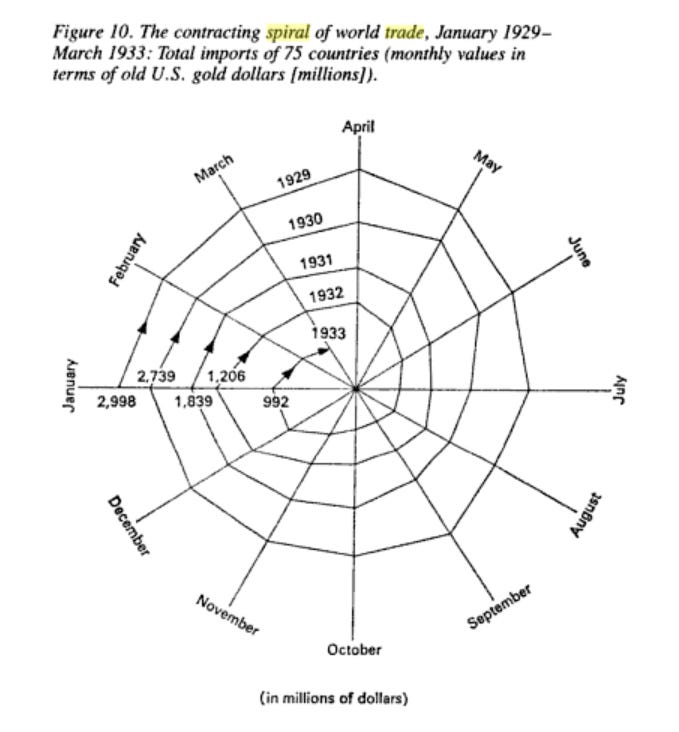
We’ve also got that little point about what happened last time around:
That all started with eggs. There’s fuss about eggs in the US at present. My, how history echoes, eh?
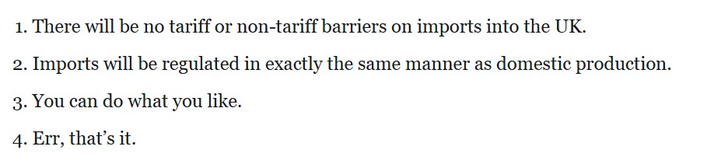
There’s only the one logical, moral or ethical position to have upon trade. As I’ve pointed out before with my model trade treaty:
Note that this applies to all ideas about tariffs — with the one exception of national security where we are indeed willing to give up direct economic benefit in order to keep the French at bay. To tariffs for industrial policy, tariffs for Green, tariffs for trade wars, tariffs as revenue raisers, tariffs, see?
We should remind ourselves that the opposition to Adam Smith and his ideas came from the conservatives. Cobden and the Manchester Liberals were the left wing betes noires of their day. The Guardian was actually set up as a newspaper to push their ideas including that dread free trade.
We did actually get free trade too, in 1846. Which, not by coincidence, is when the Engels Pause stopped happening. Which was, itself, the observation by Karl’s buddy that while the British economy had grown lots — industrialisation, capitalism, etc. — the living standards of the base people hadn’t, not very much. Of course, he was missing a bit — that ability to have a change of cotton underwear even for skivvies (aha, skivvies for skivvies even …) would only feel like an advance to those who had, previously, had to wear woollen knickers. This changed, living standards for the oiks began to rise, strongly, once we had free trade.
Now, there are a few of us still keepers of that sacred flame. But just to lay out the basic argument.
Average wages in an economy are determined by average productivity in that economy. Trade doesn’t, therefore, change wages — not nominal wages that is. Trade does change which jobs are done. That working out of comparative advantage means that we’ll do the things we’re — relative to our own abilities — less bad at and therefore are more productive at. Trade increases domestic productivity and thereby, in the second iteration, raises wages.
Trade also — obviously — gives us access to those things that J Foreigner is more productive at than we are — those things that are cheaper if Foreign, J, does them. This raises real wages again because we get more for our money. We’re better off. This is true whatever the tariffs our own exports face.
Finally, trade doesn’t affect the number of jobs in an economy — that’s determined by the balance of fiscal and monetary policy.
So, who benefits from trade restrictions? Well, the people who lose out from free trade are the domestic capitalists. Pre-1846 it was the still near feudal landlords in fact. What killed those grand aristocratic fortunes was not war nor tax — pace Piketty et al — it was free trade which destroyed agricultural rents.
The same is true today. The people who benefit from tariffs are the domestic capitalists who get to charge higher prices, make larger profits, as a result. The people who lose are all consumers plus, over time, all domestic workers as well. Tariffs increase the capitalist expropriation of the wages of the workers that is.
Tariffs are a right wing, neo-feudal, impoverishment of the people. Free trade is the ultimate leftypolicy to beat back the capitalists.
Comments Off on Free trade, the once-and-future left wing cause
The Broken Promise of Free Palestine – W2W 19 – 1948 Q1
TimeGhost History
Published 6 Apr 2025By 1948, Britain’s conflicting promises in Palestine have created a powder keg ready to explode. Contradictory pledges made to Arabs and Zionists during WWI set the stage for rising tensions, violent uprisings, and ultimately civil war. As Britain prepares to withdraw and the UN votes for partition, violence escalates, and the hope for a peaceful, free Palestine shatters into chaos. How did the broken promises lead to such tragedy?
(more…)
Comments Off on The Broken Promise of Free Palestine – W2W 19 – 1948 Q1
Mark Carney explained how he viewed the world in his book Values
It’s worth considering what Mark Carney wrote about his beliefs before becoming prime minister and how he’s campaigning right now:
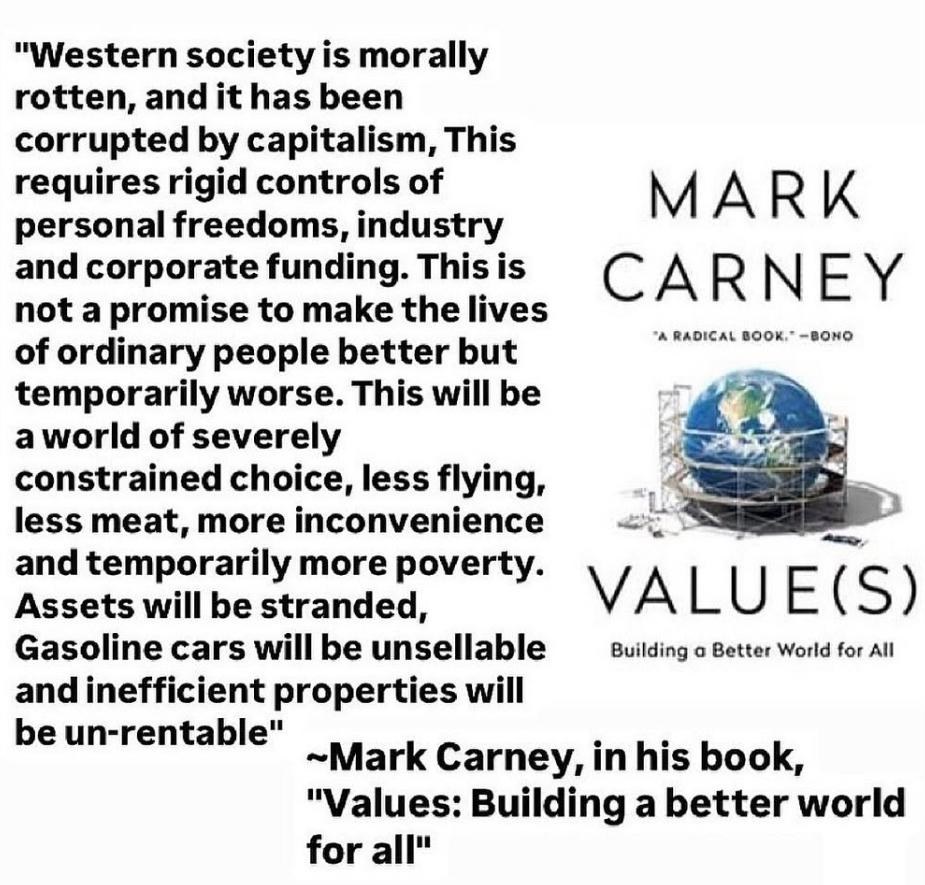
For those who haven’t had the misfortune of parsing through Mark Carney’s Values, it reads like a sermon from a high priest of globalism — polished, preachy, and packed with ideas that should send shivers down the spine of anyone who cares about Canada’s economy, especially Western energy producers.
Writing as the former Bank of Canada governor and a darling of the Liberal elite, Carney pitches a vision of “sustainable finance”, net-zero absolutism, and heavy-handed regulation. To the National Citizens Coalition, it’s clear: this isn’t a roadmap to prosperity, it’s a wrecking ball aimed at the heart of Canada’s resource sector and the West’s economic lifeline.
Start with Carney’s obsession with “revaluing value”. In Values, he argues markets should prioritize climate goals over profit, pushing financial institutions to choke funding for oil and gas.
For Alberta and Saskatchewan, where energy employs tens of thousands and pumps billions into the economy, this is a death knell dressed up as virtue.
Western producers aren’t just businesses; they’re the backbone of communities, powering schools, hospitals, and homes. Carney’s disdain for fossil fuels ignores their role in keeping Canada competitive while our allies and adversaries keep drilling. His plan? Starve the sector, stranding assets and jobs, all to appease international green lobbyists in European nations with nationalized economies on the road to being as disastrous as Canada’s.
Then there’s his love affair with regulation. Values champions policies just like Bill C-69 — the “No More Pipelines Bill” — which Carney has refused to repeal. He sees it as a tool to enforce his net-zero utopia, but for the West, it’s a padlock on progress. Pipelines that could carry Canadian oil to global markets sit stalled, leaving producers at the mercy of low prices, foreign competitors, and now, tariff threats.
Carney’s mental framework both then and now doesn’t just stop projects, it signals to investors that Canada’s energy sector is a no-go zone. The result? Capital flees, jobs vanish, and the West pays the price for the lofty ideals of a London and Manhattan banker, who spends only part of his time in Canada — specifically, Ontario and Quebec.
Dan Knight on Carney’s swing through some British Columbia ridings this week:

A mock campaign sign for the Liberals spotted on social media.
Mark Carney rolled into Victoria this week with the swagger of a man who’s never missed a wine-and-cheese reception in his life and delivered what the Liberal brain trust likely considers a “bold vision” for Canada. But peel back the banker buzzwords and Churchill cosplay, and what you really got was a cringeworthy display of delusion, detachment, and recycled globalist dogma.
He opened his mouth and immediately signaled his marching orders: “clean energy”. Not once. Not twice. It was practically every other sentence. Because when you’re out of ideas, just say “green transition” on repeat and hope nobody checks the receipts.
He’s not just pushing the same failed Liberal climate ideology — he’s doubling down on it.
Carney promised to turn Canada into a “clean energy superpower” — without explaining how, exactly, we get there when his party has spent years shutting down oil and gas, blocking pipelines, and handing our resource wealth to the Americans.
This wasn’t new policy. It was the same Liberal fantasy that has already gutted Alberta, choked investment, and driven electricity prices through the roof — just ask Europe how that’s going. And when it comes to reopening auto plants or restoring manufacturing jobs? Nothing. Not a plan, not a word, not a clue.
And don’t worry — when Trump’s tariffs hit our industries, Carney says we’ll respond with “retaliatory tariffs”. Sounds tough, until you remember who actually pays those. Working Canadians. Line workers. Parts manufacturers. People trying to keep the lights on while Ottawa plays global economic chicken.
Carney’s big idea for recovery? Just keep handing money to the Liberal-connected elite.
He promised to “give back” — and by that, he means pouring another $180 million into the CBC, the same taxpayer-funded mouthpiece that’s been running interference for the Liberals for nearly a decade. This comes after ArriveCAN, the $60 million QR code boondoggle funneled through Liberal contractors, and countless other slush funds masquerading as “public service”.
While the working class is bracing for a made-in-Ottawa recession, Carney’s pledging more green slogans, more centralized control, and more taxpayer money to keep the illusion alive.
What did Alexander the Great eat?
Tasting History with Max Miller
Published 26 Nov 2024Game hens roasted with a hazelnut and herb sauce
City/Region: Rome | Macedonia
Time Period: 1st CenturyThrowing lavish feasts was one foreign custom that Alexander the Great was all too happy to adopt. We don’t have any recipes from Alexander’s court, so I looked to the ancient Roman cookbook, De re coquinaria, to find a recipe that used ingredients that Alexander would have had.
The herbs and seasonings in the sauce combine to form a new complex flavor that is delicious. The hazelnuts are prominent and form a wonderful crust on the game hens, and the garum adds its distinctive savory umami note. You can either make the sauce and serve it forth with poultry that you’ve already cooked, or roast the birds with the sauce like I did.
Aliter Ius in Avibus, Another Sauce for Birds:
Pepper, parsley, lovage, dried mint, safflower, pour in wine, add toasted hazelnuts or almonds, a little honey with wine and vinegar, season with garum. Add oil to this in a pot, heat it, stir in green celery and calamint. Make incisions in the birds and pour the sauce over them.
— Apicius de re coquinaria, 1st century
Comments Off on What did Alexander the Great eat?
QotD: The sad plight of the modern day “radical”
Whatever the cause, they cannot “smoak a jest”, recognize other forms of humour, or distinguish the parts of speech. This makes them appear batty (in the old sense, when it would have attracted institutional attention). They are frequently convulsed with anger, then sullen when they have exhausted themselves. Alas, they cannot be left in normal company, for they will immediately and raucously demand a “safe space”, and then not go away. They will accuse the normal person of “racism”, “fascism”, “sexism”, and “microaggressions”. Their spittle represents a health hazard.
It is hard to know what to do with these people, in the absence of the traditional arrangements. When world markets open again, we could sell them into slavery. But in the meantime, I suppose, we must keep them in group homes, ideally under armed guard. Maybe feed them okra; surely there is a surplus, and I’m told it has calming properties.
But that’s just me, always looking for solutions.
David Warren, “Keeping one’s peace”, Essays in Idleness, 2020-04-18.
Comments Off on QotD: The sad plight of the modern day “radical”
April 7, 2025
Those brave, rare contrarians willing to risk everything by … criticizing Trump?
Chris Bray is deeply concerned that a free society seems unable to produce even a mild array of differing political opinions these days:
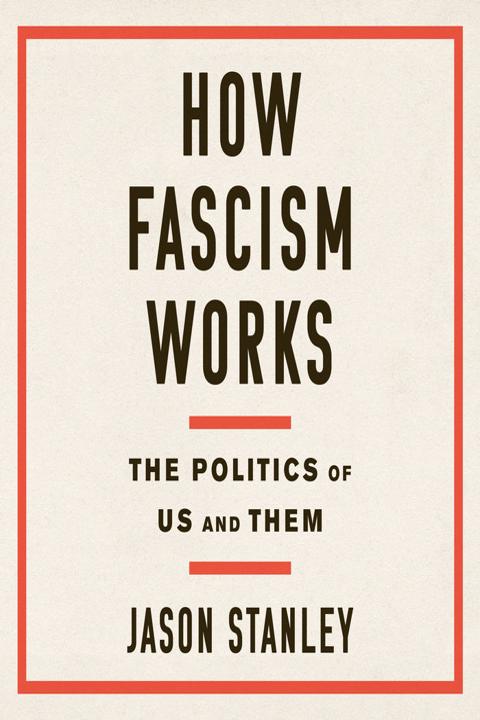
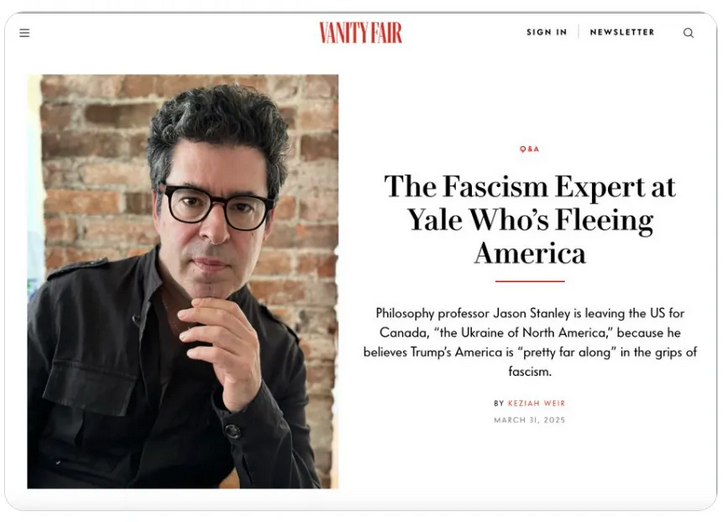
I was at a small independent bookstore today, the exact kind of place that’s supposed to curate a culture of argument and criticism. The prominently displayed books about politics and current events were Timothy Snyder’s book about the terrifying rise of American fascism under that monster Trump, Jason Stanley’s book about the terrifying rise of American fascism under that monster Trump, Anne Applebaum’s book about the terrifying rise of American fascism under that monster Trump, and a bunch of other books by prominent journalists and professors about … okay, try to guess.
On the other side of that exchange, the books by public intellectuals offering a favorable or even neutral view of Trump and the Trump era were … not there? Maybe I just missed them. So every prominent figure moving to the cultural foreground from academia and “mainstream” journalism — every brave contrarian, every freethinking intellectual warrior rising against the prevailing fascist sentiment of the age to speak in his own voice as a free person — thinks and says the same things, the same ways, with the same evidence and the same framing and the same tone and in the same state of mind. They’re so free and brave and iconoclastic that they’re essentially identical, chanting in intellectual unison.
Forget Trump for a moment and answer this question in general: If you’re living through an era in which every prominent journalist and academic and artist says exactly the same fucking thing all the time, what kind of moment are you living in? Would you call people who all chant in unison the resistance?
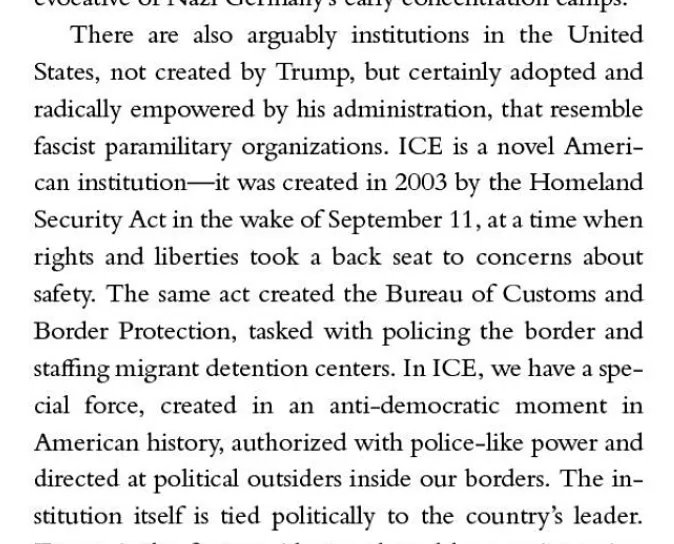
Any engagement with these books reveals their emptiness. Snyder, Stanley, Applebaum, whatever: pick a book, then pick a page. See if it makes sense. Here, I spent a few nauseating minutes today with brave Jason Stanley’s book How Fascism Works: The Politics of Us and Them. Here’s a paragraph from the introduction to the paperback edition:
ICE is novel: It was created after 9/11, by the same law that created a bureau tasked with border protection: a “special force, created in an anti-democratic moment”.
I can’t calibrate the degree to which this person is a fool or a liar, but let’s go with both. The Border Patrol was created in 1924, and was itself the successor agency to a different organization that was created in 1904. You can read that history here. The post-9/11 organization that supposedly created this novel American institution merely reorganized a century-old American institution, making it not the least bit novel. Before ICE, we had INS. Yes, we had a border before 2003, and we policed it. This isn’t a novel concept at all, as it has operated in any form of practice.
You can go through that single amazing paragraph sentence by sentence and tear every last bit of it apart, at the lowest, simplest factual level. The argument isn’t wrong: all of it is wrong, every layer of fact and interpretation. This man is an absolutely enormous jackass. And he’s … important. An important public intellectual, you see.
Comments Off on Those brave, rare contrarians willing to risk everything by … criticizing Trump?
Dambusters Part 1 – The Battle of the Ruhr
HardThrasher
Published 5 Apr 2025The background to the Dams raid; how it came into being and how it fitted into the assault on Nazi Germany. In which we discuss Banes Wallis, Arthur Harris and a man called Winterbotham.
THESE LINKS ARE ONLY FOR THE SERIOUSLY SEXY
Merch! – https://hardthrasher-shop.fourthwall.com
Patreon – https://www.patreon.com/LordHardThrasherBibliography
James Holland – Dambusters: the Races to Smash the Dams 1943
Max Hastings – Chastise – The Dambusters Story
Alan Cooper – The Battle of the Ruhr
Adam Tooze – The Wages of Destruction
Martin Millbrook and Chris Everett – The Bomber Command War Diaries
Edward Westerman – Flak German Anti Aircraft Defences [sic] 1914-1945
Tami Davis Biddle – Rhetoric and Reality in Air Warfare
Donald A Miller – Masters of the Air
Comments Off on Dambusters Part 1 – The Battle of the Ruhr
Confessions of a book-hoarder
In the latest SHuSH newsletter, confessed book-hoarder Ken Whyte has a confession to make:
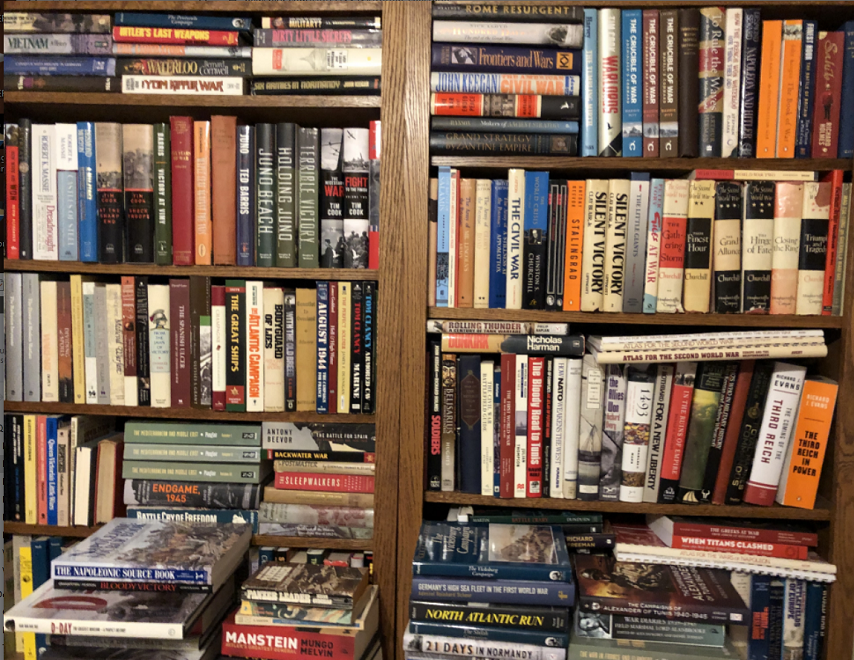
A small portion of my own book hoard. These shelves at least have a bit of commonality to them, unlike a lot of other shelves I could share.
I’ve been trying to reduce my hoard of books in recent months and it’s not going well.
And let’s be clear, it is a hoard, not a collection. A collection implies the books were selected with deliberation; that they are organized around subjects, themes, authors; that they are displayed with care. In a word, curated.
My books have been accumulated over time, some for work, some for pleasure. More were acquired impulsively than purposefully. Most people would not discern any organizational principles on my shelves. The fiction tends to be separate from the nonfiction, and books I’ve used to write books of my own tend to be grouped together, but not always. Hardbacks are mixed with paperbacks. I have some first editions that may be moderately valuable, although I’m not positive about that and I’ve never checked.
The hoard has been culled on occasion, usually in response to domestic complaints. The last major cull was a decade ago and since then I’ve been on a book diet, meaning that I can’t bring a new book home without getting rid of one already there.
I cheat on my diet all the time.
This part of the post could just as easily have been written by me … except that my sudden ejection from working life ten years back put me on an involuntary book-buying hiatus. From my peak buying years where I’d be accumulating multiple volumes per week, I was down to less than half a dozen new (or new-to-me) books through all of 2024.
That I’ve enjoyed a surplus of space for most of the last six years — the Sutherland House office is just two blocks from home — has abetted the cheating. The first week I took possession of the office, I lined it with solid metal shelves in optimistic anticipation of Sutherland House books to come. A good number of those shelves soon filled with boxes of personal books I could no longer keep at home and couldn’t bring myself to dump (along with a rather impressive archive of materials related to the founding of the National Post relocated from home to office for similar reasons).
Now Sutherland House is producing more books in one year than we produced in total over our first three years, and there are more of us in the office. Space is getting tight. I’ve been telling myself every weekend since before Christmas that I need to reduce the hoard.
It should not be difficult to jettison a quarter, a third, or even half of an impulsively amassed, haphazardly organized pile of books. You just face the shelf and pull out the ones you least want to keep. First to go are the never-cracked: anything that’s been sitting on the shelf for more than a decade without an attempt at reading. Next, books you’ve read and you know you’ll never want to read again. Then the yellowest paperbacks. Those three rules alone ought to get rid of half.
On a Saturday afternoon in mid-March. I faced a bookcase of eight shelves with about forty books per shelf. I challenged myself to get rid of one book for every book I kept. An hour later, I had half the books on the floor. Hurrah.
The next step was to put the unwanted books in boxes and haul them away.
They’re still sitting on the floor.
[Raises hand sheepishly] Yeah, I’ve got a few piles of books in various rooms of the house that failed the initial culling, yet somehow never made their way to the next stage of leaving the house.
I walk past them regularly and doubt my choices. I ask myself what harm would come from putting them all back on the shelves — makes more sense than leaving them on the floor. I wonder if a better solution to my storage problems wouldn’t be more shelves, or a storage locker.
I’ve read all the reasons why it’s difficult to get rid of books (or records, or art, or collections or hoards of any variety). The individual objects are companions, the scaffolding of your intellectual and emotional life, tokens of time, experience, identity, aspirations. Psychologists talk of loss aversion, the endowment effect that makes things feel more valuable simply because you own them, and the sunk-cost fallacy that leads you to hold onto and keep investing in things because you’ve already invested in them.
None of that makes me feel any better about my hoard (or the more than 10,000 photos and 30,000 emails I have on my laptop). The psychological explanations are just embarrassing.
When I’m levelling with myself, I can admit there are less than a hundred books I own where it genuinely matters to me to keep my particular copy. The rest are fungible. I freely admit that if I were to later miss any individual title I discarded, I could chase down a replacement in a day (in a minute electronically) at modest expense.
It used to matter to me to be surrounded by books in my living space. Now that I’m surrounded by books in my work space, not so much. For every instance when I spot a title on a shelf at home and think I really want to read that one someday, there are many more instances when I look at a whole shelf and think I’m never going to read any of these—they’re just taking up space. And I have a dust allergy, for christ sake.
Yet I can’t seem to do anything about it.
Comments Off on Confessions of a book-hoarder


