
World War Two
Published 3 Apr 2025Today Astrid and Anna explore the Simple Sabotage Field Manual, a top-secret WWII guide that taught ordinary people how to disrupt the Nazi war machine. From factory slowdowns to derailed trains, they show how small acts of sabotage targeted Hitler’s regime, and how resistance often came from unexpected places.
(more…)
April 4, 2025
Wine, Urine, Paperclips: America’s Secret Weapons of WWII
Comments Off on Wine, Urine, Paperclips: America’s Secret Weapons of WWII
Alberta plays a separate hand
In The Line, Jen Gerson discusses the disconnects between “Team Canada” (such as it is) and Alberta that now have Alberta sending its own delegation to talk to … someone … in Washington DC:
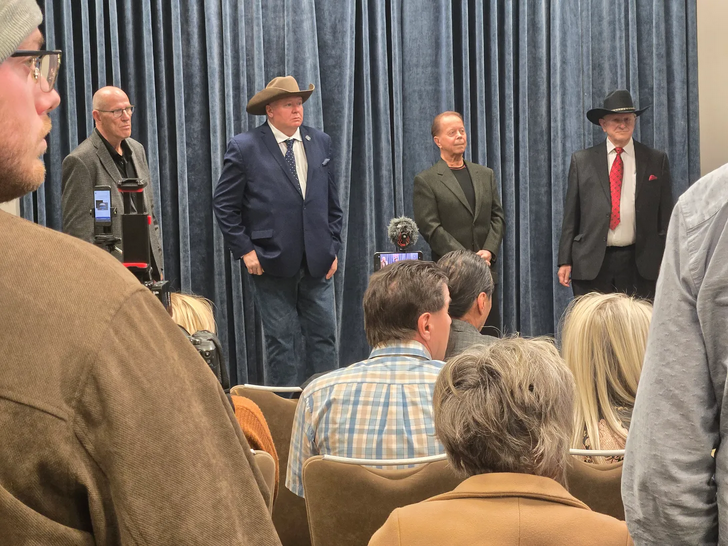
Photo by Jen Gerson, The Line.
Alberta’s periodic bursts of secessionist sentiment operate a little like the aurora that occasionally flash across the prairie sky, in tune with decades-long solar flare cycles. The phenomenon is always fascinating, yet it’s always impossible to know how seriously to take it. It waxes and wanes in line with a number of factors, only some of which can be predicted — oil prices, the partisan stripe of the federal government, and the introduction of new regulations.
We are getting another show, of late, and The Line has responded by commissioning some fresh hot polling numbers to determine just how willing Albertans are to take up U.S. President Donald Trump’s call of becoming the 51st state.
It is not a surprise that this is being talked about again. We appear to be on the verge of a potential fourth term of loathed Liberals — after being all but promised a Conservative one. Trump has declared economic war, and openly undermines our sovereignty. Alberta has elected a premier who seems to be willing to go much further than leaders past to both threaten the federal government, and align herself with Americans. Danielle Smith has made several appearances in conservative American media institutions to argue against tariffs; she also made a public appeal to her Quebec counterpart to create a common front for greater provincial autonomy. This after threatening to form another “Fair Deal” panel if a future federal government doesn’t meet a list of requests.
In the midst of this revived inter-provincial tension, an Alberta delegation has formed, insisting that it will be travelling to the U.S. in coming weeks to meet with members of the Trump administration.
Who are they meeting? Well, they won’t say.
“The response that we’re getting, quite frankly, from the present U.S. administration is very positive. We’ve been advised that the interest in what we’re doing is extremely high, and certainly everything that we’ve seen indicates that this is far from a fool’s errand,” said Jeffrey Rath, an Alberta lawyer leading the delegation, during a press conference last week held just off the lobby of a well-known Calgary hotel. The conference wasn’t well publicized, and it was obscurely signed — if you knew, you knew — and was thus populated by about 80 fellow travellers of the Alberta independence movement.
“We’ve been advised by the people we’re speaking to in the States to not disclose who it is that we’re talking to at this point,” Rath said. But the goal is clear. They’re going to Washington to meet with representatives of the Trump administration to “determine the level of support that the government of the United States would be prepared to provide to an independent Alberta.”
Admittedly, they’re only independent citizens — former Premier Jason Kenney called Rath a “treasonous kook” — though the press conference featured one former Conservative MP, LaVar Payne, and the U.S. delegation will reportedly include former Conservative MP Rob Anders.
Comments Off on Alberta plays a separate hand
SVD Dragunov: The First Purpose-Built DMR
Forgotten Weapons
Published 3 Dec 2024The development of the Dragunov designated marksman’s rifle was spurred by the NATO adoption of the 7.62x51mm cartridge. The Red Army had standardized on a new suite of infantry weapons using the intermediate-sized 7.62x39mm round, and feared being out-ranged in open terrain by NATO units. The Soviet squad needed some way to reach out and engage a NATO machine gun or antitank weapon that might be beyond the range of their RPD light machine gun. And so in 1957, specifications were issued for a new 7.62x54Rmm precision rifle.
Three designers responded with proposals; Dragunov, Konstatinov, and Simonov. The Simonov was not really suitable (it was a scaled-up SKS in essence), and the Konstantinov was not as accurate as the Dragunov. And so, Evgeniy Dragunov’s rifle was adopted in 1963 as the SVD. Dragunov himself was a talented competitive marksman, and this experience undoubtedly contributed to the quality of his design. The SVD is a rotating bolt rifle with a lightweight short-stroke gas piston and a light-be-accurate barrel. It was issued to ever squad in mechanized infantry units, and was an important part of infantry armament, still in service today.
(more…)
Comments Off on SVD Dragunov: The First Purpose-Built DMR
QotD: Nero’s persecution of the early Christians
If many among the people loved him, then this was in part because Nero had offered them the chance to share in his conflation of the heavenly with the earthly. In the wake of the great fire that, in 64, had destroyed much of Rome, he had planted a park in the very centre of the city. The sprawling lawns, lakes and forests that surrounded what he termed his “Golden House” had offered to the masses a feel of fresh breezes, a break from the monotony of smoke and brick, a hint of the pavilions of the immortals on Mount Olympus.
Senators, of course, had hated it. The loss of Rome’s familiar sights to countryside had borne witness precisely to what they had always found most disorienting about Nero: his ability to dissolve the boundaries of everything that they had previously taken for granted. So it was that they had accused him of starting the fire deliberately, as a way of clearing a space for his building plans; and so it was that Nero, looking to shift the blame, had fixed on convenient scapegoats. These culprits, even by Nero’s own taboo-busting standards, embodied everything that decent citizens had always most dreaded about moral upheaval: the adherents of a sinister cult whose motivation was nothing less than, in the words of a Roman historian, “their hatred for the norms of human society”.
“Christians”, these deviants were called, after their founder, “Christus”, a criminal who had been crucified in Judaea some decades before, under a previous Caesar. Nero, ever fond of a spectacle, had displayed a vengefulness worthy of the Olympian gods. Some of the condemned, dressed in animal skins, had been torn to pieces by dogs. Others, lashed to crosses, had been smeared in pitch and used as torches to illumine the night. Nero, riding in his chariot, had mingled with the gawping crowds. Suetonius would include his persecution of the Christians in the list — a very short one — of the positives of his reign.
Among those put to death, so later tradition would record, was a man who in time would come to be viewed as the very keeper of the doors of heaven. In 1601, in a church that had originally been built on the site of the tomb where Nero’s two nurses and his first great love had buried him, a painting was installed that paid homage, not to the notorious Caesar, but to the outcast origins of the city’s Christian order.
The artist, a young man from Milan by the name of Caravaggio, had been commissioned to portray a crucifixion: not of Christ himself, but of his leading disciple. Peter, a fisherman who, according to the Gospels, had abandoned his boat and nets to follow Jesus, was said to have become the bishop of the very first Christians of Rome. Since his execution in the wake of the great fire, more than 200 men had held the bishopric: an office which brought with it a claim to primacy over the entire Church, and the honorary title of “Pappas” or “Father” — “Pope”.
Tom Holland, “When Christ conquered Caesar”, UnHerd, 2020-04-10.
Comments Off on QotD: Nero’s persecution of the early Christians


