Quotulatiousness

November 6, 2021

Canadian flag shenanigans still not resolved, kinda

Filed under: Cancon, Government, History, Politics — Tags: , , — Nicholas @ 05:00

For non-Canadian readers (which last time I bothered to check were the absolute majority of readers), it’s perhaps not clear why flying of the Canadian national flag is an ongoing issue here in the dysfunctional Dominion. In short, Prime Minister Trudeau ordered the flag to be flown at half-staff at federal government and military sites after the publicization of unmarked graves of First Nations children who died during their stay at various residential schools across the country. (I must note that this wasn’t actually unknown beforehand … it just got enough media attention that PM Look-at-my-socks Photo-op decided it was a good idea to ostentatiously pretend that this was previously unknown and (to some) provided further evidence of the “ongoing genocide” of Canada’s problematic relations with First Nations people. The flag-lowering was ordered in May and no end date was specified to the observance. Like ritualistic “land acknowledgements” this did absolutely nothing to actually improve the living conditions of any members of First Nations bands, but was balm to the soul of virtue-signallers across the country. In Friday’s NP Platformed newsletter, Colby Cosh updates us on the state of play:

This morning the Assembly of First Nations (AFN) made its much-anticipated move in the chess game that has developed over the display of the Canadian flag on federal government buildings. As you will recall, the flags on all these buildings, including those abroad, were lowered to half-mast in May, when unmarked graves were discovered on the site of a former residential school in Kamloops, B.C., and have stayed there ever since. The prime minister said then that, although the lowering of the flags is his exclusive responsibility, he wouldn’t allow them to be flown normally again until “Indigenous communities and leadership” agreed that they could go back up.

Was this elliptical, confounding phrase intended to refer to the AFN? We wondered at the time who was capable of giving the necessary permission, if not the AFN: it appears, quite naturally, to have accepted the position, which is bound to be controversial if made explicit, that it is the exclusive political instrument for Indigenous communities.

In any case the AFN announced its solution to the stalemate this morning. Its executive committee, after consulting with elders, suggests raising the Maple Leaf on Sunday alongside an orange “Every Child Matters” banner. Both flags would go to half-mast on Monday, Nov. 8, this being Indigenous Veterans Day. The flags then go back up, and the Canadian one comes down again on Nov. 11, according to the usual tradition. From then on, both flags fly until “all of our children are recovered, named and symbolically or physically returned to their homelands with proper ceremony.”

There are Canadians who have no use for a national flag; some, no doubt, dream of carrying national self-abnegation to the point of having a fully transparent flag. But even these progressives would have to admit that it is hard to imagine a sequence of events allowing some future prime minister and some future AFN executive to get together and say, “Great job, everybody, the orange one can come down now.” This is a proposed permanent adoption of two national flags (and who is to say it won’t catch on among private citizens?). Yet it could still be argued that the AFN is letting the prime minister off the hook lightly, in exchange for a symbolic political victory of its own.

With the approach of Remembrance Day, the flag flying at half-mast was becoming a symbol, not of Canadian remorse, but of one politician’s daft impulsiveness and inability to act with even the immediate future in mind. As much as some approved of the original gesture, the prime minister should never have been allowed to treat the flag as personal property or as a subject for political negotiation.

In what other country would this be contemplated? Where else could a head of government do something like this without being warned or grimaced at or, outside the pages of the National Post, castigated very much? Indeed, how was this particular power of jerking the flag up and down on government buildings ever assigned to a prime minister in the first place? It is a little anomalous that this file doesn’t belong to the Governor General, who wrangles other flag-like symbols like medals and heraldry.

September 21, 2021

QotD: Canadian international virtue signalling is not a new thing

Filed under: Asia, Cancon, Government, Media, Politics, Quotations — Tags: , , , , , — Nicholas @ 01:00

[I]n January, after the tsunami hit, [Canadian prime minister Paul Martin] flew into Sri Lanka to pledge millions and millions and millions in aid. Not like that heartless George W. Bush back at the ranch in Texas. Why, Prime Minister Martin walked along the ravaged coast of Kalumnai and was, reported Canada’s CTV network, “visibly shaken.” President Bush might well have been shaken, but he wasn’t visible, and in the international compassion league, that’s what counts. So Martin boldly committed Canada to giving $425 million to tsunami relief. “Mr. Paul Martin Has Set A Great Example For The Rest Of The World Leaders!” raved the LankaWeb news service.

You know how much of that $425 million has been spent so far? Fifty thousand dollars — Canadian. That’s about 40 grand in U.S. dollars. The rest isn’t tied up in [Sri Lankan] bureaucracy, it’s back in Ottawa. But, unlike horrible “unilateralist” America, Canada enjoys a reputation as the perfect global citizen, renowned for its commitment to the U.N. and multilateralism. And on the beaches of Sri Lanka, that and a buck’ll get you a strawberry daiquiri. Canada’s contribution to tsunami relief is objectively useless and rhetorically fraudulent.

Mark Steyn, “Bolton’s sin is telling truth about system”, Chicago Sun-Times, 2005-05-15.

September 11, 2021

QotD: Racism, anti-racism, and cognitive dissonance

Filed under: Books, Politics, Quotations, USA — Tags: , , , , — Nicholas @ 01:00

In a little while, our chattering classes are going to have a field day roasting Charles Murray over a spit for his next book, which will openly argue that it has been scientifically proven that black people are, on the average, not as cognitively nimble as other people. For about a month, the usual suspects will jostle for space condemning the very address of this subject as racism incarnate.

Okay – but any public discussion that both reviles the idea that black people are less intelligent than others while also lustily demanding that it’s “racist” to submit black people to cognitive challenges is hopelessly incoherent. We disparage rape culture, diet culture – this exemption culture is premised on a basic assumption that it’s unsavory to require serious challenge of black students Because Racism.

No. You don’t get past racism by creating new forms of it. Scrapping traditional challenges should only be on the table after black kids have mastered the challenge anyway. Zora Neale Hurston gets the final word:

    It seems to me that if I say a whole system must be upset for me to win, I am saying that I cannot sit in the game, and that safer rules must be made to give me a chance. I repudiate that. If others are in there, deal me a hand and let me see what I can make of it, even though I know some in there are dealing from the bottom and cheating like hell in other ways.

The current “woke” consensus is that Hurston was wrong on this, that she was expecting too much. I would just love to see one of today’s Elect in a room with Hurston trying to tell her where she was going wrong.

John McWhorter, “Revisiting Classics at Princeton”, It Bears Mentioning, 2021-06-09.

August 28, 2021

Flagging enthusiasm

Filed under: Cancon, Media, Politics — Tags: , , , , — Nicholas @ 05:00

In Friday’s NP Platformed newsletter, Colby Cosh considers the suddenly politically relevant position of the Canadian flag:

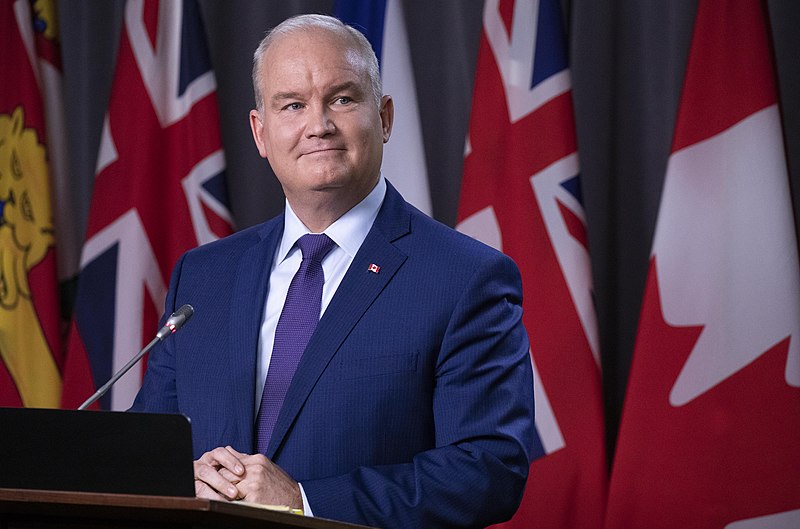
The other day, Conservative Leader Erin O’Toole made mention of the fact that the Canadian flag atop the Peace tower in Ottawa has been flying at half-staff for almost three months and that as prime minister he would put it back up — countermanding the specific order Justin Trudeau gave on May 30. O’Toole’s remark was a brief one dropped in at the end of a longer statement, but he did say we should be proud of our flag, which some people still think of as a Liberal contrivance, and he made the point that being proud of Canada goes hand in hand with wishing to improve it.

I saw this the other day and commented on social media that “I expect the Canadian dying media to be All. Over. This. — Conservative leader Erin O’Toole just called for the Canadian flag to be raised (they’ve been at half-staff officially since the end of May). If the media have their way, this will guarantee a huge majority government for their crush, Justin Trudeau.”

I admit, this was a bit glib, and not all the Canadian media are in the tank for Justin, but (as the old joke about lawyers had it) the 90% give the other 10% a bad name.

First of all, if sticking up for the proper display of the flag counts as wrapping oneself in it, doesn’t using it for gestures of regret (or the dreaded “virtue signalling”) really qualify as the mirror image of this? Trudeau made a point of making sure we knew the lowering of the flag was his own initiative. Liberals have spent a couple of generations working their asses off to constantly remind us that it’s a Liberal flag, which is precisely why conservatives in Ontario towns starting with “B” love the Red Ensign. It is natural to wonder whether, given the apparent Liberal sensitivity about our blood-soaked banner, we won’t get a third national flag before everyone’s finished adapting to the second one. […]

Canada is a place where literal Conservatives can’t “wrap themselves” too tightly in the literal flag: this isn’t the United States, where the positioning and context of the flag in ads or on stage will let you know instantly whether you’re at a Republican or a Democratic event. (The presence of an eagle is always a good clue.) Yet our Liberals have manoeuvred themselves into a position, somehow, in which it is awkward to fly the flag too high.

Can Trudeau now set a date for the raising of the flag to its position of respect and dignity, having plumb forgotten to do so in the first place? And if he is the renewed choice of the Canadian people as prime minister, will he be able to hoist the thing back up? Will this happen the day after the election? The first week? After prolonged consultations with First Nations, perhaps involving a royal commission?

You see, there is an aspect to this that goes beyond politicians battering at one another with flagpoles and other national paraphernalia. O’Toole’s comment didn’t just remind us that we’re Canadians and we should like our flag. It reminded us that we have a government that often seems to have a big problem thinking 30 seconds ahead, let alone six months.

July 19, 2021

Talk is cheap, as a pizza chain CEO demonstrates brilliantly

Filed under: Business, Economics, USA — Tags: , , , , , — Nicholas @ 03:00

John Miltimore examines the claims of the CEO of the &pizza chain in the Washington DC area that his stores have no problem getting staff because he pays them a “living wage”:

As far as PR goes, Lastoria gets an A+. He was profiled by Business Insider, CBS News, and other media outlets. His economics grade, however, is another story.

First, the notion that &pizza’s wages are uniquely generous is wrong. The minimum wage in the nation’s capital, after all, is $15.20. Considering that Washington, DC has one of the highest costs of living in the US, it’s not unreasonable to assume that &pizza is paying workers what amounts to the market wage of their labor (i.e. the price they’d get in the absence of a wage floor). This is a stark contrast to other parts of the United States. Fifteen dollars in DC translates to roughly $24 in Florida, $25 in Alabama and Tennessee, $26 in New Mexico, and $27 in Louisiana.

Second, Lastoria decries the alleged “shortage of business owners willing to pay a living wage.” But it should be pointed out that &pizza is one of those businesses.

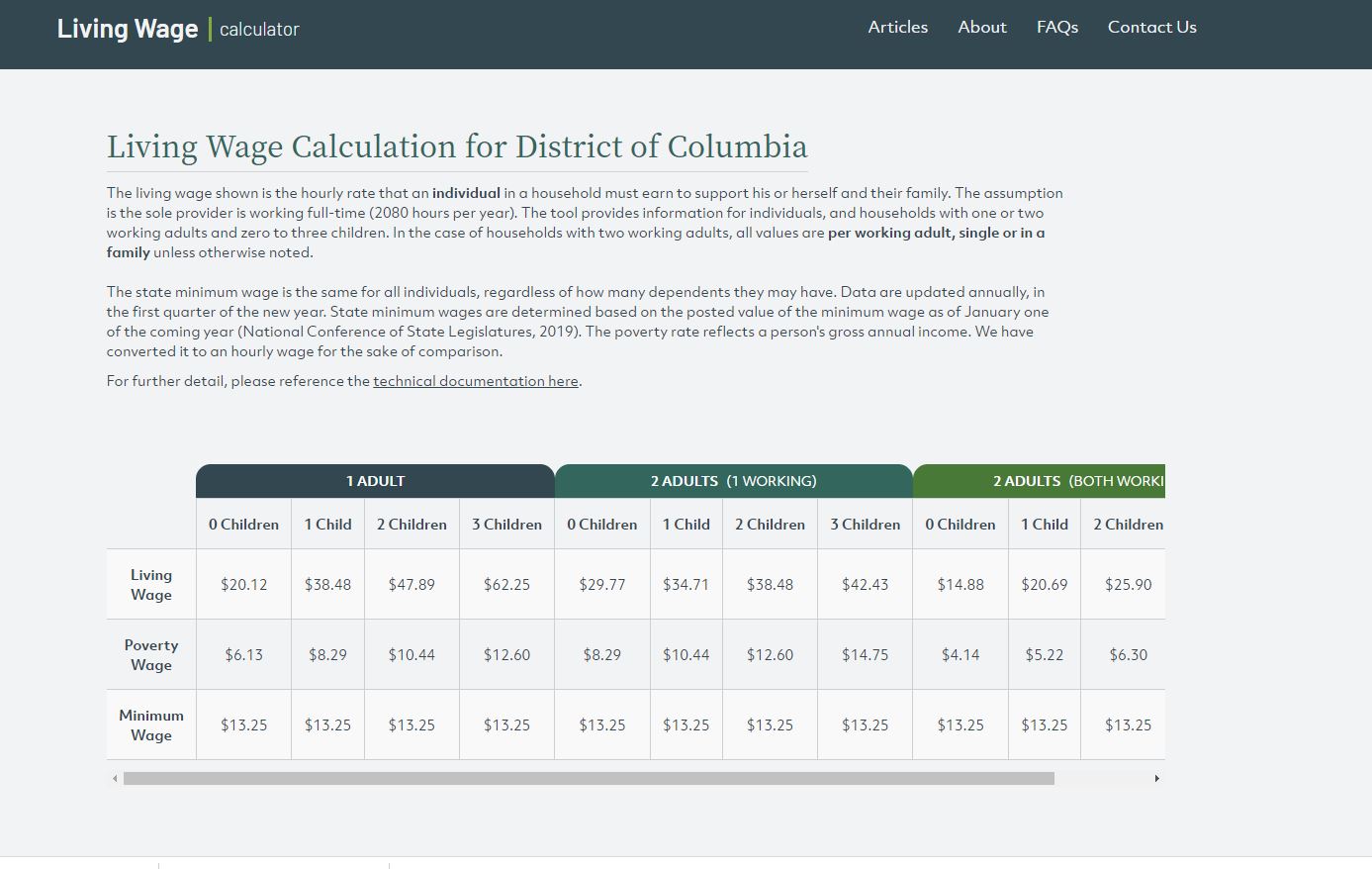
While there is no objective standard to determine what a living wage actually is, MIT has a Living Wage Calculator that allows readers to compute living wages based on the formula created by Dr. Amy K. Glasmeier.

To say that &pizza doesn’t pay its employees a “living wage” is an understatement. The living wage for a single mom with one child is $38.48 in Washington DC. For a single mother with two children, it’s $47.89. Indeed, even for a married couple with just one child, the living wage is $20.69 — nearly $5 an hour more than the average pay of Lastoria’s workers. (It’s unclear why Lastoria is having fewer problems hiring workers than other businesses, but it’s most likely attributable to local factors, such as the fact that he’s servicing nine of the twenty wealthiest counties in America.)

Finally, Lastoria’s claim that higher wages increase productivity enough to improve a company’s bottom line — the efficiency wage hypothesis — has problems logically and empirically. First, it implies that companies not currently paying an efficiency wage are willing to take less profit simply to make workers poorer. Moreover, efficiency wages have been shown to reduce employment, similar to minimum wage laws.

Lastoria might see the $16 an hour average wage as exceedingly generous — especially when he compares it to lower nominal wages paid in other parts of the country — but it’s a far cry from a “living wage”, according to the model used by living wage advocates.

I asked Lastoria how he’d respond to those who say restaurants like his should be required to pay each worker a living wage. He didn’t respond.

June 30, 2021

“We’re having a heat wave/A tropical heat wave …”

Filed under: Cancon, Environment, Media — Tags: , , , , , — Nicholas @ 03:00

Jay Currie is apparently melting in the heat somewhere out on the left coast of Canada:

As my readers know I live on Vancouver Island right by the ocean. Normally, it is too cool to be comfortable having the evening g&t on the deck. Well, yesterday and today and very possibly tomorrow it will be way too hot.

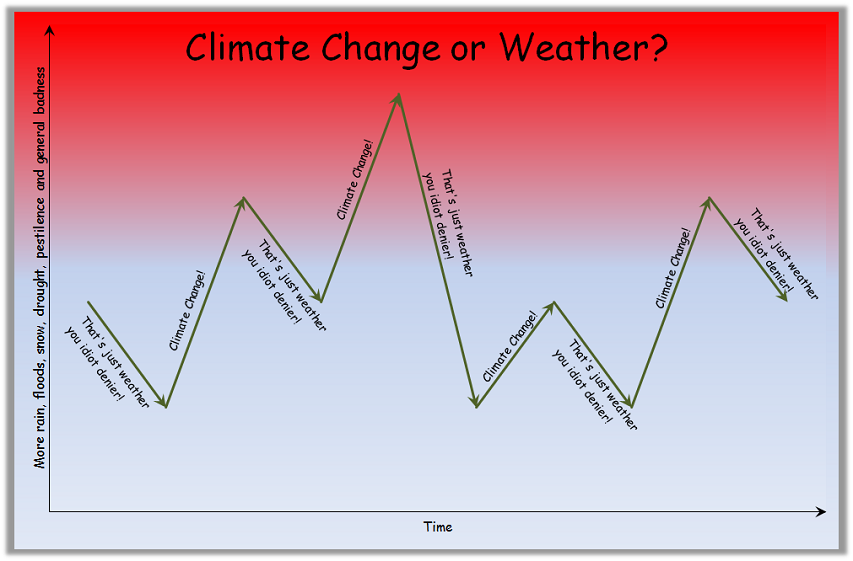
The thing about heat waves is that they bring out the climatistas ready to ascribe weather to climate change. On #bcpoli Twitter it is a dead heat between the unscientific “I will wear a mask until there is no COVID anywhere on Earth” people and the people who insist that the present heat wave “proves” global warming. Well it doesn’t.

What we are in the grips of is a jet stream excursion. A big loop of hot air is sitting on top of us. It is practically the definition of “weather”. Three weeks ago Victoria set an all time record for coldest June day in the middle of a series of anomalously cold days. This too was “weather”.

The warmists are not deterred. “Well, over all the ‘weather’ is getting hotter because of climate change.” “The jet stream is behaving eccentrically because the Arctic is getting warmer and that’s climate change.” And then they add their policy prescription d’jour – Save Old Growth, Raise the carbon tax, Stop LNG exports and so on.

The brutal narcissism of the climate crusaders is touching. The problem and its solution are all about them. Other than the Pacific North West, the rest of the world is normal to cold. The Eastern US has been wet and cool, South America is freezing, Australia and New Zealand are experiencing an early ferociously cold winter, summer snow is falling in Scandinavia. The fact the major factor in the northern and jet stream’s preignitions is the level of solar activity is borne out by the general coolness of 2021. Guess what, the Sun is very quiet at the moment which is historically linked to cooling rather than warming.

But, for fun, let’s propose that the climate change fanatics are right and there is a direct link between CO2 and the present heat wave – not one of their favoured solutions will make the slightest difference. We could all walk to hug the trees and it would not matter.

Here’s why […]

June 21, 2021

“The public are getting a little bit fed up of virtue-signalling police officers when they’d really rather we just locked up burglars”

Filed under: Britain, History, Law, Politics — Tags: , , , — Nicholas @ 05:00

Gawain Towler on the sudden, unexpected — and undoubtedly unwelcome to self-appointed guardians of the official narrative — appearance of what sounds surprisingly like common sense from a top police officer in Britain:

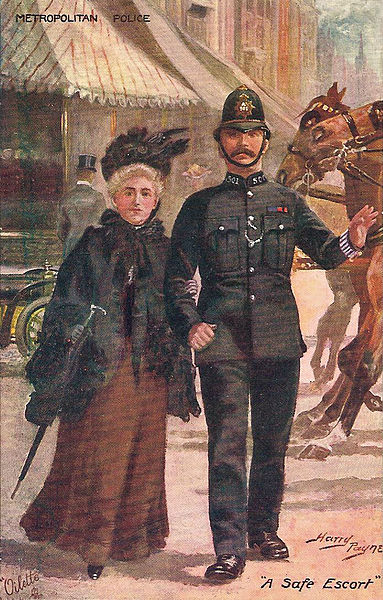
“A Safe Escort” by Harry Payne (1858-1927), first published in August 1911 but possibly painted a few years earlier. From the back of the card: “Among the hundred and one duties of the London Policeman he is here depicted as a kindly protector, halting the traffic as he escorts a Lady across the congested streets. This is essentially a London incident, and has no parallel in any other Police Force in the world.”
Photo of the Tuck’s Oilette by Leonard Bentley via Wikimedia Commons.

Has Robert Peel been reincarnated as the Chief Constable for Manchester?

“But officer, if you are not on your knee, and wearing a rainbow lanyard, how do we know that you are on the side of the oppressed, the intersectional, the poor, downtrodden graduates of minor universities?”

“I’m sorry madam, may I call you madam? I am on the side of the law.”

The promotion of Stephen Watson as the new Chief Constable for Manchester comes as a shaft of light cutting through the murk of muddled thinking. He has said two things that will resonate with millions and will cause consternation amongst thousands:

    I would probably kneel before the Queen, God and Mrs Watson, that’s it … The public are getting a little bit fed up of virtue-signalling police officers when they’d really rather we just locked up burglars.

It sounds like the first blast of the trumpet, but not only does it strike an astonishingly different note than the honky tonk tunes played by other constabularies. Stentorian and self confident it also marks a huge departure in that he makes a very public statement that he would kneel before God. A very courageous statement in the current climate in itself. But it is his approach to policing that strikes the eye.

One almost feels that as was once the case, each new officer in the Manchester Metropolitan Area will be issued with Sir Robert Peel’s 1829 Nine Principles of Policing. It is worth our while looking at those principles and deciding whether or not to accept that they should remain at the core of policing, or be junked as impossibly dated.

What is clearly apparent is that Peel’s principles are at heart about consent. Famously it described the police as merely the citizens in uniform, or that “the police are the public and that the public are the police, the police being only members of the public who are paid to give full time attention to duties which are incumbent on every citizen in the interests of community welfare and existence”.

Underlying this basic thought is an understanding that the police rely, entirely on the goodwill of the populace, if they wish to carry out their basic duties. In order to fulfil their functions and duties they are “dependent on public approval of their existence, actions and behaviour and on their ability to secure and maintain public respect”.

June 12, 2021

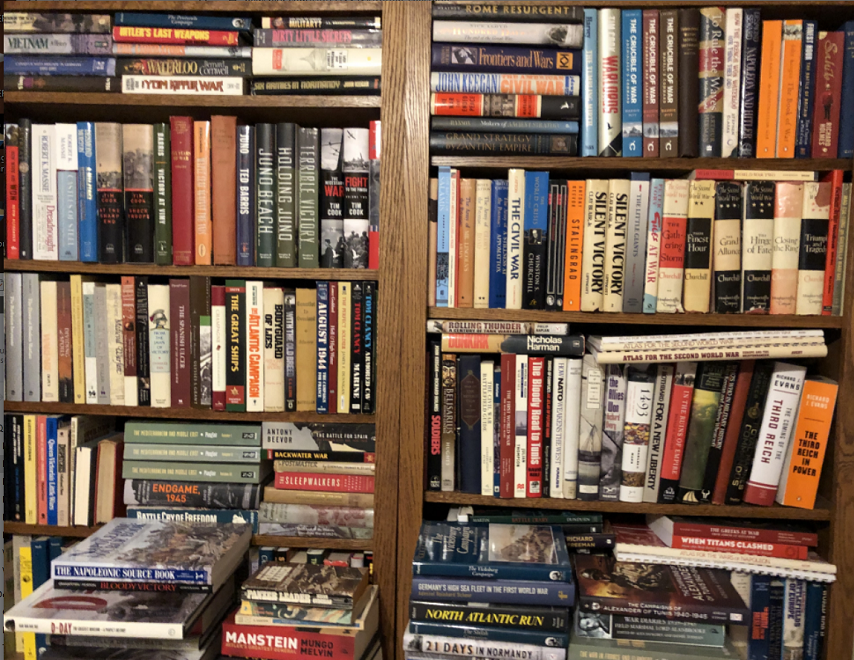
Literate people who “never read books”

Filed under: Books, Business — Tags: , , , , — Nicholas @ 05:00

I recently added Kenneth Whyte’s SHuSH to my growing list of Substack blogs, and his latest entry considers people who can read but choose not to … and boast about it:

… I ran across a tweet by Neil Patel, a self-made marketing guru, explaining or, rather, bragging about how he doesn’t read books:

    The only books I read are kids’ books and that’s to my daughter. People talk about reading books. You know what? I wrote a book and I was even a New York Times best-selling author, but here’s the thing: most books that you see in a book store, they’re written a year to two years before they were actually published and they go through this really long process. A lot of the times you’re reading outdated information. Even if the book has theories and strategies that aren’t outdated, heck, you can just go on YouTube and find that info in a five-minute clip. Why would you want to read 300 pages when you can just figure it out in five minutes. So I don’t spend my time reading books. Instead, I spend three hours a day reading blogs, Instagram, YouTube and all the other places where I can consume information faster, and you should, too.

It turns out Patel’s tweet was too dumb even for Twitter. Within hours, it had 87 retweets against 1,836 quoted retweets and 764 replies, indicating an extremely high ratio of people blasting him to people sharing his pensées.

Washington Post book critic Carlos Lozada had some of the best mockery: “Also do you realize that when you go in a bookstore, some of the books are so old that the authors are dead? How can you learn anything from a dead person? They can’t even tweet.”

I’ve found over the last few years that I’m spending less time reading books, although I still treasure my quiet reading time in the late evening. My tastes have changed a lot over the years, and I read almost no fiction works at all except for a few “unwoke” science fiction authors, and aside from books on hand tool woodworking almost everything else is history — and not much recently published history (for the same reason I avoid most modern SF novels … they’re far too woke for boring old fuddy duddy readers like me).

You’ve probably seen those internet ads that claim the average CEO reads a book a week. That’s bullshit marketed by Blinkist to flog fifteen-minute book summaries. There is no data to support it. The average American reads twelve books a year, and high-earners read fifteen, which is probably the best-case scenario for the average CEO.

Sure, Bill Gates and Mark Zuckerberg and Warren Buffett read a lot of books. I’ve run across a few lesser mortals in big offices who were enthusiastic readers. I was even part of a Bay Street book club for several years (I loved it). But most businessmen, in my experience, read very little, or not at all. Trump, who also had his name on a bestseller but never reads books, is far closer to the norm than Gates.

I was once at a dinner retreat with a dozen executives, all of whom had good university educations and generous salaries. They’d been asked by a moderator to come to the dinner with an example of something they’d read, a book or a poem or an essay that really spoke to them. Only three of the twelve mentioned books (and each mentioned a business book). Several mentioned newspaper or magazine articles they’d read. The rest relied on song lyrics, with two citing the same line from “Hotel California” as a commentary on their careers: “You can check out any time you like, but you can never leave.” None of us knew whether to laugh or cry.

Another thing I learned at that retreat, which struck me as related, was that all of the executives complained of having no time to think about the big picture: they were so busy doing their work that they seldom stopped to consider if there wasn’t a better way to do it, or if it was worth doing at all. They complained at this lack of perspective, but all were senior enough to be able to delegate day-to-day chores to others, leaving themselves time to think. I don’t believe they wanted to.

June 4, 2021

“I’m talking about the Pride flag. That omnipresent rainbow eyesore. A virtue-signal made cloth.”

Filed under: Britain, Politics — Tags: , , , — Nicholas @ 05:00

Brendan O’Neill seems to have had it up to here with the rainbow flag being used everywhere at all times, the unbearable annoyingness of Pride:

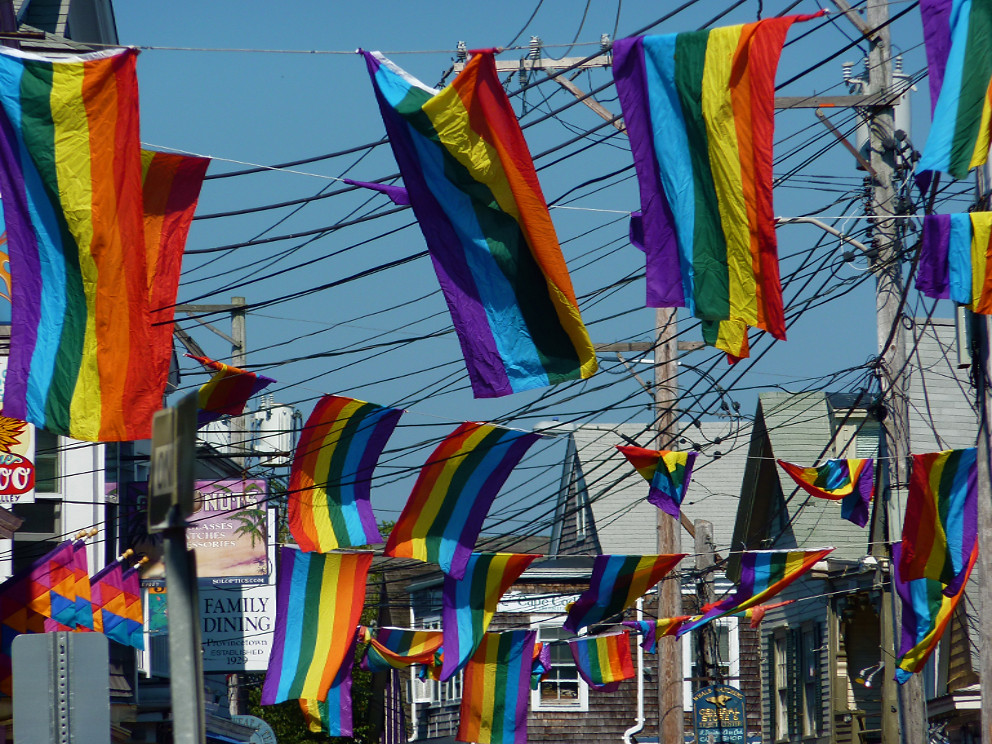
“Pride Flags, Commercial Street, Provincetown, Credit: Tim Grafft/MOTT” by Massachusetts Office of Travel & Tourism is licensed under CC BY-ND 2.0

I see the flag-shaggers are out in force. No, not working-class people who hang the Union flag from their living-room window as an expression of pride in their nation. I’m talking about the Pride flag. That omnipresent rainbow eyesore. A virtue-signal made cloth. The flag no one can escape. Yep, it’s Pride Month, which means that everywhere you go for the next four weeks – the bank, the supermarket, Maccy D’s – you’ll have this flag waved in your face to remind you not to be such a horrible, homophobic piece of shit. Happy Pride Month!

God, Pride has become annoying. It’s so gratingly ubiquitous. I haven’t seen this much smug flag-waving since 100,000 Guardian readers wrapped in the EU colours, tears streaking their blue-painted faces, descended on Whitehall to demand the cancellation of stupid northern people’s votes. And yet the people who cry “flag-shagger!” every time Keir Starmer stands stiffly next to the Union flag, or when Robert Jenrick goes on TV with a backdrop of showy British memorabilia, are curiously silent about the adorning of every building in the land with the bloody Pride flag.

You can’t move for rainbows right now. The Pride flag will flutter from town halls across the country. Some schools in Scotland will fly the flag for the whole month. I can’t be the only person who found the photo of school pupils wearing Pride face masks beneath a vast Pride flag somewhat chilling. It’s borderline cultish. Go to a cashpoint machine and you’ll be told about Pride. Coutts Bank on The Strand in London once painted its entire facade in the Pride colours. That was a very expensive way of saying: “We’re nice, I swear.”

Cops will wear Pride-coloured badges. They’ll do dad-dancing at Pride marches and everyone will go wild for it (except the Daily Mail probably). The army is getting in on the act. It is using Pride Month to showcase its British Army LGBT+ Network. If this doesn’t become a meme featuring someone in the Middle East saying “They say the next bombs will be dropped by people who believe in gay rights! Don’t you love progress!”, I will lose all faith in the internet. Even the Beano is flag-shagging. It posted a comic strip featuring Dennis the Menace in a Pride-coloured jumper. I preferred him when he was bullying Walter the Softy.

Snacks are propaganda now, too. Who can forget M&S’s Pride sandwich, which was basically a club sandwich with added guacamole (“Gays like guacamole, right?”). McDonald’s has created Rainbow-coloured boxes for its French fries, which was definitely one of the key demands of the radicals who took part in the Stonewall riot of 1969 that Pride is meant to commemorate. Skittles surely caused even Pride aficionados’ eyes to roll when they released limited-edition white versions of their sweets, because “we are giving up our rainbow to show support for the LGBTQ+ community”. (It is testament to the insanity of intersectionalism that the only complaint about this conceited act of corporate virtue-signalling was that the sweets were white.)

March 22, 2021

QotD: Signalling

Filed under: Quotations, USA — Tags: , , , , — Nicholas @ 01:00

One of the many concepts that has entered the mainstream from the Dissident Right is signalling. Its first appearance came as criticism of social justice warriors, who were signalling their virtue by opposing someone or some thing, real or imagined. Virtue signalling is not new. It has probably been a part of human society since people began to settle into agricultural communities. Scipio Africanus, the great Roman general, who defeated Hannibal at Zama, was also famous for his virtue signalling.

These days, you will hear guys on the alt-right talk about counter-signalling. The easiest example of this is the newly minted rich guy going out and buying expensive display items, like cars or gaudy homes. NBA players are prone to this. They want to signal their wealth by acquiring highly visible, expensive items. An old money guy, in contrast, counter-signals by living in an old farmhouse that has been in the family for generations and driving a 40 year old Saab. He’s the sort of rich that feels no need to advertise it.

Signalling is a basic human trait. We all do it to one degree or another. Walk into a prison and you will see an array of tattoos on the inmates. These will signal gang affiliations, time served in the system, facilities in which the inmate has served and the individual’s violence capital. That last part is an important part of keeping the peace. To civilians, a face tattoo is always scary, but in jail, the right neck tattoo can tell other inmates that they are in the presence of an accomplished killer for a particular prison gang.

Virtue signalling and danger signalling are the easiest to understand, but people also use verbal and non-verbal signals to indicate trust or test the trustworthiness of others. A criminal organization, for example, will have a new member commit a pointless crime to demonstrate their trustworthiness. This is not just to sort out police informants, as is portrayed on television. It’s mostly to ascertain the willingness of the person to commit to the life of the organization. It’s hard to be a criminal if you will not commit crimes.

Outlaw biker culture is a good example of the use of signalling to establish trust relationships. Bikers have always, for example, adopted Nazi symbols as part of their display items. Bikers are not sitting around reading Julius Evola. What they are doing is signalling their complete rejection of the prevailing morality. By adopting taboo symbols and clothing, the outlaw biker is letting other bikers know his status, as much as he is letting the squares know he is a dangerous guy, who should be avoided.

The Z Man, “Codes of the Underworld”, The Z Blog, 2017-07-26.

February 9, 2021

Tampa Bay quarterback Tom Brady – “What’s not to hate?”

Filed under: Football, Media, USA — Tags: , , , , , , — Nicholas @ 03:00

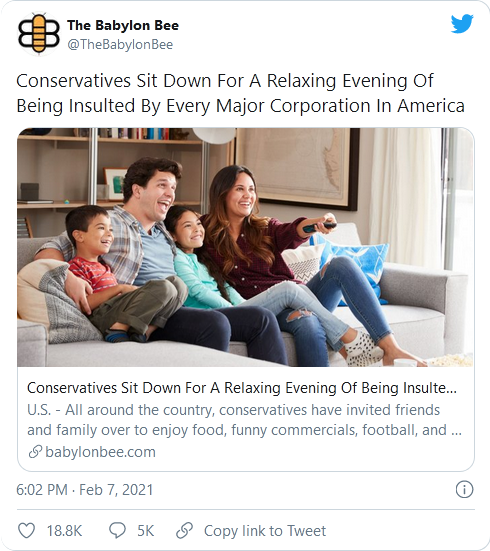
I did watch the S*per B*wl on Sunday, although as the Canadian broadcast carefully replaces almost all of the expensive, creative, one-off ads with exactly the same ads the network showed all through the rest of the season, I watched it on my computer, and kept my mute button handy to silence the roughly 2/3rds of the broadcast that wasn’t actually football-related. (Although I’ve read many people commenting that the “special” ads aren’t as good as they used to be, I watch so little TV that I’m hardly qualified to judge personally.) In Monday’s NP Platformed newsletter, Colby Cosh used the old “there’s two kinds of people” device to talk about Tom Brady:

You can easily have an opinion about Brady, and you probably do, even if you’ve never watched a whole football game. But I have no way of predicting what that opinion is. Do you see him as a cheerful, intelligent family man who has transcended his natural limitations through hard work and study? Or is he just the jammiest SOB who ever lived? There was definitely something cruel in watching the immobile Brady dismantle the Chiefs of Patrick Mahomes, a passer equipped with physical gifts whose possibility was inconceivable before he broke into the league.

That’s probably part of how Brady has driven such a fault into North American bedrock. If there were a stat representing handsomeness-to-physical-impressiveness ratio, he would dominate the NFL. When you see photos of young Brady, who famously dropped to the sixth round of the draft, you no longer wonder how he dropped so far but why he was taken at all. Did the scouts fall in love, as they are known to do, with the “good face”?

Ancient Brady is young Brady with less mobility and accuracy. Mostly, like a relief pitcher with nothing but a fastball, he just darts the ball very efficiently at nearby targets. (Trading New England’s targets for Tampa Bay’s was, obviously, shrewd to the point of genius.) He is becoming as specialized, as optimized for one function, as a punter. But in his case the function seems to be “winning Super Bowls,” and we can’t attribute one iota of that to innate gifts denied to ordinary mortals. What’s not to hate?

Speaking of the ads, I do think the Babylon Bee got it exactly right here:

As a comment at Ace of Spades H.Q. related, the S*per B*wl has lost a lot of its cultural capital over the last few years:

49 — I work at a somewhat woke company. While talking about some projects we were working on the new guy asked me “hey why isn’t anyone talking about the superbowl?” and I remembered that even last year everyone was talking about the superbowl none stop the monday after.

Well you’ve finally done it lefties you’ve killed the NFL.
Posted by: 18-1

I tuned out the halftime show, even though the performer was kinda-sorta a local boy (born in Toronto), and I was a bit nonplussed with the visuals (I had the whole thing muted, natch). James Lileks found the show to be oddly reminiscent of 70’s SciFi movies:

The halftime show had a strange 70s sci-fi aesthetic; for some reason I kept thinking of The Black Hole and Logan’s Run. The most interesting part was picking out the buildings in the New York skyline arrayed in neon. Ah, it’s the AT&T Building, Philip Johnson’s famous po-mo Chippendale tower! And that would be the Met Life tower, which is actually the base for a much-larger tower unbuilt after the Crash of ’29. Hey, everyone, let’s pause this elaborate routine and destroy its momentum so I can wax pedantic!

Then there were all those dancers in masks, looking like victims of surgery in an old movie where a gangster got plastic surgery. A way of incorporating the pandemic zeitgeist, right? Last year: EMPOWERMENT AND SEX AND SEX EMPOWERMENT! This year: faceless people moving in mass to choreographed steps, then dissolving into random panic. There was something wrong about it, like some dank gas blown up through a fissure, filling balloons that looked like the humans who populate the shadows of a nightmare.

Previous years, the Super Bowl event was pure excess — mad, crass, exuberant, American overdrive, American overkill, a mix of skill and brute force. Something about this one felt desperate and shellshocked. I suppose I’m reading too much into it. But I don’t think we need fever dreams and worried-looking buskers in empty fields, at this point. It would be nice just to have some Clydesdales again.

I saw on another site (sorry, forgotten where I noticed it) that the bandages were an in-joke for The Weeknd’s fans, who’d been teased with several social media posts about him recovering from some sort of mysterious plastic surgery procedure leading up to the performance.

February 6, 2021

QotD: Political virtue signalling in everyday conversation

Filed under: Politics, Quotations — Tags: , , — Nicholas @ 01:00

At the time, I was struck by the presumption — the belief that everyone present would naturally agree — that opposition to Brexit and a disdain of Trump were things we, the customers, would without doubt have in common. That the poem’s sentiment of friendship and community was being soured by divisive smugness escaped our local academic, whose need to let us know how leftwing he is was apparently paramount. The subtext was hard to miss: “This is a fashionable restaurant and its customers, being fashionable, will obviously hold left-of-centre views, especially regarding Brexit and Trump, both of which they should disdain and wish to be seen disdaining by their left-of-centre peers.” And when you’re out to enjoy a fancy meal with friends and family, this is an odd sentiment to encounter from someone you don’t know and whose ostensible job is to make you feel welcome.

It wouldn’t generally occur to me to shoehorn politics into an otherwise routine exchange, or into a gathering with strangers, or to presume the emphatic political agreement of random restaurant customers. It seems … rude. By which I mean parochial, selfish and an imposition — insofar as others may feel obliged to quietly endure irritating sermons, insults and condescension in order to avoid causing a scene and derailing the entire evening. The analogy that comes to mind is of inviting the new neighbours round for coffee and then, just before you hand over the cups to these people you’ve only just met, issuing a lengthy, self-satisfied proclamation on the merits of mass immigration, high taxes and lenient sentencing. And then expecting nodding and applause, rather than polite bewilderment.

David Thompson, “The Blurting”, David Thompson, 2019-09-04.

January 30, 2021

QotD: Positional goods and social signalling

PC-brigadiers behave exactly like owners of a positional good who panic because wider availability of that good threatens their social status. The PC brigade has been highly successful in creating new social taboos, but their success is their very problem. Moral superiority is a prime example of a positional good, because we cannot all be morally superior to each other. Once you have successfully exorcised a word or an opinion, how do you differentiate yourself from others now? You need new things to be outraged about, new ways of asserting your imagined moral superiority.

You can do that by insisting that the no real progress has been made, that your issue is as real as ever, and just manifests itself in more subtle ways. Many people may imitate your rhetoric, but they do not really mean it, they are faking it, they are poseurs … You can also hugely inflate the definition of an existing offense … Or you can move on to discover new things to label “offensive”, new victim groups, new patterns of dominance and oppression.

If I am right, then Political Correctness is really just a special form of conspicuous consumption, leading to a zero-sum status race. The fact that PC fans are still constantly outraged, despite the fact that PC has never been so pervasive, would then just be a special form of the Easterlin Paradox.

Kristian Niemietz, “The economics of political correctness”, Institute of Economic Affairs, 2014-04-30.

January 16, 2021

QotD: Make companies product-focused again

Filed under: Business, Politics, Quotations — Tags: , , — Nicholas @ 01:00

When I go to a coffee shop or a bank, I am not interesting in their views about politics or social issues, indeed, I actively do not want to know. I just want a fucking coffee or to arrange something financial (hopefully not confusing the two). If they want to tell me about how yummy their products are because their beans are lovingly rubbed with civet poo, or how well they are looking after their depositors’ money, that is fine.

But pretty much anything else … please just STFU unless it is directly related to the business. I get that certain “life style” brands might want their logo in a Formula One car or on Eddie Izzard’s frock. But I am not interested in how inclusive the local bookstore is, nor do I want to hear that an auto-parts shop is proud of the blasted NHS.

I do not even want any companies declaiming how much they support causes I like, let alone ones that I either oppose or which just make me roll my eyes at the sheer presumption of their marketing department. For me, this is negative marketing. I already avoid certain shops and restaurants that prominently display their “social awareness” to me: they are actually doing the opposite, emphasising that I am not their target market. So I take them at their word and if I can easily get what they sell elsewhere from someone who doesn’t, that is what I always do.

Make companies product-focused again.

Perry de Havilland, “Make companies product-focused again”, Samizdata, 2020-09-30.

January 1, 2021

QotD: Buying “organic” food

… every time I buy “organic”, I feel like I’m sending a reinforcement to several different forms of vicious stupidity, beginning with the term “organic” itself. Duh! Actually, all food is “organic”; the term just means “chemistry based on carbon chains”.

Take “no GMOs” for starters. That’s nonsense; it’s barely even possible. Humans have been genetically modifying since the invention of stockbreeding and agriculture; it’s what we do, and hatred of the accelerated version done in a genomics lab is pure Luddism. It’s vicious nonsense, too; poor third-worlders have already starved because their governments refused food aid that might contain GMOs. And without GMOs it’s more than possible that the new wave of wheat rust, once it really gets going, might condemn billions to death.

Vegan? I’ve long since had it up to here with the tissue of ignorance and sanctimony that is evangelical veganism. Comparing our dentition and digestive tracts with those of cows, chimps, gorillas, and bears tells the story: humans are designed to be unspecialized omnivores, and the whole notion that vegetarianism is “natural” is so much piffle. It’s not even possible except at the near end of 4000 years of GMOing staple crops for higher calorie density, and even now you can’t be a vegan in a really cold climate (like, say, Tibet) because it’ll kill you. In warmer ones, you better be taking carnitine and half a dozen vitamins or you’re going to have micronutrient issues sneak up on you over a period of years.

OK, I give on gluten-free. Some people do have celiac disease; that’s a real need. But “no trans fat”? Pure faddery, or the next thing to it. The evidence indicting trans fats is extremely slim and surrounded by a cloud of food-nannyist hype. I hate helping to keep that sort of balloon inflated with my dollars.

Who could be against “fair trade”? Well, me … because the “fair trade” crowd pressures individual growers to join collectives with “managed” pricing. If you’re betting that this means lazy but politically adept growers with poor resource management and productivity prosper at the expense of more efficient and harder-working ones, you’ve broken the code.

Finally, “pesticide-free”. Do I like toxic chemicals on my food? No … but I also don’t fool myself about what happens when you don’t use them. This ties straight back to the general cluster of issues around factory farming. Without the productivity advantages of pesticides, synthetic fertilizer, and other non-“organic” methods, farm productivity would plummet. Relatively wealthy people like me would cope with reduced availability by paying higher prices, but huge numbers of the world’s poor would starve.

I buy “organic” food because it tastes better and I can, but I feel guilty about reinforcing all the kinds of delusion and superstition and viciousness that are tied up in that label. We simply cannot feed a world population of 6.6 billion without pesticides and factory farming and GMOs and preservatives in most bread; now, and probably forever, “organic” food will remain a luxury good.

Try telling its political partisans that, though. Hyped on their belief in their own virtue, and blissfully ignorant about scale problems, they have already engineered policies that have cost thousands of lives during spot famines. The potential death toll from (especially) anti-GMO policies is three orders of magnitude higher.

And my problem reduces to this: how can I buy the kind of food I want without supporting dangerous delusions?

Eric S. Raymond, “Organic guilt”, Armed and Dangerous, 2010-08-23.

« Newer PostsOlder Posts »

Powered by WordPress