
ReasonTV
Published on 11 Dec 2017Thankfully, one of the biggest scams in the American tax code is finally under attack in the House version of Republican tax reform.
It’s the mortgage-interest deduction, which lets homeowners deduct interest paid on mortgages of up to $1 million for two houses. Ever since owning a home has been a central tenet of the American Dream since the end of World War II and the rise of suburbia, it’s been a given that deducting mortgage interest from your taxes is as American as apple pie.
_____The House plan would limit filers to deducting interest on the first $500,000 of a mortgage on just one house, sending a blind panic through wealthy home owners, realtors, and the building trades, all of whom are terrified that a government subsidy is being yanked away from them.
But the real problem with the House bill is that it doesn’t go far enough. We should scrap the mortgage-interest deduction altogether and let housing prices reflect real market values.
The mortgage-interest deduction is typically justified by claiming that it lets people—especially vaguely defined “middle-class” people–afford homes. But it also increases the price of housing by making it artificially cheap to borrow, meaning homebuyers are willing to pay more. England, Canada, and Australia don’t let their taxpayers deduct their mortgage interest and they all have higher rates of homeownership than the United States.
The mortgage-interest deduction disproportionately benefits the wealthiest Americans, who soak up almost all the $70 billion a year it costs in foregone revenue each year. Reason Foundation’s director of economic research, Anthony Randazzo calculates that only 20 percent of tax filers claim the mortgage-interest deduction. That group by and large are part of six-figure households in a country where the median household income is $57,000.
Killing the mortgage-interest deduction might cause a one-time 7 percent drop in real estate prices, according to one estimate, with wealthy homeowners feeling most of the pain.
As a homeowner, that seems like a small price to pay to end a policy that distorts the real estate market, complicates the tax code, and benefits mostly wealthier Americans on the false promise that it makes home-owning affordable for the middle class.
The mortgage-interest deduction is just special interest pandering wrapped in a gooey story that equates “the American Dream” with having a mortgage. The tax code should be designed to raise the revenue necessary to pay for essential services, not to nudge and prod us into spending money on something the government decides is good for us.
Produced by Todd Krainin. Written and narrated by Nick Gillespie.
December 12, 2017
Kill the Mortgage Interest Deduction Now!
December 10, 2017
Political hysteria as a tool of persuasion
David Harsanyi on the way the Democrats are reacting to the apocalyptic news that the Republicans finally managed to pass a tax reform:
Whenever passable Republican legislation materializes — a rarity these days — Democrats quickly warn that thousands, or perhaps even millions, of lives are at stake. Tax reform? Health care? Bogus international treaties? Internet regulations that were only instituted last year? It really doesn’t matter. Longstanding conservative ideas are not only wrong; they portend the end of America as we know it.
Why are liberals so apocalyptic and bellicose about tax reform (a rare cut that is, according to the sometimes-reliable Washington Post fact-checkers, only the eighth largest in history)? Well, everyone in politics tends to dramatize the consequences of policy for effect. A modern Democratic Party drifting toward Bernie-ism, though, is far more likely to legitimately perceive any cuts in taxation as a limiting of state control, and thus, an attack on all decency and morality. Taxation, after all, is the finest tool of redistribution. So it’s understandable.
But that’s not all of it. With failure comes frustration, and with frustration there is a need to ratchet up the panic-stricken rhetoric. It’s no longer enough to hang nefarious personal motivations on your political opponents — although it certainly can’t hurt! Good political activists must now corrupt language and ideas to imbue their ham-fisted arguments with some kind of basic plausibility. Many liberal columnists, for example, will earnestly argue that Republicans — who at this moment control the Senate, the House of Representatives and the White House, thanks to our free and fair elections — are acting undemocratically when passing bills. As you know, democracy means raising taxes on the minority. What else could it mean?
December 8, 2017
Final hurdle for US tax reform efforts
Veronique de Rugy looks at the two differing tax bills passed by the Senate and the House of Representatives and what needs to be done to blend them into a single bill for the President to sign:
The House and Senate passed their own versions of a tax reform bill surprisingly fast. But now the hard work starts, as they need to turn those two bills into one. The trick is to produce a bill that can pass both chambers again, meaning a bill that appeases some powerful interest groups while still making the budget math work.
In some respects, this conference process may be easier than we think. Once lawmakers have come this far with such a big bill—when stakes are this high—it’s hard to imagine them not doing everything they can to cross the finish line. Helping in the process is the fact that their bills aren’t so vastly different in terms of philosophy and provisions that it makes reconciling differences impossible.
[…]
It’s worth considering some worst- and best-case scenarios resulting from this conference process. Worst-case scenario, the final bill would water down the investment provisions and entirely preserve many tax preferences currently targeted in both bills. It would also preserve the House version’s individual rates, including a 12 percent bubble rate for top income earners, which effectively would impose a marginal tax rate of 45.6 percent, as opposed to the current 39.6 percent.
It would expand the child tax credit value beyond the levels passed in the House ($1,600) and the Senate ($2,000). That change would remove a large number of taxpayers from the tax rolls, which would be problematic because Republicans also refuse to cut spending. This also would shift more burden to the top 10 percent (taxpayers making above $138,000), who already pay 70 percent of the total federal income tax. If members of Congress also were to expand the refundable part of the credit, it would dramatically increase government spending, too.
The cherry on a very unsavory tax cake would be if lawmakers adopted the House’s tax base erosion provisions, which include an idiotic excise tax that resembles the dreaded border adjustment tax, which was killed in recent months.
To finish on a positive note, allow me to dream a little. My best-case scenario would maintain the permanent 20 percent corporate tax rate. It would also delay the adoption of anti-tax avoidance provisions until lawmakers get to assess the full impact that cutting the corporate tax rate has on avoidance behaviors by companies. Congress would adopt the Senate version of the individual tax rates or even cut the top marginal rate further.
November 23, 2017
If you think your taxes are too low, you can easily give the government more of your money
As discussed fairly recently, the government requires you to pay taxes up to a certain point, but there’s nothing stopping you from paying more than they ask. For Canadian federal taxes, Her Majesty in right of Canada would be delighted to accept any additional money you wish to donate. I’m sure your provincial or territorial government has a similar mechanism set up. Equivalent schemes are definitely available in the UK and probably other Commonwealth countries.
In the US, the tax rates are in the news again and the usual (ultra-wealthy) suspects are lining up to demand that the government not lower their taxes:
There’s an amusing ritual that takes place in Washington every time there’s a big debate about tax policy. A bunch of rich leftists will sign a letter or hold a press conference to announce that they should be paying higher taxes rather than lower taxes.
I’ve debated some of these people in the past, pointing out that they are “neurotic” and “guilt-ridden.”
But they apparently didn’t take my criticisms seriously and go into therapy, They’re now back and the Washington Post provides very favorable coverage to their latest exercise in masochism.
More than 400 American millionaires and billionaires are sending a letter to Congress this week urging Republican lawmakers not to cut their taxes. The wealthy Americans — including doctors, lawyers, entrepreneurs and chief executive — say the GOP is making a mistake by reducing taxes on the richest families… Instead of petitioning tax cuts for the wealthy, the letter tells Congress to raises taxes on rich people like them. …The letter was put together by Responsible Wealth, a group that advocates progressive causes. Signers include Ben & Jerry’s Ice Cream founders Ben Cohen and Jerry Greenfield, fashion designer Eileen Fisher, billionaire hedge fund manager George Soros… Most of the signers of the letter come from California, New York and Massachusetts.
Earlier in the month, I would have told these “limousine liberals” not to worry because I was pessimistic about the chances of a tax bill getting enacted. But then the Senate GOP unveiled a better-than-expected plan and I’m now semi-hopeful that something will make its way through the process.
That doesn’t mean, however, that these rich leftists should be despondent.
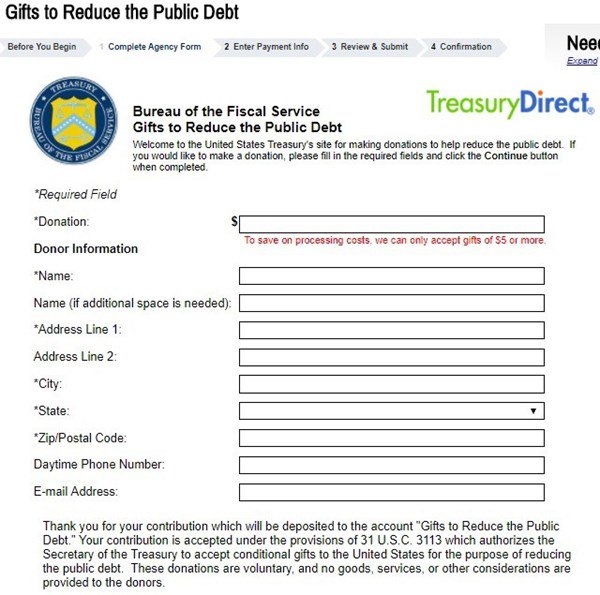
Because I’m a nice guy, today’s column is going to let them know that they don’t have to accept a tax cut. The Treasury Department has a website that they can use to voluntarily send extra money to Washington. It’s called “gifts to reduce the public debt,” and people like George Soros can have their accountants and lawyers calculate the value of any tax cut and then use this form to send that amount of money to D.C.
November 18, 2017
QotD: A key drawback of a cashless society
When I was just starting out as a journalist, the State of New York swooped down and seized all the money out of one of my bank accounts. It turned out — much later, after a series of telephone calls — that they had lost my tax return for the year that I had resided in both Illinois and New York, discovered income on my federal tax return that had not appeared on my New York State tax return, sent some letters to that effect to an old address I hadn’t lived at for some time, and neatly lifted all the money out of my bank. It took months to get it back.
I didn’t starve, merely fretted. In our world of cash, friends and family can help out someone in a situation like that. In a cashless society, the government might intercept any transaction in which someone tried to lend money to the accused.
Unmonitored resources like cash create opportunities for criminals. But they also create a sort of cushion between ordinary people and a government with extraordinary powers. Removing that cushion leaves people who aren’t criminals vulnerable to intrusion into every remote corner of their lives.
We probably won’t notice how much this power grows every time we swipe a card instead of paying cash. The danger is that by the time we do notice, it will be too late. If we want to move toward a cashless society — and apparently we do — then we also need to think seriously about limiting the ability of the government to use the payments system as an instrument to control the behavior of its citizens.
Megan McArdle, “After Cash: All Fun and Games Until Somebody Loses a Bank Account”, Bloomberg View, 2016-03-15.
November 7, 2017
“Paying for” tax cuts
In the latest issue of the Libertarian Enterprise, L. Neil Smith explains why he isn’t a fan of the notion that tax cuts need to be “paid for”:
I am not an economist, nor do I play one on TV, but I know a hand-job when I see one. The mindless mutants who are mangling Donald Trump’s tax plans are dragging this nation and the world into a Da-Daesque vortex we may never get out of. (Only a “progressive” Democrat would stomp a man’s legs, break them in a dozen places, and then make fun of him because he can’t walk.) While lowering almost everybody’s taxes, they want a special bracket appended to the deal to punish people with a million dollars or more to “pay for” everybody else’s tax relief. My question, in an era when government takes too much away from us already, why the bloody hell should it be allowed to steal more?
Even from people who are supposedly hated by the “masses”? (I seriously doubt it. “The Democrat Party masses, more likely. Most right-wing masses — if there is such a thing — aspire to become millionaires, themselves.)
Half a century ago, when I was a shiny new Objectivist warrior, jousting with various statist orcs and trolls on the left, a major concern of theirs seemed to be the big, luxurious houses that rich people built for themselves or bought and lived in. Somehow, there was something evil or sinful in that — “conspicuous consumption” one famous comtard called it — and it needed to be stopped. It didn’t ever seem to have occurred to these feeble-minded pickpockets (who had likely never done an honest day’s work in their worthless lives) that the construction of a big, luxurious house (today, we call them McMansions) requires the skilled services of dozens, if not hundreds, of earth-movers, concrete-workers, framers, finish carpenters, glazers, roofers, plumbers, sheet-rock guys, landscapers, etc., most of whom have families to feed, clothe, and house, themselves.
They need rich people to build big, luxurious houses for.
In general, there are few, if any, ways the most malign “malefactor of great wealth” can spend his money without benefitting someone who needs a job. Even cocaine has to be cultivated and processed by somebody. This lesson was learned the hard way back in 1990 when Idiot-in-Chief George 41 Bush broke his “read my lips” promise and allowed a punitive “luxury tax” to be levied on yachts, big, expensive cars, and assorted other keen stuff like that. Hundreds of jobs were lost. Thousands suffered. One company went from 220 workers to 50 overnight. Within two years those who had stirred up class envy the most energetically were calling for repeal of this “hate the rich” tax. In the same way, millionaires’ money would fly overseas in an instant and vanish from our struggling economy.
October 24, 2017
QotD: Tax complexity
What’s interesting about this [IRS] scam is that it’s a departure from classic confidence schemes. Think about something like the Nigerian e-mail scams, and how they draw their victims in: greed for a lucrative finder’s fee in exchange for doing something that sounds maybe a little bit shady, but maybe sort of noble too. The victim is then strung along by playing to the greed, and kept from talking to others who might point out the scam by because they think they are complicit in something legally questionable.
The IRS scam, on the other hand, works entirely by fear. It takes people who haven’t done anything wrong, and makes them afraid that they have. That’s a pretty hefty achievement. Imagine trying to extort money from someone by, say, claiming that they had murdered someone. You might elicit laughter, or bewilderment, but you’d rarely elicit much cash.
Which raises the obvious question: How did we get into a situation where it’s so easy for people to believe that the IRS is about to arrest them for a crime they weren’t even aware of having committed?
You guessed it: The IRS is incredibly powerful, and the tax code is incredibly opaque.
Like many journalists, my husband and I pay someone to do our taxes. We have to. The year we married, I realized that with two journalists who both had salary and non-salary income, home offices, various business expenses, and a new home purchase, our taxes had finally passed the point at which I was even marginally competent to do them. Before then, I had always done my taxes myself, and filed them with a sort of wistful hope that I had done them correctly. At this point it seems worth pausing to note that:
- I have an MBA.
- I write about tax policy for a living.
These things are surprisingly little help. Filling out your taxes is not a matter of being good at math, or accounting, or even knowing how various provisions of the tax code interact in revenue projections. It is entirely a matter of knowing what can be deducted, and how. And because our tax code is so complex, that doesn’t mean “read the statute”; it means “read the statute, and the case law, and develop a sense over long experience of how agents are likely to interpret this or that during an audit.” The only people who can do that are tax professionals; the rest of us are too busy earning a living in our own professions.
There’s no perfect measure of tax complexity, but consider one quick-and-dirty metric: the number of lines on a typical tax form, and the length of the accompanying tax booklet. Quartz did just that a while back, and found that the complexity had been steadily increasing.
Legal complexity does not accumulate linearly; it accumulates exponentially. When you have one law on the books, and you add a second, the new law may (or may not) have some unexpected interaction with the old law. This would be one complexity point for regulators to manage. But with each new law, the number of potential interactions grows quickly, until it passes the ability of any layman to grasp it (and eventually, surpasses the professionals as well, which is why they’re increasingly specialized in narrow areas). We are long past that point with the tax code.
Megan McArdle, “Why We Fear the IRS”, Bloomberg View, 2016-01-04.
October 20, 2017
Justin Trudeau’s government at the two-year mark
Paul Wells nicely lists all the good things the Trudeau government has managed to do during the first two years of its mandate, then gets down to the other side of the balance sheet:
The worse continues to pile up. I see no way the rushed and timid legalization of cannabis will drain the black market and, in hardening more penalties than it relaxes, it seems certain to provide busywork for police who have been asking only to be freed up to tackle more serious problems. (An internal Ontario government memo reaches the same conclusions.)
Since it’s impossible to find anyone in the government who’s conspicuous for saying no to any proposed spending spree, it’s a near dead-lock certainty that Canada will become a nursery for white elephants — and, unless this generation of public administrators is luckier than any previous generation, for corruption, somewhere in the system.
The government’s appointments system is, as one former staffer told me this week, “just a little f–ked,” with backlogs as far as the eye can see. There’s a serious bottleneck for important decisions, with the choke point in the Prime Minister’s Office. Rookie ministers, which is most of them, are held close. Those who don’t perform are sent new staffers from the PMO: career growth comes from the centre, not the bottom.
A cabinet full of political neophytes — and there is nothing Trudeau could have done to avoid that, given how few seats he had before 2015 — has been trained to cling for dear life to talking points. The result is unsettling: most of the cabinet simply ignores any specific question and charges ahead with the day’s message, conveying the unmistakable impression they are not as bright as — given their achievements before politics — they must surely be. Or that they think their audience isn’t. I doubt this is what anyone intends, but by now it’s deeply baked into the learned reflexes of this government.
Then there is this tax mess. I’m agnostic on the policy question: in my own life I’ve been spectacularly unimaginative in organizing my finances for minimal taxation. I put all the book money into RRSPs, called my condo an office for the two years I used it as one, and that was the end of that. But the summer tax adventure has left the Liberals with their hair on fire, for two broad reasons. One is that Bill Morneau’s personal financial arrangements are becoming surreal. The other is the way the project — and especially the life stories of its stewards, Trudeau and Morneau — undermined the Liberals’ claim to be champions of the middle class.
Wells very kindly doesn’t mention the ongoing flustercluck that is our military procurement “system” (which to be fair, the Liberals did inherit from the Harper Conservatives), which has gotten worse rather than better — and only part of that is due to Trudeau’s trumpeted “No F-35s” election pledge. The Royal Canadian Navy seem no closer to getting the new ships they so desperately need (aside from the Project Resolve supply ship, which the government had to be arm-twisted into accepting), and the government hasn’t yet narrowed down the surface combatant requirements enough to select a design.
September 25, 2017
QotD: IKEA’s shady history
IKEA itself serves as a fitting symbol of the middle-class masquerade. The company’s well-managed brand obscures the fact that its founder, Ingvar Kamprad, at the time that he founded the store in 1943, was a member of Sweden’s pro-Nazi fascist party, in which he continued to be active at least until 1948 and which he continued to praise for decades after; or that the company used forced prison labor in East Germany until the fall of the Berlin Wall. It is fitting that IKEA’s current worth is unknown, since it is technically owned by a phony-charity shell company incorporated in the Netherlands, enabling Kamprad to evade Swedish taxes. This is not to single out IKEA for particular scorn: one could write an equally lurid laundry list about almost any large corporation; a fascist undertone usually lurks beneath the surface of mass-production and mass-marketing. Consider the fact that Apple uses what is slave labor in all but name in China yet none of their customers seem to care.
Samuel Biagetti, “The IKEA Humans: The Social Base of Contemporary Liberalism”, Jacobite, 2017-09-13.
August 27, 2017
Why The Rich Like High Taxes
Published on 16 Aug 2017
When politicians raise taxes on the rich, what do the rich do to protect their $$$? This Prof. shows how high taxes actually made America less equal.
The Myth of Equality in the 1950s (video): Another myth of the 1950s is that there was economic equality. Prof. Brian Domitrovic explains why this is a myth. https://www.youtube.com/watch?v=wLl9wOivHdc
How Cronyism is Hurting the Economy (video): Prof. Jason Brennan explains why cronyism, like the tax cuts for certain businesses in the 1950s, is bad for the economy and argues why limiting the government’s power would help solve the problem. https://www.youtube.com/watch?v=gSgUENZ9O94
The Good Ol’ Days: When Tax Rates Were 90 Percent (article): Andrew Syrios compares the tax rates in the 1950s to those of the 1980s and today https://mises.org/library/good-ol-days-when-tax-rates-were-90-percentTRANSCRIPT:
For a full transcript please visit: http://www.learnliberty.org/videos/why-the-rich-like-high-taxes/
August 23, 2017
On the most recent figures, people do want to pay more tax … just not many of ’em, and not very much
Last month, I posted an item on the Norwegian experiment in encouraging taxpayers to pay more than they owed in national tax. More recently, Tim Worstall reports an uptick in UK taxpayers voluntarily sending Her Majesty’s government more than they owed:
… the greater publicity of this ability to pay more has indeed led to more people making those extra voluntary payments. Further, to a more regular reporting of how many do so:
Jeremy Corbyn’s claim that many people want to pay “more tax” to clear the national debt or fund public services has been undermined by official figures.
Figures disclosed by the Government show that just 15 taxpayers made financial gifts worth less than £200,000 to the Government over the past two years.
15 people is of course more than 5.
The Debt Management Office said that £180,393 in 2016/17 and £14,558 in 2015/16 was made in these voluntary payments.
Most of this came from a single bequest of £177,700 in the last financial year. The other donated or bequeathed by the other 14 people were for relatively trivial sums. Someone gave 1p, another gave 3p and a third person handed over £1.84 to the Government.
Although not that much more then if we’re honest about it.
[…]
At which point something economists are most insistent upon. What people say is nowhere near as good a guide to their beliefs as what people do is. Expressed preferences are all very well but the truth comes from revealed preferences. Many might say they will pay higher taxes in order to gain more government. Very few do, so few that we can dismiss the expressed wish as being untrue.
It could of course be true that many would like other people to pay more in taxes, it could even be true that some to many would happily pay more if others did as well. But those are different things, the argument that people wish to pay higher taxes themselves and themselves alone has been tested and been found to be wrong–simply because when the opportunity is made available people don’t.
Once again, for my Canadian readers, it’s totally legal and acceptable to pay Her Majesty in right of Canada any additional monies you might feel are appropriate…
August 2, 2017
Ontario has scared off foreign home-buyers, but bureaucratic delays still make housing more expensive
Josef Filipowicz and Steve Lafleur explain why Ontario’s recent crack-down on foreign home-buyers in the Greater Toronto Area still leaves one of the biggest barriers to affordable housing untouched:

The Ontario Legislature in Queen’s Park, Toronto. (via Wikimedia)
According to a recent announcement from Queen’s Park, 4.7 per cent of properties purchased in Ontario’s Greater Golden Horseshoe (between April 24 and May 26) were acquired by foreign individuals or corporations. This in the wake of the raft of measures announced in April including a 15 per cent “Non-Resident Speculation Tax” ostensibly aimed at improving housing affordability.
It’s difficult to say how this portion of the housing market — foreign buyers — ultimately impacts the cost of buying or renting in Canada’s biggest urban region, and it’s far too soon to estimate the effects of the myriad of policy changes the Ontario government is introducing. But what we do know is that the laws of supply and demand apply to housing, and it’s hard to believe that a small percentage of buyers are responsible for the massive appreciation of housing prices in the GTA over the past decade. Rather than focus on a small tranche of buyers, we should focus on ensuring that regulations don’t prevent the supply of new housing from meeting demand.
[…]
So what’s preventing cities in the Greater Golden Horseshoe from issuing more building permits?
In short, red tape at city hall. Between 2014 and 2016, Fraser Institute researchers surveyed hundreds of homebuilders across Canada to better understand how government regulation affects their ability to obtain permits. In the Greater Golden Horseshoe, it typically takes one-and-a-half years to obtain a permit in this region, and per-unit costs to comply with regulation amount to almost $50,000. Approval timelines can also be affected by the need to rezone property. Approximately two-thirds of new homes in the region require this procedure, which adds 4.3 months (on average) before builders can obtain permits.
Another deterrent to more supply is local opposition to new homes. Survey results show that council and community groups in Toronto, King Township and Oakville are more likely to resist the addition of new units in their neighbourhoods, effectively preventing newcomers from moving in.
Update, 3 August: Mission accomplished. Toronto home sales plummeted 40 percent in July.
July 20, 2017
Words & Numbers: The Illinois Budget is a Mess
Published on 19 Jul 2017
This week on Words & Numbers, Antony Davies and James R. Harrigan tackle the disaster that is the Illinois state budget crisis.
Pro-tip: Don’t let it happen to your state.
July 11, 2017
Norway’s experiment with inviting people to pay more tax than they owed
Tim Worstall reports on the results of a Norwegian initiative to encourage taxpayers who felt their taxes should be higher to voluntarily pay more:
It is a standard contention of our times that people really would love to pay more tax. The things they get in return from government are so wondrous that obviously everyone will be emptying their wallets to feed the diversity advisers. Norway tried this — they managed to raise an extra $1,325 in tax revenues.
That’s not bad, $1,325 per capita in additional tax revenues multiplied by the Norwegian taxpaying population is … oh, you mean that was the total amount?
This does not bode well for the general contention, does it?
What we have here is of course that classic economists’ point, the difference between expressed preferences and revealed ones. We’ll all say all sorts of things but the correct guide to what we really want is to watch what we do. Which isn’t, even in Norway in any large manner, pay more tax:
Hammered by the opposition for slashing taxes and going on a spending spree with the country’s oil money, the center-right government has hit back with a bold proposal: voluntary contributions.
Launched in June, the initiative has received a lukewarm reception, with the equivalent of just $1,325 in extra revenue being collected so far, according to the Finance Ministry.
It is possible to cavil about this a bit. It’s all rather new for example.
The program was decried as a political distraction from the left-of-center opposition party, who said that if the government was really serious about making up for recent revenue shortfalls then it would go after multinational companies like Google and Facebook. Launched only this past June, the opposition has argued that the scheme already costs more than it makes.
Well, yes, they would say that too. Quite clearly everyone prefers it to be that person over there getting taxed, not little ol’ me.
You don’t have to be Norwegian to take advantage of this wonderful offer to give the government more than your share: that option has been available to Canadians for many years. Her Majesty, in right of Canada, would be happy to accept any amount you wish to donate. As Tim points out in the article, the US and UK governments also accept gifts in excess of tax owed.
QotD: The non-profit scam
Oddly, another form of this non-profit scam exists in my industry. As a reminder, my company privately operates public recreation areas. Several folks have tried to set up what I call for-profit non-profits. An individual will create a non-profit, and then pay themselves some salary that is equal to or even greater than the profits they would get as an owner. They are not avoiding taxes — they still have to pay taxes on that salary just like I have to pay taxes (at the same individual tax rates) on my pass-through profits.
What they are seeking are two advantages:
- They are hoping to avoid some expensive labor law. In most cases, these folks over-estimate how much a non-profit shell shelters them from labor law, but there are certain regulations (like the new regulations by the Obama Administration that force junior managers to be paid by the hour rather than be salaried) that do apply differently or not at all to a non-profit.
- They are seeking to take advantage of a bias among many government employees, specifically that these government employees are skeptical of, or even despise, for-profit private enterprise. As a result, when seeking to outsource certain operations on public lands, some individual decision-makers in government will have a preference for giving the contract to a nominal non-profit. In California, there is even legislation that gives this bias a force of law, opening certain government contracting opportunities only to non-profits and not for-profits.
The latter can have hilarious results. There is one non-profit I know of that is a total dodge, but the “owner” is really good at piously talking about his organization being “cleaner” because it is a non-profit, while all the while paying himself a salary higher than my last year’s profits.
Warren Meyer, “The New Rich – Living the High Life Through Your Non-Profit”, Coyote Blog, 2015-09-29.


