Quotulatiousness

November 29, 2019

Revolts, civil wars, and revolutions

Filed under: Britain, Government, History, Politics — Tags: , , , , , — Nicholas @ 03:00

Severian offers his taxonomy of protest with examples from English history:

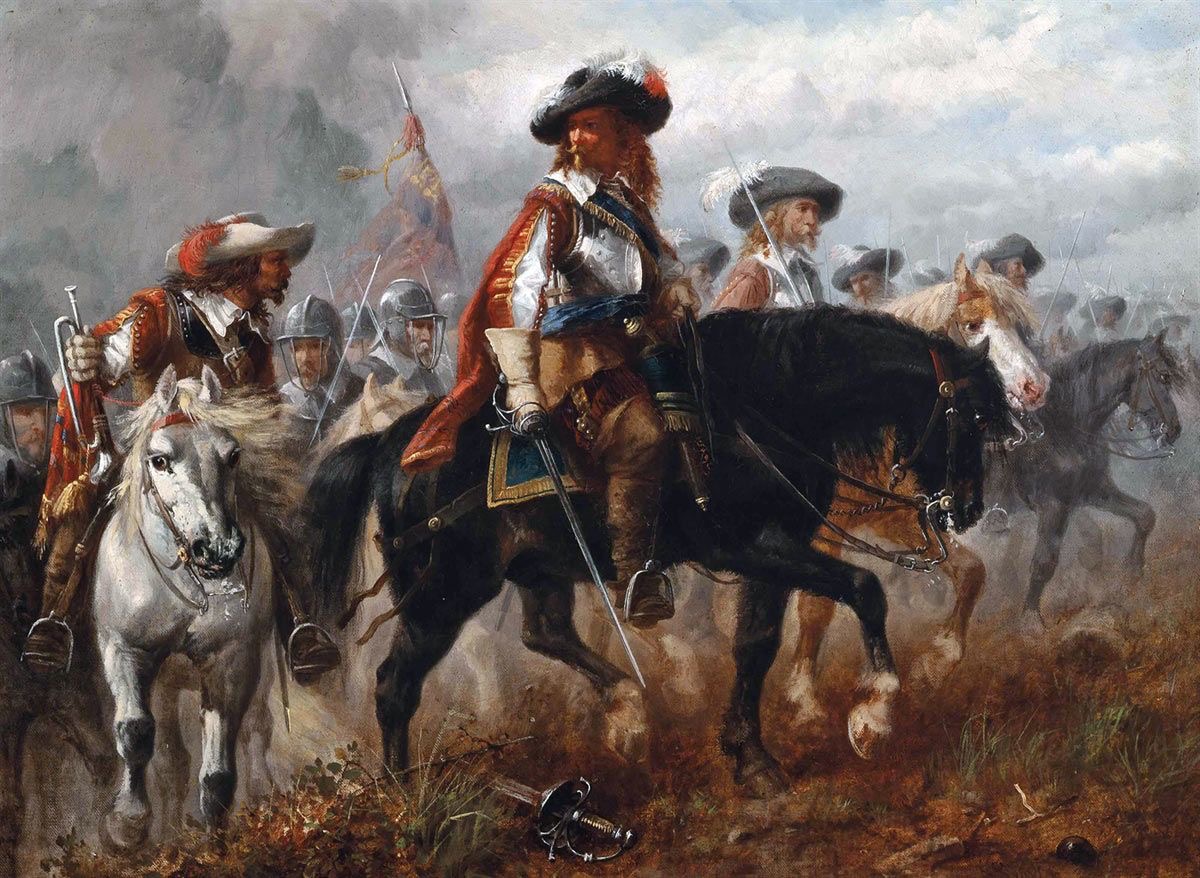
King Charles I and Prince Rupert before the Battle of Naseby 14th June 1645 during the English Civil War.
19th century artist unknown, from Wikimedia Commons.

  • A revolt is a large-scale, semi-organized riot. It aims, at best (e.g. Wat Tyler’s Rebellion), at the redress of specific grievances. At worst, it’s violent nihilism (e.g. the Jacquerie).
  • A civil war aims to replace one leader with another, leaving the underlying civil structure intact — e.g. any of the Roman civil wars post-Augustus.
  • A revolution‘s goal is total social transformation. We’re stipulating that it’s violent, because while stuff like the Industrial Revolution is fascinating, we’re not looking at peaceful change here in the Current Year. Revolutions are necessarily, fundamentally ideological.

I realize this can cause some confusion, as events I’d classify as “revolutions” are called civil wars in the history books, and vice versa. But the difference is important, because it sheds light on the development, course, and outcome of events.

The paradigm case is the English Civil War, 1642-51. This was clearly a revolution, as it aimed at — and achieved — the near-total overthrow of existing society. When Charles I took the throne in 1625, his kingdom was very much closer to a Continental-style divine-right monarchy than most Britons would like to admit. While the English had succeeded in clawing some of their liberties back from the crown after Henry VIII’s death, the fact remains that the Stuart state, like the Tudor state, was despotic. But by 1625, the despot was completely out of step with his people, and his times.

By 1642, the first revolutionary prerequisite was in place: No clear alternative. There were lots of revolts against Henry VIII, and one of them, the Pilgrimage of Grace, had the potential to turn into a civil war, or even a revolution. The revolts against Elizabeth I didn’t quite rise to that level, but the Northern Rebellion, and Essex’s Rebellion certainly imperiled her government. See also Wyatt’s Rebellion against Queen Mary, the Prayer Book Rebellion and Kett’s Rebellion against Edward VI, etc. In all of these, the alternative was clear — return to Rome, replacement of one court faction with another, or return to the old ways.

November 27, 2019

The Father of Modern China – Sun Yat-sen l HISTORY OF CHINA

Filed under: China, History — Tags: , , , , , , — Nicholas @ 06:00

IT’S HISTORY
Published 2 Sep 2015

Sun Yat-sen is known as the “father of modern China”. He spent his adult life fighting against imperial China and the ruling Qing dynasty. First as revolutionary leader and later as politician. He founded the Tongmenghui League in 1905 and supported rebellions in China. After the Wuchang Uprising, Sun handed over the presidential office for the Republic of China to Yuan Shikai who soon after would ban Sun’s political party, the Kuomintang. So he reformed it as China’s National People’s party. His military and political work laid the groundwork from which his successors would later call out the People’s Republic of China.

» Century of Humiliation
Part 1: http://bit.ly/humiliation1
Part 2: http://bit.ly/Humiliation2

» SOURCES
Videos: British Pathé (https://www.youtube.com/user/britishp…)
Pictures: mainly Picture Alliance
Content:
Chang, Johannes (1960): “Sun Yat-sen – Seine Lehre und seine Bedeutung” in: JCSW 1 [1960] S.179-194
Gernet, Jacques (1988): Die chinesische Welt. Die Geschichte Chinas von den Anfängen bis zur Jetztzeit, Suhrkamp, Berlin.
Klein, Thoralf (2008): “Politische Geschichte Chinas 1900-1949”, auf bpb.de
https://www.bpb.de/internationales/as…
Vogelsang, Kai (2013): Geschichte Chinas, Reclam, Ditzingen.
Weigelin-Schwiedrzik (2012): “Der geteilte Himmel”, in ZEIT Geschichte Nr. 01/2012
http://www.zeit.de/zeit-geschichte/20…

» ABOUT US
IT’S HISTORY is a ride through history – Join us discovering the world’s most important eras in IN TIME, BIOGRAPHIES of the GREATEST MINDS and the most important INVENTIONS.

» HOW CAN I SUPPORT YOUR CHANNEL?
You can support us by sharing our videos with your friends and spreading the word about our work.

» CAN I EMBED YOUR VIDEOS ON MY WEBSITE?
Of course, you can embed our videos on your website. We are happy if you show our channel to your friends, fellow students, classmates, professors, teachers or neighbors. Or just share our videos on Facebook, Twitter, Reddit etc. Subscribe to our channel and like our videos with a thumbs up.

» CAN I SHOW YOUR VIDEOS IN CLASS?
Of course! Tell your teachers or professors about our channel and our videos. We’re happy if we can contribute with our videos.

» CREDITS
Presented by: Guy Kiddey
Script by: Julia Korbik
Translated by: Guy Kiddey
Directed by: Daniel Czepelczauer
Director of Photography: Markus Kretzschmar
Music: Markus Kretzschmar
Sound Design: Marc Glücks
Editing: Markus Kretzschmar

A Mediakraft Networks original channel
Based on a concept by Florian Wittig and Daniel Czepelczauer
Executive Producers: Astrid Deinhard-Olsson, Spartacus Olsson
Head of Production: Michael Wendt
Producer: Daniel Czepelczauer
Social Media Manager: Laura Pagan

Contains material licensed from British Pathé
All rights reserved – © Mediakraft Networks GmbH, 2015

November 26, 2019

QotD: The “Glorious Revolution” of 1688

Filed under: Britain, History, Quotations — Tags: , , , — Nicholas @ 01:00

William of Orange masterminds a coup d’état known here as the “Glorious Revolution” (1688), and installs himself as King of England. My teachers made it sound as if the English elite suddenly decided one day that they wanted a different king, found William of Orange in a mail order catalogue, liked the look of him and had him delivered the next day, in a state of great amazement and gratitude. In fact, William bossed the entire operation, albeit with plenty of English support. It is worth noting that William achieved a successful cross-Channel invasion of England, so all that stuff about England not having been invaded since 1066 is quite wrong.

Brian Micklethwait, “Navigating individuals”, Samizdata, 2004-10-04.

November 9, 2019

History of Space Travel – Revolutions – Extra History – #2

Filed under: History, Science, Space — Tags: , , , , , — Nicholas @ 06:00

Extra Credits
Published 7 Nov 2019

Start your Warframe journey now and prepare to face your personal nemesis, the Kuva Lich — an enemy that only grows stronger with every defeat. Take down this deadly foe, then get ready to take flight in Empyrean! Coming soon! http://bit.ly/EHWarframe

As the Renaissance breathes new life into Europe, Copernicus develops mathematical proofs for the sun resting in the center of the universe. And from his works, a new world is born. The scientific world gets faster and faster. Revolutions of all kinds begin to set off chains of events that reshape human history. And as science improves, so do the tools of war. Both will be necessary to propel humanity to the stars. Join us on this race through the scientific works between the Renaissance and the Industrial Revolution.

Copernicus’ publishing really came down to the wire! Legend has it that he was given the final printed pages on his death bed. When they presented him with the book, he awoke from a coma, saw his life’s work and finally passed away in peace. Or so the story goes.

September 30, 2019

Ten Minute History – The Early British Empire

Filed under: Americas, Britain, History, India, Military — Tags: , , , , , , — Nicholas @ 02:00

History Matters
Published on 26 Sep 2016

Twitter: https://twitter.com/Tenminhistory
Patreon: https://www.patreon.com/user?u=4973164

This episode of Ten Minute History (like a documentary, only shorter) covers the birth and rise of the British Empire from the reign of Henry VII all the way to the American Revolution. The first part deals with the Tudors and their response to empire in Spain (as well as the Spanish Armada). The second part deals with England’s (and later Britain’s) establishment of its own empire in North America and India. It then concludes with the Seven Years’ War and the American Revolution.

Ten Minute History is a series of short, ten minute animated narrative documentaries that are designed as revision refreshers or simple introductions to a topic. Please note that these are not meant to be comprehensive and there’s a lot of stuff I couldn’t fit into the episodes that I would have liked to. Thank you for watching, though, it’s always appreciated.

September 29, 2019

History Summarized: Mexico

Overly Sarcastic Productions
Published 27 Sep 2019

Go to https://NordVPN.com/overlysarcastic and use code OVERLYSARCASTIC to get 70% off a 3-year plan and an extra month for free. Protect yourself online today!

This video is quite serendipitous in timing — by complete coincidence, this is going live on September 27, the day of Mexico’s true political independence under the First Mexican Empire. This is the 11 year sequel to the more traditional Mexican Independence celebrations of September 16th, which marks Miguel Hidalgo’s proclamation of the “Cry of Dolores” and the start of the Mexican War of Independence. No joke, I only realized this when I was partway through researching the video. I do so much ancient history I’m not used to events having dates we can track to the day.

ANYWAY enjoy this look at Mexican History, here broken into three main acts, the Aztec Empire, the Colony of New Spain, and the Independent nation of Mexico.

“Santianna” By The Longest Johns: https://thelongestjohns.bandcamp.com/…

PATREON: https://www.Patreon.com/OSP

DISCORD: https://discord.gg/sS5K4R3

September 3, 2019

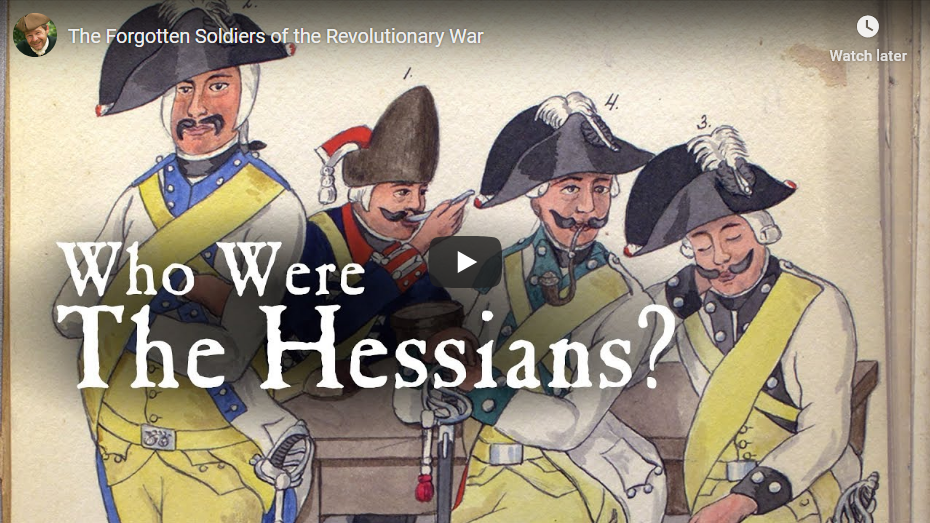
The Forgotten Soldiers of the Revolutionary War

Filed under: Britain, Europe, Germany, History, Military, USA — Tags: , , — Nicholas @ 04:00

Townsends
Published on 25 Jan 2018

Get the book here! ▶ https://www.amazon.com/Hessians-Three…

Visit Our Website! ▶ http://www.townsends.us/

Help support the channel with Patreon ▶ https://www.patreon.com/townsend

Sign up for the YouTube Mailing List! ▶ http://www.townsends.us/youtube_list.htm

August 31, 2019

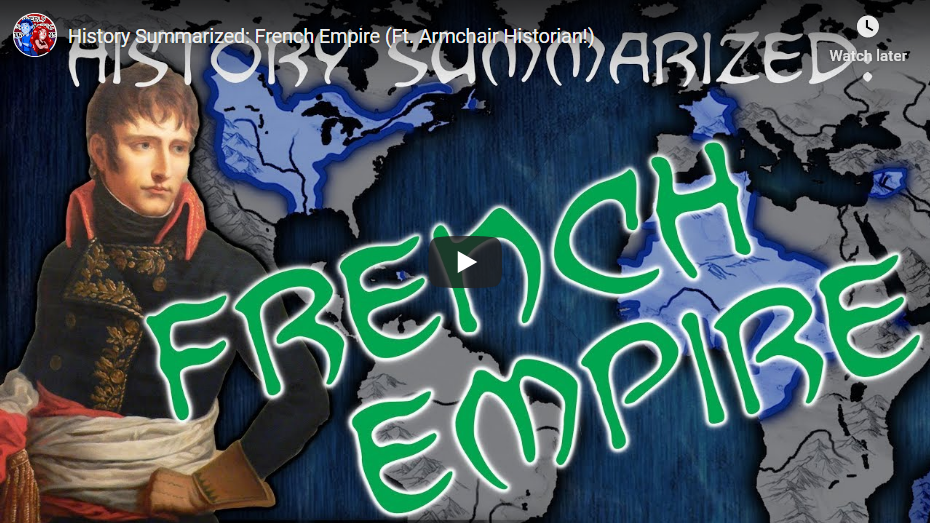
History Summarized: French Empire (Ft. Armchair Historian!)

Overly Sarcastic Productions
Published on 30 Aug 2019

Check out the Armchair Historian channel for more on French Vietnam and the battle of Dien Bien Phu: https://youtu.be/IJ051WyUsW8

Dubious morality, drawn out timescales, intricate royal politics, worldwide stages — Colonialism be like that sometimes. And by “Like That” I mean impenetrably complicated. I did my best, I’ll say that, but oh man is history a mess in the 15-1900s. This stuff is the reason I had so much trouble with history for so long. It’s just so DENSE.

ANYWAY, join Blue and Griffin the Armchair Historian for a look into the history of the multiple successive French Empires. Listen carefully as Blue makes imperceptibly subtle commentary about his extremely non-biased opinions on this chapter in history, and laugh together as we analyze the historical significance of Napoleon Bonaparte’s anime hair.

NOTE on 6:14 — I say Napoleon became Emperor in 1802. That’s a mistake. In 1802, the constitution of France was amended to make the position of Consul permanent, but Napoleon did not become the Emperor until 1804, when he declared the French Empire. That’s my bad.

NOTE on 11:25 — French Guiana, on the northeast coast of South America, remained part of France following the decolonization of Africa. That’s a mapping mix-up.

DISCORD: https://discord.gg/sS5K4R3

PATREON: https://www.Patreon.com/OSP

July 24, 2019

QotD: The failure of the Republican cause in the Spanish Civil War

Filed under: Europe, History, Military, Quotations — Tags: , , , , — Nicholas @ 01:00

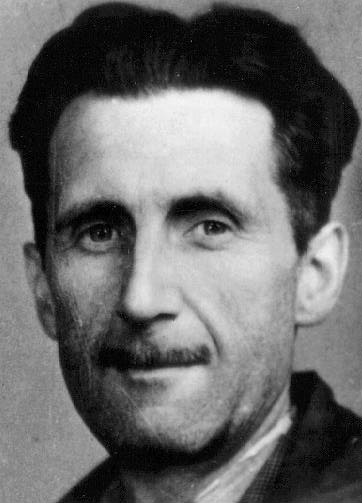
Orwell’s press card portrait, 1943

The backbone of the resistance against Franco was the Spanish working class, especially the urban trade union members. In the long run — it is important to remember that it is only in the long run — the working class remains the most reliable enemy of Fascism, simply because the working-class stands to gain most by a decent reconstruction of society. Unlike other classes or categories, it can’t be permanently bribed.

To say this is not to idealize the working class. In the long struggle that has followed the Russian Revolution it is the manual workers who have been defeated, and it is impossible not to feel that it was their own fault. Time after time, in country after country, the organized working-class movements have been crushed by open, illegal violence, and their comrades abroad, linked to them in theoretical solidarity, have simply looked on and done nothing; and underneath this, secret cause of many betrayals, has lain the fact that between white and coloured workers there is not even lip-service to solidarity. Who can believe in the class-conscious international proletariat after the events of the past ten years? To the British working class the massacre of their comrades in Vienna, Berlin, Madrid, or wherever it might be seemed less interesting and less important than yesterday’s football match. Yet this does not alter the fact that the working class will go on struggling against Fascism after the others have caved in. One feature of the Nazi conquest of France was the astonishing defections among the intelligentsia, including some of the left-wing political intelligentsia. The intelligentsia are the people who squeal loudest against Fascism, and yet a respectable proportion of them collapse into defeatism when the pinch comes. They are far-sighted enough to see the odds against them, and moreoever they can be bribed — for it is evident that the Nazis think it worth while to bribe intellectuals. With the working class it is the other way about. Too ignorant to see through the trick that is being played on them, they easily swallow the promises of Fascism, yet sooner or later they always take up the struggle again. They must do so, because in their own bodies they always discover that the promises of Fascism cannot be fulfilled. To win over the working class permanently, the Fascists would have to raise the general standard of living, which they are unable and probably unwilling to do. The struggle of the working class is like the growth of a plant. The plant is blind and stupid, but it knows enough to keep pushing upwards towards the light, and it will do this in the face of endless discouragements. What are the workers struggling for? Simply for the decent life which they are more and more aware is now technically possible. Their consciousness of this aim ebbs and flows. In Spain, for a while, people were acting consciously, moving towards a goal which they wanted to reach and believed they could reach. It accounted for the curiously buoyant feeling that life in Government Spain had during the early months of the war. The common people knew in their bones that the Republic was their friend and Franco was their enemy. They knew that they were in the right, because they were fighting for something which the world owed them and was able to give them.

One has to remember this to see the Spanish war in its true perspective. When one thinks of the cruelty, squalor, and futility of War — and in this particular case of the intrigues, the persecutions, the lies and the misunderstandings — there is always the temptation to say: “One side is as bad as the other. I am neutral”. In practice, however, one cannot be neutral, and there is hardly such a thing as a war in which it makes no difference who wins. Nearly always one stands more or less for progress, the other side more or less for reaction. The hatred which the Spanish Republic excited in millionaires, dukes, cardinals, play-boys, Blimps, and what-not would in itself be enough to show one how the land lay. In essence it was a class war. If it had been won, the cause of the common people everywhere would have been strengthened. It was lost, and the dividend-drawers all over the world rubbed their hands. That was the real issue; all else was froth on its surface.

George Orwell, “Looking back on the Spanish War”, New Road, 1943 (republished in England, Your England and Other Essays, 1953).

May 1, 2019

QotD: Standardized measurements, feudalism, and revolution

Filed under: Europe, France, History, Quotations — Tags: , , — Nicholas @ 01:00

The pint in eighteenth-century Paris was equivalent to 0.93 liters, whereas in Seine-en-Montane it was 1.99 liters and in Precy-sous-Thil, an astounding 3.33 liters. The aune, a measure of length used for cloth, varied depending on the material (the unit for silk, for instance, was smaller than that for linen) and across France there were at least seventeen different aunes. […]

Virtually everywhere in early modern Europe were endless micropolitics about how baskets might be adjusted through wear, bulging, tricks of weaving, moisture, the thickness of the rim, and so on. In some areas the local standards for the bushel and other units of measurement were kept in metallic form and placed in the care of a trusted official or else literally carved into the stone of a church or the town hall. Nor did it end there. How the grain was to be poured (from shoulder height, which packed it somewhat, or from waist height?), how damp it could be, whether the container could be shaken down, and finally, if and how it was to be leveled off when full were subjects of long and bitter controversy. […]

Thus far, this account of local measurement practices risks giving the impression that, although local conceptions of distance, area, volume, and so on were different from and more varied than the unitary abstract standards a state might favor, they were nevertheless aiming at objective accuracy. This impression would be false. […]

A good part of the politics of measurement sprang from what a contemporary economist might call the “stickiness” of feudal rents. Noble and clerical claimants often found it difficult to increase feudal dues directly; the levels set for various charges were the result of long struggle, and even a small increase above the customary level was viewed as a threatening breach of tradition. Adjusting the measure, however, represented a roundabout way of achieving the same end.

The local lord might, for example, lend grain to peasants in smaller baskets and insist on repayment in larger baskets. He might surreptitiously or even boldly enlarge the size of the grain sacks accepted for milling (a monopoly of the domain lord) and reduce the size of the sacks used for measuring out flour; he might also collect feudal dues in larger baskets and pay wages in kind in smaller baskets. While the formal custom governing feudal dues and wages would thus remain intact (requiring, for example, the same number of sacks of wheat from the harvest of a given holding), the actual transaction might increasingly favor the lord. The results of such fiddling were far from trivial. Kula estimates that the size of the bushel (boisseau) used to collect the main feudal rent (taille) increased by one-third between 1674 and 1716 as part of what was called the reaction feodale. […]

This sense of victimization [over changing units of measure] was evident in the cahiers of grievances prepared for the meeting of the Estates General just before the Revolution. […] In an unprecedented revolutionary context where an entirely new political system was being created from first principles, it was surely no great matter to legislate uniform weights and measures. As the revolutionary decree read “The centuries old dream of the masses of only one just measure has come true! The Revolution has given the people the meter!”

James C. Scott, Seeing Like A State: How Certain Schemes to Improve the Human Condition Have Failed, 1998.

April 30, 2019

QotD: Successful “democracies” in history have usually been disguised oligarchies

Filed under: Europe, France, History, Politics, Quotations, USA — Tags: , , , — Nicholas @ 01:00

Thus we get the “Revolutions” in America and France, where educated and newly politicised chattering classes try to find a simplistic solution to all the world’s problems. Their solution being to adopt a system which fits their preferred world order, and seems to give them an advantage that will allow them to force people into their way of thinking.

Humans being what they are, it didn’t work of course.

The American Revolution, supposedly about ‘equality for all’ – if you want to fall for idealistic propaganda – was actually a tax rebellion by Northern states (who also wanted to get rid of the English government’s treaties that kept them out of Indian land), and the Southern states (who wanted to block the English anti-slavery legislation from spreading to their nice comfy system). It was never really about equality, and all the exclusions of people from voting on the basis of colour, race, sex, religion, immigration status, etc., should have made it clear to anyone that what was being considered was really an Oligarchy. Similar in fact to the Ancient Greek and Roman slave-based societies, where some special and limited classes shared rights no one else had.

Actually all “successful” democracies in history have always been Oligarchies. The 1,000 year old “Sublime Republic of Venice” – on which large parts of the US constitution were based – for instance, being limited to a certain number of families that had the vote. Similarly the “Republics” of Ancient Greece or Rome, and modern Switzerland or Israel, being based on vote by military service – another way of ensuring the voters might put national interests above selfish ones.

The first few French republics (those squeezed in around the inevitable dictatorships and emperors that are the result of such systems) were also based on a limited franchise. In their case not a race or religion or sex one like the US, but a straight property qualification that saw a small percentage of both sexes as voters.

Unsurprisingly the Oligarchical Republics of the 18th and 19th centuries were some of the most internally violent (US Slavery, Civil War, Indian Wars, the Terror, multiple revolts and “communes”, Lynchings, Jim Crow laws, etc), and externally aggressive (Napoleonic Wars, Spanish–American Wars, “Interventions” in Central America, Occupations of Hawaii, Philippines, etc.) governments in history. Rivaling the Greek and Roman republics for their aggressive expansionism by land and sea, and certainly being no less effective than more traditional military (Russia and Germany) or trade (Britain and Netherlands) expansionist states.

(And here I would note that the one of the mitigating factors in the idea that German Nationalism was a problem in WWI, was that the populist Navy Leagues and Colonial Leagues of the newly enfranchised voting classes did in fact push Nationalism to dangerous extremes. The Kaiser was a dangerous loon, but he was a dangerous loon responding to the fervor of the dregs of the petit bourgeois who had been enfranchised in his nation, not a man with Napoleonic capabilities in his own right.)

Nigel Davies, “The Solution is… European Union/Multiculturalism/Communism… Name your poison!”, rethinking history, 2015-12-26.

April 21, 2019

QotD: High Modern city design as a tool to control the populace

Scott notes that although citizens generally didn’t have a problem with earlier cities, governments did:

Historically, the relative illegibility to outsiders of some urban neighborhoods has provided a vital margin of political safety from control by outside elites. A simple way of determining whether this margin exists is to ask if an outsider would have needed a local guide in order to find her way successfully. If the answer is yes, then the community or terrain in question enjoys at least a small measure of insulation from outside intrusion. Coupled with patterns of local solidarity, this insulation has proven politically valuable in such disparate contexts as eighteenth-and early nineteenth-century urban riots over bread prices in Europe, the Front de Liberation Nationale’s tenacious resistance to the French in the Casbah of Algiers, and the politics of the bazaar that helped to bring down the Shah of Iran. Illegibility, then, has been and remains a reliable resource for political autonomy

This was a particular problem in Paris, which was famous for a series of urban insurrections in the 19th century (think Les Miserables, but about once every ten years or so). Although these generally failed, they were hard to suppress because locals knew the “terrain” and the streets were narrow enough to barricade. Slums full of poor people gathered together formed tight communities where revolutionary ideas could easily spread. The late 19th-century redesign of Paris had the explicit design of destroying these areas and splitting up poor people somewhere far away from the city center where they couldn’t do any harm.

Scott ties this into another High Modernist creation: the collective farms of the Soviet Union. This was a terrible idea and responsible for the famines that killed millions (tens of millions?) during Stalin’s administration. The government went ahead with them because the non-collectivized farmers were too powerful and independent a political bloc. They lived in tight-knit little villages that did their own thing, the Party officials who went to these villages to keep order often ended up “going native”, and the Soviets had no way of knowing how much food the farmers were producing and whether they were giving enough of it to the Motherland.

The collectivized farms couldn’t grow much, but people were thrown together in artificial towns designed to make it impossible to build any kind of community: there was nowhere to be except in bed asleep, working in the fields, or at the public school receiving your daily dose of state propaganda. The towns were identical concrete buildings on a grid, which left the locals maximally disoriented (because there are no learnable visual cues) and the officials maximally oriented (because even a foreigner could go to the intersection of Street D and Street 7). All fields were perfectly rectangular and produced Standardized Food Product, so it was (theoretically) easy to calculate how much they should be producing and whether people were meeting that target. And everyone was in the same place, so if there were some sort of problem it was much easier to bring in the army or secret police than if they were split up among a million tiny villages in the middle of nowhere.

    Confronting a tumultuous, footloose, and “headless” rural society which was hard to control and which had few political assets, the Bolsheviks, like the scientific foresters, set about redesigning their environment with a few simple goals in mind. They created, in place of what they had inherited, a new landscape of large, hierarchical, state-managed farms whose cropping patterns and procurement quotas were centrally mandated and whose population was, by law, immobile. The system thus devised served for nearly sixty years as a mechanism for procurement and control at a massive cost in stagnation, waste, demoralization, and ecological failure.

Scott Alexander, “Book Review: Seeing Like a State”, Slate Star Codex, 2017-03-16.

April 15, 2019

The Lenin Boys Go To War – Hungarian Soviet Republic I THE GREAT WAR 1919

Filed under: Europe, History — Tags: , , , , , , — Nicholas @ 06:00

The Great War
Published on 14 Apr 2019

Like many European countries, Hungary experienced rapid political changes in the aftermath of the 1918 armistices. The Kingdom of Hungary used to rule big parts of South Eastern Europe and many peoples within its former boundaries are now gaining independence and expand their territory. The new Hungarian Republic is faced by external and internal pressures and after a coup becomes the Hungarian Soviet Republic, the 2nd Soviet State in Europe.

» SUPPORT THE CHANNEL
Patreon: https://www.patreon.com/thegreatwar
Merchandise: https://shop.spreadshirt.de/thegreatwar/

» SOURCES
Böhler, Jochen. “Post War Military Action and Violence (East Central Europe,” in 1914-1918 online. International Encyclopedia of the First World War. https://encyclopedia.1914-1918-online…

Borsanyi, György. The Life of a Communist Revolutionary, Bela Kun (New York: Columbia University Press, 1993).

Freud, Sigmund and Sándor Ferenczi. The Correspondence of Sigmund Freud and Sándor Ferenczi, Volume 2: 1914-1919. Eva Brabant, Ernst Falzeder, Patrizia Giampieri-Deutsch, eds. (Boston: Harvard University Press, 1993).

Gerwarth, Robert. The Vanquished. Why the First World War Failed to End, 1917-1923 (Penguin, 2017).

Gilley, Christopher. “Peasant Uprisings/Tambovshchina” in 1914-1918 online. International Encyclopedia of the First World War: https://encyclopedia.1914-1918-online…

Leidinger, Hannes. “Revolutions (Austria Hungary),” in 1914-1918 online. International Encyclopedia of the First World War https://encyclopedia.1914-1918-online…

Leonhard, Jörn. Der überforderte Frieden. Versailles und die Welt 1918-1923 (CH Beck, 2018).

Mawdsley, Evan. The Russian Civil War (New York: Pegasus Books, 2005).

Molnar, Miklos. From Bela Kun to Janos Kadar: 70 years of Hungarian Communism (New York: Berg, 1990).

Pastor, Peter. Hungary Between Wilson and Lenin (New York: Columbia University Press, 1976).

Pastor, Peter, ed. Revolutions and Interventions in Hungary and its Neighbor States, 1918-1919 (New York: Columbia University Press, 1988).

Vörös, Boldiszar. “Bela Kun,” in 1914-1918 online. International Encyclopedia of the First World War https://encyclopedia.1914-1918-online…

» SOCIAL MEDIA
Twitter: https://twitter.com/WW1_Series
Reddit: https://reddit.com/r/TheGreatWarChannel

»CREDITS
Presented by: Jesse Alexander
Written by: Jesse Alexander
Director: Toni Steller & Florian Wittig
Director of Photography: Toni Steller
Sound: Toni Steller
Editing: Toni Steller
Mixing, Mastering & Sound Design: http://above-zero.com
Motion Design: Christian Graef – GRAEFX
Maps: Daniel Kogosov (https://www.patreon.com/Zalezsky)
Research by: Jesse Alexander
Fact checking: Florian Wittig
Channel Design: Alexander Clark
Original Logo: David van Stephold

A Mediakraft Networks Original Channel

Contains licenced material by getty images
All rights reserved – Real Time History GmbH 2019

April 2, 2019

How Trains Changed China | Stuff That I Find Interesting

Filed under: China, Economics, Government, History, Military, Railways — Tags: , — Nicholas @ 02:00

Jabzy
Published on 27 Mar 2016

Thanks to Xios, Alan Haskayne, Lachlan Lindenmayer, William Crabb, Derpvic, Seth Reeves and all my other Patrons. If you want to help out – https://www.patreon.com/Jabzy?ty=h

Music by Derek Fiechter – https://www.youtube.com/channel/UCVRJ…

March 25, 2019

The Boston Massacre – Snow and Gunpowder – Extra History

Filed under: Britain, History, Military, USA — Tags: , , , , , — Nicholas @ 04:00

Extra Credits
Published on 23 Mar 2019

Boston, 1770. A frigid winter night. A British sentry strikes a local citizen. Civilians begins to gather. Reinforcements arrive to back up the young sentry. Insults and snowballs escalate. Then out of the darkness comes a shout: “FIRE!”

The Boston Massacre didn’t come out of nowhere — resentment between the early US colonies and the British army had been brewing for some time over the Stamp Act. A propaganda war ensued between the loyalists and the radicals. John Adams would get his revolutionary start as he worked to resolve this injustice…

Join us on Patreon! http://bit.ly/EHPatreon

« Newer PostsOlder Posts »

Powered by WordPress