Polyus Studios
Published 3 Oct 2017Support me on Patreon – https://www.patreon.com/polyusstudios
**I realize a few of you are having trouble with the way I talk and how I’ve done the sound mixing. Please note that this was my first video and I tried to get everything right as I learned to do it. That said, I obviously made some mistakes. I am just one guy making these things and I’m learning as I go. Feel free to check out my more recent videos where I have tried to correct the sound issues.**
The CF-100 is Canada’s only domestically designed jet fighter to reach service and to be built directly to RCAF specifications. In its day it was a competitive all-weather interceptor. The Canuck protected Canadian airspace from the threat of nuclear armed Soviet bombers for over a decade. This is the story of its development and deployment.
Aircraft mentioned:
Vampire F.3
CL-13 Sabre
CF-100 Canuck
CF-101 Voodoo
CF-105 ArrowResearch sources:
http://www.cmp-cpm.forces.gc.ca/dhh-d…
https://www.bombercommandmuseum.ca/aircraft/cf-100/
http://www.canadianflight.org/content/avro-canada-cf-100-canuck
http://www.avroland.ca/al-cf100.html
http://www.aviastar.org/air/canada/canada_canuck.php
http://www.rwrwalker.ca/caf_canucks.html
http://image-bank.techno-science.ca/d…
NORAD and the Soviet Nuclear Threat: Canada’s Secret Electronic Air War By Gordon A.A. Wilson0:00 Introduction
1:08 Initial Development
2:38 CF-100 Mk 1 and Mk 2
4:26 CF-100 Mk 3
6:51 CF-103 and Transonic Speeds
7:36 CF-100 Mk 4
11:33 CF-100 Mk 5
13:14 Velvet Glove and Future Proposals
14:28 Operational History
20:02 Conclusion#CF100 #CanadianAerospace #PolyusStudios
August 6, 2021
Avro Canada CF-100 Canuck: Canada’s only domestically produced all-weather interceptor
December 28, 2020
Another aircraft that’s about to become a political football in Canada
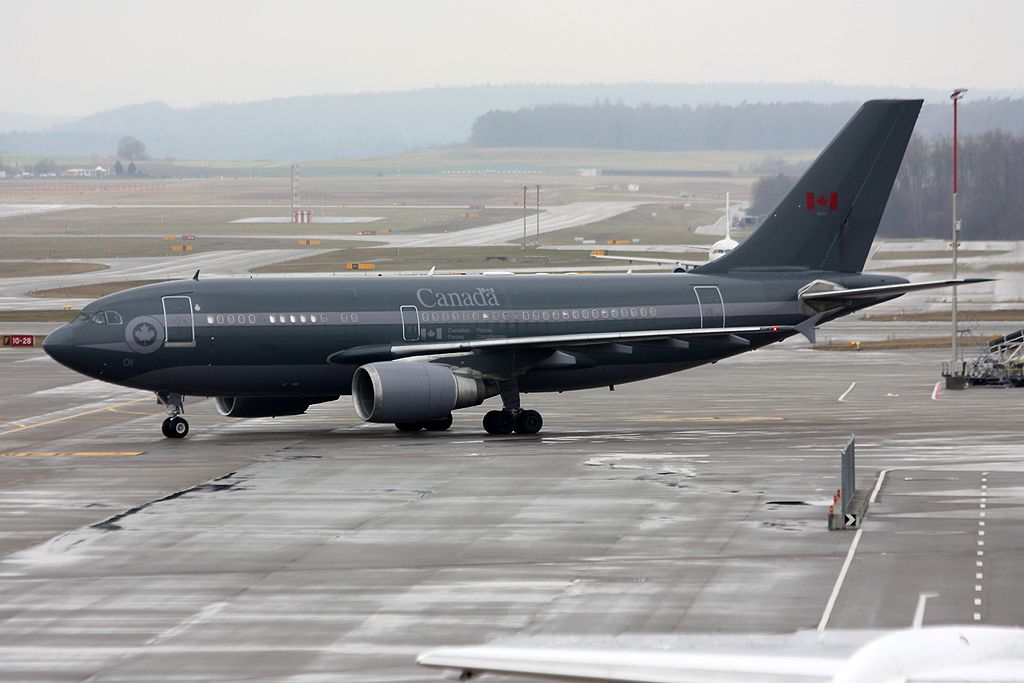
Ted Campbell discusses the need to replace the Royal Canadian Air Force long-haul VIP transport aircraft (the current CC-150 Polaris planes were built and first operated by Wardair in 1987 and obtained by the government in 1993). It’s traditional for the government to be assailed by the opposition and the media (at least when it’s a Conservative government in office) for wanting to spend far too many dollars for unnecessarily luxurious planes (Jean Chretien in opposition called the Polaris a “flying Taj Mahal”)*. The Polaris and its eventual replacement do a lot more than just fly junketing politicians around:

RCAF CC-150 Polaris at Zurich, Switzerland on 25 January, 2012.
Photo by Kambui via Wikimedia Commons
… let’s all remember please that the primary roles of this fleet of aircraft are to transport Canadian troops to wherever in the world they might need to go, for operations, and to refuel our jet fighters when they are deployed overseas, and to carry cargo, but smaller loads that do not require a big CC-130 Hercules or the mighty CC-177 Globemaster III. The Royal Canadian Air Force needs a fleet of specially modified aircraft for those roles. There are several more modern “tankers” available including the Boeing KC-46 which is used by the USA and Israel and the Airbus A330 Multi Role Tanker Transport (MRTT) which is used by several nations including Australia and the United Kingdom. […] Some commercial aircraft can be converted, easily and quickly, from carrying passengers in seats to carrying cargo in containers to carrying aircraft fuel in giant bladders with refuelling hoses attached. They are true multi-role aircraft. They can also be converted to VIP aircraft with special suites for sleeping, with showers, work spaces, secure telecommunications and regular conventional passenger seats for support staff and journalists.
The key bit of a real VIP aircraft is a secure (high-grade encryption) communications and information suite. The prime minister, ministers and senior officials, when en route to a meeting in a foreign capital may need to have discussions that are SECRET-CANADIAN EYES ONLY with senior staff back in Ottawa and they may then need to have a video conference call with, say, the Prime Ministers of e.g. Australia and the United Kingdom using a different security system that allows them to discuss SECRET-FIVE EYES ONLY materiel. You’re talking a reliable satellite communications system (with a back-up, too) and various cryptographic terminals and the people to operate and maintain them. The comm/IT suite is complex and expensive. Everything else is optional and, even in the case of a VIP shower stall, pretty cheap, too.
OK, I can already hear the objections, many from Conservatives: “Why doesn’t he fly commercial? He can even fly First Class,” some will say. Aside from some very real security concerns, suppose he has to attend a G-20 meeting in Brazil. There are no flights from Ottawa, there are no direct flights from Toronto. Even if there were he would need an entourage of security and telecommunications/cryptography specialists. I know the Pope charters an Alitalia jet when he travels but I’m afraid that even Air Canada, which has 400± aircraft and carries over 50,000,000 passengers a year, might find it too difficult to keep an aircraft on something close to “hot-standby,” as the RCAF does, for the prime minister. This problem was examined many times over the years and the range of factors ~ security, communications, availability ~ dictate that a dedicated VIP squadron in the Air Force is the best choice … maybe the only sensible choice.
* I rarely say much in favour of former PM Jean Chrétien, but in this particular case he was consistent in his opposition even after being elected: he refused to use the VIP transport during his time in office and attempted to find a buyer for that particular aircraft. Successor Paul Martin had no such aversion and used the aircraft during his premiership.
November 26, 2019
The Avro Arrow
The History Guy: History Deserves to Be Remembered
Published 25 Nov 2019In the 1950s, Canada had one of the world’s most advanced aerospace industries. But the cancellation of the Avro CF-105 “Arrow” changed everything. The History Guy remembers the Avro Arrow and forgotten aviation history. It deserves to be remembered.
(more…)
July 11, 2019
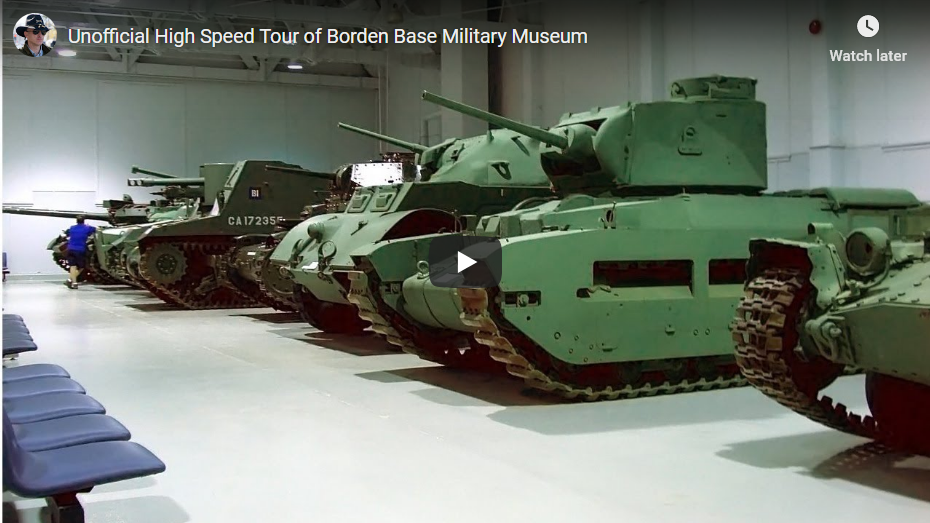
Unofficial High Speed Tour of Borden Base Military Museum
The_Chieftain
Published on 8 Jun 2019Canadian Forces Base Borden is located about an hour’s drive North of Toronto. The base is open access, so anyone can go to the museum.
In addition to the vehicles at the museum, there are others scattered as monuments around the base. I encountered a T-72 and T-55 on my way out the gate.
November 6, 2018
Fly the “Party Flight” with Canadian (Forces) Airways!
In the Ottawa Citizen, David Pugliese reminds us that not all is right with the higher-ups of the Canadian military, based on what was allowed to occur — and at least partly covered-up — on a VIP flight last year:
The December 2017 “Team Canada” tour – now more popularly known in some quarters in the military as “the party flight” – has without a doubt been a major public relations black eye for the Canadian Forces.
The tour, with VIPs who were supposed to boost the morale of military personnel deployed overseas, turned into a fiasco. Some VIPs on the RCAF flight to Greece and Latvia were drunk and abusive to the crew, in particular the military flight attendants. The VIP civilian passengers, including former NHL player Dave “Tiger” Williams were exempt from security screening before the flight, and some — already drunk — walked on to the Canadian Forces aircraft with open alcoholic drinks in their hands.
Two individuals were so drunk they were reported to have urinated themselves. Video taken aboard the plane showed people — including a staff member from Chief of the Defence Staff Gen. Jon Vance’s office — dancing in the aisles of the aircraft with their drinks as a rock band played at the back of the plane. Others chewed tobacco, in violation of Canadian Forces rules, spitting the slimy juice into cups for flight attendants to clean up.
The military flight crew was prohibited from approaching the VIPs except to provide them with service. The crew felt they couldn’t do anything to put a halt to the antics as these very important people were Vance’s guests.
Williams has been charged with sex assault and assault. He denies the charges.
The $337,000 taxpayer-funded trip was planned by Vance’s office. Vance okayed the booze on the RCAF aircraft.
We know all of this now.
But almost right from the beginning, the Canadian Forces/Department of National Defence Staff Public Affairs branch appeared to try its best to mislead journalists – and ultimately the public – on what actually took place on that flight.
September 22, 2018
The Distant Early Warning Line
The History Guy: History Deserves to Be Remembered
Published on 23 Apr 2018The History Guy examines how the Cold War transformed Canada with the establishment of the U.S. Air Force’s distant early warning or dew line.
The History Guy uses images that are in the Public Domain. As photographs of actual events are often not available, I will sometimes use photographs of similar events or objects for illustration.
Patreon: https://www.patreon.com/TheHistoryGuy
The History Guy: Five Minutes of History is the place to find short snippets of forgotten history from five to fifteen minutes long. If you like history too, this is the channel for you.
September 16, 2018
A suggested re-organization for the Canadian Forces
Ted Campbell continues his series on how to reform the Canadian Forces, this time looking at the overall command and control structure:
How the nation’s armed forces should be organized is a topic of nearly endless debate amongst military people. It is no secret, I think, that I favoured the joint force structure that former Defence Minister Paul Hellyer introduced in the 1960s. I was less enamoured with his idea of functional commands, but it was hard to strike a balance. I like the American model of joint, regional commands.
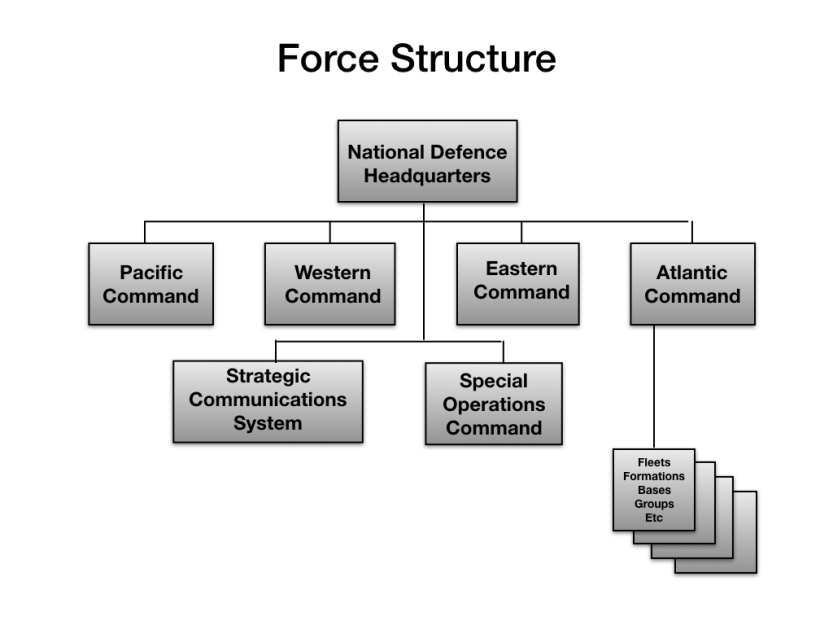
There is, almost always, a need for a few, national, functional organizations ~ for special forces and, perhaps global, strategic command, control and communications (C³) ~ but, in general, I believe that one large, national, strategic/operational HQ can control a half dozen commands, say four or five regional and two or three functional, something like this:
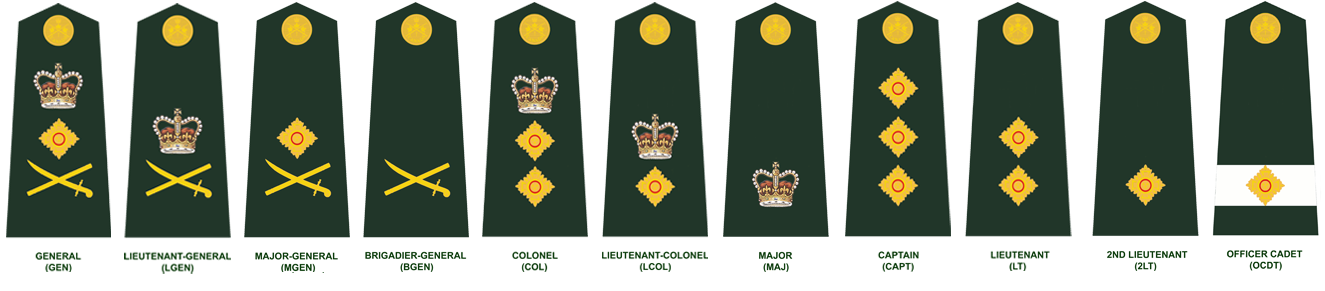
In my model (which reflects my deeply personal and often idiosyncratic views) the three star* Chief of the Defence Staff, in Ottawa, would command, just for example, four two star regional joint commanders (rear admirals or major generals) who would, in their turn, command almost every formation, base, depot, dockyard, base, combat ship and combat brigade, unit or wing in their geographic area. There would be a few exceptions ~ the one star officer (commodore or brigadier general, perhaps only a Navy captain or Army/RCAF colonel is needed) commanding the Strategic Communications System would command the specialized units scattered across the country and, indeed, around the world, but those units would get their day-to-day administrative and logistical support from their regional commander. Ditto for the one star officer commanding the Special Operations Command … except that he might need to have a bit more administrative and logistical power because of the nature of his business. There might be a perceived need for a separate Joint Operations (Overseas) Command but I doubt it is really necessary. The national Joint Staff (headed by a two star officer) in Ottawa can plan and direct the mounting of operations and each regional command should have a one star deputy commander who has a deployable HQ than can go, by sea and or air, to any trouble-spot in the world on fairly short notice.
In my model it seems obvious that Pacific and Atlantic Commands are going to be, primarily joint Navy/Air commands, likely, usually, commanded by a Navy rear admiral or an RCAF major general while Western and Eastern Commands will be, mainly, joint Army/Air commands, usually commanded by Army or RCAF major generals, but, if (s)he is the best person available there is no reason why an Army major general could not command Pacific Command and no reason why a Navy rear admiral could not command Western Command, for example. The commanders will have real commands, full of fighting and support forces … things like the current Canadian Forces Intelligence Command, will revert to being staff branches in the national HQ and the units will be part of the joint commands. Similarly, the Chiefs of the Naval, General and Air Staffs will be the professional heads of their services, responsible for things like doctrine, individual training standards and equipment requirements, but they will not be commanders.
[…]
* One of my critics has chided me for using the term “stars” when we, Canadians, don’t put stars on admirals’ and generals’ shoulders, rather they have maple leaves to indicate the level of their rank … fair enough, except that he is, as we used to say, “picking the fly sh!t out of the pepper” because I’m not using “slang”, as he suggests, but rather, I am using that was, when I served, and I understand is, still, common parlance in Canada and amongst our allies, including in the UK and Australia, too.
September 13, 2018
The Canadian Forces are suffering from obesity … in leadership and staff
Ted Campbell responds to requests to explain what he feels the Canadian Forces should do about our far-too-large military headquarters buttprint:
… let’s consider the command and control (C²) superstructure. I’m going to continue to argue that it is beyond “fat,” it is, now, morbidly obese and that condition actually poses a danger to our national defence. Too many cooks do spoil the broth and Canada has too many admirals and generals […] without enough real ‘work’ to keep them all productively busy; so they send each other e-mails and fabricate crises for their own HQ to solve and, generally, just make a nuisance of themselves. Fewer admiral and generals (and Navy captains and Army and RCAF colonels) will be busier and more productive and less dangerous.
I have a couple of concrete suggestions:
Start by reducing the rank of the Chief of the Defence Staff from four stars (admiral or general) to three stars, vice admiral or lieutenant general. We only have something like 65,000 regular force military members and 25,000 reserve force members. In about 1960 the Canadian Army, alone, had nearly 50,000 regular force members and something like 30,000 in the militia (reserve army) and it was commanded by one lieutenant general. Now, some will argue that times have changed and increased complexity means that higher ranks are needed. I call bullsh!t! The Israeli Defence Forces, today, has over 175,000 full time members and over 400,000 in reserve. Gadi Eizenkot, the Chief of Staff of the IDF holds the rank of Rav Aluf ~ lieutenant general, and he is the only Israeli officer to hold that high a rank. Now, let’s play a little mind game … suppose you are (four star) General Joseph Dunford of the United States Marine Corps, the Chairman of the Joint Chiefs of Staff, the most senior officer in the world’s most powerful military; now suppose, also, that your phone is ringing off the hook for some reason and your aide calls in on the intercom and says, “I have (four star) General Vance of Canada on line 1 and (three star) Rav Aluf Eizenkotof Israel on line 2, sir.” Which line does General Dunford pick up? Of course he isn’t impressed by Canadian General Jonathan Vance’s four stars; but he is mightily impressed by the size and power of the force that answers to three star Lieutenant General Eizenkot.
The argument that we need a four star CDS just because everyone else has one is specious … it’s rubbish. The Americans have several four star admirals and generals, they also have over 1¼ million active duty military personnel and 10 aircraft carriers and over 4,000 nuclear weapons. India has has a few four star officers, the Indian Army, with over 1 million regular, professional troops and with almost 1 million reserve soldiers, has one, only one, four star general. Canada does not need any four star officers on a regular basis … our lieutenant generals, vice admirals, rear admirals and so on, including Navy captains and Army colonels may all need generous pay raises but they do not need more gold on their shoulders and sleeves. Canada got its first four star officer back during World War II, when we had over 1 million men and women under arms. The rank returned in 1951, after our main allies, America (in 1947) and Britain (in 1939) established unified Chiefs of Staff committees to coordinate joint operations, when General Charles Foulkes was appointed to the post, which he would hold for almost a decade. Lowering the rank to three stars (vice admiral or lieutenant general) and raising the pay, would set a good example for the rest of the military and, indeed for all of government, in setting senior executive compensation, including perquisites, and status at reasonable levels.
Another thing, which I have mentioned before, is that back in the 1960s, when Defence Minister Paul Hellyer was upsetting every apple cart he and his team decided that the best way to set ranks and pay was to “benchmark” some military jobs with civil service equivalents. Now, in the civil service the appointment of “director” is, usually, the lowest level of executive ~ it is the point where technical expertise meets up with broader government wide responsibility and accountability, ‘ranks’ below that are specialists, ranks above it are, increasingly generalists. Now, anyone who knows much of anything about the military will agree that the first executive level in the Canadian Armed Forces is the captain of a major warship (a frigate, say) or the commanding officer of an Army regiment or battalion or of an Air Force squadron. Those ships and units are commanded by officers in the rank of commander or lieutenant colonel but for some reason, in the mid 1960s, the Hellyer team decided, probably just an error made in haste, that Navy captain and Army colonel and RCAF group captain were the appropriate ranks for directors and some very serious rank inflation was embedded inside the Canadian Armed Forces’ command and control (C²) superstructure … it’s an easy enough problem to fix although it will cause some short term disruption, and it means that the officers’ pay scales probably need to be reformed all the way down to the very bottom.
It has always seemed to me that the hallmark of a great army, of a great defence staff, especially, is a culture of excellence. The ranks of the staff don’t matter much, the staff act of behalf and in the name of the commander they serve. In fact, in a really good staff system the chain of command is always crystal clear because the senior staff are always, without fail, lower in rank (occasionally equal to) than the subordinate commanders. Thus, in an army corps (three or four divisions, perhaps 100,000 soldiers) the corps commander is a lieutenant general (three stars) and the subordinate commanders of divisions and of the corps artillery, are major generals (two star officers); in a proper corps the chiefs of staff of the operations and logistics branches, who control operations on behalf of the corps commander, are one star officers ~ brigadier generals. Ditto in the division (20,000+ soldiers) where the major general is the division commander and brigadier generals are the brigade commanders, the two chiefs of staff (operations, which includes intelligence, and logistics, which includes administration and personnel) are colonels … in each case the subordinate commanders outrank the senior staff officers. But the senior staff are listened to with great regard because they are excellent at their job and because they speak for the superior commander.

August 23, 2018
Lost model of the Avro Arrow found off Prince Edward County
Call me a cynic, but this is likely to kick off yet another round of myth-making about the Avro Arrow:
An iconic piece of Canada’s aviation history has been pulled out of the depths of Lake Ontario and the recovery team is hoping to find more beneath the waves.
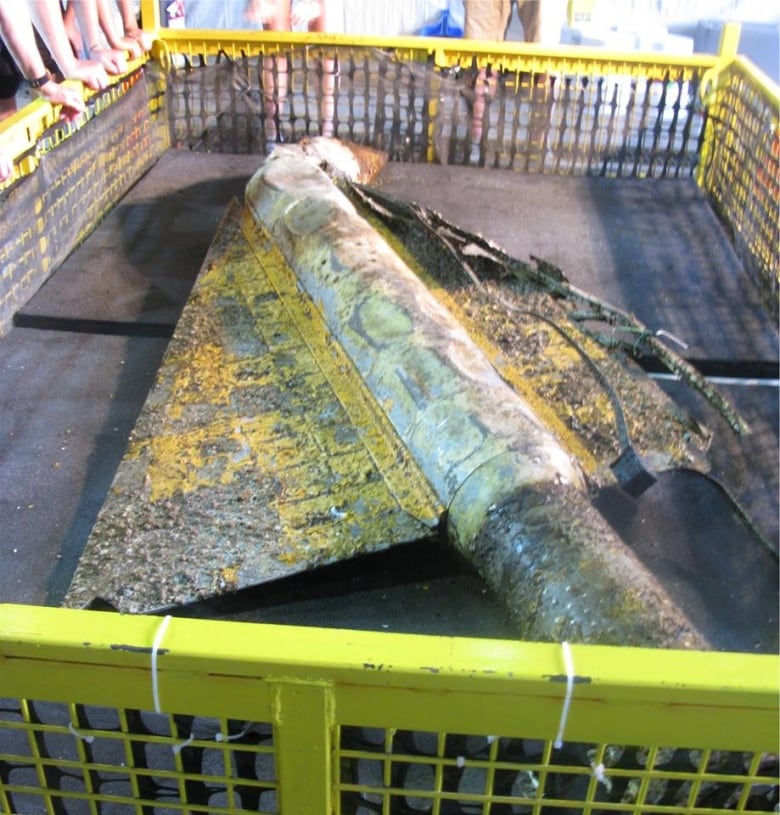
Divers brought what is believed to be a model of the Avro Arrow to the surface last week off Prince Edward County and brought it to the Canada Aviation and Space Museum on Tuesday.
Since last September, a series of models have been found at the bottom of Lake Ontario.
The model is about three metres long — a 1/8 scale of the actual plane, according to Erin Gregory, assistant curator at the museum.
“It looks like a rocket with large triangular wings,” she said.
1/8 scale model of the Avro Arrow recovered from Lake Ontario off the shores of Prince Edward County
Photo by OEX Recovery Group, via CBC.The Canadian Conservation Institute and the aviation museum, will oversee the conservation and restoration of the test models.
What they found last week, is not the full replica of the Arrow, the search group was hoping to find. Instead they believe it is a smaller model, meant to test the delta wing design — the triangular shape the plane was known for.
“The delta wing was a relatively new concept at that point, so it required a lot of testing to determine whether or not it would perform well, particularly at supersonic speeds,” said Gregory.
The Avro Arrow holds a special place in the hearts of Canadian conspiracy theorists – it’s “artisanal Canadian myth-making, hand-woven, fair-trade, and 100% organic”. As I said back in 2004, this is the only truly Canadian conspiracy theory (Colby Cosh calls it our “Napoleon-hat” complex).
July 30, 2018
Auditor General to look at the RCAF’s “capability gap” claim
Ted Campbell reports on the news that the Auditor General will investigate the Trudeau government’s claim that the RCAF would be unable to meet its obligations due to a newly discovered lack of airframes:
I see in a Canadian Press report published in the Globe and Mail that “Canada’s auditor general has started to dig into one of the Trudeau government’s most contentious claims, upon which rests the fate of hundreds of millions of taxpayer dollars: that the country is facing an urgent shortage of fighter jets … [and] … The claim was first made in November, 2016, when the Liberals announced that Canada didn’t have enough fighter jets to defend North America and simultaneously meet the country’s NATO commitments, and that a stopgap was urgently needed until the entire CF-18 fleet could be replaced.“
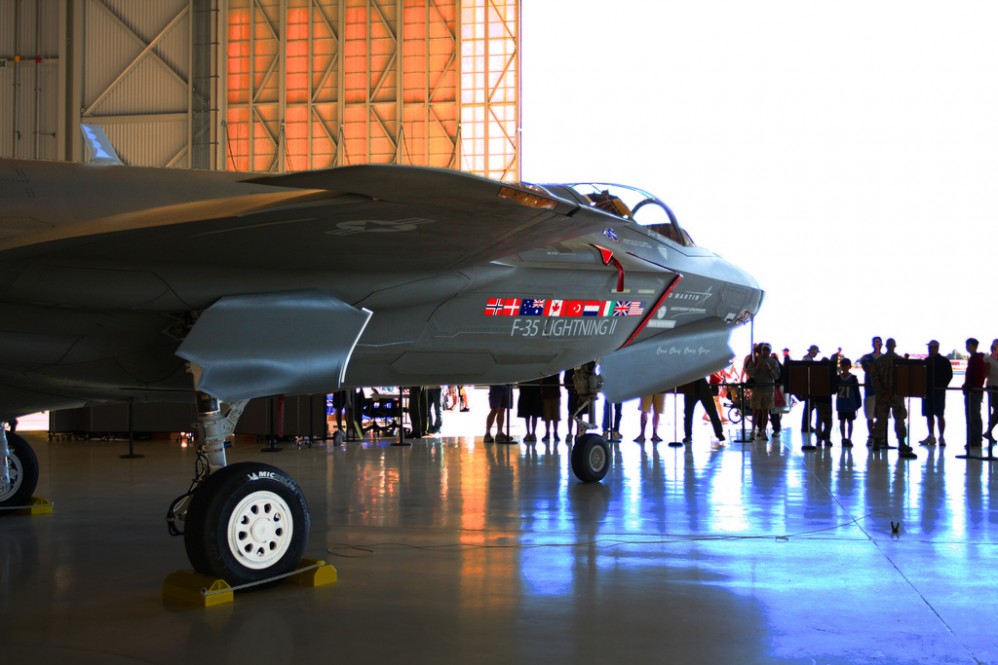
You’ll remember, I hope, that back in 1997 Canada’s government (Jean Chrétien was our Liberal prime minister) decided to join the US (but soon multi-national) F-35 Lightening II programme with the implicit intention of buying the aircraft and the explicit goal of sharing in the work, profits and jobs that the project might create. In 2010 the Government of Canada (Stephen Harper was the Conservative prime minister) committed to buying the aircraft for the Royal Canadian Air Force. There ensued an almighty public row over costs ~ partially because some generals and some DND officials tried to ‘low ball‘ the actual costs, partially because almost no one in government can agree on how to define ‘life cycle costs,‘ partially because most Canadian journalists are nearly innumerate and partially because the Liberal ‘war room‘ launched a disinformation campaign ~ and that rocked the Harper government back on its heels and made it a campaign issue. In 2015 the Liberal Party promised that Canada would not buy the F-35 but would, instead, hold “an open and transparent competition to replace the CF-18 fighter aircraft.”
Then, when in power the Liberal “government originally planned to buy 18 interim Super Hornets from Boeing for $6.4-billion before the deal was scuttled late last year in favour of buying 25 used jets from Australia for $500-million … [but] … critics, including opposition parties and former air force commanders, accuse the government of fabricating an urgent “capability gap” – as the shortfall is known – by changing the military’s requirements to avoid having to buy the F-35 stealth fighter.” The rumour ~ and that’s all it ever amounted to, as far as i know ~ floating around Ottawa was that the Liberals saw the Boeing Super Hornet fighter as a “cheap and dirty,” readily available solution and they felt confident that they could, easily back away from the promise to hold a competition, thus avoiding the dilemma of having an “open and transparent competition” while already having decided that the F-35 could not win.
June 6, 2018
D-Day: Canada at Juno Beach
Yesterday Today
Published on 3 Jun 2017D-Day: Canada at Juno Beach
6 June 1944
Of the nearly 150,000 Allied troops who landed or parachuted onto the Normandy coast, 14,000 were Canadians. They assaulted a beachfront code-named “Juno”.
The Royal Canadian Navy contributed 110 ships & 10,000 sailors in support of the landings while the RCAF had helped prepare the invasion by bombing targets inland. On D-Day & during the ensuing campaign, 15 RCAF fighter & fighter-bomber squadrons helped control the skies over Normandy and attacked enemy targets. On D-Day, Canadians suffered 1074 casualties, including 359 killed.
February 1, 2018
MV Asterix accepted by the Royal Canadian Navy
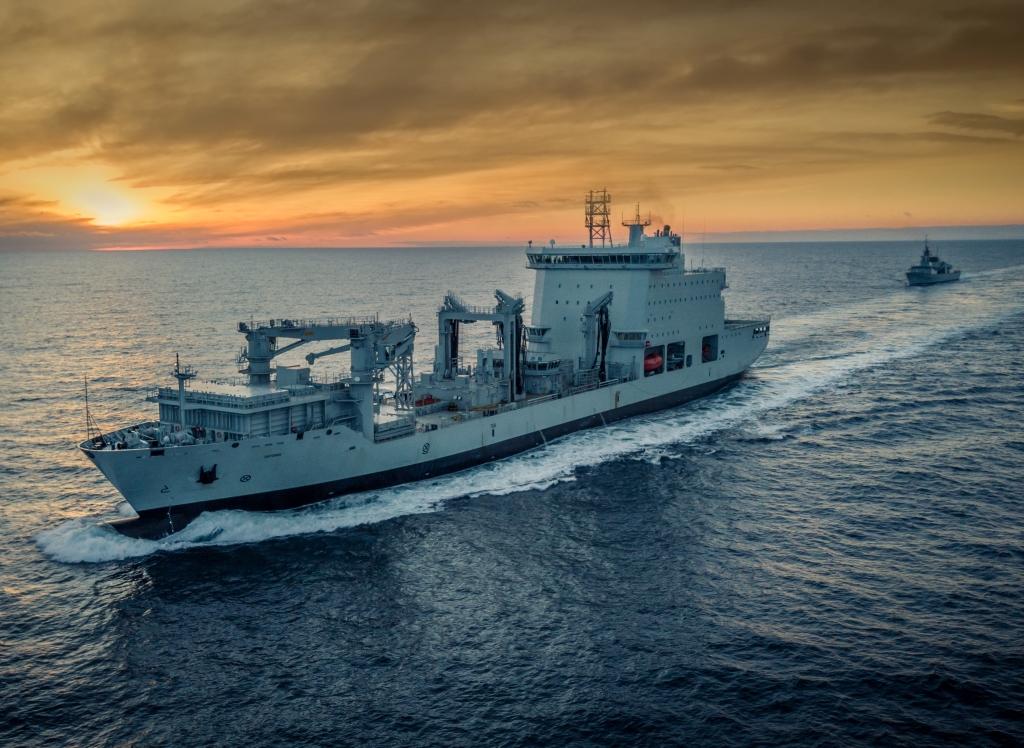
With the Queenston-class AOR ships still pinned to the drawing board, the Royal Canadian Navy has been reduced to borrowing support ships from allies and friendly nations to allow our combat ships to operate further from shore than a local fishing boat, the delivery and acceptance of the MV Asterix has to count as good news:
Davie Shipbuilding and Federal Fleet Services announced that following an intensive period of at-sea trials and testing, Asterix has been formally accepted by the Department of National Defence and has now entered full operational service with the Royal Canadian Navy (RCN) and Royal Canadian Air Force (RCAF).
As planned, Asterix performed daily replenishment-at-sea (RAS) exercises with the RCN and conducted extensive RCAF CH-148 Cyclone helicopter operations to prove and demonstrate the world-leading capabilities of the Resolve-Class Naval Support Ship. These exercises have included everything from dual RAS operations to helicopter landing, take-off and vertical replenishment trials.
Spencer Fraser, CEO of Federal Fleet Services commented “To deliver the first Canadian naval ship in over twenty years, the first supply ship in almost 50 years, and to reach FOC so efficiently and in such a short period of time is a testament to the hard work, dedication and dynamism of the teams at Davie and FFS. We are all very proud of our achievement and appreciative of the professional support we have received from DND and PSPC.”
Asterix has been leased by the government, and will be operated by a blend of merchant seamen and RCN/RCAF personnel as required for any given mission. She’ll remain an MV, not an HMCS and is not expected to be operated in “hot” environments where combat could occur. She will remain with the fleet at least until the planned-but-not-yet-started Queenston class ships are ready for service. Davie has offered to refit another ship for the RCN to lease (so we’d have one AOR for the East coast and one for the West), but so far the Trudeau government has resisted the offer.
July 23, 2017
In military training, “similar” is not the same as “identical”
Ted Campbell looks at one of the legacies of the 1968 integration of the Canadian Army, Royal Canadian Navy, and Royal Canadian Airforce as the unified Canadian Armed Forces:
Our problem, in Canada, goes back to a fairly simple mistake that former Defence Minister Paul Hellyer and his minions made in the mid 1960s. First I must declare that a lot of what Mr Hellyer proposed was good ~ the unification of the armed forces, creating proper joint commands in which Navy, Army and Air Force units and formations served together, under one single commander, just as history taught they they would fight together in war, made excellent sense. Some of what he introduced ~ like the integration of the military into a single service and introducing common occupation and training systems ~ made less, little or no sense at all.
The logical trap into which Mr Hellyer and his team fell and the consequential problem which still infects the Canadian Armed Forces today is that they failed to grasp that similar ≠ identical. Consider, for example, a Navy helicopter pilot and an Army attack helicopter pilot ~ both must fly rotary wing aircraft at a basic level, in that they are almost certainly identical, but, after that, the differences between landing a very big helicopter on the heaving deck of a very small warship and flying a small helicopter at high speeds at near treetop level are very large and the two pilots are very, very dissimilar. Does it make sense to train them together at the primary flying school level? Yes! Does it make sense to mix them together into one pool of “pilots” on the grounds that they are very much the same? No! The same applies to cooks and radar technicians and pay clerks and, and, and … they are, very often, similar but rarely nearly enough identical to merit having them in a single “trade” or group. But, Mr Hellyer was, valiantly, trying to solve a funding crisis and savings in personnel and training were seen as the equivalent of the brass ring on the old fashioned carnival carousel. For almost fifty years Mr Hellyer’s deeply flawed notion of integration has been sacrosanct even as his very good ideas about unification were pushed aside by empire building careerists in the most senior ranks of the Canadian Forces and by lazy superiors, including disengaged ministers and bureaucrats.
We can start the fix by recognizing that some things do work: there should be, just as an example, one, single, integrated primary flying school, where all helicopter pilots learn to fly a basic rotary wing aircraft. But Navy, Army and RCAF pilots (and, yes, each service should have its own) should, then, be trained in their specific specialities by their own service specialists. Similar things should apply to many skills ~ integrate the education and training when the similarities outweigh the differences, but train, usually, in single service, specialist centres, when the differences are dominant. Some training ~ staff training, for example, to produce officers who can serve in joint HQs ~ must be integrated, however, if we ever want to have a proper unified force.
Will it cost more? Yes … superficially. But the savings for which Mr Hellyer so fervently hoped, in 1968, never really materialized; instead the training system used, as it was directed to do, minimum common standards to achieve economies and, thereby, financially “burdened” the other commands with special to function training: teaching Army cooks to drive trucks and use field (gas) stoves, for example, and teaching Navy supply people how to work in a ship. It is possible, even likely, in my opinion, that Canadian military education and training could be reformed at low cost. Some education and training can be contracted out or done, as is the case now, using a kind of public-private partnership (P3) arrangement. I will return to this later with a thought on the the Royal Military College, the Staff Colleges and so on.
June 14, 2017
Canada’s Next Auxiliary Oiler Replenishment Ship – Episode 3
Published on Jun 9, 2017
The third episode in a series about the construction and operation of the Royal Canadian Navy’s next naval support ship.
June 9, 2017
The new Canadian defence policy – Strong, Secure, Engaged
Unlike all the other issues that might have moved the Canadian government to finally address the weaknesses of the Canadian Armed Forces (including the immediate aftermath of 9/11, the high-tempo troop deployments to Afghanistan, escalating tensions in Ukraine and eastern Europe, and the rather embarrassing ongoing rusting-out of the RCN’s ships), Donald Trump appears to have been the trigger … and the first visible result (after Chrystia Freeland’s rather … muscular speech the other day) is the publication of Strong, Secure, Engaged [PDF].
It certainly says a lot of the right things, from personnel to equipment to training and deployment, but as always with a big government announcement, the devil will be in the details. From Defence minister Harjit Sajjan’s introduction:
The pages that follow detail a new vision for the Defence team for the coming decades. It is about our contribution to a Canada that is strong at home, secure in North America, and engaged in the world. In a rapidly changing and less predictable world, we recognize that the distinction between domestic and international threats is becoming less relevant. Therefore, we cannot be strong at home unless we are also engaged in the world.
The policy also includes a new framework for how we will implement that vision. “Anticipate, Adapt and Act,” sets out a way of operating that addresses the challenges we face today, and the ones that will emerge tomorrow.
Canadians take pride in their Armed Forces, and its members serve their country admirably every day. Whether it is responding to natural disasters, providing expert search and rescue, defending our sovereignty, or contributing to greater peace and security in the world, our military answers the call wherever and whenever it occurs
So, along with all the verbiage, what is the new policy going to mean for the Canadian Forces?
This is the most rigorously costed Canadian defence policy ever developed. It is transparent and fully funded. To meet Canada’s defence needs at home and abroad, the Government will grow defence spending over the next 10 years from $18.9 billion in 2016-17 to $32.7 billion in 2026-27.