Quotulatiousness

August 14, 2019

Hong Kong’s struggle with the Chinese government

Filed under: China, Government, Law, Liberty — Tags: , , , , — Nicholas @ 03:00

Andrew Coyne on the desperate situation of the Hong Kong protests:

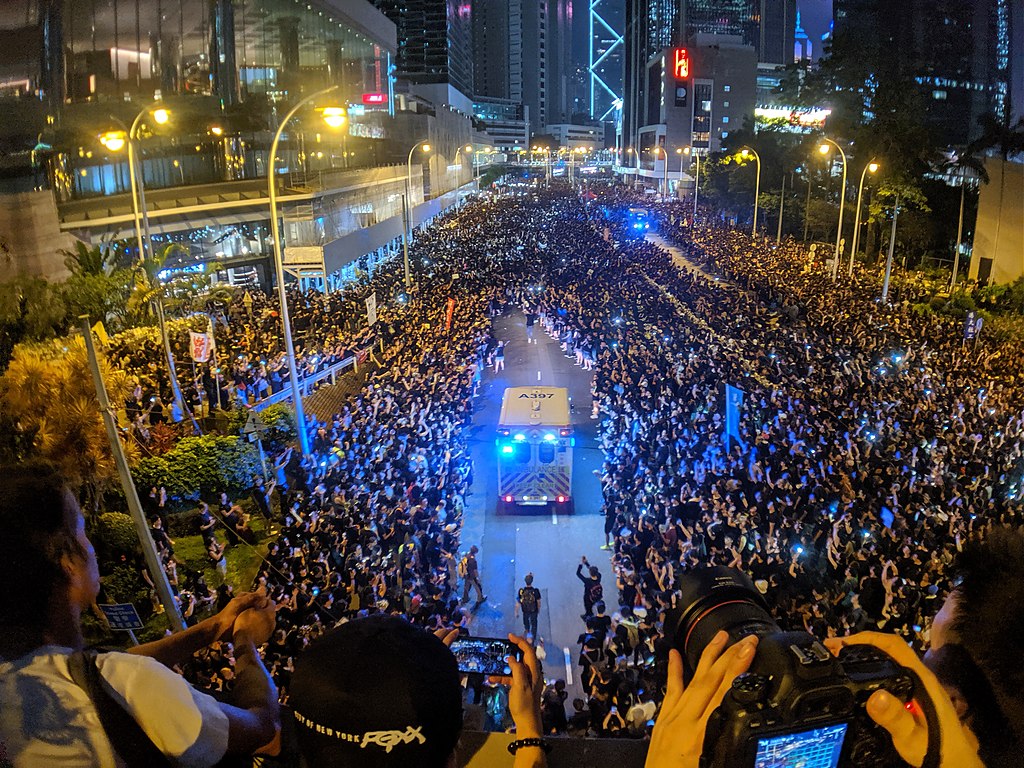
2019 Hong Kong anti-extradition law protest on 16 June, captured by Studio Incendo from Flickr.
Photo via Wikimedia Commons

A sickening pall of inevitability hangs over the protests in Hong Kong, now in their tenth week. Neither side can afford to back down – the protesters, because their way of life, indeed their very lives, are at stake; the Beijing-backed government, for the precedent it would set, and the hope it would inspire.

As the violence mounts — most of it, to date, on the part of the police, or in some cases the Triad gangs hired to beat and intimidate the protesters — so does the likelihood of mass bloodshed, a reprise of the Tienanmen massacre of 30 years ago. Some of the protesters may indeed hope to tempt Beijing into such an appalling overstep; however horrific the prospect, or improbable their chances, it is difficult to blame them.

For as the people of the world’s freest city fend off being swallowed by one of the world’s most repressive dictatorships, they do so largely alone. Fifty-six years ago, when West Berlin faced a similar threat from the Eastern Bloc, the democratic world rallied to its cause – because its cause, they knew, was their cause. President John F. Kennedy went to Berlin to give his great, moving “ich bin ein Berliner” speech, declaring before the world that “all free men, wherever they may live, are citizens of Berlin.” These were not just words — it was NATO policy to defend the city with arms, if necessary.

And today? The president of the United States refers to the protesters as “rioters,” the Beijing-approved term. Should President Xi Jinping decide to suppress the unrest in Hong Kong by force, he seems to be signalling, he would be willing to look the other way — perhaps for reasons of state (what are a few hundred or even thousand lives if it helps close a trade deal?), or perhaps just out of his habitual admiration for dictators. But the government of Canada — 300,000 of whose citizens, let us remember, live in the city — has been scarcely more robust in their defence; neither have most western governments.

August 11, 2019

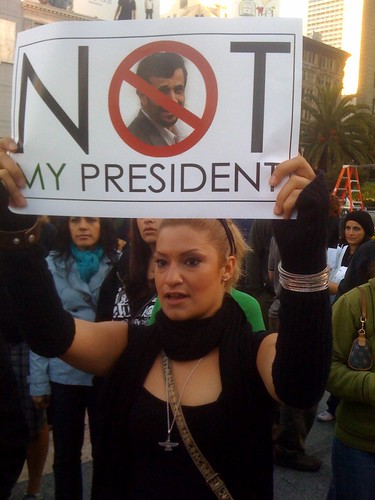
“Saying ‘Donald Trump is not my president’ is like saying that your stepfather isn’t your real dad and slamming your bedroom door”

Filed under: Britain, Cancon, Politics, USA — Tags: , , , , , — Nicholas @ 03:00

Colby Cosh looks at the oddly immature and childish meme of “Not my President”/”Not my Prime Minister” declarations that seem to be ubiquitous these days:

If you sent me back to grad school I would love to do some proper research into the history of the “Not My President”/”Not My Prime Minister”-type statements that are everywhere now. They do seem especially popular with liberals, although they are not exclusive to them. A strong memetic influence was obviously the multi-city “Not My Presidents Day” protests that followed Donald Trump’s inauguration. But the indignant, huffy insistence that Trump is “not my president” obviously had to gain traction in the first place.

The theme has been taken up internationally: if you Google “not my prime minister” most of the top hits are Boris Johnson-related (no doubt the “Theresa May: not my prime minister” T-shirts and buttons will sell in the online shops at a significant discount now), and the theme has become a formal slogan of street protest in the U.K. Adding “Trudeau” to the search string reveals a few comment threads. The Canadian politician who gets the most “Not my X” action is certainly Doug Ford. In Alberta, Rachel Notley and Jason Kenney have been getting roughly equal helpings of “Not my premier!”, presumably not from the same people. Who knows, maybe there’s someone out there who feels that his real premier is still Harry E. Strom.

In analyzing this emerging cliché, I suppose one could interpret it as a small act of libertarian or even anarchist rebellion. Is anybody really deserving of being “my” prime minister? Should we not all, in the glorious Utopia, be the prime ministers of ourselves? But the psychological force and intention of the statement that Joe Blow is not “my prime minister” or “my president” is not really anarchistic. The implication of the assertion is always that someone else might really deserve the title, or that there existed past statesmen nobody was ashamed to follow and identify completely with. Saying “Donald Trump is not my president” is like saying that your stepfather isn’t your real dad and slamming your bedroom door.

Meanwhile, of course, your stepfather is probably covering the mortgage and cleaning the eavestrough. “Not my X!” is a defection from democracy more than it is a challenge to the idea of the state. Donald Trump is definitely the lawful, constitutional president of the United States of America, and anyway possesses the powers thereof; those who say it ain’t so are making an incantation, trying to will a state of affairs into existence. If enough people say it, maybe it sorta automatically comes true. There is a lot of this kind of attempted magic going around these days.

July 18, 2019

QotD: “They might speak English, but they don’t speak Western”

Filed under: Books, Education, History, Media, Politics, Quotations, USA — Tags: , , , , , — Nicholas @ 01:00

[Responding to a photo of a protest sign labelled “Dumbledore wouldn’t let this happen“] I swear, it’s all you ever see from them.

But something happened to me last night, I had a kind of realization. It suddenly hit me WHY that is.

It’s because Harry Potter is literally all they collectively know.

Schools don’t teach history anymore.
They no longer teach the canon of Western literature.
They certainly don’t teach the Bible.

So Millennials literally have no points of common reference. It’s not that they all just want to look like complete morons by infantilizing their political metaphor to the level of a children’s book, it’s that they have no other choice.

They’re literally bereft of the allegorical language of the West. I’m sure there’s some Harry Potter monster analogy I could use to explain it to them, how it’s like monsters have come along and literally stolen their ability to speak, their common language, and their birthright.

They can no longer express or understand the set of references we have from our past, our most prized stories, and our culture’s religious quotations. They can’t do Shakespeare, Milton, or even Mark Twain because they’ve never learned any of these while they were being taught Indonesian multicultural dancing and given participation awards. They don’t know what happened at Hastings in 1066, at Runnymede in 1215, or even at Sarajevo in 28th June 1914, because they were being given feminist diversity training instead of learning the history of their civilization. They certainly don’t know what “the least of these” refers to or where it comes from, as a recent event with a White House staffer proved.

They’ve lost the entire allegorical language of the West. They might speak English, but they don’t speak Western. To them, it’s like a foreign, dead, alien language. A set of stories they do not know.

RPGPundit, “Harry Potter and the way Millennial Leftists Don’t Even Speak Western Anymore”, The RPGPundit, 2017-02-02.

July 7, 2019

QotD: Speaking for the dead

Filed under: Government, Quotations, USA — Tags: , , , — Nicholas @ 01:00

The House of Representatives passed a constitutional amendment on flag burning last week, in the course of which Representative Randy “Duke” Cunningham (Republican of California) made the following argument:

    Ask the men and women who stood on top of the Trade Center. Ask them and they will tell you: pass this amendment.

Unlike Congressman Cunningham, I wouldn’t presume to speak for those who died atop the World Trade Center. For one thing, citizens of more than 50 foreign countries, from Argentina to Zimbabwe, were killed on 9/11. Of the remainder, maybe some would be in favor of a flag-burning amendment; and maybe some would think that criminalizing disrespect for national symbols is unworthy of a free society. And maybe others would roll their eyes and say that, granted it’s been clear since about October 2001 that the Federal legislature has nothing useful to contribute to the war on terror and its hacks and poseurs prefer to busy themselves with a lot of irrelevant grandstanding with a side order of fries, they could at least quit dragging us into it.

And maybe a few would feel as many of my correspondents did last week about the ridiculous complaints of “desecration” of the Koran by US guards at Guantanamo – that, in the words of one reader, “it’s not possible to ‘torture’ an inanimate object”.

That alone is a perfectly good reason to object to a law forbidding the “desecration” of the flag. For my own part, I believe that, if someone wishes to burn a flag, he should be free to do so. In the same way, if Democrat Senators want to make speeches comparing the US military to Nazis and the Khmer Rouge, they should be free to do so. It’s always useful to know what people really believe.

Mark Steyn, “The Advantage of Knowing What People Really Think”, SteynOnline, 2017-06-14 (originally published in The Chicago Sun-Times, 2005-06-26).

July 2, 2019

Antifa strikes back against the White Patriarchy … by assaulting a gay, visible minority journalist

Filed under: Media, Politics, USA — Tags: , , , , — Nicholas @ 05:00

Andy Ngo suffered potentially serious injuries in an assault by Antifa “activists” during a Portland demonstration:

Andy Ngo, a photojournalist and editor at Quillette, landed in the emergency room after a mob of antifa activists attacked him on the streets of Portland during a Saturday afternoon demonstration.

The assailants wore black clothing and masks, and were engaged in a counter-protest against several right-wing groups, including the Proud Boys. Ngo is a well-known chronicler of antifa activity, and has criticized their illiberal tactics on Fox News. He attended the protest in this capacity — as a journalist, covering a notable public event.

According to Ngo, his attacker stole his camera equipment. But video footage recorded by another journalist, The Oregonian‘s Jim Ryan, clearly shows an antifa activist punching Ngo in the face. Others throw milkshakes at him:

Quillette posted their reaction to the attack:

All revolutionary movements seek to sanctify their lawless behaviour as a spontaneous eruption of righteous fury. In some cases, such as the Euromaidan movement in Ukraine, this conceit is justified. But usually their violence is a pre-meditated tactic to intimidate adversaries. Or as Bolshevik theorist Nikolai Bukharin put it, “In revolution, he will be victorious who cracks the other’s skull.”

The Antifa thugs who attacked Quillette editor and photojournalist Andy Ngo in Portland yesterday did not quite manage to crack his skull. But they did manage to induce a brain hemorrhage that required Ngo’s overnight hospitalization. (For those seeking to support Ngo financially as he recovers, there is a third-party fundraising campaign.) […]

Andy Ngo is an elfin, soft-spoken man. He also happens to be the gay son of Vietnamese immigrants — salient details, given Antifa’s absurd slogans about smashing the heteronormative white supremacist patriarchy. Like schoolboy characters out of Lord of the Flies, these cosplay revolutionaries stomp around, imagining themselves to be heroes stalking the great beast of fascism. But when the beast proves elusive, they gladly settle for beating up journalists, harassing the elderly or engaging in random physical destruction.

Antifa’s first prominent appearance was in 2017, when black-clad protestors at Berkeley used violence to shut down an appearance by provocateur Milo Yiannopoulos. This set a pattern whereby their rallies have been presented as counter-demonstrations aimed at “taking back the streets” from right-wing groups. But more and more, this conceit has dissolved into farce — as in Washington last year, when Antifa gangs showed up to protest largely non-existent conservative protestors. “Again and again, small groups of Antifa members harassed, threatened and occasionally jostled reporters,” the Washington Post reported. “The activists demanded not to be photographed as they marched down public streets — even as many of them hoisted their own phone cameras and staged their own photo ops.”

Update: I’m told that this is the lawyer who will be acting on Mr. Ngo’s behalf:

June 18, 2019

Hong Kong protests

Filed under: China, Law, Liberty, Politics — Tags: , , — Nicholas @ 03:00

Colby Cosh tests Betteridge’s Law by asking if the protests in Hong Kong are the birth pangs of a new nation (commonsense and a slight knowledge of Chinese history militate against answering “yes”):

2019 Hong Kong anti-extradition law protest on 16 June, captured by Studio Incendo from Flickr.
Photo via Wikimedia Commons

For the past week, Hong Kong has been taking another step toward figuring out exactly what it is. In an unprecedented display of resistance to Chinese power, literally innumerable hordes have been taking to the streets of HK, protesting the Communist Party-anointed chief executive and her effort to introduce a law allowing for the extradition of citizens to the mainland.

To anyone who follows Hong Kong affairs, these protests seem different qualitatively from those of the past. Earlier, related demonstrations like the Umbrella Movement of 2014 could be dismissed as economic unrest acted out by the young and irresponsible — by people who had not yet entered into, or who feared being excluded from, the strange social bargain between mainland power and HK’s wealth. 2019’s mass action is new: now everyone is marching. The revolt against the extradition bill is led by students, but persons of all ages — in some cases, multiple generations of the same family — are taking to the streets. Business owners are displaying sympathy with the marchers by means of small gestures. Commuters, who would normally be as annoyed with chaos and delay as any Torontonian trying to manoeuvre around a human rights demo, are signalling solidarity. The Hong Kong legal profession, aware that unrestricted extradition would annihilate their distinct system and the freedoms China promised to preserve, staged its own silent protest march. Hongkongers abroad are joining in symbolically.

Is this the birth of a nation? Those who wanted to push Hong Kong in the direction of formal independence have always been politely outnumbered. But the challenging, explosive assertion that “Hong Kong is not China” has become a routine feature of Hong Kong life.

Hong Kong was relinquished to China in 1997 after Britain secured paper guarantees that its independent judiciary and Commonwealth-style legal procedures would survive at least until 2047. When the handover was executed, the number 2047 meant — to the British trying to extract themselves from their last imperial briar patch — “far enough in the future for mainland China to have liberalized a bit.” The advent of Xi Jinping has since shown that progress, alas, does not proceed in a predictable linear way.

June 7, 2019

QotD: Ruling France

Filed under: France, Government, History, Quotations — Tags: , , , — Nicholas @ 01:00

From the French Revolution in 1789 to the ascension of Charles de Gaulle in 1958, France had an absolute monarchy, three constitutional monarchies, a directory, a consulate, two empires with one restoration, four republics, two provisional governments, a government in exile, and the hobnailed jackboot of Nazi occupation: 17 distinct regimes in 169 years.

De Gaulle, with his Fifth Republic, appeared to have settled the ancient argument between the monarchists and the republicans by creating a monarchy and calling it a republic. But the presidents of that republic — de Gaulle, Pompidou, Giscard d’Estaing, Mitterand, Chirac, Sarkozy, Hollande — have been a downward sequence. Each was at least slightly, and sometimes sharply, less talented than his predecessor.

In 2017, in utter exasperation, France embraced a 39-year old former banker and senior financial civil servant who had no more sought elective office than had Donald Trump before running for president, Emmanuel Macron. He achieved the office not by gaining control of a political party; French political parties are very fluid and rise and disappear and change their names every few years, but by standing as an independent and setting up a new party of rank political amateurs as legislators. It was magnificent in the country of Jean-Jacques Rousseau and other triumphant theorists. It ran on a euphoric platform: a green revolution, lower taxes, a better social benefit system, completed unification of Europe, stronger armed forces, everything that was desirable and the quick elimination of all that was not.

The predictable happened and Macron is now diminished by the incoherent rioting every weekend of mobs of angry bourgeois crabbing about taxes, reinforced by outright hooligans, all wearing the silly yellow vests all French drivers are required to have in their automobiles so they can put them on to signify an emergency. It is that splendid French combination of the perfect goal and the absurd result.

Conrad Black, “What’s the Matter With Europe?”, New English Review, 2019-05-06.

April 19, 2019

QotD: The revolution will be YouTubed, which might snuff it out before it gets underway

Filed under: Media, Politics, Quotations, USA — Tags: , , , , — Nicholas @ 01:00

I think that a number of factors will ultimately tamp it down [campus protests/riots]. The ability of people to record videos of police has been a tremendous spur to calls for reform. But police are not the only people who can be filmed in public; so can protesters. I suspect that as people discover what can happen when future employers google up videos of you shouting “[expletive deleted] the police” or screaming at professors and speakers, the costs of this sort of protest will rise, and there will be less of it. Moreover, I suspect that both alumni and state funding for schools where this sort of thing happens a lot will often decline, putting pressure on administrators to curb it.

Megan McArdle, “Ask Me Anything”, Reddit, 2017-04-10.

April 2, 2019

QotD: The legacy of the soixante-huitards

Filed under: Economics, Europe, France, History, Quotations — Tags: , , — Nicholas @ 01:00

It is one of the theses of this lucid book that the generation of May 1968 — or at any rate its leaders — has arranged things pretty well for itself, though disastrously for everyone else. If it has not been outright hypocritical, it has at least been superbly opportunist. First it bought property and accumulated other assets while inflation raged, paying back its debts at a fraction of their original value with depreciated money; then, having got its hands on the assets, it arranged for an economic policy of low inflation except in the value of its own assets. Moreover, it also arranged the best possible conditions for its retirement, in many cases unfunded by investment and paid for by those unfortunate enough to have come after them. They will have to work much longer, and if ever they reach the age of retirement, which might recede before them like a mirage in the desert, it will be under conditions much less generous than those enjoyed by current retirees.

It matters little whether this was all part of a preconceived plan or things just fell out this way, for that is how things now are. The result is that what was always a class society is in the process of becoming a caste society, in which only children of the already well-off have a hope of owning their own house.

Theodore Dalrymple, “Beneath Paris”, Taki’s Magazine, 2017-01-07.

March 31, 2019

QotD: Gandhi’s not-so-non-violent followers

Filed under: History, India, Quotations, Religion — Tags: , , , , , — Nicholas @ 01:00

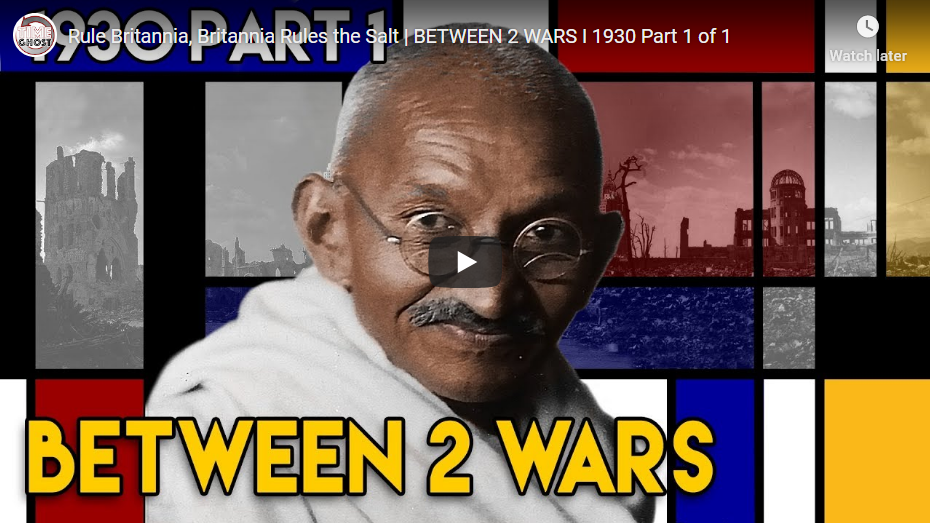
… it is not widely realized (nor will this film tell you) how much violence was associated with Gandhi’s so-called “nonviolent” movement from the very beginning. India’s Nobel Prize-winning poet, Rabindranath Tagore, had sensed a strong current of nihilism in Gandhi almost from his first days, and as early as 1920 wrote of Gandhi’s “fierce joy of annihilation,” which Tagore feared would lead India into hideous orgies of devastation — which ultimately proved to be the case. Robert Payne has said that there was unquestionably an “unhealthy atmosphere” among many of Gandhi’s fanatic followers, and that Gandhi’s habit of going to the edge of violence and then suddenly retreating was fraught with danger. “In matters of conscience I am uncompromising,” proclaimed Gandhi proudly. “Nobody can make me yield.” The judgment of Tagore was categorical. Much as he might revere Gandhi as a holy man, he quite detested him as a politician and considered that his campaigns were almost always so close to violence that it was utterly disingenuous to call them nonviolent.

For every satyagraha true believer, moreover, sworn not to harm the adversary or even to lift a finger in his own defense, there were sometimes thousands of incensed freebooters and skirmishers bound by no such vow. Gandhi, to be fair, was aware of this, and nominally deplored it — but with nothing like the consistency shown in the movie. The film leads the audience to believe that Gandhi’s first “fast unto death,” for example, was in protest against an act of barbarous violence, the slaughter by an Indian crowd of a detachment of police constables. But in actual fact Gandhi reserved this “ultimate weapon” of his to interdict a 1931 British proposal to grant Untouchables a “separate electorate” in the Indian national legislature — in effect a kind of affirmative-action program for Untouchables. For reasons I have not been able to decrypt, Gandhi was dead set against the project, but I confess it is another scene I would like to have seen in the movie: Gandhi almost starving himself to death to block affirmative action for Untouchables.

From what I have been able to decipher, Gandhi’s main preoccupation in this particular struggle was not even the British. Benefiting from the immense publicity, he wanted to induce Hindus, overnight, ecstatically, and without any of these British legalisms, to “open their hearts” to Untouchables. For a whole week Hindu India was caught up in a joyous delirium. No more would the Untouchables be scavengers and sweepers! No more would they be banned from Hindu temples! No more would they pollute at 64 feet! It lasted just a week. Then the temple doors swung shut again, and all was as before. Meanwhile, on the passionate subject of swaraj, Gandhi was crying, “I would not flinch from sacrificing a million lives for India’s liberty!” The million Indian lives were indeed sacrificed, and in full. They fell, however, not to the bullets of British soldiers but to the knives and clubs of their fellow Indians in savage butcheries when the British finally withdrew.

Richard Grenier, “The Gandhi Nobody Knows”, Commentary, 1983-03-01.

March 25, 2019

The Boston Massacre – Snow and Gunpowder – Extra History

Filed under: Britain, History, Military, USA — Tags: , , , , , — Nicholas @ 04:00

Extra Credits
Published on 23 Mar 2019

Boston, 1770. A frigid winter night. A British sentry strikes a local citizen. Civilians begins to gather. Reinforcements arrive to back up the young sentry. Insults and snowballs escalate. Then out of the darkness comes a shout: “FIRE!”

The Boston Massacre didn’t come out of nowhere — resentment between the early US colonies and the British army had been brewing for some time over the Stamp Act. A propaganda war ensued between the loyalists and the radicals. John Adams would get his revolutionary start as he worked to resolve this injustice…

Join us on Patreon! http://bit.ly/EHPatreon

March 17, 2019

Irish Potato Famine – The Young and the Old – Extra History – #5

Filed under: Britain, Food, History — Tags: , , , — Nicholas @ 09:00

Extra Credits
Published on 16 Mar 2019

Irish leaders entered the picture when the 1847 Poor Laws backfired, leading landowners to mass-evict their starving tenants. Daniel O’Connell tried to maintain an alliance with the Whigs, and failed. The Young Irelanders split off from the Repeal Association, and as a result, both the rebellious and the moderate minds of the country lost significant traction, unable to fight the famine alone.

March 15, 2019

QotD: Gender correctness

Filed under: Liberty, Media, Politics, Quotations — Tags: , , , , , — Nicholas @ 01:00

Five years ago, if someone had told you it would soon become tantamount to a speechcrime to say ‘There are two genders’, you would have thought them mad.

Sure, we live in unforgivably politically correct times. Ours is an era in which the offence-taking mob regularly slams comedians for telling off-colour jokes, demands the expulsion from campus of speakers who might offend students’ sensibilities, and hollers ‘Islamophobe’, ‘homophobe’ or ‘transphobe’ at anyone who transgresses their moral code on anything from same-sex marriage to respecting Islam. (A phobia, we should always remind ourselves, is a mental malaise, a disturbance of the mind. How very Soviet Union to depict your opponents essentially as mentally diseased.)

And yet for all that, surely it would never become a risky business to utter the opinion: ‘There are men and women and that’s all.’ Well, that has now happened. It is now looked upon as hateful, sinful and phobic, of course, to express a view that has guided humanity for millennia: that humankind is divided into two sexes, and they are distinctive, and one cannot become the other.

Say that today in a university lecture room packed with right-on millennials and watch their faces contort with fury. Write it in a newspaper column or blog post and witness the swift formation of a virtual mob yelling for you to be fired. Say it on TV and there will be protests against you, petitions, demands that you and your foul, outdated ideology be denied the oxygen of televisual publicity.

Brendan O’Neill, “It isn’t TERFs who are bigoted – it’s their persecutors”, Spiked, 2019-01-28.

March 5, 2019

If Brexit doesn’t happen, will there be a meaningful reaction?

Filed under: Britain, Europe, Government, Politics — Tags: , , , , — Nicholas @ 05:00

The British government under Prime Minister Theresa May believes — or appears to believe — that with sufficient delay, muddle, and obfuscation, the voters will mutter and grumble but in the end do nothing. David Betz and MLR Smith believe differently:

What do you get when you have a Conservative party that doesn’t conserve, a Labour party that doesn’t represent the interests of the working class, and a Liberal Democrat Party that is neither liberal nor democratic?

The answer is, a pretty accurate description of the current British political landscape. Here are different kinds of political ice cream for sale, but when licked they all turn out to have roughly the same unpalatable taste: a bland, socially progressive, anti-traditionalist, globalist, corporatist flavour. And, you the people, don’t ask for anything else! We know how to make ice cream. You don’t.

Of course, it is Brexit and the reactions of the political classes to it, that most clearly reveals the startling democratic deficit in the United Kingdom. Brexit is, though, not the cause of political strife. It is merely the symptom that has brought these latent anti-democratic inclinations to the surface. Arguably, they have always been there in one form or another since ancient times.

In November 2016, Nigel Farage told the BBC’s Andrew Marr: ‘Believe you me, if the people in the country think they’re going to be cheated, they’re going to be betrayed, then we will see political anger the likes of which none of us in our lifetimes have ever witnessed in this country’. It was an obvious point and true. Yet the striking thing about such a warning has been the degree to which national politicians and media have tried to ignore it.

How, we might wonder, has it all come to this and, just as vitally, what are the possible long-term consequences?

The government is gambling that reaction will be fierce, but localized and short-lived, and that the establishment can ride out the storm with little or no real problem. They may be seriously underestimating the anger and resentment of a voting public who are being explicitly denied the outcome they chose. But will there be serious outbreaks of violence?

Cumulatively, over the past three decades, then, the empirically demonstrable lesson is that violence and threats work. Crudely, there is simply no arguing with the fact that violence is the deus ex machina for changing the way people think and act. Physical force is a method of political communication, and when it is sustained it invariably succeeds in changing minds and changing policies.

Under the threat of violence, it is often easier for governments to knuckle under for the sake of maintaining a semblance of peace, to wax piously about societal cohesion and resilience, and to climb onwards as though the status quo ante were not crumbling beneath them. The progressive factions of academia, culture, and media cheer them for it. So, if the populace don’t really react in the face of such threats and actual violence, and merely light candles and hug teddy bears, then the bet of the political classes is sustained. They have gambled correctly.

But do enough people feel that violence is their only resort when the government refuses to do what the voters want? Might things go beyond mere loud, angry protests and transition towards rioting? Worse?

Thus, we come to the ultimate gamble of the political class, one that appears strongly to be operative in the minds of many in Parliament, namely, that Britons do not rebel and, therefore, faced with a fait accompli they will lump it even if they do not like it. Unlike the French, Italians, or Germans each of which nation is prone in its own way to violent mass spasms of political passion, the British are a phlegmatic people given to the sensible path. So the cliché goes.

It is true to an extent that revolution is a continental phenomenon that does not travel well across the English Channel — British governments have been better at responding to incipient uprisings, sometimes deflecting them, betimes co-opting their leaders, but mostly muddling through by accommodating their demands within the parameters of the status quo. This is a system that has succeeded precisely because parliamentary democracy, for over 300 years now, is able to internalise the will of the people, even when faced with threats of violent revolt, be it in the demands of Chartists, Irish nationalists or suffragettes.

Should we be so sanguine to believe that the British political system, for so long a beacon of stability, is immune from the turbulence that has afflicted other societies? As Remainers are so keen to remind us, we are not an island whose fortunes and follies are separate from those of our near-neighbours. If people, goods, and ideas flow freely across the borders of Europe why should not the concept of the Yellow Jackets too? White Van Man voted strongly for Brexit, after all. Why should there be an Alternative for Germany movement but not an alternative for Britain, even though the people were asked to choose one and did?

February 18, 2019

Mis-measuring inequality

Filed under: Britain, Economics, Government — Tags: , , , , — Nicholas @ 03:00

Tim Worstall explains why any protest in a western country about “inequality” is probably bogus from the get-go:

Their opening line, their justification:

    We live in an age of astonishing inequality.

No, we don’t. We live in an age of astonishing and increasing equality. Thus any set of policies, any series of analysis, that flows from this misunderstanding of reality is going to be wrong.

And that’s all we really need to know about it all.

The problem is that their measurements – the ones they’re paying attention to – of inequality just aren’t the useful ones, the ones we’re interested in. They’re usually pre-tax, pre-benefits. They’re always pre-government supplied services. And they never, ever, look at the thing we’re actually interested in, inequality of living standards.

To give an example, the Trades Union Congress did a calculation a few years back looking at top 10% households in the UK and bottom 10%. They took the average of each decile – so, the average of the top 10% households, the average of the bottom. Then they looked at the ratio between them.

The top 10% gain some 12 times the market income of the bottom 10%. Now take account of taxes and benefits. Then add in the effects of the NHS, free education for all children and so on. Government services. We end up with a ratio of 4 to 1. Life as it’s actually lived gives the top 10% four times the final income – income being defined by consumption of course – of the bottom 10%.

That’s not a high level of inequality.

« Newer PostsOlder Posts »

Powered by WordPress