
British Pathé
Published 13 Apr 2014Title reads: “Battle of the Rivers”.
Allied Forces invasion of France.
Various shots of mechanised units of the British and Canadian army preparing for assault on the Rivers Odon and Orne. Infantry mount the Sherman tanks and they head along the dusty road. Various shots of Sherman flail tanks passing camera (not flailing). Road bank collapses and one tank rolls onto its side
Various shots of Lancaster bombers over industrial area of Vaucelles. Aerial shots of bombs dropping from planes. Night shot of coloured markers cascading down to light up target area. More aerial shots, including L/S of Lancaster bomber crashing in flames.
Various shots of heavy artillery in action in the fields. Various shots of Royal Engineers putting Bailey Bridge across the Caen Canal. L/S of tanks crossing the bridge. Various shots of badly damaged industrial area near Caen. L/S of Canadian tanks on the move over open countryside and tracks. We see a soldier extinguishing flames where a tank’s grass camouflage has caught fire. The tanks cross a railway line.
Various shots of Winston Churchill being greeted by American officers as he arrives by plane in the Cherbourg area. He then tours the peninsula, looking at structures that were supposed to be V2 sites. M/S of Churchill climbing into spotter plane (“flying jeep”), piloted by Air Vice Marshal Broadhurst. Various shots of Churchill driving around Caen in an open-topped car, with him are Field Marshal Bernard Montgomery (Monty) and General Dempsey. Various shots of Churchill posing with a group of soldiers, he then spends some time chatting to them.
(more…)
June 14, 2023
Battle Of The Rivers (1944)
April 24, 2023
Even fighter pilots and gunners have love lives
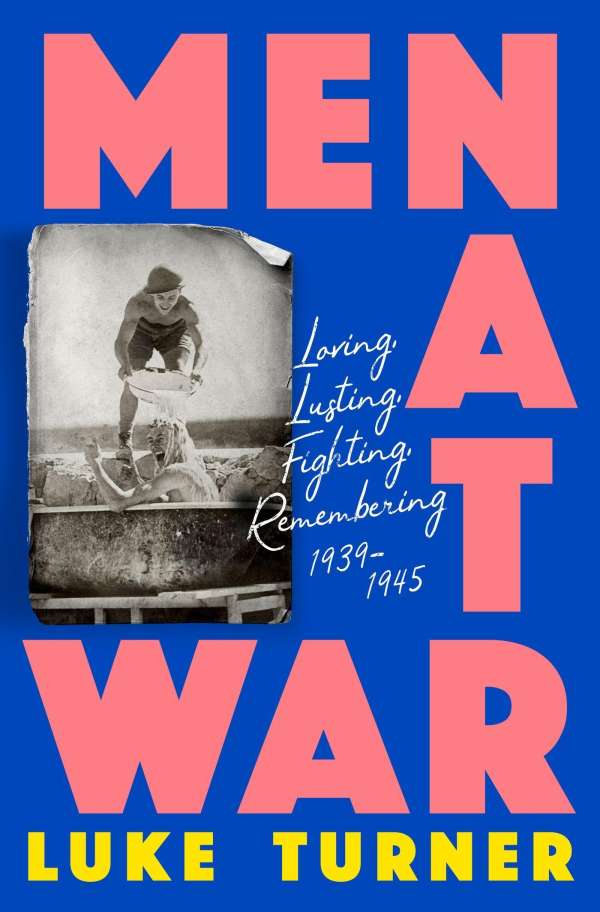
In The Critic, John Sturgis reviews a new book by Luke Turner titled Men at War: Loving, Lusting, Fighting, Remembering 1939-1945, which considers the myths and reality of wartime relationships during the Second World War:
Spitfire pilot Ian Gleed shot down five enemy aircraft in just a week in May 1940 — the fastest time in which this had ever been done, making him an official “ace” who would be quickly promoted to Wing Commander.
Gleed had become a poster boy for “the few”, the hero pilots of the Battle of Britain to whom so many would owe so much. He lived up to the popular image with his talk of “a bloody good show” and shooting down “damned Huns”, after which he’d sink a few warm beers and spend some “wizard” free time recuperating with his girlfriend Pam, whom he “loved now more than ever”.
Gleed’s luck finally ran out over Tunisia in April 1943 when his plane was hit by a German fighter and crashed into dunes. Gleed was killed. He was just 26.
It would only emerge decades later that much of the popular image he had cultivated simply wasn’t true. Gleed was gay. Pam was an imaginary character he had invented as a cover to keep his double life as a sexually active homosexual firmly secret.
Gleed’s story is one of many similar vignettes in this alternative history of the Second World War. Its author Luke Turner’s previous book was a memoir about his own grappling with issues around his identity as a bisexual. Here he takes up the question of how this would have played out for him and other sexual non-conformists in 1939–45.
Turner grew up obsessed with the war — everything from Airfix kits and Dad’s Army to Stalingrad and the Berlin bunker — and here he examines what it was to live through that period as a sexually active person of whatever hue. It proves a particularly rich subject matter as sex seems to have been everywhere in war time: everyone was sleeping with everyone else, apparently. It’s a perennial truth that you or I might be hit by a bus tomorrow — but make that bus a bomb, and suddenly this seems to create a sense of urgency which frequently manifests itself sexually, lending daily life what Turner calls “an aphrodisiac quality”. As Quentin Crisp put it when describing the shenanigans in blacked-out, Blitz London: “As soon as the bombs started to fall, the city became like a paved double bed.”
Whilst war may see an explosion of sex of all kinds, the establishment was not always comfortable with this. A Home Office report on public behaviour in London during the Blitz noted, “In several districts cases of blatant immorality in shelters are reported; this upsets other occupants of the shelters.”
One contemporary account suggests, “In wartime a uniform, whether of the Army, Navy or Air Force, to the average girl ranks as a fetish.” This had consequences in the field: Dear John letters from home could be a real problem in this regard. As an Army report in 1942 put it, morale is often damaged by “the suspicion, very frequently justified, of fickleness on behalf of wives and girls”.
Amongst all this sex was, of course, sex with Americans. Turner cites George Formby who captured this mood in the song “Our Fanny’s Gone All Yankee”: “She don’t wait for the dark when she wants to have a lark/In a bus or train she does her hanky panky.”
Then in a dark reversal of this two-nations-colliding-sexually motif, we get the horror of the Red Army’s organised rape of as many as 1.4 milllion German women during the Russian advance on Berlin, whose residents would later refer to the city’s grandiose monument to Soviet war dead as “the tomb of the unknown rapist”.
March 28, 2023
The Rise of the US Army Air Forces
World War Two
Published 27 Mar 2023The United States Army Air Force, USAAF, is the most powerful air force in the world. Alongside the Royal Air Force, it is winning the air war against the Luftwaffe. But things weren’t always like this. At the outbreak of war, the USAAF could not hold a candle to its allies or enemies. How have the Americans managed to turn things around?
(more…)
February 27, 2023
Luftwaffe Defeated in One Week?! – War Against Humanity 099
World War Two
Published 26 Feb 2023Allied and German Air Forces fight fierce battles over Europe with civilians caught in the crossfire, while Joseph Stalin and Lavrenti Beria deport two entire ethnicities of half a million in just one week.
(more…)
February 13, 2023
It’s open season for balloons over North America
In The Line, yet another incursion into NORAD air space, and no, this isn’t a re-post from last week:
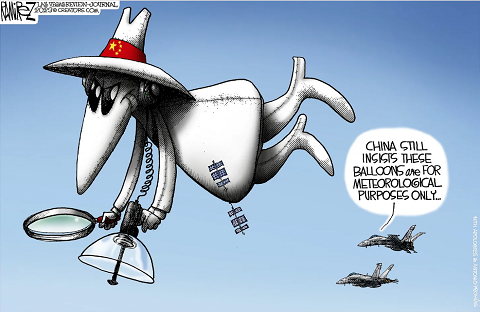
Holy jumpin’ Jeepers, folks, we’ve got more balloons!
On Friday, the Americans shot down another unidentified flying object — gulp — off the coast of Alaska. By Saturday, NORAD was reporting yet another one, this time over Canadian territory. NORAD jets scrambled, and an American F-22 destroyed the object over Yukon. Canadian military teams are now en route to recover the wreck and find out what the hell we are shooting at.
This was an exciting enough little pick-me-up on Saturday, but it wasn’t done. Later that night, another air defence emergency was declared over Montana, and American F-15 jets were scrambled out of Oregon to intercept an object that had been detected on radar. They were not able to find anything, and as of press time, NORAD has said only that they will continue to monitor the situation.
A few points we’d make about a truly bizarre series of stories.
The first is that there’s nothing wrong or particularly embarrassing about an American plane defending Canadian air space. NORAD is a joint bi-national command. Missions are tasked to the first available aircraft. That might sometimes mean a Canadian jet defending U.S. territory. It’s happened! On Saturday, the object was closer to American bases in Alaska than the nearest CF-18 base in Alberta. There probably is a conversation worth having about whether Canada should maintain a small alert force of jets further north, better able to respond in the future. That’s expensive and logistically complicated, but may still be worth considering. For now, the system functioned as intended. So we say, quite sincerely, thanks, America. We appreciate the help.
That being said, we do think this is a useful reminder that the long and repeated delays by Canada to both replace the aging CF-18 jets and modernize NORAD with new sensors and capabilities were reckless and dumb. It was obvious that the CF-18s needed replacing when Stephen Harper took office, but we only got that underway in recent months. NORAD, for its part, functions well as an institution but needs upgraded technology. That project also should have begun many years ago. In both cases, we delayed because we didn’t want to spend the money and because defence projects in this country are almost always politically fraught. The Russian invasion of Ukraine and now the weird series of aerial intruders is a useful reminder that neglecting your own defences is never a good idea. We are realists about Canada’s ability to field a massive military, but our geography, in so many ways a blessing, does impose a few costs back on us. It’s not easy to patrol and police such massive territories, especially with a relatively small and concentrated population. But we have to do it. It’s what being a country means. Too often, we haven’t. We hope that changes. With the NORAD modernization announced and the F-35s ordered, perhaps we’re finally making right some of these failures. We hope so. But we are jaded, friends. We admit that.
Our final point is an appeal to calm. We don’t really know what the hell is happening with all these aerial intruders either, but there could easily be a pretty mundane explanation. Radar sets have programmable software filters that are intended to avoid cluttering up the scopes with too much information. Without these filters, clouds, snow storms and birds can cause returns that may look like planes and missiles. One way of filtering out such clutter is by establishing a minimum speed for flagging an object. Balloons are likely normally below that minimum. Your Line editors suspect that part of what is happening right now is that we’ve adjusted those filters, and are suddenly seeing things that were already there all along.
Is that better, or worse? We don’t know. We can make that argument either way. In any case, that may be what’s happening.
Or hell, maybe it’s aliens, and Canada and the U.S. just declared war on a more sophisticated race that travelled across the vastness of the stars only to end their journey by being murdered by Justin Trudeau and Joe Biden. We doubt it, to be honest. But it’s been a weird few years already, no?
January 31, 2023
The Allied Flying Aces of World War Two – Documentary Special
World War Two
Published 30 Jan 2023Young, daring, and handsome, the Allied fighter aces of World War Two have captivated the public with their thrilling exploits. Join us as we take a look at the top scorers! Thanks to Curiosity Stream for sponsoring today’s video.
(more…)
December 17, 2022
The RAF’s Worst Day of the War – War Against Humanity 091
World War Two
Published 15 Dec 2022The United Nations Allies has some success bombing the Nazi German Reich, but it comes at a heavy price. In the village Kalavryta in Greece, the Wehrmacht massacre hundreds of men and boys.
(more…)
December 14, 2022
The Polish Armed Forces in Exile
World War Two
Published 13 Dec 2022The Polish state was the first to fall in this war, yet across the globe Polish soldiers are fighting on land, air, and sea as part of the United Nations alliance. The story of the tens of thousands of men and women fighting for Polish liberation is equal parts hope and hardship as they battle the enemy and even sometimes their own allies.
(more…)
December 8, 2022
Is the Luftwaffe Defeated in 1943? – WW2 Documentary Special
World War Two
Published 7 Dec 2022Outnumbered and outproduced, the once mighty Luftwaffe is battling to hold its own across three fronts. Every month brings new pain for the force. But the Luftwaffe still has a few tricks up its sleeves and can make the Allies bleed heavily. If only Hitler and the Nazi leadership weren’t sabotaging its chances …
(more…)
November 28, 2022
Near Peer: China (Understanding the Chinese Military)
Army University Press
Published 29 Jul 2022This film examines the Chinese military. Subject matter experts discuss Chinese history, current affairs, and military doctrine. Topics range from Mao, to the PLA, to current advances in military technologies. “Near Peer: China” is the first film in a four-part series exploring America’s global competitors.
(more…)
November 27, 2022
The Biggest Lie of WWII? The Myth of the Norden Bombsight
Flight Dojo
Published 16 Jun 2022I think most of us, at some point, have had someone say to us “You know, we went to the moon with less computing power than your iPhone” or something to that effect. What you may not know, though, is that less than a century ago, a 2000-piece mechanical computer that lacked a single transistor or chip was the most closely guarded military secret of the Allied war effort. Or, at least, the second most.
Before being overshadowed by the Manhattan Project, the U.S. Navy spent billions helping Carl Norden develop a mechanical computer with one job and one job only: to determine the point at which a level-flying bomber would need to drop its bombs to achieve “pinpoint accuracy” on an intended target.
When it was completed, Mr. Norden famously claimed that the sight was so accurate that it was capable of putting a bomb inside a pickle barrel. And if it could, then war would be revolutionized, or so the powers-at-be thought. The idea was simple: fly your bombers above the enemy’s air defenses, above the reach of their flak batteries, faster than their fighters could fly, and drop your bombs, with pinpoint accuracy, on crucial industrial sites, robbing the enemy of their ability to manufacture the equipment they need to wage a war in the first place.
The only problem was that everything about the Norden Bombsight turned out to be a myth. Not just the obviously mythical bits, like the fact that the crosshairs in the site itself were actually webs from a Black Widow, or that, instead, the reticle was made from the strands of hair of a young Midwestern girl, but everything, the accuracy, the secrecy, and even the fact that it was the only bombsight used in the war.
So how can this be? Until two weeks ago, I believed that the Norden Bombsight was an ingenious piece of equipment that more than any other singular device, changed the tides of WWII in favor of the allies. So why do we still believe in the Norden Bombsight?
Because, as it turns out, myths are useful, not just to the Army Air Corps, the Carl Norden Company, and Hollywood, but to us, the public. As it turns out, they can help us swallow hard truths about the war we’d prefer to avoid.
(more…)
November 26, 2022
Why so Deadly? – Battle of Okinawa 1945
Real Time History
Published 25 Nov 2022The American invasion of Okinawa was the last big island operation on the Pacific Front. It took the US Marines and Army troops several months to defeat the last Japanese resistance on the island in one of the costliest American victories of the 2nd World War — but in the end not even Japanese Kamikaze attacks and using the civilian population could avert the outcome.
(more…)
November 25, 2022
Canada’s all-purpose VTOL transport that could have changed everything; the Canadair CL-84 Dynavert
Polyus Studios
Published 14 Jul 2018The program that developed the CL-84 lasted for almost 20 years and produced one of the most successful VTOL aircraft ever, as far as performance. Canadair produced four Dynavert’s over those 20 years and two of them crashed. In fact one crashed twice. The story of the great CL-84 is one of perseverance and missed potential.
(more…)
November 11, 2022
In memoriam
A simple recognition of some of our family members who served in the First and Second World Wars:
The Great War
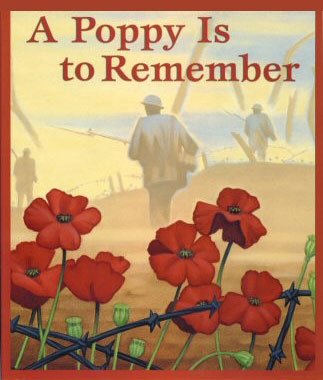 Private William Penman, Scots Guards, died 16 May, 1915 at Le Touret, age 25
(Elizabeth’s great uncle)- Private Archibald Turner Mulholland, Argyll & Sutherland Highlanders, mortally wounded 25 September, 1915 at Loos, age 27
(Elizabeth’s great uncle) - Private David Buller, Highland Light Infantry, died 21 October, 1915 at Loos, age 35
(Elizabeth’s great grandfather) - Private Harold Edgar Brand, East Yorkshire Regiment. died 4 June, 1917 at Tournai.
(My first cousin, three times removed) - Private Walter Porteous, Durham Light Infantry, died 4 October, 1917 at Passchendaele, age 18
(my great uncle) - Corporal John Mulholland, Argyll & Sutherland Highlanders, wounded 2 September, 1914 (shortly before the First Battle of the Aisne), wounded again 29 June, 1918, lived through the war.
(Elizabeth’s great uncle)
The Second World War
- Flying Officer Richard Porteous, Royal Air Force, survived the defeat in Malaya, was evacuated to India and lived through the war
(my great uncle) - Able Seaman John Penman, Royal Navy, served in the Defensively Equipped Merchant fleet on the Atlantic convoys, the Murmansk Run (he may have been on a ship in convoy PQ-17, as we know he spent a winter in Russia) and other convoy routes, was involved in firefighting and rescue efforts during the Bombay Docks explosion in 1944, lived through the war
(Elizabeth’s father) - Private Archie Black (commissioned after the war and retired as a Major), Gordon Highlanders, captured during the fall of Singapore (aged 15) and survived a Japanese POW camp (he had begun to write an autobiography shortly before he died)
(Elizabeth’s uncle) - Elizabeth Buller, “Lumberjill” in the Women’s Timber Corps, an offshoot of the Women’s Land Army in Scotland through the war.
(Elizabeth’s mother) - Trooper Leslie Taplan Russon, 3rd Royal Tank Regiment, died at Tobruk, 19 December, 1942 (aged 23).
Leslie was my father’s first cousin, once removed (and therefore my first cousin, twice removed).
My maternal grandfather, Matthew Kendrew Thornton, was in a reserved occupation during the war as a plater working at Smith’s Docks in Middlesbrough. The original design for the famous Flower-class corvettes came from Smith’s Docks and 16 (including four intended for the French Marine National) of the 196 built in the UK during the war (more were built in Canada).
For the curious, the Commonwealth War Graves Commission the Royal British Legion, and the Library and Archives Canada WW1 and WW2 records site provide search engines you can use to look up your family name. The RBL’s Every One Remembered site shows you everyone who died in the Great War in British or Empire service (Canadians, Australians, New Zealanders, South Africans and other Imperial countries). The CWGC site also includes those who died in the Second World War. Library and Archives Canada allows searches of the Canadian Expeditionary Force and the Royal Newfoundland Regiment for all who served during WW1, and including those who volunteered for the CEF but were not accepted.
In Flanders fields the poppies blow
Between the crosses row on row,
That mark our place; and in the sky
The larks, still bravely singing, fly
Scarce heard amid the guns below.We are the Dead. Short days ago
We lived, felt dawn, saw sunset glow,
Loved and were loved, and now we lie
In Flanders fields.Take up our quarrel with the foe:
To you from failing hands we throw
The torch; be yours to hold it high.
If ye break faith with us who die
We shall not sleep, though poppies grow
In Flanders fields.Lieutenant Colonel John McCrae, MD Canadian Army Medical Corps (1872-1918)
November 5, 2022
A working flight simulator, no computers necessary
Tom Scott
Published 4 Jul 2022There are only a few working Link Trainers left in the world: but before microprocessors, before display screnes, half a million pilots learned the basics of instrument flying inside one. More: https://www.most.org/explore/link-fli…
(more…)


