Epimetheus
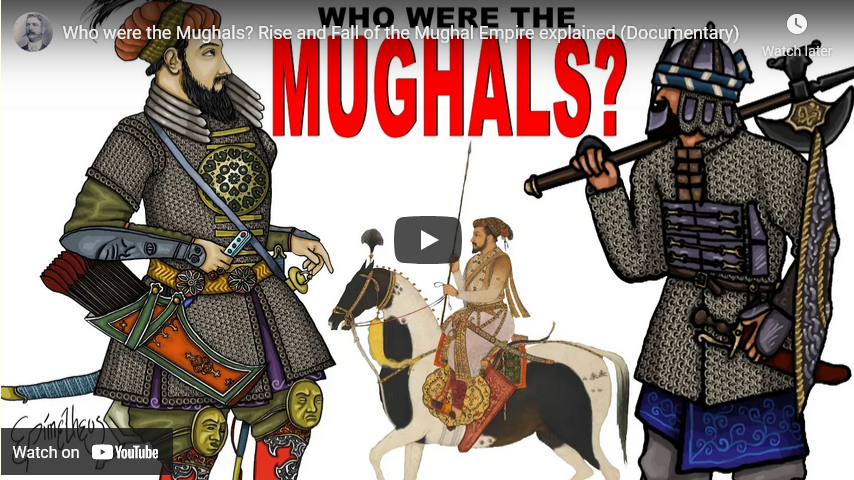
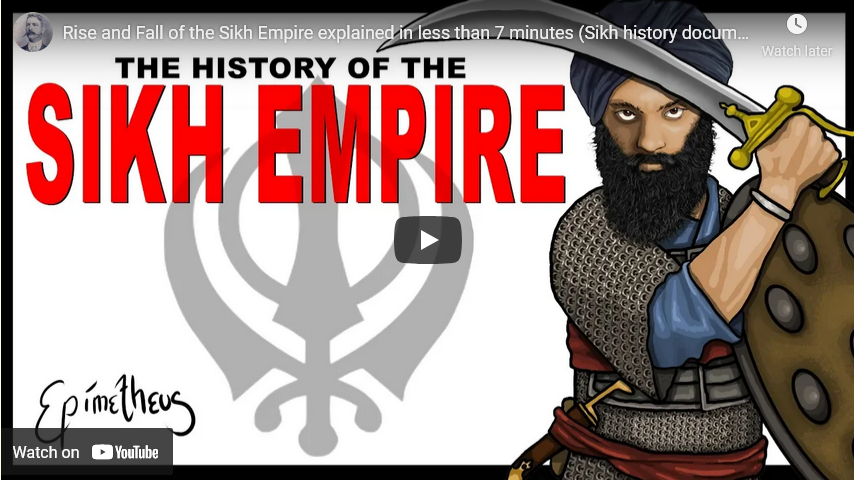
Published 8 Oct 2019Rise and Fall of the Sikh Empire explained in less than 7 minutes Sikh history documentary
This video covers Sikh history from the Guru Nanak till the fall of the Sikh Empire.
This video and others like it are sponsored by my Patrons over on patreon.
https://www.patreon.com/Epimetheus1776
June 1, 2021
Rise and Fall of the Sikh Empire explained in less than 7 minutes
May 16, 2021
QotD: Emmanuel Goldstein’s Theory and Practice of Oligarchal Collectivism as applied in Afghanistan
Orwell/Goldstein’s “main point” is the permanent emergency and the advantages that gives the state. The Afghan war can never end because it has no war aims, which means the conditions of victory and defeat are unknown and unknowable, and can never be met. Why America chooses to wage war that way is a question for another day, but there are certainly economic elements at play: Many people have grown rich on an outmoded model of national strength that puts carrier groups in every pond around the globe — the “Floating Fortresses” of Orwell’s vision — while China takes over the planet unencumbered by such things.
Mark Steyn, “Essential Structure and Irreconcilable Aims”, Steyn Online, 2021-01-31.
November 11, 2020
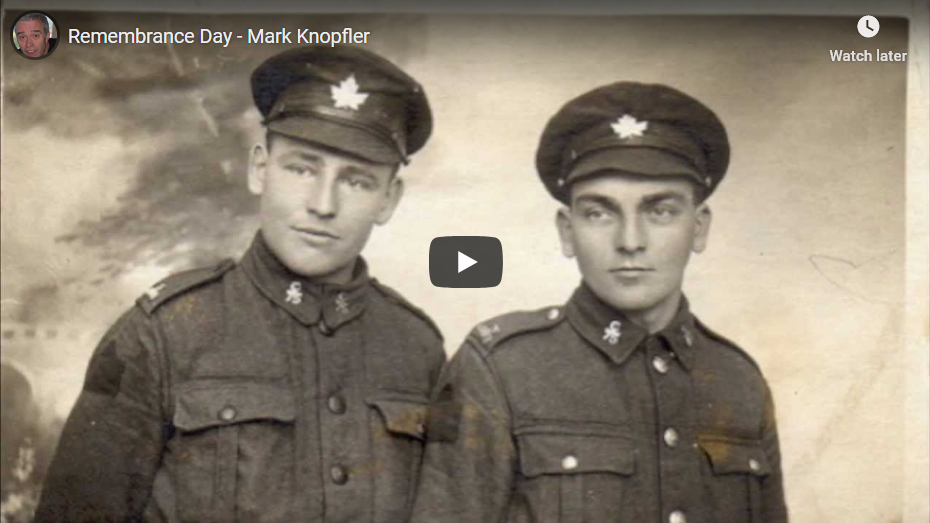
Mark Knopfler – “Remembrance Day”
Bob Oldfield
Published on 3 Nov 2011A Remembrance Day slideshow using Mark Knopfler’s wonderful “Remembrance Day” song from the album Get Lucky (2009). The early part of the song conveys many British images, but I have added some very Canadian images also which fit with many of the lyrics. The theme and message is universal… “we will remember them”.
July 6, 2020
Time to end US military deployments to Afghanistan?
Brad Polumbo reports on the split between Republican voters and Republican Senators on ending the US military involvement in Afghanistan:
Applied to the Middle East, the America First framework is intuitive — our military misadventures in countries like Iraq, Libya, and Afghanistan have cost the U.S. tremendously yet failed to further our interests. Once the party of hawks and idealists, Republican voters are now firmly in the America First camp. According to The Intercept, 81% of 2016 Trump voters support removing troops from Afghanistan.
Unfortunately, this shift in views has not been represented in Congress. Most Senate Republicans just explicitly voted against ending the war in Afghanistan.
On Wednesday evening, Sen. Rand Paul, a libertarian-leaning Kentucky Republican, introduced an amendment to the National Defense Authorization Act that would have brought our troops home from Afghanistan, given those soldiers who served a bonus, and repealed the authorization of force Congress passed in 2001. But in a 60 to 33 vote, the Senate shot it down, with only three Republicans in addition to Paul — Sens. Mike Lee, Mike Braun, and Steve Daines — backing the amendment.
“Our amendment [would] finally and completely end the War in Afghanistan,” Paul said on the Senate floor. “Over 4,000 Americans have died in Afghanistan and over 20,000 have been wounded. It’s time to bring our soldiers home.”
“It is not sustainable to keep fighting in Afghanistan generation after generation,” he continued. “In fact, we now have soldiers who were born after 9/11 serving in Afghanistan.”
“We’ve been there for 20 years,” the senator said. “How can we characterize withdrawal after 20 years, after we defeated the enemy, as ‘precipitous’? It’s crazy. The American people say, ‘Come home,’ and this is your chance.”

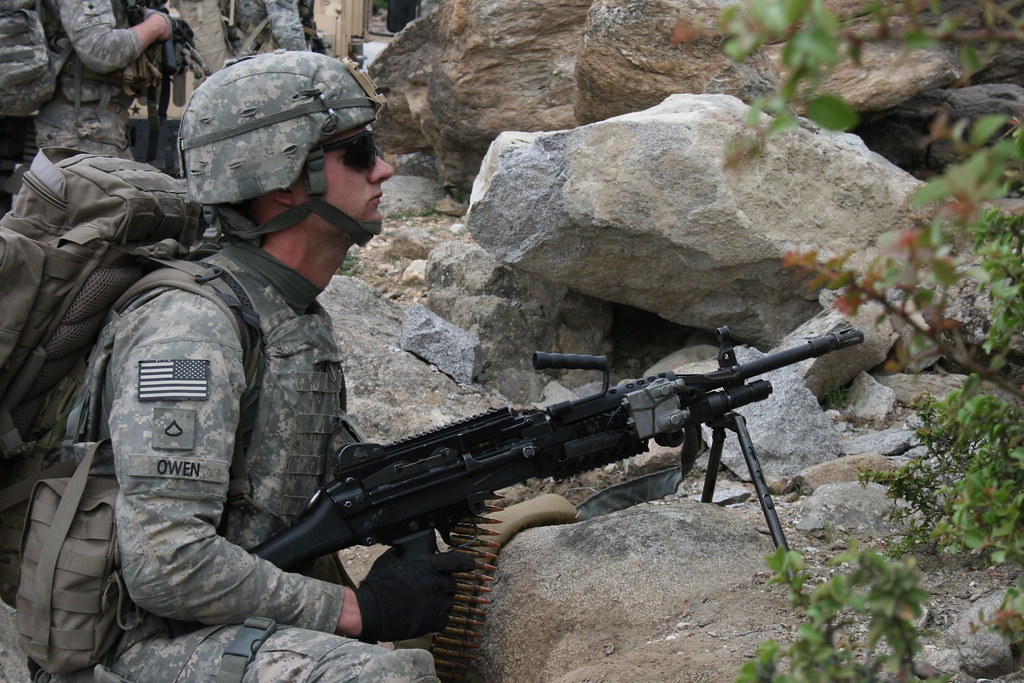
“Afghanistan 2010 43” by david_axe is licensed under CC BY-NC 2.0
June 29, 2020
The Canadian Armed Forces Primary Reserve
Ted Campbell looks at the state of the reserves, specifically the Army Reserve:
For those interested, and every thinking Canadian should have some, albeit limited interest in the subject, there is an interesting thread over on Army.ca which deals with the problems (there are a lot of them) in making Canada’s reserve Army (the militia if you’re old enough) into an effective force.
I’m going to go with what I think is the majority opinion and say that our Army reserve, in particular, is ineffective. That does not mean that it does not do yeoman service: Canada’s tiny regular Army could not have conducted sustained combat operations in Afghanistan from 2002 to 2014 unless thousands and thousands of reserve force soldiers had stepped up. They were mostly young men, many looking for some combination of a full-time job, some adventure, a faster route into the regular Army, or even a sort of “gap year” experience, but some, like Canada’s current Defence Minister Harjit Sajjan, were middle-aged senior officers when they took a year off from their civilian careers to serve. Today, as I write many reserve force soldiers are serving in a new sort of front-line: long term care facilities that have been ravaged by the COVID-19 virus. The one problem that Canada does NOT have in its Army (regular or reserve) is the quality of the people who serve ~ they are, by and large, amongst the best soldiers in the world and, equally, especially the reservists, Canada’s finest citizens.
But too many people seem to be content with the notion that reserve Army is doing enough by providing a pool of individuals to fill up or augment regular Army units in an emergency. If that’s all the country wants, if that’s the level of capability for which we are willing to settle, then I think we, as a nation, do not deserve the service of the men and women in our reserve Army units.
June 19, 2020
“Hill 3234” – The Soviet-Afghan War – Sabaton History 072 [Official]
Sabaton History
Published 18 Jun 2020It happened during the last stage of the Soviet-Afghan War.
Already withdrawing its forces, Soviet High Command needed to display its might one last time by recapturing the vital Satukandav Pass. But to achieve that goal, the commanding heights surrounding the pass had to be held against continuous Mujahideen attacks.
In the Battle for Hill 3234, an outnumbered force of Soviet paratroopers held their own against relentless attacks from the Afghan rebels.
Support Sabaton History on Patreon: https://www.patreon.com/sabatonhistory
Listen to “Hill 3234” on the album The Last Stand here:
CD: http://bit.ly/TheLastStandStore
Spotify: http://bit.ly/TheLastStandSpotify
Apple Music: http://bit.ly/TheLastStandItunes
iTunes: http://bit.ly/TheLastStandItunes
Amazon: http://bit.ly/TheLastStandAmz
Google Play: http://bit.ly/TheLastStandGooglePlayWatch the Official Lyric Video of “Hill 3234” here:
https://www.youtube.com/watch?v=K1Xkp…Listen to Sabaton on Spotify: http://smarturl.it/SabatonSpotify
Official Sabaton Merchandise Shop: http://bit.ly/SabatonOfficialShopHosted by: Indy Neidell
Written by: Markus Linke and Indy Neidell
Directed by: Astrid Deinhard and Wieke Kapteijns
Produced by: Pär Sundström, Astrid Deinhard and Spartacus Olsson
Creative Producer: Joram Appel
Community Manager: Maria Kyhle
Executive Producers: Pär Sundström, Joakim Broden, Tomas Sunmo, Indy Neidell, Astrid Deinhard, and Spartacus Olsson
Post-Production Director: Wieke Kapteijns
Edited by: Iryna Dulka
Sound Editing by: Marek Kaminski
Maps by: Eastory – https://www.youtube.com/c/eastoryArchive by: Reuters/Screenocean https://www.screenocean.com
Music by Sabaton.Sources:
– Abramov Andrey, ALDOR46, Fdutil, P.Fisxo; from Wikimedia
– E.Kuvakin
– Erwin Franzen
– Archive of S.V. Rozhkova
– Photos of 350th airborne regiment, courtesy of the 5th airborne company trooper Sergey Novikov
– Archive of the 345th airborne parachute regiment
– Library of Congress, Geography and Map Division.An OnLion Entertainment GmbH and Raging Beaver Publishing AB co-Production.
© Raging Beaver Publishing AB, 2019 – all rights reserved.
From the comments:
Sabaton History
1 day ago
They were only 39
They were told to hold the line…I’m sure most of you know the rest of those lyrics. And after watching this episode of Sabaton History, you also know the real historical events behind those words.
What some of you might not know though, is the story of the guitar solo in Hill 3234. As usual when Joakim had written the song, he sent it out to the rest of the band. Much to his surprise though, this time Thobbe Englund – lead guitarist at the time – sent a file back within the hour. Thobbe had just plugged his guitar in and hit play. He was literally listening to Hill 3234 for the first time when the solo spontaneously popped into his head, and he recorded it on the spot. And to make this solo even more special: it is that very first recording Thobbe made that ended up on the album!
Not one single re-take.
Talk about a blessing from the Muses…
April 3, 2020
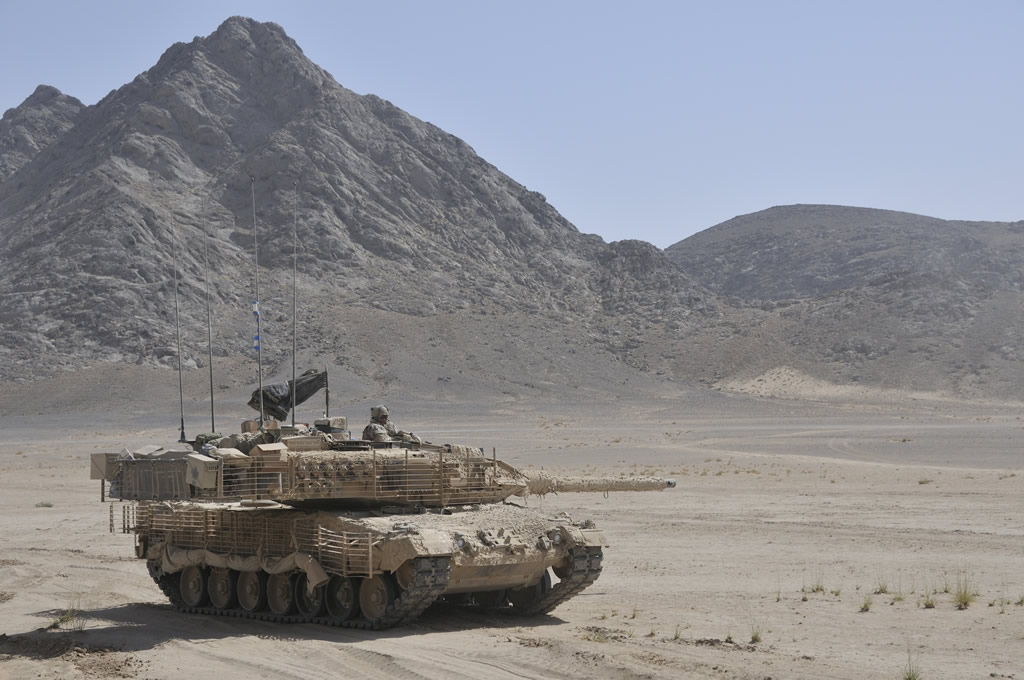
Tank Chats #66 Leopard 2 | The Tank Museum
The Tank Museum
Published 8 Feb 2019Curator David Willey gives chapter and verse on the German Main Battle Tank, Leopard 2, which first entered service with West Germany during the Cold War.
The Leopard 2 Main Battle Tank was kindly temporarily loaned to The Tank Museum by the Historic Collection of the Royal Netherlands Army.
Some stills and footage: © All rights reserved. (AR2011-0034-009, PA01-2016-0139-076, IS2010-3030-24, IS2011-1021-15, IS14-2017-0003-049, B11-ATHENA-020) reproduced with the permission of DND/CAF (2019)
At 8:55 Leopard 2 from The Arsenalen Museum, Sweden.
Support the work of The Tank Museum on Patreon: ► https://www.patreon.com/tankmuseum
Visit The Tank Museum SHOP: ► https://tankmuseumshop.org/
Twitter: ► https://twitter.com/TankMuseum
Tiger Tank Blog: ► http://blog.tiger-tank.com/
Tank 100 First World War Centenary Blog: ► http://tank100.com/ #tankmuseum #tanks #tankchats
November 18, 2019
Fungus rock – the great placebo treasure (and the Mujahideen)
Lindybeige
Published 5 Jun 2015Support me on Patreon: https://www.patreon.com/Lindybeige
The things that people valued and fought over in the past were not as they are now. You might not guess the tremendous significance of one tiny island off the coast of Gozo.
NEWS FLASH (March 8th 2017): the Azure Window, featured in this video, has collapsed into the sea.
More videos from Malta to follow.
Lindybeige: a channel of archaeology, ancient and medieval warfare, rants, swing dance, travelogues, evolution, and whatever else occurs to me to make.
▼ Follow me…
Twitter: https://twitter.com/Lindybeige I may have some drivel to contribute to the Twittersphere, plus you get notice of uploads.
website: http://www.LloydianAspects.co.uk
Fungus rock – the great placebo treasure
November 11, 2019
Mark Knopfler – “Remembrance Day”
Bob Oldfield
Published on 3 Nov 2011A Remembrance Day slideshow using Mark Knopfler’s wonderful “Remembrance Day” song from the album Get Lucky (2009). The early part of the song conveys many British images, but I have added some very Canadian images also which fit with many of the lyrics. The theme and message is universal… ‘we will remember them’.
October 31, 2019
The Graveyard of Empires Strikes Back – The British-Afghan War of 1919 I THE GREAT WAR 1919
The Great War
Published 30 Oct 2019Get 70% off NordVPN! Only $3.49/mo, plus you get two additional months FREE at https://nordvpn.com/thegreatwar and use code thegreatwar
Thanks to NordVPN for sponsoring this video – sponsorships allow us to make this show better and keep it free.» SUPPORT THE CHANNEL
Patreon: https://www.patreon.com/thegreatwar
Merchandise: https://shop.spreadshirt.de/thegreatwar/» BUY OUR SOURCES IN OUR AMAZON STORES
Our Amazon US Store: https://www.amazon.com/shop/influence…
Our Amazon CA Store: https://www.amazon.ca/shop/influencer…
Our Amazon UK Store: https://www.amazon.co.uk/shop/influen…» SOURCES
Adamec, L.W. Afghanistan, 1900-1923: A Diplomatic History, Berkley, 1967
Barthorp, Michael (2002) [1982]. Afghan Wars and the North-West Frontier 1839–1947. London: Cassell.
Beattie, Hugh: “Afghanistan”, in: 1914-1918-online. International Encyclopedia of the First World War, ed. by Ute Daniel, Peter Gatrell, Oliver Janz, Heather Jones, Jennifer Keene, Alan Kramer, and Bill Nasson, issued by Freie Universität Berlin, Berlin 2016-09-02
Heathcote, TA. The Afghan Wars (Spellmount, 2003).
Jacobsen, M H. The Third Afghan War and the External Position of India, 1919-1924. Defense Technical Information Center Archive report ADA195401, 1988.
Monro, Charles. “Despatch from His Excellency the Commander-in-Chief in India regarding the operations against Afghanistan, to the Secretary to the Government of India, Army Department”. Second Supplement to the London Gazette, 15 March 1920 https://www.thegazette.co.uk/London/i…
Molesworth, George (1962). Afghanistan 1919 — An Account of Operations in the Third Afghan War. New York: Asia Publishing House
Robson, Brian (2007). Crisis on the Frontier: The Third Afghan War and the Campaign in Waziristan 1919–1920. The History Press.
Sykes, Percy. A History of Afghanistan vol II. (London Macmillan 1940)
Wyatt, Christopher M. “Change and Discontinuity: War and Afghanistan 1904-1924,” Asian Affairs, 01 September 2016, Vol.47(3): 366-385.» SOCIAL MEDIA
Instagram: https://instagram.com/the_great_war
Twitter: https://twitter.com/WW1_Series
Reddit: https://reddit.com/r/TheGreatWarChannel»CREDITS
Presented by: Jesse Alexander
Written by: Jesse Alexander
Director: Toni Steller & Florian Wittig
Director of Photography: Toni Steller
Sound: Toni Steller
Editing: Toni Steller
Motion Design: Philipp Appelt
Mixing, Mastering & Sound Design: http://above-zero.com
Maps: Daniel Kogosov (https://www.patreon.com/Zalezsky)
Research by: Jesse Alexander
Fact checking: Florian WittigChannel Design: Alexander Clark
Original Logo: David van StepholdA Mediakraft Networks Original Channel
Contains licensed material by getty images
All rights reserved – Real Time History GmbH 2019
I don’t normally comment on sponsors of the various videos I post, but NordVPN has been very recently in the news, should you be interested in their services.
July 2, 2019
Rebecca Jensen on strategy, tactics and the need for a Canadian approach to “operational art”
Rebecca Jensen’s submission was selected as one of five winners of the 2018 Defence and Security Essay Competition:
Over 12 years, the Canadian military involvement in Afghanistan cost 162 lives, more than 10 times as many wounded, and $18 billion in direct costs. While the tactical capabilities of the Canadian Armed Forces were widely praised, it is unclear what benefit Canada or Afghanistan realized for this steep investment of blood and treasure.
“Operational art” is the term used in defence circles to describe the alignment of tactical accomplishments with strategic ends, since tactical victories alone, as coalition forces have learned in Afghanistan, do not ensure success. The development of a more rigorous approach to operational art in the CAF would help to shrink the gap between tactical accomplishments and strategic stagnation in future conflicts, particularly in coalition missions involving stabilization and development elements.
Operational art connects tactical activities to strategic objectives. Principle elements include the coordination of tactical efforts in space and time to achieve national goals, as well as the balancing of resources and risk. Fighting as part of a coalition, and in complex contingency operations that include elements of stability operations and conventional warfighting, makes the practice of operational art more difficult, as it increases the factors shaping inputs, the environment, and desired outcomes. In particular, it requires coalition members to account for, if not balance, coalition and national objectives, which may differ or even be at odds with each other.
The Canadian army adopted much US thinking about operational art in the 1980s. Confronted by a conflict in Afghanistan very different from that for which it had trained, the CAF reacted similarly, grafting American doctrine and perspectives onto the army’s existing thought and practices. Given the need for rapid adaptation in Afghanistan within an US-dominated coalition effort, this graft made had a pragmatic logic to it, but in the longer term, it is no substitute for the development of organic Canadian thought on the planning and conduct of war.
The publication of Land Operations [PDF] by Canada’s director of army doctrine in 2008 represented an important step in that direction. Crucially, it recognized the complexity of wars like Afghanistan, and the centrality of relationships with other services, nations, and agencies. However, the emphasis on particular end states, and the dualism implicit in the siloing of fires and influence operations, which take place on the physical and psychological planes respectively per the manual, is reductive and linear. When termination criteria include objectives as subjective and complex as a “stable and legitimate host government,” the military can more helpfully plan [PDF] for progress toward that state than be charged with achieving a particular result. While some military activities will be more concerned with influence than maneuver and vice versa, it is similarly unproductive to prompt the military to be aware of the physical and psychological planes. Not only are the moral and the material affected by any action, they are frequently irreducibly interconnected.
November 11, 2018
Mark Knopfler – “Remembrance Day”
Bob Oldfield
Published on 3 Nov 2011A Remembrance Day slideshow using Mark Knopfler’s wonderful “Remembrance Day” song from the album Get Lucky (2009). The early part of the song conveys many British images, but I have added some very Canadian images also which fit with many of the lyrics. The theme and message is universal… ‘we will remember them’.
October 15, 2018
German Afghanistan Mission I OUT OF THE ETHER
The Great War
Published on 13 Oct 2018Thank you again Jack Sharpe!
August 31, 2018
How did Britain Conquer India? | Animated History
The Armchair Historian
Published on 10 Aug 2018Check out History With Hilbert: https://www.youtube.com/watch?v=Hs1sw…
Our Patreon: https://www.patreon.com/armchairhistory
Our Twitter: https://twitter.com/ArmchairHist
Sources:
https://dailyhistory.org/Why_was_Brit…
1857 Indian War of Independence: 1857 Indian Sepoys’ Mutiny, Shahid Hussain Raja
The East India Company, Brian Gardner
The Corporation that Changed the World: How the East India Company Shaped the Modern Multinational, Nick Robins
A History of India, Peter Robb
August 27, 2018
Upgrading Canada’s LAV III armoured fighting vehicles
From the LAV III Wikipedia page:

Canadian Army LAV III convoy near Khadan, Afghanistan – 2010-01-25
Photo by Staff Sgt. Christine Jones via Wikimedia Commons
The LAV III, originally named the Kodiak by the Canadian Army, is the third generation of the Light Armoured Vehicle (LAV) family of Infantry fighting vehicle built by General Dynamics Land Systems first entering service in 1999. It was developed in Canada and is the primary mechanized infantry vehicle of the Canadian Army and the New Zealand Army. It also forms the basis of the Stryker vehicle used by the US Army and other operators.
[…]
In July 2009, the Canadian Department of National Defence announced that $5 billion would be spent to enhance, replace and repair the army’s armoured vehicles. Part of the spending would be used to replace and repair damaged LAV III’s due to wear and tear from operations in Afghanistan. As much as 33 percent of the army’s light armoured vehicles were out of service. Furthermore, the LAV III’s will be upgraded with improved protection and automotive components. The Canadian Armed Forces has lost over 34 vehicles and 359 were damaged during the mission in Afghanistan. The Canadian army has lost 13 LAV’s and more than 159 were damaged by roadside bombs or enemy fire. Of the $5 billion announced, approximately 20% of it will be used to upgrade LAV III models. The upgrade will extend the LAV III life span to 2035. The remaining $4 billion is to be spent on a “new family of land combat vehicles”. The Department of National Defence considered the purchase of vehicles meant to accompany the Leopard 2 and to sustain the LAV III into combat. […]
On October 21, 2011 the Canadian government announced a $1.1 billion contract to General Dynamics Land Systems to upgrade 550 LAV III combat vehicles. The government said the upgrade is needed to improve protection against mines and improvised explosive devices (IEDs), which have been the cause of a number of Canadian deaths in Afghanistan. The improvements will also extend the service of the vehicles up to 2035 and will boost troop mobility. The upgrades include a new and more powerful engine, increased armour protection, steering and brake systems. The turret hatches on the LAV III would be made larger and improved fire control, thermal, day and low-light sights, and data displays. The weight of the vehicle would increase from 38,000 pounds (17,000 kg) to 55,000 pounds (25,000 kg). The first of 66 upgraded LAV IIIs was delivered on February 1, 2013. The success of the upgrade program and budget pressures led to the cancellation of the Close Combat Vehicle replacement program later that year.
In September 2012 the original contract valued to at $1.064 billion to upgrade the 550 LAV III’s variants, an infantry section carrier, a command post, an observation post and an engineer vehicle to the LAV 6.0 configuration, was modified. This included an additional $151 million to upgrade 66 LAV III’s to the LAV 6.0 reconnaissance variant or ‘recce’.
On February 10, 2017 General Dynamics Land Systems – Canada of London, Ont. was awarded a $404 million order to work on 141 LAV Operational Requirement Integration Task (LORIT) vehicles. This contract will upgrade the remaining LAV III fleet in the Canadian Army to the LAV 6.0 configuration. This brings the Canadian Army’s Light Armoured Vehicle III Upgrade (LAVUP) program to a total cost of $1.8 billion.
Final completion and delivery of the Canadian Army’s Light Armoured Vehicle III Upgrade (LAVUP) to upgrade the LAV III to the LAV 6.0 is expected to be completed by December 2019.

Canadian combat engineers in light armoured vehicules cross the river on a German floating bridge in Tancos, Portugal, during JOINTEX 15 as part of NATO’s exercise TRIDENT JUNCTURE 15 on November 2, 2015.
Photo by Sgt Sebastien Frechette via Wikimedia Commons
Ken Pole has more on the program at Canadian Army Today:
The LAV UP, also known as LAV 6.0, project is expected to push their operational life to 2035.
That effectively was set in motion in November 2008 when the Department of National Defence (DND) confirmed that it wanted to combine three programs into one general set of upgrades to all armoured vehicles. That led to a $1.064-billion contract award to GDLSC in October 2011 to modernize 550 LAV IIIs to enhance not only their survivability, but also their mobility and lethality.
Under the contract, 409 vehicles were to receive turret and chassis upgrades while 141 LAV Operational Requirement Integration Task (LORIT) variants were scheduled to receive only the turret upgrade. A contract amendment in February 2017 added $404 million to upgrade the LORIT chassis as well.
Now the focus within the Directorate of Land Requirements (DLR) is on the Light Armoured Vehicle Specialist Variant Enhancements (LAV SVE). Major Philippe Masse, the project director, brings operational chops from Afghanistan, although he’s quick to say that he’s had a lot to learn about the vehicles since he was assigned. He’s taken a clean-sheet approach, conducting extensive discussions with combat engineers, artillery officers, and gunners.
Masse’s career includes nine months as commander of a light infantry platoon tasked with force protection of the Kandahar Provincial Reconstruction Team and later as second-in-command of the Royal 22nd Regiment battlegroup’s parachute company for its final combat rotation on Operation Athena.
The LAV III infantry carrier and command post variants are the two largest elements of the fleet and are often tasked additional roles. However, the two specialist variants, the Engineer and the Observation Post Vehicle, used by Artillery’s forward detachments, will be “enhanced” under this project.
[…]
There is extra pressure on the LAV SVE package because it was specifically identified in the Strong, Secure, Engaged policy document. “We’re on track; the options are getting a lot of priority,” Masse said. “We’re already engaged with General Dynamics Land Systems because they basically own the intellectual property of the fleet…. When you want to integrate new stuff, they’re among the first phone calls you have to make.”
While integration of a complex system is always a challenge, one of the team’s considerations will also be ease of maintenance, especially for soldiers in the field. “We’re looking to align that, if possible, with existing in-service support contracts that we already [have],” he said. “The bottom line for us is reliability.”