
No jazz musician incarnates the legend of late style more than the saxophonist John Coltrane. His early style is undistinguished; he was a bluesy sideman whose grasp of the instrument falls short of the reach of his ear. His middle style, stertorous and ambitious, began in his mid-1950s stint with Miles Davis’s quintet. Coltrane in this period is still less melodious than Hank Mobley and less witty than Sonny Rollins, but his chops are catching up with his ear. Only Johnny Griffin has fleeter fingers and only Rollins can beat him for persistence. Coltrane thinks aloud and never stops thinking; he is the perfect foil for Davis, who is also ironic and intellectual, also latent with eroticism and violence, but who never shows his working, only the finished idea. Coltrane’s sound waves are square and heavy, metallic and dark like lead. He is both implacable and lazy, like a bull elephant: You never know where the charge will take him, only that — as he himself admitted to Davis — once he gets going, he doesn’t know how to stop.
Coltrane’s late style emerged in his 1960s quartets. Now leading and writing for his own group, and newly clean of drink and drugs, he was finally able to pursue his vision and the possibilities of the music to the limits of form and expression — and ultimately beyond both. The further he went, the more ambitious and less accessible the music became, until it was incomprehensible to almost all of his audience and even to some of his closest collaborators. In the logic of modernism, further means better. But “faster” and “louder” aren’t necessarily better, so why should “further” be the supreme critical value? To judge Coltrane’s late-style art is, in an important sense, to judge modernism itself, and especially American modernism.
Dominic Green, “John Coltrane and the End of Jazz”, The Weekly Standard, 2018-08-26.
December 21, 2020
QotD: The evolving style of John Coltrane
October 5, 2020
“Letters to a Young Contrarian was fundamentally a twentieth-century work by a man who thought of himself as a sixties radical”
In The Critic, Roland Elliott Brown considers the work of Christopher Hitchens, and particularly his Letters to a Young Contrarian from 2001:
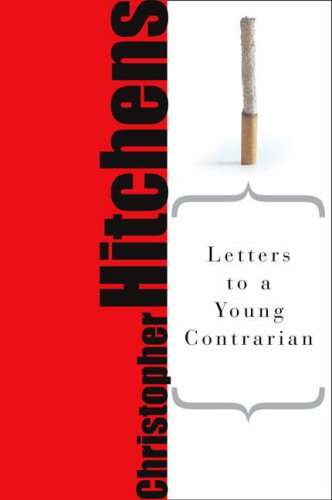
The book is now nearly twenty years old. Hitchens wrote it in late 2000 and early 2001 for Perseus Books’ Rilke-inspired “Art of Mentoring” series, and it was published a month or so after 9/11. In view of this timeline, it occupies an eerily-placid DMZ between the “acceptable” 1990s Hitchens, whose only big sin against the political left had been to hound the centrist Bill Clinton, and the ostensibly-more isolated one post-2001, who took heart at the prospect of America using its military might against jihadis and Baathists. The book was largely a post-mortem on the intellectual battles of the twentieth century, and a lesson in writerly integrity. Today, it reads as a riposte to the new “populism” and the “awokening”.
Since Hitchens’s death from oesophageal cancer in 2011, his presence has been missed on major subjects. In a counterfactual world, it seems likely that Syria, ISIS, and the Iran nuclear negotiations (all entangled) would have occupied him in the first half of the 2010s, and that the potential unravelling of the American republic would have worried him in the second. Part of what his admirers miss, too […] is his performative flair. Though new media weren’t his passion, he owes much of his legacy to his YouTube archive, wherein his long-form lectures, debates, and C-span interviews seem, in hindsight, to have provided a model for the popularity of long-form podcasts.
The Letters can be read as a guide to giving an authentic performance as a political actor. Hitchens begins by selling an imagined student his lifestyle; in one good month, he writes (with some perhaps-inauthentic modesty), he has given evidence against Mother Teresa at the Vatican, taken pride in his arguments over Bosnia as Slobodan Milosevic went to the Hague, and had the thrill of being sued by Henry Kissinger. What the world needs now, the book implies, is for the young to find their appetite for the takedown. (One wonders to what extent his search for successors may have emerged from early intimations of mortality: in one C-span interview about the book, he also urged the youth not to take up smoking.)
[…]
But to reiterate, Letters to a Young Contrarian was fundamentally a twentieth-century work by a man who thought of himself as a sixties radical. Other sixties people like Noam Chomsky and Gore Vidal, with whom Hitchens would later fall out over the War on Terror, figure here in heroic roles. Radicals, he argues in the third chapter, are needed to force major issues. Would slavery have ended in America, he asks, if not for the fanaticism of John Brown? Many of his mentors — Peter Sedgwick, E.P. Thompson — were sometime British communists (and long-time socialists) who had ditched the Party after the Soviet invasion of Hungary (what a pity, then, that he never got to debate “the left” with Jordan Peterson).
Of course, Hitchens was not the only sixties radical to court influence in the 2000s, nor was he the most influential. Much of the radicalism he valued now comes to us — via less subtle mentors — in parody form: as sixties-worship gone sour, as a morbid focus on immutable characteristics, as a desire to short-circuit debate, as the unclean spirit that possesses young journalists to misrepresent their subjects so that they can gloat about the takedown. East of the old Iron Curtain, Alexander Lukashenko borrows a page from the dissidents of ’89 by carrying on “as if” there had been no pandemic, “as if” he had won a presidential election, and “as if” NATO was getting ready to invade Belarus. In such times, it seems worth living “as if” the cigarette-smoking ghost still had an eye on the scene.
September 28, 2020
QotD: The proper role of men, according to the SCUM Manifesto
Valerie Solanas, SCUM Manifesto, 1967.
September 23, 2020
QotD: Don’t blame the Boomers for the “Summer of Love” … most of ’em were too young to participate
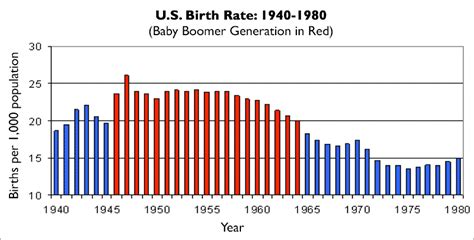
Now, I’m all for bashing the goddamn Boomers, but let’s be fair (since it matters for historical analysis). There’s a common misconception about the Baby Boom. Here, see if you can spot it:
Did you see it? Look closer, and you’ll see that while 1947(-ish) appears to be the peak year in terms of total births, the vast majority of what we call “Boomers” were born after 1950. Let’s do some simple math. The very oldest Boomers were born in 1946. The Summer of Love was 1967. Even if we assume the Summer of Love came out of nowhere — which is impossible, of course, any movement that large had antecedents going back years, probably decades, but let’s assume — that means that any “Boomers” participating were, at most, barely 22 years old. They were just barely 24 when Woodstock came around. Granted that the youngest are the dumbest, and thus can have outsize influence, they still can’t have been largely, let alone solely, responsible for the idiocy of the hippies.
That’s all on the older crowd, the so-called “Silent Generation” — the ones who were old enough to be aware of World War II, but unable to participate directly.
It’s easy to verify. The Port Huron Statement, the founding document of the New Left, was penned by coddled college kids in 1962 — meaning, by kids born, at latest, in about 1942 (its principal author, Tom Hayden, was born in 1939). Here are the Chicago Seven and their dates of birth: Abbie Hoffman (1936), Jerry Rubin (1938), David Dellinger (1915!), Hayden, Rennie Davis (1941),John Froines (1939), and Lee Weiner (1939).
Hoffman, especially, bears scrutiny. Though he’s best remembered as a Yippie — that is, the founder of an ostentatiously youth-oriented movement — he was 31 at its founding. Don’t trust anyone over thirty, right?
1936 to 1946 is only a decade, but it’s crucial. A kid born in 1936 would have vivid memories of World War II and its immediate aftermath — fathers, uncles, and older brothers (and, in more than a few cases, aunts and older sisters) coming home from the service. A kid born in 1946 would have a completely different experience — ask any combat veteran about the first year or two back in the world, versus being home for a decade. Those guys — the kids who saw firsthand the angry young strangers they were supposed to call “Dad” — were the ones who did the real damage in The Sixties(TM), just as it was the almost-but-not-quite frontsoldaten who did the real damage in the Third Reich.
With me? Now hang on to your hats, because here’s where it gets pretty meta: It was the “Silent Generation,” not the Boomers, who did the real damage in The Sixties(TM). That is, the guys who juuuust missed the giant social upheaval that was World War II. The Boomers have done all the damage since The Sixties(TM).
That — The Sixties(TM), which is why I’m using that obnoxious (TM) — is the great social upheaval they juuuust missed. [These people] aren’t old fossils from the flower power years, though many of those fossils are still alive and kicking (including four of the Chicago Seven: Hayden, Davis, Froines, and Weiner). Has anyone heard from Billy Ayers lately? How about Noam Chomsky (born 1928)? I’m sure they have plenty to say … but nobody cares.
It’s not retreads from The Sixties(TM) out there doing this stuff. It’s the people who wish they’d been around for the Summer of Love that are doing it. It’s the people who just know they would’ve ended the Vietnam War, if only they hadn’t been in junior high at the time. This is their Woodstock, not least because they only heard about the original when they arrived for freshman orientation in 1976.
Severian, “Talkin’ ’bout My Generation!”, Rotten Chestnuts, 2020-06-11.
June 30, 2020
“The Squadrons Are Coming” – HMS Ark Royal aviation operations
Aircraft Games Movies
Published 1 Jul 2010In the Western Approaches, Ark Royal welcomes her air group back aboard, with the occasional hairy approach for newly qualified aviators.
This appears to be footage from episode 3 of Sailor, a BBC television series from 1976 about life aboard HMS Ark Royal.
The Wikipedia entry for HMS Ark Royal (R09) begins:
HMS Ark Royal (R09) was an Audacious-class aircraft carrier of the Royal Navy and, when she was decommissioned in 1979, was the Royal Navy’s last remaining conventional catapult and arrested-landing aircraft carrier. She was the first aircraft carrier to be equipped with angled flight deck at its commissioning; her sister ship, HMS Eagle, was the Royal Navy’s first angle-decked aircraft carrier after modification in 1954. Ark Royal was the only non-United States vessel to operate the McDonnell Douglas Phantom at sea.
[…]
While Ark Royal‘s career spanned 24 years from the time of her commissioning (her name was a household word), she spent as much time in refit; repair and reserve and modernisation as in commissioned service (12 years). It required a lot of effort from her engineers to keep her serviceable between yard periods. Ark Royal had been poorly preserved during its lengthy construction from 1942 to 1955, and much of its machinery was obsolete by its completion, including its dated DC electrics, supplemented later by some AC systems, resulting in a ship which experienced regular defects and mechanical failure. Eagle was a more reliable and well-built ship, and spent far more time at sea than her sister. The scrapping of Ark Royal in 1980, two years after Eagle, marked the end of conventional fixed-wing aircraft operations aboard Royal Navy carriers. She had borne so many innovations, yet her replacement was not equipped with any of these. There was some discussion about preserving her as a museum ship, and some private funds were raised; the MOD would not sanction these efforts.

June 12, 2020
An unwelcome return to the 1960s
David Warren reflects on how many parallels we’re seeing in the current year to the worst aspects of the 1960s:
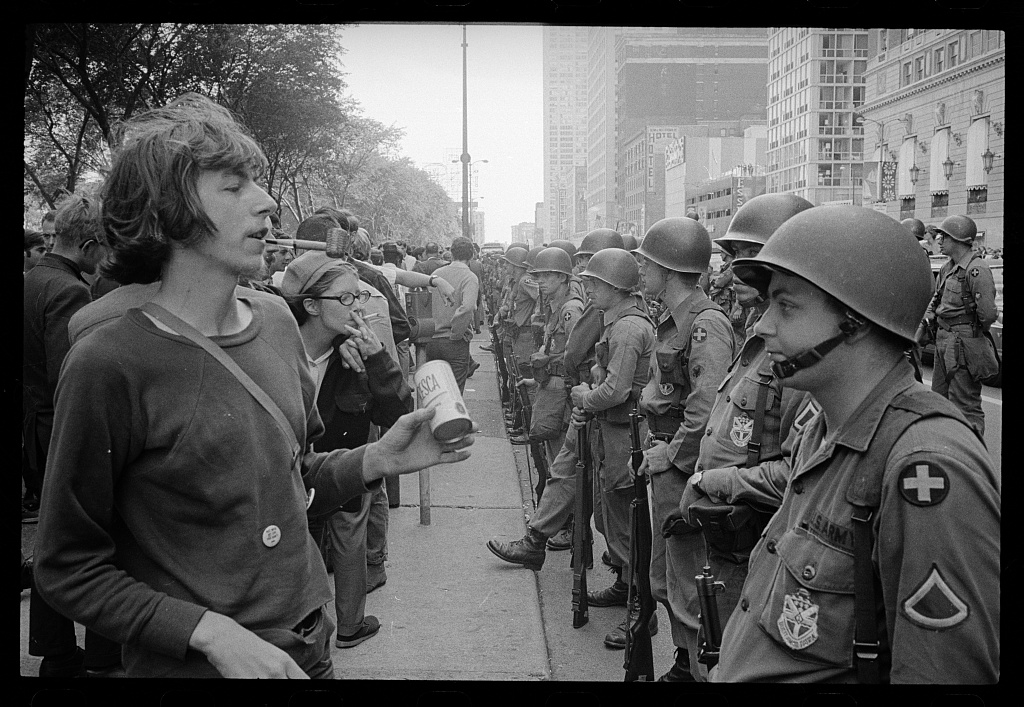
Young “hippie” standing in front of a row of National Guard soldiers, across the street from the Hilton Hotel at Grant Park, at the Democratic National Convention in Chicago, August 26, 1968. Photo by Warren K. Leffler for US News & World Report via Wikimedia Commons.
As an old Cold Warrior, and once “science kid,” whose childhood developed through the 1960s, there is nothing that ought to surprise me. We have Antifa today; we had the Weather Underground then. We have parallels to every event I witnessed through the idiot box of adolescence, and vice versa. Even the destruction of American cities by riots and crime isn’t new; nor the supine response of our liberal leaders. The obvious left bias of news and entertainment was the same then as now, only less shrieking. The replacement of flatfoot journalists, with malicious ideological clowns from the universities, then a work in progress, was by the end of the last century, complete. The poison spread, through all media of information. We’ve reached an Age of Unreason to match Robespierre’s, and seem now to be waiting for a Napoleon.
Charlatans are the handmaids of paganry. That the charlatans slide into violent insurrection, even against the better pagan customs, is not something historically new.
The alternative is improbable: another Age of Faith. This would necessarily include a subsidiary restoration of faith in science — in the modest belief that if we follow the facts where they lead, as opposed to where we want them to go, a lost perception of cosmological order will also be, willy-nilly, restored. “Modern science” — an unambiguously Christian construct — depends entirely on one assumption. It is, that a universe God created will make sense. Logic, or the principle of non-contradiction, will hold up, and where it doesn’t seem to be doing so, it is not God, but we, who have got it wrong.
By the inversion of “values,” at the present day, the sane views are labelled as “psycho.” The truth is not the true, but what we (or our masters) want to call true. This “truth” is “settled,” from one moment to another; and is not to be discovered, but imposed.
May 28, 2020
QotD: The decline and fall of the British aristocracy
The historical way-markers to this implosion are well-documented. The First World War delivered a demographic and psychological blow of unprecedented proportion. Yet the next generation laughed into the void. The Roaring Twenties were a whirl of parties and bankruptcies. Only with the aid of married American fortunes did a carapace of their old values remain intact. The ’60s dissolved what remained of those values in a fug of dope and good tail. Those who didn’t succumb to the new addictions succumbed to old ones they could no longer afford. Titans of the British military like Sir David Stirling — cofounder of the SAS and a descendant of Charles II — gambled away their estates at the hands of unscrupulous Mayfair casino-owners who pretended to be their friends. The aristos were co-opted for their charm — read: money — by a new milieu that promoted the glamour of sexual and social transgression. Blinded by their inherited feelings of self-worth, they never realized they were being used by people who despised them. As a result, nowhere was Britain’s postwar political direction — dubbed “The Management of Decline” — internalized as effectively as among the people who had once driven its ascent.
[…]
How could a species that once steered Britain to greatness now claim the Darwin Award in every passing decade? The simple reason is that British aristocrats are the only people on earth among whom stupidity is not only accepted but prized. As the ultimate proof against meritocracy, it is the ultimate badge of honor. As Stendhal wrote in Le Rouge et Le Noir, “It is not doing something well or badly that is the crime: but doing it at all.”
“Bunky Mortimer III”, “Class Rejects: A Guide to the British Aristocracy”, Taki’s Magazine, 2018-03-02.
May 27, 2020
American passenger trains before Amtrak
George Hamlin reflects on the state of the US passenger rail system before the formation of Amtrak in 1971:
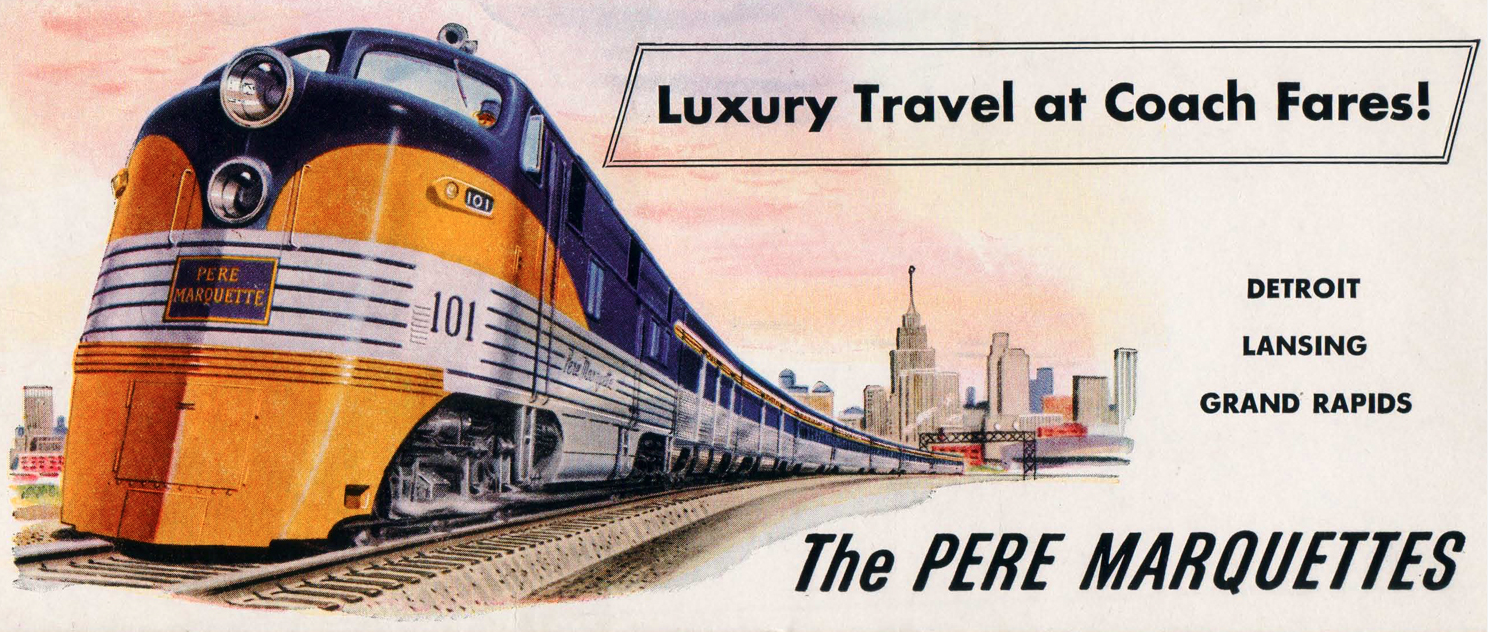
… non-commuter U.S. passenger trains can be said to have been under siege essentially for my entire lifetime, beginning not long after the end of World War II. Many railroads spent large sums to re-equip with streamlined lightweight equipment after the war, only to see what was originally couched as an investment turn into essentially a drain on their companies’ treasuries.
And the “rewards” for this? Passengers decamped to the rapidly-expanding airlines, and their personal automobiles. The decisive blow came in 1956, with the passage of the Federal Aid Highway Act, which led to the Interstate Highway System.
Quoting from Joe Welsh’s Pennsy Streamliners, The Blue Ribbon Fleet (page 138), “Referring to the challenge, [PRR President] Symes wrote ‘There is such a thing as planning an orderly retreat in the face of superior forces.’ Clearly, the bugle had been sounded.”
In 1958, an Interstate Commerce Commission Hearing Examiner predicted that there would be no intercity passenger trains by 1970; he only missed by four months, effectively (and didn’t count on the Southern Railway, Rio Grande and Rock Island shying away from the government’s largesse). In 1959, TRAINS magazine devoted an entire issue to what was now clearly a crisis; the cover bore the legend “Who Shot the Passenger Train?”, complete with simulated bullet hole.
The 1960s in the U.S. could well be described as the “train-off” decade from a transportation history perspective; get, and read, Fred Frailey’s Twilight of the Great Trains, for a blow-by-blow analysis. The 1970s quickly produced the Penn Central bankruptcy, which proved to be the catalyst for government intervention; less than a year later, Amtrak was on the scene.
And since, it has frequently found itself in a “Perils of Pauline” existence, ranging from lack of funding to buy equipment, in many cases, to several bouts of route eliminations, to micro-management by politicians that don’t seem to be willing to provide consistent operational funding so that the company can make reasonable plans.
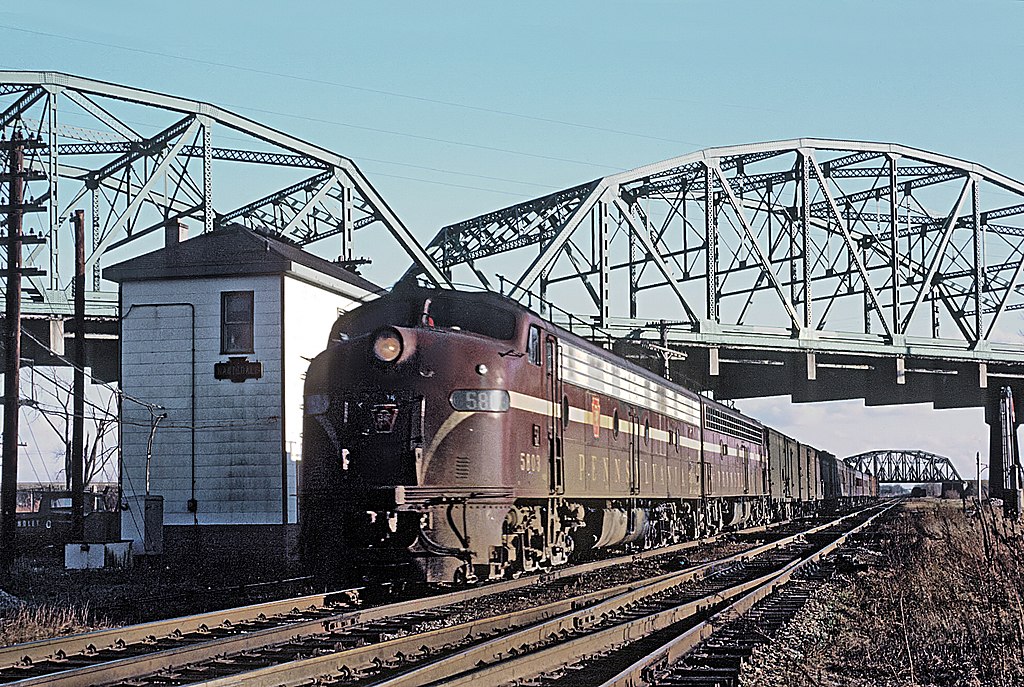
PRR E8A 5803 with Train 72, The Red Bird, passing the Hartsdale, Indiana tower and crossing the NYC and EJ&E on November 26, 1965.
Photo from the Roger Puta collection via Wikimedia Commons.
April 11, 2020
QotD: Zhou Enlai’s famous “too early to say” comment on the French Revolution
So says a retired American diplomat, Charles W. (Chas) Freeman Jr., who was present when Zhou made the comment during President Richard Nixon’s visit to China in February 1972.
Freeman, who was Nixon’s interpreter during the historic, weeklong trip, made the disclosure last week during a panel discussion in Washington about On China, the latest book by former Secretary of State Henry Kissinger.
The discussion was moderated by Richard McGregor, a journalist and China expert who wrote about Freeman’s comments for the Financial Times of London.
In an interview yesterday, Freeman elaborated on his recollection about Zhou’s comment, the conventional interpretation of which is frequently offered as evidence of China’s sage, patient, and far-sighted ways. Foreign Policy magazine, for example, referred last month to that interpretation, saying the comment was “a cautionary warning of the perils of judgments made in real time.”
The Washington Post‘s recent review of Kissinger’s book likewise referred to the conventional understanding of Zhou’s remark.
Freeman described Zhou’s misconstrued comment as “one of those convenient misunderstandings that never gets corrected.”
He said Zhou’s remark probably was made over lunch or dinner, during a discussion about revolutions that had succeeded and failed. They included, Freeman said, the Prague Spring of 1968 and the Hungarian uprising of 1956, both of which the Soviet Union crushed.
He said it was clear from the context and content of Zhou’s comment that in saying it was “too early to say” the Chinese leader was speaking about the events in France in May 1968, not the years of upheaval that began in 1789.
Freeman acknowledged that the conventional interpretation makes for a better story but added that it was “absolutely clear” from the context of the discussion that Zhou was speaking about 1968.
W. Joseph Campbell, “‘Too early to say’: Zhou was speaking about 1968, not 1789”, Media Myth Alert, 2011-06-14.
April 3, 2020
Taffy Holden, the Accidental Lightning Pilot
The History Guy: History Deserves to Be Remembered
Published 24 Sep 2018In the United Kingdom in 1966, an RAF ground crewman conducting an electrical test suddenly finds himself airborne. Taffy Holden, the accidental Lightning pilot, deserves to be remembered.
The History Guy uses media that are in the public domain. As photographs of actual events are sometimes not available, photographs of similar objects and events are used for illustration.
Patreon: https://www.patreon.com/TheHistoryGuy
The History Guy: History Deserves to Be Remembered is the place to find short snippets of forgotten history from five to fifteen minutes long. If you like history too, this is the channel for you.
Awesome The History Guy merchandise is available at:
teespring.com/stores/the-history-guyThe episode is intended for educational purposes. All events are portrayed in historical context.
#history #aviation #thehistoryguy
The English Electric Ligthning F1 had another, rather more dramatic appearance on the front page of the Daily Mirror in October 1962:

English Electric F1 Lightning interceptor XG332 about to crash on 13 September 1962.
Photo by Jim Mead via Reddit.com.
Whilst carrying out a demonstration flight, there was a fire in the aircraft’s reheat zone. Un-burnt fuel in the rear fuselage had been ignited by a small crack in the jet pipe and had weakened the tailplane actuator anchorage. This weakened the tailplane control system which failed with the aircraft at 100 feet on final approach. The aircraft pitched up violently just as Aird was coming up to land. Aird lost control of the aircraft and ejected.
Luckily, because the nose pitched up he had just enough time to eject.
The tractor in the photograph was a Fordson Super Major. If you look closely at the grill, you’ll see it reads D H Goblin, as in the de Havilland Goblin jet engine.
The tractor driver was 15-year-old Mick Sutterby, who spent that summer working on the airfield. He wasn’t posing for the camera. In fact, he was telling the photographer, Jim Mead, to move on, because he shouldn’t be there.
Mead saw the plane coming in and the nose pitch up. Then Aird ejected and Mead says he had just enough time to line up the shot as the Lightning came down nose first.
Meanwhile, George Aird landed on a greenhouse and fell through the roof, breaking both legs as he landed unconscious on the ground. The water from the sprinkler system for the tomatoes woke him. He’s reported to have said that his first thought was that he must be in heaven.
The photographs taken that day first went to the Ministry of Aviation. Once they were released, Mead sold them to the Daily Mirror.

March 21, 2020
Modern Classics Summarized: Stranger In A Strange Land
Overly Sarcastic Productions
Published 20 Mar 2020This book is:
10% Mike
20% stars
15% concentrated power of mars
5% water
50% cult
and 100% topics that are very adultThis video was requested by our longtime patron Joshua A. Demic!
Can you use the “product of the times” defense if the book was wildly controversial for its time? Asking for a comment section…
Our content is intended for teenage audiences and up. No, seriously. We REALLY MEAN IT.
PATREON: https://www.Patreon.com/OSP
MERCH LINKS: https://www.redbubble.com/people/OSPY…
OUR WEBSITE: https://www.OverlySarcasticProductions.com
Find us on Twitter https://www.Twitter.com/OSPYouTube
Find us on Reddit https://www.Reddit.com/r/OSP/
Discord: https://discord.gg/h3AqJPe

March 8, 2020
Britain’s Post-WWII Naval Decline
Sal Viscuso
Published 1 Dec 2013Max Hastings describes the declining British post-WWII role in global affairs.

February 4, 2020
Andrew Sullivan – “Our fate was almost certainly cast as long ago as 1964 and 1965”
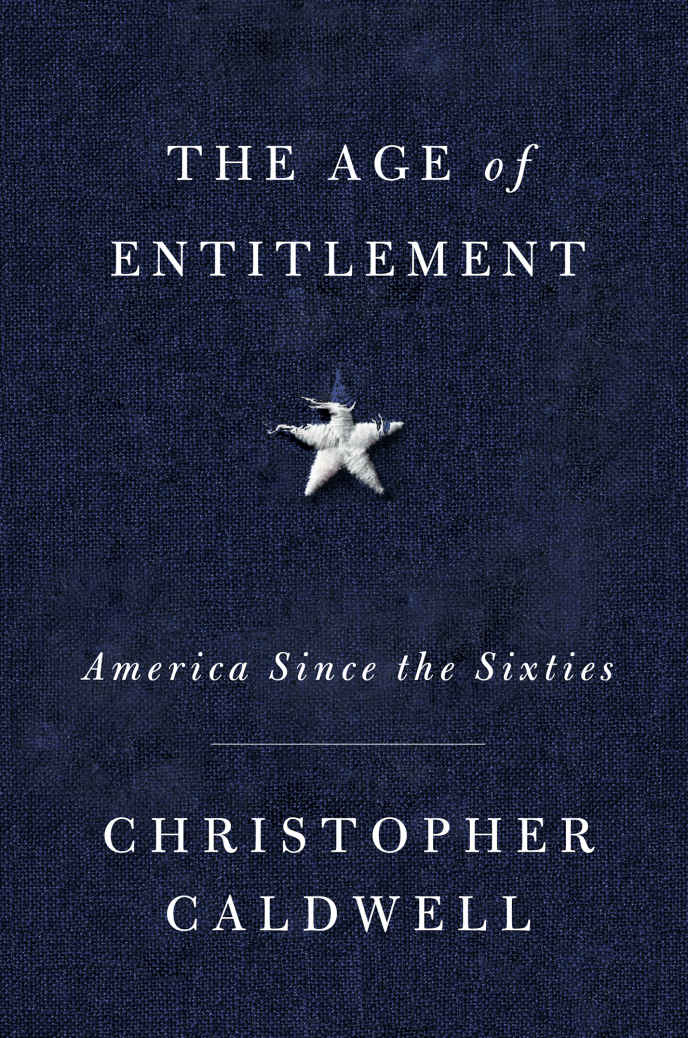
In his most recent New York magazine column, Andrew Sullivan reviews two new books on the same issues from different perspectives: Ezra Klein’s Why We’re Polarized and Christopher Caldwell’s The Age of Entitlement.
… both books agree on one central thing: Our fate was almost certainly cast as long ago as 1964 and 1965. Those years, in the wake of the Kennedy assassination, saw the Civil Rights Act upend the Constitution of a uniquely liberal country in order to tackle the legacy of slavery and racism, and the Immigration and Nationality Act set in motion the creation of a far more racially and ethnically diverse and integrated society than anyone in human history had previously thought possible. Still, at the time, few believed that either shift would have huge, deep consequences in the long term. They were merely a modernization of American ideals: inclusivity, expansiveness, hope.
As someone who was born just before these two changes were instigated, I regarded those tectonic shifts as simply part of the landscape — something that seemed always to have been here. And what could be questioned about either? One was reversing a profound moral evil; the other was banishing racism from the immigration laws. No-brainers. The strongest resistance to civil rights came from former segregationists or obvious racists, and there was little resistance to the Immigration Act, because most in the congressional debate seemed to think it wouldn’t change anything much at all. (The House sponsor of the Immigration Act, as Caldwell notes, promised that “quota immigration under the bill is likely to be more than 80 percent European,” while Ted Kennedy insisted: “The ethnic mix of this country will not be upset.”) There were a few dissenters to the 1964 Act, such as Robert Bork, who identified a significant erosion in the freedom of association. And there were southern senators who worried about immigrants from the developing world. But the resisters were easily dismissed on both counts, in the wake of LBJ’s 1964 landslide.
In fact, as Klein shows, a pivotal moment had arrived. The civil-rights movement quickly broke apart the old Democratic party, which had for decades combined the interests of blacks and southern whites into a single multiracial coalition. The result was a sorting of the two political parties into much purer vessels for their diverging ideologies, and into groupings that were also increasingly racially distinct. The GOP became whiter and whiter; the Democrats more and more became the party of the marginalized nonwhites as the years rolled by. Blacks and southern whites ceased to communicate directly within a single party, where compromises could be hammered out through internal wrangling. In the aggregate this was, as Klein emphasizes, a good thing — because blacks kept coming out the losers in those intraparty conversations, and with civil rights, they had a chance of winning in a clearer, less rigged, debate.
But it was also problematic because human beings are tribal, psychologically primed to recognize in-group and out-group before the frontal cortex gets a look-in. And so the whiter the GOP became, the whiter it got, and the more diverse the Democrats got. Simultaneously, the economy took a brutal toll on the very whites who were alienated by the culture’s shift toward racial equality, and then racial equity. Klein recognizes that this racial polarization, is, objectively, a problem for liberal democracy: “Our brains reflect deep evolutionary time, while our lives, for better and worse, are lived right now, in this moment.” So he can see the depth of the problem of tribalism — and its merging with partisanship, which goes on to create a megatribalism.
If humans simply cannot help their tribal instincts, then a truly multicultural democracy has a big challenge ahead of it. The emotions triggered are so primal, that conflict, rather than any form of common ground, can spiral into a grinding cold civil war. And you can’t legislate or educate this away. One fascinating study Klein quotes found that “priming white college students to think about the concept of white privilege led them to express more racial resentment in subsequent surveys.” Anti-racist indoctrination actually feeds racism. So tribalism deepens.
Klein sees this spiral more clearly than most on the left. He acknowledges the truth that in a period of extraordinary demographic and racial change — the U.S. is the first majority-white nation that will become majority nonwhite in human history — every group begins to feel like an oppressed minority. Including whites: “To the extent that it’s true that a loss of privilege feels like oppression, that feeling needs to be taken seriously, both because it’s real, and because, left to fester, it can be weaponized by demagogues and reactionaries.” And the truth is: It was left to fester. Whenever whites resisted ever-expanding concepts of civil rights or mass illegal and legal immigration, they were cast outside the arena of permissible disagreement, deemed racists, and stigmatized. Even the GOP scorned them. Eventually, Hillary Clinton named them: the deplorables. By 2016, plenty of Americans decided to embrace the label, and voted for Trump.
January 21, 2020
Amity Shlaes’ Great Society: A New History
In City Journal, Edward Short reviews the latest American economic history book by Amity Shlaes:
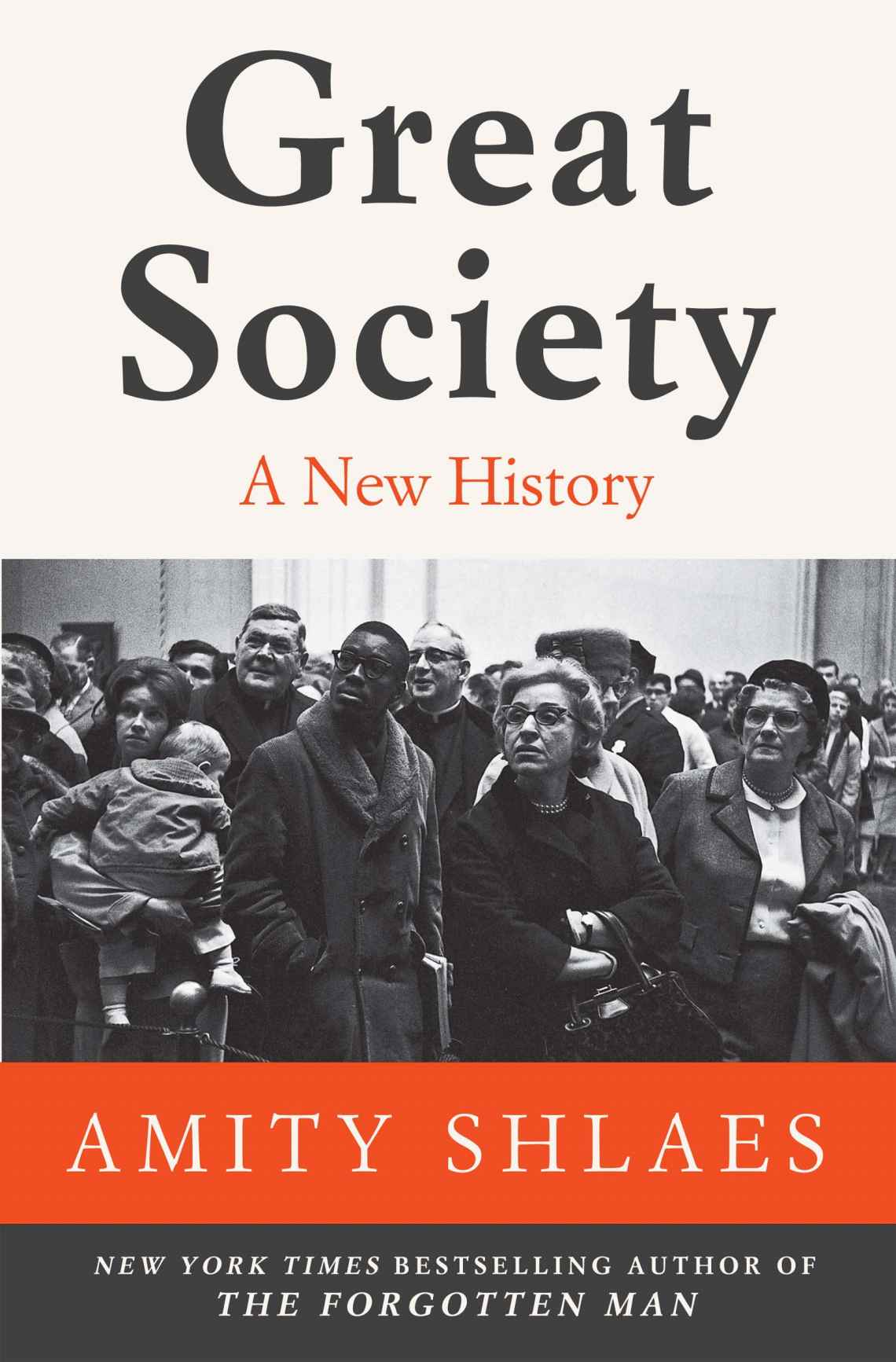
In Great Society: A New History, Amity Shlaes revisits the welfare programs of the Kennedy, Johnson, and Nixon administrations to show not only how misguided they were but also what a warning they present to those who wish to resurrect and extend such programs. “The contest between capitalism and socialism is on again,” the author writes in her introduction. Despite the Trump administration’s thriving economy, or perhaps because of it, Democratic Party progressives are calling for new welfare programs even more radical than those advocated in the 1960s by the socialist architect of Lyndon Johnson’s War on Poverty, Michael Harrington. In the new schemes for wealth redistribution, student debt relief, socialized medicine, and universal guaranteed income that make up the Democrats’ political platform in 2020, Shlaes rightly sees a recycling of Great Society hobby horses — and she worries that a good portion of the electorate may be taken in by them. “Once again many Americans rate socialism as the generous philosophy,” she observes, and she has written her admirable, sobering study to make sure that readers realize that the “results of our socialism were not generous.”
Reviewing how ungenerous makes for salutary reading. After all, socialism of any stripe, whether in Russia, South America, Europe, or America, has always been an inherently deceitful enterprise. Shales captures the essence of this imposture when she describes one of its manifestations as “Prettifying a political grab by dressing it up as an economic rescue.” In totting up these receipts for deceit, Shlaes has done a genuine public service. […]
On display here are all of Shlaes’s strengths as an author: her clear and unpretentious prose, sound critical judgment, readiness to enter into the thinking of her subjects with sympathy (even when she regards it as mistaken), and, perhaps most impressively, understanding how history can help us fathom what might otherwise be obscure in our own more immediate history.
Accordingly, she describes the influence that Roosevelt’s New Deal had on Johnson, who saw it as a model for maintaining and consolidating his Democratic majorities, as well as focusing his Cabinet’s talents. “The men around Johnson,” Shlaes points out, including Robert McNamara, McGeorge Bundy, Richard Goodwin, and Sargent Shriver, “felt the weight of his faith on them, and strove hard. Vietnam would be sorted out. There would be a Great Society. Poverty would be cured. Blacks of the South would win full citizenship. The Great Society would succeed.” Yet the president’s men could not help asking “by what measures” it would succeed.
Moynihan’s answer to this question is one that still mesmerizes social-engineering elites. The Great Society would be achieved by social science. “Progress begins on social problems when it becomes possible to measure them,” Moynihan declared. Improved quantitative analysis would give the centralized power of planners a new credibility.
Whether Johnson himself ever truly believed in such claims is questionable. When aides asked the exuberant Texan what he thought of the risks of going forward with his wildly ambitious program, his reply epitomized the hubris at the heart of his Great Society: “Well, what the hell’s the presidency for?”
January 17, 2020
QotD: The Bible
In my former life, when I entertained grand schemes, I dreamt of publishing a multi-volume revision of that Variorum, with the latest scholarship, but attached to the same old, resonant King James text. (This project could as well have been mounted on the explicitly Roman, and similarly magnificent, Douay-Rheims.)
There are now, in print, more than one hundred alternative English translations of the Bible, and the reader who buys, say, the top twenty, to compare them, is wasting time. He could actually save time by mastering the original languages. I rather think it was the Devil’s idea, to undermine the simple Christian’s confidence in Scripture by means of multiple translations, and innumerable petty and irrelevant distractions.
The New English Bible‘s first volume, a translation into “modern idiom” of the New Testament, was published in 1961. It is dated now in a way the KJV will never be, and has in fact been succeeded by the many other “improved” — and desperately flawed — ever more “modern” editions, including those which intentionally misrepresent the original texts to keep up with the latest “gender” abominations. Yet even when it first appeared, T. S. Eliot could say that the new translation “astonishes in its combination of the vulgar, the trivial, and the pedantic.”
That criticism holds, so far as I can see, for every modern-language “update” of scripture and liturgy. The hard truth is that the medium of contemporary language is incapable of conveying the substance we require.
Remove not the ancient landmark which thy fathers have set.
David Warren, “A rant”, Essays in Idleness, 2017-12-13.


