Mark Felton Productions
Published 25 Nov 2021After the wounded and dead had been removed from a battlefield, what happened to all the military vehicles and weapons left lying around? Find out here.
Dr. Mark Felton is a well-known British historian, the author of 22 non-fiction books, including bestsellers Zero Night and Castle of the Eagles, both currently being developed into movies in Hollywood. In addition to writing, Mark also appears regularly in television documentaries around the world, including on The History Channel, Netflix, National Geographic, Quest, American Heroes Channel and RMC Decouverte. His books have formed the background to several TV and radio documentaries. More information about Mark can be found at: https://en.wikipedia.org/wiki/Mark_Fe…
Help support my channel:
https://www.paypal.me/markfeltonprodu…
https://www.patreon.com/markfeltonpro…Disclaimer: All opinions and comments expressed in the ‘Comments’ section do not reflect the opinions of Mark Felton Productions. All opinions and comments should contribute to the dialogue. Mark Felton Productions does not condone written attacks, insults, racism, sexism, extremism, violence or otherwise questionable comments or material in the ‘Comments’ section, and reserves the right to delete any comment violating this rule or to block any poster from the channel.
Credits: US National Archives; Library of Congress
Thumbnail colorisation (left image) by Paul Reynolds
March 10, 2022
Salvaging WW2 Battlefields – How Vehicles & Weapons Were Reused
March 9, 2022
Switzerland – The Heart of European Spying – WW2 – Spies & Ties 14
World War Two
Published 8 Mar 2022As a neutral country surrounded by occupied and axis countries, Switzerland was a major spy hub during World War Two. Surrounded by the Swiss Alps, the Axis and Allies fought a parallel spy war to get the upper hand.
(more…)
By all means, decry the Russian invasion, but also scrutinize Ukraine’s government
In The Critic, Mark Almond says we need to keep a clear perspective about the war in Ukraine, to condemn Russian aggression certainly, but also to see as clearly as we can what kind of government is in charge of defending Ukraine:
“Know Your Enemy” is a standard invocation in wartime. But, if clear-eyed appreciation of an opponent and his intentions is obviously necessary, shouldn’t “Know Your Ally” be equally imperative?
Even when war has become a spectator sport for Westerners, rejoicing in killing Putin with their mouths in cyberspace and joyously kicking Russian cripples out of the paralympics, there is a real conflict going on which is horrendous for Ukrainians, which also has serious implications even for us off-shore islanders, as well as Europe as a whole.
Romanticising our chosen side and vilifying their foes are natural reactions, but fairy-tale versions of conflict often disguise the flaws of the allies even if they pale by comparison with the vices of the invader.
Think how in 1914 “Plucky Little Belgium” was portrayed as a damsel in distress about to be raped by a literally monstrous Hun. But until August, 1914, Belgium’s place on the scale of victimhood was decidedly at the perpetrator end. The horrific exploitation of the Belgian Congo’s population as slaves to King Leopold’s greed — fictionalised by Conrad’s Heart of Darkness — had been exposed by Sir Roger Casement and E.D. Morel, who both rejected the defence of Belgium.
Casement went over the top to side openly — and suicidally with Imperial Germany — while Morel went to prison for urging men not to join up. They were deeply mistaken about Germany, but they did know something about our Belgian ally’s moral record.
Wartime Polish resistance to the Nazis and service in the RAF is fondly remembered in this country and rightly so, but the Polish junta in 1939 was as militarily incompetent as their Argentinian counterparts in 1982. The courage of ordinary Polish soldiers should not make people forget the regime which had colluded with Hitler against the Czechs in 1938. Our other ally, Stalin, subsequently “liberated” the Poles in his inimitable way. The trade-offs and alliances that defeated the Nazis were extremely ugly.
Turning to Ukraine today, it is easy — and heart-warming — to get swept away by the pictures of Ukrainian soldiers fight back against the vast Russian army or civilians blocking the path of the “Russian steamroller” (so admired in 1914 by the British public). President Zelensky is by far the best president Ukrainians have had since independence in 1991. That might seem a back-handed compliment when we consider how low his predecessors set the bar. But the focus in Western media on this real life Charlie Chaplin defying the Kremlin’s “Great Dictator” makes good “reality tv” but overlooks the actual power-structures in Ukraine.
A Covert Weapons for Special Operations: the Sten MkII(S)
Forgotten Weapons
Published 5 Nov 2021http://www.patreon.com/ForgottenWeapons
https://www.floatplane.com/channel/Fo…
Cool Forgotten Weapons merch! http://shop.forgottenweapons.com
There are a fairly wide variety of silenced Sten guns that were made during World War Two, because many were needed for small Special Operations Executive missions. However, the British Army did also formally develop and adopt such a weapon. It was initially requested in 1942, with the first trials in November of that year. After two years of tinkering and deliberating, a pattern was finally put into production in February 1944. This was a Sten MkII with an integrally suppressed barrel. The barrel was just 3.75 inches long, with six vent holes drilled just in front of the chamber to reduce muzzle velocity below the speed of sound. The silencer itself was about 12 inches long, with an initial expansion chamber and 18 baffles.
Since the vented barrel reduced recoil energy of the cartridge, the bolt was reduced in weight by about 15% and the recoil spring shortened just slightly as well, to ensure proper cycling. The result was formally designated the Sten MkII(S). It retained the selective fire capability of the Sten, but was not to be used in automatic mode, as doing so could compress the baffles together and damage them. In total, 5,776 of these silent submachine guns were made. The design was followed by a more sophisticated Sten Mk6 (essentially a silenced Mk5), but remained in active use with the British military into the early 1970s.
Finding completely original and intact examples of the MkII(S) is extremely difficult today, and this one is a rare privilege to examine!
Contact:
Forgotten Weapons
6281 N. Oracle 36270
Tucson, AZ 85740
QotD: Cynicism
Now, there’s this about cynicism … It’s the universe’s most supine moral position. Real comfortable. If nothing can be done, then you’re not some kind of shit for not doing it, and you can lie there and stink to yourself in perfect peace.
Lois McMaster Bujold, Borders of Infinity, 1989.
March 8, 2022
HMCS Harry DeWolf goes INTO THE NORTH
Royal Canadian Navy / Marine Royale Canadienne
Published 7 Mar 2022Akuni aullarsimaniq (ᐊᑯᓂ ᐊᐅᓪᓚᕐᓯᒪᓂᖅ) Inuktitut for “A long journey”.
Imagine the adventure! For the crew of our first Arctic and Offshore Patrol Vessel, HMCS Harry DeWolf, their inaugural deployment circumnavigating North America from August to December 2021 presented many unique and life-changing experiences.
“Putin’s ambition to gather together ‘Russian’ lands has been clear for almost two decades now”
Katherine Bayford on the awkward situation many western nations find themselves in, being both dependent to a greater or lesser degree on oil and gas imports from Russia and also having allowed their armed forces to degrade significantly over time:
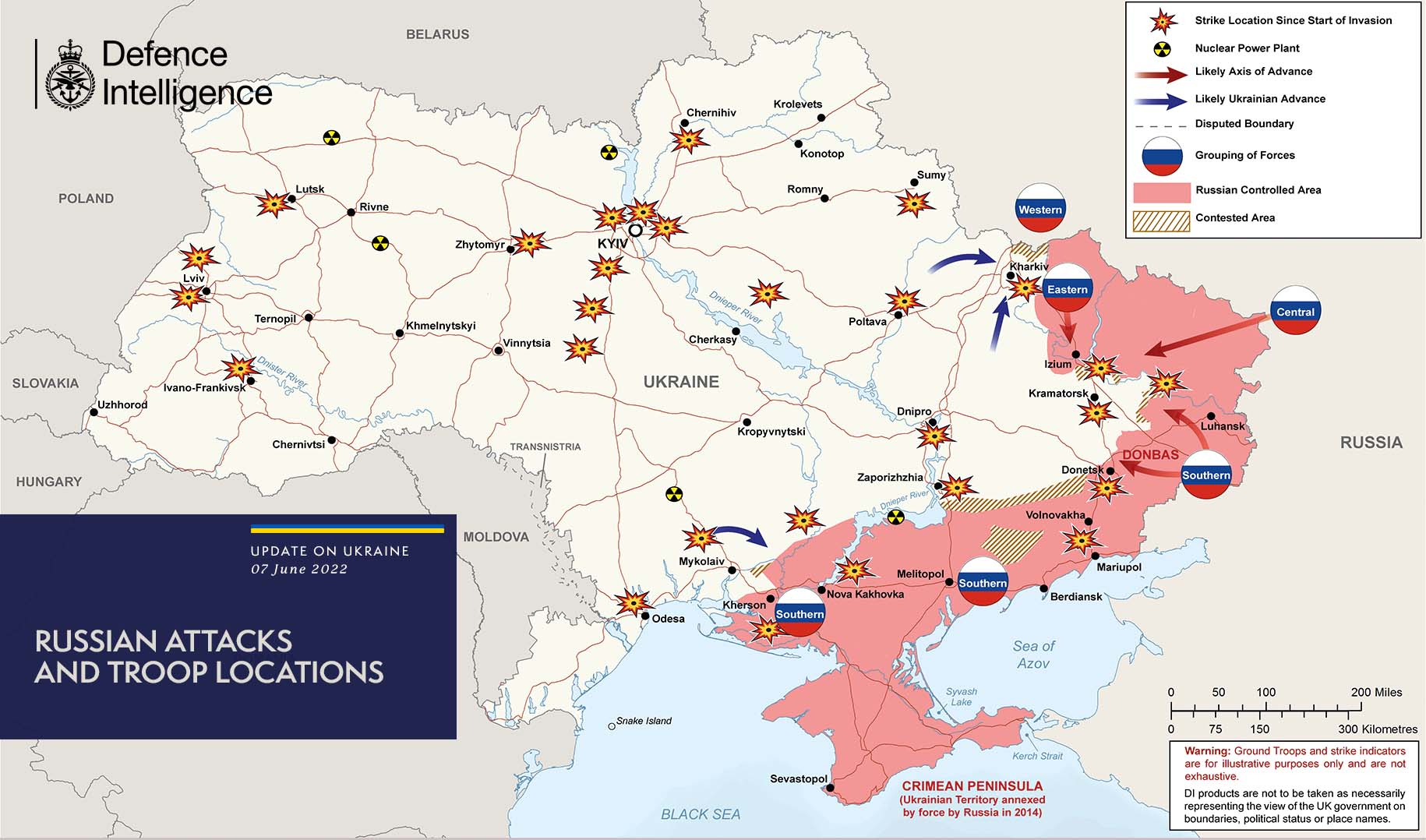
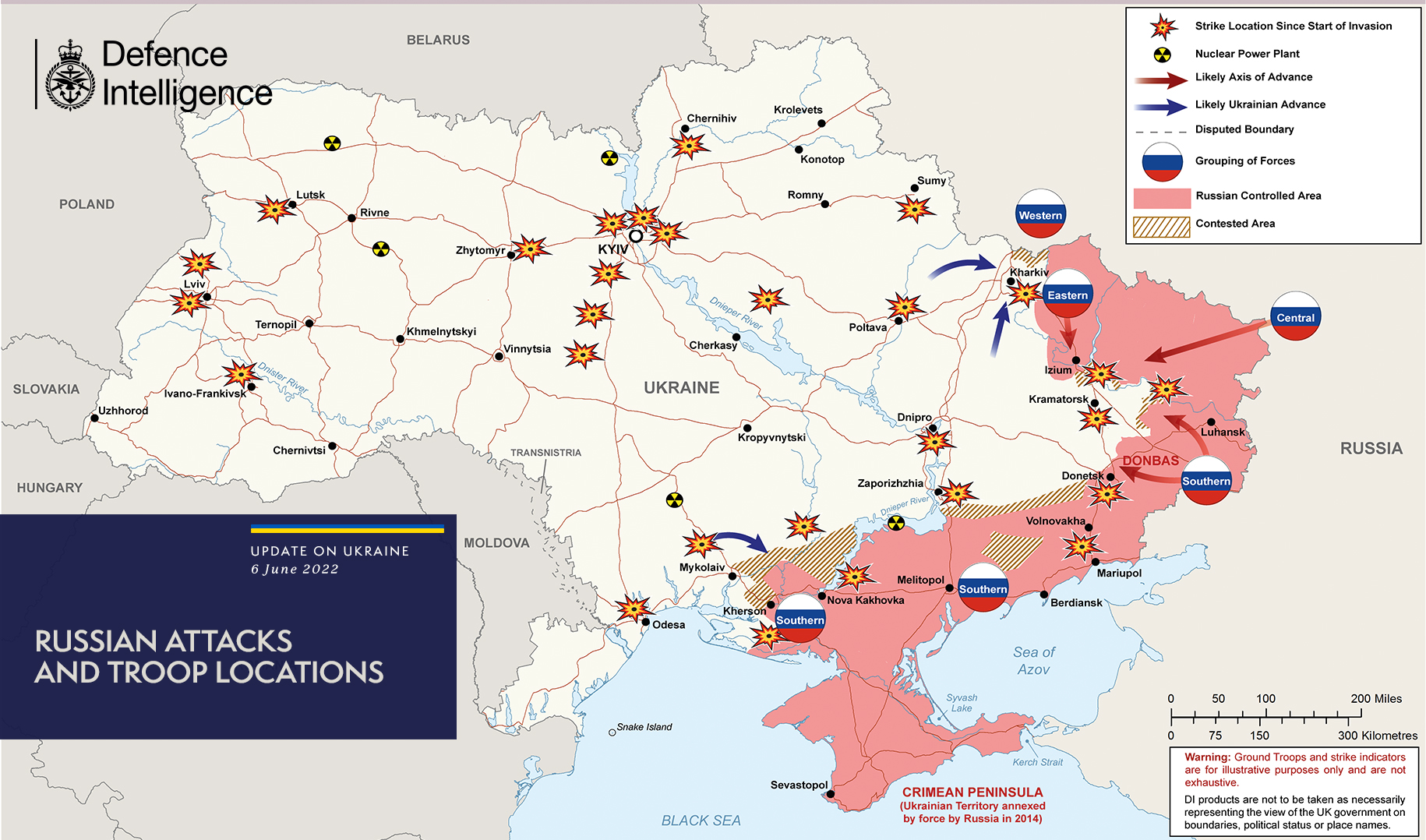
After months of military build-up and overt threats, educated, intelligent and respected experts across the West woke on Thursday, 24 February — genuinely shocked to discover that Russia had launched an invasion of Ukraine.
How is it that people paid to conduct exactly this sort of analysis could be so badly wrong? The experts who apparently completely underestimated Russia’s intention to undertake major military action, ranged from analysts and academics to President Zelensky himself. Russia’s intentions were hardly a secret. To be shocked at this invasion — not that it occurred when it did, or that it was undertaken in the particular way it was, but to be shocked at the very realistic possibility that it could have occurred — was foolishly naïve. Many of these analysts, whose careers have been built upon understanding the actions of non-western states, suffer a profound inability to understand actors with different thought patterns and belief systems. At its core, their failure seems to arise from academics, journalists and diplomats appealing to exclusively liberal fears and values. Economic penalties, the loss of reputation in liberal institutions and calls to value human rights were meant to convince a man, with minimal respect for these, to act against his own interests.
This failure of understanding limits the ability of the West to successfully counter Russian action. How can you act against an objective when you were unable to understand it in the first place? Western analysis, with its reliance on the tools of diplomacy and soft coercion, has forgotten that when soft power fails, hard power must be a credible threat. After years of managed decline, how much of a deterrent are our increasingly degraded militaries? As long as the West prioritises soft power values over hard power realities, nations who do the opposite are free to act how they may.
Russia’s attempt to reassert itself as a Great Power has been a project decades in the making. Since Putin’s ascendency to power, Russia has reached the fourth-highest military expenditure in the world; made consistent and escalating interventions in Chechnya, Georgia and Syria; enacted an increasing clampdown on dissidents; and built up a significant currency reserve. Putin’s stated belief that the fall of the Soviet Union was “the greatest geopolitical catastrophe of the century” was not born of any commitment to communist politics, but spoke to the decline of Russian influence over its neighbours in the post-Soviet years that followed. Putin wishes to make Russia a Great Power that can intervene and win abroad, prop up its allies and exterminate its ideological allies on foreign ground, without fear of diminishment on the world stage.
Putin’s ambition to gather together “Russian” lands has been clear for almost two decades now. His growing nationalist rhetoric and action over the past decade should have only indicated that this ambition was strengthening. That he had interventionist, even imperial, geopolitical goals should have come as a surprise to precisely none. He has long been open about those he admires (Peter the Great), those he despises (late and post-Soviet leadership) and his opinion of Russia’s rightful place in the world (ascendant).
Francis Turner offers the first sensible explanation of the lack of Russian airpower over the Ukraine that has been puzzling experts since the very start of the war:
Everyone knows that old quote that “amateur generals study tactics, professional ones study logistics”
Well, apparently that does not apply to the Russian high command, who seem to have failed to study logistics. I admit I didn’t see this coming, but then, as I said in my last post I am not a military expert and I kind of assumed that, while Russia might have a day or two of confusion as the initial “go in fast and topple the leadership” strategy is replaced by “go slower and more methodically”, it would adjust and continue to press forward.
I appear to have been wrong in that assumption.
First, what may seem like a slight detour, many people have noted Russia’s lack of air superiority. One reason for that could be that the Ukrainians have captured Russian mobile air defense systems in full working order. Which means they have complete lists of IFF signals, scheduled changes, cryptography settings etc. etc. Now potentially the Russians can change them, but they cannot change them via a radio broadcast because the Ukrainians will listen, so the only way to do an update is via soldiers on the ground hand delivering the updates (yes they could use land lines for some of the journey, but eventually they have to download them from some computer (print them out? copy to a USB drive?) and take them to the actual piece of equipment. Which takes time. Particularly since the vehicles doing the hand delivery have to share the roads with other parts of the Russian invasion force. But as the first link in the paragraph speculates another reason could be that the Russian airforce can’t actually coordinate things so that Ukrainian air defense systems can be targeted as they defend key sites against other Russian air attacks.
Failure to be able to take out Ukrainian air defenses is, IMHO, a symptom either way and it contributes to the bigger logistics issue because it means that the only way Russian forces can get resupply is on the ground, particularly since they can’t hold Hostomel airport either.
So logistics. Nitay Arbel posted this fascinating video about how Russians do logistics in Russia (they use the railways) and how that doesn’t work in Ukraine (Ukraine has trashed all cross border rail links). So the Russians need to use trucks. This was known and the consequences/limitations of that (should have been) entirely predictable, yet the Russians seem to not figured it all out in advance and been taken by surprise. Trent Talenko has a blog post and many tweet threads about how, particularly in the inland/north of the country, the Russians have to keep their convoys on the roads and that’s a major problem.
Back in the 1970s and 80s, one of the big differences between NATO and NATO-adjacent western militaries and those of the Warsaw Pact (and those aligned with or primarily equipped by the Soviets) was the different ratio between “teeth” and “tail”. Soviet-equipped militaries emphasized the “teeth” — the tanks, the guns, the attack aircraft and helicopters, that were the striking edge of an army’s advance. NATO and other western powers were much less about the number of tanks/guns/aircraft as they were about having enough logistical backup to keep their smaller numbers of trigger-pullers fed, supported, and resupplied with ammunition. This meant to a civilian eye, Soviet armies had many more obvious combat-capable vehicles than their western equivalents. Soviet doctrine called for units to be “burned up” in combat rather than conserved even if it meant giving up territory. Soviet battle plans tended to assume an all-out attack would not need further backup, reinforcement, or re-supply, because it would either succeed completely or fail completely and further efforts would be through alternative attack paths using different formations.
From what little we can definitely see in the current fighting in Ukraine, the Russian military is still much more Soviet in organization than it is “western”. As Marko Kloos put it on Twitter:
The Battle of Flamborough Head – Nice Ship, I’ll Take It
Drachinifel
Published 28 Aug 2019Today we look at John Paul Jones’ most famous battle, where the quality of not giving up no matter the odds shines through in a big way!
Want to support the channel? – https://www.patreon.com/Drachinifel
Want a shirt/mug/hoodie – https://shop.spreadshirt.com/drachini…
Want a medal? – https://www.etsy.com/uk/shop/Drachinifel
Want to talk about ships? https://discord.gg/TYu88mt
Want to get some books? www.amazon.co.uk/shop/drachinifel
Drydock Episodes in podcast format – https://soundcloud.com/user-21912004
QotD: Modern pop music
One of the pleasures of middle age is the utter freedom you feel when you realize it’s no longer necessary to care about pop music. This emotion takes several forms; at its worst you become a peevish coot suffused with suspicion: These youngsters are wearing their hats in a style that fills me with unease. But at its best, you realize that there’s more to life than pop music. You need not worry whether the sludgy thrash-rock ground out by yowling scowlers is post-punkabilly infused with a neo-hippie sensibility, or the other way around. If something new comes along that you like, fine. But don’t think it makes you hip. You’re not hip. Hip, like Trix, is for kids.
James Lileks, “Turning into an old crunker”, Star-Tribune, 2005-05-29.
March 7, 2022
In The Highest Tradition — Episode 4
British Army Documentaries
Published 30 Oct 2021The fourth in a six-part series that delves into the world of regimental tradition. It looks at the illustrious history of the Royal Scots Greys with an account of how a French Imperial Eagle was won at Waterloo, and covers the tragic events of the Charge of the Light Brigade, the origins of the Victoria Cross, and follows the transition from horse to the tank.
© 1989
This production is for viewing purposes only and should not be reproduced without prior consent.
This film is part of a comprehensive collection of contemporary Military Training programmes and supporting documentation including scripts, storyboards and cue sheets.
All material is stored and archived. World War II and post-war material along with all original film material are held by the Imperial War Museum Film and Video Archive.
Wargaming the Spanish Civil War
Of all the wars of the 20th century, the Spanish Civil War has to have been one of the most confusing to outsiders at the time and virtually unreadable to moderns who didn’t live through that tumultuous era. I’ve read and enjoyed Orwell’s Homage to Catalonia, but it’s not a history of the whole war: Orwell was an enlisted volunteer who served on a “quiet” sector until he was seriously wounded by a Nationalist sniper. He discusses the situations he encountered personally and avoids, for the most part, editorializing the larger strategic conflict (the TimeGhost team did a pretty helpful video on how the war was triggered that may be informative). As a result of the lack of clarity and the confused narratives, the Spanish Civil War hasn’t been covered in wargames to any great degree, but Jonathan Kay found a scenario for Advanced Squad Leader on part of the conflict that he clearly found intriguing:
The Spanish Civil War was, in human terms, an epic clash of arms: Almost 300,000 combatants are thought to have been killed, as well as more than 150,000 civilians. The conflict also looms large in the history of the 20th century, having been memorably described by U.S. ambassador to Spain Claude Bowers as the “dress rehearsal” for World War II.
Among the idealistic combatants who travelled to Spain to join the fight against fascism were Ernest Hemingway and George Orwell, whose war experiences served to inform, respectively, For Whom the Bell Tolls and Homage to Catalonia. The war also inspired Pablo Picasso’s unsettling surrealist masterpiece Guernica, which depicted the bombing of the Basque town of the same name on April 26, 1937.
All in all, something like 50,000 foreigners assisted the Republican side through the International Brigades — whose Brigada Abraham Lincoln included a Washington Battalion made up of Americans, and a Mackenzie-Papineau Battalion made up of Canadians. At least a quarter of these international volunteers died in combat, but most of the rest went home with frightening stories to tell. Even before the Nazis invaded Poland, the world’s understanding of fascism’s existential threat to humanity was shaped by General Francisco Franco’s successful campaign to topple the Second Spanish Republic.
And yet one thing that the Spanish Civil War has not yielded is a wide array of popular boardgames. This may be partly due to the fact that the conflict was so greatly overshadowed in scale and importance by World War II. But it may also be due to the fact that neither side emerged as sympathetic. As Orwell described in Homage to Catalonia (and as Adam Hochschild described, from a U.S. perspective, in his 2016 book, Spain in Our Hearts: Americans in the Spanish Civil War, 1936–1939), the Republican war effort turned out to be incompetent, fractured, and cynical, with the dominant pro-Stalinist faction eventually turning murderously upon its Trotskyist and anarchist allies. And as late as early March, 1939, just weeks before Franco conquered Madrid and ended the war, Republican forces inside the capital city were engaged in a deadly power struggle within their own ranks. All in all, the many regional and political subplots make the war difficult to model in any kind of conventional wargame (though, of course, this hasn’t stopped numerous game designers from trying).
However, The Beleaguered Capital, HazMo scenario 11, presents a reminder that when Republican and Nationalist forces fought each other in pitched battles, the mode of combat really did offer a preview of World War II, including the use of air power and tanks. (While the only tanks that existed in Spain when the war broke out were a handful of tiny, World War I-era Renault FTs, the Russians sent T-26s to the Republicans while Germany dispatched Pz Is to the Nationalists. In both cases, these vehicles arrived in Spain during the Fall of 1936, just a few months before the December 16 dateline on The Beleaguered Capital.)
Henning Wehn’s Rant About “The War” | QI
QI
Published 15 Nov 2021Follow QI on Twitter ▶ http://twitter.com/qikipedia
Follow QI on TikTok ▶ https://www.tiktok.com/@theqielves
Follow QI on Instagram ▶ http://instagram.com/theqielves
For more visit ▶ http://qi.comThis clip is from QI Series I, Episode 8, “Inequality” with Stephen Fry, Alan Davies, Clive Anderson, Sandi Toksvig and Henning Wehn.
QotD: Historical fiction and fantasy works usually leave out the vast majority of the people who did all the work
… there is a tendency when popular culture represents the past to erase not merely the farmers, but most of the commons generally. Castles seem to be filled with a few servants, a whole bunch of knights and lords and perhaps, if we are lucky, a single blacksmith that somehow makes all of their tools.
But the actual human landscape of the pre-modern period was defined – in agrarian societies, at least – by vast numbers of farms and farmers. Their work proceeded on this cyclical basis, from plowing to sowing to weeding to harvesting and threshing to storage and then back again. Religious observances and social festivals were in turn organized around that calendar (it is not an accident how many Holy Days and big festivals seem to cluster around the harvest season in late Autumn/early Winter, or in Spring). The uneven labor demands of this cycle (intense in plowing and reaping, but easier in between) in turn also provided for the background hum of much early urban life, where the “cities” were for the most part just large towns surrounded by farmland (where often the folks living in the cities might work farmland just outside of the gates). People looked forward to festivals and events organized along the agricultural calendar, to the opportunities a good harvest might provide them to do things like get married or expand their farms. The human drama that defines our lives was no less real for the men and women who toiled in the fields or the farmhouses.
And of course all of this activity was necessary to support literally any other kind of activity.
Bret Devereaux, “Collections: Bread, How Did They Make It? Part III: Actually Farming”, A Collection of Unmitigated Pedantry, 2020-08-06.
March 6, 2022
Another Naval Disaster for Japan – WW2 – 184 – March 5, 1943
World War Two
Published 5 Mar 2022The Japanese again fail to reinforce New Guinea, losing many transport ships, and their forces there are ever more isolated. In Tunisia the Axis lose a bunch of new Tiger tanks, but in the Soviet Union it is the Axis forces that are on the offensive as Erich von Manstein’s offensive continues.
(more…)