
World War Two
Published 27 Jul 2022Being allies does little to discourage Moscow from recruiting double agents in the British establishment. The most famous of them all, Kim Philby and the Cambridge Five, penetrate deep into MI5, MI6, and Bletchley Park. With friends like the NKVD, who needs enemies?
(more…)
July 28, 2022
The Posh Brits Betraying Their Country – WW2 – Spies & Ties 20
Comments Off on The Posh Brits Betraying Their Country – WW2 – Spies & Ties 20
Is the US Navy in crisis?
CDR Salamander outlines why he is very concerned about the current state of the United States Navy:

US Navy ships from the John C. Stennis and Nimitz Carrier Strike Groups with ships from the Bonhomme Richard Expeditionary Strike Group in the Gulf of Oman, 22 May 2007.
US Navy photo by Mass Communication Specialist 1st Class Denny Cantrell via Wikimedia Commons.
If you believe the threat from China is overblown, our Navy is well led, and that our fleet is big enough, then this is not the post for you. If you are concerned for all of it, grab a fresh drink and dive right in.
We are facing of something our nation has not had to seriously consider in well over three decades; we do not have free and unfettered access to the sea.
Even when Soviet submarines roamed the world’s oceans at will – though closely watched – and the Red Banner Fleet could send battle groups on cruises through the Gulf of Mexico, we had fair confidence in one thing – the Pacific was an American lake.
No more.
The leaders of the USN seem to have very different notions about what the Navy needs:
f you feel the Navy needs a larger share of the budget to meet the challenge of China, then you need to advocate for it. You need to fight for it … and when I say “you” I mean “we” and the most important and powerful parts of that “we” are our institutions; our maritime power institutions dedicated to seeing the USA remain the premier seapower.
Let’s start with the most obvious. Our uniformed Navy is itself an institution. It reports to its civilian leadership in the Executive Branch with oversight from the Legislative Branch. There are your big pixel maritime governmental institutions; the uniformed and civilian leaders in the Department of the Navy.
As reviewed yesterday, the CNO is engaged in a rather low-energy talking point about 500-ships, but in 2022 that is not even remotely achievable. He knows it, you know it, Congress knows it as well. A number is not an argument, and yet he is investing personal and institutional capital on this line that is almost immediately ignored if it is heard at all. Why?
In the last year one of his highest profile public appearances was when he shoveled heaping piles of personal and institutional capital in a fight defending a red in tooth and claw racial essentialist Ibram X. Kendi against who would normally be the US Navy’s natural allies in Congress. Ultimately he lost that battle and removed Kendi’s racist book and others from his reading list, but in the face of everything else going on in the maritime world, why?
What about the Vice CNO, Admiral William K. Lescher, USN? Maybe he could throw some sharp elbows for the maritime cause? Sadly, not. Just look at his exchange with Rep. Mike Gallagher (R-WI) back in March. He seems to be the “Vice Chief of Joint Force Operations” more than anything else. He is focused on something, but advocating for sea power is not it.
With the night orders from the CNO and VCNO as they are, if you expect any significant advocacy from the uniformed Navy leadership who report to them for — checks notes — the Navy, you are going to have to wait for a long time, time we don’t have. It isn’t going to happen.
[…]
Take a moment and ponder – when was the last time you heard the SECNAV or Under out front on The Hill or to the greater public about our maritime requirements? Yes, I fully understand what goes on behind closed doors, but that slow roll in an ever-slower bureaucracy infested with scoliotic nomenklatura is well past being of use. The American people must be provided the information and motivation to understand how their entire standard of living – and to a great extent their freedoms – is guaranteed by our mastery of the seas. Is even a rudimentary effort being made in this regard?
Just look at the USN’s YouTube feed – a primary communication device for the American people. What has the SECNAV talked about there this year? LGBTQ+ Pride Month, Juneteenth, Army birthday, Asian-Pacific Islander Month, Mental Health Awareness Month, Women’s History Month, carrier air birthday, and Black History Month.
There you go. There’s your communication. Dig harder if you want … but if you read CDRSalamander and you are not readily aware, then imagine the general population’s situational awareness of the dragon just over the horizon.
Comments Off on Is the US Navy in crisis?
The History of American Chip Flavors
J.J. McCullough
Published 2 Apr 2022The story of chips is the story of America.
(more…)
Comments Off on The History of American Chip Flavors
QotD: Getting to sleep
Going to sleep at night.
Me: Gets into bed. Adjusts pillows. Wonders what to do with my arms. Too warm. Puts one leg out of covers. Worries about leg grabbing monster. Tries to sleep. Brain reminds me of every stupid thing I’ve ever done.
Husband: Gets into bed. Goes to sleep.
Amanda (Pandamoanimum), Twitter, 2022-04-23.
Comments Off on QotD: Getting to sleep
July 27, 2022
Baghdad Biden speaks
Chris Bray recounts the story of a local government attempting and — for a while — succeeding with the Baghdad Bob blanket denial strategy:

In the Deep Blue suburban town where I live, our city government has been stumbling through a series of crises. For a couple of years, employees fled from City Hall like the building was on fire, and nowhere was the crisis more acute than in the finance department — where we had five directors in a little over two years, and lost most of the other staff, including one who sued the city over her departure. There was a year when we couldn’t pass a budget, because the budget proposal was such a shambles, and a discussion at a meeting of an advisory commission in which a commissioner asked one of the many finance directors if the numbers in the city’s bank accounts matched the numbers in the city ledger. (Try to guess the answer.)
Recently, an ad hoc committee of local citizens — all finance professionals — wrote a report on the period of crisis, and presented our city council with a recommendation that they hire someone to do a forensic audit of the city’s accounting during those years. The council scheduled the report as a “receive and file” item, placing it on a 28-item agenda as, you’ll never guess, item #28. Then, in a brief discussion that began after midnight, they said that the report was nonsense and hearsay. The end.
So, yes, there was no financial crisis in our city during the years when we had five finance directors, when “permanent” finance directors left after a few months, when we lost most of the finance department staff, when we couldn’t pass a budget, and when we had no idea how much money we were actually supposed to have in the bank. Our city council says so. “These are not the ‘droids you are looking for.”
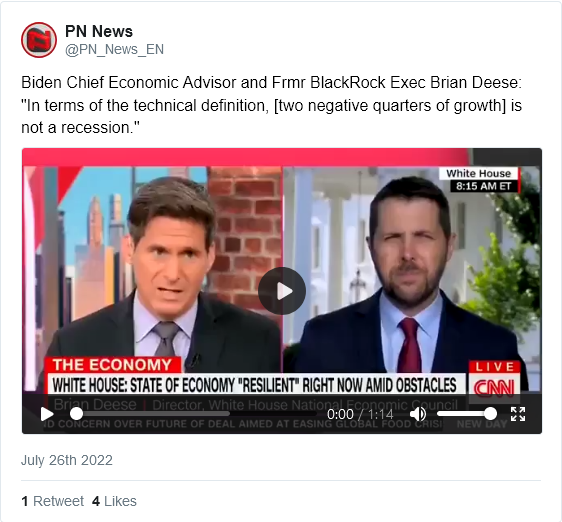
Meanwhile, we’re not in a recession, or even facing the risk of a recession, because that’s not Joe Biden’s view, and because the technical definition of a recession is very complicated.
Also, the inflation of 2021 was transitory. Zipped right by! Also, Joe Biden has a plan to shut down the virus.
The war in Ukraine is SHUT UP SHUT UP SHUT UP, the economy is SHUT UP SHUT UP SHUT UP, the continuing Covid-19 “emergency” is SHUT UP SHUT UP SHUT UP, and the mRNA injections are REALLY REALLY SHUT UP. Actually, the way experts measure this is really complicated, and technically …
Comments Off on Baghdad Biden speaks
Poland and South Korea Ink Huge Arms Deal
Ed Nash’s Military Matters
Published 26 Jul 2022Poland and South Korea are apparently on the verge of signing a huge arms deal that will replace much of the heavy frontline equipment of the Polish Army.
Sources for this video can be found at the relevant article on:
https://militarymatters.online/
(more…)
Comments Off on Poland and South Korea Ink Huge Arms Deal
When the founder of the SAS was captured by Italian troops in 1943
In The Critic, Saul David describes what happened when Lieutenant Colonel David Stirling was captured during his “most hare-brained scheme” to link up the troops of Britain’s First and Eighth armies in Tunisia:
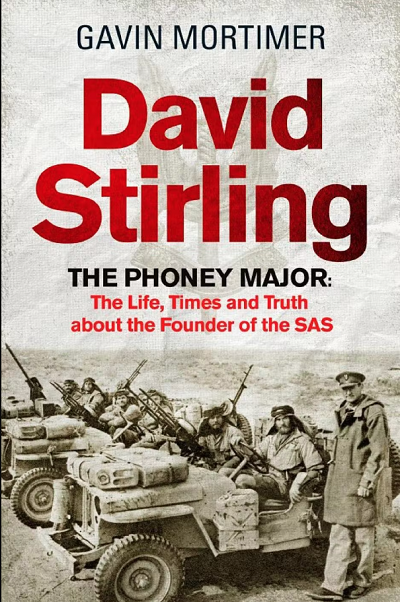
In January 1943 Lieutenant Colonel David Stirling, founder of the SAS, was flown to Rome for interrogation. He had been captured by the Italians on his “most hare-brained scheme yet” — leading a small raiding party deep into enemy territory in Tunisia to attack lines of communication, reconnoitre the terrain and become the first Eighth Army unit to link up with the First Army advancing from the west.
Cautious when speaking to the Italians, he was “vain and voluble” in conversation with a fellow “captive”, Captain John Richards. Unbeknown to Stirling, Richards was an Anglo-Swiss stool pigeon, Theodore Schurch, who had deserted from the British army and was working for fascist intelligence.
Prior to Schurch’s court-martial for treachery in late 1945, Stirling denied he had revealed any sensitive information. If he had, it was inaccurate and “designed to deceive”. This was a lie, told to protect Stirling’s reputation. In fact, as the British authorities knew all too well from intercepted signals, Stirling had told Richards vital details about current SAS operations, including the location of patrols and their orders. He had even given them the name of his probable replacement as SAS commander: Paddy Mayne.
The story of Stirling’s unfortunate encounter with Schurch has been told before, notably by Ben Macintyre in his bestselling SAS: Rogue Heroes. But Macintyre underplays Stirling’s indiscretion and fails to link it to the many other examples of the SAS commander’s recklessness and poor judgement of character. For Gavin Mortimer, on the other hand, both the capture and loose talk were typical of a man who was “imaginative, immature, immoderate and ill-disciplined”. Small wonder that even his own brother Bill thought he would be better off in a prisoner-of-war camp.
The subtitle of Mortimer’s book — a carefully researched and impeccably sourced take-down of the legendary special forces pioneer — is a corrective to the flattering but inaccurate nickname that was first coined for Stirling by British tabloids during the Second World War. “When word reached Cairo of the Phantom Major moniker,” writes Mortimer, “it must have sparked a mix of hilarity and indignation. All the falsehoods and fabrications would have been harmless enough had Stirling not stolen the valour of his comrades.”
Thread by thread, Mortimer unpicks the myth of Stirling’s life and war service that the subject and his fawning admirers had so carefully constructed, both during and after the war. Stirling was not training in North America for an attempt on Mount Everest’s summit when war broke out in 1939, as he later claimed, but rather working as a ranch hand because his exasperated family hoped it might give the feckless youth some focus and direction.
Comments Off on When the founder of the SAS was captured by Italian troops in 1943
Italy’s Worst Machine Gun: The Breda Modello 30
Forgotten Weapons
Published 28 Jul 2017http://www.patreon.com/ForgottenWeapons
Cool Forgotten Weapons merchandise! http://shop.bbtv.com/collections/forg…
The Breda Model 30 was the standard Italian light machine gun of World War II, and is a serious contender for “worst machine gun ever”. Yes, given the choice we would prefer to have a Chauchat (which really wasn’t as bad as people today generally think).
The Breda 30 suffered from all manner of problems. To begin with, it was far more complicated than necessary. The amount of machining needed to build one is mind boggling compared to contemporary guns like the ZB26/Bren or BAR. And for all that work, it just didn’t work well in combat conditions.
Mechanically, the Breda used a short recoil action with a rotating bolt. The recoil action meant that the barrel moved with each shot, so the sights were mounted on the receiver to keep them fixed. This seems like a good idea, but it meant that the sights would need to be re-zeroed each time the barrel was changed. To compound this, the gun fired from a closed bolt which made it more susceptible to overheating and it was recommended to change barrels every 200 rounds or so. An oiling mechanism was built in to lightly oil each cartridge on feeding. This allowed the gun to extract without ripping rims off the cases, but was a disaster waiting to happen on the battlefield. In places like North Africa, the oil acted as a magnet for sand and dust, leading to quick jamming if the gun were not kept scrupulously clean.
The next huge judgment error on Breda’s part was the magazine. The thought behind it was that magazine feed lips are easily damaged in the field, and they can be protected by building them into the gun receiver rather than in each cheap disposable box magazine (the Johnson LMG and Madsen LMG recognized this issue as well). However, Breda’s solution was to make the 20-round magazine a permanent part of the gun. The magazine was attached to the receiver by a hinge pin, and was reloaded by special 20-round stripper clips. This meant that reloading took significantly longer than changing magazines, and any damage to the one attached magazine would render the gun inoperable. As if anything else were needed, the magazine was made with a big opening on top to allow the gunner to see how many rounds remained – and to let more of that North African sand into the action.
Most of the Breda Model 30s were made in 6.5 Carcano, but a small number were made in 7.35 Carcano when that cartridge was adopted. The rate of fire was about 500 rounds per minute, which was a bit slower than most other machineguns of the day.
(more…)
Comments Off on Italy’s Worst Machine Gun: The Breda Modello 30
QotD: Sex and the young Zoomer
Apparently, many in the zoomer generation find sex scary. I get that. When I was 13 and contemplated the mechanics of the thing, I pretty much became reconciled to a life of despondent celibacy. But at what point was our culture handed over to clueless 13-year-old kids? The zoomers mate later, less and with fewer reproductive consequences than their parents and grandparents. They get triggered by 50 Shades of Grey and suffer a permanent headache from climate change. I mean, can anyone conjure up a romantic vision of Greta Thunberg?
There’s also the idea that sex is fluid — that one can be born into a biological “gender” then pick among dozens of other flavors, like scoops at the gelato store. But weren’t we told, not so long ago, that being gay was a matter of genetic destiny? Evidently, everyone else is free to choose. You can be transgender, of course, and cisgender, which I think is what I am. But there are 70 more buckets to pick from, such as abimegender, aerogender, cassgender — even cloudgender, which means one’s gender “cannot be comprehended or understood due to depersonalization and derealization disorder”.
If you believe there are 72 sexes, you’re overthinking. You’re also likely to be online 22 hours a day and paddling toward a digitally reinforced narcissism. “You may say you’re cassgender. Fine. Big deal. But I am cloudgender and can’t be fully comprehended or understood!” That’s the stuff of social media. It feels like millions are listening to your magnificently baroque sexual identity, even if you’re only talking to yourself.
Martin Gurri, “Get the Kids Out of the Room — We’re Going To Talk About Sex”, Discourse, 2022-04-25.
Comments Off on QotD: Sex and the young Zoomer
July 26, 2022
What’s worse than having a nepotistic elite running the country? Having an incompetent nepotistic elite running the country
Kurt Schlichter isn’t a fan of the kakistocratic “elite” running most of the western world at the moment:
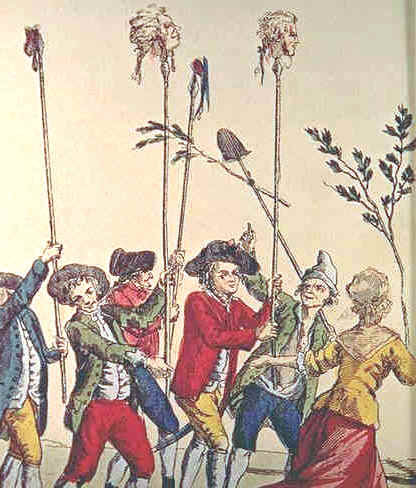
The things we took for granted decades ago are uncertain, and there’s always an excuse — inevitably one that blames us. Like the new take on air conditioners, which is that they are an extravagance we should learn to live without. What the hell? Why?
And don’t get me started on the bizarre insistence of the resetters that we all need to give up beef and start eating bugs. I have a better idea. How about we eat ribeyes and burgers like Americans instead of crickets and locust like Third World famine victims?
A proper ruling class would see the problems and move to solve them, because the proper relationship between the ruling class and the rest of us is that the ruling class provides prosperity and security and the rest of us let them skim some cream off the top. If they were doing a decent job, their riches and luxuries would not bother us much; but when they have failed yet still expect full pay and benefits anyway, that grates. It is unsustainable.
So why doesn’t the ruling class try to get America moving again instead of telling us that we should settle for less and less? For one thing, because our ruling class is not competent. Joe Biden is, in a way, the perfect president for the resetters — stupid and getting seniler, corrupt, yet absolutely sure of his own genius despite literally no basis for that self-regard. Look, the solutions are there. Want to fix crime? Do what Giuliani did in New York City in the nineties. Want energy independence? Do what Trump did in 2016. Want the economy roaring? Do what Reagan and Trump did. These tactics are not secrets, yet they seem to be too hard for our elite to pull off. Our reset revolt will be to embrace someone who can.
Of course, the incompetence issue assumes that our elite wants to succeed in doing what elites should do. Does it really? Does it really want us prosperous, secure and free? Oh, the elite wants to succeed for itself, and it sure has. The elite is richer than ever. And it intends to stay that way even after you are reset to “Peasant” mode. The elite won’t be taking public transportation among the hobos like you. They will be safe behind armed guards while you are disarmed and victimized — defend yourself at your peril! And they will keep eating steak tartar while you slurp up beetle paste. Yum yum, proles!
The ruling caste has no intention of you living like a civilized citizen. No, you are their sacrifice, to Gaia, the angry weather goddess or whatever other pagan idol that empty void inside them worships. Your pain is the point. Remember, bullies love the raw exercise of power. Making you miserable is a manifestation of their urge to dominate and crush. That’s the genesis of those seemingly insane moves around the world like Sri Lanka giving up fertilizer or agricultural powerhouse Holland evicting farmers. But these moves — including the destruction of our own energy industry — only seem insane if you refuse to accept their ultimate goal. They want to hurt you. Your pain is a feature, not a bug — which will be your next meal if they get their way.
Comments Off on What’s worse than having a nepotistic elite running the country? Having an incompetent nepotistic elite running the country
Barbarian Europe: Part 4 – The Ostrogoths in Italy
seangabb
Published 10 May 2021In 400 AD, the Roman Empire covered roughly the same area as it had in 100 AD. By 500 AD, all the Western Provinces of the Empire had been overrun by barbarians. Between April and July 2021, Sean Gabb explored this transformation with his students. Here is one of his lectures. All student contributions have been removed.
(more…)
Comments Off on Barbarian Europe: Part 4 – The Ostrogoths in Italy
Is Trudeau channelling Caligula? – “Let them hate me as long as they fear me”
Spencer Fernando, writing for the National Citizens Coalition:
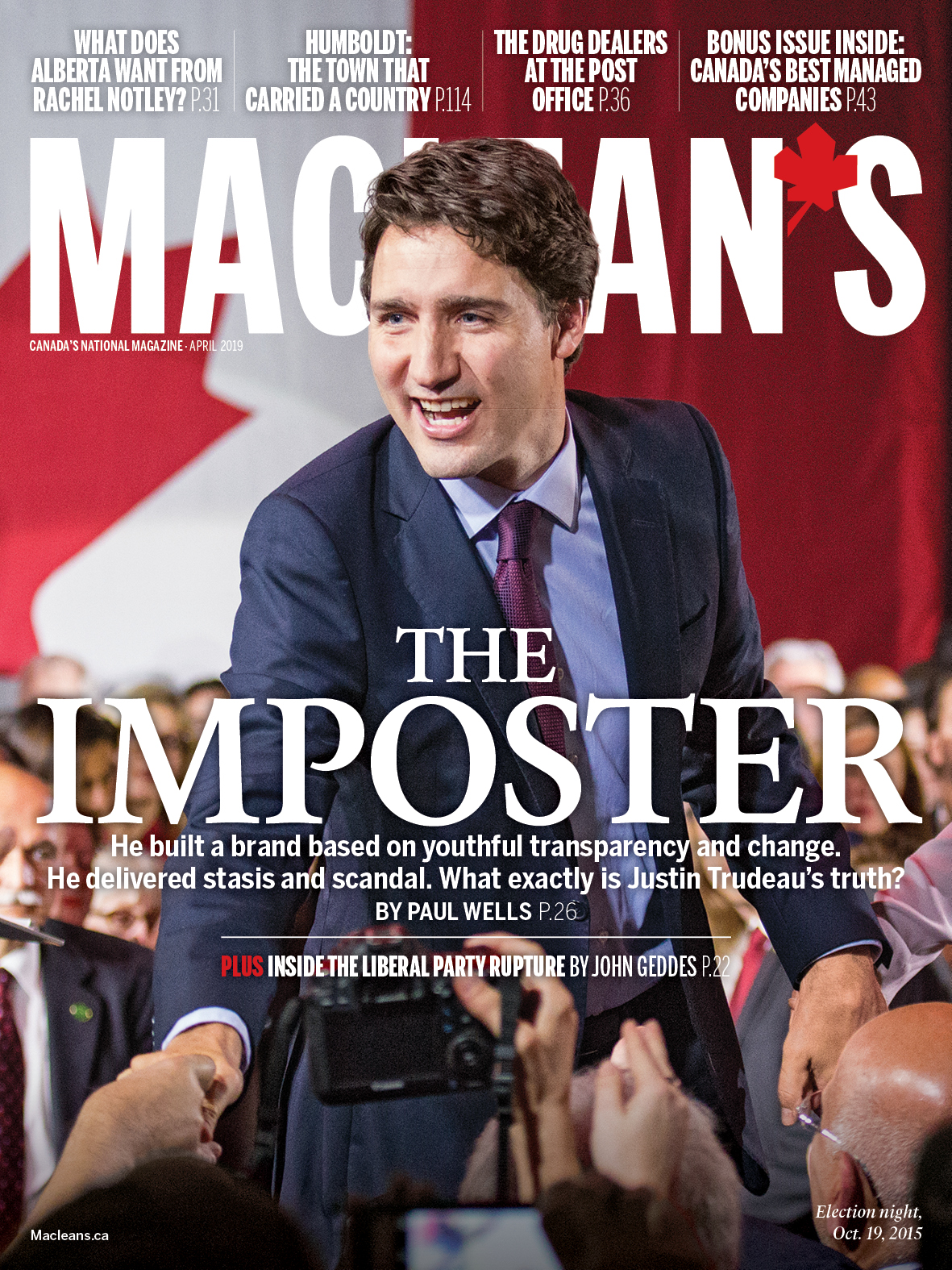
When trying to ascertain where the Trudeau Liberals are trying to take the country, it’s important to look at the foundations of Justin Trudeau’s worldview.
Clearly, he was heavily influenced by his father, someone who continuously expanded the power of the state.
Justin Trudeau’s father was well known as a Communist-sympathizer, being a big fan of both Fidel Castro and Communist China.
Note, the version of the CCP that existed in Pierre Trudeau’s era was even more brutal than the CCP as it exists today. At the time, it was not far removed from the time of Mao’s Great Leap Forward, a government-imposed “reshaping of society” that led to roughly 45 million deaths.
To look at that, and still be a fan of the Chinese Communist Party, is to show a deep ideological commitment to authoritarian socialism and a deep aversion to human freedom.
The apple clearly didn’t fall far from the tree, as Justin Trudeau praised China’s “basic dictatorship” (AKA the centralized power structure that enables horrific crimes).
Trudeau also sought to move Canada closer to China’s orbit, only giving up on that when public opinion – and a subtle revolt among some backbench Liberals – rendered it politically unfeasible.
We can see how the authoritarian socialism that Trudeau praised in China (and let’s not forget his fawning eulogy for Fidel Castro), lines up with the fear and contempt he and the Liberals have for many Canadians.
Now, let’s also note this essential point:
The Liberals continuously target the same individuals that authoritarian socialists and communists have targeted:
Rural Conservatives.
Private Enterprise.
Religious Groups.
Freethinkers.
Individualists.
Private Farmers.
Rural Gun Owners.
Independent Press Outlets.
Historically, those are all groups that the far-left has targeted when given the opportunity.
We only need to look at how the Liberal approach to Covid was modelled after the approach taken by Communist China, and how both the Liberals and the CCP have been largely unwilling to move on.
While the Liberals are more constrained than the CCP by the fact that Canada maintains some freedoms, do we have any doubt that they would be far more severe if they could get away with it?
Remember, the moment he feared losing the 2021 election, Justin Trudeau used very divisive and disturbing rhetoric (especially disturbing when seen in a historical context), and purposely sought to direct hatred and blame towards those who resisted draconian state orders.
Since then, the Trudeau Liberals – even in the face of criticism by a few courageous Liberal MPs who were quickly “put back in their place” – have almost gleefully abused their power, purposely creating an “Us vs Them” narrative designed to pit Canadians against each other.
At the same time, they’ve continued their efforts to gain control over social media, silence dissenting views, and turn the establishment media into an extension of the state propaganda apparatus.
This is all being done because they fear those who have the intelligence and strength of character to see through their agenda.
They fear you, and have contempt for you.
Comments Off on Is Trudeau channelling Caligula? – “Let them hate me as long as they fear me”
Flying Failures – Christmas Bullet (The Worst Plane Ever Built)
Ruairidh MacVeigh
Published 25 Dec 2020Merry Christmas everyone! 😀
To coincide with this most special of holidays, in this episode of Flying Failures we will be examining the dubious history of the Christmas Bullet, a divisive little plane that could either be seen as the brainchild of a man whose ambition outweighed his abilities, or perhaps one of the greatest cons in aviation history, a con that left two planes destroyed, two test pilots dead, and the US taxpayer several million dollars out of pocket.
(more…)
Comments Off on Flying Failures – Christmas Bullet (The Worst Plane Ever Built)
QotD: The nothoi class of Sparta
But we don’t need to guess or rely on comparative evidence, because this rape was happening frequently enough that it produced an identifiable social class. The one secure passage we have to this effect is from Xenophon, who notes that the Spartan army marching to war included a group he calls the nothoi – the bastards (Xen. Hell. 5.3.9). The phrase typically means – and here clearly means – boys born to slave mothers. There is a strong reason to believe that these are the same as the mothakes or mothones which begin appearing with greater frequently in our sources. Several of these mothakes end up being fairly significant figures, most notably Lysander (note Plut. Lys. 2.1-4, where Plutarch politely sidesteps the question of why Lysander was raised in poverty and seemed unusually subservient and also the question of who his mother was).
We’ll get to the Spartan free-non-citizen-underclasses next week when we talk more about the Spartan manpower shortage, but for now, I just want to underline and bold something very clearly here: there was so much spartiate rape of helot women in Sparta that it created a significant, legally distinct underclass. And, just so we’re clear: yes, I am classifying all of that contact as rape, because sexual consent does not exist in master-slave relationships where one human being has the literal power of life and death over the other human being and her entire family. We may suppose that some helot women, trapped in this horrific and inhuman circumstance, may have sought out these relationships – but that does not change the dynamics of violence and compulsion permeating the entire system.
To recap quickly: poor peasant life in ancient Greece was already hard for anyone. Women in farming households had difficult, but extremely important jobs for maintaining themselves, their families and their society. To these difficulties, the Spartan state added unnecessary, callous and brutal conditions of poverty, malnutrition, violence, murder and rape.
Bret Devereaux, “Collections: This. Isn’t. Sparta. Part III: Spartan Women”, A Collection of Unmitigated Pedantry, 2019-08-29.
Comments Off on QotD: The nothoi class of Sparta
July 25, 2022
Political memes: threat or menace?
In Quillette, Christopher J. Ferguson considers the social dangers of sharing political memes:
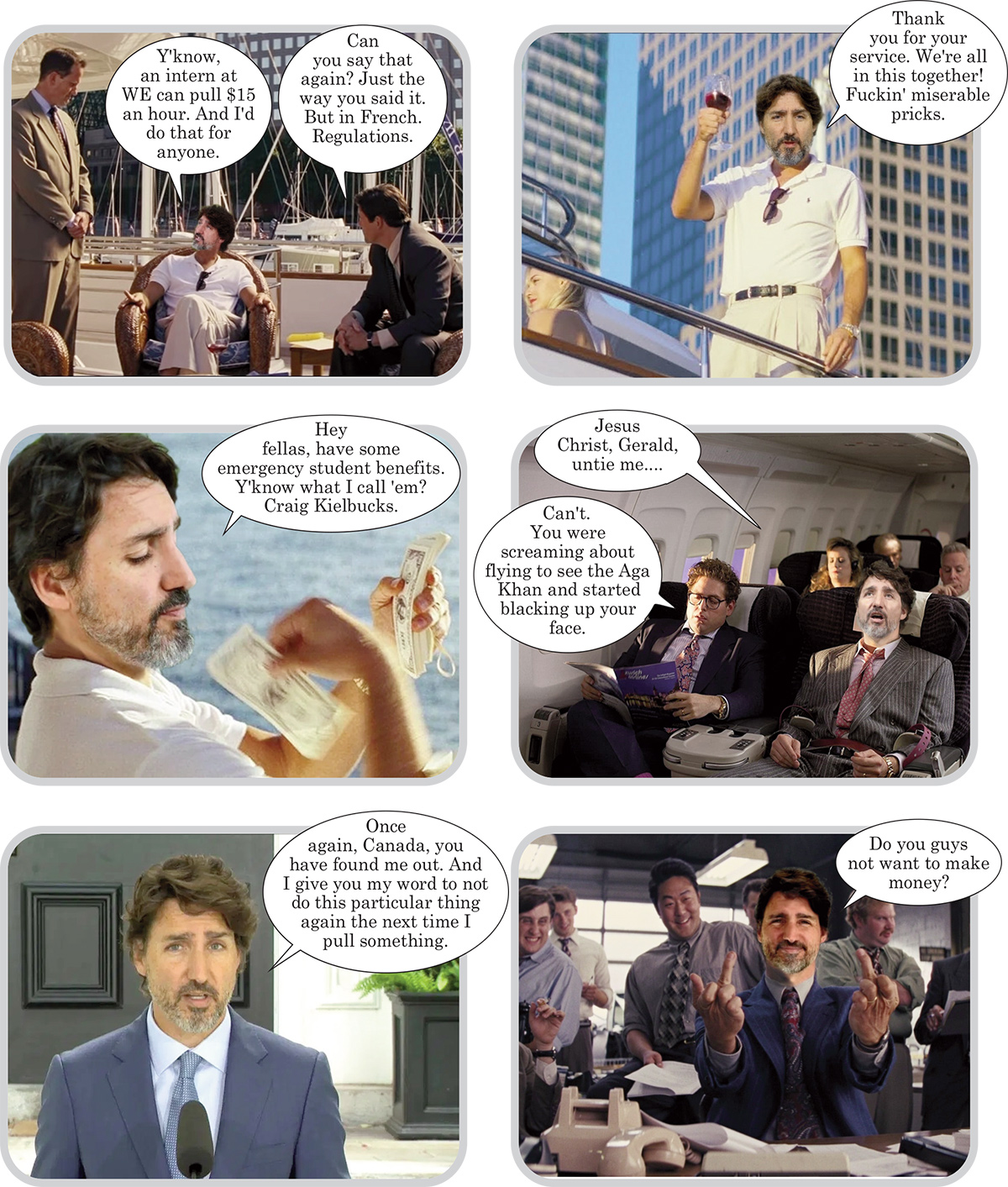
Modern politics has always been replete with issues about which people feel passionate, sometimes aggressively so. But the culture wars currently raging in the US, Canada, and across much of the industrialized West seem to be particularly fraught. In my 50-plus years, I have never seen so much anger and hostility among citizens of otherwise stable countries. Some of these people will participate in protests or engage in civil disobedience, but many more will employ the political meme to express their discontent. Given how widespread the phenomenon has become, it’s worth asking whether political memes actually advance advocacy goals and our knowledge of important issues, or if they simply feed an unconstructive cycle of anger, misinformation, and polarization.
The term “meme” was coined by Richard Dawkins, who used it to describe units of culture, socially transmitted and imitated across generations in ways synonymous with genes — adaptive ideas survive, while maladaptive ideas perish. But in the social media age, the word usually refers to “an image, video, piece of text, etc., that is copied and spread rapidly by Internet users often with slight variations”. The subset of memes that focus on politics are generally designed to boil complex issues down to a digestible combination of emotive image and sloganeering text that flatters those who agree with its message and provokes those who do not.
Most academics who study memes agree that they are poisonous to healthy public discourse (“toxic” is a word that crops up a lot, even in the scholarly literature). One scholar bluntly called them “one of the main vehicles for misinformation”, and they tend to distort reality in several ways. By their very nature, they leave no room for nuance or complexity, and so they are frequently misleading; they tend to lean heavily on scornful condescension and moral sanctimony (usually, the intended takeaway is that anyone who agrees with the point of view being — inaccurately — mocked is an imbecile); they make copious use of ad hominem attacks, straw man fallacies, and motte-and-bailey arguments; they intentionally catastrophize, generalize, personalize, and encourage dichotomous thinking; and they are aggressive and sometimes dehumanizing. They are, in other words, methods of Internet communication that display all the symptoms of a borderline personality type of mental disorder. Of course, it’s possible to construct a meme that is short yet still thoughtful and sophisticated, but these are few and far between.
The best evidence we have today is incomplete and limited, but it suggests that political memes have a net negative effect on society. If the idea is to persuade or advance practical advocacy goals, then there is little evidence that they work. To the contrary, they may be counterproductive — the evidence we do have suggests that they contribute to political polarization, distort issues in the name of political expediency, and provoke indignation, hatred, and intolerance (on both sides of the political spectrum). Yes, the available evidence is fragmentary and would certainly benefit from better and more open science designs. However, it accords with larger observations about social media and political polarization. Perhaps new and better research will reveal that alarm about the negative effects of memes is simply another moral panic comparable to those that arose around video games or smoking in movies. But since memes add almost nothing to public discourse that would offset the risks, it’s probably worth hesitating before sharing them.
I save the odd meme that wanders through my various social media sites that I find amusing or (occasionally) effective, and memes as described in this article certainly do seem to be far more common than they were even a few years ago. A few selections below the fold, just because:


