
The camera, it is said, does not lie, but when it comes to me it not only lies but is a pathological liar, incapable of telling the truth. Who is that creature it takes when pointed at me? Certainly not I: Every camera in the world, it seems, has been programmed to make me balder, whiter-haired, more wrinkled than I am. Who has done this, or why, I cannot say, but the evidence is plain for me, if not for anyone else, to see.
Theodore Dalrymple, “The Grand Illusion”, Taki’s Magazine, 2017-08-19.
May 30, 2023
QotD: The technical flaws of modern cameras
Comments Off on QotD: The technical flaws of modern cameras
May 29, 2023
“I’m starting to think that Just Stop Oil is a Big Oil plant”
Tom Slater on the amazing tone-deafness of the Just Stop Oil “activists”:
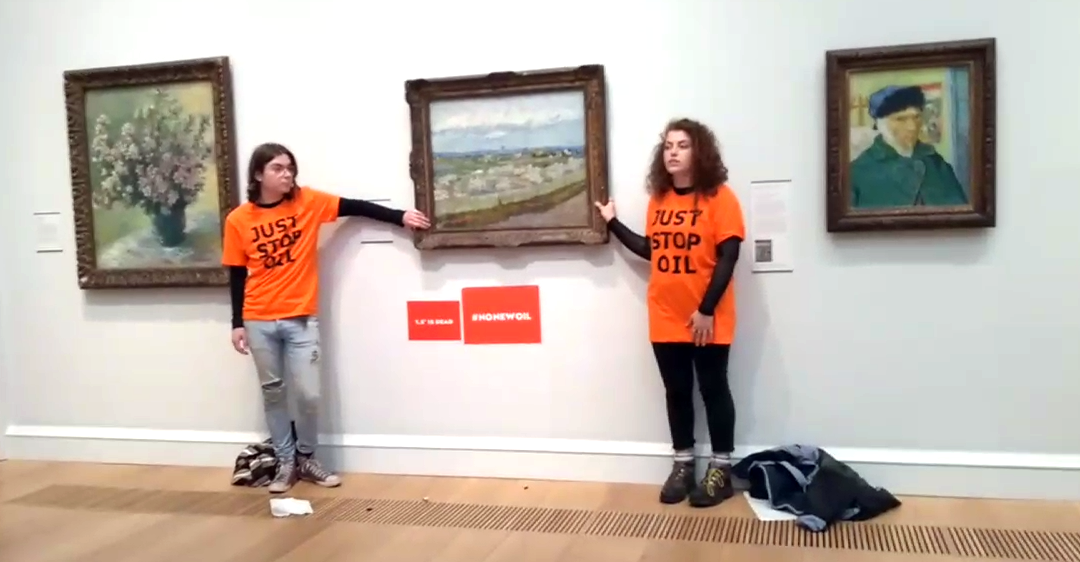
“Just Stop Oil Courtauld Gallery 30062022” by Just Stop Oil is licensed under CC BY-SA 4.0 

 .
.
I’m starting to think that Just Stop Oil is a Big Oil plant. What else could explain these campaigners’ phenomenal ability to turn the public against them and confirm their critics’ worst prejudices. Namely, that this environmental activism / amdram troupe is stuffed with upper-middle-class irritants who couldn’t give a damn about working-class people. Surely, this has got to be on purpose?
Take their recent “slow marches” through London, aimed at bringing traffic to a standstill. The whole point of these stunts seems to be to force cab drivers, delivery men and builders to sit in traffic so that these protesters can preach their miserable little gospel. And as Edred Whittingham‘s (don’t laugh) deranged antics at the Crucible recently showed us, you now can’t even escape these bourgeois millenarians during your leisure time.
That this new generation of environmentalists are almost uniformly posh is an established empirical fact. An academic survey of those involved in Extinction Rebellion – the mothership organisation from which Just Stop Oil and Insulate Britain were spawned – found, to the surprise of precisely no one, that they were overwhelmingly middle class, highly educated and from the south. A full 85 per cent of them have some form of university degree.
So what we have here is the comfortably off classes – those with sufficient free time to glue themselves to roads on a Wednesday mid-morning – forcing their weird hangups on everyone else. Time and again, when they are criticised for making people’s lives a misery, they offer only patronising lectures. “We’re so sorry that we have to disrupt the lives of ordinary people”, said Just Stop Oil’s Eben Lazarus (I know) to Vice last year, but “hopefully people will see, further down the line, that the disruption we’re causing is microscopic compared to the disruption that we’re going to face because of the climate crisis”. Translation: we know better, you cretins.
No wonder that so many now respond to these cunning stunts with instant, visceral fury. First there was the Battle of Canning Town in 2019, when east-London commuters pulled two Extinction Rebellion people down from the top of a Tube train. And as police have failed to deal with these protests – they now seem to escort rather than stop these “slow marches” – motorists have increasingly decided to take matters into their own hands. Several clips of workers clashing – sometimes physically – with Just Stop Oil activists have gone viral in the past week alone, including one of a man shoving JSOers on Blackfriars Bridge, before promptly being arrested.
Comments Off on “I’m starting to think that Just Stop Oil is a Big Oil plant”
The Moment D-Day Was Announced
World War Two
Published 28 May 2023D-Day is just around the corner, we’re in the end game now. You can learn more about the project and how to get involved at http://DDay.TimeGhost.tv
Comments Off on The Moment D-Day Was Announced
The high-water mark of the Vegan cult?
In Spiked, Patrick West celebrates the passing of peak food puritanism:

“Welcome to Las Vegans and Vegetarian, Whole Foods fake meat section, Las Vegas, NV, USA” by gruntzooki is licensed under CC BY-SA 2.0 .
Over the past few years, there has been an explosion of vegan processed food appearing in supermarkets. A growing number of the population also claims to be vegan. But there are signs this trend could be going into reverse. Demand for animal-free food and drink products has collapsed over the past year. One casualty is Swedish oat-milk firm Oatly, which has recently withdrawn its dairy-free ice cream in the UK. Another is the Yorkshire sausage-making company, Heck, which has scaled-down its vegan-friendly range from 10 products to two. Smoothie-maker Innocent discontinued its dairy-free range earlier this year. Supermarket sales of meat-free products fell by £37.3million between September 2021 and September 2022, according to the consumer intelligence firm NielsenIQ.
There seems to be two main reasons. Rising inflation has been cited as one cause, as consumers have scaled back on branded and luxury eatables. Plant-based processed foods are generally more costly than the meat and dairy products they purport to replace. Another explanation is that producers of vegan food may have overestimated the size of the market for veganism, and now they are having to readjust to reality.
Whatever the reasons, we should welcome the retreat of the cult of veganism. And I use the word cult deliberately, because veganism greatly resembles not so much a lifestyle choice, but a way of life itself. It’s a faith that resonates with today’s puritanical and conformist mood.
And I should know, as someone who became a vegetarian in 1996 and has not eaten meat since. Sure, my decision aroused some mockery and derision back then, but vegetarianism had mostly stopped being regarded as weird by the mid-1990s. Ever since then, most of the opprobrium and scolding we vegetarians face comes from vegans, largely because we continue to eat eggs, cheese and milk.
For vegans, nothing must be consumed or worn that derives from animals or insects – even if there is no killing or discernible harm involved. Anything else is a feeble cop-out. Their way of thinking is absolute. In this respect, the best exemplars of the vegan movement are the animal-rights fundamentalists, PETA, whose members are well-known for their shrill, exhibitionist narcissism. Their message is simple: they are better people than you.
It’s no surprise that veganism was turbo-charged in the mid-2010s, when wokery captured the minds of so many – when absolutist, extreme thinking, and the competition to be purer than the next man or woman, took over. The trans movement echoes this rush to extremes. It demands the transformation of your entire body. Indeed, bodily self-mutilation and mortification of the flesh have long been practised by religious fundamentalists.
Comments Off on The high-water mark of the Vegan cult?
How to Plant a Culinary Herb Garden! DIY Kitchen Garden
Food Wishes
Published 1 Jun 2015[Note, description is from the Food Wishes blog. Chef John’s plant selection is Thyme (English, French, and Lemon), Chives, Italian Parsley, Sage, Oregano (Greek and Italian), Tuscan Blue Rosemary, Basil (Genovese or Sweet), and Spearmint.]
I mentioned several times during this “how to plant your own culinary herb garden” video that I’d give a lot more specific information on the blog, but now that I’m here, I realize there’s not much more to tell you.
Herbs are very easy to grow, and besides basil, which doesn’t like to dry out, they only require occasional watering. Any well-drained soil will work, but your best bet is to grab a bag of ready-to-use planting mix. Feel free to double check with the person at the nursery, but it’s basically potting soil with benefits. And, I did say nursery. Drive the extra mile, and talk to people that just sell plants.
I consider these herbs must-haves, but there are many more varieties you can try. I’ve done things like tarragon and cilantro in the past, and while they are a little more temperamental, they can be successfully cultivated.
Nothing beats being able to go out into the garden, and just take a pinch of this and a pinch of that. When you consider the cost of one of these plants is just a little more than for a single bunch at the market, why not have a few pots around, even if they’re on the windowsill? I hope you plant your garden soon. Enjoy!
NOTE: I’m not a gardening expert, so asking me specific question about soil types and weather issues will result in many a guess. My advice would be to use this video as an inspiration, and then check out some local gardening websites.
Comments Off on How to Plant a Culinary Herb Garden! DIY Kitchen Garden
QotD: The size of the Great Library
“It was the largest library in the ancient world, containing over 700,000 books.”
It is entirely possible that it was the largest library in the ancient world, though we have no way of confirming this given that we have little reliable information about the size of its collection. Despite this, popular sources regularly repeat the huge figures given for the number of books in the library in several ancient sources, and usually opt for the ones that are the highest. Shakespeare scholar Stephen Greenblatt’s popular history The Swerve: How the Renaissance Began (Vintage, 2012) won critical acclaim and even garnered him a Pulitzer Prize, despite being panned by actual historians for its many howlers and weirdly old-fashioned historiography (see my detailed critical review here, with links to other scathing critiques by historians). Greenblatt’s account sticks closely to the nineteenth century narrative of “the dark ages” beloved by New Atheists, so it’s hardly surprising that the myths about the Great Library feature prominently in his account. Thus he informs his readers with great assurance that:
“At its height the Museum contained at least half a million papyrus rolls systematically organised, labelled and shelved according to a clever new system … alphabetical order.” (Greenblatt, p. 88)
The figure of “half a million scrolls” (or even “half a million books”) is the one that is usually bandied about, but even that colossal number is not quite enough for some polemicists. Attorney and columnist Jonathan Kirsch plumped for a much higher number in his book God Against the Gods: The History of the War Between Monotheism and Polytheism (Viking, 2004)
“In 390 AD … a mob of Christian zealots attacked the ancient library of Alexandria, a place where the works of the greatest rarity and antiquity had been collected … some 700,000 volumes and scrolls in all.” (Kirsch, p. 278)
Obviously the larger the collection in the Great Library the more terrible the tragedy of its loss, so those seeking to apportion blame for the supposed destruction of the Library usually go for these much higher numbers (it may be no surprise to learn that it’s the monotheists who are the “bad guys” in Kirsch’s cartoonish book). But did the Great Library really contain this huge number of books given that these numbers would represent a large library collection even today?
As with most things on this subject, it seems the answer is no. […] Some of these figures are interdependent, so for example Ammianus is probably depending, directly or indirectly, on Aulus Gellius for his “700,000” figure, which in turn is where Kirsch gets the same number in the quote above. Others look suspiciously precise, such as Epiphanius’ “54,800”. In summary of a lot of discussion by critical scholars, the best thing to say is that none of these figures is reliable. In her survey of the historiography of the issue, Diana Delia notes “lacking modern inventory systems, ancient librarians, even if they cared to, scarcely had the time or means to count their collections” (see Delia, “From Romance to Rhetoric: The Alexandrian Library in Classical and Islamic Traditions”, The American Historical Review, Vol. 97, No. 5, Dec. 1992, pp. 1449-67, p. 1459). Or as another historian once put it wryly “There are no statistics in ancient sources, just rhetorical flourishes made with numbers.”
One way that historians can make estimates of the size of ancient libraries is by examining the floor plans of their ruins and calculating the space their book niches would have taken up around the walls and then the number of scrolls each niche could hold. This works for some other ancient libraries for which we have surveyable remains, but unfortunately that is not the case for the Mouseion, given that archaeologists still have to guess where exactly it stood. So Columbia University’s Roger S. Bagnall has taken another tack. In a 2002 paper that debunks several of the myths about the Great Library (see Bagnall, “Alexandria: Library of Dreams”, Proceedings of the American Philosophical Society, Vol. 146, No. 4, Dec. 2002, pp. 348-362), he begins with how many authors we know were writing in the early Hellenistic period. He notes that we know of around 450 authors for whom we have, at the very least, some lines of writing whose work existed in the fourth century BC and another 175 from the third century BC. He points out that most of these writers probably only wrote works that filled a couple of scrolls at most, though a small number of them – like the playwrights – would have had a total corpus that filled many more than that, even up to 100 scrolls. So by adopting the almost certainly far too high figure of an average of 50 scrolls to contain the work of each writer, Bagnall arrives as a mere 31,250 scrolls to contain all the works of all the writers we know about to the end of the third century. He notes:
“We must then assume, to save the ancient figures for the contents of the Library, either that more than 90 percent of classical authors are not even quoted or cited in what survives, or that the Ptolemies acquired a dozen copies of everything, or some combination of these unlikely hypotheses. If we were (more plausibly) to use a lower average output per author, the hypotheses needed to save the numbers would become proportionally more outlandish.” (Bagnall, p. 353)
Bagnall makes other calculations taking into account guesses at what number of completely lost authors there may have been and still does not manage to get close to most of the figures given in our sources. His analysis makes it fairly clear that these numbers, presented so uncritically by popular authors for rhetorical effect, are probable fantasies. As mentioned above, when we can survey the archaeology of an ancient library’s ruins, some estimate can be made of its holdings. The library in the Forum of Trajan in Rome occupied a large space 27 by 20 metres and Lionel Casson estimates it could have held “in the neighbourhood of 20,000 scrolls” (Casson, p. 88). A similar survey of the remains of the Great Library of Pergamon comes to an estimate of 30,000 scrolls there. Given that this library was considered a genuine rival to the Great Library of Alexandria, it is most likely that the latter held around 40-50,000 scrolls at its height, containing a smaller number of works overall given that ancient works usually took up more than one scroll. This still seems to have made it the largest library collection in the ancient world and thus the source of its renown and later myths, but it’s a far cry from the “500,000” or “700,000” claimed by uncritical popular sources and people with axes to grind.
Tim O’Neill, “The Great Myths 5: The Destruction Of The Great Library Of Alexandria”, History for Atheists, 2017-07-02.
Comments Off on QotD: The size of the Great Library
May 28, 2023
Thanks to geography, Canada has “been able to neglect national security for decades”
In the weekly Dispatch post from The Line‘s editors, an almost unremarkable comment comes into close focus:
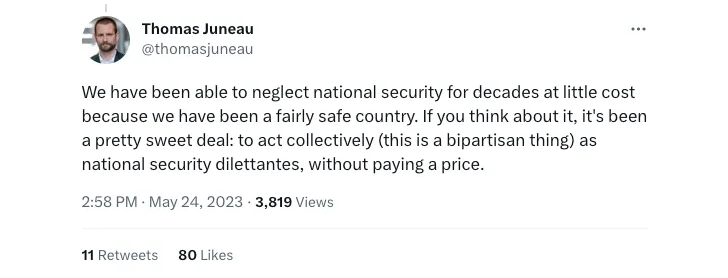
Continuing with the Johnston report fallout, The Line has been pondering a tweet by Thomas Juneau, one of the country’s relatively few genuine experts in Canadian intelligence and national security. Let’s state this up front: The Line likes Thomas Juneau. He’s written for us before, we hope he’ll write for us again. Nothing that follows should be seen as disagreeing with or nitpicking the professor, because The Line broadly agrees with the point he was making, and found his entire thread on Twitter worth the read. But let’s zoom on this particular comment:
What specifically caught us was this part: “We have been able to neglect national security for decades”.
Again, no disagreement here. Both your Line editors would have made that literal exact argument countless times before in their careers, because it’s true, and likely with essentially identical language. But we read Juneau’s tweet when the Johnston report, and the POEC report before it, were much on our minds. And we’ve been unable to shake the feeling ever since that perhaps “neglect” isn’t the right word for how Canadians approach security. Maybe, we’re wondering, it’s something closer to “disdain”.
Canada has “neglected” a lot of things, after all. And we don’t even mean that in the sense of a lament or criticism. There’s a ton of policy areas or even simply fields of knowledge and expertise that Canada hasn’t paid any particular attention to or made a priority. As Line editor Gurney cracked on the podcast this week, we’ve also neglected botany as a national endeavour. But if some strange international development or social change required Canada to up its botany game, we suspect we’d just … do that. We’d recruit botanists from abroad, schools would open botany colleges, we’d create a Progressive Feminist Botanical Middle-Class Tax Credit (though you’d probably need to attest that you are pro-choice to apply for it). Pivoting to botany wouldn’t be a problem. We’d just emphasize botany, and let a thousand flowers bloom. As it were.
Whenever the issue is anything even remotely proximate to national defence and security, though, the mere suggestion that we should maybe do better, spend more money, allot greater resources, pay more attention, and build up current and future capabilities, is met with something that goes beyond neglect. Neglect implies a degree of apathy. The default Canadian response to any push for a greater emphasis on national defence and security is something closer to hostility.
“Like, why would we care about that weird stuff,” the default Canadian response goes. “That’s dumb. What, do you think Russia is going to invade us or something? What does Canada even need an army or spies for? Why would we even want to have experts on this stuff? This is Canada. We don’t need that stuff. Are you just some kind of weirdo or just some wannabe American?”
Your Line editors agree it’s a problem, but we aren’t sure exactly the root of it. Gerson thinks it might be more just an aversion to thinking about unpleasant things; we quipped on our podcast that talking about defence and security in Canada results in the kind of aghast stares a first-class passenger during the last dinner on the Titanic would have received from his dining companions if he’d casually mentioned he’d been counting the number of lifeboats and had noticed something interesting.
Whoa, dude, we’re having a lovely dinner here. Why you gotta be bringing that up? You think the ship is gonna sink or something?
Gurney thinks there’s truth to that, and would add that if that’s the problem, it goes beyond what we would think of as defence and security, and go all the way into emergency preparedness. Canada and Canadians are chronic under-investors on emergency preparedness and underpreparers because Bad Things Don’t Happen Here, They Happen Somewhere Else, Thank You Very Much. Our typical emergency response plan is “Don’t worry, that won’t happen.” Gurney also thinks this all might be related to how Canadians continually define themselves in opposition to Americans: since the Americans do invest heavily in national defence and security, there’s probably some Canadians out there who have concluded, even subconsciously, that that is an American thing to do, and we don’t do American things.
The above is all a bit theoretical, we grant, but we can’t stop thinking about it all the same. What if the problem isn’t that we neglect security so much as actively dislike thinking and talking about it? If so, that’s a bad habit that may prove difficult, and ultimately expensive, to break free from.
Comments Off on Thanks to geography, Canada has “been able to neglect national security for decades”
Breakout from Anzio! – WW2 – Week 248 – May 27, 1944
World War Two
Published 27 May 2023After four months, the Allies breakout from their bridgehead at Anzio and meet with the advancing troops heading north after the fall of Monte Cassino last week. The Japanese begin phase two of their big operation in China, and both the Soviets and the Western Allies continue making plans for their massive June offensives to squeeze the Axis from both sides of Europe.
(more…)
Comments Off on Breakout from Anzio! – WW2 – Week 248 – May 27, 1944
Musical copyrights – crazy as they are now – were far worse in history
Ted Gioia outlines just how the concept of musical copyrights produced even more distortions in the past than they do today:
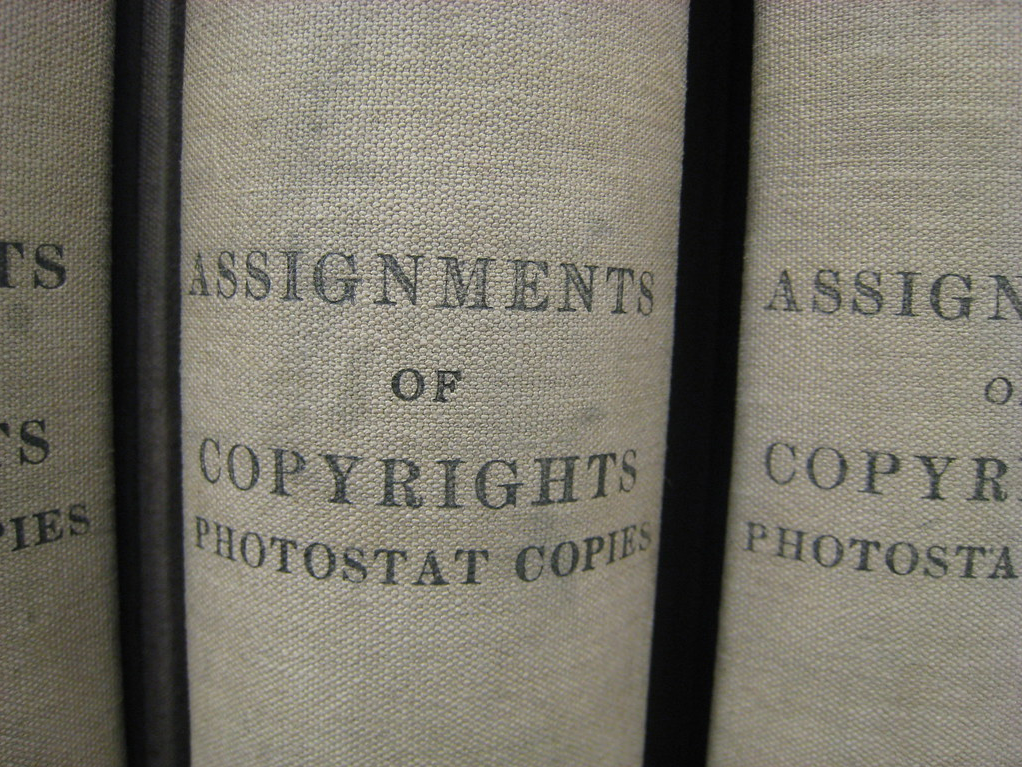
Assignments of copyrights photostat copies by mollyali (CC BY-NC 2.0) https://flic.kr/p/5JbsPE
People tell me it was never this bad before. But they’re wrong. The music copyright situation was even crazier 500 years ago.
The Italians took the lead in this, and it all started with Ottaviano Petrucci gaining a patent from the Venetian Senate for publishing polyphonic music with a printing press back in 1498. Andrea Antico secured a similar privilege from Pope Leo X, which covered the Papal States.
It’s hard to imagine a Pope making decisions on music IP, but that was how the game was played back then. In 1516, Pope Leo actually took away Petrucci’s monopoly on organ music, and gave it to Antico instead. You had to please the pontiff to publish pieces for the pipes.
Over time, this practice spread elsewhere. In a famous case, the composer Lully was granted total control over all operas performed in France. He died a very wealthy man — with five houses in Paris and two in the country. His estate was valued at 800,000 livres—some 500 times the salary of a typical court musician.
But the most extreme case of music copyright comes from Elizabethan England. Here the Queen gave William Byrd and Thomas Tallis a patent covering all music publishing for a period of 21 years. Not only did the two composers secure a monopoly over English music, but they also could prevent retailers or other entrepreneurs in the country from selling “songs made and printed in any foreign country.”
If anybody violated this patent, the fine was 40 shillings. And the music itself was seized and given to Tallis and Byrd. They probably had quite a nice private library of scores by the time the patent expired.
But that’s not all. Byrd and Tallis’s stranglehold on music was so extreme it even covered the printing of blank music paper. That meant that other composers had to pay Tallis and Byrd even before they had written down a single note. Not even the Marvin Gaye estate makes those kinds of demands.
Tallis died a decade after the patent was granted—putting Byrd in sole charge of English music. I’d like to tell you that he exercised his monopoly with a fair and open mind—especially because I so greatly esteem Byrd’s music, and also I’d like to think that composers are better at arts management than profit-driven businesses. But the flourishing of music publishing in England after the expiration of the patent — when, for a brief spell, anybody could issue scores — makes clear that Byrd did more to constrain than empower other composers.
Comments Off on Musical copyrights – crazy as they are now – were far worse in history
This Gun Could Reach Space
Real Engineering
Published 18 Feb 2023
(more…)
Comments Off on This Gun Could Reach Space
QotD: Karl Marx and the “excess labour” problem
This is not to say that slavery is the only answer. There are lots of ways to absorb excess labor. Ever gone shopping in the Third World? There’s one guy who greets you at the door. Another guy follows you around the store, helpfully suggesting items to buy. A third guy rings up your purchases, which are packed up by a fourth guy, and a fifth guy carries them out (or arranges delivery by a sixth guy). And none of those guys are actually the shopkeeper. They’re all his cousins and whatnot, fresh from the sticks, and all of them are working four jobs with four other uncles at different places in the city.
Nor is it just a Third World thing. Basic College Girls love that Downton Abbey show, so I’d use that to illustrate the point if BCGs were capable of comprehending metaphors. George Orwell wrote eloquently about growing up on the very ragged edge of “respectability” at the turn of the century. He knew all about servants, he said, and the elaborate codes of conduct in dealing with them, even though his family could afford only one part-time helper. Your real toffs, of course, had battalions of servants to do every conceivable job for them. What else is that, old bean, but an elegant solution to labor oversupply?
Note also, since I’m giving you very basic Marxist history here, that we’ve just discovered the foundations of Feminism. Though Karl Marx was — of course — a total asshole to both his wife and his domestic help (of course he had “help”; the tradition of using and abusing servants while bemoaning the plight of the proletariat comes straight from the Master himself), he realized that his theories had a hard time accounting for the very real economic effects of domestic labor. Hence Engels’s The Origin of the Family, Private Property and the State, which proves that even lemon-faced termagants with three degrees and six cats pulling down $100K per year shrieking about Feminism are MOPEs. You can cut the labor supply in half by shackling single gals to the Kinder, Küche, Kirche treadmill.
Severian, “Excess Labor”, Rotten Chestnuts<, 2020-07-28.
Comments Off on QotD: Karl Marx and the “excess labour” problem
May 27, 2023
The true purpose of the Great Exhibition of 1851
In the latest Age of Invention newsletter, Anton Howes considers the “why” of the 1851 Great Exhibition:
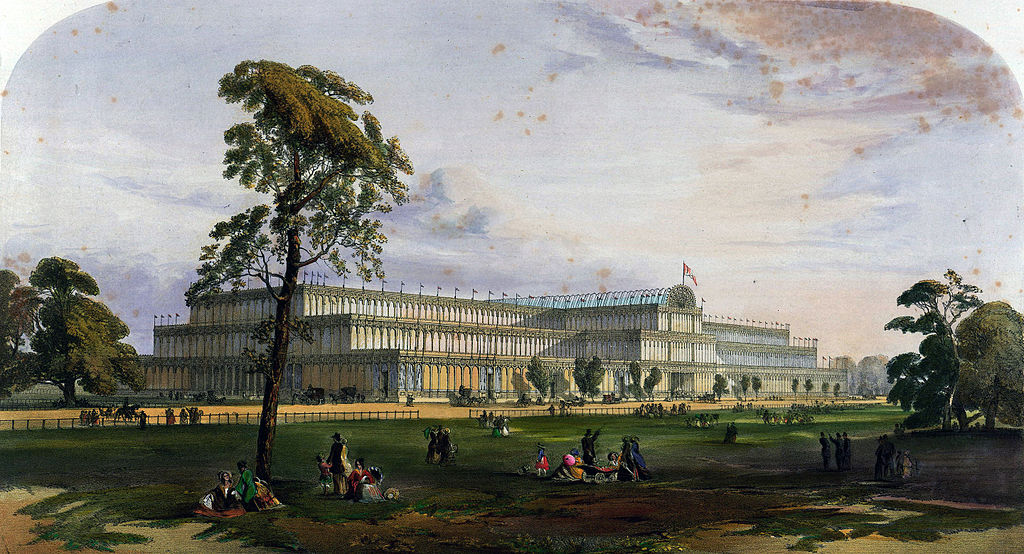
The Crystal Palace from the northeast during the Great Exhibition of 1851, image from the 1852 book Dickinsons’ comprehensive pictures of the Great Exhibition of 1851
Wikimedia Commons.
Ever since researching my book on the history of the Royal Society of Arts, I’ve been fascinated by the Great Exhibition of 1851, which they initiated. Like most people, I had once assumed that the exhibition was just a big celebration of Victorian technological superiority — a brash excuse to rub the British Industrial Revolution in the rest of the world’s faces. But my research into the origins of the event revealed that it was almost the opposite. Far from being a jingoistic expression of superiority, it was actually motivated by a worry that Britain was rapidly losing its place. It was an attempt to prevent decline by learning from other countries. It was largely about not falling behind.
Industrial exhibitions already had a long history in 1851, as a crucial weapon in other countries’ innovation policy arsenals. They were used by countries like France in particular — which held an exhibition every few years from 1798 — as a means of catching up with Britain’s technology. This sounds strange nowadays, when the closest apparent parallels are vanity projects like the Millennium Experience, the recent controversial “Festival of Brexit” that ended up just being a bunch of temporary visitor attractions all over the country, and glitzy mega-events like the World’s Fairs. But the World’s Fairs, albeit notional successors to the Great Exhibition, have strayed very far from the original vision and purpose. They’re now more about celebration, infotainment and national branding, whereas the original industrial exhibitions had concrete economic aims.
Industrial exhibitions were originally much more akin to specialist industry fairs, with producers showing off their latest products, sort of combined with academic conferences, with scientists demonstrating their latest advances. Unlike modern industry fairs and conferences, however, which tend to be highly specialised, appealing to just a few people with niche interests, industrial exhibitions showed everything, altogether, all at once. They achieved a more widespread appeal to the public by being a gigantic event that was so much more than the sum of its parts — often helped along by the impressive edifices that housed them. The closest parallel is perhaps the Consumer Electronics Show, held since 1967 in the United States. But even this only focuses on particular categories of industry, and is largely catered towards attendees already interested in “tech”. Industrial exhibitions were like the CES, but for everything.
The point of all this, rather than just being an event for its own sake, was to actually improve the things on display. This happened in a number of ways, each of them complementing the other.
Concentration generated serendipity. By having such a vast variety of industries and discoveries presented at the same event, exhibitions greatly raised the chances of serendipitous discovery. A manufacturer exhibiting textiles might come across a new material from an unfamiliar region, prompting them to import it for the first time. An inventor working on a niche problem might see the scientific demonstration of a concept that had not occurred to them, providing a solution.
Comparison bred emulation. Producers, by seeing their competitors’ products physically alongside their own, would see how things could be done better. They could learn from their competitors, with the laggards being embarrassed into improving their products for next time. And this could take place at a much broader, country-wide level, revealing the places that were outperforming others and giving would-be reformers the evidence they needed to discover and adopt policies from elsewhere.
Exposure shattered complacency. The visiting public, as users and buyers of the things on display, would be exposed to superior products. This was especially effective for international exhibitions of industry, of which the Great Exhibition was the first, and simulated an effect that had only ever really been achieved through expensive foreign travel — by being exposed to things they hadn’t realised could already be so much better than what they were accustomed to, consumers raised their standards. They forced the usual suppliers of their products to either raise their game or lose out to foreign ones.
Comments Off on The true purpose of the Great Exhibition of 1851
“David Johnston is an honourable man”
From this heading, you might be a bit reminded of Mark Antony’s funeral oration for Caesar, as imagined by William Shakespeare (well, I was, so you’ll have to suffer a few lines of iambic pentameter):
Friends, Romans, countrymen, lend me your ears;
I come to bury Caesar, not to praise him.
The evil that men do lives after them;
The good is oft interred with their bones;
So let it be with Caesar. The noble Brutus
Hath told you Caesar was ambitious:
If it were so, it was a grievous fault,
And grievously hath Caesar answer’d it.Here, under leave of Brutus and the rest–
For Brutus is an honourable man;
So are they all, all honourable men–
Come I to speak in Caesar’s funeral.
He was my friend, faithful and just to me:
But Brutus says he was ambitious;
And Brutus is an honourable man.He hath brought many captives home to Rome
Whose ransoms did the general coffers fill:
Did this in Caesar seem ambitious?
When that the poor have cried, Caesar hath wept:
Ambition should be made of sterner stuff:
Yet Brutus says he was ambitious;
And Brutus is an honourable man.
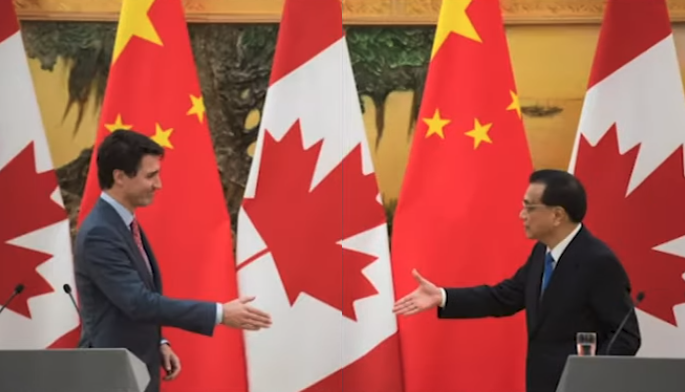
Perhaps I’m reading too much into the opening line of Philippe Lagassé’s article about former Governor General David Johnston’s role in whitewashing the Trudeau running dogs, however:
David Johnston is an honourable man. As a former governor general, he holds the title of Right Honourable and he wears it better than many former prime ministers who share that moniker. Johnston is also a champion of trust in democratic institutions; he literally wrote a book called Trust: Twenty Ways to Build a Better Country.
Although his appointment has been plagued by questions about his perceived conflicts of interest, it’s hard to accept that Johnston set out to protect the Liberal party. Whether one agrees with him or not, Johnston’s conclusions were arrived at sincerely and in keeping with his view that “Democracy is built on trust.” Unfortunately, his recommendation against a public inquiry is not only bewildering from a political perspective, but could erode the very trust in democracy that he wants to strengthen.
Whatever we think about Johnston’s first report, we should be concerned with his appointment as the special rapporteur. Aside from the perceived conflicts of interest, we should ask why a former governor general accepted the role in the first place. Serving as a vice-regal representative should be the last public role an individual performs. Any other public duty performed by a former governor general or lieutenant governor, however well-intentioned and performed, carries risks that can diminish these offices. Johnston’s experience is a cautionary tale for future vice-regals.
The governor general is the second-highest office of the Canadian state, under the monarch alone. The King’s representative performs most of the Crown’s head of state functions in Canada, both constitutional and ceremonial. Official independence and non-partisanship are essential parts of the head of state function. Canadians should be able to trust (there’s that word again) that governors general will be impartial in the exercise of their constitutional powers. We need only look at the 2008 prorogation controversy and the 2017 election in British Columbia to see why this matters for Canadian democracy.
Although less vital, independence and non-partisanship are also important for the governor general’s ceremonial roles. Having the governor general bestow honours ensures that Canadians are recognized by a neutral, but high-standing, representative of the state. An ardent Conservative can receive the Order of Canada while a Liberal government is in power without wincing, since the prime minister and cabinet are kept at a safe distance from the whole thing.
[…]
Former vice-regal representatives should take heed. They would do well to avoid becoming a new set of “retired Supreme Court justices”, whose judicial halo effect has become comically overused to stem political controversy. Indeed, Canadians should insist that the governor general’s salary and annuity come with a tacit bargain: you were set for life to ensure your impartiality and independence, now we never want to hear you wading into political controversies or see you hold another public office again.
This should not be too much to ask of the King’s representatives. No other public role has the formal role stature of a vice-regal office, aside from the monarch, and none are as carefully insulated from partisan battles. The office of governor general should be held by those at the end of a remarkable career, as a final act of independent and impartial public service.
Also in The Line, Mitch Heimpel seems to be a bit less willing to tolerate the use of a former Governor General as ablative shielding for a compromised government:
In the end, David Johnston proved himself to be exactly what his critics argued he always was.
A fervent defender of his advantaged status quo. Another among the thoroughly compromised set of politicians, senior civil servants and academics who have, over the decades when it comes to Canadian foreign policy regarding China, taken the money and run. The idea that he was ever going to be anything else was a figment of our own collective fantasy.
We believed we were a serious country. David Johnston has laughed in our faces at the very thought.
The families of members of Parliament have been targeted for possible “sanctions”? No matter.
Our elections are the subject of coordinated foreign intelligence operations? Well, sure. But what is democracy really?
Really, you see, Johnston told us — without ever being quite so direct about it, because people of Johnston’s polite air are rarely so crass — the media was your problem. They published things without the appropriate “context.”
Choosing Johnston was always a bit grubby. It was meant to politically neuter Conservatives because, after all, Stephen Harper appointed him to be the governor general. How could he possibly be compromised? Yes, he’s known the prime minister whose government he was investigating since Justin Trudeau was a small child. And, yes, as a university president, he was long an advocate for more open relations with China. And, yes, he involved with the Trudeau Foundation, which has found itself at the heart of the question of foreign interference coordinated by the Chinese Communist Party, but …
No, there is no “but”.
There is no other democracy which would have successfully conducted an elaborate farce of this magnitude to tell its citizens what it is painfully obvious that it wanted to tell them all along: You have no right to know.
Comments Off on “David Johnston is an honourable man”
Communism, Democracy, Monarchy? Any form of government is inherently tyrannical once it gets big enough
As I’ve mentioned now and again, although I’m philosophically libertarian, I also describe myself as a “weak monarchist” … it’s not that I want a return to spurred-and-booted aristos literally lording it over everyone else, but that the central institution of the monarchy tends to tamp down some of the worst excesses of various flavours of democracy. Presidential systems put a temporary monarch on top, but a temporary monarch with real, day-to-day powers that can be — and often are — exercised to the detriment of some or all of the population. Constitutional monarchy reserves a few rarely used (and rarely needed) powers to the monarch, but delegates the vast majority of the grubby day-to-day governing stuff to grubby elected politicians. This neat division of powers progressively fails as governments attempt to take on more power to interfere in the lives of ordinary people … and that process went into overdrive with the pandemic lockdowns and so much arbitrary power put not into the hands of elected officials (who at least theoretically have to answer to the voters every now and again) but to the already bloated civil service and their extended families of government-funded but “independent” organizations delegated powers to do all sorts of mischief.
All that said, I don’t think I quite fit into Theophilus Chilton‘s group of former-libertarians-turned-monarchists, if only because I’ve always preferred keeping the monarchy in place:

One of the greatest ironies of modern non-mainstream politics in the West is the tendency on the part of libertarians (whose whole ideology supposedly centers upon the maximization of personal freedom) to eventually find their way into supporting much more authoritarian ideologies on the dissident and reactionary Right. Indeed, this is the general route that my own political convictions have taken – from libertarianism to monarchism. Many libertarians would recoil in horror at the thought, yet given the number of former libertarians in neoreaction and in the dissident Right in general, it obviously happens quite often. One of the reasons I would suggest for this is that the foibles and failures of democracy – the governing system most often associated with the libertarian view of freedom – are becoming increasingly apparent to thoughtful observers. The old propaganda used to prop up the democratic dogma in Western nations is becoming increasingly stale and unconvincing. It becomes more and more apparent that democracy does not equal freedom, just as it is becoming apparent that “freedom” is not always and in every sense something that is conducive to good government and stable society.
My purpose with this essay is not to seek to convince my libertarian or classically liberal readers to become monarchists. This may well end up being where they land, politically and ideologically speaking, but their experiences and growth may move them in other directions. What I do want to do is to try to get them started on that path by pointing out that democracy is not any better than other forms of government and may indeed be worse in some areas that we can see empirically. I want to plant a seed of doubt and encourage it to grow. If the thoughtful libertarian is to be convinced, it must be by convincing himself or herself.
Please note that throughout this article, I will refer to “democracy” in a general sense to refer to any modern popular form of government. This includes the sort of representative republican system (formerly) typified by the American government which, while not directly democratic, was still essentially democratic in its overall form and complexion.
Personal Freedom
One of the obvious objections which libertarians and other classical liberals have against monarchy (and other authoritarian governing systems in general) is that the unification of power into the hands of a single executive makes it prone to abuse and to the removal or suppression of the freedoms of the citizenry. Typically, they will envision a monarchy as some kind of police state where citizens who step out of line are severely punished and every aspect of life is closely watched and regulated by the government. This, in turn, leads to a somewhat jaundiced view of history, especially that of the much-excoriated “Dark Ages”, believed to have been a dystopia of violence and tyranny.
This view of the relevant history is, however, untrue and generally relies upon a false epistemic dichotomy that is sadly very common within libertarianism. This is the failure to distinguish between “strong government” and “big government”, the two of which are usually confounded in the classical liberal’s mind. The former term refers to the capacity of the executive to exercise power within his sphere of activity, while the latter describes the extent of the sphere of activity itself. A ruler may be strong in the sense of being decisive and effective in what he does, yet find the area in which he can legitimately act to be circumscribed by law or custom. Among most historical Western monarchies, while kings often ruled “strongly”, they were not able to rule intrusively. Their subjects were often left with a relatively wide degree of latitude in their personal and economic affairs, and the restraints of custom and social structure tended to be more constraining than the actual deeds of their king himself.
Let us contrast this with the various democracies we see in the West, both the United States and others. How much do they really respect personal freedoms? In other words, how much do they really embody the “small government” ideal desired by libertarians and other classical liberals? The answer is: not much at all. Western man lives in democracies in which he can be arrested for tweeting “hate speech” on social media. His everyday life is overseen, administered, and commandeered by a body of regulations enforced by entirely unaccountable bureaucrats who have the capacity to trap him into Kafkaesque nightmares of life-altering tribulation. Every aspect of his food, his clothing, his home, his transportation, his workplace – all controlled by the government he (wrongly) believes he elected freely. If he has any kind of well-paying job or business enterprise, he will be paying a tax rate that ancient absolute monarchs would have blushed to even suggest exacting from their subjects. Democratic governments – supposedly by and for the people – intrude into every area of his life (big government) and do so through robust and often corrupt police state apparatuses which are literally willing to break down his door and possibly shoot him and his family for even minor infractions.
So please, let us dispense with the notion that democracy protects personal freedom.
Comments Off on Communism, Democracy, Monarchy? Any form of government is inherently tyrannical once it gets big enough
Lee 1875 Vertical Action Carbine
Forgotten Weapons
Published 21 Aug 2014The 1875 Lee Vertical Action was an experimental rifle designed by James Paris Lee (of Lee Enfield and Lee Navy fame) as an idea to increase the rate of fire from single-shot Army rifles. He touted an impressive 30 rounds in 45 seconds with the rifle, thanks to several design elements that combined to make a very fast manual of arms. In total only 143 of these guns were made at Springfield Armory, and this example is the only known carbine variant.
(more…)
Comments Off on Lee 1875 Vertical Action Carbine


