
Sigmund Freud was a perverted old cokehead, but he had some useful insights. One of them is that anxiety works like a spring (my paraphrase). You need a spring to have a certain tension in order to work, but if you compress it too tightly, it breaks. Anxiety that can’t be discharged (his term) in healthy, socially beneficial ways instead gets discharged in unhealthy, neurotic ways.
That’s what happened with Anna O., history’s most famous psychiatric patient. She had a very turbulent love/hate relationship with her father, as tightly wound girls do. When he became deathly ill on a family vacation, the unresolvable tension caused a whole host of physical symptoms, including hysterical paralysis. Pioneering psychologist Josef Breuer “talked her through” it, finally resolving the emotional conflict and “curing” the patient.
All this would’ve been interesting, but largely irrelevant, were it not for World War I. The world at large didn’t care about the problems of overprivileged Jewish girls, but they did care about their soldiers suddenly going crazy in the trenches. Once military doctors finally ruled out a physical cause, they were left with Freudian explanations: A soldier can’t stop fighting, because he’s an honorable, dutiful soldier. Yet that soldier must stop fighting. The only honorable way out is a wound. If the enemy doesn’t wound him, then, his subconscious will. Hence the bizarre “conversion disorders” — hysterical blindness, paralysis, mutism, etc. — characteristic of “shell shock.”
But a funny thing happened. While everyone now acknowledged the real power of the subconscious mind, we sort of … forgot … about it. Psychology, particularly psychotherapy, went back to being a ghetto Jewish preoccupation. Bored, over-privileged housewives might go to a shrink to talk through their “issues”, but as for the rest of us, well, if we weren’t going into combat anytime soon, why bother? Outside of a few crusty old reactionaries (like yours truly) making fun of SJWs, when was the last time you heard the word “neurotic”?
But that’s the thing: either the subconscious is real, or it isn’t. When we say “neurotic” (the few of us who still do), we usually mean people like Anna O. — rich, cosseted, politically active human toothaches who try to force the entire world into the all-encompassing drama of their Daddy Issues (see also: Virginia Woolf). But that’s not how Freud meant it. According to him, we’re all neurotic to some degree or another, because that’s just how anxiety works.
We all have strong emotional impulses that run counter our self-image. Hence the entire panoply of pop-Freudianism: The preacher who constantly rails against homosexuality from the pulpit is secretly gay (“projection”). The strict, controlling, everything-in-its-place type is a sadist (“anal-retentive”). The player who can’t settle down with any woman is actually trying to find a Mommy figure (“Oedipus complex”). And, of course, the — ahem — daddy of them all, the crippling Daddy Issues that make feminists such fun.
But that’s just the thing: Either anxiety works that way or it doesn’t. Just because we don’t see a specific syndrome in ourselves doesn’t mean we don’t have a whole bunch of anxiety we need to discharge. Just because it’s subclinical, in other words, doesn’t mean it’s not real, or unimportant. See for example the legions of keyboard commandos who show up in the comments of any blog with more than fourteen readers. Yeah, sure, it’s possible that those guys all got kicked out of SEAL Team 6 for being too badass … but it’s probably classic identification. They’re deeply uneasy about the world and their place in it, so they construct themselves an identity as the Rambo of Evergreen Terrace.
Severian, “High Anxiety”, Rotten Chestnuts, 2020-03-16.
February 27, 2023
QotD: Sigmund Freud’s insights
February 17, 2023
Spy ballooning has a remarkably long history (that’s clearly still ongoing)
In The Line, Scott Van Wynsberghe outlines the history of balloons in wartime and (as many are now aware from recent events) in peacetime:
China’s balloon spying is shocking on so many levels that you can take your pick. There is the ultra-flagrant violation of foreign sovereignty, the stunningly surreal air of denial exhibited by Beijing, and the fearful sense that something in the world order just lurched. There is also puzzlement: what, balloon spying is still a thing? Indeed it is, and its centuries-long history is instructive as to what China is now doing. It also makes clear that the U.S. is no innocent victim here but rather a past offender with a cleaned-up act.
Among the first major studies of aerial reconnaissance was a book brought out by military author Glenn B. Infield way back in 1970. In a way, Infield was charting unknown territory. When he addressed balloons in particular, he traced their use in spying to the many wars associated with the French Revolutionary and Napoleonic eras. In 1794, he related, the French military officer Jean-Marie-Joseph Countelle made an ascent at the city of Maubeuge in order to monitor enemy forces in the area. In the process, Countelle became the first balloon spy.
As technology improved, other firsts followed. By the 1850s, cameras were mounted on French military balloons. In the 1860s, during the American Civil War, Union forces battling the Confederacy used balloons trailing telegraphic wires, which transmitted immediate updates from the balloonists. Yet technology cut both ways. By the early 1900s, balloons had a nemesis in sight, in the form of winged and powered aircraft.
The inevitable showdown occurred in the First World War, and it was ugly. Large numbers of observation balloons were used by all sides in the conflict, and WWI historian Denis Winter claims the Germans alone deployed 170 of them in France by 1917. Typically, such balloons were tethered in place near the frontline, floating at several thousand feet, with telephone wires dangling to the ground. Although they seemed vulnerable, they were actually protected from below by anti-aircraft units, which blasted at any enemy plane that got too close. However, the reverse was also true, with balloons themselves being fired at from the ground. By 1915, says aviation writer Ralph Barker, the British were losing at least a dozen balloons a month from all forms of enemy action. Those balloonists who were not shot to pieces often had to bail out, putting their faith in parachutes that did not always work. (Horrified onlookers called them “balloonatics.”) The fighter pilots responsible for much of this mayhem — which they called “balloon-busting” — may not have had an easy time, but some of them scored heavily, with one Frenchman named Coiffard tallying 28 balloons. Although observation balloons managed to make it to the end of the war, it was a near-run thing. According to author Linda Hervieux, nobody after the war was talking about repeating that experience in any future fighting.
[…]
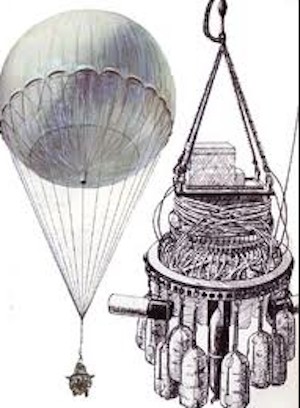
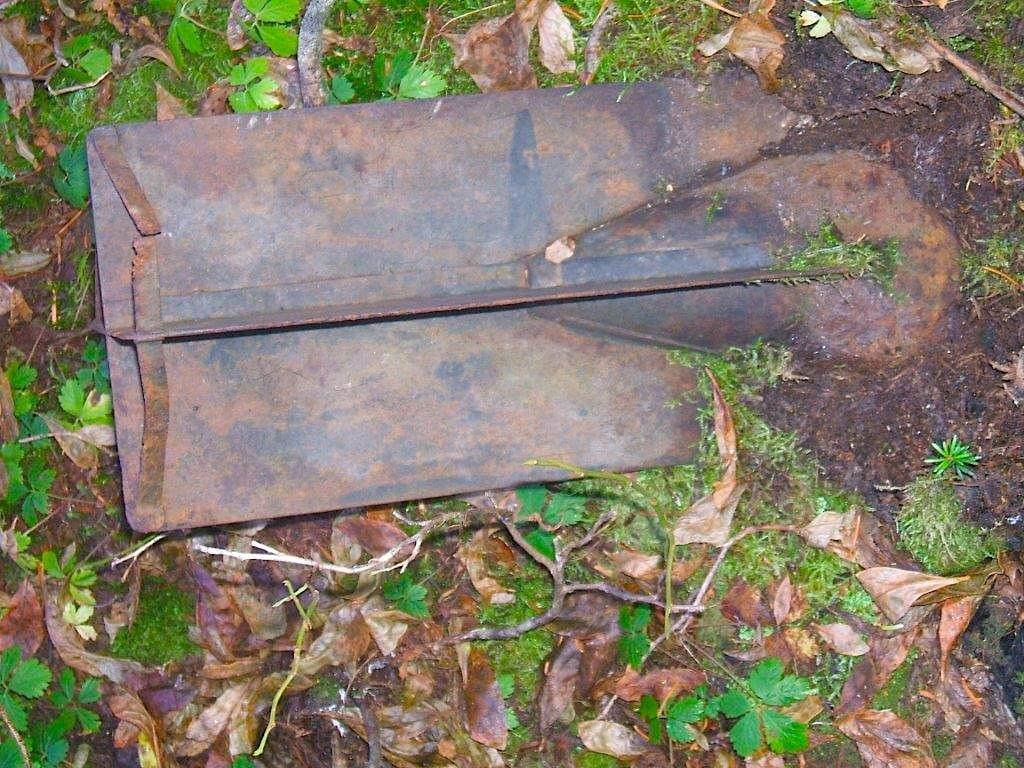
Once the Second World War was underway, some propaganda leafleting did occur, but secret balloon activity seemed to be at a low level. That was very misleading, because one of the tensest moments in ballooning history was playing out in the background, but it occurred amid so much security that the entire tale took years to emerge. In 1944, Japan launched the first of over 9,000 bomb-rigged balloons across the Pacific. Robert C. Mikesh, in a comprehensive 1973 monograph issued by the Smithsonian Institution, noted that almost a thousand of the balloons may have reached North America, but the true number is unknowable, because so many came down in remote wilderness. (One was found by forestry workers in British Columbia as late as 2014.) Mikesh tabulated 285 known incidents, ranging from Alaska all the way south to Baja California and as far inland as Manitoba. Both the U.S. and Canada clamped down hard on any news about the balloons, for fear of providing Tokyo valuable feedback about the results of the campaign. (In other words, balloon counterintelligence became a priority.) In general, the balloons did not cause a lot of harm, but one of them slaughtered six people in Oregon in 1945. By a strange fluke, one of the few groups in the U.S. that knew the full story of the balloons was an element of the Black community. The all-Black 555th Parachute Infantry Battalion was sent to the U.S. West to handle emergencies caused by the balloons.
The remains of a Japanese balloon bomb found in the Monashee Mountains near Lumby, BC in 2014. It was detonated on-site by the bomb disposal unit of Maritime Forces Pacific of the Royal Canadian Navy.
There is a strong temptation to blame the Japanese balloon bombs for what happened next, because the U.S. unaccountably entered the Cold War as the most pugnacious exponent of clandestine ballooning up to that time. Whatever the explanation, the epic struggle between the United States and the Union of Soviet Socialist Republics plunged U.S. ballooning into a tangle of psychological warfare, shadowy science, under-the-table finances, and clandestine belligerence indistinguishable from military attacks. Plus, UFOs and breakfast foods were involved (seriously).
February 3, 2023
“Lady of The Dark” – Milunka Savić – Sabaton History 117
Sabaton History
Published 2 Feb 2023One of the most badass and decorated soldiers of the Great War was a woman. Serving first in the Balkan Wars, this Serbian war heroin became a celebrity when she won the Karađorđe’s Star — the highest Serbian decoration — in 1914 and 1916. Those weren’t her only decorations either — watch to find out more.
(more…)
January 29, 2023
France’s Ultimate WW1 Selfloading Rifle: The RSC-1918
Forgotten Weapons
Published 14 Sept 2017The French RSC-1917 semiauto rifle was a major step forward in arms technology during World War One, offering a reliable and effective self-loading rifle for issue to squad leaders, expert marksmen, and other particularly experienced and effective troops. No other military was able to field a semiauto combat shoulder rifle during this was in anything but very limited numbers. However, the RSC-1917 definitely had some shortcomings:
– It was just too long, at the same size as the Lebel
– The specialized clip was a logistical problem
– The gas system was fragile and difficult to clean or disassemble
– The magazine cover was easily damagedThese issues were all addressed in the Model 1918 upgrade of the rifle, although it was too late to see active service in the Great War. The new pattern was substantially shorter (both the stock and barrel), it used the standard Berthier 5-round clip, it had a substantially strengthened magazine cover, and a much improved gas system.
Today, we will compare the various features of the 1917 and 1918 rifles, and disassemble the 1918 gas system to show how it worked.
(more…)
January 22, 2023
Where The British Army Figured Out Tanks: Cambrai 1917
The Great War
Published 20 Jan 2023The Battle of Cambrai in 1917 didn’t have a clear winner, but the conclusions that Germany and Britain drew from it, particularly about the use of the tank (in combination with other arms), would have far reaching consequences in 1918.
(more…)
January 18, 2023
Ask Ian: Why No German WW2 50-Cal Machine Guns? (feat. Nick Moran)
Forgotten Weapons
Published 20 Sep 2022From Nathaniel on Patreon:
“Why didn’t Germany or Axis powers have a machine gun similar to the American M2?”Basically, because everyone faced the choice of a .50 caliber machine gun or 20mm (or larger) cannons for anti-aircraft use, and most people chose the cannons — including Germany. There were some .50 caliber machine guns adopted by Axis powers, most notably the Hotchkiss 1930, a magazine-fed 13.2mm gun that was used by both Italy and Japan (among others). However, the use of the .50 caliber M2 by the US was really a logistical holdover form the interwar period. The M2 remained in production because it was adopted by US Coastal Artillery as a water-cooled anti-aircraft gun, and commercial sales by Colt were slim but sufficient to keep the gun in development through the 20s and 30s. It was used as a main armament in early American armor, but obsolete in this role when the war broke out.
However, with the gun in production and no obvious domestic 20mm design, the US chose to simply make an astounding number of M2s and just dump them everywhere, from Jeeps to trucks to halftracks to tanks to self-propelled guns. And that’s not considering the 75% of production that went to coaxial and aircraft versions …
Anyway, back to the question. The German choice for antiaircraft use was the 20mm and 37mm Flak systems, and not a .50 MG on every tank turret. And so, there was really no motive to develop such a gun. The Soviets did choose to go the US route, though, and developed the DShK-38 for the same role as the US M2 — although it was made in only a tiny fraction of the quantity of the M2.
(more…)
January 4, 2023
“Sarajevo” – Assassination of Archduke Franz Ferdinand – Sabaton History 116
Sabaton History
Published 3 Jan 2023Where did the war to end all wars begin? The assassination in Sarajevo may have only killed two, but the repercussions killed millions, destroyed empires, and changed the course of history.
(more…)
December 15, 2022
Christmas in the WWI Trenches – Xmas Rations
Tasting History with Max Miller
Published 13 Dec 2022
December 5, 2022
The Halifax Explosion
[For more on the events leading up to the explosion, you can read my page on the event here.]
OTD Canadian Military History
Published 3 Dec 2022Halifax, Nova Scotia was rocked by a massive explosion on the morning of 6 December 1917 after the French cargo ship SS Mont-Blanc collided with the Norwegian vessel SS Imo in the harbour. Nearly 2000 people were killed and 9000 were injured. More than 25,000 were left without adequate shelter.
This video includes a photo of the Halifax explosion itself and footage from its aftermath as I explain details of the explosion and the relief efforts.
(more…)
The sinking of HMS Courageous, 17 September, 1939
The Northern Historian
Published 5 Feb 202117th September 1939, just two weeks after Britain had declared war on Germany, aircraft carrier HMS Courageous was on patrol off the west coast of Ireland. Unbeknown to her, she was being stalked by a hidden predator. Within 20 minutes of being attacked she had slipped beneath the Atlantic surface, taking with her the lives of over 500 men. She became the first British naval casualty of World War Two.
She began her life as a light cruiser during World War One as part of the Courageous class of cruisers. They were a trio of ships comprising HMS Courageous, HMS Glorious, and HMS Furious. These ships were designed and built to support Admiral Lord Fisher’s Baltic project.
Following heavy losses at The Battle of Jutland, HMS Courageous became the flagship of the 1st Cruiser Squadron and took part in the 2nd Battle of Heligoland.
Following World War 1 and due to the Washington Naval Treaty of 1922, limiting new ship constructions, HMS Courageous along with her sisters HMS Glorious and HMS Furious were converted into aircraft carriers and became the Courageous class of aircraft carriers for the Royal Navy.
(more…)
December 3, 2022
“The Valley of Death” – The Battles of Doiran – Sabaton History 115
Sabaton History
Published 1 Dec 2022The Bulgarian defenses in the Lake Doiran region were pretty much the best defenses any country had anywhere in the Great War, which the Entente forces discovered as they tried time and again and failed time and again — to break the front.
(more…)
November 30, 2022
The St Etienne Mle 1907: France’s Domestic Heavy Machine Gun
Forgotten Weapons
Published 19 Oct 2017When the French first began testing machine guns in the late 1890s, they were one of the few countries that did not purchase quantities of Maxim guns. One of the reasons was that in France’s North African colonies, transporting water for guns was considered an unnecessary liability. Instead, France purchased a number of air-cooled Hotchkiss machine guns for its colonial forces. For the French Metropolitan Army, it wanted a gun designed and produced by its own arsenal system. And so, the Puteaux Arsenal developed the Modele 1905 gun.
This was a gas-trap style of action, pulling an operating rod forward with each shot. The gun was adopted and put into service, and as with every other military user of gas trap guns, the French quickly found the system to be seriously flawed. The St Etienne Arsenal set about improving it, and came up with the Modele 1907, which retained the forward-moving operating rod but used a gas piston instead of a gas trap. This would be the machine gun which France would enter World War One with, and more than 40,000 would be manufactured by 1917.
The Modele 1907 St Etienne gun is a magnificently Victorian machine gun, with a downright Swiss-like rack-and-pinion system running its action. It would have been truly at home on a Napoleonic battlefield — but not a World War One battlefield. The gun was not well-suited to the muddy hell of trench warfare, despite its beautiful machining and quality. Looking for both a lot more guns and also a more field-reliable system, the French began buying a great many Modele 1914 Hotchkiss machine guns, and they would replace the Modele 1907 by the end of the war.
One cannot fault the French for this change, and yet it still seems sad to see such a gorgeous piece of metal fabrication be sidelined — complete with its hydraulically adjustable rate of fire, its fine toothed feed spool, its sights with the spring and lever system to accommodate heat-induced change of aim and its magnificently extravagant flash hider.
(more…)
November 14, 2022
Two Variants of the French RSC 1917 Semiauto WW1 Rifle
Forgotten Weapons
Published 2 Apr 2017The RSC 1917, aka FSA1917, has the distinction of being the only true semiautomatic service rifle to see significant frontline infantry use during World War One. It was introduced in 1917 as a long rifle, and about 75,000 were made in that configuration. An improved carbine model was developed in in 1918 right at the end of the war, with only a few thousand of those made. However, what we are looking at today are a pair of 1917 rifles which show a couple of differences.
One of these is a standard RSC 1917 as originally produced, and the other has been updated to a 1918 standard in two ways: the bolt handle/disassembly and the bolt holdopen mechanism. I do not know if these changes were actually implemented during the war, or in the years afterward, but they make the rifles substantially easier to field strip.
If you know of details relevant to these changes, please let me know in the comments!
(more…)
November 11, 2022
Mark Knopfler – “Remembrance Day”
Bob Oldfield
Published on 3 Nov 2011A Remembrance Day slideshow using Mark Knopfler’s wonderful “Remembrance Day” song from the album Get Lucky (2009). The early part of the song conveys many British images, but I have added some very Canadian images also which fit with many of the lyrics. The theme and message is universal… “we will remember them”.
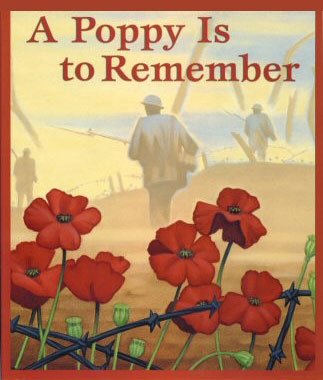
In memoriam
A simple recognition of some of our family members who served in the First and Second World Wars:
The Great War
 Private William Penman, Scots Guards, died 16 May, 1915 at Le Touret, age 25
(Elizabeth’s great uncle)- Private Archibald Turner Mulholland, Argyll & Sutherland Highlanders, mortally wounded 25 September, 1915 at Loos, age 27
(Elizabeth’s great uncle) - Private David Buller, Highland Light Infantry, died 21 October, 1915 at Loos, age 35
(Elizabeth’s great grandfather) - Private Harold Edgar Brand, East Yorkshire Regiment. died 4 June, 1917 at Tournai.
(My first cousin, three times removed) - Private Walter Porteous, Durham Light Infantry, died 4 October, 1917 at Passchendaele, age 18
(my great uncle) - Corporal John Mulholland, Argyll & Sutherland Highlanders, wounded 2 September, 1914 (shortly before the First Battle of the Aisne), wounded again 29 June, 1918, lived through the war.
(Elizabeth’s great uncle)
The Second World War
- Flying Officer Richard Porteous, Royal Air Force, survived the defeat in Malaya, was evacuated to India and lived through the war
(my great uncle) - Able Seaman John Penman, Royal Navy, served in the Defensively Equipped Merchant fleet on the Atlantic convoys, the Murmansk Run (he may have been on a ship in convoy PQ-17, as we know he spent a winter in Russia) and other convoy routes, was involved in firefighting and rescue efforts during the Bombay Docks explosion in 1944, lived through the war
(Elizabeth’s father) - Private Archie Black (commissioned after the war and retired as a Major), Gordon Highlanders, captured during the fall of Singapore (aged 15) and survived a Japanese POW camp (he had begun to write an autobiography shortly before he died)
(Elizabeth’s uncle) - Elizabeth Buller, “Lumberjill” in the Women’s Timber Corps, an offshoot of the Women’s Land Army in Scotland through the war.
(Elizabeth’s mother) - Trooper Leslie Taplan Russon, 3rd Royal Tank Regiment, died at Tobruk, 19 December, 1942 (aged 23).
Leslie was my father’s first cousin, once removed (and therefore my first cousin, twice removed).
My maternal grandfather, Matthew Kendrew Thornton, was in a reserved occupation during the war as a plater working at Smith’s Docks in Middlesbrough. The original design for the famous Flower-class corvettes came from Smith’s Docks and 16 (including four intended for the French Marine National) of the 196 built in the UK during the war (more were built in Canada).
For the curious, the Commonwealth War Graves Commission the Royal British Legion, and the Library and Archives Canada WW1 and WW2 records site provide search engines you can use to look up your family name. The RBL’s Every One Remembered site shows you everyone who died in the Great War in British or Empire service (Canadians, Australians, New Zealanders, South Africans and other Imperial countries). The CWGC site also includes those who died in the Second World War. Library and Archives Canada allows searches of the Canadian Expeditionary Force and the Royal Newfoundland Regiment for all who served during WW1, and including those who volunteered for the CEF but were not accepted.
In Flanders fields the poppies blow
Between the crosses row on row,
That mark our place; and in the sky
The larks, still bravely singing, fly
Scarce heard amid the guns below.We are the Dead. Short days ago
We lived, felt dawn, saw sunset glow,
Loved and were loved, and now we lie
In Flanders fields.Take up our quarrel with the foe:
To you from failing hands we throw
The torch; be yours to hold it high.
If ye break faith with us who die
We shall not sleep, though poppies grow
In Flanders fields.Lieutenant Colonel John McCrae, MD Canadian Army Medical Corps (1872-1918)


