Quotulatiousness

August 16, 2021

L. Neil Smith – “Take your children out of school!”

Filed under: Education, Government, Politics, USA — Tags: , , , — Nicholas @ 03:00

In the latest Libertarian Enterprise, L. Neil Smith offers a useful bit of advice to parents concerned about their children being indoctrinated in state-run schools:

“Abandoned Schoolhouse and Wheat Field 3443 B” by jim.choate59 is licensed under CC BY-NC-ND 2.0

For quite a while now, the boob-tube has been filled with coverage of various Board of Education meetings around the country attended by parents murderously angry that their kids are being forcibly indoctrinated with utter claptrap like CRT, which apparently stands for Communist Racist Toxin, a new and poisonous religion where the color of your skin is an Original Sin for which you will be made to suffer no matter what you think, do, or say. My wife Cathy, passing by the TV set half a dozen times a day, invariably shouts, “Take your children out of school!” This essay is admiringly dedicated to her.

I suppose the Public Schools got started out of some sense of specialization. “You chip the flint, Og, Ogla cooks the mammoth, and we’ll teach the kids.” Evolution would have it the other way. The young have been learning from their parents for thousands of generations and it worked out pretty well until sinister figures like Horace Mann and John Dewey, equipped with the limitless power of the State, decided to use it to steal our children from us.

Take your children out of school!

It was perhaps, the stupidest thing that a people have ever done, and I’m pretty sure that Thomas Jefferson would have recognized it as the stupid thing it was, so it had to wait until he and those like him were safely dead. It isn’t brain science. It isn’t rocket surgery. Hand your offspring over to the State, and they will be taught every self-destructive thing the State wants them to be taught — and by now it should be clear, as it surely was to Jefferson, that the State is the enemy of everything decent and productive. Public education was probably responsible for both world wars.

Take your children out of school!

And if it was such a self-evidently good idea, then why did it have to be compulsory? The rows of desks in public schools are populated by conscription — no matter how many pleasant memories we may have of our school days. Public schools are financed by extortion and theft, two of the reasons we fought a revolution in the first place.

Take your children out of school!

It might be cynically observed that public schools are cheaper than paying for baby-sitting, but, given property taxes and the damage it does to the most important people in our lives, is it really? Idiots have whimpered for the last year that having your kids at home is inconvenient.

Public Schools are convenient for the State. They give government two incomes to tax, instead of only one. Take your children out of school!

QotD: Biotechnology

Filed under: Environment, Politics, Quotations, Science, USA — Tags: , , — Nicholas @ 01:00

Along with rethinking cities, environmentalists will need to rethink biotechnology. One area of biotech with huge promise and some drawbacks is genetic engineering, so far violently rejected by the environmental movement. That rejection is, I think, a mistake. Why was water fluoridization rejected by the political right and “frankenfood” by the political left? The answer, I suspect, is that fluoridization came from government and genetically modified (GM) crops from corporations. If the origins had been reversed — as they could have been — the positions would be reversed, too.

Ignore the origin and look at the technology on its own terms. (This will be easier with the emergence of “open source” genetic engineering, which could work around restrictive corporate patents.) What is its net effect on the environment? GM crops are more efficient, giving higher yield on less land with less use of pesticides and herbicides. That’s why the Amish, the most technology-suspicious group in America (and the best farmers), have enthusiastically adopted GM crops.

There has yet to be a public debate among environmentalists about genetic engineering. Most of the scare stories that go around (Monarch caterpillars harmed by GM pollen!) have as much substance as urban legends about toxic rat urine on Coke can lids. Solid research is seldom reported widely, partly because no news is not news. A number of leading biologists in the U.S. are also leading environmentalists. I’ve asked them how worried they are about genetically engineered organisms. Their answer is “Not much,” because they know from their own work how robust wild ecologies are in defending against new genes, no matter how exotic. They don’t say so in public because they feel that entering the GM debate would strain relations with allies and would distract from their main focus, which is to research and defend biodiversity.

Stewart Brand, “Environmental Heresies”, Technology Review, 2005-05

August 15, 2021

QotD: A bold new electoral strategy for the US Republican party

Filed under: Humour, Politics, Quotations, USA — Tags: , — Nicholas @ 01:00

To save our country from President *’s reign of error, the Republican Party is going to have to think outside the box, push the envelope, and execute other similar cliches. I have a suggestion for an innovative strategy for the 2022 election cycle that might well overcome the usual GOP establishment tendency toward failure. I say – and you may want to sit down – that this time we should pick some candidates that don’t suck.

Hear me out. It’s kind of crazy, but it just might work.

A nominee who doesn’t suck has certain advantages over the usual losers we see all too often idioting up our ballots. One of those advantages is that people are more likely to vote for someone who is not terrible than one who manifestly is. And getting more votes than the Democrat – who is always terrible – is a very, very important part of electoral victory, though you would not know that from the GOPe’s actions. Its members seem to think the goal is polite defeat, but us unwashed Jesus people who like guns and America and don’t live near Washington have this weird notion that candidates should attempt to win their elections.

Maybe we should try that in 2022.

Kurt Schlichter, “Idea: In 2020, Let’s Nominate Candidates Who Aren’t Awful”, TownHall.com, 2021-05-12.

August 13, 2021

Millennial maternalism

Filed under: Media, Politics, Technology — Tags: , , , , , — Nicholas @ 03:00

In The Critic, Kittie Helmick considers the Millennial generation and their pronounced maternalistic worldview:

“Millennials” by EpicTop10.com is licensed under CC BY 2.0

The popular conception of millennials paints the generation as immature, living an extended adolescence: late to marry, late to have children, late to buy houses. Even the retort — that society hasn’t delivered on its promises; that an unfavourable job market has prevented them from living the lives expected of adults — reads as a refusal to accept responsibility.

The response to Simone Biles’s withdrawal from the Olympics demonstrates that the opposite is true. Millennials are not behaving like teenagers — they are responding like mothers. The breakdown in family life combined with quantum leaps in telecommunication technology has sent the 90s generation to their computer screens for meaningful connections. Instead of growing out of video games and chat rooms, millennials have grown with them. Online communities have not stunted young people’s growth, but absorbed it.

Millennials — now aged in their late 20s and early 30s, some with families of their own — have directed all the maternal instincts of adulthood towards online media. Rather than collect family albums, they amass Instagram and Tumblr accounts with thousands of images of their favourite characters and celebrities. Notifications act as little appeals for attention akin to the tug of a child’s hand. This otherwise unrealised yearning to nurture underpins much of the affective response to news stories about the latest victim of injustice.

There are many strands entangled in the knot of American leftism, but the maternalism of millennials manifests in the self-righteous defensiveness of Biles’s supporters and the emotional outrage they direct at anyone who criticizes the gymnast. Stripped of patriotic sentiments and religious traditions, millennials have nowhere to direct their human instincts of loyalty and affection but at the figures (fictional or fabled) who occupy so many of their hours.

The language of critical theory cloaks these sentiments in intellectual rigor, lending some dignity not only to the mouthpieces of these ideas, but also to the intended objects of their affections. Millennials don’t have to worry about infantilising Biles if they call her an “exceptional Black woman”, even while they simultaneously invoke the moral standards of a kindergarten classroom in asking, “How do we make it our responsibility to love and protect each other?”

Witness these impulses play out in the more thinly veiled account of a father who wonders if he has turned “soft” because his parental cares now eclipse his admiration of Kerri Strug’s feat during the 1996 Olympics: performing a “one-legged vault” on an injured ankle. The father implies that only a monster could cheer when a teenage girl sacrifices her health for victory. He makes no secret of the reason behind his change of heart: “Now that I have two young daughters in gymnastics, I expect their safety to be the coach’s number one priority.”

There is nothing amiss in his love for his daughters, or the extension of that concern to other children, but this father has lost sight of other principles that might compete for priority in the spotlit, split second decisions of athletes and trainers in Olympic competitions. Loyalty to something greater than oneself — to Strug’s teammates, to the country she represented — has fallen out of the picture, leaving behind only the petty incentive of winning. This perspective permits no higher motive to the coach responsible for urging Strug on, than greed for a gold medal.

Millennial parents run to the opposite extreme of the Spartan mother: instead of inculcating self-sacrifice for the good of the community, they insist, “Not my child.” They see their role as shielding children from the dangers of the outside world, rather than preparing them to face it.

August 10, 2021

Elections not for changing things but merely for “sending messages”?

Filed under: Cancon, Government, Media, Politics — Tags: , , , , — Nicholas @ 03:00

Jay Currie on the election that Justin Trudeau clearly itches to call at any moment:

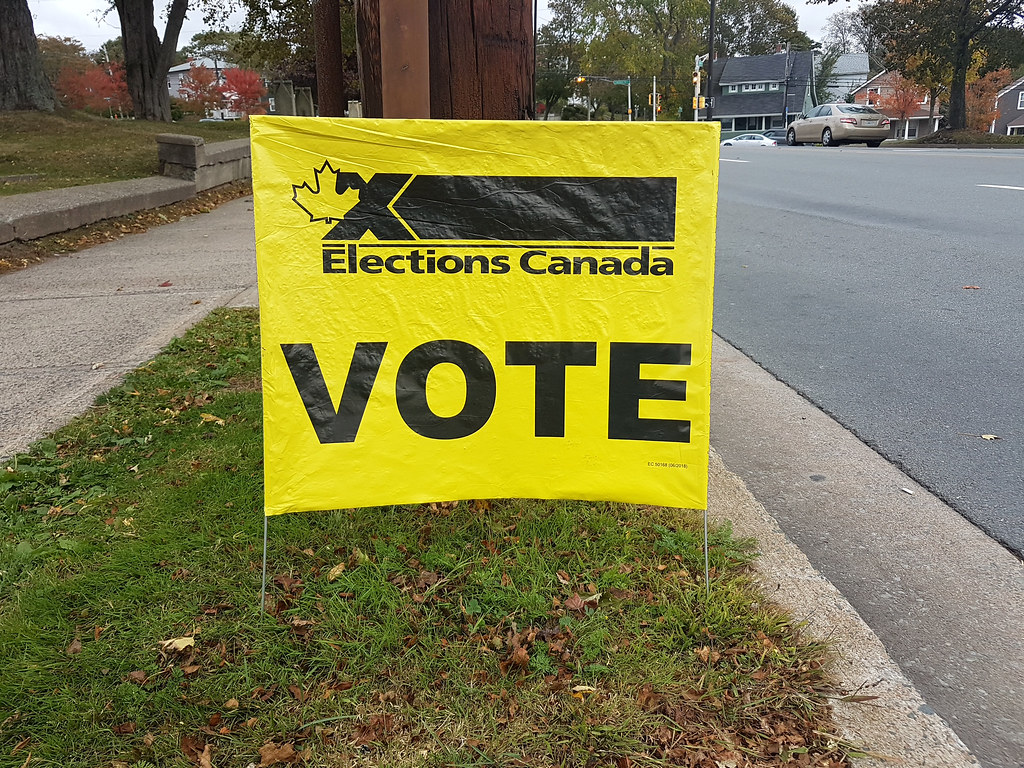
“2019 Canadian federal election – VOTE” by Indrid__Cold is licensed under CC BY-SA 2.0

Apparently Justin Trudeau thinks that the best use of the nation’s time as we head into a Delta driven 4th wave of COVID is to have an election. Okay, I never thought he had any judgement and an election call at the moment would confirm that but here we are.

There are huge issues facing Canada. Unfettered immigration, useless but expensive carbon taxes, deficits to 2070, price inflation, real estate markets which have put housing in the luxury goods category, a stalled First Nations reconciliation process, the collapse of any number of energy projects, increased homelessness, opioid deaths, a health care system which seems incapable of dealing with even a fairly mild pandemic, senior care in a shambles where our elderly died in droves as much from neglect as COVID and on and on.

Judging from the Liberals activities in the run up to the election, while those issues get the occasional nod, the strategy seems to be to spend lots of money in seats the Libs either hold or would like to win. As to substance, the Libs seem very committed to “doing something” about climate change, keeping immigration levels up over 400,000 per year and not being racist. Unfortunately, this is also pretty much the substantive position of the Conservative Party. The CPC’s big selling point is getting rid of Justin and his gender balanced Cabinet of flakes.

Conservative leader Erin O’Toole (who also happens to be my local MP) seems to believe the only way he’s going to topple Trudeau and the liberals is by offering exactly the same policies but wrapped in false Tory blue instead of Liberal red. As far as I can tell, he’s the reddest of Red Tories to lead the party in decades (disclaimer: I’ve met O’Toole a few times and chatted about non-political topics … he seems a decent sort and he’s probably a good neighbour and an upstanding citizen in his private life). He’s certainly no Stephen Harper — and I wasn’t much of a Harper fan, but I’d strongly prefer Harper to O’Toole as Tory leader. I certainly don’t plan on voting for him, and unless the Libertarians scare up a candidate in my riding I’ll be voting PPC this time around:

You will notice I do not mention Max Bernier or the Peoples’ Party. I don’t because the PPC plays outside the consensus. The PPC and its supporters think that significant change is absolutely required and that issues like the deficit, immigration, economic development, First Nations policy, housing and health care need new thinking. […] In terms of seats and outcomes, while I would be delighted to see the PPC win a few seats, the real target for the PPC is the national and regional popular vote. Yes, I do know that does not matter electorally. After all, the CPC won the popular vote in the last federal election. (My own sense is that the Maverick Party has some chance of winning seats in Alberta and Saskatchewan which will be discussed in that subsequent post.)

Max and the PPC need to crack the 5% barrier this time out. If they can do that and Max can win in Beauce, they will have sent a huge message to the CPC. That message is important. Now, if Max and the PPC manage to cut through and beat the Greens – not an unrealistic goal – the message that there are real problems which need real solutions will go mainstream whether the gatekeepers like it or not.

There are really two elections coming up: the Tweedledum and Tweedledee, paid for media, horse race and a vote on whether Canada is a serious country.

August 9, 2021

The modern-day threat of being made an “unperson” is real and very dangerous

Sean Gabb explains why even libertarians need to consider the non-state power in the hands of corporations that can — and does — force people out of their jobs, their homes, and even deprive them of the ability to communicate or to access financial services merely for expressing unpopular opinions. As I said in a different venue, it’s a short step from “no fly lists” to “no eat lists”, especially when the enforcing entity is a nominally private organization:

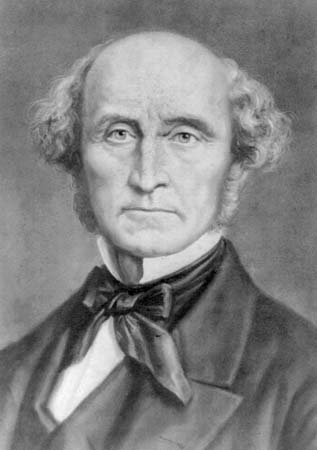
John Stuart Mill (1806-1873)

The old pressures to conform were wrong. So are the new. And they are wrong simply because they are pressures to conform. I find myself at last appreciating a part of Mill’s essay On Liberty for which I never used to have much time. Until recently, I would insist that the only real oppression was by the State: all else was the working of private choice. If the authorities fined a man £5 for having sex with another man, that was outrageous tyranny. If his tastes became public knowledge, and he was unable to find work, that was merely unfortunate. This is, I still believe, essentially true. Indeed, I could argue that, without a State having centralised and corporatised powers of discrimination that ought to be widely distributed, there would be no problem — or there would be a problem that was bearable. But these powers were centralised and corporatised a long time ago. They are now being used to achieve a uniformity of opinion outside the home in which the formal organs of compulsion have no obvious part. This is not the “tyranny of the majority” that worried Mill. I find it inconceivable that anything close to a majority could believe the insane drivel pouring from the regime media. Neither, though, is it the kind of oppression against which liberal bills of rights have traditionally been written. Because of this —

    when society is itself the tyrant …, its means of tyrannising are not restricted to the acts which it may do by the hands of its political functionaries. Society can and does execute its own mandates: and if it issues wrong mandates instead of right, or any mandates at all in things with which it ought not to meddle, it practises a social tyranny more formidable than many kinds of political oppression, since, though not usually upheld by such extreme penalties, it leaves fewer means of escape, penetrating much more deeply into the details of life, and enslaving the soul itself. Protection, therefore, against the tyranny of the magistrate is not enough: there needs protection also against the tyranny of the prevailing opinion and feeling; against the tendency of society to impose, by other means than civil penalties, its own ideas and practices as rules of conduct on those who dissent from them …

    (J.S. Mill On Liberty, 1859, “Introductory“)

We need protection indeed. But the protection we need is not yet another law telling the police to leave dissidents alone. We already have a stack of these, and they are protections against a threat that largely does not exist. The answer, I suggest, is an amendment to the anti-discrimination laws to outlaw discrimination on the grounds of what may be loosely called political opinion.

I say hardly anyone read my original essay. Sadly, most of those who did read it stand in the more wooden reaches of the libertarian movement, and these set up a cry that I had become a Communist. I was suggesting that private organisations should be coerced in their choices of whom and whom not to employ, and even in their choices of customer and supplier. I had abandoned the non-aggression principle. Here, briefly expressed, is my answer to these claims.

I run the Centre for Ancient Studies. This provides a range of tuition services in Greek and Latin. It is a sole tradership. As such, I reserve the unconditional right to decide what services I offer and to whom. If I dislike the colour of your face, or the status of your foreskin, or your tastes in love, or anything else that I may think relevant, it should be my right not to do business with you. It may be that only a fool turns away customers with money to spend, and I am not that sort of a fool. Even so, I do claim at least the theoretical right, and I ground it on my right to do as I please with my own. But I claim these rights as a human individual. A limited company is not a human individual. Whatever entrepreneurship may exist in them, these companies are artificial persons and creatures of the State. Their owners have the privilege of limited liability. That is, they have the right, in the event of insolvency, not to pay the debts of a company if these are greater than the assets of the company. If this were not a valuable right, there would not be so many limited companies. There are almost no large companies, and none lasting more than a single generation, that do not have limited liability.

This being so, limited companies benefit from a grant of privilege from the State, and are legitimate subjects of regulation by the State for as long as they are receipt of this privilege. No doubt, some forms of state regulation are bad in their objects, or bad as regards the means to their objects. But regulation is not in itself an aggression by the State. It follows that, whether or not we can get it, libertarians should not feel barred from demanding laws to prevent limited companies from discriminating against their employees on the grounds of political opinion, and to require them to do business with customers and suppliers regardless of political opinion.

I appreciate that I am asking for more than the regulation of limited companies. The anti-discrimination laws we have make no distinction between incorporated and unincorporated associations. Even so, the extension of these laws to cover political opinion would mainly affect only the larger limited companies. At the same time, there is an obvious and overriding public interest in the protection of political opinion. People are now scared to speak their minds. Whether intended or just revealed, this is part of the strategy. The reason why the collapse of both freedom and tradition is gathering pace is because no one dares stand up and protest. In the absence of protest, everything will carry on as it is. Given a restored right of protest, there is a chance of stopping the collapse. The only way to lift the blanket of fear that now lies over all but approved opinion is somehow or other to get a law making it clear that no one who speaks his mind can be loaded with shadow punishments.

“Somehow or other!” In a sense, I am making a fool of myself. I am asking the politicians to make a law against what they themselves may not be doing, but that has no effect on their main reason for being in politics, which is to fill their pockets. I am asking them to take on the entire mass of the non-elected Establishment. I am asking a lot of these people. On the other hand, the politicians still need to be elected, and that was the weak point in the Establishment’s plan to stay in the European Union. We had to spend four years voting and revoting, but we did eventually get what we wanted. It is conceivable that, if enough of us call loudly enough for protection, some kind of protection will be granted.

Short of that, we are lost.

L. Neil Smith – “[P]ut not thy trust in would-be princes”

Filed under: Liberty, Politics, USA — Tags: , , , — Nicholas @ 03:00

In the latest Libertarian Enterprise, L. Neil Smith recounts the sad record of US political parties who claim to support causes but uniformly shrink from actual support of those causes or their advocates:

A late newspaper columnist named Sam Francis (ultimately denounced by the left as a racist, of course) once said that America is ruled by an Evil party (the Democrats) and a Stupid party (the Republicans). To “stupid”, I would rush to add “cowardly”: when the GOP finally got a leader with a spine and testicles and guts (extremely rare qualities among Republicans), they were so terrified of of the man that they betrayed and abandoned him. A third political party, the Libertarians, seems determined to be even more spineless, balless, and gutless; they have specialized for years in nominating con-men and crooks for President.

They also don’t seem to know who their friends are, or how to treat them when they’ve found them. A case in point is one Norma Jean Almadovar, a former police officer and professional sex-worker who wanted to advance the Libertarian Party’s cause and recognition. The party that had always claimed it wanted to legalize prostitution was embarrassed to be confronted by the beliefs they claimed to advocate, and froze her out.

Now the once-admirable conservative youth organization Turning Point USA has faced an almost identical “crisis” and has failed almost identically. The Internet pornography-star Brandi Love (look her up), was originally scheduled to speak at their recent convention — against sex-work — but she was suddenly disinvited and chucked out into the cold, just like Norma Jean. Words like “graceless”, “churlish”, petty, “mean”,and “pusillanimous” come immediately to mind. It appears that competition has worked just as Adam Smith predicted. TPUSA is just as cowardlly and stupid as the LP.

Years ago, I took it on myself to write to Norma Jean to tell her how deeply ashamed I was of the Libertarian Party; it was just one of many reasons that I eventually left the party. Now I’m writing this little ditty in the faint hope that Brandi (whose real name is Tracey Lynn Livermore) will see it. I mean to tell her the same thing about Republicans that’s true of the Libertarians. Sorry sweetie, put not thy trust in would-be princes.

There was a movie, some years ago (it was about police corruption; I don’t remember anything else about it), where the phrase “you’ve lost the meaning” recurred several times. The Libertaran Party and the GOP lost whatever meaning they had long, long ago. Unfortunately, the Marxists, Stalinists, and Maoists we’re up against never lose their meaning. To quote another movie (Die Hard) they want to kill you and cook you and eat you. Not necessarily in that order.

QotD: Leonid Brezhnev and his mother

Filed under: China, Humour, Politics, Quotations, Russia — Tags: , , — Nicholas @ 01:00

In China, The Communist Party’s Latest, Unlikely Target: Young Marxists. “Young people who belong to Marxist groups have recently become the unlikely targets of a state crackdown due to their zeal to help educate and mobilize China’s working class to fight for their rights. The conflict has exposed a paradox between a party founded on Marxist principles and the very young people it has tasked with carrying those principles out.”

It’s not really a paradox. Communism is just a con. When the true believers get in the way of the con, they have to be shut up.

The old Soviet joke went like this: General Secretary Brezhnev shows his mother his palatial apartment in Moscow, his fancy dacha in the countryside, his chauffer-driven limousine, his personal helicopter, etc. and says “See mom, I’ve really made it. Aren’t you proud?”

“Very much so,” she says. “But I’m worried, too.”

“What are you worried about?” asks Brezhnev.

“Well, Leonid — what if the communists come back?”

Glenn Reynolds, “This Reminds Me Of The Old Soviet Joke About Leonid Brezhnev And His Mother”, Instapundit, 2018-11-24.

August 4, 2021

Canadian tourist dollars are helping keep Cuba’s struggling economy afloat

Filed under: Americas, Cancon, Economics, Politics — Tags: , , , , , — Nicholas @ 03:00

In Tuesday’s NP Platformed newsletter, Colby Cosh praises a CBC News (!!!) article on the massive impact of purely Canadian tourist income on Cuba:

A billboard in Havana, showing Camilo Cienfuegos, Ernesto “Che” Guevara, and Fidel Castro, 4 November 2014.
Photo attributed to Tumpatemcla~commonswiki via Wikimedia Commons.

NP Platformed returns today with that rarest of things in the National Post: an absolutely unironic recommendation to read a CBC News report. The article in question comes from Evan Dyer, and it’s headlined: “How Canadian Tourism Sustains Cuba’s Army And One-Party State“. And it is, we have to confess, a masterpiece of precision. We appreciate the small, uncomfortable barb, for example, concealed in this phrase: “in normal years far more Canadians enter and leave Cuba than citizens of any other country — including Cuba itself.”

Why is Canada a quintessential source of the tourism dollars that flow directly to the Cuban army, or in some cases to partnerships between foreign hospitality providers (like Toronto’s Sunwing Travel Group) and the Cuban army? Last month the world was reminded by Cuban protesters how fragile and miserable the communist island’s economy really is. As people stormed into the streets pleading for food and medicine, sympathizers abroad continued to sing from their moth-eaten hymnal and blame America’s long-standing trade embargo (which allows even American citizens and companies to sell, wait for it, food and medicine to Cuba).

And yet, within Canada, there is no sign of any social stigma attaching to Cuban travel. Perhaps it’s because Latin America is one huge undifferentiated wad in our minds, and if we began to get fussy about the governments of various Caribbean countries (most of which let people leave if they like), we might be forced to … we dunno, winter in Costa Rica or Bermuda or someplace weird like that. Cuba can’t find the cash to keep a fresh coat of paint on a hospital, but the empire of affordable resorts and jineterismo continues to expand. Some of you helped build it.

There is nothing new about this — except the obvious willingness of ordinary Cubans to risk wounds and death to protest against their communist rulers, as Michael Totten reported more than seven years ago:

Cubans in the hotel industry see how foreigners live. The government can’t hide it without shutting the hotels down entirely, and it can’t do that because it needs the money. I changed a few hundred American dollars into convertible pesos at the front desk. The woman at the counter didn’t blink when I handed over my cash — she does this all day — but when she first got the job, it must have been shattering to make such an exchange. That’s why the regime wants to keep foreigners and locals apart.

Tourists tip waiters, taxi drivers, tour guides, and chambermaids in hard currency, and to stave off a revolt from these people, the government lets them keep the additional money, so they’re “rich” compared with everyone else. In fact, they’re an elite class enjoying privileges — enough income to afford a cell phone, go out to restaurants and bars, log on to the Internet once in a while — that ordinary Cubans can’t even dream of. I asked a few people how much chambermaids earn in tips, partly so that I would know how much to leave on my dresser and also to get an idea of just how crazy Cuban economics are. Supposedly, the maids get about $1 per day for each room. If they clean an average of 30 rooms a day and work five days a week, they’ll bring in $600 a month — 30 times what everyone else gets. “All animals are equal,” George Orwell wrote in Animal Farm, his allegory of Stalinism, “but some animals are more equal than others.” Only in the funhouse of a Communist country is the cleaning lady rich compared with the lawyer. Yet elite Cubans are impoverished compared with the middle class and even the poor outside Cuba.

August 1, 2021

Christopher Hitchens on George Orwell

DailyHitchens
Published 22 Jan 2010

Aug 7, 2009. Christopher Hitchens talks with EconTalk host Russ Roberts about George Orwell. Drawing on his book Why Orwell Matters, Hitchens talks about Orwell’s opposition to imperialism, fascism, and Stalinism, his moral courage, and his devotion to language. Along the way, Hitchens makes the case for why Orwell matters. For more videos, updates and info on Christopher Hitchens, please visit http://www.dailyhitchens.com

July 27, 2021

Kurt Schlicter on the gimps of the White House press corps

Filed under: Government, Media, Politics, USA — Tags: , , , , , , — Nicholas @ 05:00

At TownHall, Kurt Schlicter expresses his disregard for the media who are supposed to be covering the White House and are voluntarily muzzling themselves and acting more like the ministry of propaganda than the free press. At least in Canada, they have the excuse that they’re paid prostitutes for whatever their federal pimps want them to say … in the United States that’s not (yet) the case:

You gotta love the lib reporters meekly accepting the delicious iron discipline of black-clad Mistress Psaki as she demands “Why do you need to have that information?” when asked about the number of infectos in the petri dish that is the * White House. The only way that kink-fest could have been more on the nose with regard to who our esteemed journalismers actually are is if her severe black outfit was vinyl. Apparently, getting flogged by the Democrat dominatrix turns their collective crank because they just took it. They always just take it. And our Fourth Estate will eagerly beg for more.

Now, it’s not even the gross double standard at play here that’s significant – imagine the fussy fury of the lib-simps if one of Trump’s vanilla spokespeople publicly abused them like that. We’ve learned that the lib-press is immune to shame, at least the kind that comes from having their rank hypocrisy exposed by conservatives. No, it’s that when their Dem domme cracks the whip, they just take it, meekly, obediently, like the groveling submissives they are.

Someday, someone will look back on this pathetic abdication of the media’s dignity and write a history of how the ink-stained wretches of the past became the craven conformists of today, and how now they revel in their own subjugation. Call it 50 Shades of the Gray Lady; when you read the hot scene in the forbidden White House press playroom at page 247, you’ll want to draw a warm bubble bath, light a lavender-scented candle, and pour yourself a goblet of Trader Joe’s screw-top chardonnay. Grrrrrrrr.

Imagine being these people. You can’t? Okay, then take a shot of Dickel Rye and try again to imagine being these people. They all grew up wanting to be the crusading Woodward and/or Bernstein – who themselves were less ace reporters than eager conduits for a disgruntled bureaucrat hack who exploited the callow correspondents to settle his personal scores – and instead they grew up to be the Gimp in the less interesting version of Pulp Fiction that is the DC milieu.

They aren’t breaking stories. They aren’t uncovering wrongdoing. They certainly are not comforting the afflicted or afflicting the comfortable. They are the ruling caste’s janitors. They are drones, thralls to their elite masters, marching in grim conformity in step to the official narrative, never complaining, never questioning, never dissenting. These are licensed, registered, regime journalists.

John McWhorter on “antiracism” in theory and practice at the University of California

Filed under: Education, Politics, USA — Tags: , , — Nicholas @ 03:00

John McWhorter doesn’t just comment on this issue from mere distant concern, because he was working at UC Berkeley and watched it happen before his eyes:

John McWhorter’s Twitter thumbnail image

When I taught at UC Berkeley in the 1990s, it was an open secret that there was a two-tier undergraduate student body. Namely, black and Latino students tended to be considerably less prepared for the workload than white and Asian students.

No one talked about it openly, but plenty attested to it when they were sure the wall didn’t have ears, and to notice it was not racist – it was simple fact. Of course there were weak white and Asian students; of course there were excellent black and Latino students. But a tendency was unmistakable. It was painfully obvious that brown students were admitted according to very different standards than white and Asian ones.

Proposition 209 barred racial preferences of that kind in the UC system as of 1998, and of course, fewer brown students were admitted to the flagship schools Berkeley and UCLA after that. There were still plenty of brown students – the “resegregation” so many furiously predicted never happened. But not as many as before. And there has remained, for almost a quarter century now, a contingent who have never gotten over thinking UC would be better by going back to the way it was.

First there was the addition of a “hardship” bonus to the admissions procedure, with standards relaxed for applicants who could attest to having faced obstacles to achievement such as the death of a parent or serious illness. Formally this was supposed to apply to kids of all races. But immediately evaluators started weighting black and Latino hardship heavier than that suffered by white and Asian kids, as in rejecting an Asian applicant who had gone through the same kinds of hardship as a Latino one who was admitted.

I criticized this in the media, and will never forget when the suits assigned a kind, academically accomplished administrator to take me to lunch to “talk to me”. The poor man did his duty and … sat there lying to me. I genuinely felt sorry for him. But this showed how impenetrably committed to antiracism – or at least what they think is antiracism – these admissions officials are.

But even this kind of thing hasn’t been able to return Berkeley and UCLA to the good old days of having a “representative” number of brown students (apparently “representative” means in lockstep with their proportion of the state population). The problem is that pesky SAT, and at last, UC has gotten rid of it. The SAT will no longer be used to evaluate students for admission or even for scholarships.

A lot of people must have clinked their glasses of Pinot over this. But what they’ve done is not antiracist at all.

July 25, 2021

QotD: The Two Rules of Modern Journalism

Filed under: Humour, Media, Politics, Quotations — Tags: , , , , — Nicholas @ 01:00

RULE # 1: Because journalists are required to be open-minded, exercise independence of spirit, and display a healthy amount of skepticism, the words and deeds of politicians, leaders, and the powerful — as well as those of regular citizens being interviewed — must constantly be questioned, second-guessed, doubted, fact-checked, challenged, and, more often than not, interrupted (more or less politely).

RULE # 2: Rule # 1 only applies to Republicans.

(And to anybody leaning conservative.)

For Democrats and leftists, the typical query is more along the lines of “pray enlighten us to your glorious plans for fundamentally transforming the United States of America (we will be quiet now).” (Close second: “kindly tell us how much people have suffered, and are still suffering, in this dreadful country of ours.”)

Erik, “The Two Rules of Modern Journalism”, ¡No Pasarán!, 2021-04-16.

July 24, 2021

Boris Johnson as a character-brought-to-life from Evelyn Waugh’s Scoop

Filed under: Books, Britain, Media, Politics — Tags: , — Nicholas @ 03:00

In The Critic, Robert Hutton explains why so many members of the British press find Waugh’s satire of their trade so compelling:

Boris Johnson, Secretary of State for Foreign and Commonwealth Affairs at an informal meeting of the Foreign Affairs Council on 15 February 2018.
Photo by Velislav Nikolov via Wikimedia Commons.

For a British reporter, Scoop is the holy text of the job. One of the enduring mysteries of journalism is that a trade which employs large numbers of skilled writers, and puts them into interesting situations every day, has been the subject of so few really good novels. Scoop was written as satire, but eight decades after it was published, and after the industry has gone through two technological revolutions, it remains the best description of UK journalistic life.

While parts of the job have changed — copy is no longer filed in an abbreviated telegramese to reduce transmission costs — much remains the same. Anxious newspaper executives still live in terror of capricious proprietors. Reporters still enjoy a strange fellowship of simultaneous competition and cooperation. Entertaining readers remains as important as informing them.

So how does the current British PM fit into all of this? Well, Boris had been a journalist:

Which brings us to Boris Johnson. As well as being Britain’s most successful politician, the prime minister has long been one of the country’s highest-paid journalists, a job he did entirely in the Scoop mould. His sympathetic biographer, Andrew Gimson, describes how, posted to Brussels, Johnson delighted in producing stories that were more entertaining than accurate. It was not that he was opposed to writing accurate stories, but he didn’t see it as in any way essential.

The Scoop character Johnson most resembles isn’t the hero — Boot is too naïve, his reports too close to reality. Nor is the press corps regulars, Corker, Shumble, Whelper and Pigge, who huddle in the same hotel, lest they will be beaten on a story. Johnson, both as journalist and politician, has generally preferred to hunt alone. We must look to the man Boot replaced at the Beast, foreign correspondent Sir Jocelyn Hitchcock.

Like Johnson, who was hazy on the outcome of the Battle of Stalingrad, Sir Jocelyn is more confident than he should be about history (“He was wrong about the Battle of Hastings,” says Lord Copper. “It was 1066. I looked it up”). He hides in his hotel room before filing an entirely imaginary interview — something else for which Johnson has form. Sir Jocelyn was, pleasingly, modelled on Sir Percival Phillips, a correspondent for the Daily Telegraph, which would later employ Johnson.

Sir Jocelyn’s fabrications didn’t hold him back, and Johnson’s propelled him to the front rank of journalism, then into politics, where he exhibits the same behaviour: the pursuit of a higher “truth” unburdened by facts, the deadline mentality, the reluctance to correct mistakes, the assumption that someone else should pick up the bill. Johnson was neither the kind of journalist nor a prime minister who would read a study on, say, pandemic preparedness. A leaked document from his first months in the job showed him describing Cameron as a “girly swot” for wanting to show that MPs were hard at work.

July 23, 2021

QotD: Cultural Marxism includes a form of reverse Nazism

Filed under: Germany, History, Politics, Quotations — Tags: , , , , — Nicholas @ 01:00

While the neo-Marxism (or cultural Marxism, as some call it) is same shit, different assholes, it also represents a sort of a reverse Nazism. Where under the original Nazism, the Aryans were the master race of supermen, with all the other races inferior, and some (like Jews) not only inferior but positively dangerous and evil, now it’s the “whiteness” that is irredeemably tainted and the source of everything that is wrong with the world. If that sort of a Manichean world-view filled with hateful racialist (and increasingly eliminationist) rhetoric worries you, there is no need to – after all, the people who hold such opinions are “anti-fascists”.

There is nothing new under the sun, just the same old zombie ideas that refuse to die. Whether the old or new Marxism, the activists have the same simplistic, blinkered view of life and the same radical solutions. The irony in both cases is that their ideology reaches its peak popularity after the genuine grievances that gave rise to it in the first place have by and large been confronted and addressed. No matter. In the twentieth century, Marxists failed to replace liberal capitalist democracy with their utopia; in the twenty-first, they are trying their luck again. This time it will be “real” socialism, rainbows and unicorns and happily ever after. This time it will be different.

Arthur Chrenkoff, “Why everything is racist”, Daily Chrenk, 2021-04-13.

« Newer PostsOlder Posts »

Powered by WordPress