
Published on 2 Mar 2017
The new Austro-Hungarian Kaiser is not happy about his Empire’s dependence on the German ally. And he is also not happy about their own military decisions and over the winter has worked to replace key positions with his own men. The last step in that process is convincing Conrad von Hötzendorf to take a position on the Italian Front. At the same time, French Commander Robert Nivelle is trying to get control over the British Armies on the Western Front and the Zimmermann Telegram is released to the press.
March 3, 2017
Conrad Loses His Job – Nivelle’s Coup I THE GREAT WAR Week 136
Comments Off on Conrad Loses His Job – Nivelle’s Coup I THE GREAT WAR Week 136
March 2, 2017
Possible end-game for the British nuclear deterrent
Charles Stross speculates on a few ways that Il Donalduce could trigger the end of Britain’s nuclear-armed ballistic missile submarines:
Working hypothesis #1: Donald Trump is an agent of influence of Moscow. Less alarmingly: Putin’s people have got blackmail material on the current President and this explains his willingness to pursue policies favourable to the Kremlin. Russian foreign policy is no longer ideologically dominated by communism, but focusses on narrow Russian interests as a regional hegemonic power and primary oil and gas exporter.
Clearly, it is not in Russia’s geopolitical interest to allow a small, belligerent neighbor to point strategic nuclear missiles at Moscow. But this neighbor’s nuclear capability has a single point of failure in the shape of the resupply arrangements under the 1958 UK-USA Agreement. Donald Trump has made no bones about his willingness to renegotiate existing treaties in the USA’s favor, and has indicated that he wants to modernise and expand the US strategic nuclear capability. Existing nuclear weapons modernization programs make the first goal pointless (thanks, Obama!) but he might plausibly try to withdraw British access to Trident D-5 in order to justify commissioning four new US Navy SSBNs to carry the same missiles and warheads.
(Yes, this would break the “special relationship” between the USA and the UK for good — but remember, this is Donald Trump we’re talking about: the original diplomatic bull in a china shop who decapitated the state department in his first month in office.)
Trump could present this as delivering on his promise to expand the US nuclear capability, while handing his buddy a gift-wrapped geopolitical easter egg.
Working hypothesis #2: Let us suppose that Donald Trump isn’t a Russian agent of influence. He might still withdraw, or threaten, British access to Trident as a negotiation lever in search of a better trade deal with the UK, when Theresa May or her successor comes cap-in-hand to Washington DC in the wake of Brexit. It’s a clear negative sum game for the British negotiating side — you can have a nuclear deterrent, or a slightly less unpalatable trade deal, but not both.
In this scenario, Trump wouldn’t be following any geopolitical agenda; he’d just be using the British Trident renewal program as a handy stick to beat an opponent with, because Trump doesn’t understand allies: he only understands supporters and enemies.
As for how fast the British Trident force might go away …
Missiles don’t have an indefinite shelf-life: they need regular servicing and maintenance. By abrogating the 1958 agreement, or banning Royal Navy warships from retrieving or delivering UGM-133s from the common stockpile at King’s Bay, POTUS could rely on the currently-loaded missiles becoming unreliable or unsafe to launch within a relatively short period of time — enough for trade negotiations, perhaps, but too short to design and procure even a temporary replacement. It’s unlikely that French M51 missiles could be carried aboard Dreadnought-class SSBNs without major design changes to the submarines, even if they were a politically viable replacement (which, in the wake of Brexit, they might well not be).
Comments Off on Possible end-game for the British nuclear deterrent
March 1, 2017
Yes Prime Minister – Bernard Woolley on defence capabilities
Uploaded on 20 Jul 2010
Comments Off on Yes Prime Minister – Bernard Woolley on defence capabilities
February 28, 2017
Outbreak of World War 1 – A Banker’s Perspective I THE GREAT WAR Special
Published on 27 Feb 2017
The classic narrative of the outbreak of World War 1 is that everyone saw it coming and was awaiting it with patriotic fervor. But studying the people that profited most from a war, the bankers, that idea is definitely challenged.
Comments Off on Outbreak of World War 1 – A Banker’s Perspective I THE GREAT WAR Special
Remembering the Royal Navy’s humiliation at the Battle of Chatham
Apparently the Royal Navy’s long unbroken tradition of glorious victories had a few setbacks after all, like the 1667 Battle of Chatham, which a flotilla of Dutch sailing vessels will be commemorating this June:
The Dutch are preparing to invade English seas with a fleet of 90 vessels after a previous expedition boarded the Royal Navy’s flagship and stole the Royal Coat of Arms from her.
In a celebration of Dutch Admiral De Ruyter’s 1667 raid on Chatham Dockyard, which resulted in English flagship HMS Royal Charles being boarded and ransacked by Dutch sailors, their modern-day civilian counterparts are planning a memorial cruise to Chatham.
The raid is known in British naval history as the Battle of Chatham, and formed part of the endless naval scrapping of the middle of the last millennium which eventually forged Britain’s 19th century dominance of the high seas.
In the battle, the numerically superior Dutch fleet sailed right up the River Medway into Chatham, Kent, and generally caused mayhem amongst the laid-up English warships moored there. The English fleet, starved of money and manpower, could not afford to put to sea in numbers despite wreaking havoc on the Dutch in the previous year.
Amongst other booty, the Dutch made off with the English royal coat of arms from fleet flagship HMS Royal Charles, which adorned the warship’s stern. The ornate carving can be viewed in the Netherlands’ Rijksmuseum today.
Comments Off on Remembering the Royal Navy’s humiliation at the Battle of Chatham
February 26, 2017
Disc Grenade – Camel Corps – Austro-Hungarian Heroes I OUT OF THE TRENCHES
Published on 25 Feb 2017
Indy sits in a French Chair this time and answers your questions about World War 1. This week we talk about the German disc grenades and the heroes that were celebrated in Austria-Hungary.
Comments Off on Disc Grenade – Camel Corps – Austro-Hungarian Heroes I OUT OF THE TRENCHES
February 25, 2017
Updating the junior rank structure of the Canadian Army
Earlier this week, Ted Campbell offered his suggestions on how to address some issues he notes in the lower ranks of the Canadian Army, based on both Canadian and allied armies’ experiences:
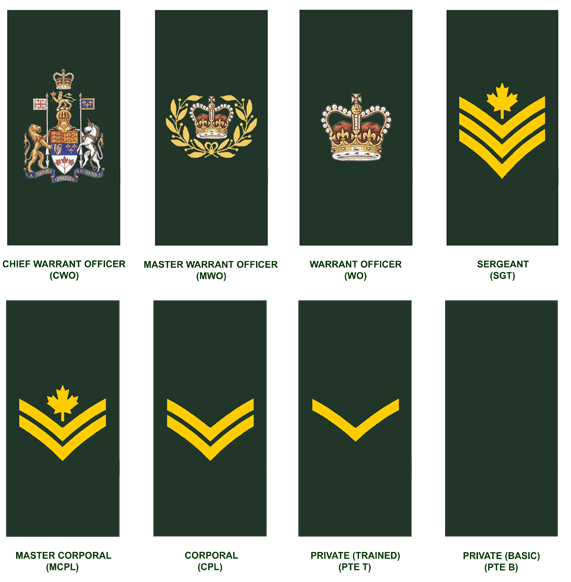
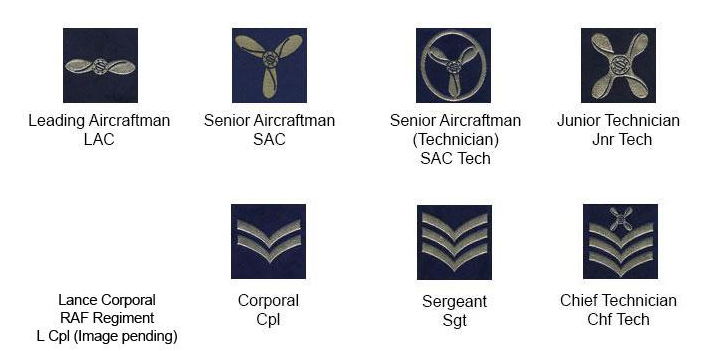
There was always a problem with the old (1850s to 1960s) Army rank structure: there was some need to tie rank to trade, but not as tightly, many military people believe, as […] in the Canadian Armed Forces today. Some branches (corps) used to have fairly strict rules; in the old (1960s) Royal Canadian Corps of Signals, for example, the technicians, amongst the very highest paid soldiers in the whole army, could not attend the long, difficult and expensive, advanced (3rd of 4 levels) technician course until they had passed the junior leadership course and they could not attempt the senior leadership course until they had passed the advanced technician’s course, and so on. But that system always excluded some good people. There were, and still are today, many people who can be excellent, even outstanding technicians but cannot lead or manage soldiers. The United States Army addressed this same issue by creating the “specialist” grouping which allowed soldiers to “advance” through part of the pay system ~ higher salaries for technical skills ~ but not the other ~ even higher salaries for leadership. In past years there were many different (paid) grades of specialist but now it is a “rank” equivalent to the US Army corporal for soldiers who have not yet or cannot pass the first level junior leader course. The British Royal Air Force has a similar and, in my opinion, better system …
… which recognizes both technical skill and leadership requirements.
In my opinion we should undo much of what Mr Hellyer did, while thanking him for addressing the pay problem, and restore the junior leadership positions, especially the tank and rifle section commanders, to the real, and younger, junior leaders: those in the rank of master corporal. This will restore the senior leaders to their traditional roles as “guides” and mentors to the junior leaders: both to the corporals and the lieutenants. The ranks of sergeant ~ in several “grades” and warrant officer are often, and very correctly, referred to as the backbone or even the “heart and soul” of the army. That is partly because, traditionally, they stood ever so slightly “aloof” from the rank and file. The lieutenants gave orders, advised, coached and mentored by the sergeants, to the corporals who, then, directly led the riflemen but were also mentored by the sergeants. It was, to repeat the words I used to describe the US constitution, “a fine and finely balanced system;” we upset the balance 50 years ago to solve a pay problem. We should, also, adapt the RAF’s aircraftman/technician to our own needs to allow some soldiers to advance “up” in their technical field (and be paid more) without becoming leaders (and being paid more for that, too).
To do that the Army will have to reform itself.
First, it will have to repose trust in its junior leaders; that’s something that will be hard to do, even after the Army, of absolute necessity, makes junior leader training ~ making privates into corporals and civilians into second lieutenants ~ its highest priority and the job it assigns to its very, very best senior leaders.
Second, it will have to restore the “sergeant’s mess” to its traditional pride of place in the Army by giving the sergeants and warrant officers back the senior supervisory and management duties that have, in far too many cases, migrated “upwards” until they are now done by captains and even majors. Once again, it is a trust issue and we live in a world where many of the most senior leaders are timid because they have been “burned” too often, by their own superiors, when a subordinate makes a mistake. Mistakes are part of human nature; they have to be corrected, forgiven, in most cases, and, very often, used as teaching aids.
Third, the government will need to revise the pay system so that junior leaders are paid more and, meanwhile, the gap between corporal and master corporal and sergeant is maintained.
Fourth, promotions, in the Army, at least, to corporal and to captain must not be automatic. Promotion to corporal must require that one pass a very tough junior leaders course; promotion from lieutenant to captain should be by examination.
But, doing these four things will, in my opinion, give the Army a firm foundation upon which to build and fight.
Comments Off on Updating the junior rank structure of the Canadian Army
February 24, 2017
Mechanised War In Mesopotamia – Toplica Uprising I THE GREAT WAR Week 135
Published on 23 Feb 2017
After the humiliating defeat at Kut last year, the British upped their game in Mesopotamia and this week 100 years ago the British Indian Army starts making gains towards Baghdad. In the occupied territories of Serbia the local population is rising up against the Bulgarian and Austro-Hungarian occupants and on the Western Front, the British make surprisingly easy progress against the German Army.
Comments Off on Mechanised War In Mesopotamia – Toplica Uprising I THE GREAT WAR Week 135
February 22, 2017
TEDxWarwick – Tim Harford – Management Lessons from the War in Iraq
Uploaded on 17 Mar 2011
Tim Harford is an economist who writes about economics theories behind our daily lives in books and as a Financial Times columnist. All of his books have been sold worldwide and widely translated, namely The Undercover Economist that has sold one million copies. He is the also only person who runs a problem page “Dear Economist” in Financial Times in which readers’ problems are answered with the thought-provoking economic ideas. Tim currently presents the BBC radio series More or Less and contributes regularly to other radio, TV programmes and publications. His talk in TEDxWarwick this year focuses on the similarities between the War in Iraq and the organisation’s top-down management.
About TEDx, x = independently organized event
In the spirit of ideas worth spreading, TEDx is a program of local, self-organized events that bring people together to share a TED-like experience. At a TEDx event, TEDTalks video and live speakers combine to spark deep discussion and connection in a small group. These local, self-organized events are branded TEDx, where x = independently organized TED event. The TED Conference provides general guidance for the TEDx program, but individual TEDx events are self-organized.* (*Subject to certain rules and regulations)
Interestingly, the name H.R. McMaster pops up a few times in this talk…
So who is this H.R. McMaster dude?
John Ringo strongly approves of the choice of Lt. Gen. H.R. McMaster for National Security Adviser:
McMaster for NSA.
Fuck. Yeah.
For those who don’t know much about McMaster, just check his wiki [https://en.wikipedia.org/wiki/H._R._McMaster] which isn’t all that ‘edited for lefty sensibilities.’
Short answer: Took his troop (company) in against a brigade of Republican Guard (about ten times his firepower) in Desert Storm and stomped them. In 23 minutes. And I mean Stomped. Them. Hard.
Won the Silver Star (very well deserved, there are arguments for DSC. Also later two bronze and a purple heart.)
In Iraq took over a ‘hot’ sector and turned it basically cold. (Then had it go hot when he left when the replacement unit didn’t use the same tactics.) Essentially created the tactics the Marines (under Mattis) later used to get the Al Najar tribes on our side. Which looked to actually be working right up until we pulled out and the place went to shit.
The Old Bull generals at the time hated him. He didn’t take their pronouncements of Olympian Superiority as Gospel. He wasn’t Cold War, zero defect, there’s-nothing-strategically-important enough for them. He was one of the new generation of officers who had been fighting various low-intensity mixed with high-intensity fights since the end of the Cold War. So they black balled him. (Refused to promote him to General.) Bush basically shoved him down their throat and at least partially broke the log-jam against officers with actual, you know, COMBAT EXPERIENCE making rank. (Was one of those big discussions back on boards like this at the time.)
Beloved by his troops. Well respected by his peers and superiors. Mind like a quantum physicist. Edetic memory. Universally curious.
Bright eyed intellectual warrior. Can tell you everything there is to know about the politics of any country on earth down to who’s who of the major players. (Something Trump desperately needs.) Great ‘out of the box’ thinker.
And his ‘high protein, low carb’ fruit salad makes Mattis’ balls shrivel up a little.
Q: If Rommel and McMaster went up against each other, same TOE, same level of training, same numbers, who wins?
A: God. Cause the Almighty would be breaking out the popcorn for that one.
Comments Off on So who is this H.R. McMaster dude?
February 21, 2017
Medical Treatment in World War 1 I THE GREAT WAR Special
Published on 20 Feb 2017
Some sources say that during the four years of World War 1, medicine and medical treatments advances more than during any other four year period in human history. The chances for a soldier to survive his injury were far greater in 1918 than in 1914.
Comments Off on Medical Treatment in World War 1 I THE GREAT WAR Special
HMS Queen Elizabeth to be commissioned in May
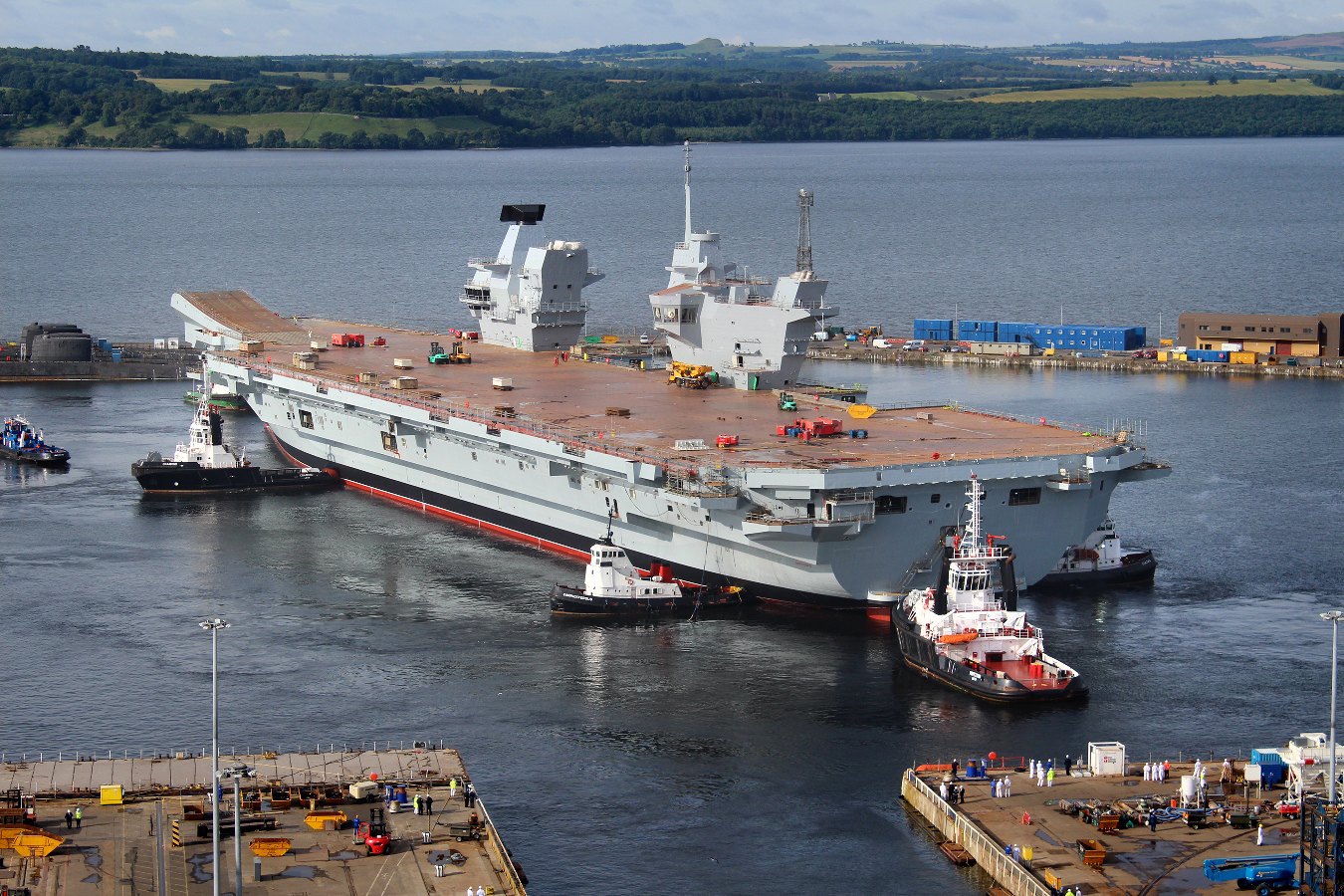
The Royal Navy’s largest ever warship HMS Queen Elizabeth is gently floated out of her dock for the first time in Rosyth, Scotland in July 2014. In an operation that started earlier that week, the dry dock in Rosyth near Edinburgh was flooded for the first time to allow the 65,000 tonne aircraft carrier to float. It then took only three hours to carefully manoeuvre HMS Queen Elizabeth out of the dock with just two metres clearance at either side and then berth her alongside a nearby jetty. Teams continued to outfit the ship and steadily bring her systems to life in preparation for sea trials in 2016. The dock she vacated will be used for final assembly of her sister ship, HMS Prince of Wales.
Source: Wikimedia.
The Royal Navy’s newest aircraft carrier is scheduled to be brought into commission in May this year:
The first new Royal Navy aircraft carrier in thirty years is nearing sea trials. After a brief absence from the world of fixed-wing naval aviation the Royal Navy’s brand new flattop HMS Queen Elizabeth and its sister ship, Prince of Wales, will soon sail the seas, their decks full of new F-35 Joint Strike Fighters. The result will be the most powerful “Senior Service” in generations.
The Royal Navy was one of the first naval warfare forces to explore the nascent world of naval aviation. HMS Argus, commissioned in September 1918, was arguably the first aircraft carrier with a full-length flight deck. The UK was one of the major aircraft carrier powers throughout World War II, and continued to operate carriers in the postwar period.
By 1982, the Royal Navy had committed to building three Invincible-class carriers. Somewhat scaled back from earlier ships, and dwarfed by the U.S. Navy’s Nimitz-class carriers, the Invincible class was more suited to antisubmarine warfare duties against the Soviet Navy, keeping the sea lines of communication between North America and Europe clear in the event of World War III. The Invincibles could sail with a complement of up to twenty-two aircraft, typically a mixture of Sea Harrier fighters and Sea King helicopters.
The 1982 Falklands War demonstrated the shortcomings of relying upon such small carriers. HMS Invincible, along with the older HMS Hermes, struggled to provide early warning and combat air patrol over the UK task force sent to reclaim the islands, and were unable to prevent Argentine air power from sinking six friendly warships and supply ships and damaging another nine.
In 2007, despite the general downturn in the size and scope of the navy, plans were announced in 2007 to construct two brand-new aircraft carriers. Each would be stocked with brand-new F-35 Joint Strike Fighters and helicopters, and would be up more than three times larger than their predecessors by displacement. The carriers, Queen Elizabeth and Prince of Wales, would be the largest warships ever built by the UK, bigger even than the World War II battleship HMS Vanguard.
Unfortunately, in order to free up funding for the new carriers the older ships had to be retired, and decommissioning of the Invincible class carriers and their Sea Harrier jets during the 2010s was a huge blow to the Fleet Air Arm. The three warships were broken up for scrap, and the remaining Harrier jets, which by now included RAF Harriers, were purchased by the U.S. Marines to provide spare parts for their own fleet of AV-8B Harriers.
Comments Off on HMS Queen Elizabeth to be commissioned in May
February 19, 2017
French Railway Guns – Physical Requirements For WW1 Pilots I OUT OF THE ETHER
Published on 18 Feb 2017
It’s time for another episode of Out Of The Ether – Indy reads the best and most insightful comments of recent weeks. This week we talk about French railway guns and the physical and mental requirements of World War 1 pilots.
Comments Off on French Railway Guns – Physical Requirements For WW1 Pilots I OUT OF THE ETHER
February 17, 2017
Russian Bombing On The Eastern Front – US Prisoners of War I THE GREAT WAR Week 134
Published on 16 Feb 2017
After breaking off diplomatic relations, the tensions between the US and Germany are still strong. This week the so called Yarrowdale prisoners become pawns in the power play between the great powers. At the same time, the Russian air force is bombing targets all over the north Eastern Front and little skirmishes happen on the overall quiet Western Front.
Comments Off on Russian Bombing On The Eastern Front – US Prisoners of War I THE GREAT WAR Week 134
Railways Of The Great War With Michael Portillo Part 1 A Railway War Begins
Published on 9 Feb 2015
In the run up to the 100 yr anniversary of the end of the First World War Michael Portillo travels across France and Belgium to find out the history of raiways of the past and present….
Comments Off on Railways Of The Great War With Michael Portillo Part 1 A Railway War Begins


