
Published on 27 Feb 2015
The second in a series of short films about some of the vehicles in our collection presented by The Tank Museum’s historian David Fletcher MBE.
The Carden Loyd Carrier or tankette: Designed by Sir John Carden and Captain Vivian Loyd this was a low cost, two-man Machine-Gun Carrier for infantry use. The company was taken over by Vickers-Armstrong in 1927 and the vehicle was mass-produced for the British Army in addition to a thriving export trade. Unpopular with the infantry, they were used mostly by the Royal Tank Corps as embryonic light tanks in the reconnaissance role.
March 24, 2017
David Fletcher’s Tank Chats #2: The Carden Loyd Carrier
Comments Off on David Fletcher’s Tank Chats #2: The Carden Loyd Carrier
March 22, 2017
The Backbone of Total War – Trains in WW1 I THE GREAT WAR Special
Published on 21 Mar 2017
Without trains, the modern armies of World War 1 were not able to move their troops en masse. Without trains, the soldiers at the front didn’t have food or ammunition and without trains, the soldiers wouldn’t make it to the nearest hospital. Trains were the backbone of the new, industrialised war of the 20th century.
Comments Off on The Backbone of Total War – Trains in WW1 I THE GREAT WAR Special
March 21, 2017
British Weapons of World War 1 feat. C&Rsenal I THE GREAT WAR Live Stream
Streamed live 9 hours ago
Othais’ channel: https://www.youtube.com/candrsenal
In our series about the rifles and pistols today, Othais got his hands on the standard issue rifles and pistols of the British Army in World War One.
Comments Off on British Weapons of World War 1 feat. C&Rsenal I THE GREAT WAR Live Stream
March 19, 2017
Crucified Soldier – RMS Olympic – Somme Cavalry I OUT OF THE TRENCHES
Published on 18 Mar 2017
Chair of Wisdom Time! This week we talk about the propaganda story of the crucified soldier and the RMS Olympic.
Comments Off on Crucified Soldier – RMS Olympic – Somme Cavalry I OUT OF THE TRENCHES
March 17, 2017
The Tsar Abdicates – Baghdad Falls I THE GREAT WAR Week 138
Published on 16 Mar 2017
The protests that emerged in Russia this week are growing stronger and the Tsar is increasingly isolated until even his generals are pushing for his abdication. And after 300 years of Romanov rule, Tsar Nicholai II abdicates and when his brother refuses to take up the throne, the dynasty is no more. Meanwhile in the Middle East, the British are taking Baghdad effectively seizing control over a large area.
Comments Off on The Tsar Abdicates – Baghdad Falls I THE GREAT WAR Week 138
March 15, 2017
Serbian Field Marshal Stepa Stepanovic I WHO DID WHAT IN WW1?
Published on 14 Mar 2017
Serbia’s turbulent history of the late 19th and early 20th century created some hard-boiled military leaders to the front lines of World War 1. One of these was Stepa Stepanovic – but he was not just hard boiled, he also stood with his country throughout the entire war which included the Serbian Exodus to Korfu.
Comments Off on Serbian Field Marshal Stepa Stepanovic I WHO DID WHAT IN WW1?
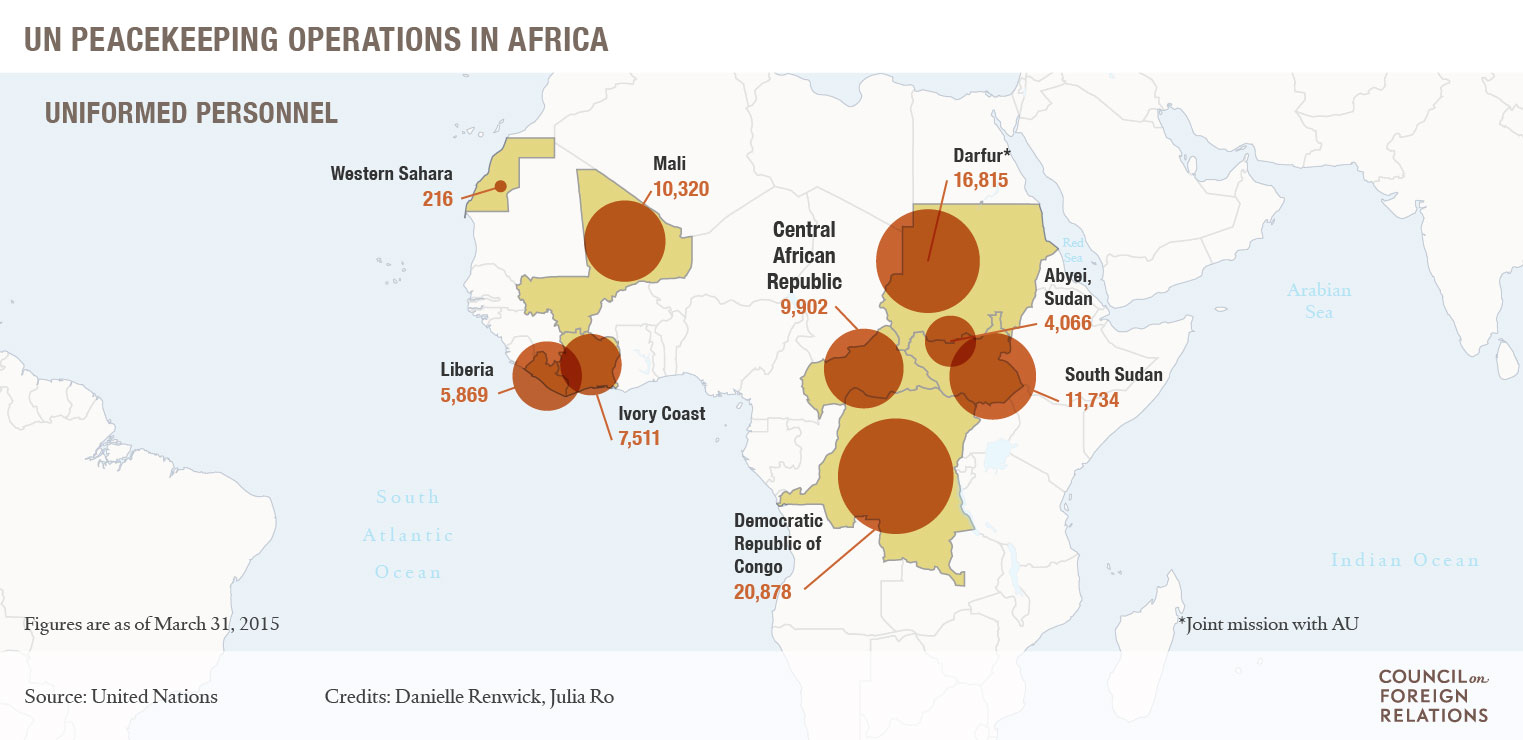
Sensible reasons to reject a Canadian peacekeeping mission in Africa
Ted Campbell explains why it would not be a good thing for Canada to send a peacekeeping force to Mali (or to anywhere else in Africa right now):
The Globe and Mail, in an editorial, asks the key question:
“Is there a Canadian national interest in sending troops to Mali?”I suggest that unless and until the Trudeau government can say, “yes,” and can explain that vital interest to most Canadians that sending Canadian soldiers off to Africa on a United Nations operation is problematical. “The Canadian Armed Forces shed blood and lost lives during the decade-long mission in Afghanistan,” the Globe‘s editorial says, “Sending them into a similar campaign in Mali may further Liberal political interests. But does it serve the national interest?“
Now, I believe that I can make a sensible, mid to long term case for Canada to be “engaged,” politically, economically and militarily in Africa:
- Africa will be, after Asia, the “next big deal” for economic growth, trade and, therefore, profits;
- Canada will want to be involved as a trusted friend when Africa is ready to “blossom” and have an economic “boom” of its own; and
- Despite Chinese and French incursions there are still plenty of opportunities for Canadian engagement.
In other words, we have interests in Africa; even, perhaps, in the mid to long term, we have vital interests, at that.
I cannot make a case for getting involved in any United Nations mission in Africa. I cannot, even with rose coloured glasses, see one single United Nations mission in Africa that is working, much less succeeding and doing some good.
I’m not opposed to the UN. In fact, I’m one of those who says that if it didn’t exist we’d have to invent it. The current UN is better than the old League of Nations, and some UN agencies, like the International Telecommunications Union, for example, do good work for the whole world and are, alone, worth our entire UN contribution, but we ask too much of the UN and it is neither well enough designed or led or organized or funded to do even a small percentage of what is asked of it. Peacekeeping is one of the things that the UN cannot do well in the 21st century. Peacekeeping was fine when it was ‘invented’ (circa 1948, by Ralph Bunche, and American and Brian Urquhart, a Brit, not by Lester Pearson in 1957, no matter what your ill-educated professors may have told you) but it could not be adapted to situations in which there is:
- No peace to be kept;
- A plethora of non-state actors who are not amenable to UN sanctions.
A few days ago I wrote about the risks involved in sending soldiers to Africa. The Globe and Mail‘s editorial just adds some more fuel to that fire.
Comments Off on Sensible reasons to reject a Canadian peacekeeping mission in Africa
March 14, 2017
British India During World War 1 I THE GREAT WAR Special
Published on 13 Mar 2017
India was part of the British Empire during World War 1 and it was of vital importance to the war effort. Resources, manufacturing power and over 1.3 million men that served in the Army meant a great price for India to pay during the war. But even before the conflict, the call for independence grew louder and louder.
Comments Off on British India During World War 1 I THE GREAT WAR Special
March 12, 2017
Camouflage Patterns – Funerary Practices – Prisoner Exchange I OUT OF THE TRENCHES
Published on 11 Mar 2017
Comments Off on Camouflage Patterns – Funerary Practices – Prisoner Exchange I OUT OF THE TRENCHES
March 11, 2017
QotD: US Army awards contract, losing bidder launches appeal (of course)
The Services should just acknowledge the reality of contracting anything in the seven-figure realm, and change initial award announcements to read: “The Initial Conditional Award of Contract XYZ is to Defense Conglomerate 1369. Work will commence after all Congressional Outraged Publicity-Seeking Posturing is exhausted and Butthurt Losing Contractor Challenges are adjudicated. We hope to run both those actions concurrently, and anticipate work will commence a minimum of 3-5 years behind schedule and costs grow at an exponential rate during this period, hence the budget supplemental is already in draft form for Newsies, Think Tanks, and Outraged Congresspersons to grind axes with.” Added caveat for this particular contract: “Additionally, a website has been established to collect all the comments from .40/.45 cal and steel-frame fanboyz to rant about How Stupid This Choice Is.”
John Donovan, posting to Facebook, 2017-02-28.
Comments Off on QotD: US Army awards contract, losing bidder launches appeal (of course)
March 10, 2017
The Russian February Revolution 1917 I THE GREAT WAR Week 137
Published on 9 Mar 2017
Food shortages, an overall desolate supply situation and great political turmoil make Russia ripe for revolution and this week 100 years ago, the people take to the streets. The US adopts a policy of armed neutrality.
Comments Off on The Russian February Revolution 1917 I THE GREAT WAR Week 137
March 8, 2017
History Of The Cossacks Until World War 1 I THE GREAT WAR Special
Published on 7 Mar 2017
The Cossacks are surrounded my myths and legends. For some they were the “Tsar’s dogs” for others they were more comparable to the cowboys of the Wild West. In any case, their history and culture is unique and is deeply intertwined with the rise and end of the Romanov dynasty. And that’s why we are taking a look further back than usual to introduce to the Cossacks.
Comments Off on History Of The Cossacks Until World War 1 I THE GREAT WAR Special
March 7, 2017
Russia Before the 1917 Revolution I THE GREAT WAR Special
Published on 6 Mar 2017
Russia’s history in the decades leading up to World War 1 where a time of great turmoil and social changes. The Romanov tsars held a tight grip on the country which remained an autocracy even though the people requested change. And by 1917, three years into World War 1, the people demanded change again.
Comments Off on Russia Before the 1917 Revolution I THE GREAT WAR Special
March 6, 2017
David Fletcher’s Tank Chats #1: The A13 Cruiser
Published on 13 Feb 2015
The first in a series of short films about some of the vehicles in our collection presented by The Tank Museum’s historian David Fletcher MBE.
The A13 was the first British tank to have Christie Suspension. With a top speed of 40 miles per hour, it was much faster than the German Panzers, and had one of the best guns of its time. Despite this, many were lost in the battle for France in 1940. They fared better in the desert when their speed enabled them to cut off and defeat a huge Italian Army at Beda Fomm in Libya.
Comments Off on David Fletcher’s Tank Chats #1: The A13 Cruiser
March 5, 2017
Liechtenstein, San Marino, Monaco and Andorra in WW1 – Live And Let Live I OUT OF THE TRENCHES
Published on 4 Mar 2017
Batman is answering your questions about World War 1, oddly enough. This week we talk about the European micro nations and about the quieter sectors on the Western Front.
Comments Off on Liechtenstein, San Marino, Monaco and Andorra in WW1 – Live And Let Live I OUT OF THE TRENCHES


