
Published on 18 Mar 2016
Probably the best German tank design of the Second World War.
The Panther was not as thickly armoured, nor as heavily armed, as tanks such as the Tiger but was probably a much more balanced design. It was one of the fastest German tanks, highly manoeuvrable and equipped with an accurate gun. Its worst defect was a propensity to catch fire if the engine backfired.
August 14, 2017
Tank Chats #16 Panther
Comments Off on Tank Chats #16 Panther
August 13, 2017
War-Weariness I THE GREAT WAR Summary Part 10
Published on 12 Aug 2017
In this special Recap Episode we summarize the events from May to July 1917. Two major Allied spring offensives at Arras and on the Aisne come to an end with mixed results. The Macedonian Front flares up again as does the 10th Battle of the Isonzo. Mutiny in the French army. A stunning British victory at the Battle of Messines. A vicious battle on the heights of Mount Ontigara. The first American troops are landing in France. July sees the great strides of the Kerensky offensive featuring the Russian Women´s Battalion of Death. A showdown between the Bolsheviks and the Provisional Government. The first usage of the dreaded Mustard Gas.
Comments Off on War-Weariness I THE GREAT WAR Summary Part 10
August 11, 2017
Despair Everywhere – Battle of Mărășești I THE GREAT WAR Week 159
Published on 10 Aug 2017
This week Russo-Romanian forces clash with the Central Power´s counteroffensive in the Second Battle of Oltuz. The failure of the Kerensky Offensive disheartens the Russian army and radicalizes the homefront. While the Bolsheviks were calling for “Peace, Bread and Land”, the new commander of the Russian army Lavr Kornilov strives to become a strong authoritarian figure for the political right. And the Battle of Passchendaele reveals a scarred, broken battlefield of mud and destroyed equipment. Despair is everywhere.
Comments Off on Despair Everywhere – Battle of Mărășești I THE GREAT WAR Week 159
August 9, 2017
The Falklands War – A War for Lost Glory I THE COLD WAR
Published on 1 Jul 2015
The Falklands War was based on an old colonial struggle between two former world powers. When the military Junta in Argentina decided to claim the Falkland Islands in the South Atlantic they didn’t reckon with Great Britain’s Iron Lady Margaret Thatcher. The British Prime Minister unleashed full scale invasion. The Royal Navy and the British Army landed and ultimately took the capital Port Stanley. The Argentine Army surrendered shortly after that.
Comments Off on The Falklands War – A War for Lost Glory I THE COLD WAR
August 8, 2017
The Baltic States in World War 1 I THE GREAT WAR SPECIAL
Published on 7 Aug 2017
Before the First World War, what are today Lithuania, Latvia, and Estonia were part of the Russian Empire. As that empire fought and fell, so to fought the soldiers of the Baltic States, first during the war, and then in their struggles for eventual independence.
Comments Off on The Baltic States in World War 1 I THE GREAT WAR SPECIAL
Tank Chats #15 Tortoise
Published on 25 Feb 2016
Tank Museum Historian, David Fletcher is currently unavailable, so rather than make you all wait, Curator David Willey is here to present Tortoise!
The A39 Tortoise is the ultimate manifestation of the British concept of the heavily armoured, but slow, ‘Infantry’ tank.
It was built in 1947, making it a contemporary of the highly successful Centurion tank. The Tortoise proved to be too slow and unwieldy for the conditions of modern warfare and was a nightmare to transport.
The only service that the Tortoise had was when two tanks took part in trials in Germany in 1948. The Tank Museum’s Tortoise is now the only surviving example.
Comments Off on Tank Chats #15 Tortoise
August 6, 2017
Recap Of Our Trip To England I THE GREAT WAR Special
Published on 5 Aug 2017
Stow Maries Great War Aerodrome: http://www.stowmaries.org.uk/
The Tank Museum, Bovington: http://www.tankmuseum.org/
The Prince of Wales, Restaurant: http://www.prince-stowmaries.net/
Comments Off on Recap Of Our Trip To England I THE GREAT WAR Special
August 4, 2017
The recent machine gun purchase is a great example of how broken our defence procurement system
About a week ago, the Department of National Defence announced they were purchasing some new machine guns for the Canadian Army. The new weapon is an improved version of the C6 General Purpose Machine Gun (GPMG) currently in service. The Ottawa Citizen gave the basic information on the deal in this article:
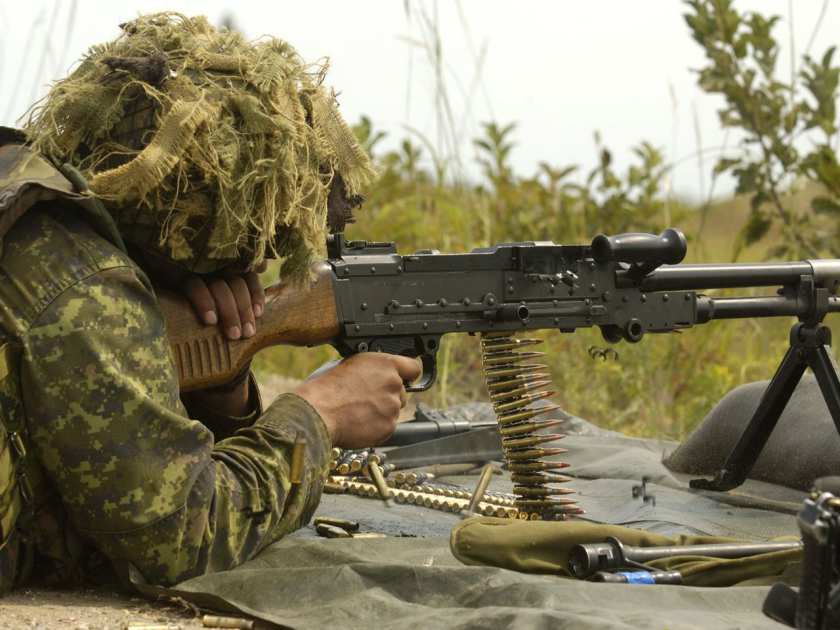
Canadian C6 GPMG. (DND photo)
The Canadian government will purchase 1148 new C6A1 FLEX General Purpose Machine Guns from Colt Canada, Defence Minister Harjit Sajjan announced Wednesday.
The current C6 machine guns were procured over 30 years ago. Some have been removed from service due to wear and tear and others are reaching the end of their service life, according to the Canadian military.
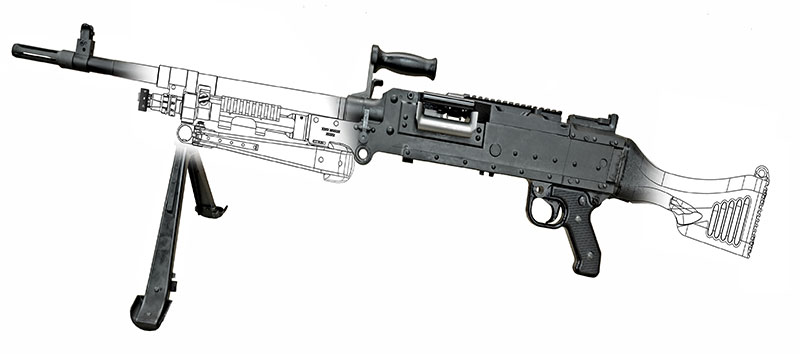
The new C6A1 FLEX (flexible) is designed to be carried by soldiers or attached to vehicles such as the new Tactical Armoured Patrol Vehicle. The new machine gun will feature a durable polymer butt stock instead of the current wooden style, according to the Canadian Forces. Additionally, soldiers will be able to attach pointing devices and optical sighting systems to the new weapon to help increase their operational effectiveness.
Sounds good, right? Not so fast:
On the face of it this is a good news story. The C6, a 7.62-mm is a fully-automatic, air-cooled, gas- and spring-operated medium machine gun that is well liked by the troops of the many western nations which use some version of this weapon. Based on the Fabrique Nationale (FN) MAG it has been used by more than 80 countries, and is made under licence in several countries, most notably the USA where it is known as the M240. It is many ways the standard machine gun, used by all our allies.
A closer look suggests that this announcement reveals everything that is wrong with Canadian defence procurement.
For our $32.1 million we get 1148 new C6A1 machine guns (with cleaning and repair kits, spare parts and carrying slings), 13 jobs which it seems reasonable to assume are for the length of the contract, i.e. two years, and a production line including engineering validation and certifications. Or perhaps more accurately, Colt Canada gets a production line at the Colt Canada plant.
Even if we accept that the implied a cost of nearly $28,000 per weapon should be informed by the fact that about one-quarter of the contract cost goes toward setting up a production line it still means that each weapon is costing almost $21,000 each.
The price of the equivalent US weapon, the M240, is somewhere between $6,600 US and $9,200 US depending on which model is being purchased. This means that, at current exchange rates, if we were to purchase the weapons from FN’s U.S.plant they would cost us about $10,000 each, in Canadian dollars. This in turn suggests that we would save at least $12,628,000. If you assume that in this case we don’t have to buy Colt Canada a new production line it works out to a savings of almost $20 million dollars.
This is the real cost of those 13 jobs for 2 years, over $750,000 for each job per year.
One would think that jobs that cost taxpayers $750,000 per year would raise questions.
Questions like; do we need to make our own machine guns, especially when we consider that they are almost universally available from a number of our allies and that we have the proven ability to maintain them ourselves?
So, it’s not just that we can’t buy ships or fighter aircraft at a competitive price — because our politicians are addicted to using military spending for partisan purposes — we can’t even buy a slight variant on a bog-standard infantry support weapon without paying through the nose.
H/T to MILNEWS.ca for the link (perhaps we should consider changing that standard section heading from “What’s Canada Buying?” to “What’s Canada subsidizing in the form of procurement?” or “What’s Canada being robbed blind over now?”)
The Battle of Passchendaele – Mutiny in the German Navy I THE GREAT WAR Week 158
Published on 3 Aug 2017
Douglas Haig had been busy since the Battle of Arras came to an end. He amassed huge artillery concentration, got his hands on the new British Mark IV tanks and had a cunning plan that even involved a naval landing along the Belgian coast. And the opening of the battle was definitely more promising than the Battle of the Somme one year earlier. In Germany, a small naval mutiny is put down at the same time.
G.J. Meyer – A World Undone: http://bit.ly/WorldUndoneWW1
Comments Off on The Battle of Passchendaele – Mutiny in the German Navy I THE GREAT WAR Week 158
Experimental Lightweight Browning High Power
Published on 3 May 2017
One of the handguns that resulted from the post-WW2 interest in standardizing arms among the future members of NATO was a lightweight version of the Canadian produced Browning High Power. Experiments began in 1947 to create first a lightened slide by milling out unnecessary material, and then additionally with the use of machined and cast aluminum alloy frames. The first major batch of guns consisted of six with milled alloy frames, with two each going to the Canadian, American, and British militaries for testing.
This would reveal that the guns were in general quite serviceable, except that the locking blocks tended to distort their mounting holes in the alloy frames under extended firing. The cast frames were generally unsuccessful, suffering from substantial durability problems. The program was cancelled in 1951 by the Canadian military, and the last United States interest was in 1952. The example in today’s video is one of the two milled frame guns sent to the US for testing.
Comments Off on Experimental Lightweight Browning High Power
August 2, 2017
Argentina vs United Kingdom: Falklands War 2017
Published on 9 Dec 2016
How would Argentina fare if it tried to take the Falklands again? Does UK have enough forces stationed there to defend itself? Watch the video and find out!
Comments Off on Argentina vs United Kingdom: Falklands War 2017
August 1, 2017
Burial and Identification Of The Dead in WW1 I THE GREAT WAR Special
Published on 31 Jul 2017
The millions of dead soldiers of World War 1 needed and often still need a proper burial place. But modern war, waged with artillery and poison gas, made even the retrieval, let alone the identification of bodies very difficult.
Comments Off on Burial and Identification Of The Dead in WW1 I THE GREAT WAR Special
July 30, 2017
US Preparation – Alien Enemies Act – Franco-Prussian War I OUT OF THE TRENCHES
Published on 29 Jul 2017
It’s time for the Chair of Wisdom again and this week Indy talks about US Preparations before reaching the battlefield, the Alien Enemies Act for German citizens in the US and the length of the Franco-Prussian War.
Comments Off on US Preparation – Alien Enemies Act – Franco-Prussian War I OUT OF THE TRENCHES
July 29, 2017
Matchlock Musket Demonstration with Armor (Live Rounds)
Published on 15 Apr 2014
Live rounds were fired from this matchlock with the musketeer first using no armor, then wearing standard armor, and finally equipped with a modified armor breastplate that had an attached piece for the musket butt to rest. Accuracy did not seem to be a factor, as all three tests yielded similar results. However, the modified breastplate was much more comfortable and easier to use than the standard breastplate. In 1611 at Jamestown, a law was enacted which stipulated that musketeers had to start wearing armor. In response they adapted by changing some of the existing armor to suit their needs, and this is evidenced with an adaptive breastplate found in a James Fort period well. A special thanks to Fred Scholpp from the Jamestown-Yorktown Foundation for coming out to the island to conduct experimental archaeology with the matchlock and armor breastplate reproductions.
If you are interested in donating to this non-profit research project, please click the following link. https://donatenow.networkforgood.org/jamestownrediscovery
Comments Off on Matchlock Musket Demonstration with Armor (Live Rounds)
July 28, 2017
Three Years of World War 1 I THE GREAT WAR Week 157
Published on 27 Jul 2017
Christmas 1914 – that’s when the war was supposed to be over. And now, in the summer of 1917, it entered its fourth year and there was no end in sight. The British Army was about to launch a new offensive near Ypres, Russia drowned in chaos and the central powers’ defences were still holding. Though in Romania, the combined Russian and Romanian attack put a few cracks into the German self esteem.
Comments Off on Three Years of World War 1 I THE GREAT WAR Week 157


