Quotulatiousness

July 31, 2012

The BEST model: still science-by-press-release

Filed under: Environment, Media, Science — Tags: , , — Nicholas @ 09:02

Andrew Orlowski on the latest PR offensive by Dr Richard Muller of the Berkeley Earth Surface Temperature (BEST) project:

Richard Muller’s Berkeley Earth Surface Temperature (BEST) project, which began with goodwill from all corners of the climate debate, has made a series of bold announcements (without benefit of peer review) to the effect that global warming is definitely serious and definitely caused by humans. This has aroused derision among formerly supportive climate sceptics, caused an eminent climatologist to abandon the project, and even drawn criticism from generally alarmism-sympathetic media commentators.

Muller, professor of physics at UC Berkeley, is often regarded as a climate sceptic because he has frequently criticised the techniques used by climate scientists in the past and because he accepted funding for BEST from libertarian oil billionaire Charles Koch. When BEST launched in the wake of Climategate, it vowed to be “an independent, non-political, non-partisan group”, with Muller promising that “there will be no spin, whatever we find”. Critics of the existing temperature establishment, including well known sceptics Anthony Watts and Doug Keenan, welcomed it.

However each announcement has been aggressively trialled in the press not only before the peer review process had judged them ready for publication — which may not be a major issue — but also before anyone outside the BEST project could examine the papers at all. This requires the ordinary reader to take BEST’s accompanying press releases on blind faith — which is not a barrier for some journalists, but is far short of acceptable practice.

July 30, 2012

If your source data is flawed, your conclusions are useless

Filed under: Environment, Media, Science — Tags: , , , — Nicholas @ 10:30

James Delingpole on the recent paper from Anthony Watts and his co-authors:

Have a look at this chart. It tells you pretty much all you need to know about the much-anticipated scoop by Anthony Watts of Watts Up With That?

What it means, in a nutshell, is that the National Oceanic and Atmospheric Administration (NOAA) — the US government body in charge of America’s temperature record, has systematically exaggerated the extent of late 20th century global warming. In fact, it has doubled it.

Is this a case of deliberate fraud by Warmist scientists hell bent on keeping their funding gravy train rolling? Well, after what we saw in Climategate anything is possible. (I mean it’s not like NOAA is run by hard-left eco activists, is it?) But I think more likely it is a case of confirmation bias. The Warmists who comprise the climate scientist establishment spend so much time communicating with other warmists and so little time paying attention to the views of dissenting scientists such as Henrik Svensmark — or Fred Singer or Richard Lindzen or indeed Anthony Watts — that it simply hasn’t occurred to them that their temperature records need adjusting downwards not upwards.

What Watts has conclusively demonstrated is that most of the weather stations in the US are so poorly sited that their temperature data is unreliable. Around 90 per cent have had their temperature readings skewed by the Urban Heat Island effect. While he has suspected this for some time what he has been unable to do until his latest, landmark paper (co-authored with Evan Jones of New York, Stephen McIntyre of Toronto, Canada, and Dr. John R. Christy from the Department of Atmospheric Science, University of Alabama, Huntsville) is to put precise figures on the degree of distortion involved.

Pre-season rankings: lies, damned lies, plus statistics

Filed under: Football, Media — Tags: , , — Nicholas @ 08:40

Even the most rabid Vikings fan isn’t really expecting a SuperBowl run this year: climbing from a 3-13 season to 8-8 would be a very significant improvement, and an honest fan would say that would be acceptable. Squeaking into the playoffs might be possible, except that the Vikings play in one of the toughest divisions in the NFL, so you’d need to be dangerously optimistic to expect that outcome.

That being said, the Vikings are getting no respect at all from the various pre-season ranking experts in the media. Christopher Gates explains why you shouldn’t pay too much attention to forecasts like the one published recently in Pro Football Weekly:

Ugh, there is so much wrong here, I’m not even sure where to start. . .but I’ll try.

– According to PFW, the Vikings’ defensive line (which tied for the NFL lead in sacks in 2011 and is led by the guy that probably should have been Defensive Player of the Year last season) is just as good as the Vikings’ secondary … a unit that allowed the second-highest passer rating against in NFL history, went nearly ten full games without an interception (setting an NFL record in the process), and allowed more touchdown passes than any team in the league last year. Yep … the same.

– Not only that, but the Vikings’ secondary is (according to PFW) just as good as Green Bay’s secondary. Yes, the Packers allowed the most passing yards in a season in NFL history in 2011 and only allowed five fewer TD passes than Minnesota did (34 to 29). The Packers also intercepted twenty-three more passes than the Vikings did (31 to 8) despite collecting about half as many sacks (50 for Minnesota, 29 for Green Bay) and their passer rating allowed was a full 27 points lower (107.6 for Minnesota, 80.6 for Green Bay). According to Pro Football Weekly? The secondaries are basically interchangeable. Seriously.

– Is Minnesota’s defensive line that much worse than Detroit’s, to the point where the Lions get an A- and the Vikings get the aforementioned C+? I really don’t think so. In fact, until Nick Fairley can become known for something other than personal fouls (in college) and getting arrested (since reaching the NFL), I fail to see where Detroit’s front four is better than Minnesota’s at all. (Sure, I’m biased … but come on.)

July 29, 2012

NBC’s Olympic coverage under fire

Filed under: Britain, Media, Sports — Tags: , , — Nicholas @ 12:41

Billy Gallagher at TechCrunch explains why he’s recommending viewers not watch NBC:

Spoiler alert: Phelps and Lochte raced today. The results are all over Twitter. But the race won’t air on TV in America until tonight.

This is 2012, not 1996. NBC has put all of the events live online, provided you have a cable subscription, but won’t have them available recorded online and won’t air many events, including the most high-profile ones, until a primetime tape delay.

This isn’t a new strategy, just a dumb, outdated one.

Sums it up pretty well. We’ve already covered the failings of NBC (and the IOC) fairly extensively, but its a topic that bears repeating. Check out #nbcfail for a live (gasp, what’s that?) stream of people’s frustrations with the peacock network.

July 28, 2012

“Beevor’s book stinks”

Filed under: Books, History, Japan, Media, Military, WW2 — Tags: , — Nicholas @ 12:01

Yes, the headline is taken out of context. Here’s the context:

Granted, we already knew that World War II was brutal. What, then, can Beevor add to this horridly familiar tale? Or, stated differently, do we need another history of that war? Yes, we do. While the war itself remains a constant, the way it is viewed evolves according to changing moral perceptions. In late 1945, for instance, the Tokyo War Crimes Tribunal decided to suppress evidence of cannibalism in order not to traumatize the families of soldiers who died in Japanese prison camps. Beevor thinks that this once-taboo story needs now to be told. He’s probably right. His skill lies in telling it without descending into gratuitous horror.

The challenge that confronts historians is how to convey the immensity of total war without losing sight of singular torment. Too often, the grandeur of great battles smothers the suffering of the individual. Soldiers become battalions that attack on faceless flanks. “One death is a tragedy,” Stalin famously remarked. “A million deaths a statistic.” In the grand narrative, human beings disappear. War is thus sanitized; Stalingrad and Normandy are re-created without the detail of men and women screaming in agony. That is how some readers like it — war without the carnage and putrefaction, without the dismembered limbs and torn faces.

But that is chess, not war. Good military history should stink of blood, feces and fear. Beevor’s book stinks. It reconstructs the great battles but weaves in hundreds of tiny instances of immense suffering. War is presented on its most personal level. We learn not only of the vanity of Gen. Mark Clark, the cruelty of Gen. George Patton and the stupidity of Gen. Maurice Gamelin, but also of the terrible misery endured by what the poet Charles Hamilton Sorley once called “the millions of mouthless dead.” Very few heroes emerge, because heroes are too often cardboard constructs. Detail adds nuance and dimension, clouding characteristics worthy of worship. “Say not soft things as other men have said,” warned Sorley to those who wanted to remember war. Beevor constructs a true picture by avoiding soft things. The book brims with horror, but so it should.

Feschuk’s Olympic opening ceremony highlights

Filed under: Humour, Media, Sports — Tags: , — Nicholas @ 11:23

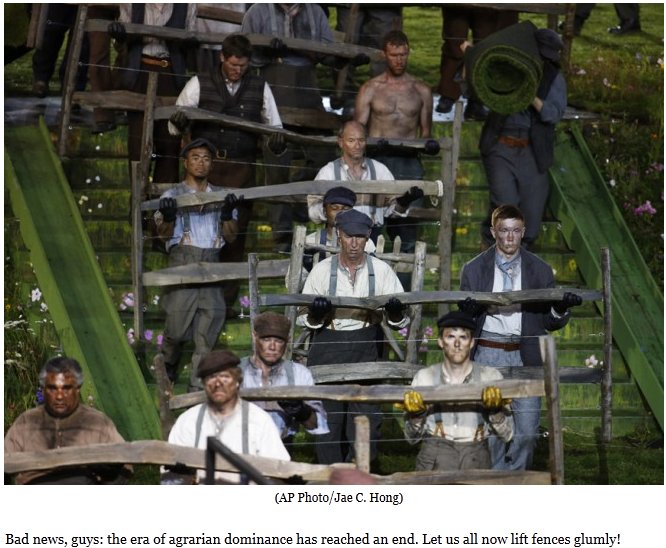
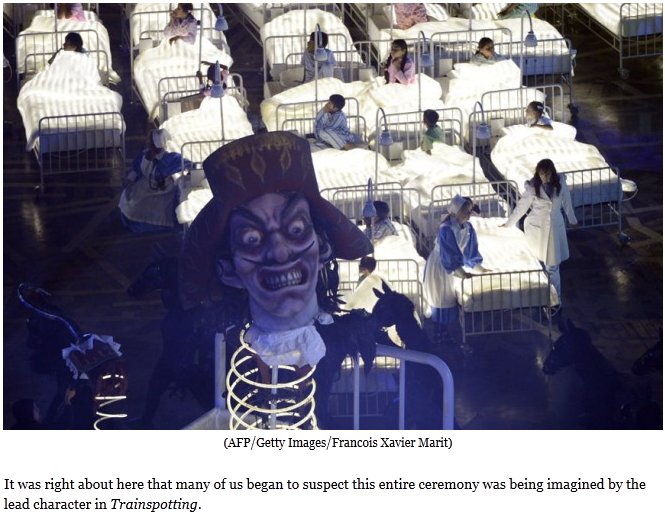
I didn’t watch the opening ceremonies, but I did enjoy Scott Feschuk’s twitter updates during the festivities. He’s collected some of them along with the appropriate photos for Maclean’s:

Clocking in at three hours and 45 minutes, the Opening Ceremonies of the 2012 Summer Games featured many remarkable moments and tophats. Here’s a selection of just a few of the images that captivated the world when the world wasn’t busy asking, “Did they seriously just play a song by Frankie Goes to Hollywood?”

[. . .]

[. . .]

[. . .]

July 27, 2012

Bruce Arthur calls for moderation in regard to the London Olympics

Filed under: Britain, Media, Sports — Tags: , , , — Nicholas @ 11:13

In the National Post, Bruce Arthur tries to encourage all of us, in spite of our memories of what British journalists were saying about the Vancouver Olympics, to avoid being nasty about the London games:

But perhaps we in Canada should restrain ourselves, as a nation. Perhaps we should take the higher road. That is, unless the higher road is crammed with traffic in this built-for-horses-and-carriage town. Or the tube is down again.

The Brits did not treat Canada kindly two years ago, it’s true. The Guardian said Vancouver could be the Worst Games Ever three days in, and they based the assessment on refunded snowboard tickets rather than on the preventable death of an athlete. The Guardian also called our glowing totem poles a collection of ice penises, and even the BBC announcer cocked an eyebrow, as it were. The Times of London called us cursed, while the Daily Mail mocked the escalation of the budget. They were, to be honest, kind of jerks about it.

But that doesn’t mean that Canadians should stoop to a similarly savage brand of mockery, beginning with the Opening Ceremony. It doesn’t mean we should make fun of the leaked details of the event, starting with children in hospital beds, which doesn’t seem terribly festive. It doesn’t mean we should make fun of the fact that Muse will apparently play, and even if they do not, that the official song of the Olympics by Muse is a grating, strutting, whining, overcompensatory sneer of a song.

If Boris wasn’t mayor of London

Filed under: Britain, Media, Sports — Tags: , , , , , , , — Nicholas @ 08:53

Lawsmith imagines what Boris Johnson would write about the London Olympics “major international sporting event” in a “certain major city in the UK” if he were not mayor:

I can imagine his perfect article in this alternative history in my dreams. Written in the Spectator and littered with self-deprecation, references to dead or fictitious Greeks, Liverpool and wiff-waff, Boris would have danced across the pages as he gleefully excoriated the Labour administration for the absurd idea of inviting a bunch of prima donna athletes and bureaucrats, most of them foreign, to compete in an outdoor stadium during the coldest, wettest summer in British history.

He might have pointed out that all this would take place in Newham, a place not altogether unlike Portsmouth and, in any case, one most Londoners consider more alien than Paris, with among the highest incidence of robbery and assault in the entire city. He might have joyfully foretold the pain and suffering of millions of income taxpayers on account of the shut-down of major roads and TfL advising know-nothing tourists to hop the tube at rush hour to make the 10 AM events, and seriously questioned the wisdom of erecting a steel wall around Hyde Park for an entire summer before fouling it up beyond recognition.

In our alternative history he would have savaged, rather than prodded, the implementation of widespread censorship undertaken by a hit squad of intellectual property ninjas; he would have lamented the fact that our police were arresting “marginal” (i.e., possibly innocent) suspects – living, breathing, thinking people – on terrorism charges which they might not be able to prove. If he had really driven it home, he would have pointed out that, under normal circumstances, those arrests would never have been made. He would also have asked why nobody seems to care.

By this point, his oeuvre would have been the most hilarious political essay ever written. He would flay alive in full public view the pathetic, uncritical, fawning news-media industry which crafts its Olympic stories with all the creative flavour of an oak plank, their proxy world to escape from our own inadequacies where professional athletes become “heroes” (seriously, find a different word), washed-up “heroes” become “legends,” and civil liberties violations and government largesse are completely ignored.

July 26, 2012

The “international sporting event” in “the capital of the United Kingdom”

Filed under: Britain, Law, Liberty, Media, Sports — Tags: , , , — Nicholas @ 09:00

Dahlia Lithwick explains why we all need to be careful how we refer to a certain large organized sports extravaganza happening in a major city in England:

At the London Olympics, we’re seeing unprecedented restrictions on speech having anything to do with, erm, the Olympics. There are creepy new restrictions on journalists, with even nonsportswriters being told they should sign up with authorities.

Then there’s the London Olympic Games and Paralympics Games Act 2006. The law was originally aimed at preventing “over-commercialization” of the games, but it seems to have unloosed something of a Pandora’s box of speech suppression. Provisions triggering worries for protesters include sections regulating use of the Olympic symbol “in respect of advertising of any kind including in particular — (a) advertising of a non-commercial nature, and (b) announcements or notices of any kind.” The law further seems to authorize a “constable or enforcement officer” to “enter land or premises” where they believe such material is being produced. It also permits that such materials may be destroyed, and for the use of “reasonable force” to do so.

[. . .]

But it’s not just the Olympic rings that are being protected; it’s also Olympic words. As Nick Cohen recently observed, the “government has told the courts they may wish to take particular account of anyone using two or more words from what it calls ‘List A.’ ” Those words: Games, Two Thousand and Twelve, 2012, and twenty twelve. And woe betide anyone who takes a word from List A and marries it with one or more words from “List B”: Gold, Silver, Bronze, London, medals, sponsors, summer.

Spectators have been warned they may not “broadcast or publish video and/or sound recordings, including on social networking websites and the Internet,” making uploading your video to your Facebook page a suspect activity. Be careful with your links to the official Olympic website as well.

Should Travels with Charley be filed in non-fiction or fiction?

Filed under: Books, History, Media, USA — Tags: — Nicholas @ 08:53

Bill Steigerwald talks about his research into John Steinbeck’s famous Travels with Charley and what was eliminated from the manuscript before it went to press:

Three weeks before I left on my trip to retrace John Steinbeck’s steps in Travels With Charley in Search of America, I did something no one in the world had done in four years. I went to the Morgan Library & Museum in Manhattan to read the first draft of the book. The handwritten manuscript — along with a typed and edited copy — has been stored at the Morgan like the Ark of the Covenant at the end of Raiders of the Lost Ark for almost 50 years.

Few scholars, graduate students, or critics had bothered to read it. If they had, the Travels With Charley myth — that for 11 weeks Steinbeck slowly traveled alone, camped out often, carefully studied the country, and told readers what he really thought about America and its 180 million people — might have been debunked decades ago.

[. . .]

The edits to the first draft mostly make sense; a lot of extraneous details and long-windedness on Steinbeck’s part are cut. But excising material about Steinbeck’s regular liaisons with his wife Elaine in fancy hotels, his stay with his good friend and failed presidential candidate Adlai Stevenson, and his outright contempt for Richard Nixon serve another purpose. The casual or romantic reader is left with the impression that Steinbeck was alone and on the road most of the time, when in fact he was neither. By the time Viking Press was done marketing the book as nonfiction and dressing it up with excellent but misleading illustrations by Don Freeman, the Travels With Charley myth was born and bronzed. The book was an instant and huge bestseller. Critics and reviewers, followed by several generations of scholars, never questioned the book’s nonfiction status.

July 25, 2012

Chris Selley on the burka’d bottles

Filed under: Cancon, Law, Media — Tags: , , , — Nicholas @ 09:56

Following up from yesterday’s amusing story about the Sun News stunt of dressing an underaged teen in a burka and successfully buying booze at the LCBO, Chris Selley gets to the real reason the stunt worked:

Debates about face coverings in this country almost always boil down to policy, not people. Should people wearing burkas have to unveil to vote? We went pretty crazy about that issue, a while back, and probably will some day again (especially if Sun News has anything to say about it). Should Quebecers have to unveil to take a government-run French class? Quebec went a bit crazy about that, and eventually said yes. What about to board an airplane, or to get a driver’s license? Controversies along these lines pop up every now and again and get thrown into the coliseum of Canadian debate, where the right’s and the left’s gladiators battle it out.

Meanwhile, off to the side, you’ll usually find representatives of the miniscule number of Canadian women who actually wear burkas explaining that they have no problem unveiling in circumstances where it is logically required. But they’re largely ignored, because the left wants to fight for a woman’s right to wear the veil (even if she doesn’t feel it’s being impinged upon) while the right wants to take that right away (on grounds of “liberating” Muslim women).

[. . .]

Again, this wasn’t the Sun’s angle. But it seems reasonable to speculate that those LCBO clerks looked at the veiled customer, realized what they ought to do, and didn’t do it for fear of winding up in their supervisor’s office, the newspaper or some kind of human rights court. That’s not healthy at all, and there’s no point blaming Muslim immigrants for it. In pursuing a harmonious, egalitarian, rights-conscious society, longer-established Canadians may have created a fear of making reasonable requests of fellow citizens who aren’t superficially “like” us. That drives people apart, not together. It perpetuates precisely the sort of nonsensical backlash that the Sun’s critics worry about.

Reason.tv: Fan fiction versus copyright

Filed under: Books, Cancon, Law, Liberty, Media — Tags: , , , , — Nicholas @ 09:34

“It takes a big studio to make The Avengers, but it doesn’t necessarily take a big studio to write a piece of Avengers fan fiction,” says Georgetown University law professor and fan fiction advocate Rebecca Tushnet. “Big content companies largely recognize that fan activities are really good for them because they engage people.”

The growing popularity of fan fiction, a genre in which fans create their own stories featuring characters or settings from their favorite works of popular culture, raises thorny copyright issues. “Given how broad copyright is now, it’s now possible to say fan fiction is an infringing derivative work,” Tushnet explains. “In order to deal with that…we now talk about fair use, which allows people to make fair, limited uses of works without permission from the copyright owner.”

As a member of the Organization for Transformative Works, Tushnet works to defend fan fiction creators caught in the legal debate between protected intellectual property and fair use.

July 20, 2012

Fellow Canucks: here’s your pre-Olympic angst schedule

Filed under: Cancon, Media, Sports — Tags: , , — Nicholas @ 10:33

Chris Selley explains what will happen with our Olympic team and the media’s saturation coverage of their every effort:

As I write, Canadians are currently warming up their typing fingers and talk radio voices in anticipation of the traditional Olympic psychodrama. Almost certainly, at some point, there will be a paroxysm of angst over a medal drought. Almost certainly people will extrapolate from that certain lessons: We don’t spend enough on amateur athletics. We spend too much on amateur athletics to deserve these bums. We aren’t winning medals because our athletes have been pampered by the welfare state.

If we do win a lot of medals, that will displease a whole other constituency. There are those among us who deride the whole idea of caring that a Canadian might jump higher or run faster than an Italian as an absurd, unbecoming nationalist spectacle. There are those who think winning, and taking pride in winning, violates our traditionally humble nature. Back in 2010, Star columnist Richard Gwyn deplored the Vancouver organizing committee’s stated intention to top the medal standings as “completely and outrageously un-Canadian.” Globe columnist Lawrence Martin lamented that “at the opening ceremonies and elsewhere, it seemed like we were pushing the idea that we are great.” Heaven forbid!

Then there are those, like flamboyantly anti-Olympic Ottawa Citizen columnist Dan Gardner, who insist that those beaming medal-winners are in fact victims of deranged parents, injurious training regimes and childhood-destroying obsession. (This is often the price of excellence in general, I would argue, although it’s true that concert pianists will have much better knees in their 80s than downhill skiers.) It’s all about the money, people complain, and they’re mostly right.

I certainly agree with the haters about the so-called “Olympic Movement,” as presided over by the International Olympic Committee: It’s a putrid, corrupt, manipulative, corporatist scam masquerading as a triumph of the human spirit. The amount of money spent to bid for and stage the Games is literally indefensible — stomach-turning, even, when you consider the better uses to which it could have been put.

July 19, 2012

The messy internal state of North Korea

Filed under: Asia, China, Economics, Media — Tags: , , , , , , — Nicholas @ 09:49

Strategy Page on internal affairs of North Korea in the early stage of Kim Jong Un’s leadership:

China remains the foreign power with the most influence over North Korea, but that isn’t saying much. When given unwelcome advice from China, which represents nearly 80 percent of foreign trade and the only source of free food and fuel aid, North Korea still tends to adopt a suicidal attitude. For the northern leadership, it’s “death before dishonor” and that means Chinese demands, even backed by threats of aid cuts, are ignored. For this reason, China is believed involved in the current reorganization of the senior North Korean leadership. China has long developed friends and relationships among the North Korean elite. As corruption became more of a factor in the last decade, China knew how to cope. China is awash in corruption, and Chinese leaders have learned how to use it (even as they struggle to lose it). In effect, China’s decade-long effort to overwhelm the “old school” faction in North Korea appears to have succeeded. But the “old school” crowd are still numerous, scared and armed. This could get messy. This does not bother China, which has plenty of experience with messy.

In the last month or so North Korea’s new leader (Kim Jong Un) has removed hundreds of military and government officials and promptly installed younger replacements. Un has made it clear, in public announcements, that it’s time for a new generation. Many of the dismissed older officials were seemingly loyal to and supportive of Un, so this appears to be more a desire to shake up the leadership, than to purge opponents. Kim Jong Un isn’t doing this by himself, as he has a small group of advisors he relies on a lot. This includes his uncle, Jang Sung Taek, who is married to Kim Jong Ils sister. Jang has long been a powerful government official, and is believed to be quite wealthy. That’s because Jang has a lot to say about how North Korea earns (by legal, or illegal means) foreign currency. In a country so extremely poor, the man who controls the most money has a lot of power. Jang, for example earlier this year ordered house searches of families believed to be hoarding foreign currency (Chinese or American), rather than, as the law demands, putting it in the bank. People do not want to put their foreign currency in the bank because the government pays you less for it (in North Korean currency) than the black market money changers (who give fair market value). Jang understands how the North Korean economy really works, and is trying to increase government control over the “new economy.” Yang and his wife have a lot more knowledge of, and experience with, the North Korea government and economy than their nephew Kim Jong Un and, for the moment, they have his ear, and trust.

[. . .]

The food situation in the north is getting worse, with food prices (in the growing number of free markets) at record levels. Government distributions of food are declining. Worse, the government is printing more money, increasing inflation (because there’s now more money chasing the same amount of food.)

North Korean censors finally caught on to the fact that young North Koreans had been taking South Korean or Western popular songs, adding new lyrics that have a double (anti-government) meaning in the north, and spreading them widely. North Korea doesn’t have much Internet access, but there are memory sticks, CDs and floppy disks. Stuff gets around, and now the police have been ordered to crack down on a list of over 500 subversive songs. The cops love this sort of thing, as it creates plenty of new bribery opportunities. That’s because many of those involved in this music conspiracy are children of ruling families, and can afford a fine (rather than anger their parents by getting arrested.)

Update: In the Guardian, Paul Watson says we’re all sheep and ignoring the horrific crimes of South Korea and vilifying the peace-loving, friendly, warm-hearted North Koreans:

Reunification and conciliation are usually portrayed as South Korean concepts, while North Korea is seen as a closed state, hostile to such talk on “idealistic grounds” – a view perpetuated by media outlets’ lack of interest in all recent North Korean initiatives. In fact it is almost impossible to find any piece of positive European journalism relating to the Democratic People’s Republic of Korea (DPRK). The days of cold war pantomime journalism and great ideological battles might be over, but North Korea remains an area in which journalists have free licence for sensationalism and partiality.

The lack of western sources in North Korea has allowed the media to conjure up fantastic stories that enthrall readers but aren’t grounded in hard fact. No attempt is made to see both sides of the Korean conflict: it is much easier and more palatable to a western audience to pigeonhole the DPRK as a dangerous maverick state ruled by a capricious dictator and South Korea as its long-suffering, patient neighbour.

These roles are dusted off whenever there are flare-ups, such as the Yeonpyeong Island incident of 2010 when North Korea was condemned for firing shots at South Korean military and civilians in an “unprovoked attack”. It was not widely reported that South Korea had been test firing artillery in a patch of ocean that North Korea claims ownership of or that North Korea’s repeated demands for an explanation were ignored. While military intervention may not have been wise, it was far from the random act of hostility it was made out to be.

July 18, 2012

Toronto’s gun problem

Filed under: Cancon, Media — Tags: , , , , , — Nicholas @ 13:41

No, not a problem with guns per se, but a problem with the image of guns. Jonathan Kay tries to do a quick psycho-analysis of Toronto’s issue here:

The primary tragedy of urban gun violence is, of course, that it kills people — including 14-year-old Shyanne Charles and 23-year-old Joshua Yasay, who were slain in Scarborough this week. A secondary ill effect is that it produces paralyzing anxiety in millions of otherwise unaffected people, largely thanks to sensationalistic media reporting that encourages the idea we are all inhabiting some kind of anything-goes “war zone.” As I’ve written before, gun violence in Toronto is largely confined to a small set of areas, and a small set of social and criminal contexts. For the average citizen, the chance of suicide or death-by-domestic-battery is much, much higher than the chance of becoming collateral damage in a gang killing.

But it’s not hard to figure out why scared housewives are canceling their zoo trips when the Toronto Star is blaring out headlines like “Mass shooting on Danzig puts the lie to Toronto’s ‘safe city’ mantra.”

Combine that headline with the lurid, disturbingly blood-fixated Rosie DiManno column that sits under those words, and a clear message emerges: Torontonians have been living in a dream world, going about their parenting and work lives in blissful ignorance of the warring gangs who are probably just around the corner, ready to march up the street, spraying the whole area with machine gun fire. Even the lemur isn’t safe: They’ll probably shoot him, too.

As I’ve noted, Chicago — a city with a population close to Toronto’s 2.6-million — witnesses about 10 times as many murders every year as Hogtown. And as Marni Soupcoff wrote earlier this week, tiny Detroit has had 184 murders this year, compared to Toronto’s 28. To repeat what’s been written: Among the American cities that witnessed more murders than Toronto in 2011 were Nashville (pop. 616,000), Tulsa, Okla (pop. 393,000), and Stockton, Cal. (292,000). In per-capita terms, Toronto has a substantially smaller homicide problem than Winnipeg and Edmonton.

And one must remember that Toronto has a unique view of itself and its role in the world:

Another factor is Toronto’s bizarrely inflated view of itself as a civic nirvana, to which the rest of the world is constantly gazing as a sort of Light Unto Cities. When anything bad happens, we naturally assume that the entire planet is gasping in horror and disappointment. In 2010, for instance, when a few dozen windows got broken at the G20 Summit here, Canadian journalists truly believed that the news would make banner headlines on other continents — and that we would have a “black eye” that would last for generations.

Regarding the shootings in Scarborough, this Reddit item is worth reading.

Update: Margaret Wente in the Globe and Mail:

… In certain neighbourhoods, a war is on. It’s a war against peace and order waged by the forces of social disintegration. It’s the same war that killed Jane Creba in 2005, two people at the Eaton Centre last month and dozens of other victims who happened to be in the wrong place at the wrong time. The single most significant root cause is not guns or crummy housing or racism or inadequate policing or lenient sentencing or lack of jobs or insufficient social programs. It is family and community breakdown. Most especially, it’s absent fathers.

Social programs are essential. But all the social programs in the world can’t make up for family disintegration.

[. . .]

Family disintegration is not a racial problem. It is an underclass problem. The evidence is plain that children born to unmarried women – of whatever race – do much worse than children with two married parents. They’re less likely to succeed in school and more likely to turn to violence (boys) and promiscuity (girls). The easiest way for them to feel like someone is to grab a gun or have a baby.

So by all means, let’s redevelop public housing, strengthen our policing, hire more youth workers, launch more employment programs, start more basketball programs, help young mothers finish school and teach them how to read to their kids. It makes us feel good to focus on these things because they are things we can actually do something about, and maybe they will make a difference. But let’s not kid ourselves: They’re Band-Aid solutions.

We have a million euphemisms for what’s gone wrong in our so-called “priority” neighbourhoods, a splendidly euphemistic term that has replaced “at-risk,” “disadvantaged,” “underprivileged” and “poor.” By now, it should be obvious that material poverty is not the problem – not when every kid in a priority neighbourhood has a cellphone and a flat-screen TV. Their poverty is of a different, more corrosive kind: a poverty of expectations, role models, structure, consistency, discipline and support.

Even our euphemisms have euphemisms these days. They do nothing to solve the problem, but they allow the problem to be discussed at such a distance from reality that the lack of solution is generally hidden from view.

Until the next shooting.

« Newer PostsOlder Posts »

Powered by WordPress