The Cynical Historian
Published 6 Nov 2015The classic film Lawrence of Arabia, is one of the most beautiful movies of all time, but it has its flaws.
————————————————————
references:
https://en.wikipedia.org/wiki/Lawrenc…http://www.wordandfilm.com/2013/08/wh…
http://www.pri.org/stories/2013-12-16…
most beautiful movies list:
https://www.youtube.com/watch?v=kj73a…
————————————————————LET’S CONNECT:
https://twitter.com/Cynical_History
————————————————————
wiki:
Lawrence of Arabia is a 1962 epic historical drama film based on the life of T. E. Lawrence. It was directed by David Lean and produced by Sam Spiegel through his British company Horizon Pictures, with the screenplay by Robert Bolt and Michael Wilson. The film stars Peter O’Toole in the title role. It is widely considered one of the greatest and most influential films in the history of cinema. The dramatic score by Maurice Jarre and the Super Panavision 70 cinematography by Freddie Young are also highly acclaimed.
The film was nominated for ten Oscars at the 35th Academy Awards in 1963; it won seven in total: Best Picture, Best Director, Best Original Score, Best Cinematography (Color), Best Art Direction (Color), Best Film Editing and Best Sound Mixing. It also won the Golden Globe Award for Best Motion Picture – Drama and the BAFTA Awards for Best Film and Outstanding British Film.The film depicts Lawrence’s experiences in the Arabian Peninsula during World War I, in particular his attacks on Aqaba and Damascus and his involvement in the Arab National Council. Its themes include Lawrence’s emotional struggles with the personal violence inherent in war, his own identity, and his divided allegiance between his native Britain and its army and his new-found comrades within the Arabian desert tribes. As well as O’Toole, the film stars Alec Guinness, Jack Hawkins, Anthony Quinn, Omar Sharif, Anthony Quayle, Claude Rains and Arthur Kennedy.
————————————————————
Hashtags: #History #LawrenceOfArabia #WWI #Review #BasedOnATrueStory

April 9, 2020
Lawrence of Arabia | Based on a True Story
QotD: Collective narcissism
[P]eople who score high on the collective narcissism scale are particularly sensitive to even the smallest offences to their group’s image. As opposed to individuals with narcissistic personality, who maintain inflated views of themselves, collective narcissists exaggerate offences to their group‘s image, and respond to them aggressively. Collective narcissists believe that their group’s importance and worth are not sufficiently recognised by others. They feel that their group merits special treatment, and insist that it gets the recognition and respect it deserves. In other words, collective narcissism amounts to a belief in the exaggerated greatness of one’s group, and demands external validation.
Collective narcissists are not simply content to be members of a valuable group. They don’t devote their energy to contributing to the group’s betterment and value. Rather, they engage in monitoring whether everybody around, particularly other groups, recognise and acknowledge the great value and special worth of their group. To be sure, collective narcissists demand privileged treatment, not equal rights. And the need for continuous external validation of the group’s inflated image (a negative attribute) is what differentiates collective narcissists from those who simply hold positive feelings about their group.
[…]
When their own group is involved, collective narcissists have no sense of humour. They are disproportionately punitive in responding to what they perceive as an insult to their group, even when the insult is debatable, not perceived by others, or not intended by the other group. Unlike individual narcissists, collective narcissists cannot dissociate themselves from an unpopular or criticised group. Once their self-worth is invested in the greatness of their group, collective narcissists are motivated by enhancing their group rather than themselves.
My team researched collective narcissism as a characteristic that pertains to an individual. We believe that there will always be a proportion of people in any given population who meet the criteria. But collective narcissism can also seize an entire group, resulting in seemingly sudden and unprovoked outbursts of intergroup rage or prejudiced reactions towards minority groups. We believe that collective narcissism is most dangerous as a group syndrome – when the belief that the righteous group is not given its due acknowledgement becomes shared by the majority of group members and becomes a dominant narrative about the group’s past and present.
Agnieszka Golec de Zavala, “Why collective narcissists are so politically volatile”, Aeon, 2018-01-18.
April 8, 2020
If the Wuhan Coronavirus panic feels oddly familiar … there’s a good reason for it
Warren Meyer explains why his skepticism about the dangers of the Wuhan Coronavirus epidemic kicked in quickly because it followed a very familiar pattern:
I have been skeptical about extreme global warming and climate change forecasts, but those were informed by my knowledge of physics and dynamic systems (e.g. feedback mechanics). I have been immensely skeptical of Elon Musk, but again that skepticism has been informed by domain knowledge (e.g. engineering in the case of the hyperloop and business strategy in the case of SolarCity and Tesla). But I have no domain knowledge that is at all relevant to disease transfer and pathology. So why was I immediately skeptical when, for example, the governor of Texas was told by “experts” that a million persons would die in Texas if a lock-down order was not issued?
I think the reason for my skepticism was pattern recognition — I saw a lot of elements in COVID-19 modelling and responses that appeared really similar to what I thought were the most questionable aspects of climate science. For example:
- We seem to have a sorting process of “experts” that selects for only the most extreme. We start any such question, such as forecasting disease death rates or global temperature increases, with a wide range of opinion among people with domain knowledge. When presented with a range of possible outcomes, the media’s incentives generally push it to present the most extreme. So if five folks say 100,000 might die and one person says a million, the media will feature the latter person as their “expert” and tell the public “up to a million expected to die.” After this new “expert” is repetitively featured in the media, that person becomes the go-to expert for politicians, as politicians want to be seen by the public to be using “experts” the public recognizes as “experts.”
- Computer models are converted from tools to project out the implications of a certain set of starting hypotheses and assumptions into “facts” in and of themselves. They are treated as having a reality, and a certainty, that actually exceeds that of their inputs (a scientific absurdity but a media reality I have observed so many times I gave it the name “data-washing”). Never are the key assumptions that drive the model’s behavior ever disclosed along with the model results. Rather than go on forever on this topic, I will refer you to my earlier article.
- Defenders of alarmist projections cloak themselves in a mantle of being pro-science. Their discussions of the topic tend to by science-y without being scientific. They tend to understand one aspect of the science — exponential growth in viruses or tipping points in systems dominated by positive feedback. But they don’t really understand it — for example, what is interesting about exponential growth is not the math of its growth, but what stops the growth from being infinite. Why doesn’t a bacteria culture grow to the mass of the Earth, or nuclear fission continue until all the fuel is used up? We are going to have a lot of problem with this after COVID-19. People will want to attribute the end of the exponential growth to lock-downs and distancing, but it’s hard to really make this analysis without understanding at what point — and there is a point — the virus’s growth would have turned down anyway.
- Alarmists who claim to be anti-science have a tendency to insist on “solutions” that have absolutely no basis in science, or even ones that science has proven to be utterly bankrupt. Ethanol and wind power likely do little to reduce CO2 emissions and may make them worse, yet we spend billions on them as taxpayers. And don’t get me started on plastic bag and straw bans. I am willing to cut COVID-19 responses a little more slack because we don’t have the time to do elaborate studies. But just don’t tell me lockdown orders are science — they are guesses as to the correct response. I live in Phoenix where it was sunny and 80F this weekend. We are on lockdown in our houses. I could argue that ordering everyone out into the natural disinfectant of heat and sunlight for 2 hours a day is as effective a response as forcing families into their houses (initial data, though it is sketchy, of limited transfer of the virus in summertime Australia is interesting — only a small portion of cases are from community transfer. By comparison less than a half percent of US cases from travel).
Debunking the claim that “80% of America’s drugs come from China”
Eric Boehm tries to sort out where the startling claim came from … because it’s not true:
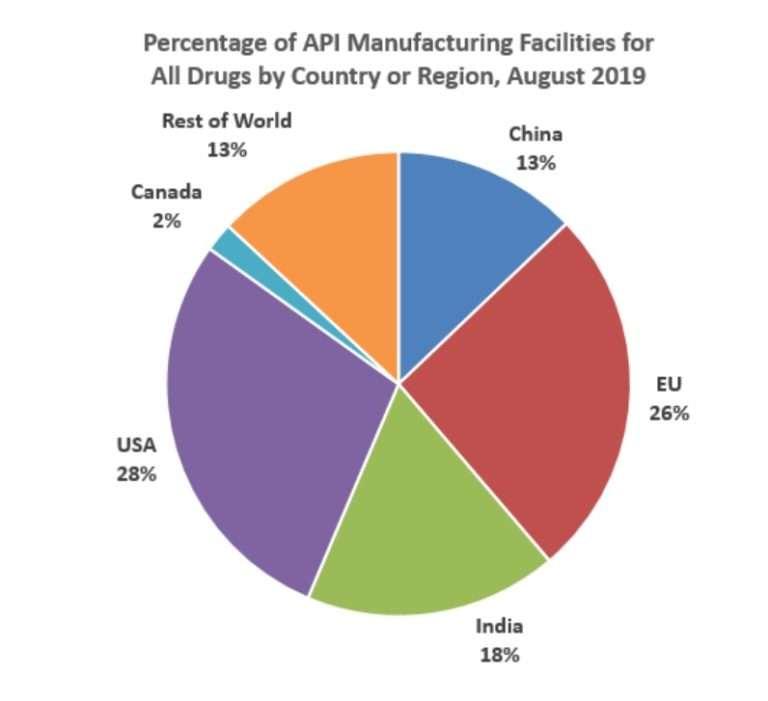
While reading about the COVID-19 outbreak, you’ve probably encountered this particularly shocking statistic at one time or another: 80 percent of America’s pharmaceutical drug supply comes from China.
It’s a statistic that has made the rounds in right-wing publications for a while — offered as proof that China-heavy global supply chains are putting Americans at risk — but it has also popped up in mainstream outlets, including in pieces published in Politico and The Atlantic. Wherever it is deployed, the stat carries an unstated implication: What if China decides to cut us off in the middle of a pandemic? Could America face a dramatic shortage of key pharmaceutical drugs at the moment when we are most in need? And that distorted claim that says America has been too reliant on China has been seized by politicians like Sen. Josh Hawley (R–Mo.) as evidence that globalization has undermined America’s pandemic response.
[…]
How much is a lot? “In all, 80 percent of the U.S. supply of antibiotics are made in China,” [Politico contributors Doug Palmer and Finbarr Bermingham] wrote, linking back to a press release from Sen. Chuck Grassley (R–Iowa).
But that’s not what the press release says.
Grassley’s statement was publicizing a letter Grassley sent on August 9 to the Department of Health and Human Services (HHS) and the FDA, asking them to conduct more inspections of foreign drug manufacturing facilities to make sure they meet American standards.
“Unbeknownst to many consumers … 80 percent of Active Pharmaceutical Ingredients are produced abroad, the majority in China and India,” Grassley wrote.
There’s the first bit of context collapse: the authors of the Politico piece merged Grassley’s “80 percent … are produced abroad” into “80 percent … are made in China.”
All of this also raises another question: Where is Grassley getting that information? His letter sources that claim to a 2016 Government Accountability Office report which itself cited FDA data on pharmaceutical manufacturers around the world. And that report makes it clear that the U.S. has a diverse supply chain for drugs that goes well beyond India and China.
“Nearly 40 percent of finished drugs and approximately 80 percent of active pharmaceutical ingredients (API) are manufactured in registered establishments in more than 150 countries,” is how the GAO summed up America’s pharmaceutical supply chain.
In two jumps, we’ve gone from “80 percent of American drugs are manufactured in more than 150 countries around the world” to “80 percent of drugs come from two countries” to “80 percent of drugs come from China.”
Now, a further complication. The FDA only tracks drug manufacturing facilities — not the supply chains of specific drugs.
That “lack of structural transparency and available supply chain data about drugs,” researchers at the University of Minnesota researchers wrote last month, is one of the reasons why making accurate assessments about potential drug shortages is difficult. Indeed, it was this same bit of missing information that Grassley was encouraging the FDA to address back in August.
April 5, 2020
Ontario premier Doug Ford surprises many observers – “Wasn’t this guy supposed to be Canada’s Donald Trump?”
Chris Selley on the surprisingly solid performance of Ontario premier Doug Ford during the Wuhan Coronavirus epidemic response:

Ontario premier Doug Ford as new Progressive Conservative leader at the 2014 Good Friday procession in East York, Canada.
Photo via Wikimedia.
The premier has attracted much praise for his performance during this crisis, and it is deserved. His last misstep was advising families to head off on March Break as planned, viruses be damned, but that might as well have been 100 years ago. We were all clutching at optimism. Former premier Kathleen Wynne, who clearly understands Ford, graciously said she heard a man “trying to calm the waters … out of the goodness of his heart.”
Since then Ford has struck the right tone: often visibly alarmed, but calm, scripted and plain of speech. He has been gracious to everyone on the right side of the fight, from doctors and nurses to supermarket clerks and frantic, unemployed people stuck at home, to Prime Minister Justin Trudeau, to his fellow premiers of all political stripes, and even to journalists. And he has been galvanizingly withering to those on the wrong side, most notably a few price-gouging businesses who have been helpful enough to offer themselves up as common enemies.
More than a few people have remarked: “Wasn’t this guy supposed to be Canada’s Donald Trump?”
Indeed, once upon a time, those comparisons flew thick and fast. But they were always absurd — a toxic by-product of the Canadian media’s mortifying obsession with all things American. No First World politician is remotely like Donald Trump. I have filed many thousands of words over the past decade on what I view as Doug Ford’s inadequacies as a politician, and it would never have occurred to me to compare him to such a transparently awful president.
Ford, too, has levelled many vastly over-the-top accusations against his opponents. But he has basically set them all aside now. While federal Conservatives continue battling federal Liberals on the carbon tax file, Ford has refused to discuss it and happily applauds the feds’ anti-coronavirus efforts. Where once Ford railed at his media critics, now he praises their efforts covering the crisis and informing Ontarians. His relatively plain talk is noticeably more reassuring than the messaging some other Canadian heads of government, who fancy themselves far more polished, are dishing out — Trudeau in particular.
April 4, 2020
The media’s grasp of modern logistics
Kurt Schlicter — who, spoiler, isn’t a fan of our news media in general — on the demands by newsbeings for the impossible to be done immediately:
We Americans are truly blessed by having a mainstream media full of brilliant renaissance men, women, and gender non-specific entities who are masters of so many varied and intermittently useful skills and who are eager to share their knowledge with us benighted souls. The pandemic has revealed that every urban Twitter blue check scribbler, MSNBCNN panelist, NYT/WaPo doofus, and barely legal “senior editor” of a website you never heard of, is a Nobel Prize-winning epidemiologist, a master logistician, and a diversity consultant to boot.
[…]
Another hitherto unknown skill that the media believes it possesses is logistics. “Why hasn’t Trump commanded a million ventilators to appear?!” the reporters demand. It’s pretty easy to see where they might have gotten the idea that the moment one articulates a desire to possess something that it magically appears. Capitalism has pretty much made that a reality. If you want something, you can go to a store and get it 24/7, or you can go on Amazon and it’ll be at your Manhattan apartment in 48 hours. Since they have never built anything or transported anything or distributed anything, only benefited from the labor of the unhip people who do those things, it’s only natural that the delayed adolescents who make up our media class imagine that material goods can be simply wished into being. After all, for all practical purposes during normal times, because of the efforts of Americans they look down upon, material goods pretty much can be simply wished into being. But prosperity takes work, not that the media would know.
[…]
Apparently, the media class thinks there are giant warehouses with an endless supply of goods just sitting there, somewhere, waiting. They have no idea about how logistics work, how goods flow quickly from producer to market and how expected resupply levels need a few days to adjust from a 10 percent daily turnover to a 30 percent daily turnover. They have zero appreciation for inventory management because no one they know does unglamorous stuff like that.
It’s all much easier in a socialist command economy. You get nothing and like it. Or don’t like it. Whatever. Here’s your weekly bean allowance. Workers of the world unite. You have nothing to lose but access to toothpaste and toilet paper.
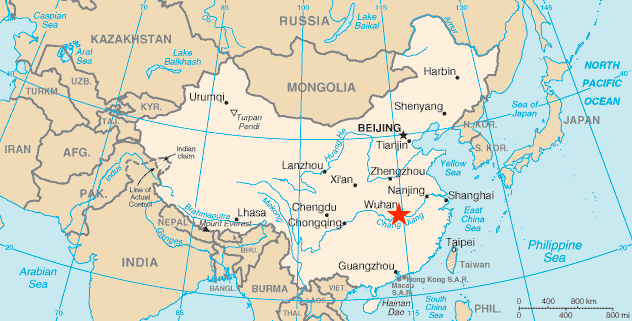
The best part is when the media – the same media that was collectively soiling its Dockers because that mean old Trump was barring direct flights from China because of racism and stuff – demands to know why, back in December, Trump was not commanding a zillion Wuhan Flu tests, a zillion masks, and a zillion ventilators be created, while locking down all of America. Leaving aside the whole lack of an enumerated power to do that thing, in what world would have Trump have convinced anyone – least of all the media that was slobbering over his bogus impeachment at the time – that some bat soup-derived pathogen in BumFoo, China, was going to black swan all over America’s economy? The lack of seriousness by the people who presume to be reporting the news to us is more breathtaking than the damn ChiCom grippe.
“Into The Fire” – The Vietnam War – Sabaton History 061 [Official]
Sabaton History
Published 3 Apr 2020During the height of the Cold War, weapons ran hot in the jungles of Vietnam. Combat along the overgrown trails, the wide open fields of rice-paddies or the marshes of the Mekong Delta, was not only exhausting and relentless, but also the place where many of the old doctrines of warfare did no longer apply. The western coalition had to face the elusive guerilla methods of the North Vietnamese forces, who prepared ambushes and traps along the marching routes. The eerie quietness of the jungle was all too often broken by a sudden explosion of violence as troops marched right into the fire.
Support Sabaton History on Patreon: https://www.patreon.com/sabatonhistory
We would like to thank the World of Tanks team for their contribution and help with the video filming. If you’re not yet a World of Tanks player, join the game and get your hands on cool in-game stuff for free via the link: https://redir.wargaming.net/w7fwclmx/…
Listen to “Into the Fire” on the album Primo Victoria:
CD: http://bit.ly/PrimoVictoriaStore
Spotify: http://bit.ly/PrimoVictoriaSpotify
Apple Music: http://bit.ly/PrimoVictoriaAppleMusic
iTunes: http://bit.ly/PrimoVictoriaiTunes
Amazon: http://bit.ly/PrimoVictoriaAmzn
Google Play: http://bit.ly/PrimoVictoriaGooglePlayCheck out the trailer for Sabaton’s new album The Great War right here: https://www.youtube.com/watch?v=HCZP1…
Listen to Sabaton on Spotify: http://smarturl.it/SabatonSpotify
Official Sabaton Merchandise Shop: http://bit.ly/SabatonOfficialShopHosted by: Indy Neidell
Written by: Markus Linke and Indy Neidell
Directed by: Astrid Deinhard and Wieke Kapteijns
Produced by: Pär Sundström, Astrid Deinhard and Spartacus Olsson
Creative Producer: Joram Appel
Executive Producers: Pär Sundström, Joakim Broden, Tomas Sunmo, Indy Neidell, Astrid Deinhard, and Spartacus Olsson
Post-Production Director: Wieke Kapteijns
Edited by: Iryna Dulka
Sound Editing by: Marek Kaminski
Maps by: Eastory – https://www.youtube.com/c/eastoryArchive by: Reuters/Screenocean https://www.screenocean.com
Music by Sabaton.An OnLion Entertainment GmbH and Raging Beaver Publishing AB co-Production.
© Raging Beaver Publishing AB, 2019 – all rights reserved.
April 1, 2020
The Orient Express: King of Trains, Train of Kings
Geographics
Published 29 Nov 2019The journey to the Express was not a simple one. For upper class travellers to enjoy a luxury, non-stop train ride across seven nations, it would take the dream of a lovesick Belgian engineer, with his rather interesting supporting cast: an American industrialist, the inventor of US tabloid journalism, the Prince of Wales, and one of the most prolific mass murderers of the 19th and 20th Centuries.
Credits:
Host – Simon Whistler
Author – Arnaldo Teodorani
Producer – Jennifer Da Silva
Executive Producer – Shell HarrisBusiness inquiries to admin@toptenz.net
Getting the federal government out of the media business
Far from subsidizing the faltering mainstream media, the Canadian government should follow Ted Campbell’s advice here:
Direct subsidies will make many Canadians suspicious that the media has been bought and paid for and is little better than a government PR agency. Government advertising will bring charges of taxpayers’ money being used to publish propaganda. I wonder if tax breaks might help … maybe, as long as they are available, equally, to The Star and Rebel Media, and the North Renfrew Times, too I suppose. But where does it stop? Is my blog a news source? No, quite clearly not, it is almost 100% opinion, but what about blogs like Vivian Krause’s Fair Questions? It looks a lot more like reporting than what I do. In fact, some of her reporting looks a lot better than what the CBC does, doesn’t it? So where would the bureaucrats who draft the laws and regulations and then implement them draw the lines? Let’s assume that the traditional, mainstream media ~ the Globe and Mail and Global TV and so on ~ get tax breaks, and let’s assume that I don’t qualify. Who else does? Who makes that decision? Is it a politician, someone like the current Heritage Minister Steven Guilbeault? Is it another the so-called “arm’s-length” boards that act as surrogates for the ministers? Or is it a team of bureaucrats? Who do we trust? None of the above?
The better answer, it seems to me, is to do pretty much exactly the opposite of what Daniel Bernhard recommends:
- First: defund most of the CBC. Make it a national (and international) radio network (actually, two networks: one English and one French). Sell off ALL of the CBC’s TV broadcast licences and ALL of its TV production facilities and many of its major radio production facilities, too. Keep a fair number of local studios, especially in rural and remote regions, and a handful (five or six?) larger regional news centres and two (one English, one French) national and international newsrooms that will provide both voice and text reports ~ over the air and on the internet, free for all Canadians and totally free of copyright so that any news agency can use them;
- Second, provide no, zero, nada, zilch funding to any news organization. Watch and see how they shake out in this rapidly changing environment. Remove or reduce most foreign ownership restrictions. Encourage “bundling” ~ allow e.g. telecom companies like Bell and Rogers to own and to integrate newspapers and TV stations and radio stations and internet platforms and entertainment sources, too; and
- Third, get the CRTC out of the business of the internet and cable. There is a legitimate role for an independent regulator to manage scarcity. Over-the-air radio and TV channels are always in limited (and often in short) supply and they need to be allocated (licensed) to individual broadcasters; that’s a useful job for the CRTC. There is no scarcity of capacity on the landlines, cables and even satellite links in Canada. The market does a first-rate job of regulating them; the CRTC does, at best, a third-rate job.
I am certain that there are useful, profitable business models for media out there. The fact that we don’t seem to have one in Canada is, in my opinion, because of the existence of the CBC, which distorts the market too much, and the constant efforts of governments (national, provincial and even local) to try to “support” commercial favourites. The right move is to stand back and remove the heavy hand of bureaucracy and let the media find its own, profitable business model. There is a very limited role for government but Canada does not need a Ministry of Truth.
March 31, 2020
March 29, 2020
March 27, 2020
“Aces In Exile” Pt.2 – Non-British RAF Pilots – Sabaton History 060 [Official]
Sabaton History
Published 26 Mar 2020“Aces in Exile” return! Interesting times make for interesting men. In this second part we talk about some individual stories of Czechoslovakian, Polish and Canadian pilots that all fought under the banner of the British Royal Air Force during the Second World War. How they escaped German occupation, how they traveled through war torn Europe, and how they eventually found themselves fighting in a different uniform for a different country.
We would like to thank the World of Tanks team for their contribution and help with the video filming. If you’re not yet a World of Tanks player, join the game and get your hands on cool in-game stuff for free via the link: https://redir.wargaming.net/w7fwclmx/…
Support Sabaton History on Patreon: https://www.patreon.com/sabatonhistoryListen to “Aces in Exile” on the album Coat of Arms:
CD: http://bit.ly/CoatOfArmsStore
Spotify: http://bit.ly/CoatOfArmsSpotify
Apple Music: http://bit.ly/CoatOfArmsAppleMusic
iTunes: http://bit.ly/CoatOfArmsiTunes
Amazon: http://bit.ly/CoatOfArmsAmzn
Google Play: http://bit.ly/CoatOfArmsGooglePlayCheck out the trailer for Sabaton’s new album The Great War right here: https://www.youtube.com/watch?v=HCZP1…
Listen to Sabaton on Spotify: http://smarturl.it/SabatonSpotify
Official Sabaton Merchandise Shop: http://bit.ly/SabatonOfficialShopHosted by: Indy Neidell
Written by: Markus Linke and Indy Neidell
Directed by: Astrid Deinhard and Wieke Kapteijns
Produced by: Pär Sundström, Astrid Deinhard and Spartacus Olsson
Creative Producer: Joram Appel
Executive Producers: Pär Sundström, Joakim Broden, Tomas Sunmo, Indy Neidell, Astrid Deinhard, and Spartacus Olsson
Post-Production Director: Wieke Kapteijns
Edited by: Iryna Dulka
Sound Editing by: Marek Kaminski
Maps by: Eastory – https://www.youtube.com/c/eastoryArchive by: Reuters/Screenocean https://www.screenocean.com
Music by Sabaton.Sources:
– Narodowe Archiwum Cyfrowe
– IWM: CH 1566
– Morane-Saulnier icon by Truszko from Wikimedia
– D.520 icon by PpPachy from Wikimedia
– Hurricane icon by Martin Čížek from WikimediaAn OnLion Entertainment GmbH and Raging Beaver Publishing AB co-Production.
© Raging Beaver Publishing AB, 2019 – all rights reserved.
March 25, 2020
March 23, 2020
The world of woke crossword-puzzlers – a place of horrible, unintentional microaggressions
David Thompson takes us on a scary trip to the heart of the woke crossword world:
The world of woke crossword-puzzlers — because that’s a thing that exists — is one in which enthusiasts, via social media, grumble about white men, bemoan the insufficient prominence of “queer or POC colloquialisms,” share “off-colour jokes about hypothetical titles for a Melania Trump memoir,” and fret about the exact ratio of male and female names used as clues. Because a lack of “gender parity” in crossword puzzle clues constitutes one of “the systemic forces that threaten women.”
Crossword puzzles can do that, apparently.
The list of possible crossword-puzzle wrongdoings is, of course, extensive, ever-growing and not entirely straightforward.
Transgressions include clues for ILLEGAL (“One caught by border patrol”); MEN (“Exasperated comment from a feminist”); and HOOD (“Place with homies”).
I’ll give you a moment to steady yourselves, to recover from all that gasping.
A New York Times puzzle triggered agitation with the clue “Pitch to the head, informally,” the solution to which was “beaner.” Given sufficient effort, said word could also, it seems, be construed as a mild and antiquated racial slur, albeit one that had escaped me and which I had to look up. Inevitably, apologies and public prostration ensued, despite both the puzzler-writer and editor confessing their own ignorance and intending no harm. Needless to say, the apology immediately resulted in further hissing and rending of garments by people whose Twitter bios include preferred pronouns and the words liberal and feminist.
Unlike almost every other site on the web, I do encourage you to read the comments at David’s blog … he has a great group of regular commenters (commentators? commentistas? Whatevs…)