Quotulatiousness

March 12, 2020

Comrade Sanders

Filed under: Media, Politics, USA — Tags: , , , , — Nicholas @ 03:00

Arthur Chrenkoff points out the amazing double-standard that has helped Bernie Sanders become a major candidate for the Democratic nomination:

Imagine a credible candidate for a significant elected office – never mind the Presidency of the United States of America, the elected office in the world – who has spent his career cheering on Mussolini, Franco and assorted Latin America authoritarian strongmen, who admires Nazi Germany’s record in job creation and public infrastructure, and who, while eschewing excesses of the past, proclaims himself a proud national socialist, but to reassure all he says he is a democratic national socialist.

Now think of Bernie Sanders and you can once again understand the pervasive double standard in our politics. The hypothetical candidate from the previous paragraph – and he or she are very much hypothetical – would be considered a political and social pariah. Bernie, on the other hand, is lionised by millions and until very recently, prior to the miraculous, Dr Frankenstein-like reanimation of Joe Biden, has been considered a probable presidential candidate by a major political party (coincidentally, of which he has never been a member in his entire career).

To the best of my knowledge, Sanders has never expressed any regret, misgivings or second thoughts about a lifetime of cheerleading for virtually every socialist/communist government around the world, from the Soviet Union to Vietnam and from Cuba to, most recently, Venezuela. It is not like the true nature of these regimes has been a secret until now. Anyone with any modicum of knowledge and common sense could see all long these were all totalitarian dictatorships and mass abusers of human rights, which nationalised poverty and whatever their meager economic or social progress it has been achieved at an unacceptable cost.

[…]

That an old Chomskyite like Sanders came so close to being the Democrat presidential candidate tells of a sickness at the heart of a major political party. Democrats still staunchly believe that Donald Trump is a Russian asset but almost ended up with an actual communist sympathser in charge. History didn’t end in 1989; it repeats itself like vomit rising in your throat.

On a lighter note, Larry Correia is amused at the current top two Democratic contenders:

That is about the most pathetic match up of losers to ever occur in any political contest in the history of ever.

Sanders is a Marxist doofus. His plans are gibberish. His philosophy is bullshit, designed to appeal to wishful thinkers who can’t do math, and greedy ass mooches. But don’t worry, he’s a total squish without an ounce of fight in him, so the DNC’s just gonna roll him over to make from for their chosen one …

Joe Biden! Who is either suffering from dementia, or is just really really dumb. (insert porque no los dos? meme girl here)

They can’t let Joe speak for more than five minutes because they know he’ll go off script and start babbling incoherently. And I’m not talking Trumpian style stream of consciousness yammering, but weird ass, dog faced pony soldiers, corn pop, hairy legs, girl sniffing, finger biting, he’ll slap you, fight me IRL, you wanna step outside?

I’ve known people who worked with Joe Biden years ago, and they all said the same thing. With him, what you see is what you get. There is no act. That’s how Joe Biden is. And he was a weird scoundrel back then, but I’m pretty sure his mind is going now.

On the plus side, Jill Biden moves faster than the Secret Service, and that lady will throw hands. Respect.

All the DNC needed to do was find somebody decent and dignified to run against Trump, but oh no, they went batshit crazy instead, and their anointed one is a doddering, senile, fool, who is so corrupt his son, Crackhead McStripperbang makes millions of dollars for imaginary jobs not at all related to his dad’s position, and they don’t even try and hide it. But don’t worry, Biden’s gonna come from behind, because nothing wins swing states like threatening to slap construction workers who are suspicious that Beto O’Dork actually does want to take their AR-14s.

As somebody who would rather reach into his own chest and pluck out his heart than vote democrat, I will admit that I find it terribly amusing all the liberals I know who are weeping, wailing, and gnashing their teeth about Old Rich White Guys There Are No Women Or People Of Color Running … While Tulsi Gabbard is over there, like WTF?

Sorry, progs. She said hurtful things about Hillary, so the media and Google basically Thanos-snapped her into dust. Meanwhile, the right are eagerly betting on whether Nikki Haley is going to run in 2024 or not … So who are the real misogynist bigots?

March 11, 2020

QotD: Orthorexia

Filed under: Business, Food, Health, Media, Quotations, Science, USA — Tags: , , , , — Nicholas @ 01:00

The American media and our popular culture both celebrate a fear of safe, nutritious food if it is not labeled “organic.” To be consistent then, why don’t we also celebrate anti-vaxxers’ fear of safe vaccines, which are also not “organic?” To be clear, I am not an anti-vaxxer. I am strongly pro-vaccine. Everyone in my house is vaccinated, and I am appalled at the outbreaks of contagious diseases due to anti-vaxxers. But let’s be clear, a Venn diagram of those who obsess about organic food and anti-vaxxers will reveal a major overlap. If you know an anti-vaxxer, he is most likely committed to an organic diet.

Our culture accepts as a scientific fact that organic food is healthier than non-organic food. You can watch TV, read popular magazines, or listen to healthy-living gurus, and overwhelmingly you will be told that organic food is healthier than non-organic food. Recipes tend to call for organic produce and ingredients. And it goes beyond organic foods. Genetically-modified foods are slandered as “frankenfoods” concocted by mad scientists in a laboratory. Further, we are admonished to avoid anything that is not “natural.”

OK then. Vaccines are genetically modified, lab-made, and certainly not natural. Being anti-vax seems a logical extension of the natural, organic lifestyle.

I know several people — including family members — who have so completely bought into the natural-organic hype that they genuinely believe GMO and non-organic foods are poisonous. They would rather starve themselves and their children to death than ingest a gram of non-organic food. They look at the shelves of a regular grocery store and see rows and rows of poison. There is a medical term for this fear of safe healthy food — it’s called “orthorexia.” I am not shocked that some of these individuals are anti-vaxxers. Instead, I am shocked (and relieved) that some of the orthorexics I know actually do vaccinate themselves and their children.

Buck Throckmorton, “Organic Food & Anti-Vaxxers – Does The Fear of Safe Food Lead to Fear of Safe Vaccines”, Ace of Spades H.Q., 2019-12-08.

March 10, 2020

The Hitchhiker’s Guide to the Galaxy turns 42

Filed under: Britain, History, Humour, Media — Tags: , — Nicholas @ 05:00

In The Register, Richard Speed notes a significant anniversary:

The weekend marked the 42nd anniversary of the first broadcast of The Hitchhiker’s Guide to the Galaxy, the hugely influential BBC radio show.

42 is a significant number for fans of the innovative series by Douglas Adams so (carefully) pour yourself a Pan Galactic Gargle Blaster, wrap yourself in a towel and join The Register for a trip back to 1978, when the BBC decided to do something quite different.

Writing in the introduction to the Pan Books’ 1985 publication of the radio scripts (which differ from the books, which differ from the television series, which differ from the film …), series producer Geoffrey Perkins described his first meeting with the author. Adams was giving a speech despite being aggressively heckled by the cast members of the Cambridge Footlights show he’d just directed.

He’d also elected to stand on a rickety chair to deliver the speech.

“Here,” recalled Perkins, “was someone prepared to stick his neck out further than most people, someone who would carry on in the face of adversity, and someone who would shortly fall off a chair.

“I was right on all three counts.”

Perkins went on to join the BBC, while Adams worked with the Monty Python team as well as contributing to Doctor Who as the 1970s went on. He pitched the idea for a science-fiction comedy radio series to radio producer Simon Brett. Brett recommended Perkins to the BBC as a potential producer and the series was given the go-ahead on 31 August 1977 (after the first episode was commissioned on 1 March 1977).

“We both owe him an enormous debt,” said Perkins of Brett.

The Birth of a Nation | Based on a True Story

Filed under: History, Media, USA — Tags: , , , , , , — Nicholas @ 02:00

The Cynical Historian
Published 7 Oct 2016

The Birth of a Nation was the first major motion picture success, and because of its historical inaccuracy, the Ku Klux Klan was revived for another round of terror. This is the worst case of a “Based on a True Story” film. So today is a prime time to go into why it was so bad, and get some President Wilson bashing in.

Through YouTube’s cowardice, this video has been demonetized.
————————————————————
references:
Blee, Kathleen M. Women of the Klan: Racism and Gender in the 1920s. Berkeley: University of California Press, 1991. https://amzn.to/2NzeHbl

http://www.npr.org/sections/codeswitc…

https://en.wikipedia.org/wiki/The_Bir…
https://en.wikipedia.org/wiki/The_Cla…
https://en.wikipedia.org/wiki/Ku_Klux…
https://en.wikipedia.org/wiki/Reconst…
https://en.wikipedia.org/wiki/Woodrow…
https://en.wikipedia.org/wiki/1804_Ha…
https://en.wikipedia.org/wiki/Nat_Tur…
————————————————————
contribute to my Patreon:
https://www.patreon.com/CynicalHistorian

LET’S CONNECT:
https://twitter.com/Cynical_History
—————————————–
Wiki:
The Birth of a Nation (originally called The Clansman) is a 1915 American silent epic drama film directed and co-produced by D. W. Griffith and starring Lillian Gish. The screenplay is adapted from the novel and play The Clansman, both by Thomas Dixon Jr. Griffith co-wrote the screenplay (with Frank E. Woods), and co-produced the film (with Harry Aitken). It was released on February 8, 1915.

Three hours long, the film was originally presented in two parts separated by an intermission; it was the first 12-reel film in America. The film chronicles the relationship of two families in the American Civil War and Reconstruction era over the course of several years: the pro-Union Northern Stonemans and the pro-Confederacy Southern Camerons. The assassination of President Abraham Lincoln by John Wilkes Booth is dramatized.

The film was a commercial success, though it was highly controversial for its portrayal of black men (many played by white actors in blackface) as unintelligent and sexually aggressive towards white women, and the portrayal of the Ku Klux Klan (KKK) (whose original founding is dramatized) as a heroic force. There were widespread African-American protests against The Birth of a Nation, such as in Boston, while thousands of white Bostonians flocked to see the film. The NAACP spearheaded an unsuccessful campaign to ban the film. Griffith’s indignation at efforts to censor or ban the film motivated him to produce Intolerance the following year.

The film’s release is also credited as being one of the events that inspired the formation of the “second era” Ku Klux Klan at Stone Mountain, Georgia, in the same year. The Birth of a Nation, along with the trial and lynching of Leo Frank for the 1913 murder of Mary Phagan in Atlanta, was used as a recruiting tool for the KKK. Under President Woodrow Wilson, it was the first American motion picture to be screened at the White House.

Griffith’s innovative techniques and storytelling power have made The Birth of a Nation one of the landmarks of film history. In 1992, the United States Library of Congress deemed the film “culturally, historically, or aesthetically significant” and selected it for preservation in the National Film Registry.
————————————————————
Hashtags: #History #BirthOfANation #KKK #Review #BasedOnATrueStory #WoodrowWilson #DWGriffith

March 8, 2020

Trope Talk: Macguffins

Filed under: Humour, Media — Tags: , , — Nicholas @ 06:00

Overly Sarcastic Productions
Published 6 Mar 2020

Edit: DANG IT YES I MEANT THOR 2 EVERYONE LEAVE ME ALONE

Everybody wants ’em! Very few people get ’em! Sometimes, the things we call macguffins turn out not to be macguffins at all! But what IS the elusive macguffin, and how do we go about understanding, writing, OR acquiring it?

Got a favorite macguffin or macguffin-centric storyline? Drop it in the comments!

Our content is intended for teenage audiences and up.

PATREON: https://www.Patreon.com/OSP

MERCH LINKS: https://www.redbubble.com/people/OSPY…

DISCORD: https://discord.gg/h3AqJPe

OUR WEBSITE: https://www.OverlySarcasticProductions.com
Find us on Twitter https://www.Twitter.com/OSPYouTube
Find us on Reddit https://www.Reddit.com/r/OSP/

March 7, 2020

KidLit is woke, woke, woke

Filed under: Books, Media, Politics — Tags: , , , — Nicholas @ 03:00

Ed West on the amazing amount of propaganda that has been pumped into books for children:

When my daughters were around six and seven, they started French classes at a children’s library in our borough; I had been to our local library countless times but had mainly confined myself to the infant section, and older children’s books were something of a revelation. The entire front desk area was made up of hagiographies of Barack Obama and Nelson Mandela.

And hagiography is the most accurate term: these books were just like the ones I used to read in church. Here Blessed Nelson forgave his jailors, here St Barack healed America of its racial sins – and these are just a couple of examples.

It was a bit of a surprise — learning just how much the tone of kids’ books had changed since I was young and we wore onions on our belts. Nowadays, progressive politics is ever-present in children’s books. Which is fine, if you’re a believer; but if you’re a conservative, you’re faced with raising your children in a culture which is filled with messages you disagree with — sometimes misleading, sometimes anecdotally true but not representative, often just anti-wisdom, giving children the worst possible advice in life. And it’s becoming worse: since about 2016, children’s books have grown way more explicitly political.

Last month, a friend went to Tate Modern and took a picture of the young children’s section. Among the books on display are biographies of Greta Thunberg, something called Queer Heroes, another work called The Rainbow Flag, books about refugees, the bestselling Good Night Book for Rebel Girls — and its countless imitators. Whether you support it or not, this is propaganda; the aim is to raise a generation of progressives just as those Lives of the Saints were designed to bring forth young Christians.

And it works. Conservative ideas are very much in retreat, the subject of a brilliant new book I recently read (which, admittedly, I also wrote).

From a very young age, children are read books and shown films that teach them the core progressive messages: that we are all basically good and only behave badly because of circumstances; that borders and barriers are bad, stereotypes are wrong and girls ought to adopt traditional male gender roles if they want to be respected.

Stereotype inaccuracy is a popular idea — and a false one; in so many kids’ stories the unusual stranger or alien or wild animal who turns up in the neighbourhood will defy the small-minded pessimist who expects the worst. When it comes to gender politics, no self-respecting children’s book in the 21st century has girls aspiring towards being a princess and living happily ever after; to the post-ironic upper-middle-class parents who are the publishers’ main audience, that would just be lame.

History Buffs: Lawrence of Arabia

Filed under: Britain, History, Media, Middle East, Military, WW1 — Tags: , , , , , , — Nicholas @ 02:00

History Buffs
Published 17 Apr 2016

BIG THANK YOU TO THE GREAT WAR CHANNEL FOR COLLABORATING WITH ME AND MAKING AWESOME VIDEOS!

Check out their T.E. Lawrence video here –
https://www.youtube.com/watch?v=iqvcjL6ObH0

And the rest of their awesome channel here 🙂
https://www.youtube.com/user/TheGreatWar

And thank you History Buffs so very much for being patient whilst I was in Ireland working on the Vikings podcasts for the History Channel and moving house at the same time. I sincerely hope you guys enjoy this review!

● Follow us on Twitter: https://twitter.com/HistoryBuffsNH

________________________________________­­_________________________________

Lawrence of Arabia is a 1962 epic historical drama film based on the life of T. E. Lawrence. It was directed by David Lean and produced by Sam Spiegel through his British company Horizon Pictures, with the screenplay by Robert Bolt and Michael Wilson. The film stars Peter O’Toole in the title role. It is widely considered one of the greatest and most influential films in the history of cinema. The dramatic score by Maurice Jarre and the Super Panavision 70 cinematography by Freddie Young are also highly acclaimed. The film was nominated for ten Academy Awards and won seven in total including Best Director, Best Sound Editing, Best Film Editing, and Best Picture.

The film depicts Lawrence’s experiences in the Arabian peninsula during World War I, in particular his attacks on Aqaba and Damascus and his involvement in the Arab National Council. Its themes include Lawrence’s emotional struggles with the personal violence inherent in war, his own identity, and his divided allegiance between his native Britain and its army and his new-found comrades within the Arabian desert tribes.

In 1991, Lawrence of Arabia was deemed “culturally, historically, or aesthetically significant” and selected for preservation in the United States Library of Congress National Film Registry.

March 6, 2020

“Poltava” – The Great Northern War – Sabaton History 057 [Official]

Filed under: Europe, History, Media, Military, Russia — Tags: , , , , , — Nicholas @ 04:00

Sabaton History
Published 5 Mar 2020

Bullets break the silent air, a wasted battleplan! It was a long and harsh march through the lands in the east, where the Swedish army of Charles XII sought to bring the Russian Empire to its knees. The Swedish king had the vision of a great victory, in which he captured Moscow and destroyed Tsar Peter I’s ambitions once and for all. However, as in late June 1709, the exhausted and hungry Swedish troops finally met the Tsar in open battle near the fortress of Poltava, it all seemed impossible. A relentless and fateful battle would commence. A battle after which only one empire would continue to rise while the other would fall.

Support Sabaton History on Patreon: https://www.patreon.com/sabatonhistory

Listen to “Poltava” on the Album Carolus Rex:
CD: http://bit.ly/CarolusRexStore
Spotify: http://bit.ly/CarolusRexSpotify
Apple Music: http://bit.ly/CarolusRexAppleMusic
iTunes: http://bit.ly/CarolusRexiTunes
Amazon: http://bit.ly/CarolusRexAmz
Google Play: http://bit.ly/CarolusRexGooglePlay

Check out the trailer for Sabaton’s new album The Great War right here: https://www.youtube.com/watch?v=HCZP1…

Listen to Sabaton on Spotify: http://smarturl.it/SabatonSpotify
Official Sabaton Merchandise Shop: http://bit.ly/SabatonOfficialShop

Hosted by: Indy Neidell
Written by: Markus Linke and Indy Neidell
Directed by: Astrid Deinhard and Wieke Kapteijns
Produced by: Pär Sundström, Astrid Deinhard and Spartacus Olsson
Creative Producer: Joram Appel
Executive Producers: Pär Sundström, Joakim Broden, Tomas Sunmo, Indy Neidell, Astrid Deinhard, and Spartacus Olsson
Post-Production Director: Wieke Kapteijns
Edited by: Iryna Dulka
Sound Editing by: Marek Kaminski
Maps by: Eastory – https://www.youtube.com/c/eastory

Archive by: Reuters/Screenocean https://www.screenocean.com
Music by Sabaton.

An OnLion Entertainment GmbH and Raging Beaver Publishing AB co-Production.

© Raging Beaver Publishing AB, 2019 – all rights reserved.

From the comments:

Sabaton History
2 hours ago
Just a quick correction: St. Petersburg was not named after Peter I himself, but after his patron saint St. Peter. Although the Russian Tsar made sure that he himself would be immortalized by founding St. Petersburg, Russia’s window to Europe.

Some of the early influences on Terry Pratchett’s writing

Filed under: Books, Britain, Media — Tags: , , , , — Nicholas @ 03:00

That is, the books that made him love reading and how he incorporated those early works into his own style. This is from a very late interview with Tom Chivers published after his death in 2015:

“I wasn’t particularly interested in books,” he says. “And my mum, God bless her, she rolled up her sleeves and gave me a penny per page, and it worked beautifully. I think she only gave me about thruppence, because the third book was The Wind in the Willows.” He was so enthused after this, she no longer needed to pay him. Indeed, Pratchett got a job in Beaconsfield library. “You’re talking to a man who thinks, mostly, that his school days assisted him not at all, but the library did, in spades.” He looks at me sharply. “You, when you were young, read lots of books, didn’t you? A –” he pauses, and chooses his next word carefully – “a —-load, I believe?” I did, I reassure him. “A library boy. I recognise the kind. I was the same.” He had an indifferent time at school – he grumbles about the “death or glory” nature of the 11-plus (he passed easily), and about old teachers who had a grudge against him at the High Wycombe Technical High School (“sort of half a grammar school. A big woodwork place”). But the fire kindled by Kenneth Grahame, and Ratty, Mole and Badger, grew, and blazed.

The cover of Discworld Imaginarium by Terry Pratchett’s “artist of choice”, Paul Kidby.

Pratchett’s own sense of humour, a sort of gentle, English, observational thing, stems from this period. “Wodehouse, obviously, but also I tore my way through the Just William books. Richmal Crompton was a very good writer. I think it was from her that I learnt irony. It took me a while to work it out.” Do you think you could define irony, I ask him. “Sort of like iron.” I deserved that, I acknowledge. “When you get hit on the head with it, you know it.”

He also fell in love with RJ Yeatman and WC Sellar, authors of 1066 and All That (“in the Thirties, when the middle classes were getting richer, the two of them really got as much fun out of that as you could. The Thirties were an awful lot of fun. Or at least until the end. Bad ending, the decade, admittedly”) and fell out with his headmaster for “bringing in a copy of Mad magazine. How horrible! And a copy of Private Eye. Seditious.” But it was the now defunct satirical magazine Punch which really formed the comic voice in which he now speaks. “I read my way through all the bound Punches. It was the best way to read history; you got it without granny looking over your shoulder, and it was just astonishing.

“And just about any writer of distinction, anywhere in the English language, worked for Punch. Mark Twain. Jerome K Jerome. And they spoke with the same voice, which opened the door for me – the same kind of slightly satirical, people-are-rather-silly-but-they’re-not-that-bad voice, friendly about humanity, fond of its foibles.” Apart from the books, the other influences of his youth are clear in his own writing – especially the later Ankh-set works, in which he frequently extols the virtues of the poor-but-respectable people living in tiny, tidy terraced houses, and of the self-made men and women. “There used to be a sort of dignity in labour,” he says. “I don’t think there is now.”

He has spoken, often, of how his time on local newspapers made him. He started at 16, in high dudgeon at his headmaster: “On my last day at the school, I left all my stuff behind and phoned up the editor of a local newspaper. He actually used some cliché like, ‘I like the cut of your jib, young man’, or something.” It is the stuff of legend that he saw his first dead body the next day, “work experience really meaning something in those days”, as he put it in his author’s bio in his books.

“Truthfully, without over-egging it, as I often do,” he says, “the library and journalism, those things made me who I am. Journalism makes you think fast. You have to speak to people in all walks of life. Especially local journalism. London journalism can p— in someone’s face and they can’t do anything about it. Try that in local journalism, and someone’s down to complain. Everyone should have one local journalism job in their lives, especially if they’re a nosy parker.” He talks of local journalists in the same way he does his parents, with a sense of quiet heroism. “I interviewed an elderly journalist who’d worked in a small town for a very, very long time. I asked: is it boring? And he said: over there, that’s where a couple pushed their daughter into the attic because she’d had a black baby. And over there, that’s where a man was caught in flagrante delicto with a barnyard fowl. And he’d said to the magistrates, ‘Well, it was my fowl’. Even those small moments, they make you realise the world is not as you thought.”

March 3, 2020

The bottled water and toilet paper hoarders of 2020

Filed under: Economics, Health, Media — Tags: , , — Nicholas @ 03:00

Arthur Chrenkoff on one of the oddest features of the current infectious disease panic:

“sold out of bottled water?” by Klara Kim is licensed under CC BY-NC-SA 2.0

This is happening alright, and it’s not some isolated incidents; on my Facebook news feed, at least half a dozen posts from friends in Sydney and Brisbane display photos of Venezuela-style empty shelves at their local supermarkets. The fear is real, and so is the hoarding.

OK, I can understand face masks and hand sanitisers walking off the shelves, as these are the crucial tools in containing the spread of the pandemic. Most face masks – as with so many other products in our shops – are made in China and in the current crisis conditions any new and additional supplies won’t make it out of the country, so whatever is already here is it. And it isn’t, as masks have been the first item to disappear from retail outlets from your local pharmacy to a Bunnings store.

I can also understand the non-perishable food supplies. Even though Australia could be quite self-sufficient if need be (minus the out of season imported fruit and veg), possibly people are stocking up not so much in fear the food will run out but out of reluctance to go out in the public in a few weeks’ time should the situation really turn into a zombie apocalypse. In any case, there is nothing wrong with having a well stocked pantry.

Where I start to no longer understand the consumers is bottled water. We are fortunate to live in a developed country where one can safely drink from a tap. There won’t be shortages of drinkable water under any circumstances – except for a complete societal collapse – and coronavirus is not a water-borne pathogen like those causing cholera or typhoid. If you are still paranoid, you can boil your water before ingesting (just make sure you cool it down).

But it’s the toilet paper that really gets me. Trust me, if things go really belly up, toilet paper is the least of your worries. Humanity has survived for tens of millennia without sanitary tissues, and in their absence any paper or rag or even running water will substitute nicely. Food, water, medicines, electricity, to name just four, are much more crucial in a time of crisis or emergency. Again, it’s true that a lot of toilet paper is manufactured in China or generally overseas and so potentially susceptible to shortages if manufacturing and international transport are affected as they are already. But how much toilet paper does your household require to function? Are you expecting you might need the iron rations of your favourite rolls to last for at least a few months? And if you think that you might not be able to restock on toilet paper until later this year, then – let me repeat myself – don’t you think you will have much bigger problems with ensuring your continuing survival to worry about?

As Norman Lewis points out, the worst hysterics are among the “elites”, not us lumpenproles:

Last week, the world stock markets suffered their worst week since the financial crisis in 2008, with $6 trillion wiped from shares and, in some markets, a sell-off at a rate not seen since the Great Depression almost a century ago. Why? Because global investors are in a panic about the potential economic fallout from the coronavirus epidemic.

Many commentators are making the point that this is mad. Ross Clark argues convincingly in the Spectator that the “most dangerous thing about coronavirus is the hysteria”. Philip Aldrick, economics editor of The Times, agrees. He says it is the “panic we should fear more than the virus itself”.

Our appetite for doom and fear of the unknown are offered as explanations for this behaviour. Risk culture and a predisposition to overreacting to threats are also certainly components of what is happening. But there is another equally important element linked to these that is not being raised – that this madness is not being driven by the “low-information”, knuckle-dragging, gullible ignorant masses, but by the information-rich, university-educated and refined global business and government elites.

The contrast between the responses to coronavirus from the elites and ordinary people has been stark. Even as the level of panic in the mainstream reporting around coronavirus has risen, ordinary people have just gotten on with their lives. The supposedly well-informed elites, who often accuse the “dumb” masses of being vulnerable to hysteria and “fake news”, have themselves been prodded into panic. Meanwhile, where they are not in lockdowns, ordinary people are still going to work, commuting, going to bars … They’re simply getting on with their lives, while taking note of the potential risks.

The elites are in free-falling panic; like a herd of wildebeest, panicked by the sight of a predator and rushing blindly across crocodile-infested waters, they have sparked a potential global economic meltdown. Meanwhile, we see stoic common sense, simple but profound wisdom, on the part of the “great unwashed”.

February 28, 2020

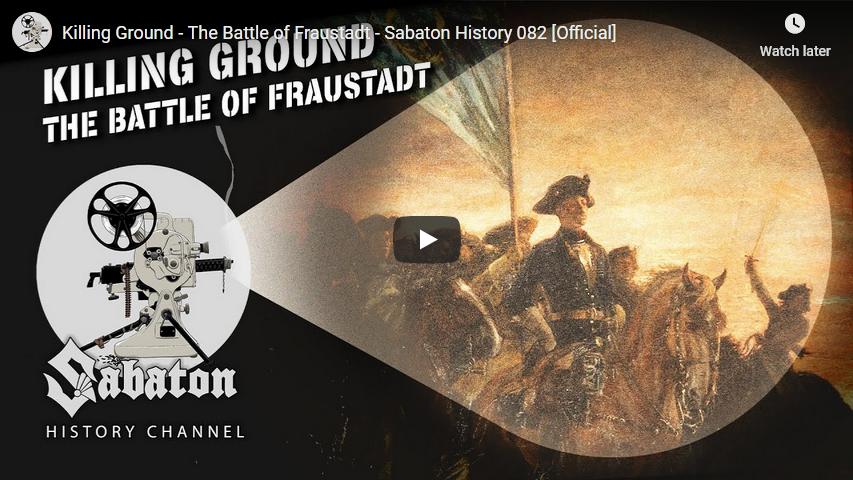
“The Future of Warfare” – British Tanks of the Great War – Sabaton History 056 [Official]

Filed under: Britain, Germany, History, Media, Military, WW1 — Tags: , , , , , — Nicholas @ 04:00

Sabaton History
Published 27 Feb 2020

Tanks! What a terrible and frightening sight they must have been for the Germans, the first time they had appeared on the battlefield at the Somme in 1916. The tanks were the product of many different ideas and prototypes, that all sought to overcome the perils of the modern battlefield — the machine gun, the bombed out ground and the barbed wire. The British Mark I tank would crush those obstacles through its sheer weight and begin a new age of mechanized warfare!

Support Sabaton History on Patreon: https://www.patreon.com/sabatonhistory

Listen to “The Future of Warfare” on the album The Great War:
CD: http://nblast.de/SabatonTheGreatWar
Spotify: https://sabat.one/TheGreatWarSpotify
Apple Music: https://sabat.one/TheGreatWarAppleMusic
iTunes: https://sabat.one/TheGreatWarItunes
Amazon: https://sabat.one/TheGreatWarAmazon
Google Play: https://sabat.one/TheGreatWarGooglePlay

Watch the official lyric video of “The Future of Warfare” here:
https://www.youtube.com/watch?v=t8qJi…

Check out the trailer for Sabaton’s new album The Great War right here: https://www.youtube.com/watch?v=HCZP1…

Listen to Sabaton on Spotify: http://smarturl.it/SabatonSpotify
Official Sabaton Merchandise Shop: http://bit.ly/SabatonOfficialShop

Hosted by: Indy Neidell
Written by: Markus Linke and Indy Neidell
Directed by: Astrid Deinhard and Wieke Kapteijns
Produced by: Pär Sundström, Astrid Deinhard and Spartacus Olsson
Creative Producer: Joram Appel
Executive Producers: Pär Sundström, Joakim Broden, Tomas Sunmo, Indy Neidell, Astrid Deinhard, and Spartacus Olsson
Post-Production Director: Wieke Kapteijns
Edited by: Iryna Dulka
Sound Editing by: Marek Kaminski
Maps by: Eastory – https://www.youtube.com/c/eastory

Archive by: Reuters/Screenocean https://www.screenocean.com
Music by Sabaton.

Sources:
– Bundesarchiv
– Bibliothèque nationale de France
– Library and Archives Canada
– National Library of Scotland
– Australian War Museum
– National Army Museum
– IWM: Q 53204, Q 115391, Q 1419, Q 78121, Q 72864, HU 55578, Q 14496, Q 14495, Q 2487, Q 2486, Q 5574, Q 52, Q 43463, Q 3565, Q 3542, Q 5578, Q 80026, Q 68975
– IWM ART: REPRO 000684 7
– Sound of tracktor engine by viertelnachvier, tank sound by nicstage, from freesound.org

An OnLion Entertainment GmbH and Raging Beaver Publishing AB co-Production.

© Raging Beaver Publishing AB, 2019 – all rights reserved.

February 27, 2020

Toby Young’s Free Speech Union (FSU)

Brendan O’Neill explains why Toby Young’s FSU is so important right now:

The beautiful thing about the mad reaction to Toby Young’s Free Speech Union (FSU) is that it proves why the union is so necessary. No sooner had Young unveiled his censorship-busting union than the illiberal liberals were out in force to mock it and ridicule it and to insist that, actually, there is no free-speech crisis in the UK. It’s a right-wing myth, they claim. There is no widespread censorship. People aren’t being shipped off to gulags for expressing an opinion. Apparently, the free-speech “grift” – God, I hate the word “grift” – is just a bunch of pale, male and stale blokes pissed off that they can no longer say the N-word or talk openly about women’s boobs. Freedom of speech is not under threat, the Young-bashers claim, and anyone who says it is is probably just an Islamophobe, transphobe or some other breed of phobe itching to spout bile with “no consequences”.

This rank denialism, this blinkered insistence that free speech is not in danger in 21st-century Britain, is exactly why we need the FSU and as broad a discussion as possible about the importance of the liberty to express oneself. Because the fact that so many inhabitants of the chattering-class bubble can’t even see that free speech is dying right now confirms how naturalised and uncontroversial the new censorship has become. They don’t even see it as censorship. They see it as perfectly normal, and good, in fact, that certain views cannot be expressed in public life or on social media. That’s how cavalier the new war on heretical opinion has become. At least in the past, from Torquemada to the McCarthyites, authoritarians were honest about being censors. Today’s self-elected moral guardians of correct opinion are so hubristic, so taken with their own mortal rectitude, that they don’t even see themselves as enemies of freedom, but rather as decent, unimpeachable maintainers of a natural intellectual order.

Things have come to such a pass that these people will literally seek to censor you in one breath and then express alarm at being called censors in the next breath. Hence the Guardian could publish a piece last week claiming that the idea that there is a culture of censorship in British universities is a “right-wing myth” while simultaneously defending censorship on campus. In an act of extraordinary moral contortionism, Evan Smith mocked the “idea that there is a free-speech crisis at British universities” and then, without missing a beat, he defended the policy of No Platform and the creation of safe spaces because “the university cannot be a place where racism and fascism – as well as sexism, homophobia and transphobia – are allowed to be expressed”. The Orwellianism is staggering. “There is no censorship on campus. Except the censorship I approve of. Which is not really censorship.” That is what is being said here. The intellectual dishonesty is almost impressive.

This Orwellian denialism of the existence of censorship by people who actually support and enact censorship cuts to the heart of the free-speech crisis in the UK. The reason the illiberal liberals and woke McCarthyites and Twittermobs don’t consider themselves to be censors – even as they gleefully agitate for the censorship of feminists, secularists worried about Islamist extremism, and right-wing people opposed to mass immigration – is because they have convinced themselves that certain forms of speech are not free speech. That certain beliefs should not be afforded the liberty of expression. You hear it in their telling, baleful mantra that “Hate speech is not free speech”. And if “hate speech” is not free speech, but rather some kind of toxin, a pox on public life, then crushing it is not censorship. It is more like an act of public health: cleansing the public realm of diseased thoughts that are liable to harm certain groups. These people see themselves not as censors, but as public-health activists delousing the community of germs spread by evil men and women.

Tuesday night’s Democratic debacle debate

Filed under: Media, Politics, USA — Tags: , — Nicholas @ 03:00

Mark Steyn reports on the casualties from the latest Democratic presidential debate:

Henry Kissinger’s famous line on the Iran/Iraq war was that it’s a shame they can’t both lose. In Tuesday night’s primary debate they somehow contrived for everyone to lose, including both the Democrat Party and the media. It reached its peak of perfection early on when all seven candidates began shrieking over each other and, as with some hideous atonal aleatoric modernist cacophonous symphony, its very unlistenability seemed an impressive feat of organization.

Five insipid moderators sat there like dowagers declining to catch the eye of the shrieking nutter on the Piccadilly Line as Elizabeth Warren ate up all the opening airtime with charges that Michael Bloomberg would make you kill your babies (she’s not concerned about the baby-killing, only that it shouldn’t be Bloomberg ordering the hit). Realizing that the show was in danger of degenerating into Screech White and the Six Dwarves, her comrades belatedly began screaming along, shredding the alleged “rules” even as the hopelessly inept moderators gamely persisted with all the usual bland over-formatted props of leaden telly debates – like making a big deal about interactively selecting random Twitter-submitted questions about the besieged Syrian city of Idlib.

Mayor Pete looked earnestly into the camera and declared, “I stand with the people of Idlib.” Which, translated out of of Demoblather, means: You guys are screwed. Still, the ability to adlib a line about Idlib is not to be disdained.

In other news, Joe Biden got tough with China: “They must play by the rules. Period. Period. Period.” Actually, I think “period period period” is an ellipsis… Which is oddly Bidenesque. But he was assessed by the experts to have delivered a killer performance – if only because he appeared to know what state he was in and which office he was running for, and did not claim to have been arrested on the streets of Soweto while trying to see a South African prisoner in a gaol cell nine hundred miles away. Great job, Joe!

On the other hand, he did assert that, thanks to Bernie’s crazy pro-gun Second Amendment absolutism, 150 million people had been killed since 2007. Which would be half the population of America. And is 149,997,230 people more than the coronavirus, and roughly a thousand times the entire population of Idlib, so you’d think somebody would have noticed it.

QotD: Clichés of bad travel writing

Filed under: Economics, Media, Quotations — Tags: , , — Nicholas @ 01:00

The poor-but-oh-so-happy sentiment pops up without fail in any crappy travel magazine version of a visit to Myanmar, Laos, or Nepal (and probably any other desperately poor and badly governed country), in which “the people” are always gleeful, generous, and colorful. I’m not exactly sure what it is about being ruled by insane dictators that makes people so damn nice, but here’s an idea: If you’re a Western travel writer, or, say, German tourist, and you’re going to an impoverished country full of hungry people in which you clearly stand out as someone with money to spend, people might be extra nice to you.

Kerry Howley, “But the People Are So Friendly“, Hit and Run, 2005-08-18.

February 25, 2020

QotD: Canadian content rules

Filed under: Cancon, Government, Media, Quotations — Tags: , , , — Nicholas @ 01:00

[Stargate: Atlantis] is a Sci-Fi channel show produced in Canada, starring Canadians and featuring a cranky, sympathetic Canadian character in a lead role. But thanks to Canadian trade-barriers it has yet to air on Canadian television. Remind me again what original programming Canada’s CRTC sheltered Space: the Imagination Station has produced? How many times can we be expected to watch decade old repeats of Seaquest DSV in defense of “Canadian culture”? If they had the wisdom to rebroadcast Starlost or some such epic crap I could almost see the point but as it stands CanCon rules, and the businesses they shelter, are a joke.

I tried making this case to a left-leaning friend. She said, half-joking, “I know you are speaking Canadian but I can’t understand any of the words.” I am reminded every day of my former communication studies undergrads who would argue for Canadian content rules (I am told these represent “regulation” and not “censorship”) and, with no change of expression, cheerfully explain they never watch Canadian television because it is uniformly awful. Such is the naked truth of ideology.

Ghost of a Flea, “Poisoning the Well”, Ghost of a Flea, 2005-08-12.

« Newer PostsOlder Posts »

Powered by WordPress