
No totalitarian regime has ever successfully solved what you might call the Emmanuel Goldstein Problem. They just can’t exist without some kind of existential threat to rally around; it’s their nature. In 1984, the Party simply created Goldstein out of whole cloth, but they seemed to believe this was just another temporary expedient — they were counting on technology to do all the heavy lifting of mass mind control, so they wouldn’t have to resort to things like Goldstein and MiniTrue.
Obviously that ain’t gonna work in Clown World, Cthulhuvious and Sasqueetchia being notso hotso on the STEM. They’ll always need a Goldstein, then, and that’s a real problem, because whatever else Bad Orange Man is, he’s also pushing 80 years old. How long would he have, even in a sane world? 10 more years, tops? And the candidates for Replacement BOM are generally a sorry lot … but even if they weren’t, they’re about to get purged, too. The WARG is already going negative …
For overseas readers (and those not conversant with “Moneyball”: Baseball has these weird “sabermetric” stats that purport to compare players from different teams and eras in terms of absolute value. It’s acronymed (it’s a word) WAR, Wins Above Replacement; “replacement” being an absolutely average player. Like all baseball “sabermetrics” it quickly gets ridiculous, but see here. According to this guy, then, Babe Ruth has a per-season WAR of 10.48 in right field. That means Babe Ruth, himself, personally, alone, was worth 10 and a half wins above your “average” player. If Ruth goes down for the season in a tragic Spring Training beer mishap, you can go ahead and take 10 wins off the Yankees’ record that season (assuming they replace the Bambino with some scrub just off the bus, which back then is what would’ve happened).
WARG, then, is Wins Above Replacement Goldstein. I’d say that Orange Man set the bar for Goldsteins, but that’s not statistically useful, since Trump Derangement Syndrome is so far the apex of liberal lunacy. To make statistical comparisons useful — to find a “replacement Goldstein,” as it were — we have to have someone the Left considered an existential enemy at the time, but who didn’t really do much in the grand scheme of things. So I nominate George W. Bush. If Bush is the “Replacement Goldstein,” then his WARG is a nice round zero. Trump would have a Babe Ruth-ian WARG.
This gives us a convenient measurement for looking at various Republicans, both current and historical. Richard Nixon would have a pretty high WARG — he drove them even more nuts than W. did — and Ronnie Raygun would be up there, too. Gerald Ford would have a slightly negative WARG, since not even the New York Times could pretend Gerald fucking Ford was a threat to the Progressive takeover. Your steeply negative WARGs would be those “Republicans” actively working with the opposition, like Bitch McConnell.
I’d argue that Ron DeSantis and maybe Greg Abbott still have positive WARGs … for now. But they’re going to get gulaged here in pretty short order. Who’s the next guy on the bench? Your Marjorie Taylor Greenes and whatnot drive certain segments of the Left insane, but she’s just too ludicrous to have a positive WARG. And then things start getting really pathetic …
The Law of Diminishing Returns makes the WARG problem even more acute. Freakout fatigue is a real thing. The Media will give it the old college try, of course, but you really just can’t convince people that a goof like Greene is some kind of existential threat to Our Democracy. Her WARG goes negative every time she opens her mouth.
Severian, “Salon Roundup”, Founding Questions, 2022-08-20.
August 26, 2022
QotD: The WARG rating – “Wins Above Replacement Goldstein”
August 25, 2022
Liz Cheney “got smashed worse than a wine aunt who just lost a national championship cat show”
Theophilus Chilton indulges in a bit of gloating over Liz Cheney’s Republican primary loss to a Trump-supported challenger:
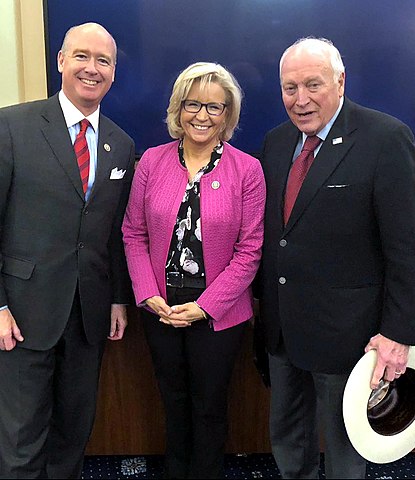
Liz Cheney with Robert Aderholt and former Vice President Dick Cheney, 14 November, 2018.
Photo from the office of Robert Aderholt via Wikimedia Commons.
The biggest news in domestic American politics in the past week was the absolutely shattering upset of Liz Cheney by Trump-backed challenger Harriet Hageman in Wyoming’s Republican primary for its at-large House seat. I mean, she got smashed worse than a wine aunt who just lost a national championship cat show. In a race that should have been hers for the taking, she was instead defeated by 37 points in one of the worst primary losses suffered by a sitting politician in recent history. If I sound like I’m vicariously gloating, it’s because I am.
Yet, if you were to listen to what the world of Never Trump is saying, you’d think that rather than an ignoble defeat caused by poor political decision-making, Cheney’s self-immolation was a glorious act of martyrdom for the cause of our sacred norms. Seriously, their cope for her loss is that she was too brave and too principled to do anything as tawdry as give the actual voters what they want. Cheney and the rest of Never Trump have seemed kind of bitter, like they’re angry at the voters for not getting with the program. At the same time, the current buzz involves Never Trump trying to gin up enthusiasm for a Cheney 2024 presidential run.
So yeah, there are a ton of Never Trumpers out there running with the line that Liz Cheney will be a serious contender to challenge Trump in the 2024 GOP primaries. “Now,” you might be thinking to yourself, “what on earth makes them think that she has a snowball’s chance in the great perdition of breaking even the low single digits?” And you would be correct. There is, in fact, zero chance that “she’s gonna get him next time!” Yet, why are a bunch of people who are supposedly savvy politicos and insiders trotting out such obvious nonsense?
What’s going on here is that these people are being put through a humiliation ritual, a peculiar kind of loyalty test that the Regime will often impose on its enemies, both potential and actual. These savvy politicos don’t really believe that Liz Cheney has any chance at all — but they have to say so if they want to remain in the good graces of the powers that be. Indeed, once you start paying attention to modern politics and culture, it’s amazing to see just how much of what goes on is basically this kind of loyalty test. Are you a Goodthinker who goes along with the sociocultural programming or are you a Badthinker who questions or rejects elements of the Regime’s playbook?
A few years ago, I wrote about the distinction between narratives and reality. There is a great gulf between what the Left says it believes and what actually is. What you see on the news and on social media has no bearing on reality or vice versa. But the thing to keep in mind is that none of this matters to the Left. They don’t actually want to convince or be convinced. The public face of their ideology and their policy decisions most often are not determined by some Rockwellesque ideal of public debate, but by social force.
August 23, 2022
When the Great Reset turns into the Great Resignation, unexpectedly
Elizabeth Nickson is enjoying the spectacle of the Klaus Schwabs of the world being undermined by the rational actions of ordinary people:
Klaus Schwab’s slaves are quietly vanishing.
In the US, 52 million quit their jobs in 2022, which only added to the flood of 2021. 41% of the work force, when interviewed stated they were quitting, and another 38% were planning to. Mostly mid-career. That’s the ball game, baby, that is almost 80%. ABC Corp will be left with oldsters too tired to change and a bunch of kids looking to cash in and cash out as fast as possible.
Corporatists are in a bit of a flap, which is delicious to watch. Their Bible, the Harvard Business Review is scrambling to explain, to deconstruct, to propose ways to get them back, more money, more time off, more benefits. All of which would thrill trade unionists except that they won’t be getting their cut, their vig, their power base. No one is coming back, btw, Klaus, the UN and the CCP screwed the pooch, everyone knows about it, no censorship can hide the fact that their plans for us include pinning us in our matchboxes, hypnotizing us via screens and farming us like sheep with monthly allowances and Prime delivery of cricket paste.
HBR has therefore re-named this The Great Exploration, as a sop to the rapid individuation of the people they tried to turn into machines. Yeah, that’s not going to work either. No workshops from Tony Robbins, no retreats with Oprah, no courses, no sabbaticals, no Five Second Rule gal or Brene Brown explaining that investigating insurance claims is somehow spiritual, especially if you “fight” for the “rights” of the marginal, and give your next promotion to a person of color, preferably other sexed. Nope nope nope. It is over.
Target missed its earnings projections by 90%. Ninety percent. Ninety percent. The thing about being enmeshed in corporate culture is that you need a lot of stuff to be comfort yourself after the brutalism of your days. You can go home and wallow on your green mattress and lots of pillows with your achingly lonely pets. But when you’ve quit, and maybe sold your house and moved to a cheaper location and started farming, you don’t need more stuff, you have tasted freedom and a pox on all your big box stores. Instead of competitive co-workers, you have your dog, your family and friends, and an open road.
Bye-bye Black Rock. It looks like the hail Mary of ESG and DEI failed. In fact, it acted as a repellant. So obviously dishonest and a play to shame employees into submission, added to the manipulations of Covid, the lock-downs, the forced injections, the obvious sickening of your friends and family, bye bye.
I personally could not be more delighted, since I quit almost 20 years ago, reasoning that working in newsrooms was like entering a bee hive without protection. I look around my home place and there are a lot of eager new faces, young and thrilled, and loaded for bear.
August 21, 2022
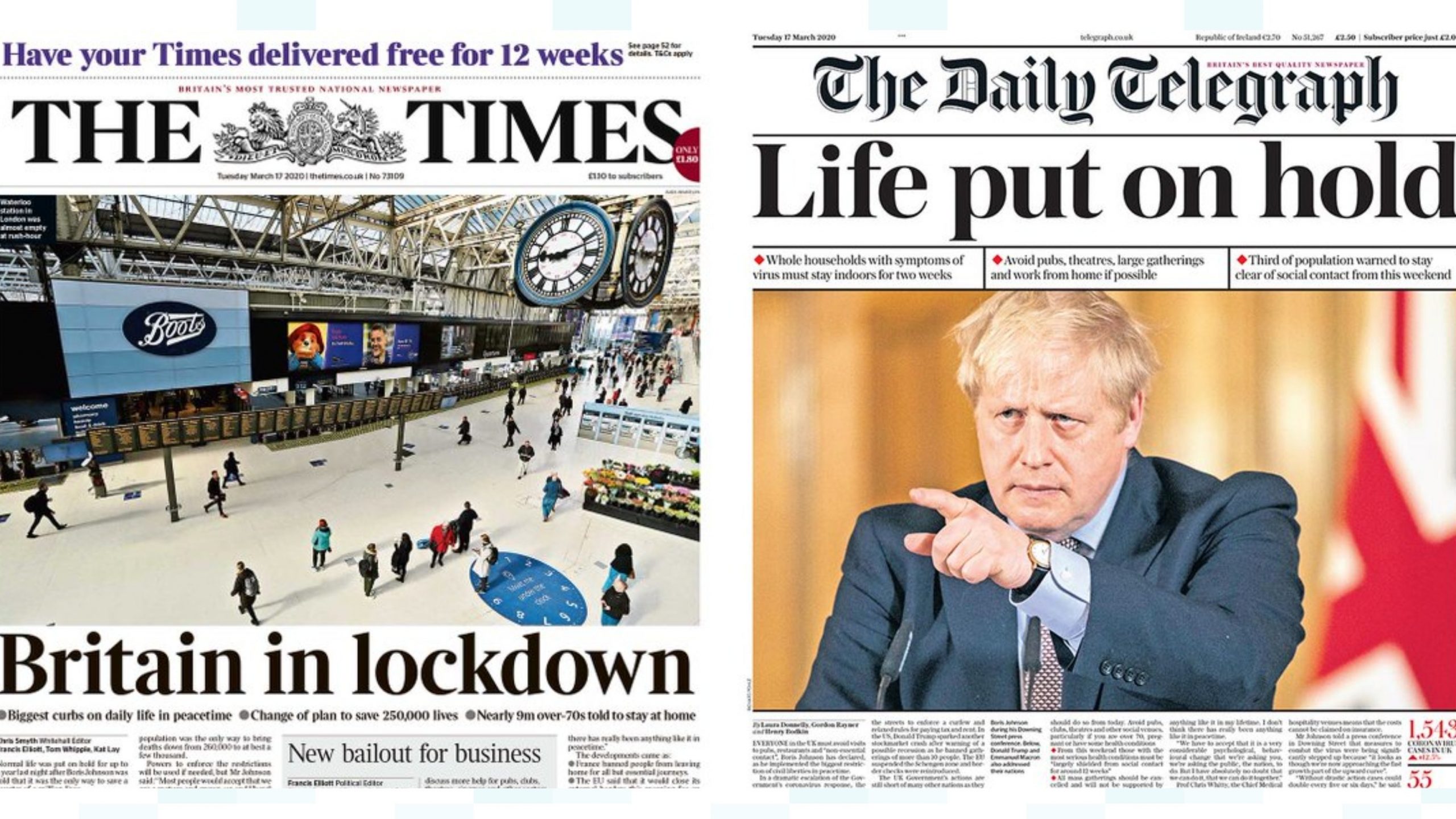
The pandemic lockdowns heralded the “worldwide end of the Nuremburg code”
At Samizdata, Perry de Havilland considers how British culture has been impacted by many of the worst notions coming out of American culture in the last few years:
… support for Brexit, by no means confined to the lumpenproletariat of Guardian reader’s imagination, might not indicate what purveyors of the high status opinion fondly imagine. The conflation of Brexit with the “Trump phenomenon” was always overblown, given the deep social and structural differences between UK and USA. Yes, we are influenced by America, but we are not the same in oh so many ways.
But western civilisation, not just Britain, is undeniably going through a very strange phase. The insane and demonstrably pointless covid lockdowns seem to have had a pressure cooker effect, with every -ism being dialled up several notches. The mainstreaming of transsexuality, a largely harmless hobby until a lunatic fringe grabbed hold of it, indicates the world is not running in well-oiled grooves. An inability to define “what is a woman?”, by sages and politicians who nevertheless expect to be treated as serious people, would have seemed implausible just a few years ago.
But the covid lockdowns, that is the “biggie”: an egregious abridgement of liberty & common sense that placed the global economy into repeated bouts of cardiac arrest. The worldwide end of the Nuremburg code.
The lockdowns were an even more polarising issue that Brexit or Trump or indeed anything else. Why? Because there was no opt-out, you could not just go to work, or visit granny, no ability to ignore the whole thing and just head down the pub or retire for a macha latte in some café. The effects of that will be enduring. That was the issue that taught a lot of people to fear what other people believe to be true, and people always hate what they fear.
Now just wait to see what happens when the green lunacy that stopped investment in reliable power supply and new reservoirs means we start running out of power and water. I suspect that will be what makes the cork finally blow off.
August 20, 2022
Yes, you will end up owing your conspiracy theorist friend an apology at this rate …
Chris Bray re-enacts a few of the minor erasures, walk-backs, and out-and-out lies coming from organizations who’ve spent the last two-plus years spreading a line of medical “truth” that, day-by-day, appears a bit less “truth-y” all the time:
I can’t get this attack on Dr. Ryan Cole out of my head:
What’s becoming very clear is that the narrative is going to shift by inches, eventually ending up at the place where mRNA dissenters started, but. Let’s get through the first part, and I’ll get to that but in just a moment. Look at, for example, the recent stealth-edit on the CDC website that quietly removed the assurance about the spike protein from mRNA injection leaving your body in a hurry. So on Monday it’s disinformation to falsely claim that the spike protein lingers in your body, and you’re a dangerous extremist if you say it; on Tuesday, the simple fact of lingering spike protein was always known and never contested. That’s DISINFORMA— hold on, I’ve just been handed a new memo.
This is going to keep happening, in little pieces that move toward reality. There are ZERO mRNA deaths, you lying idiots, and you need to stop spreading disin— uh, hold on, it says here that, uh …
In a year, or in five years, the things that Ryan Cole and Clare Craig and Peter McCullough and Tracy Beth Hoeg and Robert Malone and all the other MONSTERS have been saying will be validated and acknowledged. We’ll know that the mRNA injections caused heart damage and a cancer spike, and we’ll know that mRNA-injected people get sick more often than the dirty unvaccinated. Look at the matter-of-factness with which Deborah Birx says that oh yeah, I always knew these vaccines — vaccines! — weren’t going to prevent infection. A year before she shrugged and said she’d always known that, you would have lost your social media accounts for saying exactly what she just said. Yesterday’s idiotic conspiracy theory disinformation nonsense is today’s “yeah, we always knew that”.
Now, here’s my big but: The narrative is going to turn, in a long series of tiny and unacknowledged shifts, until it matches what the heretics have always been saying — but my bet is that the heretics will not be rehabilitated. Ryan Cole, to stick with the opening example, will be proven correct, but he will not be vindicated. The YOU CAN’T SAY THAT, IT’S DISINFORMATION oh wait it’s totally true maneuver doesn’t rehabilitate the crimethinkers. You can think X when it’s time to think X; if you think X too early, you remain a thought criminal.
The truthtellers in medicine will be proved correct, but they’ll still be resented and excluded.
August 19, 2022
How Accurate is Saving Private Ryan? – WW2 D-Day Special
World War Two
Published 16 Aug 2022How accurate is that famous beach scene in Saving Private Ryan? Is it true to the history or just another Hollywood story? Seeing as we’re about to start the filming for our massive D-Day project, we figured we’d break it down, shot by shot.
(more…)
August 18, 2022
The acute lack of numbers in every climate debate
The Grumpy Economist notes that every discussion of laws and regulations “to tackle climate change” only ever seem to cover one side of the issue — how much your taxes will go up and how much more your life “needs” to be regulated to “save the planet”. The almost universally lacking numbers are the expected benefits of the law or regulation in climate terms:
Most legislation or regulation that spends hundreds of billions of dollars aimed at a purpose is extensively analyzed or scored to that purpose. OK, the numbers are often, er, a bit unreliable, but at least proponents go through the motions and lay out assumptions one can examine and calculate differently. Tax and spending laws come with extensive analysis of just how much the government will make or spend. This is especially true when environment is concerned. Building anything requires detailed environmental assessments. An environmental review typically takes 4.5 years before the lawsuits begin.
In this context, I’m amazed that climate policy typically comes with no numbers, or at least none that I can find readily available in major media. We’re going to spend an additional $250 billion or so on climate policies in the humorously titled “inflation reduction act”. OK, how much carbon will that remove, on net, all things included, how much will that lower the temperature and when, how much and when will it quiet the rise of the oceans?
Finally, I have seen one number, advertised in the Wall Street Journal,
Our contributor Bjorn Lomborg looked at the Rhodium Group estimate for CO2 emissions reductions from Schumer-Manchin policies. He then plugged them into the United Nations climate model to measure the impact on global temperature by 2100. He finds the bill will reduce the estimated global temperature rise at the end of this century by all of 0.028 degrees Fahrenheit in the optimistic case. In the pessimistic case, the temperature difference will be 0.0009 degrees Fahrenheit.
Bjorn’s twitter stream on the calculation.
Maybe you don’t like Bjorn’s numbers and the IPCC model. (Not exactly a right-wing operation). Maybe you don’t like the Rhodium group’s analysis. A quick reading left me the impression its thumb might be on the wildly over-optimistic side of what this rathole of pork can produce, and of experience with what the similar past ratholes have produced:
Our preliminary estimate is that the IRA can cut US net greenhouse gas emissions down to 31% to 44% below 2005 levels in 2030—with a central estimate of 40% below 2005 levels — compared to 24% to 35% under current policy. The range reflects uncertainty around future fossil fuel prices, economic growth, and technology costs. It will also meaningfully reduce consumer energy costs and bolster US energy security over the medium-term,
10% of 2005 levels is a lot. Subsidies reduce consumer costs, but not the cost to society overall. Clever. How one can claim that clamping down on fossil fuels and subsidizing windmills and solar panels helps energy security with the German example before us is a good question. Bjorn’s point is that even with this immense thumb on the scale, the actual climate benefit is tiny. If you disagree, fine, produce some alternates.
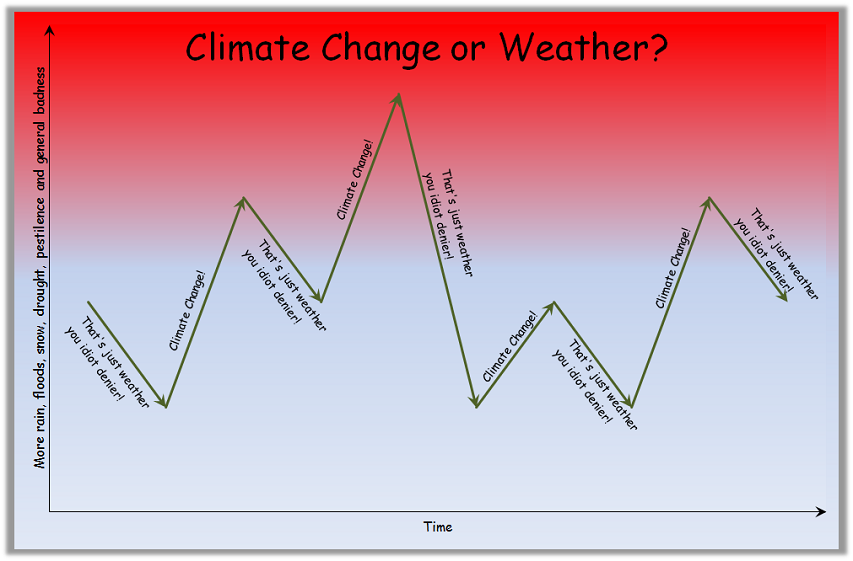
(BTW, politicians who tell you we need to do something about climate to turn off heat waves and stop forest fires are either lying or profoundly ignorant. Nothing even Greta Thunberg proposes will actually lower temperatures in our great grandchildren’s lifetimes. Read carefully, “reduce the temperature rise“. Not “reduce temperatures”.)
August 16, 2022
QotD: The first casualty of political campaigns
Walking in Paris just before the French election, I was handed some leaflets and stickers by partisans of Jean-Luc Mélenchon, the demagogic left-wing candidate. “The rich pollute,” said one of them, “the people pay.”
Am I one of the rich, I wonder? Or one of the people? What about the customers chatting over lunch in the nearby café? Are they rich or are they of the people? Mélanchon’s slogan is founded on the old lie, as Wilfred Owen calls Dulce et decorum, etc., that society is divided neatly into two distinct categories with interests diametrically opposed.
No lie appeals more to the dissatisfied than this, offering as it does the illusory hope of a confiscatory solution to life’s little problems. The best that can be said of it is that it permits the dissatisfied an access of hatred and moral outrage, which is always enjoyable and gratifying to experience.
Theodore Dalrymple, “Election bumf”, The Critic, 2022-04-29.
August 14, 2022
QotD: The 2016 US election was a rejection of the media
The rise in support isn’t the surprising part. The surprising part is that the Media still find this surprising.
Not to toot my own horn too much here, but I’ve been writing about this since 2015 … “Make America Great Again” was the Trump campaign’s official slogan, but unofficially — and much, much more effectively — it was: “Fuck the Media”. The 2016 election is known far and wide as “The Great Fuck You”, but somehow, some way, almost everyone still fails to grasp that it wasn’t the Democrats who got told to fuck off. It wasn’t even the “Progressives”. It was The Media. The Great Fuck You was aimed entirely at the Media.
Severian, “Which Hand Holds the Whip?”, Rotten Chestnuts, 2019-07-17.
August 12, 2022
Testing the old saying about those who believe in nothing will believe anything
At Astral Codex Ten, Scott Alexander considers the old saying — often mis-attributed to G.K. Chesterton or C.S. Lewis:
There’s a popular saying among religious apologists:
Once people stop believing in God, the problem is not that they will believe in nothing; rather, the problem is that they will believe anything.
Big talk, although I notice that this is practically always attributed to one of GK Chesterton or CS Lewis, neither of whom actually said it. If you’re making strong claims about how everybody except you is gullible, you should at least bother to double-check the source of your quote.
Still, it’s worth examining as a hypothesis. Are the irreligious really more likely to fall prey to woo and conspiracy theories?
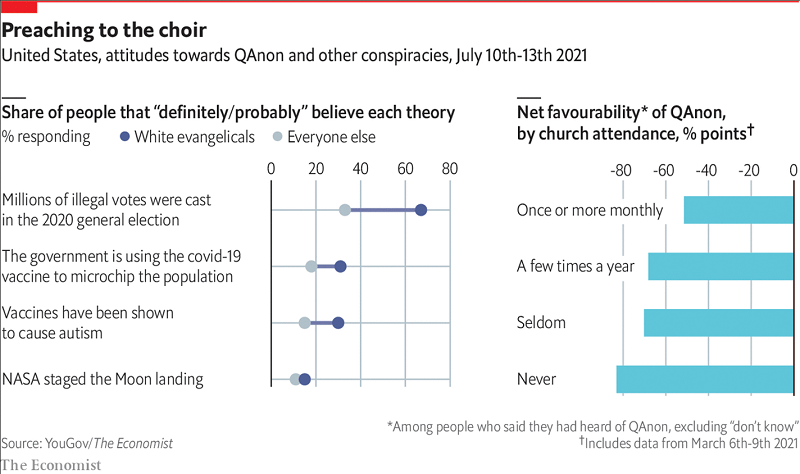
This Economist article examined the question and concluded the opposite. See especially this graph:
“White evangelicals” are more likely to believe most measured conspiracy theories, and churchgoers were more likely to believe in QAnon in particular.
There’s an obvious confounder here: the authors are doing the usual trick where they cherry-pick right-wing examples of something bad, show that more right-wingers are in favor of them, then conclude that Science Has Proven Right-Wingers Are Bad. QAnon, illegal votes, and COVID microchips are inherently right wing conspiracy theories; vaccines/autism has probably become right-coded post-COVID. Only the moon landing seems politically neutral, and it’s hard to tell if there’s a real difference on that one. So this just tells us that white evangelical church-goers are further right than other people, which we already know.
These data still deflate some more extreme claims about religion being absolutely protective against conspiracy theories. But I was interested in seeing how people of different faiths related to politically neutral conspiracies.
August 11, 2022
N.S. Lyons offers a Public Service Announcement for folks in class B
N.S. Lyons is talking to you. Yes, you in particular:
Hello Friend,
I saw your post on the interweb the other day about that nasty thing Team A did, even though they always completely lose their collective mind with moralistic outrage if Team B (which I understand is your team) even thoughtcrimes about doing something similar. In fact Team A seems to blatantly do things all the time that no one on Team B could ever get away with doing without being universally condemned as the absolute worst sort of immoral criminal/being openly threatened with mob violence/losing their livelihood/having their assets frozen/being rounded up by the state and shipped to a black site somewhere for some extended TLC.
Maybe the latest thing was breaking some very important public health rules, or pillaging and burning down government buildings for fun, or mean tweets, or polluting the planet with a private jet, or using allegedly neutral public institutions against political opponents, or just engaging in a little tax-dodging or corruption while doing, like, a ton of blow in a hotel room with some capital city hookers – I forget the specifics. In fact I forget what country you’re even living in nowadays.
But I did see that slick video you posted on how just pointing out “imagine if someone on Team B did this!” is all it takes to blow the lid off this glaring hypocrisy, thus totally destroying Team A with facts and logic. I’ve noticed you posting a lot of things like this, which is nice, since they are very witty and produce a pleasant buzz of smug superiority, even though this feeling never lasts very long.
However, I suddenly realized that you may not be in on the joke, so to speak, so I figured I’d write this short PSA to help explain what “hypocrisy” in politics actually is, just in case you didn’t know and had been fooled into seriously trying to benefit Team B with your comparative memes.
You see, it’s possible you are under the misapprehension that you are not supposed to notice what you described as the “double-standard” in acceptable behavior between Team A and Team B. And that you think if you point out this double-standard, you are foiling the other team’s plot and holding them accountable. This might be because, in your mind, you are still in high school debate club, where if you finger your opponent for having violated the evenly-applied rules a neutral arbiter of acceptable behavior will recognize this unfairness and penalize them with demerits.
Except in reality you are not holding Team A accountable, and in fact are notably never able to hold them accountable for anything at all. Even though Team A gets to hold you accountable for everything and anything whenever they want. This is because unfortunately there is no neutral arbiter listening to your whining. In fact, currently the only arbiter is Team A, because Team A has consolidated all the power to decide the rules, and to enforce or not enforce those rules as they see fit.
[…]
Much like the Great Khan, Class A has decided the greatest happiness in life is to crush its class enemies, see them driven before it, and hear the lamentations of their pundits.
Fundamentally, Class A believes the purpose of power is to reward its friends and punish its enemies. Which is what it does. That way it can keep its enemies down at the same time as it attracts more friends by offering great perks for class membership. And as a controversial Arab thought-leader once said: everyone prefers a strong horse to a weak horse.
If you, Class B serf, do not enjoy this arrangement, your lamentations about hypocrisy will not change it, no matter how loud and shrill. Only taking back control of the levers of power and then using that power to strike the fear of accountability into the hearts of your ruling class will ever be able to do that.
August 9, 2022
When asking a simple, factual question is treated as a direct personal attack
Chris Bray explains why just asking for [certain] facts is enough to trigger people who think you’re somehow saying that they’re not “good people”:
Come back to the cultural sewer with me, just for a moment, because here’s the last time I’ll lay a quote on you from Klaus Schwab’s COVID-19: The Great Reset, from a discussion about public health measures to contain the pandemic:
This is ultimately a moral choice about whether to prioritize the qualities of individualism or those that favour the destiny of the community. It is an individual as well as a collective choice (that can be expressed through elections), but the example of the pandemic shows that highly individualistic societies are not very good at expressing solidarity.
Now: Pharmaceutical products sometimes fail, and sometimes cause serious harm, and it frequently takes a while for reality to get out of the dugout and take the field, so keep taking your FDA-approved Vioxx. It’s safe and effective! I rarely give up on books, but I gave up on Ben Goldacre’s 2012 book Bad Pharma about halfway through — for the same reason you’d stop eating a skillfully prepared shit sandwich. I felt like, yes, I get the point: Sometimes a drug is ineffective, sometimes a drug is outright harmful, and the manipulation of science and of regulatory agencies is more common than you would ever have wanted to know.
But it’s different this time, even while “this time” fits a very long pattern. As much as Big Pharma course corrections are always hard, this one will be infinitely harder. We’re not currently debating the efficacy of a pharmaceutical product, or of a class of pharmaceutical products; instead, we’re debating self-conception, social status, and cultural position. The claim “I don’t think these mRNA injections are as safe as they’ve been made out to be” is a character attack that threatens to take people out at the core like dynamite under a bridge: Are you saying I’m not a good person?
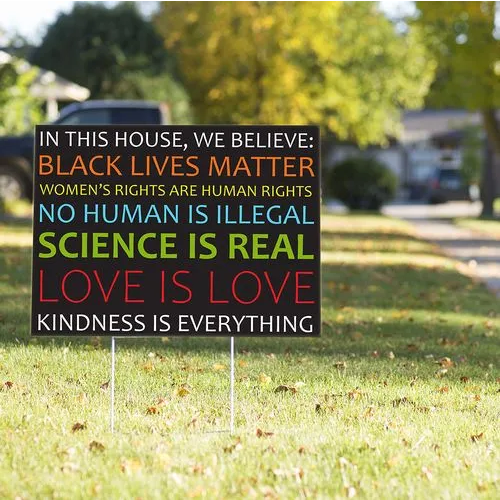
Bad Cattitude has been on fire lately on the topic of elite self-hypnosis and the descent into an “entirely hallucinatory landscape”. Consistent with this shrewd feline analysis, look again at what Klaus Schwab said about lockdowns and the suppression of economic activity in the name of public health: He said that shutting down our open societies was a “moral choice” about “expressing solidarity”. (My mask is for you, your mask is for me!) The discussion isn’t about what works, and has never been about what works. It has never been a discussion about the efficacy of anything; it’s a posture about social character, and always has been. Are you a bad, selfish person, or are you a good person who believes in kindness? The subtext about social class strikes me as too obvious to explicate, because mean people belong in their trailer parks in flyover country, and kind people are high-status. Review the lawn signs if you doubt this.
So when you question the little vial of fluid that goes into a syringe to be injected into your body, you’re not asking questions about the way a medical product works — or at least, you’re not asking questions that are perceived, by advocates of the injections (or the lockdowns, or the masks), as a discussion about safety and efficacy. You say, “Does it work? Is it safe?” — but they process it as an attack on their moral choice to express solidarity:
Are you saying we should have stood up for selfishness? Which means, if we bring the subtext to the surface, Are you saying we should have engaged in low-status behavior?
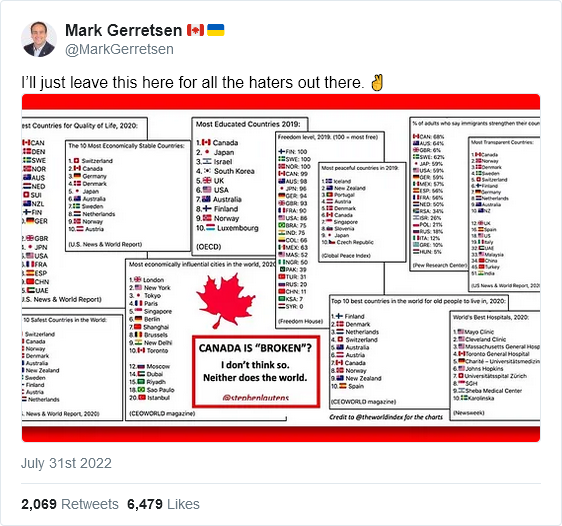
“Canada’s not broken: here’s a set of totally arbitrary social media listicles to prove it, h8rs!”
Meant to post this on the weekend, but another lengthy Rogers internet outage got in the way. From the most recent weekly Dispatch from The Line:
We try to avoid spending too much time on Twitter nowadays, but we’ve noticed a trend emerge on the site that irks us. It’s not new, exactly, but it seems to have become a favoured rhetorical tactic among Liberals and their apologists. And as it touches on virtually all of the blurbs above, it’s worth noting.
We’ll call it Rebuttal by Listicle, and it works a little like this: rather than actually engage with critiques of the country or the government, partisans will simply post random rankings that show Canada is at the top of some subjective set of metrics like “freedom” or “quality of life”.
To wit:
And this:
Because these listicles look impressive and official, the partisans in question can treat them with the weight of proven scientific truth. Canada’s great! Look, the list proves it! Them’s the facts!
We have three major problems with this rhetorical tactic.
The first is optics: Please tell the couple priced out of the housing market in every major urban centre, the one that is now worried about the grocery bill, can’t fill the car with gas, and frets about heating costs next winter, that none of these problems really matter. That they should just be grateful and happy with this definitely not-broken country because Canada scored well in a ranking compiled by an intern at an American newspaper. Show the lists to the person suffering a lingering illness, with no family doctor, in a town where the ER is closed, and wait patiently for their enthusiastic high five.
You want to guarantee Prime Minister Poilievre, this is the way to go about it: smarmily dismissing legitimate grievances and concerns by tweeting a list and calling it a day.
And, of course that’s presuming the ranking was subject to even a moderate degree of fact checking, logic, or scientific scrutiny goes into these rankings at all.
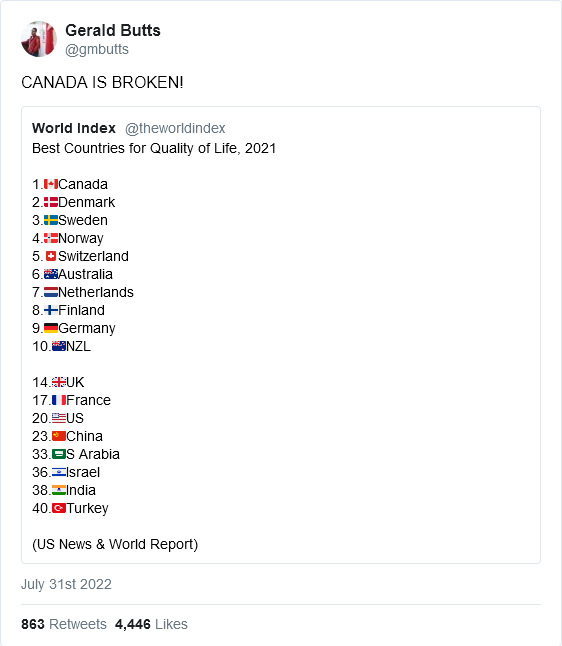
Let’s look a little more carefully at the ones posted by former Trudeau senior aide Gerry Butts, shall we?
He has a whole thread devoted to cherry picking Canada-topping rankings compiled by something called The World Index. What is The World Index? Well, we don’t know, Bob. The Twitter bio says: “Know the world. Focus on economics, art & culture, science, technology, sports, travel, politics and military affairs.” Okay. The only website listed takes us to an Instagram account with 37 followers.
The list above, in which Canada hits #1 for Best Countries for Quality of Life, 2021, is from U.S. News & World Report, an American media company. We checked out their methodology for the 2021 survey, and this is what we found: it’s a survey of 17,000 people, run by an academic. What’s being surveyed? Glad you asked! “Participants assessed how closely they associated an attribute with a nation.” You’ll be thrilled to note that these 17,000 people around the globe gave Canada near perfect scores on being “not bureaucratic”, and having a “well developed public health system”, “well-distributed political power”, and “transparent government practices”. (Lol, *dies inside*.)
Hey, it’s great that people associate Canada with being awesome, but we hope that when Liberals talk about “evidence-based policies”, they are using actual, you know, evidence, not just rankings by survey participants.
August 8, 2022
The British left briefly rediscovers an interest in free speech … no, wait, they’re back to loving Big Brother again
In Spiked, Tom Slater recounts the brief moment last week that the great and good of British left wingers found nice things to say about freedom of speech. A very brief moment:
The British left – or what passes for it today – briefly pretended to care about free speech this week. Which was kind of cute. It was all sparked by Tory leadership no-hoper Rishi Sunak’s bonkers suggestion that people who “vilify” Britain should be put on the Prevent anti-radicalisation programme, alongside all the Islamists and fascists. “Who are the real snowflakes?”, thundered one left-wing commentator. “Fascism creeps ever closer”, warned Richard Murphy, a one-time adviser to Jeremy Corbyn, as he wondered out loud if he might soon end up in “some camp of Sunak’s choosing for ‘re-education'”.
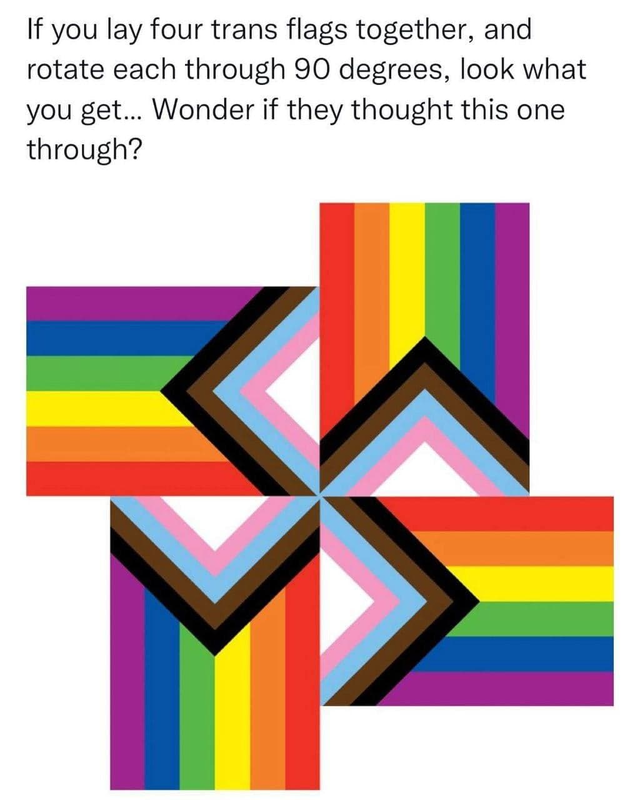
This is probably the meme that Darren Brady posted which drew the attention of Hampshire Police’s crack “hurty words and pictures” squad last week.
Such principled expressions of horror, over an insanely authoritarian policy that almost certainly will never be implemented, might have had a bit more weight had the exact same people not studiously ignored a very real incident of state censorship – and attempted re-education – that went viral last week. I’m referring, of course, to Hampshire Police’s arrest of 51-year-old army veteran Darren Brady, all because he posted an offensive meme, which arranged four “Progress Pride” flags to resemble a swastika – a clumsy commentary on the authoritarianism of the contemporary LGBT movement.
The details chillingly echo Richard Murphy’s tweeted fever dream. Reportedly, the police had visited Brady 10 days before they tried to arrest him, informing him that he had committed an offence by posting the flag meme. They offered him a deal: pay for a £60 “community-resolution course” and they’d downgrade his offence to a “non-crime hate incident”, which would still appear on an advanced background check. Brady refused and contacted Harry Miller, leading campaigner against thoughtpolicing, who was present at the arrest and spent a night in the cells himself for trying to obstruct the cops. Going by the footage, now seen around the world, the (several) officers who attended Brady’s home had no idea what offence he was supposed to have committed, saying only that he had “caused anxiety”.
So, state censorship? Yep. Threats of re-education? Yep. The police showing up at someone’s door for no other crime than expressing an opinion? Big yep. Just because it was done in a Keystone Cops sort of fashion doesn’t make the treatment of Brady any less sinister. And yet there hasn’t been a peep of protest from the left-leaning intelligentsia. The armed wing of the state is going about harassing and arresting people purely for upsetting someone on the internet. And yet the people who pass themselves off as liberal, progressive, radical even, are clearly not the tiniest bit bothered about it.
Brady isn’t an isolated case, either. Britain is fast becoming a warning to the Western world about “caring” censorship, about trying to quite literally police “hurtful” speech. According to one investigation, nine people a day are arrested in the UK over offensive things they post on the internet. On top of that, more than 120,000 people have had so-called non-crime hate incidents recorded against their name. These alleged incidents needn’t be investigated or even be credible to be recorded. So much so that an Oxford professor once managed to get a hate incident recorded against then home secretary Amber Rudd, for a speech she gave about immigration that he later admitted he hadn’t even listened to, let alone witnessed in person.
August 6, 2022
Britain’s woke Stasi | The spiked podcast
spiked
Published 5 Aug 2022The spiked team discusses the rise of Britain’s thoughtpolice, Nancy Pelosi’s Taiwan trip and Beyoncé’s act of self-censorship.
(more…)


