Quotulatiousness

May 2, 2022

Cancel Karl Marx? That’s definitely a bridge too far for the woke

Filed under: Books, History, Media, Politics, USA — Tags: , , , — Nicholas @ 03:00

In the free portion of his Weekly Dish, Andrew Sullivan considers how other philosophers and statesmen from the age of enlightenment are quickly thrown aside by modern day Progressives, yet one political philosopher remains sacrosanct:

Discrediting a thinker’s broad worldview or legacy by discovering some statement from the distant past revealing him or her to be a bigot by today’s standards is a depressing degeneration in our intellectual life. It speaks of a compulsion to moralize rather than to understand, to shut down rather than expand debate.

Picasso was morally monstrous; but his painting is transcendent. And if you cannot disentangle the two, you are attacking a key liberal principle: that ideas and works of art should be considered on their merits, and not on the virtue or vice of their proponents.

But what makes this illiberalism even more repellent is how selective it is. For a few generations now, critical race theorists have attempted to cancel one Enlightenment thinker after another, excoriating Thomas Jefferson as a bigot and hypocrite, David Hume as a vicious racist, Immanuel Kant of all people for white supremacism. The Age of Reason has been recast as the Era of Hate.

In his new book, The War on the West, Douglas Murray quotes Black Studies professor Kehinde Andrews explaining the rationale for this: “A defense of liberalism is the worst possible thing you want to do. Because liberalism is the problem. It is the Enlightenment values which really cement racial prejudice.” The notion here is that human beings had no tribal, racial prejudices until the Age of Reason dawned. Racial hatred was invented by and is the exclusive property of white people in the last few hundred years. Seriously, that’s what the woke believe.

The attacks on Hume, Jefferson and Kant, moreover, refer to single sentences or asides that represent some of the lazy bigotries of the past. (The entire works of Aristotle and Plato are also on the chopping block because of their retrograde views on slavery, among other things.) And so one wonders if the same standard would apply to every philosopher in the past — way beyond the Enlightenment.

Well, one doesn’t wonder very much … because the bad faith of so much critical theory is a feature and not a bug. The goal is not to see the truth, but to gain power in order to impose their truth. And to accuse you of hate if you dare to demur.

Few examples demonstrate this better than Karl Marx, one of the most repellent anti-Semites and racists of the 19th century. Murray’s treatment is devastating. Let’s cite some of the greatest hits:

    The Jewish nigger Lassalle who, I’m glad to say, is leaving at the end of this week, has happily lost another 5,000 talers in an ill-judged speculation … It is now quite plain to me — as the shape of his head and the way his hair grows also testify — that he is descended from the negroes who accompanied Moses’ flight from Egypt (unless his mother or paternal grandmother interbred with a nigger). Now, this blend of Jewishness and Germanness, on the one hand, and basic negroid stock, on the other, must inevitably give rise to a peculiar product. The fellow’s importunity is also nigger-like.

Classic “race science” — yet the left pass it by. The following passage could come from Mein Kampf:

    What is the worldly religion of the Jew? Huckstering. What is his worldly God? Money. … Money is the jealous god of Israel, in face of which no other god may exist. Money degrades all the gods of man — and turns them into commodities. … The bill of exchange is the real god of the Jew. His god is only an illusory bill of exchange. … The chimerical nationality of the Jew is the nationality of the merchant, of the man of money in general.

And this is not just a personal aside or footnote or private correspondence. It’s in a published essay, “On The Jewish Question”, from 1843.

What did Marx think of a multicultural society? Roughly what Richard Spencer believes today. In 1853, Marx wrote of the Balkans that the region had “the misfortune to be inhabited by a conglomerate of different races and nationalities, of which it is hard to say which is the least fit for progress and civilization.”

May 1, 2022

Despite the ever-present smartphone, people are still reading actual books in pretty good numbers

Filed under: Books, Business, Media, USA — Tags: , , — Nicholas @ 05:00

In the latest SHuSH newsletter, Kenneth Whyte provides some mildly hopeful numbers for both readers and writers:

I was having coffee this week with a former star journalist who now (like so many) works in a journalist-adjacent industry. “Who reads books?” she wondered.

It’s a question I’m often asked by journalists who these days get a lot of their information from Twitter. The chore of keeping up with their feed leaves little time for anything else. My guest still read books and belongs to a book club, but she asked the question all the same.

According to the authorities at the PEW Institute, 77% of Americans read books in 2021 (or, to be more precise, read one or more books in one or more format—print, audiobook, ebook). That’s not bad considering only 86% of American adults can read.

Only 21% of women read no books, and 26% of men. Eighty per cent of white people read books (as compared to 62% of Hispanics).

Good news for the future of book reading: 81% of adults under the age of fifty read books compared to 72% of adults over the age of fifty.

More on the demographics: 69% of those earning less than $30,000 a year read books, while 85% of those earning over $75,000 read books; 61% of those with a high-school (or less) education read books; 89% of college graduates read books.

According to PEW, the average reader manages twelve a year.

There is some evidence that reading is a declining habit: according to the Bureau of Labor Statistics, average time spent reading for pleasure declined from twenty-three minutes a day to seventeen minutes a day from 2005 to 2017. But the least decline was among young adults, 18 to 34 (less than 1%).

In fact, there is good evidence that the much-maligned millennials read more than their parents, and they overwhelmingly prefer hard copies to digital books. Even better, the millennials pay for their books:

April 30, 2022

Welcome to the Ministry of Truth, aka the “Disinformation Governance Board”

Filed under: Bureaucracy, Government, Media, USA — Tags: , , , , — Nicholas @ 05:00

Jim Treacher wraps up some of the noteworthy events of the week, including the almost-too-Orwellian-to-be-true “Disinformation Governance Board”:

The Department of Homeland Security just created something called the “Disinformation Governance Board”. Apparently, “Ministry of Truth” was too on-the-nose. All they can do anymore is scream about Russia, yet now they’ve dreamed up a propaganda org with the initials DGB. Great branding, geniuses!

I can’t put it any better than this:

Dems just spent four years screaming about the government because they weren’t in charge of it. Then they forgot all about that and immediately started amassing power again, which inevitably will be handed over to their enemies the next time the Dems are voted out of office. They never think about that, because thinking isn’t really what they do. As soon as their foes grab the levers of power the left has assembled, they’ll just start screaming about “fascism”.

Fortunately, there’s a useful logo for the new organization floating around the internet:

April 27, 2022

“We’re healthy from the bottom up, and sick from the top down.”

Filed under: Britain, China, History, Media, USA — Tags: , , , , , — Nicholas @ 03:00

Chris Bray has a bit of fun at David French’s expense:

In the 1830s, British merchants with trade routes from India had forced open an enormous market for opium in China, and were pouring the product into the country, producing a lucrative addiction crisis. (Queen Victoria, the first Sackler.) But the Qing Dynasty had run China with a firm hand since the first half of the 17th century, and the emperors of the dynasty had long regarded themselves as, to use an academic term from the field of political science, The Shit. In 1839, Commissioner Lin Zexu sent a huffy letter to the British monarch, warning her that her tedious little pissant country over there in Nowhereville was trifling with a vast and dangerous power:

    Our celestial empire rules over ten thousand kingdoms! Most surely do we possess a measure of godlike majesty which ye cannot fathom! Still we cannot bear to slay or exterminate without previous warning …

The British responded with naval artillery, and the limits of the Qing Dynasty’s power were revealed with the greatest possible clarity. Commissioner Lin had an image of himself, an understanding of his place in the world and the meaning of his nation’s power, that couldn’t survive an encounter with reality.

So: David French. In his own version of Commissioner Lin’s letter, French warns this week that American institutions most surely do possess a measure of godlike majesty which ye cannot fathom, yet ye weak and depraved subjects of these potent institutions offer not thine gratitude. It’s insane. He doesn’t see the world he’s describing, so his description doesn’t have anything to do with the people he’s talking to, and he has no idea.

Before I say anything else, though, I have to point out that I recently described the American crisis like this: “We’re healthy from the bottom up, and sick from the top down.” French does the opposite, describing institutions that are undermined by the dreadful human material beneath them: “Our government is imperfect, but if this republic fractures, its people will be to blame.” Wreckers and saboteurs have undermined the otherwise successful five year plan, you see. The problem is bottom-up.

This is exactly the same beat patrolled by “real conservatives” like Max Boot and Tom Nichols, who endlessly warn that the fat dumb peasants lack the sense to lick the hands of their capable superiors. These are very strange men.

Here, watch French do his thing:

    The people disproportionately driving polarization in the United States are not oppressed minorities, but rather some of the most powerful, most privileged, wealthiest people who’ve ever lived. They enjoy more freedom and opportunity than virtually any prior generation of humans, all while living under the protective umbrella of the most powerful military in the history of the planet.

    It’s simply an astonishing level of discontent in the midst of astonishing wealth and power.

Tell me the comparison to Commissioner Lin isn’t perfect. Does not our wealth and power astonish you!?!?

As French writes about the privileged creatures who live “under the protective umbrella of the most powerful military in the history of the planet,” the Taliban rules Afghanistan. A reminder: The Taliban controlled about half of that country in September of 2001; then the most powerful military in the history of the planet invaded, and fought the Taliban for two full decades, at the cost of thousands of lives and trillions of dollars, the result of which is that the Taliban now controls … all of the country. The implosion of the American effort in Afghanistan happened last fucking year, and we’ve somehow already taken care to forget the details of that goat rodeo. What was the plan?

April 25, 2022

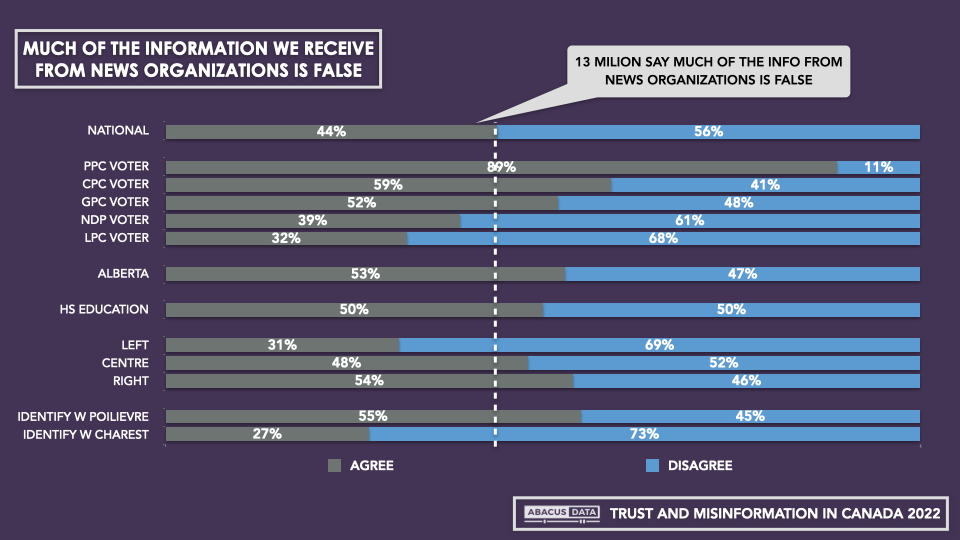
“We live in such a degraded information environment that we can’t get to discussions of principle”

Filed under: Media, Politics, USA — Tags: , , , , , — Nicholas @ 05:00

Chris Bray on the increasing inability or deliberate choice of most legacy media outlets to avoid presenting basic facts in favour of pitching a scenario with the preferred outcome prepackaged and largely predigested for the consumer to accept uncritically:

Over and over again, journalism doesn’t begin to accurately describe; consuming it, we don’t get to the starting line of a functioning political discourse, which is just knowing what’s happening, more or less. We’re buried in fakery, in representations of reality that have no connection to reality. […]

I wrote last week about the disappearance of basic information on the criminal justice system in Los Angeles County, where I live. We have an ongoing debate over our Woke DA’s policy choices — but the more I look at the debate, the more I’m sure it’s a debate about nothing, because the slogans used to represent the DA’s policy choices really don’t seem to begin to reflect the reality of the DA’s actual policy choices. The slogans look from here like cover words, chaff fired as a rhetorical countermeasure to cloud the air. I’ve been trying to get clear information from people in Los Angeles County government, which has been … interesting, so stay tuned on that question. But what are we debating if we’re exchanging our thoughts on the empty fakery the DA is deploying to prevent us from noticing what he’s doing?

Back in 2016, the vapid mayor of a tiny city in Los Angeles County boldly announced that she had banned Donald Trump from her community, ordering city staff to burn the witch. Journalists reported it straight: TRUMP BANNED FROM LOCAL CITY.

It was left to lawyers with a media presence to seriously examine all of the problems with the remarkable claim that a part-time small-town mayor owns a personal fiefdom and can ban people from it. A not-especially-gifted politician with ambitions for higher office made up some nonsense to get herself in the news, and it worked. But the news was about nothing, because she had no authority to do the thing she announced in the press release.

This is more than half of the news: Noise with nothing it, a press release from an idiot typed up by idiots. What debate over questions of principle can proceed on the foundation of an informational void? (“I’m for empty hole!” “Oh yeah, well I’m against empty hole!”)

We’re beginning to solve some big pieces of that problem with alternative media, which is why you’re hearing so much complaining about misinformation. “Our democracy,” that hilarious phrase that doesn’t mean what it says, relies on the screen of fakery. Nothing happens until we punch enough holes in that screen.

Trudeau’s Liberals shocked to discover that not everyone wants the internet censored

The free segment of The Line‘s weekend round-up looked at the federal government’s gone-wrong public consultation about their proposed internet censorship Online Harms bill:

Your Line editors have been diligently seeking out educated comment about the Liberals’ forays into Internet regulation and censorship; as we suspected, they are finding out the hard way that determining which speech is fit to be heard is a philosophical fools’ errand. Only a very little research into the history of liberal norms around free speech could have spared them the trouble, but, alas, this seems to be the lesson that every generation needs to re-learn from first principles.

Well, a little out-of-school learning landed in the laps of the Liberals back in September of last year via a seven-page letter written by Michele Austin, then-Twitter Canada’s head of public policy. She took the government’s proposed Online Harms Bill to task in a submission that was only revealed when this country’s lone Internet warrior, Saint Michael Geist (*sign of the cross*), filed an Access To Information request revealing Austin’s scathing critique.

To wit:

    Sacrifices freedom of expression to the creation of a government run system of surveillance of anyone who uses Twitter. Even the most basic procedural fairness requirements you might expect from a government-run system such as notice or warning are absent from this proposal. The requirement to “share” information at the request of Crown is also deeply troubling.

It’s rare to see a piece of proposed legislation so poorly conceived, so profoundly over-reaching, that virtually every organization asked to comment on it proves to be against it. But so it was. As Geist notes, even organizations that one would imagine to be at least nominally in favour of a regulatory regime intended to crack down on unequivocally harmful Internet carcinomas like child porn, hate speech, and terrorism, in fact came out against it. The National Association of Friendship Centres, Canadian Centre for Child Protection, Safe Harbour Outreach Project, Centre for Israel and Jewish Affairs, and the National Council of Canadian Muslims all noted that the government’s proposal stood to do much more harm to their respective communities than it would prevent.

Again, even a little bit of historical research would have demonstrated that those dastardly, evil, liberal values of “free speech” have traditionally done more to help marginalized communities than hinder them. But we digress.

Heritage Minister Pablo Rodriguez has subsequently announced the government would halt its Online Harms Bill, presumably in the wake of the disastrous consultation process. So the protests did, indeed, work. But as Geist rightly notes, the fact that he even had to spend months formally seeking out these submissions to be publicly released ought to raise serious questions about this government’s commitment to openness and transparency in how it approaches one of the most foundational freedoms we have as citizens. This is not a government that is philosophically well equipped, nor technically able, to control access to information in the way it so clearly wishes to. Something to keep in mind when evaluating its other Internet bills, C-11 and C-18.

I used to regularly post links to Michael Geist’s work, but at some point in the last few months his RSS feed went down and I stopped getting updates. I’ve relinked to his Twitter feed, which hopefully will provide notice when he publishes something on this file.

Today’s post identifies at least four problems. First, lack of transparency runs counter to promises of an open, transparent government. @justintrudeau even introduced a bill on open by default in 2014. Disclosures only via ATIP are not transparency. 2/5

Second, notion that the government was simply consulting on some ideas and will now course correct requires Canadians to overlook the reality that the actual plan was to introduce this as a bill last year. This was the Internet regulation plan. 3/5

Third, “What We Heard” report from @pablorodriguez significantly understated the extent of the public criticism and feedback. Recommendations omitted, criticisms softened. Having now seen the actual submissions, I feel misled. 4/5

Most importantly, this is part of a larger Internet regulation plan:
1️⃣Bill C-11 opens the door to regulating user generated content
2️⃣Bill C-18 mandates payments for links
3️⃣Online harms wasn’t an outlier. It reflects plan for regulating the Internet.
5/5

April 24, 2022

Let us bid an unfond farewell to all the “cool city” initiatives

Elizabeth Nickson on a few of the ways that governments’ and pan-national organizations’ love for urban intensification looks to be finally fading away:

A decade ago cool cities were all the rage and tax money was pouring into cultural events and buildings to “attract” and densify people because “climate change”. Richard Florida, drawing upon a dubious book about cultural creatives had started his ferocious PR drive towards the mega-city as the apex of modernist civilization, a mixed-race cauldron of creativity and more, an economic engine that would power the world and leave the countryside to the bees and trees. Smart Growth was insinuated into every regulatory structure in order to, just like Captain Picard, make it so.

There were a few oppositional voices. There was me, a very minor chord along with Randal O’Toole, Wendell Cox, Joel Kotkin who detailed the risks. But mostly it was all rah rah rah. If we build it they will come. Masses of public money poured in to attract “them”. Country infrastructure was starved, and if broken, left to rust.

And did they come. To all the glamorous cities came the genius thieves of the modern age, oligarchs creating bolt holes for their money and mistresses, looters from Communist regimes, ditto for Africans stealing aid money. Every crime syndicate facing looser immigration rules started branch-plants, laundering money, and seducing the marginal into lives of misery.

Increased levels of crime was one of our objections, but hell on wheels, the devastation in LA, San Francisco, Chicago, New York and Vancouver sure wasn’t foreseen.

Housing affordability would collapse said Wendell Cox, and was he right. In Vancouver, which has been taken over by Chinese mega-crime-syndicates, is the third most expensive city in the world. People whose families founded the city, can’t afford a studio apartment.

Politicians did nothing but take the laundered cash earned by ruining the lives of their citizens, and used it to build casinos so laundering drug money from all over North America would be easier. We Canadians are so helpful. And nice. To everyone, Even child traffickers. Yeah, come here, the scenery is grand and we can take care of all the people you broke with our “free” health care.

I objected to the potential noise being noise sensitive. Also viruses. That was a big one. Courtesy of my ex-husband’s trips to Asia, I picked up a couple viruses which my immune system couldn’t suppress, since I had no built immunity. The indiscriminate mixing, flooding of people overwhelming resources would create health catastrophes I thought, and lo and behold, it looks like WHO is planning for world-wide pandemics as far as the eye can see.

So, like all the other bad ideas of the age, cool cities failed leaving massive massive debt. Everyone with a scrap of money and initiative is plotting to leave the mega cities for the distinctly uncool country these days. Out here we are bracing ourselves for your bad ideas, but we are also ready. We know what you are like. You are as dumb as rocks, and you would destroy the country just like you ruined the cities. You have zero humility. You are a nightmare coming to join the other nightmare visited on our home places, the mass confiscation of our land. The land that feeds you idiots.

“This is the status of mental illness in youth culture today, where […] they would like the laurel of victimhood without the actuality of being victimized”

Filed under: Health, Media, USA — Tags: , , , — Nicholas @ 03:00

Freddie deBoer has become convinced that there’s no such thing as “Multiple Personality Disorder”, despite the vastly increased numbers of young people with social media accounts who have built their online personas around their MPD or dissociative identity disorder (DID) issues:

The technical name is dissociative identity disorder, but it’s more commonly referred to as multiple personality disorder. It’s been in a thousand cheesy cop shows and legal dramas, too many novels written in MFA programs, and untold freshman Into to Psychology textbooks. M. Night Shyamalan’s films Split and Glass are typical of pop culture portrayals of the disorder as a lurid and impossibly dramatic disorder, with clear and distinct switches between entirely separate personalities that occur at the most narratively convenient times. And in recent years there’s been an explosion of interest and claims of diagnosis of the disorder, coincident with the rise of Tumblr and TikTok, where there are thriving communities of adolescents who claim to have dozens of “alters” and who refer to themselves as “systems”, along with a whole boutique identity vocabulary that they’ve developed. The number of views of videos tagged with #DID on TikTok is in the billions.

And yet.

And yet dissociative identity disorder is probably not even real. Its presence in the DSM has proven to be persistently and deeply controversial. Diagnostic criteria and standards are perceived by many to be highly impressionistic and unacceptably subject to the biases of the evaluator. The disorder reflects a cinematic and exaggerated vision of what mental illness looks like, which may make it more attractive to people looking for a diagnosis. DID is often presented as a kind of get-of-accountability-free card, as someone who claims to have it can always say that past bad behavior was caused by another personality and is thus not their responsibility. Many high-profile cases have been revealed to be frauds or, at least, the product of a therapist or doctor forcing patients to think they have it. The most famous DID patient, Chris Costner Sizemore of The Three Faces of Eve, claimed that her alters were not the product of childhood trauma but that she was born with multiple selves with fully-formed personalities, which completely contradicts the established etiology for the disorder.

Some who have claimed to have it have done so only after being accused of a crime. (An embezzler’s sole defense in a trial in the early 1980s was that an alter stole the money.) Diagnosis often involves the use of “recovered memories” and hypnosis, both of which are controversial if not outright discredited. And claiming to have it does not even require conscious dishonesty, just an active imagination and too much awareness of DID’s presence in culture. Regardless, the mere existence of the disorder provokes angry disagreement in a way that simply does not exist for other major psychiatric conditions like schizophrenia or bipolar disorder. Even proponents of the prevalence of DID acknowledge major overlapping symptoms with schizophrenia and major difficulties in diagnosis.

[…]

Even if we accept the disorder and are particularly generous in our criteria, the number of genuine cases from the past one hundred years is probably somewhere in the three digits. It’s that rare, if real. And its newfound prevalence among adolescents is particularly hard to understand, given that the condition has generally been identified among those in their 30s and 40s and is even rarer among the young. As stated in a 2011 lit review, “Despite continuing research on the related concepts of trauma and dissociation, childhood DID itself appears to be an extremely rare phenomenon that few researchers have studied in depth.”

The people who have traditionally been treated for DID have suffered, greatly, and not in the cool arty time-to-dye-my-hair-again type of suffering common to social media performance, but actual, painful, pitiable suffering. Those patients who have been diagnosed in the past with the disorder, by doctors, and who have spent years and years dealing with the consequences, are often truly debilitated people, whether the disorder itself is real or not. They require intense therapy, are often medicated with powerful drugs, and are frequently subject to long-term hospitalization. They tend to live broken and pain-filled lives, like most people with serious mental illness.

Of the dozens of high-follower DID accounts that I’ve seen, almost none are experiencing any of that. Plenty of them are in therapy, but judging from how they talk about it, it all seems to be of the customer service variety of therapy. Hardly any of them say they’re medicated, which I guess makes sense — every last one I’ve seen comes from the school that sees mental illness as some adorable personality quirk that makes them unique and high status, rather than as a source of great pain and personal destruction. They don’t take meds because they don’t think there’s anything to treat. And, indeed, they aren’t living debilitated lives. On the contrary, they’re flourishing, going about self-actualized and successful lives, getting into Ivy League schools, bragging about their social media clout, being girlbosses. This is the status of mental illness in youth culture today, where we are expected to extend every accommodation to those who say they have mental illness even as they would seem to require no accommodation at all; they would like the laurel of victimhood without the actuality of being victimized.

þ to Colby Cosh for the link.

QotD: Love in an age of Instagram

Filed under: Health, Humour, Media, Quotations — Tags: , , — Nicholas @ 01:00

    I really like the girl I’m dating, except for one thing. On every date, she asks me to take photos of her for Instagram. Afterward, she consults me repeatedly on which will “get the most likes.” I’m starting to get really annoyed, and I find it cuts into my enjoyment of our time together. She even did this on my birthday! — Irritated

Psychologist Erich Fromm wrote, “Mature love says: ‘I need you because I love you.'” He died in 1980, 30-some years before Instagram-infused love: “I need you, love, because my telescoping selfie stick won’t fit in my cute purse.”

This girl’s far from alone in turning every occasion short of stints on the toilet into a photo op. Social media (and Instagram especially) transformed fishing for compliments into a business model. #admirationvampires

Some young women — especially 20-somethings with a still-murky sense of identity — might feel they don’t exist in any meaningful way if they don’t post pix and videos of themselves to score likes and gain followers. #KeepingUpWithTheInstadashians

There’s also the lure of easy money for those who can rack up an audience: potentially making big “influencer” bucks just by showing up to events in some pop-up shop’s dress and striking a bunch of poses they copied off Beyonce.

Amy Alkon, “The Camera Sutra”, Advice Goddess, 2021-12-25.

April 22, 2022

Pierre Poilievre’s social media campaign is going well

Filed under: Cancon, Media, Politics, USA — Tags: , , , — Nicholas @ 03:00

In The Line, Rahim Mohamed wonders if Poilievre’s campaign for the leadership of the federal Conservatives might follow a similar path to the flash-in-the-pan that was the Andrew Yang campaign:

Conservative MP Pierre Poilievre at a Manning Centre event, 1 March 2014.
Manning Centre photo via Wikimedia Commons.

It may be hard to believe, but the race to crown the next leader of the Conservative Party of Canada is now well into its third month. If there is one clear takeaway that can be drawn from the campaign so far, it’s that one candidate, frontrunner Pierre Poilievre, has dominated social media.

By any metric, Poilievre’s social media presence dwarfs that of the other candidates in the race. He boasts nearly 340,000 followers on Twitter and more than half-a-million on Facebook. By comparison, none of his opponents has cracked six-figures on either platform. Poilievre’s personal YouTube page, which houses a growing library of hundreds of videos, has garnered over 39 million views since it was launched in 2011. As digital advocacy guru Cole Hogan tweeted earlier this month, “if you’ve watched Canadian political content on YouTube, you’ve seen Pierre Poilievre”.

And Poilievre has not just lapped his opponents in terms of quantity. The contrast between the polished, professional content that his digital team consistently puts out and the amateurish social media fare offered by the other candidates could not be more stark. Earlier this week, the Poilievre campaign released this excellent five-minute video targeting housing affordability, filmed on-location in Vancouver (the world’s third most unaffordable housing market). The video drew praise from unlikely corners of the Twittersphere. For instance, left-leaning Washington Post Canadian politics correspondent David Moscrop quote-tweeted the video, adding; “God I hope you lose but you’re onto something here.”

Poilievre has strategically highlighted issues that appeal disproportionately to the “very online”. For instance, housing policy is a preferred topic of conversation among the aging millennials who dominate YIMBY Twitter — many, ironically, tweeting from their parents’ basements. He has also embraced cryptocurrency; promising to make Canada the “blockchain capital of the world” and purchasing a shawarma with Bitcoin at a recent campaign stop in London, Ontario.

But before he uncorks the champagne, Poilievre would be prudent to take heed of lessons learned the hard way by another social media darling: failed New York City mayoral candidate Andrew Yang.

April 21, 2022

EU accuses Le Pen of financial skulduggery, in what I’m sure must be purely co-incidental timing

Filed under: Europe, France, Media, Politics — Tags: , , , , — Nicholas @ 05:00

Theodore Dalrymple on the surprisingly frequent “charges made against anti-EU politician late in election campaign” phenomenon that seems to have become standard practice in France:

Marine Le Pen speaking in Lille during the 2017 French presidential election
Photo by Jérémy-Günther-Heinz Jähnick via Wikimedia Commons

A disturbing pattern has emerged in French presidential elections: A credible candidate is found almost at the last minute to have committed an illegal act, the revelation of which is intended to spoil or destroy altogether the candidate’s electoral chances.

The latest “victim” of this pattern is Marine Le Pen, who is facing the incumbent president, Emmanuel Macron, in the forthcoming second round of the French presidential election, a repeat of the contest of 2017. The main difference between the two contests is that, this time round, the polls give Le Pen at least some slight chance of victory, while last time Macron gained not only an overwhelming victory, but from the first had also appeared likely to do so. The outcome was never in any kind of doubt, as it is now.

Le Pen is usually described as being of the far right, though in fact her economic ideas are in some respects not very different from those of the candidate of the far left, Jean-Luc Mélanchon, who came not very far behind her in the first round of the election, in which the two candidates who receive the most votes go forward to the second, and decisive, round.

Perhaps economic affinity helps to explain why almost as many voters for the far-left candidate say they will vote for the candidate of the far right as say they will vote for the centrist candidate, Macron. Mélanchon himself has expressed the wish that not a single one of his voters should vote for Le Pen, without, however, having asked them to vote for Macron. He seems, then, to be hoping for a high rate of abstention, which would strengthen his argument that the current French political system is undemocratic and illegitimate, and that the country needs yet another new constitution.

Le Pen has just been accused by the European Union’s antifraud office of malversation of funds, 136,993.99 euros (about $148,000) of the Union’s money to be precise, while she was a member of the European Parliament between 2004 and 2017. For example, she is accused of having claimed 23,100 euros (about $25,000) for the purchase of little objects such as pens and bags to be given out at her political party’s annual conference in 2014, which is not allowed under the rules.

It might be a coincidence that the accusation of something that was allegedly done eight years ago has emerged in the week before the election, but I do not think many people will be found to believe it. After all, Le Pen is decidedly hostile to the European Union, while Macron is almost a religious devotee of it. There are no prizes for guessing, then, which of the two candidates the Union would prefer to win.

The fight for freedom of speech must continue

Chris Bray on the foundation of the US Republican Party (aka the “GOP”) and the fight for freedom of speech then and now:

In 1854, Whig Party members disgusted by their party’s weak opposition to the westward expansion of slavery founded the Republican Party. Two years later, the new party ran its first presidential candidate, John C. Fremont, behind the slogan that appears at the bottom of these campaign rally-song lyrics:

Free Speech, Free Press, Free Soil, Free Men, Fremont!

The reason free speech and a free press were in there as political premises in 1856, as contested values a new political party was fighting for …

Okay, hold on a minute. In 2022, we’re a little baffled that we’re fighting for free speech. An army of sniveling shitweasels insists that we need guardrails around our discourse to prevent extremism, and Twitter employees gasp and sob as some horrible monster threatens to use their platform to let people just say stuff.

Stop trying to let people speak freely, you Nazis!

The whole thing is so baffling because we feel like the other side is trying to win the game as we amble out of the locker room and get on the team bus to head back to the hotel, like, game’s over, folks, we won an hour ago. Aren’t these long-settled questions? How is it that people are trying to drive us back against the powerful course of the American free speech tradition?

And one argument I’d like to offer, if Robert Reich will allow me to make it HITLER HITLER HITLER this content should me moderated out of existence to protect democracy, is that the argument we’re hearing right now is very much one of the American traditions regarding political speech. We buried it for a long time, but it’s real, it has been quite powerful, and it’s back.

Max Fucking Boot, my God.

April 16, 2022

How much of teenagers identifying as transgender is “social contagion and the development of a new youth subculture”?

Filed under: Health, Media, USA — Tags: , , , , , , — Nicholas @ 03:00

The sheer number of children and teens who are deciding that they are “trans” is far in excess of previous generations. How much of this phenomena may be accounted for by social contagion?

My teenage daughter has decided that she is “trans”. So have all her friends. Not some of them. Not most of them. Every. Single. One.

She had never heard of trans, and had no signs of gender dysphoria, until she was moved to a new, cool trans-friendly school by her unsuspecting, politically liberal parents. There she met a group of geeky (or dare I say nerdy?), smart, slightly (but not very) gender nonconforming, artsy kids. As I understand it, they all discovered “trans” together. The old “cis” friends were swiftly discarded in favour of this exciting new peer group.

Exploring “trans stuff” online with friends is a source of great interest and excitement — a real social event. What’s not to love about 245 gender identities, complete with their own unique flags? Then there are those cool neo-pronouns. Forcing your out-of-touch old parents to refer to you as “ze” or “ey” (how do you pronounce that again??) in the name of “inclusivity” is just too delicious to resist. The manga, the cute avatars in computer games, the blue or pink hair — all part of the fun as well. Mocking the outgroup (in this case so-called “cis” people in general and the dreaded TERFs in particular) is also good for a laugh — especially if they happen to be your parents as well.

There is even a special vocabulary with lots of new terms — deadnaming, misgendering, sex assigned at birth, and much more. If these concepts need to be explained to your uncool parents (accompanied by eye rolls of course), so much the better.

Bonding with friends, searching for their identity and place in life, working out their sexuality, separating from family — these are all normal developmental tasks for teens. For many, youth subcultures can be a natural part of that. Some are harmless. Some, like drug use and extreme dieting, not so much. But in the case of the latter, sensible adults usually intervene to help steer the young people in the right direction. Not in the case of trans. Here we have adults steering kids down a dangerous path, which involves permanent, life altering drugs and surgeries for which there is no good evidence base.

For many of these kids, LGBTQ+ is a youth subculture. It really is as simple as that. Recent surveys have been identifying skyrocketing rates of “trans” or “queer” identification in young people. One found that an astonishing 39% of young adults in the US aged between 18-24 identified with the label LGBT — the figure for teens <18 may well be even higher. Of course this figure includes gay and lesbian people as well as those identifying as trans. Another poll, which looked only at gender, found that nearly 10% of US high schoolers identified as “gender diverse”. Yet another survey gives a lower figure of 1.8%. Whichever figure is correct, this is a huge explosion in numbers over a very short period of time. As endocrinologist Dr Will Malone asks; “How do we reconcile these numbers with 2013 data reporting the prevalence of adult gender dysphoria to be a rare 2-14 in 100,000?”

Social contagion and the development of a new youth subculture, that’s how.

H/T to Blazing Cat Fur for the link.

April 15, 2022

Volodymyr Zelensky has become a “pop cultural admixture of Churchill and an ’80s action hero”

Filed under: Europe, Government, Media, Russia — Tags: , , , — Nicholas @ 05:00

In The Line, Andrew Potter explains how Ukrainian President Zelensky has shamed all the western leaders — like Trudeau — who have been long on rhetoric and short on action to support their claimed values:

“Volodymyr Zelensky Official portrait” by http://www.president.gov.ua/ is licensed under CC BY 4.0

When asked by journalists to explain his refusal to head for safety, Zelensky has made it clear that he has no wish to die, and that he fears for the lives of his loved ones (his wife and kids have since been moved to relative safety.) But, he added: “As for my life: I am the president of the country, and I simply do not have the right to it.” Sure, he could flee to preserve his own life. But, he has said, how would he explain his actions to his kids? As Zelensky sees it, he has no choice in the matter. His duty requires that he remain and lead his country in the fight; to do anything less would be dishonourable.

But while his Last Action Hero schtick has proven enormously popular with European and North American audiences, Zelensky’s refusal to leave Kyiv, and Ukraine’s insistence on fighting off the Russians instead of capitulation, has put our so-called leaders in a bit of a bind.

To begin with, Ukraine’s refusal to capitulate to Russian aggression has forced many governments into taking steps they almost certainly would have preferred to avoid — economic and political sanctions against Russia, costly shipments of arms and other aid, diplomatic side-choosing, rethinking of trade agreements, and so on. Ukraine’s defence is coming at a pretty high cost, and the final bill is far from being tallied.

But beyond the economic and political price that is being paid to support Ukraine, there is the extraordinary amount of cognitive dissonance Zelensky’s behaviour has generated amongst the leadership of the West. Honour? Duty? Sacrifice? What century does he think he’s living in?

For centuries, honour reflected the sorts of qualities that gentlemen were expected to possess: dignity, integrity, courage. But it is hard to even talk about honour now with a straight face. It brings to mind 19th-century aristocrats in wigs and hose, demanding satisfaction and challenging one another to a meeting over some best-forgotten offence. The old honour codes couldn’t survive the triumph of the values of liberal democracy and the arrival of what Francis Fukuyama famously called the End of History, where the willingness to risk one’s life for abstract ideas or principles has been replaced by voting and economic calculation in the public sphere and “the satisfaction of sophisticated consumer demands” in the private.

Today, the old notion of honour survives only in small and isolated precincts of (mostly) male society, places like the military and some sports, places where how you behave in front of your peers matters more than comfort, more than money, more than health, maybe even more than life itself. The rest of us have become versions of what Nietszche derided as “the last man” — creatures of liberalism who have no pride, take no risks, and desire only comfort and security.

April 14, 2022

Chris Bray contra Jonathan Haidt’s belief in a former, more unified body politic

Filed under: Media, Politics, USA — Tags: , , , , , — Nicholas @ 03:00

Jonathan Haidt wrote at some length about what Chris Bray contends was an imaginary period of American history when people were less divided:

First, I think that this maneuver is the political strategy of a mediocre elite, with varying degrees of consciousness. The limit to which this may be true has to do with the spectacular loss of historical knowledge, which leaves a big part of the population feeling pretty sure that they’re the first people in the history of the universe who have ever encountered meanness. But the constant recourse to the language of “bullying” in the face of ordinary disagreement is a tell:

If you disagree with someone and only get the response that you’re vicious and a bully, you’re talking to an asshole; currently, it’s close to being the whole argument of the American governing class. The point of this kind of rhetoric is to win an argument by not allowing the other side to have it, and this seems like not really a mystery. See Jonathan Haidt’s reference to the high levels of trust in countries run by a “stable, competent autocracy”. Political elites all over the free world keep panting and sighing about how much they admire China’s dictatorship, and get a room, man.

A related diversionary strategy is the constant recourse to the argument that people who disagree are victims of disinformation, the pivot in which “I disagree with this policy” is met with horror that the peasants have been tricked by the Internet. For example, did you know that some people have fallen for the lie, spread by Russian bots, that the Covid-19 vaccines aren’t as safe and effective as Pfizer and Dr. Fauci said? It’s hard to believe how far we’ve fallen.

But the biggest problem in Haidt’s essay is a giant omission: While Haidt writes at length about what the psychology of social media has done to the public — how it’s eroded our trust, how it’s fomented tribalism and point-scoring behavior, how it’s trapped us in the pattern of confirmation bias, “making it far easier for people to find evidence for absurd beliefs and conspiracy theories,” and so on — he never mentions the possibility that the psychology of social media has had the same effect on our institutions and the people who run them.

« Newer PostsOlder Posts »

Powered by WordPress