Quotulatiousness

July 16, 2025

German Sten Copy: MP-3008, aka Gerät Neumünster

Filed under: Britain, Germany, History, Military, Weapons, WW2 — Tags: , , , — Nicholas @ 02:00

Forgotten Weapons
Published 4 Feb 2016

The MP 3008, aka Gerät Neumünster, was one of two German efforts to copy the British Sten gun. The first was the Gerät Potsdam (“gerät” meaning device or project; basically project code name), which was a direct copy of the Sten distinguishable only by a marking details and a few differences in manufacturing processes. While 10,000 of those were being manufactured by Mauser, R&D engineer Ludwig Vorgrimmler was simplifying the Sten design even farther, resulting in the MP-3008.

This simplified design did away with the Sten’s barrel shroud, and used a vertical magazine well instead of the Sten’s distinctive horizontal mounting. These were the significant changes, although there was also a sling loop placed on the front of the magazine well and a few minor simplifications to the fire control parts. Unlike the Potsdam, significant variation can be found in the MP-3008 in the details of stock and grip design.

In a masterpiece of insane optimism, German official placed an order for literally a million MP-3008 submachine guns, which of course was completely insane. Manufacture was undertaken at a wide scattering of small shops, with guns being assembled by larger manufacturers from supplied parts. The total made is not known, but is probably in the range of 3000-5000. Some are marked with manufacturing codes from recognized factories, some with codes unknown, and some have no marking at all. This particular example is dewat made by “TJK” — an unknown factory.

QotD: Slavery in history

Filed under: Britain, Government, History, Liberty, Quotations — Tags: , — Nicholas @ 01:00

The British Empire’s principal association with slavery is that it abolished it. Until William Wilberforce, the British Parliament and the brave men of the Royal Navy took up the issue, slavery was an institution regarded by all cultures around the planet as a constant feature of life … Britain expunged it from most of the globe.

It is pathetic but unsurprising how ignorant all these brave “anti-fascists” are. Yet there is a lesson here not just for Britain but for America, too: when a society loses its memory, it descends inevitably into dementia.

Mark Steyn, After America: Get Ready for Armageddon, 2011.

July 15, 2025

American (religious) exceptionalism

Filed under: Books, Cancon, Europe, History, Media, Religion, USA — Tags: , , , , — Nicholas @ 05:00

Christianity has been in retreat across the western world for decades, with the United States being the laggard in abandoning the faith. Canada is closer to the western European rate of secularization. On Substack, Fortissax explains why it has become uncommon to find a believing Christian outside the US in response to a query on X about people turning to various neopagan faiths:

    First, I believe there are two factors at play. One is the divide between the United States and the rest of the Western world. The United States still has the highest percentage of weekly churchgoers in the West, at around 24 percent. In the U.S., Christianity remains a living tradition. Millions still attend church, or at least try to. Many people share a common faith, believe in God, and are familiar with Christian references in public life, politics, and law. In contrast, in countries like Canada and much of Europe, regular church attendance is closer to 5 percent. That number often includes recent immigrants who tend to be more socially conservative. Among native-born Canadians and Europeans, especially in urban areas, church attendance is even lower. Religion in these places is often kept alive only by older or rural populations. Among the youth, it has largely faded. Second, many Western countries have experienced secularization for much longer.

I believe this first one is not obvious to a majority of people. There are significant cultural differences and experiences within in the United States and outside of it. I believe it would be appropriate to say that the U.S. is still a Christian country, and not just nominally, regardless of whether or not it was established on Lockean principles and Greco-Romain inspiration (some would say revision), of the liberal enlightenment. Sure, the faith is not what it used to be, but probably the majority of Americans at least understand Christian references in common parlance.

I can share a personal anecdote that I believe is fairly typical.

    I was born and raised in a region where Christianity had long disappeared from everyday life, following a slow process of state secularization. My great-grandfather was Catholic, but he changed denominations to marry my great-grandmother in the 1930s. It was a utilitarian choice. He believed in God but didn’t care for the petty tyrannies of ethnic and cultural association by denomination. His son, my grandfather, saw hypocrisy in both Catholic and Protestant institutions. As a boy, he was told he could not be friends with a Protestant by a the Catholic priest of his best friend, and he was kicked out of the house by his mother for attending Catholic mass with his girlfriend, even though his father had once been Catholic. My parents were irreligious agnostics. They were not hostile to Christianity, just indifferent, because they were not raised in it. As for me, I grew up in a post-liberal, post-Christian society. I believe in the divine and understand the importance of religion to civilization, but I have no living connection to what came before. In my country of Canada and among my people, Christianity is no longer part of the cultural fabric. I believe this to be the case in Western Europe as well.


There is a common joke that if someone likes paganism so much, they should try the most pagan tradition of all: converting to Christianity. But the unfortunate reality is that secular liberalism has exercised a longer and deeper influence in the modern West than many realize. In response, one could just as easily say that the most Christian tradition of all is converting to secular liberalism, which has formally shaped the cultural and institutional framework of the West for more than 275 years.

For people raised in multi-generational secularized liberal contexts, there is nothing to return to. Christianity is not a living tradition. They cannot come home to Jesus the way many Americans still can, and they cannot undo the liberal Enlightenment. They can only move forward through it. At best, something new might be reinterpreted or reformed from its remnants. But Christianity was never part of their lived experience. It was not seen, heard, or practiced. Churches were never attended. Christmas and Easter functioned as civic holidays focused on family rather than faith. Christianity resembled a historical artifact, something like a beautiful mantelpiece in an old house. It had aesthetic and historical value, but no emotional, cultural, or spiritual presence. This situation is common in much of the non-American West.

This is why many contemporary efforts at Christian revival often feel disconnected. They are built on the assumption that secular individuals are lapsed believers who simply need to be reminded of what they once knew. But these individuals are not returning exiles. They are cultural natives of a secular world. They did not lose the faith, it was never given to them. There were no prayers at the dinner table, no hymns embedded in childhood memory, no sacred calendar shaping the flow of life. Organized religion belonged to the past, replaced with secular civic cults they’re largely unaware of. It was something other people had, something no longer meant for them. This group is not necessarily hostile to Christianity. In many cases, they admire it. They recognize its role in shaping art, architecture, law, and moral tradition. When foreigners attack these, they defend them. They understand its civilizational significance. But the faith speaks a language they do not understand. Its metaphors do not resonate. Its moral claims appear without context. Its stories feel distant.

A useful comparison can be found in the Heliand, a ninth-century Old Saxon gospel poem that re-imagined the life of Christ using the language and imagination of Germanic warrior culture. In that version, Christ is not a wandering teacher from a distant land, but a noble chieftain surrounded by loyal retainers. His mission is framed in terms of honor, loyalty, kinship, fealty, and sacred duty. The gospel message is not altered in its substance, but it is reshaped so that it resonates with the values, social structures, and poetic traditions of a people for whom neither Scripture nor Roman religious order had any living relevance.

This work was part of a broader process of the Germanization of Christianity, a phenomenon that has been studied in detail by scholars like James C. Russell and Fr. G. Ronald Murphy, SJ. Russell, in The Germanization of Early Medieval Christianity, argues that the conversion of the Germanic peoples did not consist merely in the passive reception of Christian doctrine, but in a complex synthesis between Germanic folk-religious consciousness and Christian metaphysics. The resulting Christianities of the early medieval West were distinct, rooted in local mythic frameworks, and expressed through tribal loyalty, sacrificial kingship, and heroic virtue. Murphy, in works such as The Heliand: The Saxon Gospel, explores how the Heliand uses alliteration, formulaic verse, and martial imagery to make Christ intelligible to a newly converted warrior society. He shows how the gospel was not just translated into the Saxon tongue, but into the Saxon soul.

This is the historical precedent that today’s Church must study carefully. The peoples of early medieval Europe were not apostates. They were unbaptized, uncatechized, and culturally alien to Christianity. They were brought into the faith through through cultural immersion. Christianity did not ask them to surrender their world entirely. It entered their world, dignified their heroic values, and redirected them toward the divine. Only then did conversion become possible.

Even those outside the Church understand that this work is urgent. The crisis of meaning in secular liberal societies is visible. The desire for transcendence, rootedness, and spiritual structure has not disappeared. It has been redirected into political identity, consumer behavior, and digital escapism.

If Christianity is to succeed, the same kind of work is needed today. Christianity must once again become a missionary faith. This time, the mission field is not a remote foreign land, but the secularized cities and postmodern suburbs of the Western world. The people being addressed are cultural outsiders. Many were born into environments where the gospel was never lived, never spoken, never embodied. Christianity was not abandoned. It was never truly encountered.

A future for Christianity in the West will not be built on appeals to lost memory or civilizational guilt. It will not be recovered through progressive accommodation or through aesthetic traditionalism that treats churches, vestments, and relics as ornaments of cultural decline. It will only re-emerge through an act of deep cultural translation. That act must begin with an honest assessment of what has been lost, and a willingness to reframe the sacred in terms that can again be understood.

The alternative is a continued descent into spiritual confusion and civilizational forgetfulness. Christianity may continue to grow in the Global South. It may endure as a global religion. But in the West, it will only live again if it learns how to speak, once more, to those who were never taught how to listen.

Looking in from the outside, it seems to me that the majority of Christian priests and ministers have already made their peace with the inevitable extinction of their faith and far too many of them are actively working toward that end. Feminist and progressive currents move far more local Christian leaders than the message of the faith itself, hence any hopes of western Christianity reforging itself depend on a tiny minority of the clergy.

Why France Couldn’t Crush the Viet Minh – W2W 36

Filed under: Asia, China, France, History, Military — Tags: , , , , , — Nicholas @ 04:00

TimeGhost History
Published 13 Jul 2025

Why couldn’t France crush the Viet Minh after war broke out in Vietnam? In this episode we dive into the brutal opening years of the First Indochina War, from the outbreak of violence in Hanoi in December 1946 to France’s failed military campaigns and the rise of Vietnamese resistance.

Despite having superior weapons, colonial experience, and Foreign Legion reinforcements, France failed to defeat Ho Chi Minh’s forces. We explore why early offensives like Operation Léa and Ceinture fell short, how the Viet Minh’s rural strategy kept them alive, and why French hopes of ending the war quickly vanished.

As Mao Zedong’s Communist China consolidates power just across the border, the Viet Minh gain strength, support, and a long-term advantage that France simply cannot match.

This video is part of War 2 War, our Cold War history series covering the decade after WW2, a time of seismic global transformation.
(more…)

July 14, 2025

Day Seven – Ghost Division! – Ten Days in Sedan

Filed under: Britain, France, Germany, History, Military, WW2 — Tags: , , , , , , — Nicholas @ 04:00

World War Two
Published 13 Jul 2025

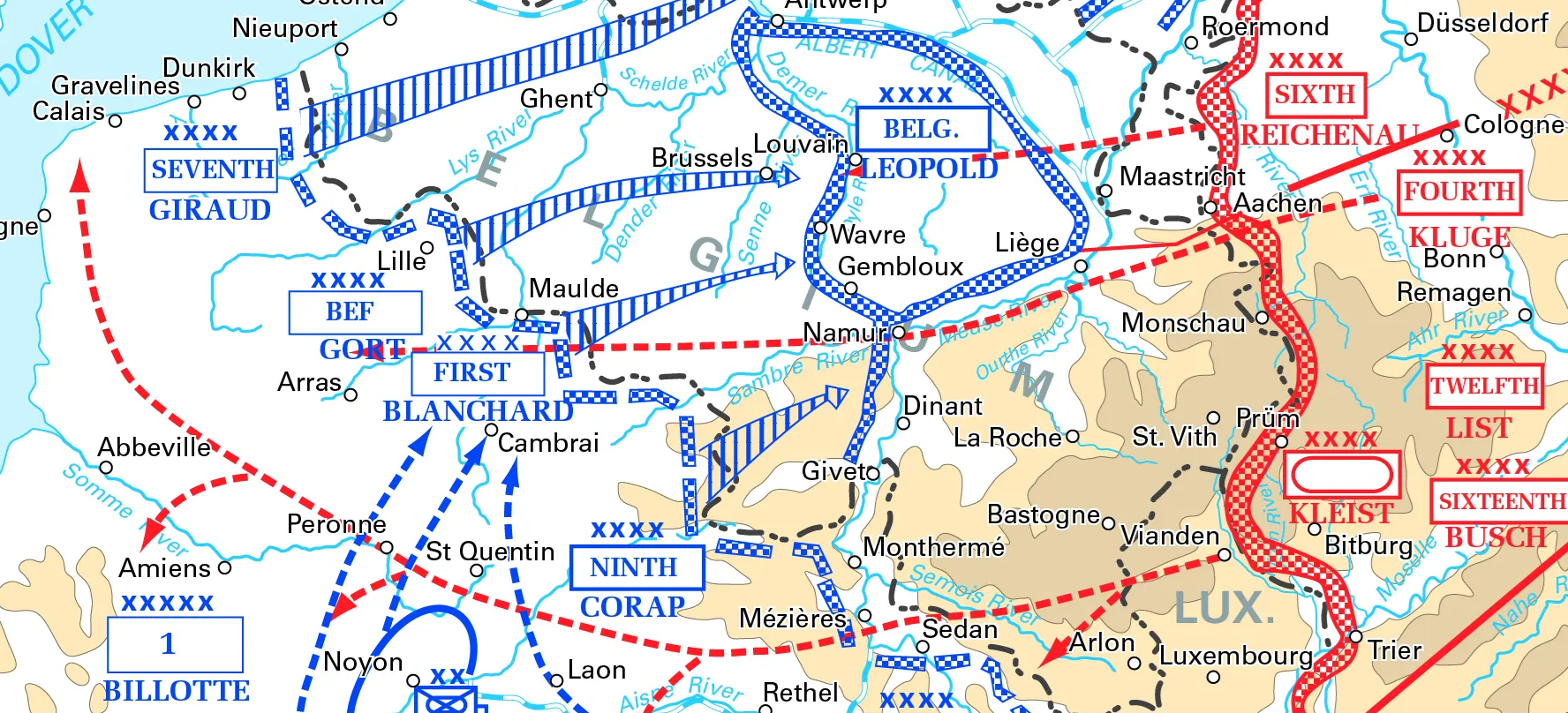
May 16 1940: Our WW2 Blitzkrieg documentary, Ten Days in Sedan, continues as Winston Churchill arrives in Paris. The Prime Minister still has hope but he’s shocked to see the French burning documents and preparing to evacuate. Meanwhile French and German tanks slug it out in Stonne, Guderian reaches Montcornet, and Rommel leads his Ghost Division far behind French lines.

Chapters
00:00 Intro
00:58 Recap
01:38 Stonne
03:05 Panzers Drive West
07:02 New French Plan
12:23 Rundstedt’s Halt Order
16:06 Ghost Division
21:53 Churchill in Paris
(more…)

Emperor Hadrian and Antinous the God

Filed under: Books, Europe, History, Religion — Tags: , , , , , , — Nicholas @ 03:00

Reginald Godwyn reviews a new monograph from Dr. Sean Gabb:

Sean Gabb’s The Cult of Antinous is not a hagiography. It is something better: a quiet, erudite demolition of pious lies from both the ancient and modern world. The lecture-turned-book is a brisk, sardonic tour through the most decadent cult of the Roman world, and one of its most effective. The boy died, yes — but what followed was a miracle of political opportunism and spiritual success. Gabb does not flinch from the disturbing parts. Nor does he genuflect before the fashionably uncritical idolatry now surrounding Antinous as gay icon. This is not a work of celebration. It is a work of historical thought, dressed as a lecture and sharpened with scepticism.

It begins, as it must, with a photograph of Hadrian and Antinous — stone fragments now housed in the British Museum, staring out from beneath museum glass and centuries of self-serving speculation. “Hadrian is on the left”, Gabb says, “Antinous on the right”. But from then on, it is the boy — not the emperor — who takes centre stage. The story is simple enough. Antinous was a Bithynian youth, met Hadrian at around age twelve, became his lover, travelled with him, and died in the Nile under suspicious circumstances. Hadrian made him a god. Cities were built. Statues were raised. Coins were minted. Shrines were erected. And the worship spread quickly and widely—and in ways that make some modern historians uncomfortable.

Gabb’s treatment of all this is not exactly kind, but it is always fair. He reminds us that, when it comes to Antinous, we know almost nothing. The written sources are sparse: Dio Cassius gives a few lines; the Historia Augusta offers rumour. Most of what we “know” is based on “could have”, “may have”, “might have”. And yet on this we have built dissertations, operas, novels, and now neopagan blogs filled with inverted pentagrams and airbrushed torsos. Gabb is not impressed. His repeated refrain is “castle of supposition”. And rightly so. Royston Lambert, he notes, was especially fond of these castles.

But for all that, there is a real story here. Gabb walks us through the ancient views of sex, pausing only to make the necessary disclaimer for his mixed audience of Chinese undergraduates and English middle class language students:

    Please be aware that other civilisations frequently have or had views of sexual propriety different from our own. This lecture will discuss, and sometimes show depictions of, sexual relationships between adults and persons somewhat below the present age of consent. Some of these relationships involve disparities of legal status. Though not recommended for imitation in modern England, such relationships are nowhere explicitly condemned. The lecture will also not avoid language that many may consider indelicate or obscene.

What follows is a lesson in ancient sexual economics. Among Greeks, boy-love was structured: older men pursued beautiful adolescent boys, usually between 12 and 17, who were supposed to receive but not enjoy. The Romans were less sentimental: they cared only who did the penetrating. “To use was fine. To be used was shameful.” Gabb’s phrasing here is withering, but accurate. There is no anachronistic moralising — just the dry, clinical reconstruction of a culture with different priorities.

Tiberius: Rome’s Most Underrated Emperor?

Filed under: Books, Europe, History — Tags: , , , , — Nicholas @ 02:00

The Rest Is History
Published 31 Jan 2025

The Roman historian Suetonius’ biography of the controversial Emperor Tiberius is one of his most shocking and salacious, condemning Tiberius to infamy. But was Tiberius really the perverted monster Suetonius would have us believe? Born of Rome’s most illustrious family and a sacred bloodline — the Claudians — Tiberius’ mother Livia was unceremoniously taken from his father while she carried him, to marry the great Emperor Augustus. So it was that Tiberius grew up in the very heart of imperial power, proving himself intelligent, and a superb military commander. But, following the unforeseen deaths of Augustus’ young heirs, he found himself primed to become the next Caesar of Rome. The reign that ensued would prove largely peaceful, prosperous and stable, though Tiberius himself was increasingly plagued by paranoia and fear. While the last of Augustus’ bloodline were wiped out one by one, he retired to Capri, much to the horror of the Roman people. Before long, rumours had begun percolating of the heinous deeds, sick proclivities, and vile abominations Tiberius was practicing on his pleasure island …

Join Tom and Dominic as they discuss Tiberius, the impressive though widely lambasted second emperor of Rome. What is the truth behind the sordid myths and mysteries of his reign …?

00:00 The bad emperor?
06:45 Was he depraved?
08:30 The Roman version of the Kennedys
13:29 How he became the heir
16:50 The greatest general of his generation
17:53 Tiberius is manoeuvred into the succession
21:23 Tiberius the emperor
(more…)

July 13, 2025

Tiger II: What was the point?

Filed under: Germany, History, Military, Weapons, WW2 — Tags: , , , — Nicholas @ 04:00

The folks at the Tank Museum at Bovington put together a video comparing the Tiger II to the earlier Tiger I and the typical allied tanks they faced on the battlefield. On the social media site formerly known as Twitter, historian Jonathan Ware posted a long thread about both the topics the Tank Museum’s video raised and where he feels they should have added more context:

And here’s the Tank Museum’s video itself:

FEATURING FOOTAGE OF TIGER I AND TIGER II RUNNING TOGETHER AT TANKFEST 2025 – with thanks to Musée des Blindés and World of Tanks.

It’s absurdly large, heavy, expensive, and difficult to build. So, you have to ask; what is the point of Tiger II when you already have the biggest, toughest and meanest beast on the block – Tiger I.

Whilst the Tiger I has maintained a legendary status since its appearance on the battlefield, there were many aspects of this tank’s design that were pretty much dead ends. The turret couldn’t be resized to fit a more powerful gun. And adding extra weight in the form of armour would put a huge amount of strain on the internal mechanics. So, a new tank was needed to ensure the German’s could maintain their edge against Allied armour.

Enter the Tiger II, otherwise known as the King Tiger. Heavily armed, the Tiger II could take on any Allied tanks that it faced, with its KwK 43 able to penetrate the frontal armour of a Sherman at 1,800m. Its thick sloped armour was incredibly dependable, and no Allied tank commander would willingly engage a Tiger II in a head-to-head fight.

The Tiger II’s battlefield presence came at a significant cost. A single Tiger II could take up to 400,000 hours to build at a price of RM 321,500 – up to 100,000 more hours than a Tiger I, and over twice the cost of a Panther. A while the Allies were churning out tanks that were “good enough”, the Germans were committed to quality and ensuring their tanks would always have the edge against enemy armour.

The Tiger II has often been described as a tactical success for its battlefield prowess, but a strategic failure for being so resource-hungry, expensive and relatively low in number. Given their cost, it forces us to question whether the German war machine should have dropped Tigers altogether in favour producing tanks that were cheaper and easier to build

00:00 | Introduction
00:55 | Durchbruchswagen
06:15 | Tiger I vs Tiger II
12:52 | The Numbers Game
17:34 | Was Tiger II a Success?

This video features archive footage courtesy of British Pathé.

In this film, Chris Copson breaks down the differences between two legendary tanks – the Tiger I and Tiger II. Whilst Tiger I was an impressive tank, certain areas of its design were an evolutionary dead-end. Its boxy turret couldn’t be enlarged to fit a bigger gun, and the hull couldn’t be up armoured without adding stress to the drive train. So, Tiger II ordered in 1943, including even thicker, sloped armour and a much more destructive gun. With mixed success on the battlefield, difficulties in maintaining its complex mechanics and reliance on dwindling supply lines, the Tiger II ended up being a tactic success, but a strategic failure.

Want to learn more about the Tiger I and Tiger II? Here are some of the sources we used to make this film:

Panzer Tracts No.23 – Panzer Production from 1933 to 1945 by Thomas Jentz and Hilary Doyle, 2011
Germany’s Tiger Tanks, DW to Tiger I: Design, Production and Modifications by Thomas Jentz and Hilary Doyle, 2000
Germany’s Tiger Tanks, VK45.02 to Tiger II: Design, Production and Modifications by Thomas Jentz and Hilary Doyle, 1997
Encyclopedia of German Tanks of World War Two, Revised Edition by Peter Chamberlain and Hilary Doyle, 1993
Tigerfibel. English translation by The Tank Museum, 2022
Panther and its Variants by Walter Spielberger, 1978
Armored Champion: The Top Tanks of World War II by Steven Zaloga, 2015
www.tankarchives.com
www.forum.axishistory.com
www.achtungpanzer.com
www.feldgrau.net

Q&A: Finland and Finnish Small Arms (From Berdan to New Sako AR)

Forgotten Weapons
Published 19 Feb 2025

Today’s Q&A is brought to you by the fine folks at Patreon!

I figured that Finland would be a good subject for this month’s Q&A, as I am visiting the country to shoot Finnish Brutality this month. In fact, this video was filmed during the trip (the match took place last weekend, and its video coverage will be coming soon!).

00:39 – Development of the Suomi and PPSh-41 submachine guns
03:24 – Oldest guns used in Finnish Independence War
04:40 – Biggest strength and weakness of the Suomi
06:43 – Soviet use of captured Suomis?
08:52 – Finnish Maxim guns
11:41 – Finnish alcohol
17:05 – Finnish small arms that could have been globally popular but weren’t?
20:04 – Benefits of a small invaded country using the same weapons as its invader?
23:07 – Favorite and least favorite Finnish customs?
25:57 – Finnish Mosin Nagant book by Matt DiRisio
27:26 – Sisu movie
28:28 – Are the Finns masters of improving other peoples’ guns?
30:08 – Pre-independence Finnish arms production
31:47 – Shower beer or sauna beer?
32:20 – Why so few RK95 rifles made, and RK95 vs RK62M?
35:35 – Swedish Mausers in Finland
37:54 – Commercial Sako rifles before and after Beretta bought Sako
39:19 – Finnish gun laws, specifically CCW
40:58 – Interlude: Finnish Brutality 2025 match update w/ Jari Laine
42:24 – Did Finland improve the PKM and SVD like they did the AK and Mosin?
44:57 – 7.62x54R vs 7.62x53R
47:56 – Thoughts on new Sako AR for Swedish and Finnish militaries
(more…)

QotD: The ever-elusive perfect future (maybe we can get there with more blood spilled…)

Filed under: History, Politics, Quotations, USA — Tags: , , — Nicholas @ 01:00

What the modern hard left wants is the same they’ve wanted since the French Revolution: claim the present in the name of the future, repudiate the past, then own the past, redefine it to their terms, then make it off limits for discussion unless you keep within the lines they’ve defined. Discussion of the past outside of the boundaries is counter-revolutionary, and proper consciousness has to be displayed at all times.

James Lileks, The Bleat, 2020-06-15.

July 12, 2025

G.K. Chesterton on the dangers of cultural surrender

Filed under: Books, Britain, History, Religion — Tags: , , , , , , — Nicholas @ 04:00

Andrew Doyle on Chesterton’s novel The Flying Inn (1914) which warned against the risks of unfettered immigration and what came to be known as “multiculturalism”:

The creed of multiculturalism has made it difficult to discuss the impact of unfettered immigration. The far right have always opposed it on the basis of racial prejudice and ethno-jingoism. Yet there are authentically liberal concerns to be raised about the problem of political Islam and how all discussions are stifled through accusations of “Islamophobia”. What happens when an essentially anti-democratic ideology is allowed to flourish within a society that otherwise depends upon democratic norms?

To help illuminate the troubles of our time, and in particular the perverted form of liberalism that ensures its own undoing, we might return to G. K. Chesterton’s The Flying Inn (1914), a whimsical novel about a future Islamic England. With today’s proliferation of sharia courts and the government’s determination to criminalise blasphemy against Islam by legislative stealth, one might call Chesterton’s novel prescient.

The key figure is Lord Ivywood, a politician who becomes enamoured of Misysra Ammon, an Islamic cleric who styles himself as the “Prophet of the Moon”. Ivywood is an exemplar of the zealotry of the progressive reformer, a prototype of the virtue-signaller, one who “did not care for dogs” but “cared for the Cause of Dogs”. He first introduces Ammon at a private event at the “Society of Simple Souls”, where he is able to preach his creed to the gullible bons vivants of the upper middle-class. The collective thrill of the crowd is pure orientalism, and they are easily mesmerised by Ivywood’s panegyrics.

Inevitably, Ivywood’s submission to Islam is framed in syncretic terms; not so much surrender as a beautiful fusion. “The East and the West are one”, Ivywood says. “The East is no longer East nor the West West; for a small isthmus has been broken, and the Atlantic and Pacific are a single sea.” Islam, he claims, is the “religion of progress”, a phrase that anticipates today’s oft-echoed slogan of Islam as the “religion of peace”.

This kind of doublespeak is ubiquitous among those activists who routinely strive to force the square peg of Islamic doctrine into the round hole of woke politics. This is exemplified by articles such as “Prophet Muhammed was an intersectional feminist” in Muslim Girl magazine, a piece that includes the inane claim that the founder of the religion “wanted to generate as much inclusivity as possible”. In similarly convoluted terms, Ammon in The Flying Inn argues that there is nothing more feminist than a harem. “What is the common objection our worthy enemies make against our polygamy?” he asks. “That it is disdainful of the womanhood. But how can this be so, my friends, when it allows the womanhood to be present in so large numbers?”

Today’s readers will recognise Chesterton’s depiction of the tendency of liberal politicians to kowtow to the demands of Islamic clerics in a bid to avoid causing offence. At one point, Ivywood explains that he has tabled the “Ballot Paper Amendment Act” in parliament to allow citizens to vote with a mark resembling a crescent rather than the traditional cross.

    If we are to give Moslem Britain representative government, we must not make the mistake we made about the Hindoos and military organization — which led to the Mutiny. We must not ask them to make a cross on their ballot papers; for though it seems a small thing, it may offend them. So I brought in a little bill to make it optional between the old-fashioned cross and an upward curved mark that might stand for a crescent — and as it’s rather easier to make, I believe it will be generally adopted.

The main plot of The Flying Inn revolves around the innkeeper Humphrey Pump and the Irish sailor Captain Patrick Dalroy, who take it upon themselves to sell alcohol in spite of the new Islamic prohibitions in England. They find a loophole in the law that permits them to conduct their business so long as they first erect an official inn sign. And so we follow the pair as they dash from location to location, with their barrel of rum and a wheel of cheese on a donkey’s back, planting their portable sign wherever refreshment is needed.

Feeding Emperor Augustus Caesar – Handmade Roman Cheese

Filed under: Europe, Food, History — Tags: , , , , — Nicholas @ 02:00

Tasting History with Max Miller
Published 11 Feb 2025

Fresh handmade cheese as Augustus might have enjoyed it with some bread and figs

City/Region: Rome
Time Period: 1st Century

Augustus, a man meticulous about his public image and about consolidating power as the first emperor of Rome, had rather simple tastes when it came to food. Suetonius, a Roman historian from the first and second centuries, wrote in The Lives of the Twelve Caesars that Augustus “preferred the food of the common people, particularly the coarse sort of bread, small fishes, fresh, moist, hand-pressed cheese, and green figs of the second crop”.

This recipe from the first century does indeed make a fresh, moist, hand-pressed cheese that is slightly nutty and is a clear predecessor to modern mozzarella. It’s just as historically accurate if you make it with goat, sheep, or cow milk, you just need to make sure that the milk is pasteurized, not ultra-pasteurized, and that it’s non-homogenized.

Note that this recipe is vegetarian if you use vegetable rennet.

    Cheese should be made of pure milk which is as fresh as possible … It should usually be curdled with rennet obtained from a lamb or a kid … and equally well with fresh sap from a fig-tree … The least amount of rennet that a pail of milk requires weighs a silver denarius … It is sprinkled with pounded salt … Some crush green pine nuts and mix them with the milk and curdle it in this way … Their method of making what we call “hand-pressed” cheese is the best-known of all: when the milk is slightly congealed in the pail and still warm, it is broken up and hot water is poured over it, and then it is shaped by hand.
    De re rustica by Columella, 1st century

(more…)

QotD: Ancient empires

Filed under: Economics, History, Quotations, Technology — Tags: , , , — Nicholas @ 01:00

The earliest “empires” were Security oriented. A band of hunter-gatherers — who had no concept of individual property, and just took whatever they needed from the environment — finally settled, and became farmers. Fencing and cultivating and irrigating, and building surpluses which could be traded for items that would improve living standards. (Farmers in areas that CAN’T store surplus — mainly tropical areas with year round crops — never made it further than village level agriculture, whereas farmers in areas with storable annual crops like grain — which can be stored and TAXED — went on to found empires …)

Unfortunately the initial problem with being farmers surrounded by hunter-gatherers who don’t understand property, is that such hunter-gatherers look at those nicely fenced grains and enclosed cows and sheep and goats as wonderfully convenient places to hunter-gather … (There is a reason the boundaries between hunter-gatherers and farmers are violent places, and all the crap written about “frontier wars” and extermination and the rest is just a shorthand for — these two cultures cannot co-exist peacefully … Nomads are different … they trade, therefore they understand property, therefore they can co-exist with farmers — though they will still raid where they can, be they Mongol or Viking!)

So farmers immediately face a law and order issue, which can only be solved if there is enough surplus available to provide a tax base that will allow an authority figure (chief, king, emperor, etc.) to employ people to provide protection. At village level that is usually a warrior caste who can keep the competition at bay, but once surplus gets to a level that allows higher tech, that will mean states or empires.

To put that in perspective, if your local community collects a surplus, and can afford a local chief/lord/king to provide protection, the resulting tax system is almost always (in recorded human cultures) based on a percentage of production. (In fact the earliest versions of written communication are almost always record keeping for crops and taxation.) This means that the local lord immediately has both the majority of excess funds locally, and a strong incentive to increase local production so his take will increase.

When I ask the average class of secondary school students what sorts of things the local lord could invest in to improve productivity, they get the idea pretty quickly. Irrigation for fields; animals for farm work; blacksmiths for tools and axles; wheelwrights; roads; bridges; mills; markets; guards; etc. This list is common to most parts of Europe, Africa, Asia, Central and South America and Australasia. The only places it never develops are the very early farming communities in places like New Guinea that have no storable or taxable food items to allow such a development.

So all early farming societies that can tax — without exception — become tax based hierarchical cultures. Some are even referred to as kingdoms or empires. And they are based on the idea of keeping the farmers safe, so they can be taxed.

These early empires are all Security empires. In the Middle East they are often shown as large sprawls across the map, but such sprawls are fairly fanciful. In practice they usually refer to rich farm based river valleys, with an extended hinterland based on nomadic tribes that are trading with/employed by/or paid tribute to by the “imperial authority” simply to keep other outsiders at bay.

Traditionally they fall when their hinterland nomadic allies are not strong enough to keep outsiders at bay, or become strong enough themselves to try a bit of conquest. At which point of course the conquerors find that they have to adopt the systems of the despised lowlanders they have just conquered if they are to keep the loot coming in and the system going. (One of my favourite historical analogies is the nomadic conquerors crucifying the old king on the walls of his palace and sneering that he could watch his city burn, only for him to point out that it isn’t his city anymore, it’s their city that’s burning …)

Nigel Davies, “Types of Empires: Security, Conquest, and Trade”, rethinking history, 2020-05-02.

July 11, 2025

The 1st Canadian Infantry Division in Operation Husky, 10 July 1943

Filed under: Britain, Cancon, History, Military, WW2 — Tags: , , , — Nicholas @ 05:00

For Project 44, Nathan Kehler describes the role of the 1st Canadian Infantry Division as the western-most part of Montgomery’s 8th Army landings on the southern tip of Sicily:

In the days leading up to Operation Husky, the Canadian contingent suffered two major losses – one in leadership and one in logistics. Though the landings would ultimately succeed, these events cast a shadow over the operation before a single boot touched Sicilian soil.

The Death of General Salmon

On July 2, 1943, Major-General G.G. Salmon, commander-designate of the 1st Canadian Infantry Division for the Sicily campaign, was tragically killed when his Hudson aircraft crashed near Barnstaple, Devonshire, shortly after takeoff from Hendon Airfield. Also on board were several senior officers, including Rear-Admiral P.J. Mack, the Canadian naval force commander, and Lt.-Col. C.J. Finlay, the newly appointed senior logistics officer for the division. All were killed.

Major General Guy Simonds, commanding 1CID.

General Salmon had been hand-picked to lead Canada’s first major amphibious campaign. His death, just days before the invasion, shook the command structure. With no time to replace him formally, Major-General Guy Simonds was appointed in his place. Simonds was known for his drive, discipline, and tactical focus. The loss of Salmon meant an abrupt shift in leadership style and planning assumptions on the eve of battle.

Sinking of Canadian Troop Ships

Only days later, Canadian forces suffered another blow. Between 4–5 July, as convoys moved across the Mediterranean from North Africa toward Sicily, Axis submarines attacked Allied shipping near the Algerian coast. Three ships were torpedoed: the St. Essylt, City of Venice, and Devis.

While the first two sinkings resulted in relatively few casualties, the loss of the Devis was severe. Carrying 261 Canadian troops, the ship was hit and engulfed in fire. Fifty-two Canadians were killed, with many trapped in the holds below deck. In total, the convoy lost over 500 vehicles and 40 guns, along with critical headquarters and signals equipment. Divisional Headquarters suffered particularly heavy equipment losses, forcing last-minute improvisation in communications and command coordination.

Despite these losses, the Canadian Division adapted quickly, and the operation went forward as planned. These early setbacks, however, underscore the high cost and uncertainty of even reaching the battlefield in the Second World War.

Canadian Beaches

On 10 July 1943, the 1st Canadian Infantry Division landed in southeastern Sicily as part of Operation Husky – the Allied invasion of Europe’s “soft underbelly.” The division’s assault was split across two main beaches: “Roger” Beach to the east and “Sugar” Beach to the west of the village of Le Grotticelle. These beaches formed the right flank of the British Eighth Army’s landings.

General Simonds’ plan for the Canadians was a two-brigade front:

  • The 1st Canadian Infantry Brigade would land on Roger Beach and push inland to destroy a coastal battery near Maucini, seize the Pachino airfield, and establish contact with nearby British forces around Pachino town.
  • The 2nd Canadian Infantry Brigade would land on Sugar Beach, clear beach defences, support the adjacent British Special Service Brigade landing on the far left, and advance north past the Pantano Longarini marshes.
  • The Special Service Brigade (British Commandos) would land west of Punta Castellazzo, eliminate enemy resistance in their zone, and cover the Canadians’ western flank from elevated ground north of the marshes.

The landings were scheduled for 2:45 a.m., with Commandos hitting the shore ten minutes earlier. Objectives were clear: knock out coastal defences, secure strategic positions, and quickly link up with Allied forces to expand the beachhead.

The Landings

Despite rough seas from a storm the day before, the landings went ahead as planned in the early hours of 10 July 1943. Just after 1:00 a.m., British Commandos began landing west of the Canadian sector, encountering only light resistance. By 1:34 a.m., the 2nd Canadian Infantry Brigade – the Seaforth Highlanders of Canada and Princess Patricia’s Canadian Light Infantry – were heading for Sugar Beach under covering fire from naval guns, including the 15-inch guns of HMS Roberts.

Navigation errors caused the Seaforth Highlanders to land to the right of the Patricias, reversing their intended order. But the heavy surf helped carry landing craft over a false beach, and both units came ashore with minimal opposition. They quickly cleared light beach obstacles and scattered Italian machine-gun posts. By 3:00 a.m., both battalions had successfully landed and were advancing inland toward their objectives.

On Roger Beach, however, the 1st Canadian Infantry Brigade faced delays. Their assault relied on DUKWs and landing craft (LCTs) arriving from Malta. When these were delayed, Brigadier Howard Graham initiated a backup plan, switching to Landing Craft Assault (LCAs). Confusion and the heavy swell caused further delay, with some units landing as late as 5:30 a.m. – nearly three hours behind schedule.

Despite the setbacks, the Hastings and Prince Edward Regiment and the Royal Canadian Regiment landed successfully. The Hastings had one reserve company land 5,000 yards off target in the Commando sector but regrouped without major issue. Both units met minimal resistance. The RCR encountered light shelling from the Maucini battery, but naval gunfire quickly silenced it.

By 6:45 a.m., all three lead brigades had secured their assigned beachheads, with support units and armour – including Shermans from the Three Rivers Regiment – beginning to land. The 48th Highlanders of Canada and The Edmonton Regiment followed their respective brigades ashore, some accompanied by pipe bands.

Opposition during the landings was light overall. Many Italian defenders withdrew as the naval bombardment and confusion of the assault overwhelmed them. However, isolated machine-gun fire and limited artillery shelling still resulted in several Canadian casualties, primarily on Roger Beach.

The pre-invasion loss of ships to enemy submarine or air attack was taken fully into account during the weeks before the convoys set out. But as with all military planning, the enemy gets a vote too.

Why Didn’t France and Britain Stop Germany’s Secret Rearmament? – Out of the Bullpen 001

Filed under: Britain, France, Germany, History, Military, Russia — Tags: , , , , — Nicholas @ 04:00

World War Two
Published 10 Jul 2025

In this special “Out of the Bullpen” episode, we answer your burning questions about Weimar Germany’s most turbulent years. From clandestine military pacts with the Soviets to the creative ways Germany sidestepped Versailles, we dig into aspects which shaped a republic on the brink.
(more…)

« Newer PostsOlder Posts »

Powered by WordPress