
The Scots are almost everywhere you go – every corner on the planet — anything that’s worth it, doesn’t matter whether you’re talking about banks in Hong Kong or rubber plantations in Malaya or the Canadian Pacific Railway, everywhere you go on the planet was built by Scots. And you go back to contemporary Scotland now, and they’re these pathetic, feeble, passive economic swamp of dependency – parts of Glasgow, male life expectancy … they all sit around eating fried Mars bars all day, and life expectancy is getting down to West African rates in certain wards of Glasgow. So if you’re someone who knows the Scottish diaspora, all that great stuff they did around the planet, and you go back to Scotland, you think, “What the hell happened?” Well what happened is government. What happened is welfare.
“America’s decline and fall in 13 quotes from our interview with Mark Steyn”, The Blaze, 2014-04-24
March 19, 2015
QotD: The Scottish diaspora
March 18, 2015
What About Canada? I OUT OF THE TRENCHES
Published on 16 Mar 2015
Indy sits in the chair of wisdom to answer your questions about World War 1. This week you asked about the chance of Scandinavia joining the war and what was the deal with Canada?
March 16, 2015
Parallels between the Regia Marina of the 1930s and the PLAN today
In The Diplomat, Franz-Stefan Gady shows how it could be that China’s People’s Liberation Army Navy (PLAN) may be following a similar strategy to Mussolini’s Regia Marina (Royal Italian Navy):
The history of the inter-war Italian navy, the Regia Marina, which faced a strategic outlook similar to the PLAN and was also confronted by technologically superior naval opponents, provides a great lesson in why overestimating your enemy’s capabilities is maybe just as dangerous as underestimating military power.
In short, miscalculating the fighting strengths of Mussolini’s navy prior to and during World War II diverted precious allied resources from dealing with more important military challenges (and as a consequence it inadvertently contributed to various allied defeats in the first three years of the war, such as during the Battle of France, and especially during the campaigns in North Africa). It also influenced policy making by granting Italy too big of a say in European politics (e.g., look up the history of the signing of the Munich Agreement) in comparison to the country’s real military capabilities.
Like the PLAN today, the Italians were engaged in many military innovations throughout the 1930s. For example, one article notes: “The Italian navy was impressive for its pioneering naval research into radar and its prowess in torpedo technology — the latter resulting in powerful aerial and magnetic torpedoes and contributing to the maiali, or small human-guided torpedoes — the ultimate weapons in asymmetric naval warfare.”
Also, the post-World War I Italian Navy, similar to today’s People’s Liberation Army Navy, harbored regional aspirations. With the conclusion of the war in 1918, the Italian admirals agreed that the navy must first dominate the Adriatic Sea and then expand into the Mediterranean and the Red Sea. China has a similar sequential strategy with attempting to dominate the Taiwan Strait as well as the South China Sea, followed by a push beyond the First Island Chain, and finally projecting power all the way to the Second Island Chain and beyond.
March 14, 2015
QotD: The unlikely survival of the Byzantine empire
Above all, Byzantine history is a record of survival and even prosperity in the face of terrible odds. Between about 540 and 720, the Byzantines were hit by wave after wave of catastrophe. First, there was the Great Plague of the 540s, that killed around a third of the population. Then, in the first decades of the seventh century, they were attacked on every frontier by the Persians and the Barbarians. They saw off these challenges, but had no time to recover before the first eruption of Islam from the deserts. In almost a single bite, the Arabs swallowed up the remains of the Persian Empire. They conquered vast areas of the East, and, within less than a century, pushing into Southern France. But, if they took Syria and Egypt and North Africa, they never conquered the core territories of the Byzantine Empire.
The reason for this is that the Byzantine State was ruled by creative pragmatists. The Roman Empire was a ghastly place for most of the people who lived in it. The Emperors at the top were often vicious incompetents. They ruled through an immense and parasitic bureaucracy. They were supreme governors of an army too large to be controlled. They protected a landed aristocracy that was a repository of culture, but that was ruthless in its exaction of rent. Most ordinary people were disarmed tax-slaves, where not chattel slaves or serfs.
During the seventh century, the Byzantines scrapped almost the entirety of the Roman heritage. Much of the bureaucracy was shut down. Taxes were cut. The silver coinage was stabilised. Above all, the landed estates were broken up and given to those who worked on them, in return for service in local militias. Though never abolished, chattel slavery became far less pervasive. The civil law was simplified, and the criminal law humanised – after the seventh century, the death penalty was rarely used.
The Byzantine Empire survived because of a revolutionary transformation in which ordinary people became armed stakeholders. The inhabitants of Roman Gaul and Italy and Spain barely looked up from their ploughs as the Barbarians swirled round them. The citizens of Byzantium fought like tigers in defence of their country. Now, this was a transformation pushed through in a century and a half of recurrent crises during which Constantinople itself was repeatedly under siege. Alone among the ancient empires in its path, Byzantium faced down the Arabs, and kept Islam at bay for nearly five centuries.
Don’t tell me this isn’t an inspiring story. I could have written yet another series of novels around the Persian War or the murder of Julius Caesar. But, if you can take the trouble to master your sources – and never let them master you – I really can’t think of a finer background than the early flowering of the one of the most remarkable, and effectively democratic, civilisations that ever existed.
Richard Blake, interviewed by Jennifer Falkner, 2014-06-23.
March 13, 2015
The Battle of Neuve-Chapelle I THE GREAT WAR Week 33
Published on 12 Mar 2015
The British Expeditionary Forces are starting their first major offensive since the beginning of trench warfare. Near Neuve-Chapelle they attack the Germans and try to “bite and hold” their position. This battle will be the blueprints for future British offensives. On the Balkan, Serbia is facing a different enemy: Typhus. The catastrophic sanitary conditions enable the disease to spread across the whole country.
March 12, 2015
Stephen Fry’s Key to the City – Exploring the Mysteries of the City of London
Published on 6 Jul 2014
Stephen Fry discovers the hidden mysteries of the City of London, from the huge amount of cash in the Bank of England vaults to the terrors of Dead Man’s Walk at the Old Bailey. The QI host tours the City of London, discovering the hidden mysteries of this rich and powerful square mile. Along the way, he visits the Bank of England’s vaults, witnesses high drama at the London Metal Exchange as dealers buy and sell stocks, and experiences Dead Man’s Walk at the Old Bailey, where many condemned criminals trod their final steps. Plus, as a recipient of the Freedom of the City of London, Stephen finds out just what privileges this gives him.
H/T to Ghost of a Flea for the link.
March 10, 2015
In the Service of Men – Women of World War One I THE GREAT WAR
Published on 9 Mar 2015
When you think about World War One, you think of men fighting to death in the mud. All to often the immense contribution of women as nurses, medics, ammunition workers and so many more has been forgotten. This special episode salutes all the women who served in the Great War.
Magna Carta in the modern world
Mark Steyn talks about the decline in state observance (and in David Cameron’s case, even awareness) of the significance of Magna Carta:
Real rights are like Magna Carta: restraints on state power. Too many people today understand the word “rights” to mean baubles and trinkets a gracious sovereign bestows on his subjects — “free” health care, “free” community college, “safe spaces” from anyone saying anything beastly — all of which require a massive, coercive state regulatory regime to enforce.
But, to give it is full name, Magna Carta Libertatum (my italics – I don’t think they had ’em back then) gets it the right way round. It was in some respects a happy accident. In 1215, a bunch of chippy barons were getting fed up with King John. In those days, in such circumstances, the malcontents would usually replace the sovereign with a pliable prince who’d be more attentive to their grievances. But, having no such prince to hand, the barons were forced to be more inventive, and so they wound up replacing the King with an idea, and the most important idea of all — that even the King is subject to the law.
In this 800th anniversary year, that’s a lesson worth re-learning. Restraints on state power are increasingly unfashionable among the heirs to Magna Carta: in America, King Barack decides when he wakes up of a morning what clauses of ObamaCare or US immigration law he’s willing to observe or waive according to royal whim; his heir, Queen Hillary, operates on the principle that laws are for the other 300 million Americans, not her. In the birthplace of Magna Carta, a few miles from that meadow at Runnymede, David Cameron’s constabulary leans on newsagents to cough up the names and addresses of troublesome citizens who’ve committed the crime of purchasing Charlie Hebdo.
The symbolism was almost too perfect when Mr Cameron went on TV with David Letterman, and was obliged to admit that he had no idea what the words “Magna Carta” meant. Magna Carta Libertatum: The Great Charter of Liberty. I’m happy to say Mr Cameron’s Commonwealth cousins across the Atlantic in Ottawa are more on top of things: One of the modestly heartening innovations of Stephen Harper’s ministry is that, when immigrants to Canada take the oath of citizenship, they’re given among other things a copy of Magna Carta.
Why? Because everything flows therefrom — from England’s Glorious Revolution to the US Constitution and beyond. It’s part of the reason why the English-speaking world, in contrast to Continental Europe, has managed to sustain its freedoms across the generations.
On the topic of Cameron’s inability to say what Magna Carta translates to in English, Richard Anderson is convinced it was a deliberate ploy by Cameron to downplay his (expensive) educational background:
A Prime Minister of the United Kingdom, a graduate of Eton and Brasenose no less, no more forgets stuff like this then he forgets his wife’s name or his archenemy’s personal weaknesses. He flubbed it on purpose. Boris Johnson, the rather eccentric Tory mayor of London, figured out Davy pretty much from the start:
Johnson, a classics scholar, said: “I think he was only pretending. I think he knew full well what Magna Carta means. It was a brilliant move in order to show his demotic credentials and that he didn’t have Latin bursting out of every orifice.”
A bit of context is required here. Since the Roman Empire went the way of all flesh Latin has been the language of the European elite. At first this was for practical purposes. For centuries any useful knowledge that had survived after the fall of the Empire in the west was in either in Latin or Greek. But long after Gutenberg, whose revolution made the vernacular languages of Europe important stores of knowledge, Latin remained the mark of a gentleman.
[…]
Mr Cameron is a graduate of Eton, an Old Etonian as they say. What is Eton? It makes Upper Canada College look like a cheap poseur. It is a super private high school that has produced nineteen of Britain’s fifty-three Prime Ministers. Harvard has produced a mere eight American Presidents. The University of Toronto a corporal’s guard of four Canadian PMs. Harold Macmillan, Britain’s snottiest modern PM, once derisively quipped that Mrs Thatcher’s cabinet had more Estonians than Etonians. A meritocratic break from an aristocratic past. At least it seemed at the time. Cameron’s particular team of rivals is decidedly Toff heavy. His Chancellor of the Exchequer, George Osborne, is a descendant of Henry III and his father was a baronet.
And what distinguishes the education of a Toff, even in these fallen times, is a sprinkling of Latin. Two millennia after the Romans decided the British Isles, or at least the warmer bits of it, were worth conquering the language of Cicero is still the mark of the Great and Good. Boris Johnson was perfectly correct. David Cameron almost certainly knew what Magna Carta meant. He was pandering to the lowest common denominator by pretending not to know.
But knowing the meaning of the name of the foundational document of British liberty, and by extension the liberty of the English speaking peoples, isn’t quite like being able to translate Virgil from the original into the Greek. It’s not specialized knowledge and should never be seen as such. This is what every schoolboy should and did know until the day before yesterday. That the Prime Minister of the day should think it politically advantageous to pretend not to know basic historical information is a chilling thought. That he was pandering was disgraceful but hardly shocking. That such pandering would be successful is a condemnation of modern Britain as severe as anything found in the works of Anthony Daniels.
There is stooping to conquer and then there is surrendering to the modern Vandals. David Cameron is the man holding the gate wide open.
Method to their vandalistic madness
David Warren on the ongoing organized vandalism of antiquities in areas under the control of ISIS:
Their opponents complain that, “Daesh terrorist gangs continue to defy the will of the world and the feelings of humanity.” I am quoting Iraq’s minister of tourism, who uses the Arabic acronym for the group that has apparently bulldozed the archaeological remains of Nimrud, on top of its other accomplishments. I’m sure the presidents of the United States and France, the prime ministers of England, Italy, and Japan, the chancellor of Germany and many other world leaders would agree with this sentiment. And let me add that these gangs have hurt my feelings, too.
[…]
The Black Obelisk of Shalmaneser III — thank God, removed to the British Museum more than a century ago — was found at Nimrud. It depicts, among foreign tributaries, Jehu, the ancient King of Israel, and is thus a direct transcription onto dated Assyrian limestone of what is also reported in our Bible. That was 841 BC: one of innumerable physical proofs of the historical veracity of what our children are taught to sneer at as “fairy tales,” in today’s jackboot-secular schools.
For more than a generation, now, the barbaric savages who teach in our post-Christian universities have been filling their heads with e.g. the malicious lies of the late Edward Said. They are drilled by these Pavlovs to drool, promptly, upon hearing the word “Orientalism,” and then woof, yap, and bay at “Western Imperialism,” like little attack poodles. This also hurts my feelings.
The bas-reliefs, the ivories, the sculptures — the colossal, winged, man-headed lions that once guarded palace entrances and were found in such a wonderful state of preservation — are, so far as they remained on site, or were retained in the Mosul Museum, now being smashed to bits on camera; or ground to gravel by heavy machinery beyond the local competence to manufacture or design. The “irony” here is that much of this sophisticated equipment, and probably even the mallets, were paid for by the profits from other archaeological objects which these Muslim fanatics, and their “moderate” enablers, have been selling in the international black market for art and antiquities.
Indeed: these videos of gratuitous destruction, which our media so generously promote, are probably designed to drive the prices up on the gems they have for sale; as, too, the beheading videos are intended to increase prices, and guarantee payment, on the heads of such other hostages as they may capture, from time to time. (I have noticed that many of the objects we see being smashed are actually plaster copies, of originals exported in the good old days. One must be familiar with practices in the bazaars of the Middle East to follow the many angles, in a culture that exalts low cunning.)
March 8, 2015
The War of 1812 as a statist enabling event
On the right side of the border, the War of 1812 is viewed as a key event in the progress towards independence. On the south side of the border, the war is usually considered to be a minor error, but as Sheldon Richman points out, it was an inflection point in the road to bigger, more coercive government in the United States:
In 1918, having watched in horror as his Progressive friends gleefully jumped onto Woodrow Wilson’s war wagon, Randolph Bourne penned the immortal words: “War is the health of the state.” As he explained it,
The republican State has almost no trappings to appeal to the common man’s emotions. What it has are of military origin, and in an unmilitary era such as we have passed through since the Civil War, even military trappings have been scarcely seen. In such an era the sense of the State almost fades out of the consciousness of men.
With the shock of war, however, the State comes into its own again,…
[I]n general, the nation in wartime attains a uniformity of feeling, a hierarchy of values culminating at the undisputed apex of the State ideal, which could not possibly be produced through any other agency than war. Loyalty—or mystic devotion to the State — becomes the major imagined human value.
An earlier group of Americans would have agreed, although they would not have shared Bourne’s horror. These are the men who sought war with England in 1812.
[…]
The retired founders were not the only ones who worried. They were joined by the men who still exercised power, especially Republicans James Madison and James Monroe, and such influential men of the next generation as John Quincy Adams, Henry Clay, and John C. Calhoun. As war with England approached, Republicans (as opposed to the Federalists) had no problem finding silver linings. War would not only inject government with a new dynamism—with important implications for trade policy, money and banking, and internal improvements — it would also give the people a shot of badly needed national spirit.
Thus the War of 1812 is an underrated turning point in American history, rivaling the Civil War, the Spanish-American War, and the two world wars. Indeed, the War of 1812 helped to launch the empire that manifested itself in those later conflicts. In its aftermath, America’s rulers could believe that their continental and global ambitions, backed by the army and a global navy, were fully realizable. They just needed a government equal to the task.
Every generation thinks they invented (non-vanilla) sex
Maggie McNeill can definitely confirm that your great-grandparents knew more about sex than you give them credit for:
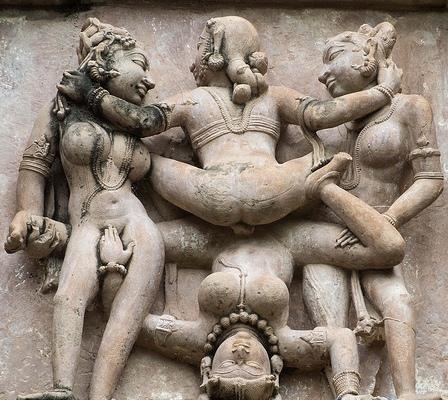
Every generation thinks it invented sex, or at least non-vanilla sex. And I don’t just mean teenagers who are squicked out by the idea of their parents shagging, either; among vanilla folk and/or those outside the demimonde, the delusion seems to persist through life that nearly everybody who lived before a moving line (hovering like a will-o-the-wisp exactly at the year the believer reached puberty) only had missionary-position sex for the purpose of procreation. Even if the individual is familiar with the Kama Sutra, knows about classical Greek pederasty or has seen the menu of a Victorian brothel, these are likely to be dismissed as islands of kink in a vast sea of unsweetened vanilla custard stretching back into prehistory. Even doctors quoted in newspaper articles are wont to make incredibly stupid, totally wrong statements like “the concept of having oral sex is something that seems less obscure to you than it did to your parents or grandparents.” Well, my dears, I’m old enough to have given birth to many of you reading this, and I can assure you that oral sex was not remotely “obscure” to us in those long-ago and far-off days of the early ‘80s; nor was it “obscure” to any of the older men I trysted with in my late teens, many of whom are now old enough to be your grandfathers; nor was it “obscure” to my own grandparents’ generation, who came of age in the Roaring Twenties; nor to the 5.5% or more of the female population who worked as whores in every large city of the world in the 19th century, nor the 70% or more of the male population who had enjoyed their company at least once; nor to any of the long procession of harlots and clients stretching back to before busybodies invented the idea of policing other peoples’ sexuality. Know what else wasn’t “obscure” to them? Anal sex. BDSM. Role-playing. Exhibitionism & voyeurism. Homosexuality. Cuckolding. I could go on and on, but I think you get the idea. Here’s a hint: most lawmakers have always been pompous ignoramuses too obsessed with telling other people what to do to actually have normal lives, so by the time they get around to banning something it’s a pretty safe bet the majority of everybody else in that culture over the age of 16 already knows about it, and many of them are doing it.
Chief among the popular sex acts that modern mythology pretends were “obscure” is masturbation, at least for women. The common delusion is that because a culture didn’t like to talk about something, it must not have existed; accordingly, the idea has arisen that Victorian girls were somehow so carefully controlled that they never discovered that touching oneself between the legs (or riding rocking horses) feels good. And because many women have difficulty reaching orgasm without some form of masturbation, that must mean that pre-20th century women all went around in a perpetual state of sexual frustration. In the past few years, the ridiculous myth has arisen that Victorian doctors actually gave women orgasms without knowing what they were, and that the vibrator was invented to speed up what they viewed as an odious task.
Playing With Fire – The First Flame Thrower I THE GREAT WAR Week 32
Published on 5 Mar 2015
Modern war already took place in the sky and under water but the waring nations also wanted to gain an advantage in the trenches. So this week, we see the first use of another merciless invention on the battlefield: the flame thrower. The battles on the Western Front, in the Carpathian’s and near the Dardanelles continued nonetheless.
March 6, 2015
ISIS takes sledgehammers and drills to ancient artifacts
This makes me sick to my stomach:


These images and many more are screencapped from a propaganda video released by ISIS, reported by Conflict Antiquities:
It is notable that the Islamic State released this propaganda, to assert their religious purity through their commitment to cultural destruction, immediately after the were exposed for making a deal with Turkey and not destroying Suleyman Shah’s tomb.
Last June, it was rumoured and mistakenly reported that the Islamic State had ‘destroyed ancient masterpieces, including the rare Assyrian winged bull’ at Nineveh Museum. This time, they’ve done it — at Mosul Museum and the Nergal Gate to Nineveh [the Nergal Gate Museum at Nineveh]. You can stream or download the mp4 (or watch it on YouTube/YouTube archive).
But if, like other sensible people, you don’t want to boost the web traffic to their pornography of violence — which they try to advertise as Islamic although they also preserve “heretical”, “idolatrous” things as long as they profit from them — I’ve taken screenshots from the video for verification and analysis. Christopher Jones, at the Gates of Nineveh, has ongoing, historically-informed coverage of this and other destruction, including Assessing the Damage at the Mosul Museum, Part 1: the Assyrian Artifacts.
March 5, 2015
QotD: Shalamar and the Khalsa
Between the Sutlej and Lahore lie fifty of the hottest, flattest, scrubbiest miles on earth, and I supposed we’d cover them in a long day’s ride, but Sardul said we should lie overnight at a serai a few miles from the city: there was something he wanted me to see. So we did, and after supper he took me through a copse to the loveliest place I ever saw in India — there, all unexpected after the heat and dust of the plain, was a great garden, with little palaces and pavilions among the trees, all hung with coloured lanterns in the warm dusk: streams meandered among the lawns and flower-beds, the air was fragrant with night-blooms, soft music sounded from some hidden place, and everywhere couples were strolling hand in hand or deep in lovers’ talk under the boughs. The Chinese Summer Palace, where I walked years later, was altogether grander, I suppose, but there was a magic about that Indian garden that I can’t describe — you could call it perfect peace, with its gentle airs rustling the leaves and the lights winking in the twilight; it was the kind of spot where Scheherazade might have told her unending stories; even its name sounds like a caress: Shalamar.
But this wasn’t the sight that Sardul wanted me to see — that was something unimaginably different, and we viewed it next morning. We left the serai at dawn, but instead of riding towards Lahore, which was in full view in the distance, we went a couple of miles out of our way towards the great plain of Maian Mir where, Sardul assured me mysteriously, the true wonder of the Punjab would be shown to me; knowing the Oriental mind. I could guess it was something designed strike awe in the visiting foreigner — well, it did all of that. We heard it long before we saw it, the flat crash of artillery at first, and then a great confused rumble of sound which resolved itself into the squealing of elephants, the high bray of trumpets, the rhythm of drums and martial music and the thunder of a thousand hooves making the ground tremble beneath us. I knew what it was before we rode out of the trees and halted on a bund to view it in breathtaking panorama: the pride of the Punjab and the dread of peaceful India: the famous Khalsa.
Now, I’ve taken note of a few heathen armies in my time. The Heavenly Host of Tai’ping was bigger, the black tide of Cetewayo’s legions sweeping into Little Hand was surely more terrifying, and there’s a special place in my nightmares for that vast forest of tipis, five miles wide, that I looked down on from the bluffs over Little Bighorn but for pure military might I’ve seen nothing outside Europe (and damned little inside) to match that great disciplined array of men and beasts and metal on Maian Mir. As far as you could see among the endless lines of tents and waving standards, the broad maidan was alive with foot battalions at drill, horse regiments at field exercise, and guns at practice — and they were all uniformed and in perfect order, that was the shocking thing. Black, brown, and yellow armies in those days, you see. might be as brave as any, but they didn’t have centuries of drill and tactical movement drummed into em, not even the Zulus, or Ranavalona’s Hova guardsmen. That was the thing about the Khalsa: it was Aldershot in turbans. It was an army.
George MacDonald Fraser, Flashman and the Mountain of Light, 1990.
March 3, 2015
Poland’s Struggle for Independence During WW1 I THE GREAT WAR
Published on 2 Mar 2015
World War 1 was a a fight of nationalism and self determination for many countries which did not yet exist then. One of those countries was Poland – its territory split between Russia, Austria-Hungary and Germany. In our first of multiple special episodes, Indy tells you everything about Poland and it’s fight for independence.


