
Published on 14 Nov 2016
Romania is sometimes overlooked when talking about World War 1, but they had their own military tradition. As a smaller player in Europe, equipping the army was even more a challenge than it already was for the world powers.
November 15, 2016
Romanian Uniforms of World War 1 I THE GREAT WAR Special
Comments Off on Romanian Uniforms of World War 1 I THE GREAT WAR Special
November 14, 2016
“… he should have subtitled it, ‘500 Years of Aristocratic Testosterone Poisoning'”
M. Harold Page, guest-posting at Charles Stross’s blog:
Every so often, somebody posts some wistful meme about how nice it would be if duelling were legal again.
I’m increasingly less gentle in my response. Partly I don’t want non-sword folk to start to thinking of Historical European Martial Arts as some kind of Fascist death cult (we really aren’t, and we’re a very geeky and inclusive movement).
Mostly though, as a historical novelist, swordsman, and father of a teenage boy, I can tell you that duelling was — and — a bloody stupid idea.
Look, I like swords. Love them, even.
I revel in their history, evolution and context. I get a buzz from handling originals — earlier this year, I examined a well-notched sword from the Battle of Castillon and I could almost hear the English army annihilating itself by charging a superior force in entrenched positions.
Most of all, I like fighting with swords or writing about people fighting with swords; Zornhau!
All this is what leads me to think duelling is essentially a bloody stupid idea.
[…]
People talk airily about duelling as a “safety valve” or a “test of manhood”.
However, consider what happens when it’s OK and almost mandatory for young men to challenge each other to mortal combat for reasons that can best be called whimsical…
Alfred Hutton — one of the saints of the modern Historical European Martial Arts movement (real soldier, instructor of sabre to the British Army, early investigator of Medieval martial arts treatises) — wrote a wonderful book called The Sword and the Centuries in which he gathered all the anecdotes of tournaments and duelling he could find. Honestly, he should have subtitled it, “500 Years of Aristocratic Testosterone Poisoning“.
Especially if you are the parent of a young man, or have ever sustained a sword injury, the sections on French duelling culture are truly horrific. Duelling wasn’t so much a safety valve as a public health emergency.
We’re talking young men going out for a bottle of wine and coming back in a hearse because another youth caught their eye in the wrong way and they felt impelled to issue an immediate challenge.
We’re talking three versus three duels where a stranger gallantly — read bloody stupidly — offers to make up the missing third on one side. And almost everybody dies.
Reading between the lines, we’re also talking appalling peer pressure, bullying and legitimised murder — a duel is an awfully handy way of getting rid of an unwanted heir or rival.
Comments Off on “… he should have subtitled it, ‘500 Years of Aristocratic Testosterone Poisoning'”
November 13, 2016
Olympic Games 1916 – Reaction To Tanks – Barbed Wire I OUT OF THE TRENCHES
Published on 12 Nov 2016
It’s time for another exciting episode of Out Of The Trenches. This week we talk about the Olympic Games 1916, how the Germans reacted to the first tanks and about barbed wire.
Comments Off on Olympic Games 1916 – Reaction To Tanks – Barbed Wire I OUT OF THE TRENCHES
November 11, 2016
Mark Knopfler – “Remembrance Day”
A Remembrance Day slideshow using Mark Knopfler’s wonderful “Remembrance Day” song from the album Get Lucky (2009). The early part of the song conveys many British images, but I have added some very Canadian images also which fit with many of the lyrics. The theme and message is universal… ‘we will remember them’.
Comments Off on Mark Knopfler – “Remembrance Day”
Charming The Poles – The Central Powers Look For New Allies I THE GREAT WAR Week 120
Published on 10 Nov 2016
The year of battles is coming to a close as winter approaches. The Central Powers realise that they need new troops and new war material if they actually want to win the war and not just continue it. Erich Ludendorff dreams of a Polish Army under German command and to charm the Poles in the German Empire and the occupied territories, the Kingdom of Poland is established.
Comments Off on Charming The Poles – The Central Powers Look For New Allies I THE GREAT WAR Week 120
In memoriam
A simple recognition of some of our family members who served in the First and Second World Wars:
The Great War
 Private William Penman, Scots Guards, died 1915 at Le Touret, age 25
(Elizabeth’s great uncle)- Private David Buller, Highland Light Infantry, died 1915 at Loos, age 35
(Elizabeth’s great grandfather) - Private Walter Porteous, Northumberland Fusiliers, died 1917 at Passchendaele, age 18
(my great uncle) - Corporal John Mulholland, Royal Tank Corps, died 1918 at Harbonnieres, age 24
(Elizabeth’s great uncle)
The Second World War
- Flying Officer Richard Porteous, RAF, survived the defeat in Malaya and lived through the war
(my great uncle) - Able Seaman John Penman, RN, served in the Defensively Equipped Merchant fleet on the Murmansk Run (and other convoy routes), lived through the war
(Elizabeth’s father) - Private Archie Black (commissioned after the war and retired as a Major), Gordon Highlanders, captured at Singapore (aged 15) and survived a Japanese POW camp
(Elizabeth’s uncle) - Elizabeth Buller, “Lumberjill” in the Women’s Land Army in Scotland through the war.
(Elizabeth’s mother) - Trooper Leslie Taplan Russon, 3rd Royal Tank Regiment, died at Tobruk, 19 December, 1942 (aged 23).
A recently discovered relative. Leslie was my father’s first cousin, once removed (and therefore my first cousin, twice removed).
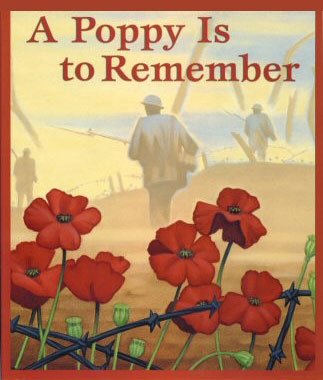
In Flanders fields the poppies blow
Between the crosses row on row,
That mark our place; and in the sky
The larks, still bravely singing, fly
Scarce heard amid the guns below.We are the Dead. Short days ago
We lived, felt dawn, saw sunset glow,
Loved and were loved, and now we lie
In Flanders fields.Take up our quarrel with the foe:
To you from failing hands we throw
The torch; be yours to hold it high.
If ye break faith with us who die
We shall not sleep, though poppies grow
In Flanders fields.Lieutenant Colonel John McCrae, MD Canadian Army Medical Corps (1872-1918)
QotD: The amazing long-term success of Soviet subversion in the West
The Soviets consciously followed the Gramscian prescription; they pursued a war of position, subverting the “leading elements” of society through their agents of influence. (See, for example, Stephen Koch’s Double Lives: Stalin, Willi Munzenberg and the Seduction of the Intellectuals; summary by Koch here) This worked exactly as expected; their memes seeped into Western popular culture and are repeated endlessly in (for example) the products of Hollywood.
Indeed, the index of Soviet success is that most of us no longer think of these memes as Communist propaganda. It takes a significant amount of digging and rethinking and remembering, even for a lifelong anti-Communist like myself, to realize that there was a time (within the lifetime of my parents) when all of these ideas would have seemed alien, absurd, and repulsive to most people — at best, the beliefs of a nutty left-wing fringe, and at worst instruments of deliberate subversion intended to destroy the American way of life.
Koch shows us that the worst-case scenario was, as it turns out now, the correct one; these ideas, like the “race bomb” rumor, really were instruments deliberately designed to destroy the American way of life. Another index of their success is that most members of the bicoastal elite can no longer speak of “the American way of life” without deprecation, irony, or an automatic and half-conscious genuflection towards the altar of political correctness. In this and other ways, the corrosive effects of Stalin’s meme war have come to utterly pervade our culture.
The most paranoid and xenophobic conservatives of the Cold War were, painful though this is to admit, the closest to the truth in estimating the magnitude and subtlety of Soviet subversion. Liberal anticommunists (like myself in the 1970s) thought we were being judicious and fair-minded when we dismissed half of the Right’s complaint as crude blather. We were wrong; the Rosenbergs and Alger Hiss really were guilty, the Hollywood Ten really were Stalinist tools, and all of Joseph McCarthy’s rants about “Communists in the State Department” were essentially true. The Venona transcripts and other new material leave no room for reasonable doubt on this score.
While the espionage apparatus of the Soviet Union didn’t outlast it, their memetic weapons did. These memes are now coming near to crippling our culture’s response to Islamic terrorism.
Eric S. Raymond, “Gramscian damage”, Armed and Dangerous, 2006-02-11.
Comments Off on QotD: The amazing long-term success of Soviet subversion in the West
November 9, 2016
Italian Rifles of World War 1 featuring Othais from C&RSENAL I THE GREAT WAR – Special
Published on 8 Nov 2016
All about the Carcano Carbine on C&Rsenal: https://www.youtube.com/watch?v=mG3-i…
In our last live stream with Othais we talked about the Italian rifles and pistols of WW1. This is the slightly edited version in which we focus on the rifles. Check out Othais’ channel for more details.
Comments Off on Italian Rifles of World War 1 featuring Othais from C&RSENAL I THE GREAT WAR – Special
November 8, 2016
The Arditi – Italian Special Forces of World War 1 I THE GREAT WAR Special
Published on 7 Nov 2016
The Arditi (“The Daring Ones”) were special Italian assault troops in World War 1. And even though they were only able to really make a difference on the battlefield in 1918, the effects on morale and culture can be seen to this day.
Comments Off on The Arditi – Italian Special Forces of World War 1 I THE GREAT WAR Special
November 6, 2016
The First Shots of World War 1 – Serbian River Warfare | OUT OF THE ETHER
Published on 5 Nov 2016
In this episode of Out Of The Ether, Indy got a great comment from Pavle Pavlovic about Bodrog, the ship from which the first shots of the Great War were fired.
Comments Off on The First Shots of World War 1 – Serbian River Warfare | OUT OF THE ETHER
Did “Trudeaumania” exist outside the press corps?
In the Literary Review of Canada, Kenneth Whyte compares two new books on Pierre Trudeau and “Trudeaumania”:
Trudeaumania, by common understanding, refers to a state of mind that prevailed in 1968 when a swinging intellectual bachelor from Montreal rose to the leadership of the governing Liberal Party and swept Canada off its feet on his way to a majority victory in a national election campaign.
It never happened, at least not in any quantifiable way. Pierre Trudeau in 1968 was a politician. Elections are how we keep score in politics. Careers are made, governments change, history is shaped by electoral results. The 1968 election gave Pierre Trudeau his first majority government and revealed to the world his peculiarly Canadian charisma, but no matter how many women (and journalists) swooned in the course of his campaigns, there is nothing in the data to suggest anything resembling a mania.
[…]
Litt and Wright have combed the same newspaper and television archives, providing, between them, a neat case study of how historians tend to find what they want in the record. The weight of evidence is on Litt’s side. The front-page photos and evening news footage of Mod Trudeau—the “single, youthful, athletic, and fashionable [candidate] with a liberated-lifestyle” — are more plentiful and impactful than editorials on Intellectual Trudeau, editor of Cité Libre, circulation 500. Litt finds reason for the best-selling status of Trudeau’s book of constitutional essays on its dust jacket:
Pierre Elliott Trudeau is almost incredible: A Prime Minister who swings, who is described by Maclean’s magazine as “an authoritative judge of wine and women,” who drives a Mercedes, throws snowballs at statues of Laurier and Stalin, wears turtleneck sweaters and says things like “the state has no business in the bedrooms of the nation.”
Media imagery was critical to Trudeau’s emergence. Wright is correct in that Trudeau could be underwhelming in televised debates, formal speeches and long interviews. It was his spontaneous performances, catalogued by Litt, that created an endless supply of news hits: Trudeau dancing to rock ’n’ roll beside his campaign bus, Trudeau using a hanging microphone as a punching bag, Trudeau jumping over railings to get at his worshippers, Trudeau wearing ascots and sandals and saluting supporters with Buddhist bows, Trudeau posing shirtless and in yoga positions (yes, him too), Trudeau sliding down bannisters and performing somersaults off the diving board at a hotel pool, and, of course, Trudeau kissing, on the lips, random 16-year-olds on the street.
[…] Explains Litt: “A strange passion swept the media ranks, precipitating an idolization of Trudeau akin to that of an ancient religious sect worshipping a fertility god.”
Comments Off on Did “Trudeaumania” exist outside the press corps?
November 5, 2016
The Gunpowder Plot: Exploding the Legend
July 10, 2023: Replaced the replacement video with yet another one. Hopefully this one has a bit more staying power.
April 9, 2019: Replaced the original 2016 YouTube link with a current one. After all, the “only man to ever enter Parliament with honest intentions” should be remembered.
Reel Truth History Documentaries
Published on 20 Mar 2019Richard Hammond looks to provide a definite answer to an outstanding mystery of history… Could Guy Fawkes have succeeded with the Gunpowder Plot? 400 years after of the infamous Gunpowder Plot, when Guy Fawkes planned an explosion that would wipe out the King and the entire British Government, the question still remains what impact the blast would have had but this film sets out to discover what would have happened if he’d lit the fuse.
(more…)
Comments Off on The Gunpowder Plot: Exploding the Legend
November 4, 2016
War of Attrition On The Italian Front – The Ninth Battle of the Isonzo I THE GREAT WAR Week 119
Published on 3 Nov 2016
The dust of the 8th and even 7th battle hasn’t really settled on the Isonzo Front, but Luigi Cadorna is already unleashing the 9th Battle of the Isonzo River. The Austro-Hungarian troops under Svetozar Borojevic von Bojna can only look forward to the onset of winter because that will give them the long needed rest on the mountainous battlefield.
Comments Off on War of Attrition On The Italian Front – The Ninth Battle of the Isonzo I THE GREAT WAR Week 119
November 2, 2016
Naval Tactics in the Age of Sail (1650-1815)
Published on 9 Sep 2016
» SCRIPT & REFERENCES «
http://militaryhistoryvisualized.com/
» SOURCES & LINKS «
Hughes, Wayne: Fleet Tactics. Theory and PracticeTracy, Nicholas: “Naval Tactics in the Age of Sail”, in: Stilwell, Alexander: The Trafalgar Companion.
Slantchev ,Branislav L.: Warfare at Sea: The Evolution of Naval Power
Konstam, Angus: British Napoleonic Ship-of-the-Line
Tritten, James: Doctrine and Fleet Tactics in the Royal Navy
Comments Off on Naval Tactics in the Age of Sail (1650-1815)
November 1, 2016
New Inventions And New Fronts – Fall 1916 I THE GREAT WAR WW1 Summary Part 6
Published on Oct 31, 2016
1916 is known as the year of battles and in the past three months you could see that there was still no end in sight. Romania joined the war opening another front and at the Somme and at Verdun the battles were still raging.
Comments Off on New Inventions And New Fronts – Fall 1916 I THE GREAT WAR WW1 Summary Part 6


