Sumer just before the dawn of civilization was in many ways an idyllic place. Forget your vision of stark Middle Eastern deserts; in the Paleolithic the area where the first cities would one day arise was a great swamp. Foragers roamed the landscape, eating everything from fishes to gazelles to shellfish to wild plants. There was more than enough for everyone; “as Jack Harlan famously showed, one could gather enough [wild] grain with a flint sickle in three weeks to feed a family for a year”. Foragers alternated short periods of frenetic activity (eg catching as many gazelles as possible during their weeklong migration through the area) with longer periods of rest and recreation.
Intensive cereal cultivation is miserable work requiring constant toil with little guarantee of a good harvest. Why would anyone leave this wilderness Eden for a 100% wheat diet?
Not because they were tired of wandering around; Scott presents evidence that permanent settlements began as early as 6000 BC, long before Uruk, the first true city-state, began in 3300. Sometimes these towns subsisted off of particularly rich local wildlife; other times they practiced some transitional form of agriculture, which also antedated states by millennia. Settled peoples would eat whatever plants they liked, then scatter the seeds in particularly promising-looking soil close to camp – reaping the benefits of agriculture without the back-breaking work.
And not because they needed to store food. Hunter-gatherers could store food just fine, from salting animal meat to burying fish and letting it ferment to just having grain in siloes like everyone else. There is ample archaeological evidence of all of these techniques. Also, when you are surrounded by so much bounty, storing things takes on secondary importance.
And not because the new lifestyle made this happy life even happier. While hunter-gatherers enjoyed a stable and varied diet, agriculturalists subsisted almost entirely on grain; their bones display signs of significant nutritional deficiency. While hunter-gatherers were well-fed, agriculturalists were famished; their skeletons were several inches shorter than contemporaneous foragers. While hunter-gatherers worked ten to twenty hour weeks, agriculturalists lived lives of backbreaking labor. While hunter-gatherers who survived childhood usually lived to old age, agriculturalists suffered from disease, warfare, and conscription into dangerous forced labor.
Scott Alexander, “Book Review: Against The Grain“, Slate Star Codex, 2019-10-15.
April 15, 2024
QotD: Cereal cultivation also helped grow the centralized state
April 14, 2024
More evidence of Canada’s dwindling state capacity – not enough judges
Matt Gurney discussed this issue along with several others in this week’s Line podcast (highly recommended listening/watching, by the way):

Superior Court of Justice building on University Avenue in Toronto (formerly the York County Court House).
An evolving line of defence we see from the federal Liberals is that they’re actually doing a great job. It’s those darned provincial premiers that are screwing things up.
We touched on this in our last dispatch. And you know what? There’s some truth to it. Some, I stress. A lot of issues that are much vexing Canadians today aren’t fully or even primarily in federal jurisdiction. Health care and housing are two obvious examples. Canada is a complicated place, and the Liberals no doubt prefer to not talk about things that they’ve done that have exacerbated challenges faced by other orders of government. But the basic point is fair: Justin Trudeau ain’t to blame for all that ails you. Or at least, the blame ought to be spread around some.
This national disgrace, though, lands squarely on him.
You might have read about the shortage of judges across the country. It’s a pretty niche issue, so you might have missed it. Even if you’ve heard about it, you may not have paid much attention to it. Most Canadians won’t have much contact with the criminal justice system over their lives, let alone make their careers in it. But the crux of the issue is this: appointing judges to provincial superior courts, where many of the most serious matters are heard, is in the federal jurisdiction. Solely. Ditto appointments to the courts of appeal: totally in the federal jurisdiction. And the feds have fallen way behind on filling vacancies and aren’t appointing judges fast enough to erase the backlog. Despite a spate of recent appointments, there are dozens of vacancies across the country. These are funded positions that ought to be filled and overseeing cases. But they aren’t, entirely because the feds haven’t made the necessary appointments. That’s the issue.
A lack of judges is creating bottlenecks in the justice system. Arrests are being made and charges are being laid and cases are being prepared and then … nothing happens. Because you can’t hold a trial if there isn’t a judge available to oversee it.
The Toronto Star‘s Jacques Gallant has established something of a bleak speciality in his recent reporting. He’s written a series of articles in recent months documenting serious criminal cases that are being thrown out of court, with the accused set free, because their trial has been delayed so much that it cannot be completed before the Supreme Court-ordered limit for a “reasonable” wait for a trial runs out. That’s 18 months for more minor issues, and 30 months for serious ones.
To be clear: the decision to throw out the cases is, in a legal sense, correct. Indeed, it’s mandatory. The Supreme Court determined what a hard limit should be, and a case that exceeds that is dead. Full stop. That’s the law of the land. The judges forced to preside over these dismissals are not to blame, and are increasingly venting their frustration in their rulings. They’re mortified, and they’re criticizing the government in unusually blunt terms, to put it mildly. You don’t often read court rulings that come off more like op-eds, but we live in weird times.
But it’s a good thing that they’re saying something. Because these vacancies are having appalling real-world consequences. Gallant wrote recently about a case that I felt would mark the low point in the entire embarrassment. A woman had accused a man of raping her. She did a brave thing and reported it. The police believed her and made an arrest. The Crown reviewed the evidence and believed her, and proceeded with a trial. A jury believed her, and after considering the evidence against the accused and hearing his defence, convicted him of the crime.
And then the judge tossed the case, setting aside the verdict and letting the accused go free, innocent in the eyes of the law. Because the clock had run out.
QotD: Imperium in the Roman Republic
What connects these offices in particular is that they confer imperium, a distinctive concept in Roman law and governance. The word imperium derives from the verb impero, “to command, order” and so in a sense imperium simply means “command”, but in its implication it is broader. Imperium was understood to be the power of the king (Cic. Leg. 3.8), encompassing both the judicial role of the king in resolving disputes and the military role of the king in leading the army. In this sense, imperium is the power to deploy violence on behalf of the community: both internal (judicial) violence and external (military) violence.
That power was represented visually around the person of magistrates with imperium through the lictors (Latin: lictores), attendants who follows magistrates with imperium, mostly to add dignity to the office but who also could act as the magistrate’s “muscle” if necessary. The lictors carried the fasces, a set of sticks bundled together in a rod; often in modern depictions the bundle is thick and short but in ancient artwork it is long and thin, the ancient equivalent of a policeman’s less-lethal billy club. That, notionally non-lethal but still violent, configuration represented the imperium-bearing magistrate’s civil power within the pomerium (recall, this is the sacred boundary of the city). When passing beyond the pomerium, an axe was inserted into the bundle, turning the non-lethal crowd-control device into a lethal weapon, reflective of the greater power of the imperium-bearing magistrate to act with unilateral military violence outside of Rome (though to be clear the consul couldn’t just murder you because you were on your farm; this is symbolism). The consuls were each assigned 12 lictors, while praetors got six. Pro-magistrates [proconsuls and propraetors] had one fewer lictor than their magistrate versions to reflect that, while they wielded imperium, it was of an inferior sort to the actual magistrate of the year.
What is notable about the Roman concept of imperium is that it is a single, unitary thing: multiple magistrates can have imperium, you can have greater or lesser forms of imperium, but you cannot break apart the component elements of imperium.1 This is a real difference from the polis, where the standard structure was to take the three components of royal power (religious, judicial and military) and split them up between different magistrates or boards in order to avoid any one figure being too powerful. For the Romans, the royal authority over judicial and military matters were unavoidably linked because they were the same thing, imperium, and so could not be separated. That in turn leads to Polybius’ awe at the power wielded by Roman magistrates, particularly the consuls (Polyb. 6.12); a polis wouldn’t generally focus so much power into a single set of hands constitutionally (keeping in mind that tyrants are extra-constitutional figures).
So what does imperium empower a magistrate to do? All magistrates have potestas, the power to act on behalf of the community within their sphere of influence. Imperium is the subset of magisterial potestas which covers the provision of violence for the community and it comes in two forms: the power to raise and lead armies and the power to organize and oversee courts. Now we normally think of these powers as cut by that domi et militiae (“at home and on military service”) distinction we discussed earlier in the series: at home imperium is the power to organize courts (which are generally jury courts, though for some matters magistrates might make a summary judgement) and abroad the power to organize armies. But as we’ll see when we get to the role of magistrates and pro-magistrates in the provinces, the power of legal judgement conferred by imperium is, if anything, more intense outside of Rome. That said it is absolutely the case that imperium is restrained within the pomerium and far less restrained outside of it.
There were limits on the ability of a magistrate with imperium to deploy violence within the pomerium against citizens. The Lex Valeria, dating to the very beginning of the res publica stipulated that in the case of certain punishments (death or flogging), the victim had the right of provocatio to call upon the judgement of the Roman people, through either an assembly or a jury trial. That limit to the consul’s ability to use violence was reinforced by the leges Porciae (passed in the 190s and 180s), which protected civilian citizens from summary violence from magistrates, even when outside of Rome. That said, on campaign – that is, militae rather than domi – these laws did not exempt citizen soldiers from beating or even execution as a part of military discipline and indeed Roman military discipline struck Polybius – himself an experienced Greek military man – as harsh (Polyb. 6.35-39).
In practice then, the ability of a magistrate to utilize imperium within Rome was hemmed in by the laws, whereas when out in the provinces on campaign it was far less limited. A second power, coercitio or “coercion” – the power of a higher magistrate to use minor punishments or force to protect public order – is sometimes presented as a distinct power of the magistrates, but I tend to agree with Lintott (op. cit., 97-8) that this rather overrates the importance of the coercive powers of magistrates within the pomerium; in any case, the day-to-day maintenance of public order generally fell to minor magistrates.
While imperium was a “complete package” as it were, the Romans clearly understood certain figures as having an imperium that outranked others, thus dictators could order consuls, who could order praetors, the hierarchy neatly visualized by the number of lictors each had. This could create problems, of course, when Rome’s informal systems of hierarchy conflicted with this formal system, for instance at the Battle of Arausio, the proconsul Quintus Servilius Caepio refused to take orders from the consul, Gnaeus Mallius Maximus, because the latter was his social inferior (being a novus homo, a “new man” from a family that hadn’t yet been in the Senate and thus not a member of the nobiles), despite the fact that by law the imperium of a sitting consul outranked that of a pro-consul. The result of that bit of insubordination was a military catastrophe that got both commanders later charged and exiled.
Finally, a vocabulary note: it would be reasonable to assume that the Latin word for a person with imperium would be imperator2 because that’s the standard way Latin words form. And I will say, from the perspective of a person who has to decide at the beginning of each thing I write what circumlocution I am going to use to describe “magistrate or pro-magistrate with imperium“, it would be remarkably fortunate if imperator meant that, but it doesn’t. Instead, imperator in Latin ends up swallowed by its idiomatic meaning of “victorious general”, as it was normal in the republic for armies to proclaim their general as imperator after a major victory (which set the general up to request a triumph from the Senate). In the imperial period, this leads to the emperors monopolizing the term, as all of the armies of Rome operated under their imperium and thus all victory accolades belonged to the emperor. That in turn leads to imperator becoming part of the imperial title, from where it gives us our word “emperor”.
That said, the circumlocution I am going to use here, because this isn’t a formal genre and I can, is “imperium-haver”. I desperately wish I could use that in peer reviewed articles, but I fear no editor would let me (while Reviewer 2 will predictably object to “general”, “commander” or “governor” for all being modern coinages).3
Bret Devereaux, “Collections: How to Roman Republic 101, Part IIIb: Imperium”, A Collection of Unmitigated Pedantry, 2023-08-18.
1. I should note here that Drogula (in Commanders and Command (2015)) understands imperium a bit differently than this more traditional version I am presenting (in line with Lintott’s understanding). He contends that imperium was an entirely military power which was not necessary for judicial functions and was not only indivisible but also, at least early on, did not come in different degrees. In practice, I’m not sure the Romans were ever so precise with their concepts as Drogula wants them to be.
2. Pronunication note because this bothers me when I hear this word in popular media: it is not imPERator, but impeRAtor, because that “a” is long by nature, and thus keeps the stress.
3. And yes, really, I have had reviewers object to “general” or “commander” to mean “the magistrate or pro-magistrate with imperium in the province”. There is no pleasing Reviewer 2.
April 12, 2024
Busybody Alberta cabinet minister claims cheap booze is not in “compliance with … the spirit of Albertans”
Chris Selley points and laughs at Dale Nally, Alberta cabinet minister with responsibility for the regulation of gambling, booze, and cannabis:

Lauren Boothby on Twit, er, I mean “X” – https://twitter.com/laurby/status/1776437318435422493/photo/1
The latest prude eruption comes from Alberta — Canada’s freedom capital, by some accounts. Over the weekend, Edmonton Journal reporter Lauren Boothby quite rightly informed her social-media followers of an extraordinary bargain she had discovered at Super Value Liquor in Edmonton’s Mill Woods neighbourhood: $49.99 for four litres of store-brand “Value Vodka”, produced at the T-Rex distillery in St. Albert, sold in a clear plastic jug, and labelled roughly as you might label a jug of vinegar or bleach (appropriately, per the vodka snobs on X).
“Alberta rules”, Boothby reported, and in many respects I agree.
Alas, a very Canadian scene then unfolded. Dale Nally, the minister responsible for Alberta Gaming, Liquor and Cannabis (ALGC), declared himself not OK with these vodka jugs. Not even slightly tolerant was Nally of these jugs; no sirree, Bob. He conceded the vodka was perfectly legal to sell — a minor but important detail — but claimed the jugs were somehow not in “compliance with … the spirit of Albertans”.
That’s not bad as an accidental pun, but you’ll notice that it’s absolutely meaningless as an explanation or justification for a policy. (Ironically, Nally is also Alberta’s minister responsible for eliminating red tape.) In my experience, when a politician or activist tells you something is against your society’s values or “spirit”, chances are they’re somewhere between 30 and 180 degrees wrong about it. I certainly tend to trust a distillery, a liquor store chain and the people of Alberta over a government minister on the question of whether there’s a market for cheap vodka.
Now to be fair, by any Canadian standard at least, Super Value Liquor is selling some astonishingly cheap hooch. Had someone other than a credible journalist posted that photo on X, I would have disbelieved my eyes. You can’t legally sell a four-litre vessel of vodka in Ontario for less than $144, and in practice it will cost you considerably more than that.
Ontario will always be the capital of Canadian prudery, but that’s almost three times as much! Canadian provinces have their policy and pricing discrepancies, but not many that big.
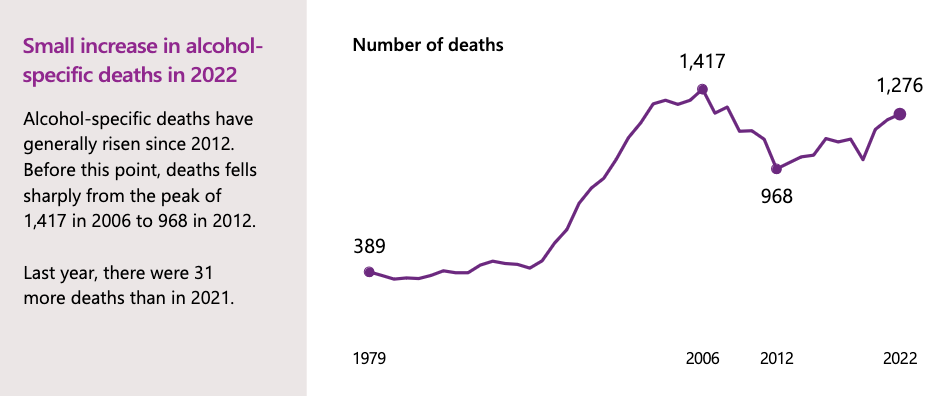
I’m all for reasonably cheap booze and a wide-open market in pretty much everything that doesn’t inherently harm other people. But in the wrong hands, certainly, alcohol does harm other people, in addition to its consumer. I wish it weren’t true, but it is. Curbing excessive alcohol consumption is a reasonable public-health goal that every serious government and opposition party in the developed world shares to some extent. And the simplest, most efficient and therefore most lucrative way for governments to accomplish that goal is through pricing.
(We’ll leave aside for now the howling conflict of interest inherent in governments selling alcohol — and casino gambling, lottery and sportsbooks, for heaven’s sake — while officially trying to dissuade people from partaking.)
April 11, 2024
All the ways A few of the ways Canada is broken
In The Line, Andrew Potter outlines some of the major political and economic pressures that prompted the formation of the Dominion of Canada in 1867, then gets into all the ways some of the myriad ways that Canada is failing badly:
It is useful to remember all this, if only to appreciate the extent to which Canada has drifted from its founding ambitions. Today, there are significant interprovincial barriers to trade in goods and services, which add an estimated average of seven per cent to the cost of goods. Not only does Canada not have a free internal market in any meaningful sense, but the problem is getting worse, not better. This is in part thanks to the Supreme Court of Canada which continues its habit of giving preposterously narrow interpretations to the clear and unambiguous language in the constitution regarding trade so as to favour the provinces and their protectionist instincts.
On the defence and security front, what is there to say that hasn’t been said a thousand times before. From the state of the military to our commitments to NATO to the defence and protection of our coasts and the Arctic to shouldering our burden in the defence of North America, our response has been to shrug and assume that it doesn’t matter, that there’s no threat, or if there is, that someone else will take care of it for us. We live in a fireproof house, far from the flames, fa la la la la. Monday’s announcement was interesting, but even if fully enacted — a huge if — we will still be a long way from a military that can meet both domestic and international obligations, and still a long way from the two per cent target.
As for politics, only the most delusional observer would pretend that this is even remotely a properly functioning federation. Quebec has for many purposes effectively seceded, and Alberta has been patiently taking notes. Saskatchewan is openly defying the law in refusing to pay the federal carbon tax. Parliament is a dysfunctional and largely pointless clown show. No one is happy, and the federal government is in some quarters bordering on illegitimacy.
All of this is going on while the conditions that motivated Confederation in the first place are reasserting themselves. Global free trade is starting to go in reverse, as states shrink back from the openness that marked the great period of liberalization from the early 1990s to the mid 2010s. The international order is becoming less stable and more dangerous, as the norms and institutions that dominated the post-war order in the second half of the 20th century collapse into obsolescence. And it is no longer clear that we will be able to rely upon the old failsafe, the goodwill and indulgence of the United States. Donald Trump has made it clear he doesn’t have much time for Canada’s pieties on either trade or defence, and he’s going to be gunning for us when he is returned to the presidency later this year.
Ottawa’s response to all of this has been to largely pretend it isn’t happening. Instead, it insists on trying to impose itself on areas of provincial jurisdiction, resulting in a number of ineffective programs — dentistry, pharmacare, daycare, and now, apparently, school lunches — that are anything but national, and which will do little more than annoy the provinces while creating more bureaucracy. Meanwhile, the real problems in areas of clear federal jurisdiction just keep piling up, but the money’s all been spent, so, shrug emoji.
What to do? We could just keep going along like this, and follow the slow-mo train wreck that is Canada to its inevitable end. That is is the most likely scenario.
The CIA would “brief the press on matters of national importance … when ‘we, the CIA, wanted to circulate disinformation on a particular issue'”
Jon Miltimore outlines the fascinating revelations from 1983 about how the CIA directly manipulated American journalists to propagandize certain issues in the way the Agency desired:
One of Snepp’s many jobs at the Agency was to brief the press on matters of national importance. Or in Snepp’s words, when “we, the CIA, wanted to circulate disinformation on a particular issue”.
Snepp made this statement in a 1983 interview (see above) that I’d encourage readers to watch. In the video, the former CIA analyst discusses how the CIA manipulates journalists with lies and half-truths in pursuit of its own agendas.
For instance, if we wanted to get across to the American public that the North Vietnamese were building up there force structure in South Vietnam, I would go to a journalist and advise him that in the past 6 month X number of North Vietnamese forces had come down the Ho Chi Minh Trail system through southern Laos. There is no way a journalist can check that information, so either he goes with that information or he doesn’t. Usually the journalist goes with it, because it looks like some kind of exclusive.
What Snepp was describing was one of the most simple tactics the CIA has used for decades to control information. He said the success rate of planting these stories in the media was 70-80 percent.
“The correspondents we targeted were those who had terrific influence, the most respected journalists in Saigon,” Snepp said.
Snepp even offered the names of the journalists he successfully targeted: Bud Merrick of US News and World Report; Robert Chaplin of the New Yorker; Malcom Brown of the New York Times; and others.
Snepp worked his way into these journalists’ trust exactly as one would expect.
“I would be directed to cultivate them, to spend time with them at the Caravel Hotel or the Continental Hotel, to socialize with them, to slowly but surely gain their confidence,” Snepp said.
All of this sounds sleazy, but it gets worse.
April 10, 2024
Saving Our Democracy watch – “[Trump] has to do at least ten years, or everybody will hate the navy”
Chris Bray suggests that reading the full linked document may be hazardous to your mental health, so he’s helpfully highlighted a few of the key points that may have you scratching your head and saying something like “The Fuh? What??”
I have a mixed view of Donald Trump’s argument about presidential immunity, which you can read here. But an amicus brief filed with the Supreme Court today by retired flag officers and service secretaries is so bizarre that reading it may permanently alter the structure of my face.
You can read the whole amicus brief here, but treat it like a solar eclipse and don’t stare at it directly. As a first sign of how much good faith the thing contains, one of the amici is Michael Hayden.
The first argument is that Trump has to go to prison or else civilians won’t control the military anymore. You think I’m kidding.
“Amici are deeply interested in this case because presidential immunity from criminal prosecution would threaten the military’s role in American society, our nation’s constitutional order, and our national security.” See the connection? If Donald Trump doesn’t go to prison, “the military’s role in American society” will be damaged. He has to do at least ten years, or everybody will hate the navy.
The prevailing feature of the entire brief is an essence of flattening. Every issue is very simple. There are no competing examples. None of this has ever come up before: The brief deals with questions of presidential immunity around Obama drone-killing a 16 year-old US citizen, or Lincoln unilaterally suspending habeas corpus and using the military to arrest critics of the war, by not mentioning any of it, or any other historical example. Everything is a surface. I’ve graded undergraduate essays, so the tone and depth of the effort feels familiar.
Third argument: Donald Trump has to be prosecuted, because America promotes democracy all over the world, and Trump not being prosecuted is against democracy, so it will be harder for us to promote democracy if we don’t prosecute him. Authoritarian regimes say that American democracy doesn’t work, so: “Presidential immunity from criminal prosecution feeds those false and harmful narratives. Unless Petitioner’s theory is rejected, we risk jeopardizing America’s standing as a guardian of democracy in the world and further feeding the spread of authoritarianism, thereby threatening the national security of the United States and democracies around the world.”
We have to imprison the leader of the political opposition, or people won’t think we’re a democracy, and then there will be more authoritarianism, like when regimes imprison the political opposition.
April 8, 2024
“The carbon rebate seems to be one of those rare examples of people getting mad at receiving government money rather than being grateful”
In The Line, Jen Gerson makes a strong argument that the vaunted (by Justin Trudeau and the Liberal Party) carbon tax rebate is actually the big problem with the carbon tax, not the “Conservative misinformation” constantly being pointed at by the government’s paid accomplices in the mainstream media:
Is the purpose of the Liberals’ carbon tax to materially reduce carbon emissions — or is it a wealth redistribution program? I ask because every time the Liberals defend the carbon tax by resorting to the awesomeness of the rebate, what they cease to talk about is how effective it is at actually reducing carbon emissions.
Instead, we fall into an endless series of counterproductive debates about whether what individuals are getting from the rebate equals what they’re paying out in tax. And that debate is repeated every quarter, and each time the carbon tax rises. In other words, our entire political discourse about the tax is centred on wealth redistribution — not emissions.
That makes people suspicious of the government’s actual goals, and skeptical about its claims. This, again, is a problem of message dilution. If you cannot clearly express your intentions, then you’re not going to get political buy-in to your aims. This problem is particularly acute on a policy that is — by definition — demanding a sacrifice of cash and/or quality of life by Canadians. People can get on board with sacrifice, but only if it’s tied to a clear, obtainable, and material objective.
[…]
And here’s where we get into the real dark heart of the problem.
It’s the rebate itself.
I understand why the Canada Carbon Rebate happened. The government wanted to introduce a carbon tax without disproportionately penalizing the poor — the demographic least able to make the investments and lifestyle changes necessary to respond to the tax. But did that relief have to come in the form of a rebate?
Well, no.
There are lots of methods a government can use to ease poverty. But governments love themselves a rebate. Why? Because rebates are normalized vote buying. One that all political parties are guilty of using. The Liberals implemented the rebate thinking Canadians would hit their mailboxes every quarter, see a few hundred bucks, and get warm fuzzy feelings for Papa Trudeau and the natural governing party. “Government’s looking out for me!”
Getting government cheques is popular, and the Liberals were no doubt trying to replicate the appeal of the Canada Child Benefit.
But that didn’t happen here. The carbon rebate seems to be one of those rare examples of people getting mad at receiving government money rather than being grateful. Why?
Well, may I suggest that it’s because every time people open up those cheques, instead of processing the dopamine hit of “free” money, they’re instead reminded of how much they had to pay in to get it. They do the math in their head, think about their rising grocery bills and gas, and come away thinking “not worth it”. Every single quarter, millions of Canadian households are feeling as if they are paying dollars to get dimes — and it’s pissing them right off. Further, demanding they acknowledge they’re better off in the exchange is only adding salt to the wound. Throwing Parliamentary Budget Officer (PBO) reports at them doesn’t change their minds. It just pisses them off more.
To put it more pithily — a benefit is a gift. A rebate is a value proposition. And a hell of a lot of Canadians are looking at this rebate and determining that its value is wanting — all the more so as the goals of that purchase haven’t been clearly articulated.
April 7, 2024
QotD: Censorship works, but not the way the censors think it does
Preference Falsification — If people are afraid to say what they really think, they will instead lie. Therefore, punishing speech — whether by taking offence or by threatening censorship — is ultimately a request to be deceived.
Gurwinder Bhogal, “33 concepts to survive the year”, UnHerd, 2024-01-01.
April 5, 2024
Canada’s carbon tax – “… no emissions policy that doesn’t start with banning private jets can be called ‘fair’ with a straight face”
In The Line, Clarke Ries points out the incredibly uncomfortable truth that no matter how the federal government tries to hide it, the carbon tax regime is going to be painful and the pain is going to be absorbed much more by the rural poor than anyone else:

Minister of Environment and Climate Change Steven Guilbeault, 3 February 2020 (when he was Canadian Heritage Minister).
Screencapture from CPAC video.
Consumption taxes are a straightforwardly-effective policy tool. You simply increase the price of the resource you want to see used less and let people adapt to the simulated scarcity via ingenuity, frugality, lifestyle change, repricing their goods and services, etc. The government doesn’t dictate solutions, it lets people find their own. In the process, the consumption tax dispassionately reveals who’s making the most valuable use of that resource.
[…]
So the question remains, who uses a lot of carbon but doesn’t make a lot of money doing it? Who lives in drafty old single-family houses? Who uses archaic methods of keeping those houses warm, like furnaces that run on heating oil? Who has to drive halfway around the world to reach the nearest grocery store and halfway to the moon for the nearest medical clinic? Who’s making that drive in a battered old ride with terrible fuel economy?
The rural poor.
Not the farmers or the ranchers, who mostly make plenty of dough and often know their way around America’s higher-end resort towns, but the rural poor. The kind of people you disproportionately find in Newfoundland outports, eking out a tenuous living as they wait for the cod to return. You know, reliable Liberal voters.
Put another way, a neutrally-applied carbon tax goes after Maritimers first and hardest — forcing them to close shop on their romantic traditional lifestyle and move into apartment blocks in the nearest city, where they’ll earn more for their labour and emit less carbon doing it.
[…]
Remember: for the carbon tax to do what it says on the tin, somebody has to lose. For the carbon tax to be anything other than a purposeless pain in the ass, somebody — a lot of somebodies, frankly, if the Liberals are serious about cutting carbon emissions to 40 per cent under 2005 levels — must be forced to make significant and unpleasant lifestyle changes.
So let’s assume the Parliamentary Budget Office is right, and that Atlantic Canadians are now, after a second round of special supplements and exemptions, definitely net beneficiaries of the carbon tax. All it’s bought the Liberals is a reprise of the same question: who’s for dinner?
Who’s going to trade in their beater for bus tickets? Who’s going to raise their kids in a condo tower instead of a single-family home? Who’s going to start taking their midwinter vacation in the province next door instead of Palm Springs or Costa Rica? Who’s going to shiver on a cold night instead of raising the thermostat?
Only the most diehard of optimists could believe that the roster of ritual sacrifices will substantially consist of financially-comfortable Canadians. The people who can afford to make investments that reduce their carbon emissions without materially sacrificing their lifestyles will do so. A handful will start biking to work during the summer. Others will install solar panels on top of their detached houses — which are mostly located in neighbourhoods where you’re not even allowed to build a condo tower — and that’s going to be that.
Beneath all the aspirational language, what an effective carbon tax actually does is throw the government into a cage match with Canada’s working class. The truth behind the Liberals’ woes on this file is that as long as they’re committed to the carbon tax as a tool for fighting climate change, their only real choice is which part of the working class they land on when they come off the top rope.
April 3, 2024
QotD: Optional economic reality
A majority of politicians and pundits believe that economic reality is optional. Of course, they don’t express this belief in any manner so direct. But one can logically infer this belief from their policy proposals.
Take, for example, support for rent control. Having the state keep the monetary prices of rental units below the values that would arise in free markets is believed by many pols and pundits – and by nearly all “Progressives” – to effectively keep the actual market values of rental units at whatever low prices the state sets. In this reality-is-optional world, when the state pushes down nominal rental prices, the quantity of rental units supplied not only does not fall, it increases to match the increase in the quantity of rental units demanded.
Want more housing for folks with modest incomes? No problem! We’ll just push the rental prices lower to increase ordinary folks’ access to housing. See, the world is such a simple place!
Similar reality-is-optional “solutions” are minimum-wage statutes (for increasing the pay of low-skilled workers) and mandated paid-leave (for increasing the welfare of all workers).
Pondering this strange notion that the state can make market values be whatever the state wants them to be merely by dictating changes in the names of market values – that is, changes in nominal prices – I wondered what the world would be like if miracles more broadly could be worked merely by changing nominal designations. […]
Of course, all such scenarios are ludicrous. Reality isn’t changed merely by reporting that reality is other than what it is. In fact, reality is made worse by false reports because, unable to learn the truth about reality, people act in ways that are inconsistent with reality, thus worsening their situations.
Yes – but why, then, do so many people believe that economic reality is optional? Why do so many people believe that economic reality can be made to be whatever the state wants it to be merely by having the state order that reports of economic reality lie about that reality? All state-imposed price controls – rent control, minimum wages, you name it – are state-dictated lies about reality.
Don Boudreaux, “What if All Reality Were Optional?”, Café Hayek, 2019-09-13.
March 29, 2024
“Constitutional monarchy, such as we have, is a gift not to be ignored”
In The Line, Graeme Menzies makes a pitch for a renewed royal presence in Canadian affairs:
The role of the Crown in Canada has been given a particularly cold shoulder by Trudeau. He’s first in line at the funerals and wedding parties, and quick to boast of his lifelong friendship with members of the royal family, but of all Canada’s 23 prime ministers Justin Trudeau is the one who has done his best to erase them from Canadian cultural identity. His record appointing governors-General suggests he’s been actively doing his best to tarnish that office.
Trudeau was the first prime minister not to approve the traditional Jubilee Medal for her late majesty Queen Elizabeth II — Canada’s loyal and beloved monarch for over 70 years. Under his watch, the anticipated Canada 150 Medal was also quashed. Later, under pressure, he agreed at the very last minute that a medal should be issued to celebrate the Coronation of King Charles III; but other than a couple lines about it in a news release last May, nothing has come of it. Not a single medal has been produced or issued.
This is where a post-Trudeau government must really seize the day. The monarchy is a great gift to Canada. It’s probably the single most important thing that distinguishes Canada from the United States. Take it away and we’re just Puerto Rico — another American protectorate, waiting for the day it gains statehood and a star on the flag.
It is foolish to think any serving prime minister will ever command the respect and affection of the majority of citizens; but Queen Elizabeth often did and there’s no reason to think King Charles cannot do so as well. The past visits to Canada by William and Kate, the future King and Queen of Canada, have been nothing short of sensational.
But the next prime minister will have to act on this. Constitutional monarchy, such as we have, is a gift not to be ignored. It is to be embraced and folded fully into a forward-looking vision of a new, proud, strong nation. To begin with, the next prime minister should ask the King, or the Prince of Wales, to visit Canada annually. The presentation of Orders of Canada should be timed to coincide with these visits. I would even go so far as to suggest Canada reinstate knighthoods. If Ringo Starr and Paul McCartney can be knighted then why can we not have Sir Randy Bachman and Dame Joni Mitchell?
The King of Canada can also play an important and useful role toward Canada’s reconciliation efforts. Trudeau and his radicals have done much to make it seem the Crown and Indigenous peoples are incompatible but a closer review of history books would suggest otherwise. It wasn’t the King who came up with the Indian Act — our elected political leaders did that. The statue of Tecumseh in Windsor is marvellous, but there should be another in Ottawa and it should be unveiled by the King. Same for Chief Maquinna who, apart from a likeness chiselled into the exterior of the British Columbia Legislative Library Building, has no statue, and I’ll bet dollars to donuts he is virtually unknown to most Canadians. That should be changed.
Most Canadians would rather see the King unveil a statue like that than the current, or the next, prime minister. When a prime minister is involved, it’s political. When the monarch does it, we can all get behind it. It’s unifying.
March 28, 2024
Why European farmers are revolting
spiked
Published Mar 27, 2024Europe’s farmers are rising up – and the elites are terrified. From the Netherlands to Germany to Ireland, farmers are taking to the streets, parking their tractors on the establishment’s lawn, spraying buildings with manure and bringing life to a standstill. The reason? Because unhinged green regulations, dreamt up by European Union bureaucrats, are immiserating them. In this spiked video polemic, Fraser Myers explores the roots of the farmers’ revolt across the continent – and explains why it must succeed. Watch, share and let us know what you think in the comments.
Support spiked:
https://www.spiked-online.com/support/
Sign up to spiked‘s newsletters: https://www.spiked-online.com/newslet…
Check out spiked‘s shop: https://www.spiked-online.com/shop/
March 23, 2024
Ireland’s Varadkar heads for the showers
In Spiked, Brendan O’Neill discusses the “shocking” — but not actually shocking — resignation of Ireland’s Taoiseach (prime minister):
“I am no longer best man to be Irish PM”, said a BBC headline this week, summarising Leo Varadkar’s resignation speech. The truth, Leo, is that you were never the best man to be Irish PM. He was never elected by the people to be taoiseach, instead securing that seat of power by appointment and backroom dealing. And once there, once he’d been gifted the highest office in the land by his allies in Dublin 4, he wielded government not for the people, but against them. He bent Ireland to what was essentially a vast real-time experiment in social re-engineering and thought control.
An unelected ruler using his power and clout to correct the country and improve the people? There’s a word for that. And it isn’t “democracy”.
Varadkar announced his resignation on Wednesday. In an emotional speech he said he was stepping down as leader of Fine Gael immediately and will step down as taoiseach once his successor has been chosen. His “shock departure” followed the people’s crushing defeat of the twin referendum he put forward. Overwhelming majorities rejected his proposals to alter the Irish constitution to update its definition of “family” and to fix what Varadkar damned as its “very sexist” reference to a woman’s “duties” in the home. No thanks, said the electorate, in the biggest ever referendum loss by an Irish government.
Even the fact that Varadkar’s stepping down is widely seen as a “shock move” speaks to the haughtiness, the outright unworldliness, of his political kind. To many of us it makes perfect sense that a PM would bugger off after suffering a historically unprecedented bloody nose from voters. But it seems the Varadkar clique thought they could ride it out. “No biggie” was their view. Until his “shock departure” on Wednesday, reports the Guardian, “the political fallout from the [referendum] debacle had widely been expected to be limited”.
Who expected that? I’m sure those voters who gleefully seized the opportunity of the referendum to give the middle finger to Varadkar and the rest of the establishment didn’t expect the impact of their discontent to be “limited”. It is a testament to the arrogance of technocracy, to the chasm that has emerged between Ireland’s rulers and Ireland’s ruled, that the Dublin establishment thought it could shrug off the largest drubbing it has ever received from voters.
In the end, tellingly, it seems it was disgruntlement from within his own party ranks, rather than the disgruntlement of the oiks, that convinced Varadkar to go. He was facing “increasing discontent within Fine Gael”, with some party bigwigs worried he’s an “electoral liability”. Everything you need to know about the man is contained in the fact that he essentially shrugged when the masses rose up against him but bolted when his fellow clerisy members criticised him. To the technocrat, the disapproval of their dinner-party circle carries far more weight than the discontent of ordinary people.
If Varadkar was edged out by the tut-tutting of movers and shakers, it would be a fitting end to a career that always owed more to the intrigue of political insiders than to the enthusiasm of the electorate. It is an unremarked upon truth that Varadkar was never installed into power by the people. He first became taoiseach in 2017 when then taoiseach Enda Kenny resigned as leader of Fine Gael. Varadkar was elected new party leader and became taoiseach on the back of it. So he became PM of Ireland on the back of the deliberations of 25,000 party members, not the ballots of the people.
Actually, even members of Fine Gael weren’t especially enthused by him. Varadkar’s opponent in the 2017 leadership contest – Simon Coveney – won almost twice as many votes from party members: 7,051 to Varadkar’s 3,772. But Varadkar won more votes from members of the parliamentary party – 51 to Coveney’s 22 – which meant Fine Gael’s weighted electoral college ruled in his favour rather than Coveney’s. From the get-go, Varadkar’s rule of Ireland was more an accomplishment of elite patronage than democratic keenness.
“At least they didn’t arrest the dog”
Andrew Doyle revisits the Nazi pug story as new Scottish blasphemy hate speech laws are about to come into force at the beginning of April:
If you’re deluded enough to suppose that human history works in a progressive linear fashion, the example of Scotland should swiftly change your mind. Once the home of the Enlightenment, the country has now veered into authoritarianism under the control of the SNP. The party’s new hate crime law will come into force on April Fools’ Day, and no-one in government is seemingly able to give examples of “crimes” that would be covered by this legislation that aren’t already criminal. When specifically asked on the BBC’s Newsnight whether “misgendering” would result in prosecution, SNP backbench Fulton MacGregor could only mutter: “Well, it depends on the circumstances”. How reassuring.
For all MacGregor’s “faith” that the law would be “properly” implemented, nonbelievers are right to be cautious. Vaguely worded legislation is bound to be exploited, and has been many times in the past. This is particularly the case when it comes to “hate speech”, a concept for which no adequate definition has ever been achieved. The best the Irish government could muster for their forthcoming hate crime bill is that hatred “means hatred”. In these times of slippery authoritarian wordplay, that’s about as specific as we can expect.
The Scottish police have claimed that they will not “target” comedians and actors under the new legislation, and yet at the same time have sworn to investigate every complaint. Thankfully, activists never make spurious complaints against their ideological opponents in the hope of seeing them silenced. Oh wait. They do. All the time.
[…]
So for all of the claims that our concerns about the new hate crime law are unfounded, and that the police would never prosecute anyone for a gag, we should remember that they already have. This legislation will simply make it easier for activists within and without the police force to weaponise the law against those deemed to be subversive. On the day of Meechan’s arrest, one police officer affirmed that he must be “an actual Nazi trying to inspire people to become Nazis”. The judge eventually agreed, in spite of the fact that after two years of investigation the police had uncovered no evidence of far-right sympathies.
Of course those who wish to criminalise dissent will not stop at comedians. They’ll also be keen to crack down on anyone who knows the difference between men and women and is willing to declare this esoteric knowledge out loud. Although it has become a cliché to cite George Orwell’s Nineteen Eighty-Four in such circumstances, that is only because it is so apposite: “The Party told you to reject the evidence of your eyes and ears. It was their final, most essential command”.
I do not sincerely believe that the police will turn up at our Comedy Unleashed show next Monday. It seems unfathomable that we might see a kind of re-enactment of the closing scenes of The Blues Brothers, with police officers standing in the shadows of the club to monitor the show for heterodox content. But then, I would never have anticipated that in a free country someone who made a video mocking Nazis would end up with a criminal record. Of course our show will be offensive to those who choose to be offended. Such is the nature of comedy. The only way to avoid such a situation would be for the acts to stand on stage in total silence. And even then, someone might find this offensive to mutes.