Tasting History with Max Miller
Published 2 Nov 2021Thank you to my Patreon Patrons – https://www.patreon.com/tastinghistory
Merch ► crowdmade.com/collections/tastinghistory
Instagram ► https://www.instagram.com/tastinghist…
Twitter ► https://twitter.com/TastingHistory1
Tiktok ► TastingHistory
Reddit ► r/TastingHistory
Discord ► https://discord.gg/d7nbEpySend mail to:
Tasting History
PO Box 766
Burbank, CA 91503LINKS TO INGREDIENTS & EQUIPMENT**
Sony Alpha 7C Camera: https://amzn.to/2MQbNTK
Sigma 24-70mm f/2.8 Lens: https://amzn.to/35tjyoW
Medium Oatmeal: https://amzn.to/2ZAcpTE
Cake Flour: https://amzn.to/3brKkkl
Black Treacle: https://amzn.to/2XZdW5x
Golden Syrup: https://amzn.to/3jPzhWRLINKS TO SOURCES**
Pot-Luck by May Byron: https://amzn.to/3ExpRHs
Parkin by Anne Fencott: https://www.fencott.com/FencottBooks/…**Some of the links and other products that appear on this video are from companies which Tasting History will earn an affiliate commission or referral bonus. Each purchase made from these links will help to support this channel with no additional cost to you. The content in this video is accurate as of the posting date. Some of the offers mentioned may no longer be available.
Subtitles: Jose Mendoza
PHOTO CREDITS
Lewes Guy Fawkes Night: Peter Trimming
Andy Beecroft / Filey Brigg at low tide#tastinghistory #GuyFawkes #Bonfirenight
November 3, 2021
1915 Yorkshire Parkin for Bonfire Night
October 31, 2021
Soul Cakes & Trick-or-Treating
Tasting History with Max Miller
Published 30 Oct 2020Help Support the Channel with Patreon: https://www.patreon.com/tastinghistory
Follow Tasting History here:
Instagram: https://www.instagram.com/tastinghist…
Twitter: https://twitter.com/TastingHistory1
Reddit: r/TastingHistoryLINKS TO INGREDIENTS & EQUIPMENT**
Canon EOS M50 Camera: https://amzn.to/3amjvwu
Canon EF 50mm Lens: https://amzn.to/3iCrkB8
Currants: https://amzn.to/2T3qItA
Nutmeg: https://amzn.to/2IGDlcb
Clove: https://amzn.to/3dyNWRP
Mace: https://amzn.to/31j625h
Saffron: https://amzn.to/3560pbP
KitchenAid Stand Mixer: https://amzn.to/37hsboALINKS TO SOURCES**
The Customs and Traditions of Wales by Trefor Owen: https://amzn.to/37gi6bt
The Book of Hallowe’en by Ruth Eda Kelley: https://amzn.to/3dDb41i
Trick or Treat: A History of Halloween by Lisa Morton: https://amzn.to/348t0xQ**Amazon offers a small commission on products sold through their affiliate links, so each purchase made from this link, whether this product or another, will help to support this channel with no additional cost to you.
Editor: WarwicSN – https://www.youtube.com/WarwicSN
SOUL CAKES
ORIGINAL 16TH CENTURY RECIPE (From Elinor Fettiplace’s Receipt Book)
To make Cakes
Take flower & sugar & nutmeg & cloves & mace & sweet butter & sack & a little ale barm, beat your spice & put in your butter & your sack, cold, then work it well all together & make it in little cakes & so bake them, if you will you may put in some saffron into them or fruit.MODERN RECIPE
INGREDIENTS
– ½ Cup Lukewarm Ale (Below 100°F/38°C)
– 1 Teaspoon Yeast
– 3 Cups (360g) Flour
– ½ Cup (100g) Sugar
– 4 Tablespoons Butter Softened
– ½ Teaspoon Salt (if you’re using unsalted butter)
– ¼ Teaspoon Nutmeg
– ¼ Teaspoon Clove
– ¼ Teaspoon Mace
– ⅓ Cup Sack or Sherry
– 1/4 Teaspoon Saffron Threads (optional)
– 3/4 Cup Dried Fruit, plus more for decoration. (Optional)
– 1 Egg for Egg Wash (Optional)METHOD
1. Create an “ale barm” by mixing the yeast with the lukewarm ale and letting sit for 10 minutes. If you are using saffron, mix that into the sherry and let steep.
2. In a large bowl, mix the flour, sugar, salt, nutmeg, clove, and mace together. Add the yeasted ale and work it in. Then work in the softened butter and the sack with saffron along with any fruit you are using. Mix until everything the dough comes together, then knead for 5 – 12 minutes. The longer you knead, the more bread-like the cakes will be, but the more they will rise.
3. Allow dough to rise for 1 hour (it will likely not double in size), then punch the dough down and form into small cakes. Cover and allow the cakes to rise for another 20 minutes while you preheat the oven to 400°F/200°C.
4. When the cakes have puffed up, add the optional egg wash and/or additional fruit, or form a cross on the top of each cake using the back of a knife (do not cut the cross in). Then back fro 20 minutes. When baked, allow to cool before serving.#tastinghistory #halloween #soulcakes
October 26, 2021
What is Marmite?
Atomic Shrimp
Published 13 Mar 2021I used Marmite to flavour gravy in a previous video — loads of people asked what it was. Here (I hope) is the answer you need.
I’ve tried — and liked — both Marmite and Vegemite and I have a very slight preference for Marmite, but now I’ll need to search for the reduced salt and XO versions … for science, of course.
October 23, 2021
QotD: Patum Peperium, the Gentleman’s Relish
… a word of warning, Gentleman’s Relish is an acquired taste. One look at the sludgy paste is enough to deter many. And then there is its pungent smell. Brave men have been known to blanch at it. Yet, once these initial reservations are overcome, you will discover a delicate paste that rivals Marmite in its deliciousness.
Opinions differ as to how and when you should eat Gentleman’s Relish. According to the Ritz, breakfast is the time to enjoy its piquant flavour, preferably on thinly sliced, brown toast. I prefer to eat it for tea, on white toast with a little mustard and cress. Mrs Beeton suggests that anchovy paste is usually spread on toast as “an excellent bonne bouche which enables gentlemen at wine-parties to enjoy their port with redoubled gusto”.
It was originally created in 1828 by John Osborn, an English provision merchant in Paris. Like any good marketing man, he created a grandiose name from a fictitious fudge of Latin and Greek implying pepper paste, to tempt his fashion-conscious customers into buying it. It only became known as Gentleman’s Relish once his son brought the business to London. According to Elsenham, its current manufacturer, it is still made according to the original recipe. It imports the finest Spanish anchovy fillets, which have been packed in barrels of salt and left to mature for 18 months. Once suitably fruity, they are rinsed in brine and gently cooked before being cooled and blended with butter and rusk. A secret blend of spices and herbs is then added.
Sybil Kapoor, “Spreading the word”, The Guardian, 2001-02-18.
October 20, 2021
Chocolate | British Pathé
British Pathé
Published 22 Sep 2016BON APPETIT – FOOD MONTH ON BRITISH PATHÉ (SEPTEMBER 2016): Chocolate.
We all love a bit of chocolate, so have a watch of these vintage films which show different chocolates being made, as well as the celebrations when sweet rationing came to an end.
(Film Ids: 1601.11, 313.13, 1108.14, 1401.17)
Music:
The Show Must Be Go (incompetech.com)
Licensed under Creative Commons: By Attribution 3.0 License
http://creativecommons.org/licenses/b…A NEW THEME EVERY MONTH!
Each month, a range of new uploads and playlists tell the story of a particular topic through archive footage. Let us know what themes you’d like to see by leaving us a comment or connecting with us on social media.BRITISH PATHÉ’S STORY
Before television, people came to movie theatres to watch the news. British Pathé was at the forefront of cinematic journalism, blending information with entertainment to popular effect. Over the course of a century, it documented everything from major armed conflicts and seismic political crises to the curious hobbies and eccentric lives of ordinary people. If it happened, British Pathé filmed it.Now considered to be the finest newsreel archive in the world, British Pathé is a treasure trove of 85,000 films unrivalled in their historical and cultural significance.
ALL RIGHTS RESERVED
A VIDEO FROM BRITISH PATHÉ. EXPLORE OUR ONLINE CHANNEL, BRITISH PATHÉ TV. IT’S FULL OF GREAT DOCUMENTARIES, FASCINATING INTERVIEWS, AND CLASSIC MOVIES. http://www.britishpathe.tv/
FOR LICENSING ENQUIRIES VISIT http://www.britishpathe.com/
British Pathé also represents the Reuters historical collection, which includes more than 136,000 items from the news agencies Gaumont Graphic (1910-1932), Empire News Bulletin (1926-1930), British Paramount (1931-1957), and Gaumont British (1934-1959), as well as Visnews content from 1957 to the end of 1984. All footage can be viewed on the British Pathé website. https://www.britishpathe.com/
October 13, 2021
500 Year Old Apple & Cheese Pie
Tasting History with Max Miller
Published 12 Oct 2021Use my exclusive link here https://cen.yt/TradeTastingHistory4 to get your first bag from Trade Coffee for free.
Support the Channel with Patreon ► https://www.patreon.com/tastinghistory
Merch ► crowdmade.com/collections/tastinghistory
Instagram ► https://www.instagram.com/tastinghist…
Twitter ► https://twitter.com/TastingHistory1
Tiktok ► TastingHistory
Reddit ► r/TastingHistory
Discord ► https://discord.gg/d7nbEpy
Amazon Wish List ► https://amzn.to/3i0mwGtSend mail to:
Tasting History
PO Box 766
Burbank, CA 91503LINKS TO INGREDIENTS & EQUIPMENT**
Sony Alpha 7C Camera: https://amzn.to/2MQbNTK
Sigma 24-70mm f/2.8 Lens: https://amzn.to/35tjyoW
Emile Henry Pie Dish: https://amzn.to/3i5go19LINKS TO SOURCES**
Apple – A Global History by Erika Janik: https://amzn.to/3COmCui
Diary of Samuel Sewall: https://amzn.to/3AKDj9j
The Life and Repentance of Samuel Sewall by Eve LaPlante: https://amzn.to/3EUBUiU
Das Kochbuch der Sabina Welserin: http://www.daviddfriedman.com/Medieva…**Some of the links and other products that appear on this video are from companies which Tasting History will earn an affiliate commission or referral bonus. Each purchase made from these links will help to support this channel with no additional cost to you. The content in this video is accurate as of the posting date. Some of the offers mentioned may no longer be available.
Subtitles: Jose Mendoza | IG @worldagainstjose
PHOTOS
Tarte tatin: Loslazos, CC BY-SA 4.0 https://creativecommons.org/licenses/…, via Wikimedia Commons#tastinghistory #applepie
October 12, 2021
Pesto — You Suck At Cooking, episode 73
You Suck At Cooking
Published 28 Mar 2018The YSAC Cook Book is now available: http://hyperurl.co/yousuckatcooking
Pesto. It’s the besto.
http://instagram.com/yousuckatcooking
https://twitter.com/yousuckatcookin
Snapchat: @yousuckatcookin2 cups basil
Half cup olive oil
half cup parmesan
couple spoonfuls of pine nuts (you can use walnuts if you want)
a clove or two or garlic
a squeeze of lemon
you can salt it a bit more if the parmesan hasn’t done the trick
September 28, 2021
“Eating healthy”? You’re doing it wrong
Joanna Blythman pulls some useful tasty tidbits out of a recent Swedish study that contradicts much of what western governments have been pushing as “healthy” eating habits for the last fifty-plus years:
The NHS Eatwell Guide, fondly known to its critics as the Eat badly guide, still tells us to choose lower-fat products, such as 1% fat milk, reduced-fat cheese, or low-fat yoghurt. This is based on the inadequately evidenced postwar belief that saturated fat is bad for your heart.
How embarrassing, then, for government dietetic gurus, that a major study of 4,150 Swedes, followed over 16 years, has last week reported that a diet rich in dairy fat may lower, not raise your risk of cardiovascular disease.
This Swedish study echoes the findings of a 2018 meta-analysis of 29 previous studies, which also found that consumption of dairy products protects against heart disease and stroke.
A body of research also suggests that consumption of dairy fat is protective against type 2 diabetes.
[…]
Five a day
A slogan invented to shift more fruit and veg, but not one to live your life byThis catchy slogan, now a central plank of government eating advice, came out of a 1991 meeting of fruit and veg companies in California.
Five a day logos now appear on many ultra-processed foods, from baked beans to ready meals, imbuing them with a questionable aura of health.
But other than as a marketing tool, any justification for this slogan is thin.
[…]
The health case against meat is predicated on cherry-picked evidence from low-quality, unreliable, observational studies that fail to draw a distinction between meat in its unprocessed form and multi-ingredient, chemically altered, ultra-processed meat products, such as hotdogs.
Association doesn’t mean causation. Confounding factors exist; someone who eats bacon butties daily might also be eating too much sugar, be consuming lots of additive-laden bread, be under stress, or smoke – the list goes on.
The International Agency for Research on Cancer’s 2015 claim that red meat is “probably carcinogenic” has never been substantiated.
In fact, a subsequent risk assessment concluded that this is not the case.
September 26, 2021
I finally made GARUM | Ancient Rome’s favorite condiment
Tasting History with Max Miller
Published 9 Jun 2020In nearly every recipe we have from Ancient Rome, a key ingredient is Garum or Liquamen; fermented fish sauce. While it usually takes two months to make, I use an ancient recipe for same day garum which gave me plenty of time to look at the history of Ancient Rome’s favorite condiment.
Help Support the Channel with Patreon: https://www.patreon.com/tastinghistory
Follow Tasting History with Max Miller here:
Instagram: https://www.instagram.com/tastinghist…
Twitter: https://twitter.com/TastingHistory1LINK TO COLATURA DI ALICI: https://amzn.to/30o2Dmg
LINKS TO SOURCES**
The Roman Cookery Book by Elizabeth Rosenbaum: https://amzn.to/2zg73QVTasting Rome by Katie Parla and Kristina Gill: https://amzn.to/2Affi01
Ferment by Holly Davis: https://amzn.to/37bDtIK
https://coquinaria.nl/en/roman-fish-s…
The rise and reorganization of the Pompeian salted fish industry – Steven Ellis: https://www.academia.edu/678386/The_r…
**Amazon offers a small commission on products sold through their affiliate links, so each purchase made from this link, whether this product or another, will help to support this channel with no additional cost to you.
LINK TO Making A Cure for the Black Plague | Galen and the Four Humors: https://www.youtube.com/watch?v=jtCKA…
GARUM
ORIGINAL RECIPE From The Geoponica
If you wish to use the garum at once — i.e. not expose it to the sun, but boil it — make it in the following manner: Take brine and test its strength by throwing an egg into it to see if it floats; if it sinks it does not contain enough salt. Put the fish into the brine in a new earthenware pot, add oregano, put it on a good fire until it boils — i.e., until it begins to reduce. Some people also add defrutum. Let it cool and strain it two or three times, until the liquid is clear. Seal and store it away.MODERN RECIPE
INGREDIENTS (Amounts are approximate)
– 2 Quarts (1900ml) Water
– 1lb (450g) Sea Salt
– 2 Teaspoons Dried Oregano
– Defrutum or Honey
– 2lbs (900g) Whole Fish (oily)METHOD
1. Add salt to the water and stir to dissolve. You may not need the full amount, so start with about 3/4s. Place an egg in the water and if the egg floats, stop adding salt.
2. Add the whole fish and the oregano (and defrutum if you are using any) to the water and place over medium-high heat and boil for 30 – 40 minutes. Every ten minutes, mash with a spoon to break up the fish.
3. Once the water has reduced to about half the amount, remove the pot from the heat and allow to cool.
4. First, pass through a colander and then strain through a kitchen cloth or paper towel until the garum is free of particles. Then bottle in a sterile bottle and refrigerate.Music Credit
“Gigue” From 3rd Cello Suite
Exzel Music Publishing (freemusicpublicdomain.com)
Licensed under Creative Commons: By Attribution 3.0
http://creativecommons.org/licenses/b…Photo Credits
chef PNG Designed By CHENXIN from https://pngtree.com/
Garum Mosaic – Claus Ableiter / CC BY-SA (https://creativecommons.org/licenses/…)
Adana Mosaic – Dosseman / CC BY-SA (https://creativecommons.org/licenses/…)
Galen – Wellcome Collection / CC BY (https://creativecommons.org/licenses/…)
Snails Mosaic – Carole Raddato from FRANKFURT, Germany / CC BY-SA (https://creativecommons.org/licenses/…)
Seneca & Nero – By Eduardo Barrón – Own work, CC BY-SA 3.0, https://commons.wikimedia.org/w/index…#tastinghistory #garum #ancientrome #foodhistory
September 13, 2021
How Is Worcestershire Sauce Made? | How Do They Do It?
DCODE by Discovery
Published 25 Sep 2018Worcestershire Sauce was invented in 1835 when a posh army officer went to India to help run the British Empire. He fell in love, not with a woman, but with a fish sauce. DCODE how the iconic sauce is made in England today.
#DCODE, #HowDoTheyDoIt, #WorcestershireSauce
September 12, 2021
Ocean travel without losing half the crew to scurvy
In the most recent Age of Invention newsletter, Anton Howes discusses the scurvy dogs of the Spanish Main, or any other ocean before Europeans discovered how to fight off scurvy:

An English ship of the late 16th/early 17th century: this is a replica of the Susan Constant at the Jamestown Settlement in Virginia. The original ship was built sometime before 1607 and rented by the Virginia Company of London to transport the original settlers to Jamestown.
Photo by Nicholas Russon, March 2004.
For as long as humans have suffered severe food shortages, scurvy has been known. The first record of it appears to date to ancient Egypt, in 1550BC, and it was especially familiar to the inhabitants of northern climates, with fresh vegetation every winter becoming scarce. Our word for scurvy almost certainly comes from the old Norse skyrbjugr — the skyr being a sort of soured cow’s milk that was thought to have caused the disease by going bad. In mid-sixteenth-century sources, scurvy was often referred to as though it was endemic to the Netherlands — a flat land assailed by the North Sea each winter, that had suffered long sieges and devastation thanks to the Dutch Revolt, and where fishing and merchant shipping employed an especially large proportion of the workforce. The Dutch thus had a perfect storm of factors to make vitamin C deficiencies more common, even though they abounded in fresh-caught fish and imported Baltic grain.
And so, over the centuries, the people of the northern climes had discovered the cure. Or rather, cures. The Iroquois ate the bark, needles or sap of evergreen trees — most likely white cedar, or some other kind of spruce, fir, juniper or pine, all rich in vitamin C. Their remedy saved the lives of Jacques Cartier’s colonists based near modern-day Quebec City in the winter of 1536. It’s the reason white cedar is known as arborvitae, the tree of life. And the Saami of northern Scandinavia prized cabbages and other leafy greens, in the summertime filling up casks of reindeer milk with crowberries and cloudberries, to be ready for winter.
[…]
Still more remedies were discovered by accident, as European ships began to range farther and farther abroad. The very first Portuguese voyagers around the Cape of Good Hope almost immediately discovered the value of orange and lemons — especially effective sources of vitamin C, as their acidity helps to preserve it. The voyage of Vasco da Gama, having been the first to round the Cape and reach the eastern coast of Africa, was then stricken with scurvy. They were only inadvertently saved when they traded with some Arabian ships laden with oranges, before landing at Mombasa. There, the ruler sent them a sheep and some sugar-cane, the gift also happening to include some oranges and lemons. Although the Portuguese couldn’t stay there long — they learned of a conspiracy to capture their ship — one of the voyagers later reported in wonder how the climate there must have been especially healthful to have cured them all.
Fortunately, at least some of the crew suspected the citrus instead. On the return journey from India, after a fatally slow three-month crossing of the Indian Ocean, some of the newly scurvy-ridden sailors asked their captain to procure them some oranges at Malindi. At least a few of the crew must certainly have been saved by this request, though perhaps the excitement of their imminent deliverance induced a few fatal aneurysms: “our sick did not profit”, was the report, “for the climate affected them in such a way that many of them died here.” By the time the fleet limped home back to Lisbon in 1499, scurvy had still managed to claim the lives of over two thirds of the original crew.
Nonetheless, the status of oranges as a scurvy wonder-cure had entered sailors’ lore. When Pedro Alvares Cabral repeated da Gama’s feat of rounding the Cape of Good Hope in 1500, his crew purposefully treated their scurvy using oranges. And by the 1560s, if not earlier, the news of the cure had spread beyond the Portuguese. Sailors from the Low Countries, on the eve of the Dutch Revolt from Spain, were said to be staving off scurvy by eating oranges in large quantities, skins and all. (Orange peel is in fact especially rich in vitamin C, so they were onto something.) Their value was certainly appreciated by the Dutch explorer Jacob Corneliszoon van Neck by the time of his second expedition to the Indian Ocean in 1598. Not long after setting out, he purchased 10,000 oranges from a passing ship off the coast of Spain, rationing them out to all his crew. And on the return journey via St Helena they were dismayed when initially “we found no oranges, whereof we had most need, for those that were troubled with the scurvy disease.”
The account of van Neck’s journey was translated into English for the first voyage of the East India Company in 1601, which may be why its commander, James Lancaster, directed his crew to drink three spoonfuls of lemon juice every morning. Lancaster doesn’t appear to have paid any special attention to oranges and lemons ten years earlier, when he first attempted the voyage, although other English mariners like the privateer Sir Richard Hawkins had in the 1590s already been extolling their virtues. We don’t know many of the details of Lancaster’s lemon juice trial, but his flagship’s crew was not entirely saved. Contrary to common report, at least a third of them had died by the time they left their first landing at Table Bay, South Africa — a proportion similar those on the other ships of his fleet, though we don’t know how many actually died of scurvy or of other causes. But upon the expedition’s return, the experience placed lemon juice firmly on the list of known scurvy cures — “the most precious help that ever was discovered against the scurvy” as the East India Company’s surgeon-general put it.
September 8, 2021
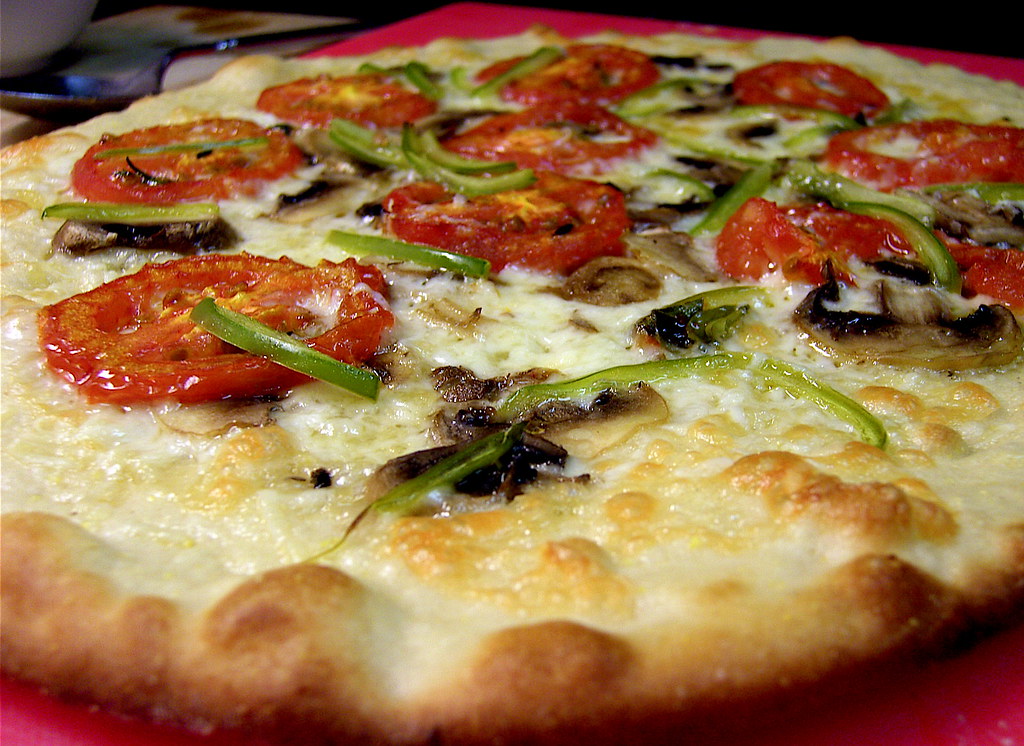
500 Year-Old Pizza VS Today
Tasting History with Max Miller
Published 25 May 2021Help Support the Channel with Patreon: https://www.patreon.com/tastinghistory
Tasting History Merchandise: crowdmade.com/collections/tastinghistoryFollow Tasting History here:
Instagram: https://www.instagram.com/tastinghist…
Twitter: https://twitter.com/TastingHistory1
Tiktok: TastingHistory
Reddit: r/TastingHistory
Discord: https://discord.gg/d7nbEpyTasting History’s Amazon Wish List: https://amzn.to/3i0mwGt
LINKS TO INGREDIENTS & EQUIPMENT**
Sony Alpha 7C Camera: https://amzn.to/2MQbNTK
Sigma 24-70mm f/2.8 Lens: https://amzn.to/35tjyoW
10 inch removable bottom pan: https://amzn.to/3f8ZZI0
Rose Water: https://amzn.to/3oL0xqILINKS TO SOURCES**
Scappi Video: https://www.youtube.com/watch?v=o4Ymv…
Tomato Video: https://www.youtube.com/watch?v=beBQg…
Pizza – A Global History by Carol Helstosky: https://amzn.to/3bHFPCQ**Some of the links and other products that appear on this video are from companies which Tasting History will earn an affiliate commission or referral bonus. Each purchase made from these links will help to support this channel with no additional cost to you. The content in this video is accurate as of the posting date. Some of the offers mentioned may no longer be available.
Subtitles: Jose Mendoza
PHOTO CREDITS
Stuffed pizza from Giordano’s: By TNVWBOY – https://www.flickr.com/photos/tnvwboy…, CC BY 2.0, https://commons.wikimedia.org/w/index…
Lombardi’s Pizza: By Beyond My Ken – Own work, CC BY-SA 4.0, https://commons.wikimedia.org/w/index…
Sushi Pizza: Quinn Dombrowski from Berkeley, USA, CC BY-SA 2.0 https://creativecommons.org/licenses/…, via Wikimedia Commons
Pizza Bagels: Mike Mozart https://www.flickr.com/photos/jeepers…MUSIC CREDITS
“Bushwick Tarentella” – Thatched Villagers by Kevin MacLeod is licensed under a Creative Commons Attribution 4.0 license. https://creativecommons.org/licenses/…
Source: http://incompetech.com/music/royalty-…
Artist: http://incompetech.com/#tastinghistory #pizza
August 30, 2021
A History of American Barbecue
The History Guy: History Deserves to Be Remembered
Published 29 Jun 2020Different cultures have been roasting meat over a fire since prehistory, but the practice took on special meaning in the United States. The History Guy remembers a brief history of American barbecue.
This is original content based on research by The History Guy. Images in the Public Domain are carefully selected and provide illustration. As very few images of the actual event are available in the Public Domain, images of similar objects and events are used for illustration.
You can purchase the bow tie worn in this episode at The Tie Bar:
https://www.thetiebar.com/?utm_campai…All events are portrayed in historical context and for educational purposes. No images or content are primarily intended to shock and disgust. Those who do not learn from history are doomed to repeat it. Non censuram.
Find The History Guy at:
Patreon: https://www.patreon.com/TheHistoryGuy
Join the History Guy for history trivia at https://www.quizando.com/TheHistoryGuyThe History Guy: History Deserves to Be Remembered is the place to find short snippets of forgotten history from five to fifteen minutes long. If you like history too, this is the channel for you.
Awesome The History Guy merchandise is available at:
teespring.com/stores/the-history-guyScript by THG
#ushistory #thehistoryguy #foodhistory
August 24, 2021
Aztec Chocolate – Blood & Spice
Tasting History with Max Miller
Published 9 Mar 2021Help Support the Channel with Patreon: https://www.patreon.com/tastinghistory
Tasting History Merchandise: crowdmade.com/collections/tastinghistoryFollow Tasting History here:
Instagram: https://www.instagram.com/tastinghist…
Twitter: https://twitter.com/TastingHistory1
Tiktok: TastingHistory
Reddit: r/TastingHistory
Discord: https://discord.gg/d7nbEpyTasting History’s Amazon Wish List: https://amzn.to/3i0mwGt
LINKS TO INGREDIENTS & EQUIPMENT**
Sony Alpha 7C Camera: https://amzn.to/2MQbNTK
Sigma 24-70mm f/2.8 Lens: https://amzn.to/35tjyoW
Molinillo: https://amzn.to/3rpoXGJ
Cacao Beans: https://amzn.to/3v4feIe
Cacao Nibs: https://amzn.to/3sX7JAU
Achiote/Annatto Powder: https://amzn.to/3rpWe4CLINKS TO SOURCES**
The Secret Life of Chocolate by Marcos Patchett: https://amzn.to/3qoLOB1
For more information visit thesecretlifeofchocolate.com
The True History of Chocolate by Sophie & Michael Coe: https://amzn.to/3sWBl1f
Florentine Codex by Bernardino de Sahagún: https://amzn.to/2OrKiAE
Thomas Gage’s Travels in the New World: https://amzn.to/3sO3YxA**Some of the links and other products that appear on this video are from companies which Tasting History will earn an affiliate commission or referral bonus. Each purchase made from these links will help to support this channel with no additional cost to you. The content in this video is accurate as of the posting date. Some of the offers mentioned may no longer be available.
Subtitles: Jose Mendoza
PHOTO CREDITS
Metate et Mano: Yelkrokoyade, CC BY-SA 3.0 https://creativecommons.org/licenses/…, via Wikimedia Commons
Olmec Head No 3: By Maribel Ponce Ixba (frida27ponce) – Flickr, CC BY 2.0, https://commons.wikimedia.org/w/index…#tastinghistory #aztec #chocolate
August 7, 2021
The Black Markets of World War Two – WW2 – On the Homefront 012
World War Two
Published 6 Aug 2021With the scarce food supply brought about by war, many turn to the black market and its astronomic prices as supplements. It is a place for opportunists and patriotic protesters, but mainly it’s a means to survive.
(more…)