
Tasting History with Max Miller
Published Feb 23, 2024Rich, thick, dark hot chocolate spiced with cinnamon and cardamom
City/Region: England
Time Period: 1747Up until the 19th century, the most popular way to partake of chocolate was to drink it. Aztecs drank a very bitter chocolate, and when Europeans brought it back home, they paved the way for one of the most perfect of food pairings: chocolate and sugar.
This hot chocolate is fairly dark, so feel free to add more sugar if that’s to your taste. It’s super rich and much thicker than most hot chocolates you’d get today, so you may only want to make a small amount of the drink and save the rest of the chocolate for later. The spices jump out at you, and even though mine still had a bit of grittiness from the cocoa nibs (it’s basically impossible to get it completely smooth at home), it was really, really good.
(more…)
June 3, 2024
18th Century Spiced Hot Chocolate
May 28, 2024
Why a Tire Company Gives Out Food’s Most Famous Award
Tasting History with Max Miller
Published Feb 20, 2024Eugénie Brazier, the chef behind today’s recipe, was a culinary force to be reckoned with. She was described as “a formidable woman with a voice like a foghorn, rough language, and strong forearms”. Both of her restaurants won Michelin stars in the early 20th century, making her the first person to have six. No one else would earn six Michelin stars for 64 years.
By modern Michelin standards, this dish is pretty plain, but it’s still really good. The chicken is cooked simply in butter, and the cream sauce is absolutely fantastic. I was afraid the alcohol would overpower it, but it doesn’t. The sauce takes on a kind of floral woodiness instead of each individual alcohol’s flavor, and it’s so good.
(more…)
May 23, 2024
The Roman Colosseum: What It Was Like to Attend the Games
Tasting History with Max Miller
Published Feb 13, 2024Like at sports events today, you could get snacks and souvenirs in and around the Colosseum in ancient Rome. There were sausages and pastries and small sweet snacks, like these dates. Not the same as modern hot dogs and soft serve, but kind of in the same spirit.
These dates are really, really good. You could grind the nuts into a fine paste, but I like the texture a lot when they’re left a little coarse. They’re very sweet from the dates and the honey, but the salt and pepper balance it so well (highly recommend the long pepper here). Definitely give these a try!
(more…)
May 17, 2024
Deviled Bones – The History of Hot Wings
Tasting History with Max Miller
Published Feb 6, 2024[Information from the Tasting History page for this video]
Chicken wings tossed in a spicy, complex sauce featuring mushroom ketchup.
The history of hot wings goes much further back than 1964 in Buffalo, New York, as a Google search might have you believe. Deviled bones were a way to use up undesirable chicken wings for centuries before that, calling for leftover cooked joints that still had some meat on them (the bones), and flavorful spices (deviled).
If you’re not a lover of spicy things, like me, then the 1/4 teaspoon of cayenne is plenty. That said, feel free to adjust the amounts of any of the spices to suit your taste. I was afraid that the mustard would be overpowering, but it isn’t. The flavor is complex and full of umami thanks to the mushroom ketchup. This is an easy recipe to do some prep work the day before, as the wings would have originally been leftovers.
Devilled Bones
Take the bones of any remaining joint or poultry, which has still some meat on, which cut across slightly, and then make a mixture of mustard, salt, cayenne, and pepper, and one teaspoonful of mushroom ketchup to two of mustard; rub the bones well with this, and broil rather brownish.
— A Shilling Cookery for the People by Alexis Soyer, 1854.
May 10, 2024
Table Manners in the Ottoman Empire – Acem Pilaf
Text from https://www.tastinghistory.com/recipes/ottomanpilaf:
At an Ottoman banquet, you were only ever meant to eat a few bites of each dish that was brought out (having more was seen as being greedy). But there was no danger of leaving the table hungry, as there could be upwards of dozens of dishes. To European visitors, the order that the dishes were brought out in made no sense. Cakes could be brought out between meat courses, a rich pastry brought out after fish, and fowl after chocolate cake. Amidst this seeming chaos, pilaf was always the last dish served.
Let’s address the elephant in the room and state that yes, the pilaf is supposed to come out layered and all in one piece, but mine did not. Ottoman dishes were meant to be not only flavorful, but beautiful as well. That being said, even if you mold yours in a separate container like I did, it is still delicious (and quite nice looking). The warm spices are a wonderful and unusual combination with the lamb (at least to my palate), and there is a fantastic array of textures.
“Chop a piece of good mutton into small pieces, place them in a pot … add one or two spoonfuls of fresh butter and after frying, take the cooked meat from the pot with a hand strainer. Finely chop three or four onions and fry them, then put the roasted meat on top. Then add plenty of pistachios, currants, cinnamon, cloves, and cardamom on top. After that, according to the old method, one measure of washed Egyptian rice. Add two measures of cold water without disturbing the rice, add sufficient salt, then close the lid of the pot and cover it thoroughly with dough. Boil it slowly on coals and when the water is absorbed, take the cover off, and turn the contents out of the pan onto a dish so it comes out intact. This makes a Pilaw that is very pleasing to the sight, and exceedingly pleasant to the taste.”
— Melceü’t-Tabbâhîn, 1844
May 8, 2024
The cocoa shortage is really the same economic trend that caused the Victorian “servant problem”
Tim Worstall explains not only why your favourite chocolate bar is going to be more expensive, but also why your olive oil will do the same and why it really is the same thing as the Victorian and Edwardian upper class complaints about “the help”:
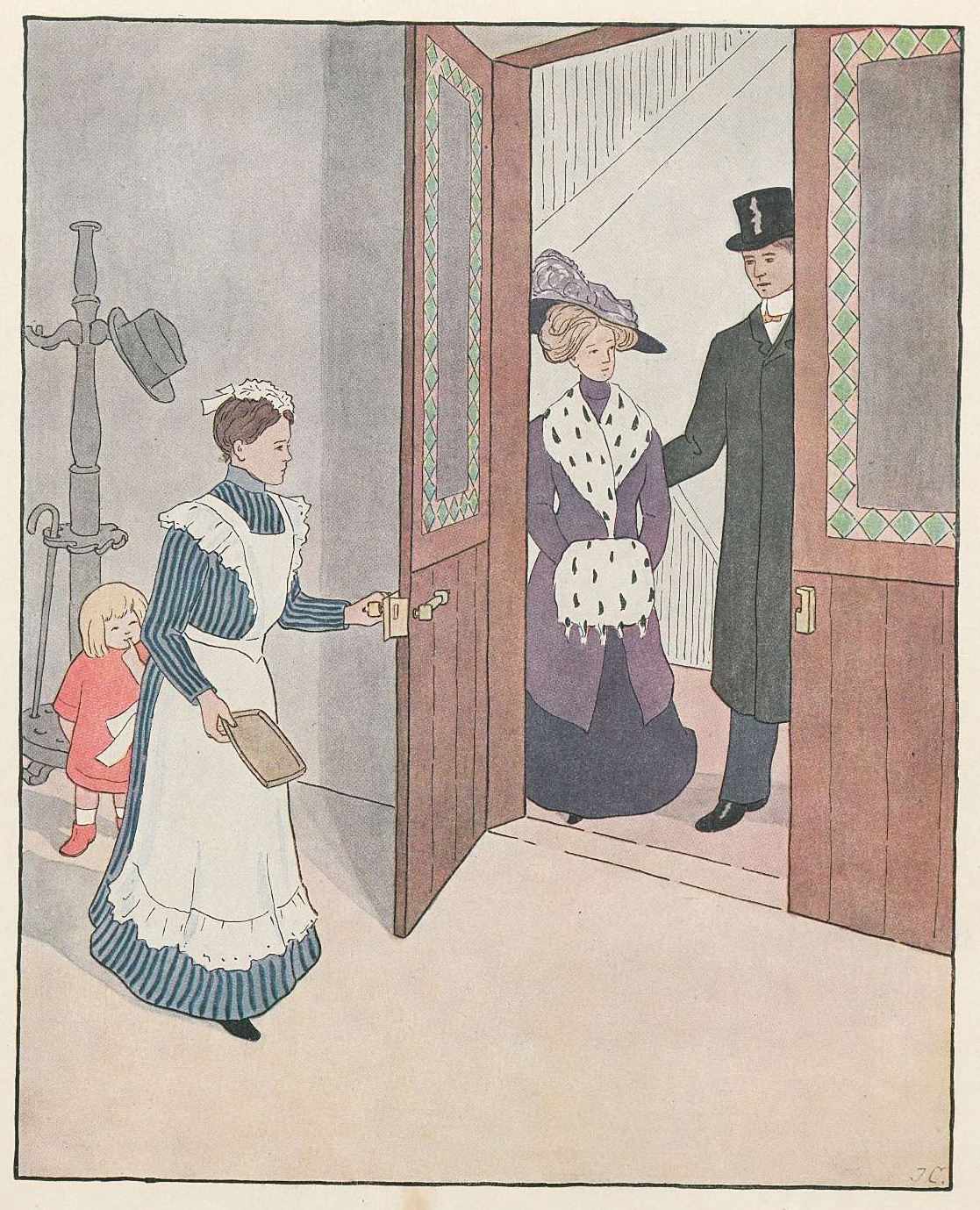
Upper classes expected maids and other servants to be cheap, eager, and easy to replace. This began to change quickly in the Victorian era, as women found better-paying jobs in commerce and industry that didn’t require bowing and scraping and putting up with constand, casual abuse from oblivious wealthy snobs.
As you might have noticed, cocoa is getting very much more expensive. Futures prices (no, futures are not a good guide to actual market prices but still) have gone from $3,000 a tonne or so (-ish, you understand ) to $12,000 and back to $8,000 or so. According to the usual suspects this is climate change. According to those a little more informed there’s El Nino, there have been a few rusts and plant plagues to deal with. Low prices led to not much planting in recent years — all sorts of little problems that led to that burst of higher prices.
Real prices have changed, the sort of Cadbury’s bar that my wife likes a piece of with her afternoon coffee has gone up by a € a bar in recent weeks (I know, I know, “Send Munnies! Quick!”) and so something must be done.
But there’s a much larger and more significant problem here and one to which there may or may not be a solution. The servant problem.
One of those things you learn when living in foreign is that the poorer a country is the easier it is to get a servant and the cheaper a servant is when you get one. This doesn’t wholly make sense to folk until it’s explained. A poor place is one where wages are low — where wages are low is a poor place. They’re the same statement. So, wages for a servant are low in poor countries.
We can up that a little as well. Poor people spend — truly poor people that is — some 80% of their income on food and shelter. So, when you’re in one of those truly poor places you can gain access to a servant — their fulltime, undivided services — for $2 a day plus a bowl of boiled rice and being allowed to sleep in the barn. Because, if they were out there in the cash economy they’d be paid $2 a day (800 million still live at that level out there) and they’d have to buy their own bowl of rice and a tarpaulin to shelter under out of that.
Servants are cheap in poor places because human labour is cheap in poor places because a place with cheap labour is a poor place. QED.
As places become richer human labour costs more. Which is why the letters pages of The Lady started to fill up with complaints about the uppityness and demands of servants from about the 1880s onwards — about the time that British wages at that low and untrained end first started to substantially rise above mere subsistence. This is also one of our major political problems now that middle class women have the vote. They’re using the franchise to insist that government do something about that servant problem. That’s what all that insistence upon child care subsidies and freebies is about. Those middle class women going off to their terribly important power skirt jobs can no longer afford to hire some working class popsie to look after their kids — so government must be forced to do so instead. The correct answer being look after your own damn kids, obviously.
But cheap labour in poor places:
Britain is at risk of olive oil shortages as the industry is wracked by a production crisis.
Fears are growing over the risk of empty shelves as growers across Europe battle a combination of extreme weather, inflation and high interest rates.
Interest rates matter because you plant, wait some number of years, only then do you gain olives. You will then gain them for many decades even centuries, but that wait without income is more painful the higher interest rates get.
There are rusts, plant plagues, afflicting the crop across much of Europe. Of course we’ve those blaming everything on climate change but that’s just the usual bollocks.
However, low wages in poor places. I live in the middle of an oil producing area. Vast waving acres of olive trees in fact. I’ve also lived, until recently, in an historically poorer area of the same country. Where much of the land — little 2 and 4 acre farms (if they were lucky) which might raise a few goats, a sheep (cheese more than anything) and have a couple or four olive trees — has been simply abandoned. The place is getting richer, no one wants to scrape a living on 4 acres of land these days. Rightly so. 4 acres is an adventurous garden, not a living. The absence of those goats is also why the wildfires are getting so much worse — there’s more scrub to burn.
I can take you to places where there are hundreds of acres of such land. Plenty of olive trees in there too, all fruiting and none of them being picked. Because picking olives from the occasional tree is hard bloody work. Spread a net beneath it, hit the tree hard, a lot. Collect up the net with all the olives. Then sort them. By hand. Each single one needs to be checked (for worms and rot) and then nicked. Then you can take them down to the oil mill (every village has at least one) and you hand over the olives and get back the oil, minus a percentage for the mill owner.
May 7, 2024
The real problem for Starbucks is that they’ve “turned coffee into something ridiculous”
Ted Gioia will stack his coffee-drinking credentials against anyone, but even he is saddened by what Starbucks did to his favourite hot beverage:
I’ve tried it all, from those crazy hot coffee can dispensers in Tokyo, to Alfred Peet’s humble coffee dispensary in Berkeley (with the master presiding), to actual Colombian in Bogotá and handpicked Kona on the plantations of Hawaii.
Mr. Prufrock has nothing on me. I’ve measured out my entire life in capacious coffee spoons — and make no apologies for it.
But this requires a proper level of gravitas. I don’t just slurp it down. I treat it as a ritual, conducted with mindfulness and reverence. You should do the same.
So I’ve watched with dismay as coffee got turned into a joke.
I mention this in response to the crisis at Starbucks — which reported ugly financial results on Tuesday. Sales are down. Profits are down. Store traffic is down. Everything is down.
Here are some headlines from the last week.
This makes no kind of sense.
How can you lose when you’re selling an addictive substance? Even the most brain-cell-deprived stoner in your high school class eventually figured out how to deal.
When did they get so clueless in Seattle? I’ve heard many explanations.
Some complain that coffee got too expensive — and that’s true. Others will point to the declining quality of the Starbucks experience — and I can’t disagree. I’ve seen things go down in front of the barista straight out of the Battle of Stalingrad.
But the biggest problem is one Starbucks created.
They turned coffee into something ridiculous.
Every comedian now has a five-minute riff on coffee in their routines. In a day when it’s dicey making jokes about people, Starbucks comes to the rescue. Nobody gets offended when those silly beverages are jeered — they are the punchline that keeps on giving.
How did Starbucks become a laughingstock?
Maybe it started with selling a Pumpkin Spice Latte that had zero pumpkin in it. Whatever the reason, there’s something about this beverage that invites mockery — so much so that comedians have actually demanded a moratorium on pumpkin spice latte jokes.
That didn’t stop the drink from gaining a sizable hipster following. Those latte-swilling bros should have been a warning sign. But instead of reading the room, Starbucks pushed ahead with a host of other goofy drinks.

May 4, 2024
Process optimization can definitely be taken too far
Freddie deBoer considers systems that have been overoptimized to the detriment of most users and the benefit of a small, privileged minority:

I know a guy who used to make his living as an eBay reseller. That is, he’d find something on eBay that he thought was underpriced so long as the auction didn’t go above X dollars, buy it, then resell it for more than he paid for it Classic imports-exports, really, a digital junk shop. Eventually he got to the point where, with some items, he didn’t ever have physical possession of them; he had figured out a way to get them directly from whoever he bought an item from to the person he had sold the item to, while still collecting his bit of arbitrage along the way. This buying and selling of items on eBay, looking for deals, was sufficient to be his full-time job and pay for a mortgage. But the last time I saw him, a few years ago, he had gotten an ordinary office job. He told me that it had become too difficult to find value; potential sellers and buyers alike had access to too many tools that could reveal the “real” price of an item, and there was little delta to eke out. He’s not alone. If you search around in eBay-related forums, you’ll find that many longtime sellers have reached similar conclusions. The hustle just doesn’t work anymore.
I don’t suppose there’s any great crime there — it’s all within the rules. And there does appear to still be an eBay-adjacent reselling economy; it’s just that, as far as I can glean, it’s driven by algorithms and bots that average resellers simply don’t have access to. It appears that some super-resellers have implemented software solutions to identify underpriced goods and buy them automatically and algorithmically. They have optimized the system for their own use, giving them an advantage, putting other sellers at a disadvantage, and arguably hurting buyers by eliminating uncertainty that sometimes results in lower-than-optimal-to-sellers prices. This is all in sharp contrast to the early years, when my friend would keep listings for lucrative product categories open – in separate windows, not tabs, that’s how long ago this was – and refresh until he found potential moneymakers. That sort of human searching and bidding work stands at a sharp disadvantage compared to those with information-scraping capacity and automated tools. It’s a good example of how access to data has left systems overoptimized for some users. One of the things that the internet is really good at is price discovery, and these digital tools help determine the “optimal” price of items on eBay, which results in less opportunity for arbitrage for other players.
My current working definition of overoptimization goes like this: overoptimization has occurred when the introduction of immense amounts of information into a human system produces conditions that allow for some players within that system to maximize their comparative advantage, without overtly breaking the rules, in a way that (intentional or not) creates meaningful negative social consequences. I want to argue that many human systems in the 2020s have become overoptimized in this way, and that the social ramifications are often bad.
Getting a restaurant reservation is a good example. Once upon a time, you called a restaurant’s phone number and asked about a specific time and they looked in the book and told you if you could have that slot or not. There was plenty of insiderism and petty corruption involved, but because the system provided incomplete information that was time consuming to procure, there was a limit to how much you could game that system. Now that reservations are made online, you can look and see not only if a specific slot has availability but if any slots have availability. You can also make highly-educated guesses about what different slots are worth on the market through both common sense (weekend evenings are the most valuable etc) and through seeing which reservations get snapped up the fastest in an average week. And being online means that the reservation system is immediate and automatic, so you can train a bot to grab as many reservations as you want, near-instantaneously, and you can do so in a way that the system doesn’t notice. (Unlike, say, if you called the same restaurant over and over again and tried to hide your voice by doing a series of fake accents.) The outcome of all this is that getting a reservation at desirable places is a nightmare and results in a secondary market that, like seemingly everything in American life, is reserved for the rich. The internet has overoptimized getting a restaurant reservation and the result is to make it more aggravating and less egalitarian.
As has been much discussed, nearly the exact same scenario has made getting concert tickets a tedious and ludicrously-pricy exercise in frustration.
May 1, 2024
Lobscouse, Hardtack & Navy Sea Cooks
Tasting History with Max Miller
Published Jan 23, 2024Hearty meat and potato stew thickened with crushed hardtack (clack clack)
April 19, 2024
Breakfast in Jane Austen’s England
Tasting History with Max Miller
Published Jan 16, 2024What you could tell about someone from their breakfast in Jane Austen’s England, and a recipe for Bath buns as she might have eaten them for her first meal of the day.
Caraway buns topped with glaze, sugar, and caraway, served with butter. Perfect for a Jane Austen inspired breakfast with some hot chocolate
City/Region: England
Time Period: 1769It is a truth universally acknowledged that a person who has recently risen from bed must be in want of breakfast. In Jane Austen’s time, breakfast could be around 8:00 or 9:00 in the morning if you were a manual laborer or servant, or it could be as late as 3:00 or 4:00 in the afternoon if you were upper class.
Jane wrote a letter to her sister Cassandra saying that she wanted to join her on her trip to Bath, but didn’t want to inconvenience their hosts, so she would fill up on bath buns for breakfast. I can see why this would have been a sound strategy. The buns are denser than modern versions, but still soft and very good (they would certainly fill you up). The caraway is present but not overpowering, and they’re sweet but not as sweet as a dessert.
Caraway comfits were candy-coated caraway seeds (think M&Ms), but they don’t use caraway to make them anymore. I mimic them as best I can with caraway seeds and sugar.
To make Bath Cakes.
Rub half a pound of butter into a pound of flour, and one spoonful of good barm, warm some cream, and make it into a light paste, set it to the fire to rise, when you make them up, take four ounces of carraway comfits work part of them in, and strew the rest on the top, make them into a round cake, the size of a French roll, bake them on sheet tins, and send them in hot for breakfast.
— The Experienced English Houskeeper by Elizabeth Raffald, 1769
April 15, 2024
QotD: Cereal cultivation also helped grow the centralized state
Sumer just before the dawn of civilization was in many ways an idyllic place. Forget your vision of stark Middle Eastern deserts; in the Paleolithic the area where the first cities would one day arise was a great swamp. Foragers roamed the landscape, eating everything from fishes to gazelles to shellfish to wild plants. There was more than enough for everyone; “as Jack Harlan famously showed, one could gather enough [wild] grain with a flint sickle in three weeks to feed a family for a year”. Foragers alternated short periods of frenetic activity (eg catching as many gazelles as possible during their weeklong migration through the area) with longer periods of rest and recreation.
Intensive cereal cultivation is miserable work requiring constant toil with little guarantee of a good harvest. Why would anyone leave this wilderness Eden for a 100% wheat diet?
Not because they were tired of wandering around; Scott presents evidence that permanent settlements began as early as 6000 BC, long before Uruk, the first true city-state, began in 3300. Sometimes these towns subsisted off of particularly rich local wildlife; other times they practiced some transitional form of agriculture, which also antedated states by millennia. Settled peoples would eat whatever plants they liked, then scatter the seeds in particularly promising-looking soil close to camp – reaping the benefits of agriculture without the back-breaking work.
And not because they needed to store food. Hunter-gatherers could store food just fine, from salting animal meat to burying fish and letting it ferment to just having grain in siloes like everyone else. There is ample archaeological evidence of all of these techniques. Also, when you are surrounded by so much bounty, storing things takes on secondary importance.
And not because the new lifestyle made this happy life even happier. While hunter-gatherers enjoyed a stable and varied diet, agriculturalists subsisted almost entirely on grain; their bones display signs of significant nutritional deficiency. While hunter-gatherers were well-fed, agriculturalists were famished; their skeletons were several inches shorter than contemporaneous foragers. While hunter-gatherers worked ten to twenty hour weeks, agriculturalists lived lives of backbreaking labor. While hunter-gatherers who survived childhood usually lived to old age, agriculturalists suffered from disease, warfare, and conscription into dangerous forced labor.
Scott Alexander, “Book Review: Against The Grain“, Slate Star Codex, 2019-10-15.
April 13, 2024
The Legend of the Wiener Schnitzel
Tasting History with Max Miller
Published Jan 9, 2024Variations of wienerschnitzel throughout history and its legendary origin stories, and a recipe for a 19th century version.
Fried breaded veal cutlets served with the traditional lemon wedges and parsley
City/Region: Vienna
Time Period: 1824Breaded and fried meat has been around for a very long time in many places, but it wasn’t until 1893 that we get the first mention of the word wienerschnitzel. Then in the early 20th century, the Austrian culinary scene decided to champion this term to refer to a veal cutlet that is made into a schnitzel, and restaurants in Vienna began specializing in schnitzel.
This recipe predates the term wienerschnitzel, and unlike modern versions it isn’t dredged in flour first. This makes it so that the breading doesn’t puff away from the meat, but the flavor is rich and delicious, just like I remember from my trip to Vienna. If you don’t like veal or don’t want to use it, you can use pork or chicken. It won’t technically be wienerschnitzel, but nobody’s going to judge you. You can also use another fat instead of the clarified butter, but butter gives the best flavor.
(more…)
April 7, 2024
How Traditional English Stilton Cheese Is Made At A 100-Year-Old Dairy | Regional Eats
Insider Food
Published Dec 4, 2019Stilton cheese takes its name from the village of Stilton, in the east of England. The earliest reports of cheese made and sold here date to the 17th century. In 1724, English writer Daniel Defoe referred to the town being “famous for cheese”, calling the product the “English Parmesan”. Today, Stilton can only be made in six dairies, which are spread across three counties in England: Nottinghamshire, Leicestershire, and Derbyshire. We visited Colston Bassett Dairy in Nottinghamshire to learn more about the cheese is made.
For more, visit:
https://www.colstonbassettdairy.co.uk/——————————————————
(more…)
April 6, 2024
The Fake (and real) History of Potato Chips
Tasting History with Max Miller
Published Jan 2, 2024The fake and true history of the potato chip and an early 19th century recipe for them. Get the recipe at my new website https://www.tastinghistory.com/ and buy Fake History: 101 Things that Never Happened: https://lnk.to/Xkg1CdFB
(more…)
March 28, 2024
The History of Fish Sauce – Garum and Beyond!
Tasting History with Max Miller
Published Dec 26, 2023Sweet frittata-like patina of pears with classic ancient Roman flavors and sprinkled with long pepper
City/Region: Rome
Time Period: 1st CenturyThis patina de piris is one of over a dozen recipes for similar dishes in Apicius’ De re coquinaria, a staple for ancient Roman recipes. It would have probably been part of mensa secunda, or second meal. Not a second breakfast, it was the final course in a larger meal and usually consisted of sweets, pastries, nuts, and egg dishes, kind of like a modern dessert course.
I finally made my own true ancient Roman garum in the summer of 2023, from chopped up fish pieces and salt to clear amber umami-laden liquid. There’s no fishiness in this surprisingly sweet dish, just a saltiness and savory umami notes that complements the other very ancient Roman flavors.
As with all ancient recipes, this is my interpretation and you can change things up how you like. I separated my eggs before beating them, but you could just whisk them up whole and add them like that.
(more…)


