
War parties, as noted, often moved without bringing the entire camp, the non-combatants or the sheep with them. This was actually a crucial operational concern on the steppe, since the absence of a war party might render an encampment – stocked full of the most valuable resources (livestock, to be clear) – effectively unguarded and ripe for raiding, but at the same time, attempting to chase down a moving encampment with an equally slow moving encampment was obviously a non-starter. Better to race over the steppe, concealed (as we’ll see) and quick moving to spring a trap on another group of nomads. But how did a war party make those high speed long-distance movements over the steppe? Horse-string logistics (a term, I should note, that I did not coin, but which is too apt not to use).
Each steppe warrior rode to battle with not one horse, but several: typically five to eight. For reasons that will rapidly become obvious, they preferred mares for this purpose. The Steppe warrior could ride the lead horse and keep the rest of them following along by connecting them via a string (thus “horse-string logistics”), such that each steppe warrior was his own little equine procession. These horses are, you will recall, fairly small and while they are hardy, they are not necessarily prodigiously strong, so the warrior is going to shift between them as he rides, sparing his best mount for the actual fight. Of course we are not looking at just one warrior on the move – that would be very dangerous – but a group on the move, so we have to imagine a large group (perhaps dozens or hundreds or even thousands) of warriors moving, with something like 5-8 times that many horses.
[Edit: It is worth noting that a horse-string war party might well also bring some number of sheep with them as an additional food supply, herding them along as the army rode. So even here, sheep maintain their importance as a core part of the subsistence system.]
Now of course the warriors are going to bring rations with them from the camp, including milk (both liquid in leather containers and dried to qurut-paste) as well as dried meat. But the great advantage of moving on mares is that they when they are lactating, mares are already a system for turning the grass of the steppe into emergency rations. As Timothy May (op. cit.) notes, a mare produces around 2.25-2.5 quarts of milk in excess of the needs of her foal per day during her normal five-month lactation period, equal to about 1,500kcal/day, half of the daily requirement for a human. So long as at least two of the horses in the horse-string were lactating, a steppe warrior need not fear shortfall. This was more difficult in the winter when less grass was available and thus mare’s milk became scarce, which could impose some seasonality on a campaign, but a disciplined band of steppe warriors could move massive distances (the Mongols could make 60 miles a day on the move unencumbered, which is a lot) like this in just a few months.
In adverse conditions (or where time permitted because meat is tasty), steppe warriors on the move could also supplement their diet by hunting, preserving the meat as saddle-jerky. In regions where water became scarce, we are frequently told that the Mongols could keep going by opening a vein on their horse and drinking the blood for both nourishment and hydration; May (op. cit.) notes that a horse can donate around 14 pints of blood without serious health risk, which is both hydrating, but also around 2,184kcal, about two-thirds of the daily requirement. This will have negative impacts on the horses long term if one keeps doing it, so it was an emergency measure.
The major advantage of this kind of horse-string logistics was that a steppe warrior party could move long distances unencumbered by being essentially self-sufficient. It has a second major advantage that I want to note because we’ll come back to it, they light no fires. For most armies, camp fires are essential because food preparation – particularly grains – essentially requires it. But a steppe warrior can move vast distances – hundreds of miles – without lighting a fire. That’s crucial for raiding (and becomes a key advantage even when steppe warriors transition to taking and holding territory in moments of strength, e.g. the Mongols) because sight-lines on the steppe are long and campfires are visible a long way off. Fireless logistics allow steppe warriors to seemingly appear from the steppe with no warning and then vanish just as quickly.
That said, these racing columns of steppe warriors, while they could move very fast and be effectively independent in the short term, don’t seem generally to have been logistically independent of the camp and its herds of sheep in the long term. Not only, of course, would there be need for things like hides and textiles produced in the camp, but also the winter snows would drastically reduce the mares milk the horses produced, making it more difficult to survive purely on horse-string logistics. Instead, the camp formed the logistical base (and store of resources, since a lot of this military activity is about raiding to get captives, sheep and horses which would be kept in the camp) for the long range cavalry raids to strike out from. To the settled peoples on the receiving end of a Mongol raid, it might seem like the Mongols subsisted solely on their horses, but the Mongols themselves knew better (as would anyone who stayed with them for any real length of time).
Bret Devereaux, “That Dothraki Horde, Part II: Subsistence on the Hoof”, A Collection of Unmitigated Pedantry, 2020-12-11.
March 26, 2024
QotD: Cavalry logistics for Steppe raiders
March 23, 2024
QotD: The SCIENCE was SETTLED in the 1970s
For younger readers, back in the late 70s the nutritional Powers That Be got in bed with the corn lobby. It sounds funny, but they were and are huge, the corn lobby — why do you think we’re still getting barraged with shit about ethanol, even though it’s actually much worse for the environment than plain ol’ dinosaur juice, when you factor in all the “greenhouse emissions” from growing and harvesting it? Anyway, ethanol wasn’t a thing back then … but corn syrup was, and so suddenly, for no reason whatsoever, the PTB decided that fat was bad and carbohydrates were good.
Teh Science (TM) for this was as bogus and politicized as all the other Teh Science (TM) these days, but since we still had a high degree of social and institutional trust back then — living in a country that’s still 85% White will do that — nobody questioned it, and so suddenly everything had to be “fat free”, lest you get high blood pressure and colon cancer and every other damn thing (ever notice how, with Teh Science (TM), everything they decide is bad suddenly correlates with everything that has ever been bad? Funny, that). But since fat is what makes food taste good, they had to find a tasty substitute … and whaddya know, huge vats full of corn syrup just kinda happened to be there. Obesity rates immediately skyrocketed; who’d have thunk it?
… but again, this isn’t a deliberate thing with your average Leftie. You know how they are about Teh Science (TM), even Teh Science (TM) produced by people who thought polyester bellbottoms were a great look, which alone should tell you everything you need to know. They just learned “red meat is bad”, and so, being the helpful sorts they are, decided to boss you around about it. You know, for your own good.
Severian, “Friday Mailbag / Grab Bag”, Rotten Chestnuts, 2021-06-25.
March 18, 2024
Slimy “nudgers” want to manipulate the food you buy by “denormalizing” what you enjoy
Christopher Snowden on the self-imagined elites’ desire for you dirt people to eat a different diet than you would voluntarily choose for yourselves:

On Thursday, Legal & General Investment Management’s senior global environmental, social and governance (ESG) manager told Nestlé to sell less sugar. It’s not for want of trying. In 2018, Nestlé launched Milkybar Wowsomes with 30% less sugar than a Milkybar. The company described it as a “great tasting product” that was the result of “a scientific breakthrough” but when it was discontinued in 2020, Nestlé lamented that demand for it had been “underwhelming”. In 2021, it launched a non-HFSS version of Shreddies called Shreddies The Simple One which contained just four ingredients. The company said:
We know that consumers are looking to eat more healthily, especially following the pandemic. Shreddies The Simple One is an exciting new addition to the breakfast table that caters to growing demand, with a delicious taste consumers will love.
Consumers did not, in fact, love it and it was withdrawn from sale the following year.
Today, the King’s Fund has added its voice to the call for mandatory reformulation targets enforced with heavy fines. The King’s Fund’s job has traditionally been to get more money for the NHS but it is under new management with Sarah Woolnough, a former trustee of Action on Smoking and Health and former CEO of Cancer Research UK, so it is now involved in lifestyle regulation.
Compelling food manufacturers to strip out large amounts of fat, salt and sugar would help “denormalise” the routine consumption of unhealthy food, Sarah Woolnough, the chief executive of the King’s Fund, told the Guardian.
The word “denormalise” is taken straight from the anti-tobacco playbook. See how it works yet?
As the Guardian points out, the King’s Fund has done some polling which finds that reformulation is hugely popular in the abstract.
Overall, 67.3% of Britons agree that the government should require companies to reduce the amount of fat, salt and sugar they put in their products, a survey for the influential health thinktank undertaken by Ipsos Mori found. Only 5% disagreed.
This is a beautiful example of the difference between stated preferences and revealed preferences. People love the idea of fat, salt and sugar being removed from food. Who wouldn’t, so long as the food tasted the same? But it doesn’t taste the same. It tastes considerably worse. And when reformulation isn’t physically possible — for example, with nearly all confectionery, biscuits and cakes — the only way to meet the target is by shrinking the product. Some chocolate bars are now so small that a dual pack is the default (and so, as with the sugar tax, big business is doing rather well out of it). And, yes, that is because of the government’s reformulation scheme.
If pollsters asked people if they are in favour of shrinkflation, I doubt many would say yes. As for reformulation, the only way to get an informed opinion would be to do a taste test using the “before” and “after” versions of popular food products and ask people whether the government should mandate the reformulated version and ban the original version. Again, I doubt many people would give unqualified support for reformulation.
Fortunately, we don’t need to carry out such experiments because the public have been offered reformulated products many times in the real world. Sometimes they become popular — in which case there is no need for government coercion — but very often they are a flop, and in many cases they cannot even be attempted.
The British public have put up with a lot from meddlesome puritans in the last 20 years, but I strongly suspect that if the government tried to force us to eat the likes of Milkybar Wowsomes and Shreddies The Simple One, the thin blue line would finally snap.
March 17, 2024
Green Beer (You Suck at Cooking) Episode 87
You Suck At Cooking
Published Mar 17, 2019The history of Ireland is a long and storied one, and one I know next to nothing about. The history of St. Patrick is a short one, relative to the length of the history of the world. The current St. Patrick’s day celebrating has little or nothing to do with the actual St. Patrick, and that’s the way we like it.
The first step to making green beer is to add a few drops of food coloring, then add beer. When selecting a glass to drink it out of, make sure it’s transparent, that way you are able to see the green part of the beer not only from the top or from within the stomach, but also from the side while drinking beer.
While pouring the beer, making sure not to pour it from a great height. This will decrease the amount of bubbles that end up in the beer when you are drinking it, and therefore the enjoyment. If you were aware of the lengths that the manufacturers went to in order to get bubbles inside of that beer in the first place, you wouldn’t even drink it at all.
While drinking the beer, make sure you don’t allow the beer to come into contact with anything that could get stained, such as your clothes, dog, or mouth. If you swallow quickly enough you can keep your mouth from turning green permanently.
If you dislike drinking beverages that are colored green but want to get into the festive spirit, simply tape green construction paper around your drinking vessel, and dye your beer purple instead.
March 13, 2024
The History of the Chocolate Chip Cookie – Depression vs WW2
Tasting History with Max Miller
Published Dec 5, 2023WWII ration-friendly chocolate chip cookies made with shortening, honey, and maple syrup
City/Region: United States of America
Time Period: 1940sDuring WWII, everyone in the US wanted to send chocolate chip cookies to the boys at the front. With wartime rationing in effect, we get a recipe that doesn’t use butter or sugar, but shortening, honey, and maple syrup instead.
The dough is much softer than the original version, and the cookies spread out a lot more as they bake. They bake up softer than the crunchy originals, with a light pillowy texture. They aren’t as sweet, but still have a really lovely flavor. It kind of reminds me of Raisin Bran, but with chocolate. All in all, I was pleasantly surprised.
Check out the episode to see a side-by-side comparison with the original recipe.
(more…)
March 9, 2024
Salt – mundane, boring … and utterly essential
In the latest Age of Invention newsletter, Anton Howes looks at the importance of salt in history:
There was a product in the seventeenth century that was universally considered a necessity as important as grain and fuel. Controlling the source of this product was one of the first priorities for many a military campaign, and sometimes even a motivation for starting a war. Improvements to the preparation and uses of this product would have increased population size and would have had a general and noticeable impact on people’s living standards. And this product underwent dramatic changes in the seventeenth and eighteenth centuries, becoming an obsession for many inventors and industrialists, while seemingly not featuring in many estimates of historical economic output or growth at all.
The product is salt.
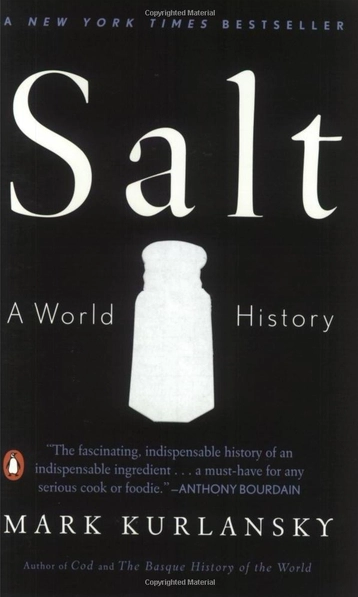
Making salt does not seem, at first glance, all that interesting as an industry. Even ninety years ago, when salt was proportionately a much larger industry in terms of employment, consumption, and economic output, the author of a book on the history salt-making noted how a friend had advised keeping the word salt out of the title, “for people won’t believe it can ever have been important”.1 The bestselling Salt: A World History by Mark Kurlansky, published over twenty years ago, actively leaned into the idea that salt was boring, becoming so popular because it created such a surprisingly compelling narrative around an article that most people consider commonplace. (Kurlansky, it turns out, is behind essentially all of those one-word titles on the seemingly prosaic: cod, milk, paper, and even oysters).
But salt used to be important in a way that’s almost impossible to fully appreciate today.
Try to consider what life was like just a few hundred years ago, when food and drink alone accounted for 75-85% of the typical household’s spending — compared to just 10-15%, in much of the developed world today, and under 50% in all but a handful of even the very poorest countries. Anything that improved food and drink, even a little bit, was thus a very big deal. This might be said for all sorts of things — sugar, spices, herbs, new cooking methods — but salt was more like a general-purpose technology: something that enhances the natural flavours of all and any foods. Using salt, and using it well, is what makes all the difference to cooking, whether that’s judging the perfect amount for pasta water, or remembering to massage it into the turkey the night before Christmas. As chef Samin Nosrat puts it, “salt has a greater impact on flavour than any other ingredient. Learn to use it well, and food will taste good”. Or to quote the anonymous 1612 author of A Theological and Philosophical Treatise of the Nature and Goodness of Salt, salt is that which “gives all things their own true taste and perfect relish”. Salt is not just salty, like sugar is sweet or lemon is sour. Salt is the universal flavour enhancer, or as our 1612 author put it, “the seasoner of all things”.
Making food taste better was thus an especially big deal for people’s living standards, but I’ve never seen any attempt to chart salt’s historical effects on them. To put it in unsentimental economic terms, better access to salt effectively increased the productivity of agriculture — adding salt improved the eventual value of farmers’ and fishers’ produce — at a time when agriculture made up the vast majority of economic activity and employment. Before 1600, agriculture alone employed about two thirds of the English workforce, not to mention the millers, butchers, bakers, brewers and assorted others who transformed seeds into sustenance. Any improvements to the treatment or processing of food and drink would have been hugely significant — something difficult to fathom when agriculture accounts for barely 1% of economic activity in most developed economies today. (Where are all the innovative bakers in our history books?! They existed, but have been largely forgotten.)
And so far we’ve only mentioned salt’s direct effects on the tongue. It also increased the efficiency of agriculture by making food last longer. Properly salted flesh and fish could last for many months, sometimes even years. Salting reduced food waste — again consider just how much bigger a deal this used to be — and extended the range at which food could be transported, providing a whole host of other advantages. Salted provisions allowed sailors to cross oceans, cities to outlast sieges, and armies to go on longer campaigns. Salt’s preservative properties bordered on the necromantic: “it delivers dead bodies from corruption, and as a second soul enters into them and preserves them … from putrefaction, as the soul did when they were alive”.2
Because of salt’s preservative properties, many believed that salt had a crucial connection with life itself. The fluids associated with life — blood, sweat and tears — are all salty. And nowhere seemed to be more teeming with life as the open ocean. At a time when many believed in the spontaneous generation of many animals from inanimate matter, like mice from wheat or maggots from meat, this seemed a more convincing point. No house was said to generate as many rats as a ship passing over the salty sea, while no ship was said to have more rats than one whose cargo was salt.3 Salt seemed to have a kind of multiplying effect on life: something that could be applied not only to seasoning and preserving food, but to growing it.
Livestock, for example, were often fed salt: in Poland, thanks to the Wieliczka salt mines, great stones of salt lay all through the streets of Krakow and the surrounding villages so that “the cattle, passing to and fro, lick of those salt-stones”.4 Cheshire in north-west England, with salt springs at Nantwich, Middlewich and Northwich, has been known for at least half a millennium for its cheese: salt was an essential dietary supplement for the milch cows, also making it (less famously) one of the major production centres for England’s butter, too. In 1790s Bengal, where the East India Company monopolised salt and thereby suppressed its supply, one of the company’s own officials commented on the major effect this had on the region’s agricultural output: “I know nothing in which the rural economy of this country appears more defective than in the care and breed of cattle destined for tillage. Were the people able to give them a proper quantity of salt, they would … probably acquire greater strength and a larger size.”5 And to anyone keeping pigeons, great lumps of baked salt were placed in dovecotes to attract them and keep them coming back, while the dung of salt-eating pigeons, chickens, and other kept birds were considered excellent fertilisers.6
1. Edward Hughes, Studies in Administration and Finance 1558 – 1825, with Special Reference to the History of Salt Taxation in England (Manchester University Press, 1934), p.2
2. Anon., Theological and philosophical treatise of the nature and goodness of salt (1612), p.12
3. Blaise de Vigenère (trans. Edward Stephens), A Discovrse of Fire and Salt, discovering many secret mysteries, as well philosophical, as theological (1649), p.161
4. “A relation, concerning the Sal-Gemme-Mines in Poland”, Philosophical Transactions of the Royal Society of London 5, 61 (July 1670), p.2001
5. Quoted in H. R. C. Wright, “Reforms in the Bengal Salt Monopoly, 1786-95”, Studies in Romanticism 1, no. 3 (1962), p.151
6. Gervase Markam, Markhams farwell to husbandry or, The inriching of all sorts of barren and sterill grounds in our kingdome (1620), p.22
March 2, 2024
The Hindenburg Disaster – Dining on the Zeppelin
Tasting History with Max Miller
Published Nov 28, 2023Decadent vanilla rice pudding with poached pears, chocolate sauce, and candied fruit
City/Region: France
Time Period: 1903Everything about this dish exudes fanciness, and it comes as no surprise. A ride across the Atlantic on the Hindenburg cost around $9,000 in today’s money, and the whole experience was meant to be luxurious. The head chef on the Hindenburg, Xaver Maier, had worked at the Ritz Hotel in Paris, which was still cooking from the recipes of Auguste Escoffier.
The Escoffier recipe for pears condé seems simple enough, until you realize he references about 5 other recipes in total in order to make the dish. It’s a lot of work, but it’s so good. The rice pudding has such an intense vanilla flavor that really elevates it and is the perfect base for the poached pears. Don’t get too much of the rich chocolate sauce or it will overwhelm the other flavors.
Really you could make just the rice pudding and have that be a fancy dessert all on its own if you don’t want to go to all the fuss.
Poires Condé:
Very small pears which are carefully peeled and shaped are most suitable for this preparation. Those of medium size should be cut in half. Cook them in vanilla-flavored syrup then proceed as for Abricots Condé, recipe 4510.
Abricots Condé:
On a round dish prepare a border of vanilla-flavored Prepared Rice for sweet dishes (recipe 4470)— Auguste Escoffier, 1903
February 26, 2024
The Freedom Convoy’s European echoes
Niccolo Soldo on the widespread protests against the EU and various national governments’ intrusive and anti-human attempts to restrict or destroy European farmers in pursuit of their climate change agenda:

I wish there was a way to measure the gulf between ruling elites and the people that they lord over. Don’t Political Scientists have such a methodology already on hand? I don’t know.
What I do know is that this gulf is very palpable on both sides of The Pond, and that this gulf shows no signs of narrowing any time soon. Whether the issue is migration, crime, COVID-19, etc., it seems that the views of the people are simply ignored by those who can and do ignore them, and proceed to make policy that suits their own interests and the interests of their allies and class.
Judging by American media reporting, you would most likely not be aware that massive farmers’ protests are rocking the European continent as we speak. From Portugal to Poland, farmers are protesting the EU’s drive to push policies like “Net Zero” in order to “combat Climate Change” … policies that would severely impact the livelihoods of our food producers. These proposed changes are entirely top-down, indicative of just how divorced the Brussels elites are from the daily lives of the people whose lives they wish to upend with a stroke the pen. “Oppose us? You must be far right … probably a Nazi too.”
The “far-right” political libel against hard-pressed farmers is really a sign of how far the EU elites have lost touch with the reality of life for the peoples of Europe. We should ignore the slurs, and get behind the fighting farmers.
The protests by angry farmers have spread across the European Union, with mighty convoys of tractors blockading roads and cities from Romania to Rome, from Portugal to Poland, from Bulgaria to Brussels and beyond.
There might be some national variations in the farmers’ specific demands. But what unites them all is opposition to the way that the EU elites are subordinating agricultural policy to their Green agenda and Net Zero obsession, leading to more hardship for farmers and higher food prices for other Europeans.
As tractor convoys blockaded German cities in January, farmers’ association president Joachim Rukwied spelt out that they were protesting not just against the government’s proposed cuts in fuel subsidies, but against an EU-wide system where “agricultural policy is being made from an unworldly, urban bubble and against farming families and rural areas”.
This week in Poland, 62-year-old protesting farmer Janusz Bialoskorski told the media that, “They’re talking about climate protection. But why should it be done at farmers’ expense?” Farmers, he pointed out, are not responsible for industrial pollution, and “nor do we fly to Davos on our jets”.
Pitchfork Populism. The fact that the elites in Brussels have invited this in a year when elections for the EU’s Parliament are scheduled to occur indicates just how out of touch they really are.
These farmers are now in the front line of a wider populist revolt, against those elitists who DO fly in their private jets to the World Economic Forum in luxurious Davos, Switzerland, where they lecture the rest of us about how to save the planet by sacrificing our living standards.
Their protests expose the yawning gap between the high-minded talk of the Brussels Green oligarchy, and the grim reality of what those Net Zero policies mean for normal people in the muddy fields of Flanders or on the supermarket shelves of Florence.
If you can’t shut them up, call them “far right”:
Last weekend, UK Observer newspaper (Sunday sister of the liberal Guardian), the most pro-EU voice in the British media, worried aloud about how the European farmers’ cause “has been enthusiastically adopted by a resurgent populist far-right”.
Similar fears have repeatedly been expressed in the Brussels-backing news media this year: “Brussels struggles to placate farmers as far-right stokes protests,” and “EU farmers egged on by the far-right” (Financial Times); “How the far-right aims to ride farmers’ outrage to power in Europe” (Politico); “Far-right harvests farmers’ anger across Europe” (France 24) etc., etc.
The EU establishment and its media pals are so out of touch with the reality of people’s lives that they apparently imagine Europe’s naïve farmers are protesting only because they have been “egged on” or “stoked up” by “far-right” agitators. The idea that these farmers might be entirely reasonable, hard-working people who are simply at the end of their collective tether with EU bureaucracy seems beyond the comprehension of those bureaucrats and their media mouthpieces.
“A Silent War on Farming”:
As the title of a recent report by the think-tank MCC Brussels puts it, Europe’s agricultural communities are facing nothing less than a “Silent War on Farming,” waged from Brussels.
For decades, EU agricultural policy was about the efficient, cheap, and safe production of food to feed the peoples of Europe and ensure that the continent never suffered famine again. Now, that policy has instead been captured by Green ideology, which demands that farmers use less land and less intensive methods to produce lower emissions. In sum, that must mean less farming—and less food being produced.
Farmers are bearing the brunt of the ideologically-driven regulations imposed by the EU, with falling incomes and the closure of family farms. The rest of Europe faces a scarcity-driven surge in prices—with shortages being met by food imports from countries with far higher emissions than the EU’s hi-tech farming sector.
For many Europeans now supporting the farmers, however, this is about even more than the price of food on their table. Farming and rural communities are at the heart of traditional European ideas of community and self-image. People who live far from the countryside can now identify with farmers who are resisting the same sort of threat to their way of life that they see posed by, for example, EU policies on mass migration.
All Brussels seems to be able to do these days is pass laws to micromanage the lives of Europeans, while increasing the contempt that these same people have for them.
February 24, 2024
Feeding Napoleon – Chicken Marengo
Tasting History with Max Miller
Published Nov 21, 2023
(more…)
February 23, 2024
QotD: Eating roti
You roll the roti up and eat the curry like a bear eating a Cub Scout in a sleeping bag.
Steve H., “Roti Stuffed With Curry: Green and Mean”, Hog on Ice, 2005-01-01.
February 18, 2024
QotD: British meals – sauces
George Orwell, “British Cookery”, 1946. (Originally commissioned by the British Council, but refused by them and later published in abbreviated form.)
February 17, 2024
Apparently Confucius “had a based libertarian streak”
N.S. Lyons points out some very helpful advice from Confucius that pretty much every western government would benefit from heeding:
I was watching a bit of recent footage of some peasants in revolt, as they are at the moment basically everywhere across the West, and was suddenly struck by the recollection that I’d definitely read a wise saying about the general situation somewhere on a fortune cookie. No, wait, I realized, this time it must actually have been from Master Confucius himself! So I went digging through my copy of the Analects …
Lo and behold, right there in Book 12, Chapter 7, is this straightforward lesson:
A disciple asks Confucius what, fundamentally, it takes to govern a state without it collapsing.
Confucius says: “Simply make sure there is enough armaments, enough food, and that you have the trust of the common people.” (足食,足兵,民信之矣.)
“If sacrificing one of these three things becomes unavoidable, which would you give up first?” the disciple asks. (必不得已而去,於斯三者何先?)
“The weapons,” Confucius replies. (去兵.)
“If two things?” the disciple asks. (必不得已而去,於斯二者何先?)
“The food,” Confucius says, because while even death is a part of life “without the trust of the people, a state cannot stand.” (去食. 自古皆有死,民無信不立.)
What is most notable to me from this little dialogue from almost 2,500 years ago is how much, in comparison, our political leaders, in their hubris and absorption in grand projects (and graft), seem to have forgotten the very basics.
Indeed it strikes me that they already failed on maintaining enough armaments (at least in Europe, though even America now seems to be struggling to produce the most basic munitions). More broadly speaking, they can no long provide security for citizens or defend their own borders.
And now they’ve suddenly got the wise idea of going after the food too, which is a plan that will surely work out great.
February 12, 2024
A mustard lover’s journey
Every week, Substack helpfully sends along a collection of new-to-me Substacks to entice me to subscribe to yet another — in Substack’s ideal world, I’d be a paid subscriber to many, but I don’t live in that world, I’m afraid. Saturday’s mailing included Chloe List’s paean to the condiment mustard, in all its many guises:
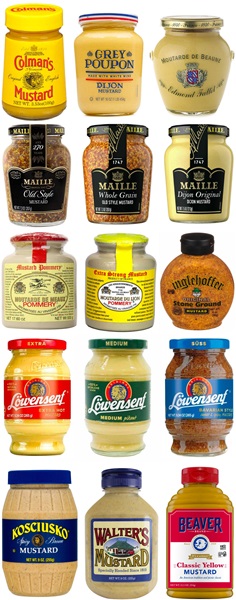
A Mustard Deep Dive
I have so many feelings about mustard I don’t even know where to start. It’s my favorite color (marigold, mustard yellow, same difference). I’m from Chicago. I love hot dogs. If you don’t understand, google “chicago ketchup”. I blow through jars of dijon like it’s nobody’s business because can you even make a good salad dressing without it? Just last week, I went to a German restaurant and ordered a plate-sized chicken schnitzel that was more or less a vessel for eating their incredible mustards (one sweet, one spicy). All to say, it’s a perfect condiment and it doesn’t get the love and respect it deserves. And let me tell you, the Mustard Rabbit Hole did not disappoint. The packaging is so inspiring and sincere, and I’m this close to booking a flight to Europe so I can buy some mustard in a tube (more on that below). Anyways, please enjoy this deep dive into a product category that is seemingly untouched by trendy packaging design in the best way. But first …
1. Mustard for the person who has the palate of a 277-year-old
Grey Poupon was founded in 1866. Colman’s was founded in 1814. Maille was founded in 1747! I didn’t know just how old these legacy brands were until I started researching this letter, but after digging further it’s not all that surprising. Mustard as a spice is one of the earliest on record, appearing in Sanskrit manuscripts around 3000 BCE, and mustard as a condiment dates back to the early Romans. I’d love to see how they were storing this colorful condiment back then, but I’m quite pleased with how these brands are jarring it today. Per usual, this is one of my favorite categories in this deep dive because of that whole “timeless cool” thing that always wins for me when it comes to packaging design. Side note, I’m now obsessed with vintage mustard pots.
2. Mustard for the person who longs for the days of “Harvest Gold”
What’s “harvest gold”, you may be asking? Picture the “before” photo of a fixer-upper kitchen remodel in Domino. Or any number of recent brands that have been bringing back that avocado green and orange/yellow palette. All to say, these bottles and jars look like they could be set pieces on The Brady Bunch or That ’70s Show. And because apparently mustard brands can do no wrong, these are all working. They don’t feel try-hard or overly designed, but rather truly feel like they time traveled 50 years to the future. I especially love that top left bottle of Finnish mustard and the type on Mister Mustard. Also, Mustard Girl would be a great Halloween costume.
February 7, 2024
“China is a food-obsessed society”
If your initial reaction to the headline is to assume this is because of the amazingly unsettled history of mainland China over the last several hundred years and the totally understandable fear of famines, I’m with you, but we’d both be wrong, as John Psmith explains:
One sunny December morning years ago, Jane and I were on holiday in the South of China. Far from the city, a little temple had been hewn out of a seaside grotto so that it partially flooded when the tide came in. We stood inside and gazed up at a statue of 觀音, “Guan Yin”, the lady to whom the temple was dedicated. Her legend originated in India, where she was known as the bodhisattva Avalokitasvara, but she’d been absorbed and appropriated by Chinese folk religion many centuries ago, and in this statue there was no trace to be found of her South Asian origins. A minute or two into our reverie, a local came over to us and, seeing that we looked out of place, helpfully explained in unaccented English, “This is one of the most important Christian goddesses.”
The Chinese are almost as bad as the Romans were about pilfering the deities of their neighbors, so you really can’t blame them when they occasionally get confused about who they stole them from. As with goddesses, so with food: earlier that day a different helpful local had steered us towards a restaurant specializing in “Western cuisine”. The menu listed steaks “French style”, “German style”, and “Barbecue style”. Soup options included minestrone and borscht, both of them with the surprise addition of prawns. Their pride and joy, however, was their breakfast menu which included roughly seventy different varieties of toast. The chef told me that there were restaurants in Europe and America that did not have so many kinds of toast, and beamed with pride when I nodded gravely. One of the diners, delighted to see real living and breathing Westerners in her local Western restaurant, told me: “The thing I love about this place is that it’s so authentic.”
This “Western” restaurant may sound ridiculous to you, but it’s only as ridiculous as most of the “Chinese” restaurants you’ve encountered in the West. First of all, there’s no such thing as “Chinese” food. China is a country, but it’s the size of a continent, and it boasts a culinary diversity which exceeds that of many actual continents. Second, the dishes you encounter in the average Chinese restaurant over here bear about as much resemblance to real Chinese food as the seventy varieties of toast and the barbecue steaks do to French cuisine. “American Chinese food” is an interesting topic in its own right, and there are some good books about it, but now that I’m through the mandatory throat-clearing you have to do when writing about Chinese cuisine for a Western audience, I’m never going to mention it again.
China is a food-obsessed society. People are always talking about their next meal. People talk about it incessantly. The Chinese equivalent of talking about the weather, a way of making polite chitchat with strangers, is to mention a restaurant that you like, or a meal that you’re looking forward to. A standard way of saying “hello” in Mandarin is “你吃饭了吗?” In Cantonese it’s “你食咗飯未呀?” Both of them literally translate as something like “have you eaten yet?” and produce a natural conversational opening to begin immediately discussing food. Perhaps most uncanny to foreigners, Chinese people will sometimes discuss their next meal while they are in the middle of eating a fancy dinner. Dozens of gorgeous little dishes spread around them, chomping or slurping away at exquisite cuisine, and happily chattering about what they plan to eat tomorrow.
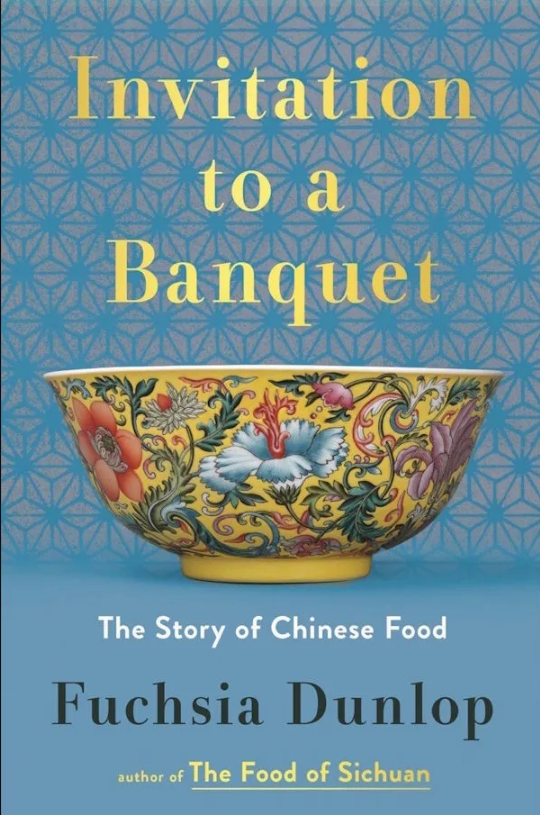
None of this is remotely new. If anything, between the Revolution and the famines, Chinese food culture is actually tamer than it used to be.1 We know this from literary and historical accounts, from archeological evidence (China had fancy restaurants about a thousand years before France did), and from the structure of the language itself. They say the Eskimos have an improbable number of words for snow,2 but the Chinese actually do have a zillion words for obscure cooking techniques. What’s more, many of the words are completely different from region to region, which is hardly surprising since the food itself is bewilderingly different from one side of the country to the other.
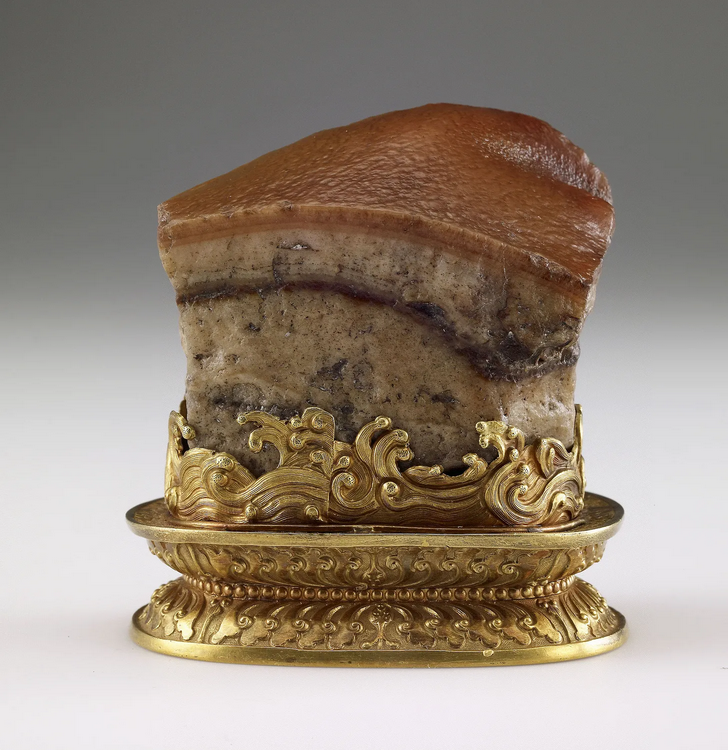
How food-obsessed are the Chinese? One of the most priceless artifacts belonging to the imperial family, the one thing the fleeing Nationalists made sure to grab as communist artillery leveled Beijing, now the most highly-valued object in the National Palace Museum in Taipei is … The Meat-Shaped Stone.3 A single piece of jasper carved into a lifelike hunk of luscious pork belly, complete with crispy skin and layers of subcutaneous fat and meat. Feast your eyes upon it.
1. Ferran Adrià, the legendary chef of El Bulli, once said that Mao was the most consequential figure in the history of cooking because: “[Spain, France, Italy and California] are only competing for the top spot because Mao destroyed the pre-eminence of Chinese cooking by sending China’s chefs to work in the fields and factories. If he hadn’t done this, all the other countries and all the other chefs, myself included, would still be chasing the Chinese dragon.”
2. I once tried searching Google to find out whether Eskimos really have a lot of words for snow. The top results were all places like BuzzFeed and the Atlantic denouncing this as an outmoded racist stereotype … followed by a Wikipedia article patiently explaining that no it’s actually true.
3. The Meat-Shaped Stone is not some weird aberration. The runner-up most valuable items in the museum are a piece of jadeite carved to look like a cabbage and a very fancy cooking vessel.
February 5, 2024
“Why can’t these Russians see how they’re being oppressed?”
As the war in Ukraine has gone on, western media seem to have completely lost track of what ordinary Russians think about their government, replacing reality with a westernized imaginarium of Russia somehow being little more than a mirror of western progressive opinion:

For the average western normie, Russians are suffering under a brutal and vicious dictatorship, and cannot wait for the day that Putin loses power and western liberal democracy becomes the law of the land.
None of you reading this are normies, and all of you know full well that the overwhelming majority of Russians are not buying what western media and think tanks are selling. They have a unique (and foreign) history and culture that has at times moved towards Europe, but they have always managed to stand apart. This informs how Russians view their country and how they deal with the rulers that rule over them.
Many had hoped that the War in Ukraine would finally see Russians rise up against their own government and remove it from power. Those hopes were always misplaced and naive. Western journalists have long been blinded by their own false assumptions regarding the “superiority of western liberal democracy” and Russian sentiment. “Why can’t these Russians see how they’re being oppressed?”, is the generalized refrain. Harper’s Magazine sent two journalists to explore Russia along the Volga River, and what they found was a culture far removed from the West, and very proud of its own. It’s a long piece, so here are some highlights:
Piotrovsky, who is mild-mannered and cerebral, and who wore his jacket loosely over hunched shoulders, seemed to have become a warrior. “Russia is many people, but one nation,” he asserted. “Russia along the Volga was able to incorporate everyone. Islam is just as much a religion of Russian tradition and identity as is Christian Orthodoxy. In Europe, in America, you speak of nothing but multiculturalism, but your cities are bursting with hate. For us, it didn’t take much to include everyone, because we’re an imperial civilization.” Then he grew more animated. “Look at the Hermitage!” he said, opening his arms to the room around us, widening his eyes. “It’s the encyclopedia of world culture, but it’s written in Russian because it’s our interpretation of world history. It may be arrogant, but that’s what we are.”
On renewed trade with Asia:
Sergeeva took me to see the Jewish, Armenian, and Iranian neighborhoods of Astrakhan. An exhibition of photographs highlighting the civilian volunteers supporting the military was being set up outside of a park. At sunset, the elegant riverfront was swarmed with families and groups of young people talking and laughing in hushed tones. Couples sat on railings eating watermelon while food stalls projected multicolored lights on the Volga. There was a fin de siècle quality to the atmosphere, curls of smoke emanating from shashlik grills, a warm breeze delivering the lament of a distant violin. No military uniforms in sight.
The café façades and the wrought-iron balconies reminded me of New Orleans. Sergeeva pointed out the renovations along the canal that runs through the old town, indicating the nineteenth-century wooden villas that will soon become hotels and luxury homes. “They seemed destined to crumble,” she said. “But now that money is going around, Astrakhan is once again the gateway to European Russia, Central Asia, and India. This is how it is for now. Later, we’ll see.“
and
In Astrakhan, it was rumored that the Iranians had invested billions in the development of the Caspian-Volga-Don corridor. There was talk of trafficking agricultural products and oil, but also turbines, spare mechanical parts, medicine, and nuclear components. I couldn’t verify this, but it was clear that Astrakhan is central to the anti-Western economic bloc’s efforts to turn east.
The general opinion in February of 2022 was that the Russians would easily seize much of Ukraine, but that they would pay a very large economic price, possibly the destruction of their entire economy. This was a safe bet, and it was totally wrong.
Import substitution:
“The Russians are reacting to the sanctions in an extraordinary way, even with a weak ruble and the inevitable inflation. The prices of essential goods have held steady. And now we’re consuming better and healthier products than before the war, even exceptional cheeses.”
I had never imagined that the rise of hyperlocal food would be one of the recurring themes of this trip. But it appears that the Western sanctions and war economy have intensified a traditional Russian gastronomy movement. Western products had piqued the palates of average urban Russians, and local producers were trying to fill their vacuum, proudly offering Russian-made Camembert and prosciutto, as if to provide some material evidence of Russkiy Mir, Putin’s ideology of Russian supremacy. As I dined along the Volga, menus often specified the farms from which ingredients had been sourced. Restaurants served svekolnik and okroshka, simple cold summer soups, exalting the quality of local radishes grown without Western fertilizers.
An ethnic Tatar foodstuffs producer from Kazan, Tatarstan on the sanctions regime leveled against Russia:
Since then, the company’s net worth has become the stuff of legend. But Kazankov, too, is a great supporter of Western sanctions: “They’re an incredible developmental tool for Russia,” he told me. “The West should have imposed them back in the Nineties. We’d be the engine of the world by now. Too bad.” For him, the sanctions are pure adrenaline, and to prove it he added that his company has copied Italian, German, and Israeli “production means” to the letter: “We doubled processing in one year and we supply almost a thousand supermarkets in all of Russia.” Ivan believes that his “full-circle communist company” is the ideal model for “rebuilding a new Soviet Union with healthy local food from our lands.”
On the loss of vacationing in Europe:
Was this fatalism? Indifference? Or arrogance, as Piotrovsky had implied back at the Hermitage? I struggled to find room in hotels or on ferries, all of which were overflowing with tourists forced to give up on the Mediterranean and make do with the Volga. Take Tatiana, the middle-aged manager of a supermarket chain. When I met her on a ferry in Yaroslavl, she wore a Panama hat, Gucci sunglasses, and capri sandals; she was heading downstream, to the same dacha where she had spent her summers as a girl. “I’ve had a boat docked in Mykonos for three years — who knows when I’ll see it again,” she told me. “I’m getting to know my river again. I’m running into friends I haven’t seen in thirty years. An interesting vacation.” I told her she looked a bit sad and resigned. “Russians have been sad and resigned for thousands of years,” she replied. “It’s how we stay resilient. I’m against this war, but I can’t do anything but wait, like everyone else. They manipulate us with artificial ideas. Garbage. But the West has been humiliating us for too long. Don’t we also have a right to be who we want to be without feeling like barbarians?“


