
World War Two
Published 16 Mar 2021South America is home to one of Germany’s most effective spy-networks. In Operation Bolivar, dozens of German operatives transmit information from and to the USA, Brazil, Argentina, and other South and Central American countries, giving the Abwehr and SD access to crucial information on politics, economics, and military business.
(more…)
March 17, 2021
Sunny Beaches, Fascist Leaders, and Nazi Spies – WW2 – Spies & Ties 01
Comments Off on Sunny Beaches, Fascist Leaders, and Nazi Spies – WW2 – Spies & Ties 01
Heavy But Effective: Britain’s No4 MkI (T) Sniper Rifle
Forgotten Weapons
Published 29 Aug 2018http://www.patreon.com/ForgottenWeapons
Cool Forgotten Weapons merch! http://shop.bbtv.com/collections/forg…
The main British sniper rifle of World War Two, and arguably one of the best looking military sniper rifles of all time, the No4 MkI (T) was something the British military knew they would want even before the No4 MkI rifle had gone into real production. The first No4 snipers were built on leftover trials rifles from Enfield, and the pattern was formally introduced in February of 1942. First use was in North Africa, but the fighting there was not really suited to sniper rifles, and the weapon’s practical combat debut was in Italy in 1943.
The No4 MkI (T) was a conversion of a standard No4 MkI rifle, using examples chosen for particular good accuracy. They were sent to Holland & Holland to have scope mount bases added and No32 telescopic sights fitted (along with cheek risers on the stocks and having the battle sight aperture ground off to allow room for the scope bell). Between 23,000 and 26,000 were made during the war, and they would continue to be used in the British military for decades, including later conversion into 7.62mm NATO L42A1 rifles [which Ian discusses here].
Contact:
Forgotten Weapons
6281 N Oracle #36270
Tucson, AZ 85704

Comments Off on Heavy But Effective: Britain’s No4 MkI (T) Sniper Rifle
March 16, 2021
Mumford & [REDACTED]
Jack Stacey on the group-mandated self-cancellation of Winston Marshall by his band mates in Mumford & Sons at the behest of a social media mob for the mortal sin of complimenting a book publicly:
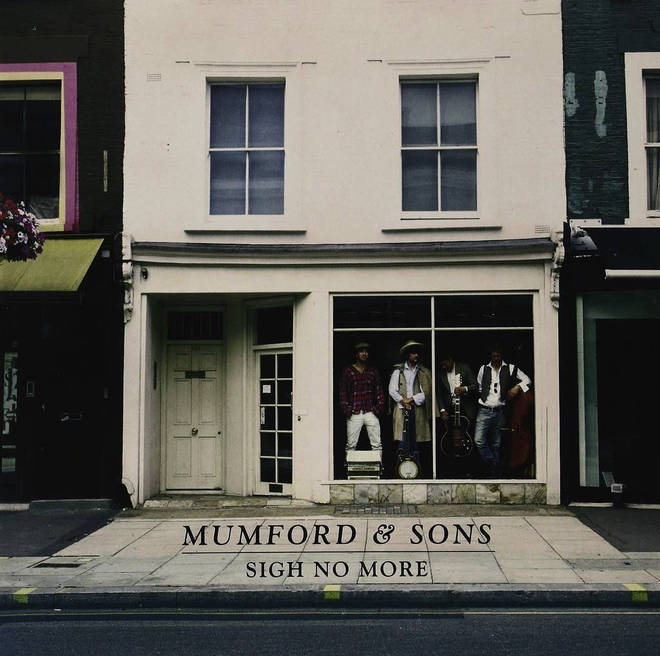
As the band’s most famous lyric goes, he really fucked it up this time. For while the book in question does describe the left’s penchant for totalitarian control disguised as benevolence, it was not the above classic [Nineteen Eighty-Four] (yet to be deemed problematic), but Unmasked by journalist Andy Ngo, which gets Inside Antifa’s Radical Plan to Destroy Democracy in the name of social justice.
Following this transgression against the militant arm of wokery and pressure from the rest of the group for his “increasingly right-wing views”, Marshall the banjoist has pushed his entire Twitter feed down the memory hole leaving only a mea culpa pinned to the start. It states: “Over the past few days I have come to better understand the pain caused by the book I endorsed. I have offended not only a lot of people I don’t know, but also those closest to me, including my bandmates, and for that I am truly sorry.”
He adds in his adopted Newspeak that he will use his absence “to examine my blindspots”, and concludes: “For now, please know that I realise how my endorsements have the potential to be viewed as approvals of hateful, divisive behaviour. I apologise, as this was not at all my intention.”
You would have thought he’d had rats caged to his face to become so repentant. But no, it appears that, as ever, some people got angry on social media, after which his partners at the tweed and ‘tache firm he’d helped set up have made him genuinely believe he deserved it for mucking around in politically incorrect prole territory.
For don’t let the & Sons bit fool you. Like the band’s resulting output, their name was chosen to add an earthy patina to bely the fact that they were, as Bo’ Selecta!’s Mel B might have it, “posh as fook”, rather than as they would have you think: “common as mook”.
Comments Off on Mumford & [REDACTED]
The horrors of British & US Logistics in WW2
TIK
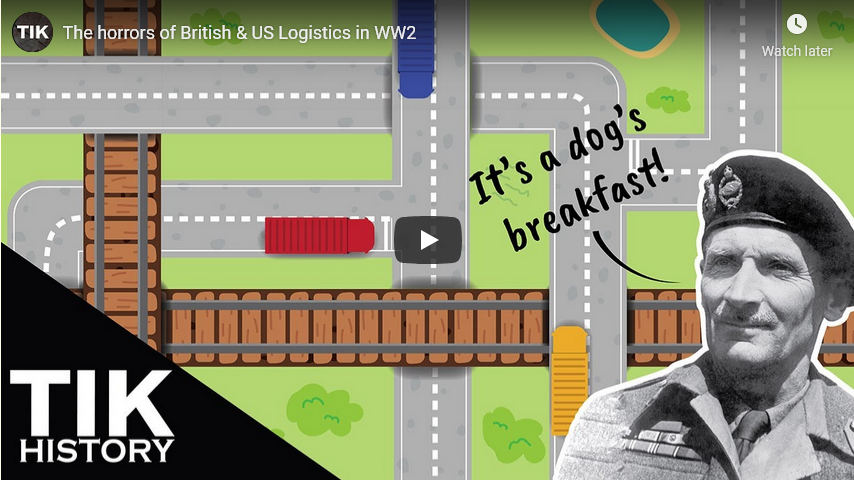
Published 15 Mar 2021The Allies may have had a lot of resources, manpower and industry, but that didn’t mean that their logistics weren’t inefficient or a disorganized mess. Today, we’re going to look at how the British railways were disaster during WW2, how the Americans ran out of fuel on the way to Germany, and why Montgomery called the planning for the invasion of Sicily a “dog’s breakfast”.
⏲️ Videos EVERY Monday at 5pm GMT (depending on season, check for British Summer Time).
The thumbnail for this video was created by Terri Young. Need graphics? Check out her website here https://www.terriyoungdesigns.co.uk/
– – – – –
📚 BIBLIOGRAPHY / SOURCES 📚
Dunn, W. The Soviet Economy and the Red Army, 1930-1945. Praeger Publishers, 1995.
Garvey, J. Operation Husky: The Untold Story of the logistics of the Sicily Invasion. Farm Publications, Kindle 2019.
Hazlitt, H. Economics in One Lesson: The Shortest & Surest Way to Understand Basic Economics. Three Rivers Press, 1979.
MacDonald, J. Supplying the British Army in the Second World War. Pen & Sword Military, Kindle 2020.
Molony, C. The Mediterranean and Middle East, Volume V, The Campaign in Sicily 1943 and The Campaign in Italy 3rd September 1943 to 31st March 1944. The Naval & Military Press LTD 2004, first published in 1973.
Wolmar, C. Fire & Steam: How the Railways Transformed Britain. Atlantic Books, Kindle 2007.British Government, Railways Act 1921, https://www.legislation.gov.uk/ukpga/…
Full list of all my sources https://docs.google.com/spreadsheets/…
– – – – –
⭐ SUPPORT TIK ⭐
This video isn’t sponsored. My income comes purely from my Patreons and SubscribeStars, and from YouTube ad revenue. So, if you’d like to support this channel and make these videos possible, please consider becoming a Patreon or SubscribeStar. All supporters who pledge $1 or more will have their names listed in the videos. For $5 or more you can ask questions which I will answer in future Q&A videos (note: I’m behind with the Q&A’s right now, and have a lot of research to do to catch up, so there will be a delay in answering questions). There are higher tiers too with additional perks, so check out the links below for more details.
https://www.patreon.com/TIKhistory
https://www.subscribestar.com/tikhistoryThank you to my current supporters! You’re AWESOME!
– – – – –
ABOUT TIK 📝
History isn’t as boring as some people think, and my goal is to get people talking about it. I also want to dispel the myths and distortions that ruin our perception of the past by asking a simple question – “But is this really the case?”. I have a 2:1 Degree in History and a passion for early 20th Century conflicts (mainly WW2). I’m therefore approaching this like I would an academic essay. Lots of sources, quotes, references and so on. Only the truth will do.
This video is discussing events or concepts that are academic, educational and historical in nature. This video is for informational purposes and was created so we may better understand the past and learn from the mistakes others have made.
Comments Off on The horrors of British & US Logistics in WW2
“… because who doesn’t like to see both wine snobs and the French taken down a peg or two?”
In The Critic, Henry Jeffreys sadly notes the passing of Steven Spurrier, perhaps best known for organizing the “Judgement of Paris” in 1976:

The wine world lost one of its giants this week in Steven Spurrier. He’s one of the very few people who managed to put the subject on the front pages of the world’s newspapers when he organised the so-called Judgement of Paris competition in 1976.
This was a blind tasting judged by the great and good of the French wine world pitting the might of Bordeaux and Burgundy, against California, a place whose wines most Europeans had never even tasted. Surely France could not lose. But thrillingly, and deliciously, it did, with Californian wines coming top in both the white and red categories. It inspired a book and a feature film Bottle Shock starring Alan Rickman as Spurrier. In fact, the media, particularly over here and in the US, has never lost interest. Perhaps because who doesn’t like to see both wine snobs and the French taken down a peg or two?
More significantly, it marked the arrival of American and later Australian, Chilean and other New World wines. Fittingly, I first met Spurrier at a round table tasting for an upmarket Chilean wine. These tastings could be nerve-wracking affairs for new writers. They still fill me with anxiety. I never know what to say as the big beasts of the wine world opine. Sometimes, the cellar rooms where such tastings are often held seem much too small for all those jostling egos.
I was sat next to Spurrier and, much to my surprise, he asked me my opinion on the wines, something I don’t think any other writer had done up to that point. He then engaged with what I said, and said something like, “yes, I think you’ve got it there.” Or words to that effect. It’s quite hard to express how startling this experience was to someone outside the wine world. It’s like Martin Scorsese asking your opinion on film making.
Comments Off on “… because who doesn’t like to see both wine snobs and the French taken down a peg or two?”
Tank Chats #99 | StuG III | The Tank Museum
The Tank Museum
Published 2 Apr 2020Here David Willey discusses the Sturmgeschütz III Self-Propelled Assault Gun, better known as the StuG III, Germany’s most numerously produced fully tracked Armoured Fighting Vehicle of the Second World War.
Support the work of The Tank Museum on Patreon: ► https://www.patreon.com/tankmuseum
Visit The Tank Museum SHOP & become a Friend: ►tankmuseumshop.org
Twitter: ► https://twitter.com/TankMuseum
Instagram: ► https://www.instagram.com/tankmuseum/
Tiger Tank Blog: ► http://blog.tiger-tank.com/
Tank 100 First World War Centenary Blog: ► http://tank100.com/
#tankmuseum #tanks #MuseumFromHome

Comments Off on Tank Chats #99 | StuG III | The Tank Museum
March 15, 2021
Battle of Jena-Auerstedt 1806: Napoleon Smashes Prussia
Epic History TV
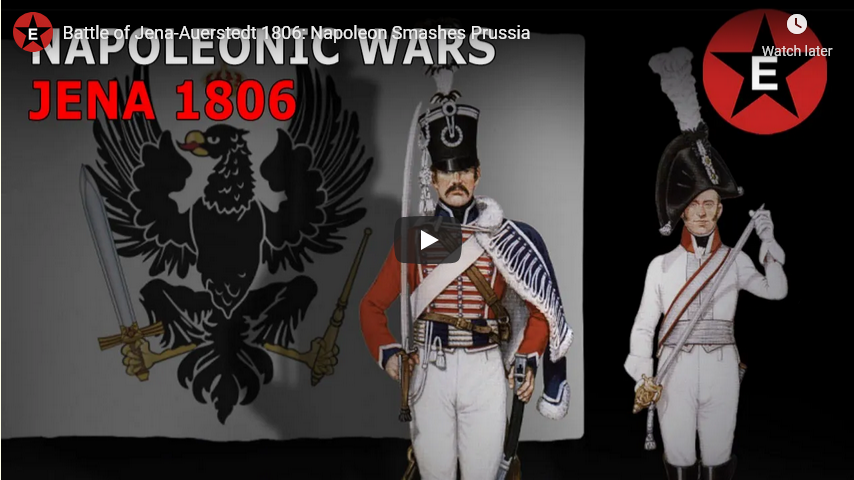
Published 28 Aug 2018Fresh from his great victory at Austerlitz, Napoleon’s next campaign saw him take on Prussia in the autumn of 1806. Prussia’s army had been feared throughout Europe since the days of Frederick the Great, but in just 5 weeks of “Napoleonic Blitzkrieg”, the French Emperor showed that those days were long gone.
Start your FREE trial with The Great Courses Plus here: http://ow.ly/Fq9R30kFTgf
Get early access and a vote on future topics by supporting Epic History TV on Patreon: https://www.patreon.com/epichistorytv
With thanks to HistoryMarche, check out his channel here: https://www.youtube.com/channel/UC8MX…
Learn more about the Napoleonic Wars with books from our co-production partner Osprey Publishing (as an Amazon Associate I earn from qualifying purchases):
Jena 1806 http://geni.us/C8ieSe
Napoleon’s Cuirassiers & Carabiniers http://geni.us/AZ4nWU
Prussian Cavalry of the Napoleonic Wars http://geni.us/xepcMusic from Filmstro: https://filmstro.com/?ref=7765
Get 20% off an annual license with this exclusive code:EPICHISTORYTV_ANN#EpicHistoryTV #NapoleonicWars #Napoleon
“The Great Courses Plus is currently available to watch through a web browser to almost anyone in the world and optimized for the US, UK, and Australian markets. The Great Courses Plus is currently working to both optimize the product globally and accept credit card payments globally.”
Comments Off on Battle of Jena-Auerstedt 1806: Napoleon Smashes Prussia
QotD: The “Greatest Generation”‘s expectations of the Boomers
I’ve never bought into the “greatest generation” stuff. I saw it as a Jungian appeasement of the boomers towards their aging fathers whom they’d “sacrificed” in more ways than one. I’m at heart — or at back brain — very Roman. To explain why would take more uncomfortable biographical revelations than I have time for, including “because that’s what I was brought up to be.”
I get this dance very well. First comes the sacrifice, then the deification.
Did the World War II generation rise to the challenge? Yes, they did. But in a way they’d been brought up for it: a generation grown to continue Europe’s long war, because the previous generation had been eaten in the fields of WWI.
And can anyone blame the veterans, coming back from yet another European abattoir for wanting to put an end to the cycle?
Obviously something had gone wrong in Western civilization and it needed to be stopped. The next generation were going to be a brand new beginning. They were going to make it all better.
Did I mention the serpent in the garden? You can’t make the garden without the serpent.
A lot of the crazy of the sixties, and the unmaking of society was what the boomers were explicitly raised to do. A lot of the poison in our cultural waters was the rebellion of the veterans of WWII. An understandable rebellion, but one that threw the baby out with the bath water nonetheless.
However, even the boomers who weren’t raised on utopian ideals, who weren’t told the world was theirs to remake, even the ones who didn’t protest (or fought in) the war, even the ones who were and are decent human beings were raised with the idea that it was theirs to change Western Civ to be more … humane. Or at least not to self-destruct in battlefields.
This created an ur-programming, a back brain thing. Even responsible boomers who cut their hair, got jobs and raised families had the idea that they were supposed to transform everything.
Sarah Hoyt, “Business From The Wrong End”, According to Hoyt, 2018-09-27.
Comments Off on QotD: The “Greatest Generation”‘s expectations of the Boomers
March 14, 2021
Tumbling Capitals – MacArthur on the Run – March 13, 1942 – WW2 – 133
World War Two
Published 13 Mar 2021Rangoon in Burma falls to the invaders without a shot, the Dutch East Indies surrender 100,000 men to them at Batavia, and the Japanese land on New Guinea and begin their advance on Port Moresby. The first phase of their offensives is now over. The Philippines still hold out, their armies under siege at Bataan, but Douglas MacArthur, Allied commander there, has made his getaway, one day to hopefully return. American troops do begin landings on New Caledonia, to build a base there to begin the fight back.
Join us on Patreon: https://www.patreon.com/TimeGhostHistory
Or join The TimeGhost Army directly at: https://timeghost.tvFollow WW2 day by day on Instagram @ww2_day_by_day – https://www.instagram.com/ww2_day_by_day
Between 2 Wars: https://www.youtube.com/playlist?list…
Source list: http://bit.ly/WW2sourcesWritten and Hosted by: Indy Neidell
Director: Astrid Deinhard
Producers: Astrid Deinhard and Spartacus Olsson
Executive Producers: Astrid Deinhard, Indy Neidell, Spartacus Olsson, Bodo Rittenauer
Creative Producer: Maria Kyhle
Post-Production Director: Wieke Kapteijns
Research by: Indy Neidell
Edited by: Iryna Dulka
Sound design: Marek Kamiński
Map animations: Eastory (https://www.youtube.com/c/eastory)Colorizations by:
– Mikołaj Uchman
– Norman Stewart – https://oldtimesincolor.blogspot.com/Sources:
– bockelsound from Freesound.orgSoundtracks from the Epidemic Sound:
– Rannar Sillard – “Easy Target”
– Jo Wandrini – “Dragon King”
– Fabien Tell – “Break Free”
– Philip Ayers – “The Unexplored”
– Howard Harper-Barnes – “Underlying Truth”
– Gunnar Johnsen – “Not Safe Yet”
– Reynard Seidel – “Rush of Blood”
– Flouw – “A Far Cry”
– Philip Ayers – “Trapped in a Maze”Archive by Screenocean/Reuters https://www.screenocean.com.
A TimeGhost chronological documentary produced by OnLion Entertainment GmbH.

Comments Off on Tumbling Capitals – MacArthur on the Run – March 13, 1942 – WW2 – 133
Livgardet – 500 Years in Service of the King – Sabaton History 102 [Official]
Sabaton History
Published 13 Mar 2021In 1523, Swedish King Gustav I. Vasa gathered 16 of his bravest and most loyal soldiers around him and appointed them to be his royal bodyguards. From this day on, the Swedish Royal Guards were tasked to guard the King and the royal family in their palace in Stockholm with their lives. Throughout the centuries the Royal Guard took on many names, outfits, and weapons, yet their mission remained the same. They joined the King on his military campaigns, protected him from assassins, and policed the royal estate.
Support Sabaton History on Patreon: https://www.patreon.com/sabatonhistory
Listen to Livgardet: https://music.sabaton.net/Livgardet
Watch the Official Music Video of Livgardet here: https://www.youtube.com/watch?v=Um5R_…
Listen to Sabaton on Spotify: http://smarturl.it/SabatonSpotify
Official Sabaton Merchandise Shop: http://bit.ly/SabatonOfficialShopHosted by: Indy Neidell
Written by: Markus Linke and Indy Neidell
Directed by: Astrid Deinhard and Wieke Kapteijns
Produced by: Pär Sundström, Astrid Deinhard and Spartacus Olsson
Creative Producer: Maria Kyhle
Executive Producers: Pär Sundström, Joakim Brodén, Tomas Sunmo, Indy Neidell, Astrid Deinhard, and Spartacus Olsson
Community Manager: Maria Kyhle
Post-Production Director: Wieke Kapteijns
Editor: Karolina Dołęga
Sound Editor: Marek KamińskiArchive: Reuters/Screenocean – https://www.screenocean.com
Sources:
– Försvarsmuseum Boden
– Sveriges militärhistoriska arv
– Armémuseum
– Pictures of modern Livgardet and Swedish castles courtesy of GI99pema, Manfred Werner (Tsui), Arild Vågen, Jakub Hałun, President’s Secretariat India, Holger.Ellgaard, Andreas Trepte, Jürgen Howaldt, Arild Vågen
– Photo of the changing of the guard at Stockholm Palace by CEphoto, Uwe Aranas
– Ministério da Defesa
– Gustaf II Adolf before Battle of Lützen by Nils Forsberg, courtesy of Gothenburg Museum of Art.
– Poltava History MuseumAll music by: Sabaton
An OnLion Entertainment GmbH and Raging Beaver Publishing AB co-Production.
© Raging Beaver Publishing AB, 2019 – all rights reserved.

Comments Off on Livgardet – 500 Years in Service of the King – Sabaton History 102 [Official]
March 13, 2021
The Paperback Revolution
The History Guy: History Deserves to Be Remembered
Published 12 Mar 2021Sponsored by Blinkist. The first 100 people who go to https://www.blinkist.com/thehistoryguy are going to get unlimited access for one week to try it out. You’ll also get 25% off if you want the full membership.
Today, the most popular book format in the world is not a traditional hardcover book, nor an ebook, but a paperback — a format that changed the what, how, when and how much the world reads. It is history that deserves to be remembered.
This is original content based on research by The History Guy. Images in the Public Domain are carefully selected and provide illustration. As very few images of the actual event are available in the Public Domain, images of similar objects and events are used for illustration.
You can purchase the bow tie worn in this episode at The Tie Bar:
https://www.thetiebar.com/?utm_campai…All events are portrayed in historical context and for educational purposes. No images or content are primarily intended to shock and disgust. Those who do not learn from history are doomed to repeat it. Non censuram.
Find The History Guy at:
Patreon: https://www.patreon.com/TheHistoryGuy
Please send suggestions for future episodes: Suggestions@TheHistoryGuy.netThe History Guy: History Deserves to Be Remembered is the place to find short snippets of forgotten history from five to fifteen minutes long. If you like history too, this is the channel for you.
Awesome The History Guy merchandise is available at:
teespring.com/stores/the-history-guyScript by THG
#history #thehistoryguy #Books

QotD: The legendary French snobbery
No Frenchman worthy of the name has ever apologized for anything, and I’m certainly not going to start. Obviously the English word “snob” is an inaccurate description, since a snob is someone who thinks he’s superior, which is different from a Frenchman, who knows he’s superior.
Our food is superior, our language is superior, our culture is superior, our women are more beautiful and sophisticated, but we still take your women as well, because we can. Did you know that syphilis is known as “the French disease” in every major European language and Arabic? We’re not even sorry for that.
Niccolo Soldo, “The Zürich Interviews – Pascal-Emmanuel Gobry: Unrepentant Baguette Merchant”, Fisted by Foucault, 2020-12-02.
Comments Off on QotD: The legendary French snobbery
March 11, 2021
Boris as a latter-day Prince Rupert of the Rhine?
In The Critic, Graham Stewart portrays the British Prime Minister and Sir Keir Starmer, leader of Her Majesty’s loyal opposition in the House of Commons as English Civil War combatants:
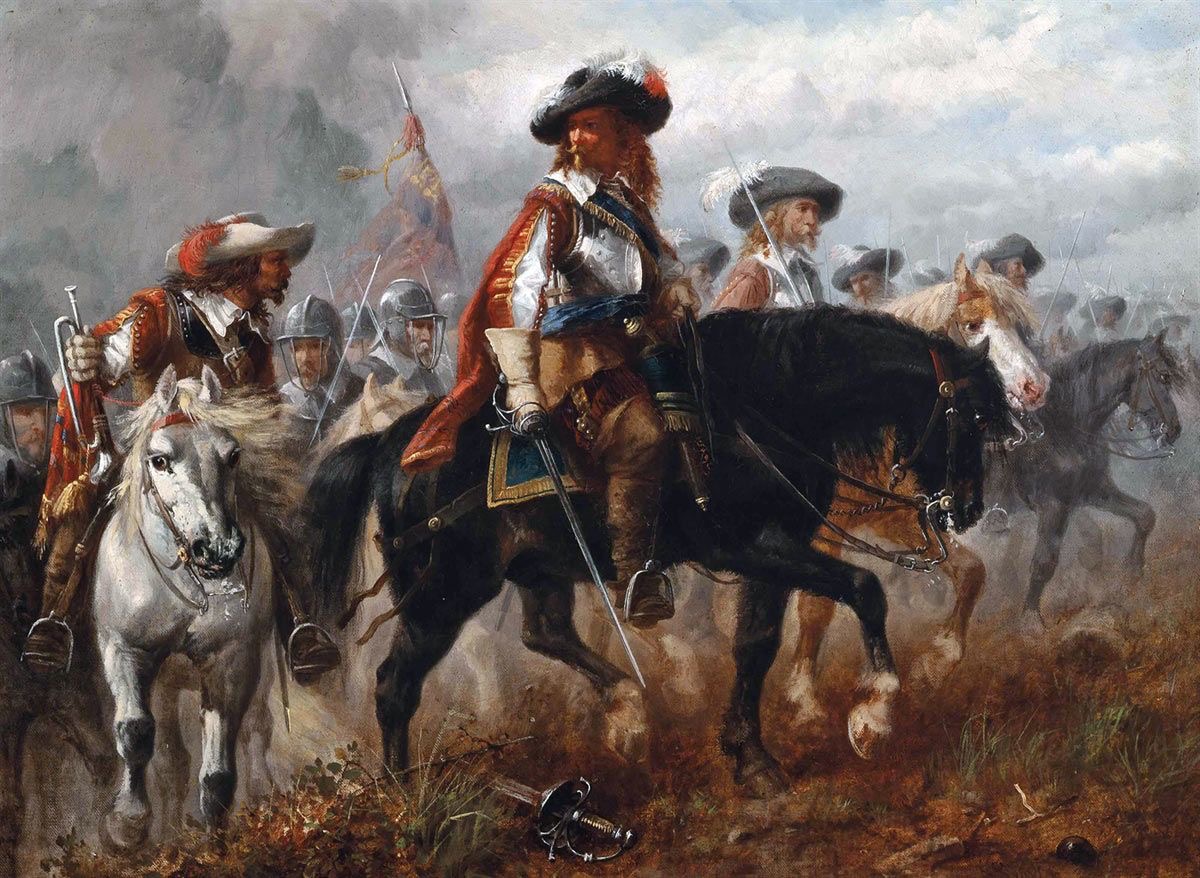
King Charles I and Prince Rupert before the Battle of Naseby 14th June 1645 during the English Civil War.
19th century artist unknown, from Wikimedia Commons.
Prime Minister’s Questions distils into a single gladiatorial contest what thousands of enthusiasts in a charitable organisation called the Sealed Knot perform across the country most summers – namely the re-enactment of battles of the English Civil War.
Unsmiling, relentless, serious to the point of bringing despair to his foot-soldiers as much as his opponents, Sir Keir Starmer is a Roundhead general for our times. Nobody believes better than he that virtue and providence are his shield. This faith sustains him whilst the fickle and ungodly court of popular opinion fails to rally to his command. He believes that holding firm, doggedly probing the enemy with the long pike and short-sword will eventually prevail, no matter how long the march to victory may prove.
Facing him, the generous girth of the nation’s leading Cavalier occupies his command-post. His long, uncut hair resembling a thatch on a half-timbered cottage, Boris Johnson lands at the despatch box as if he has just fallen from his place of concealment in an oak tree, bleary and under-prepared, but confident in assertion. It might be said of him, as Sir Edward Bulwer Lytton once said of the parliamentary style of a previous Tory prime minister, Lord Derby, that Johnson is “irregularly great, frank, haughty, bold – the Rupert of debate.”
Today was one of those occasions when the prime minister did indeed resemble the dashing Prince Rupert of the Rhine. Unfortunately, it was the moment during the decisive civil war battle of Naseby when the great Cavalier commander charged his horsemen through the parliamentary lines with such momentum that they kept going and ended up spending the rest of the day plundering a distant baggage train rather than returning to determine the result of the battle.
Comments Off on Boris as a latter-day Prince Rupert of the Rhine?
Italy’s WW1 Heavy Machine Gun: FIAT-Revelli Modello 1914
Forgotten Weapons
Published 9 Dec 2020http://www.patreon.com/ForgottenWeapons
https://www.floatplane.com/channel/Fo…
Cool Forgotten Weapons merch! http://shop.bbtv.com/collections/forg…
Italy was the first major adopter of the Maxim heavy machine gun and had several hundred by 1914 — but wanted to have a domestic design in production as well. The Italian government and military put a lot of resources into the Perino machine gun, but kept it so secret that it was never properly tested and development was very slow. By the time war broke out, the Perino was clearly not ready for field use — and Maxims (along with other foreign designs) were no longer available for commercial sale as production was being taken up by warring nations. This led Italy to adopt a private design of Bethel Revelli in partnership with the FIAT company.
Adopted as the Modello 1914, Revelli’s machine gun was a delayed blowback system with a wedge under mechanical disadvantage holding the bolt closed long enough to safely cycle. Its most unique element was the 50-round mousetrap-type box magazine that used 10 independent stacks of 5 rounds each (a 100-round version was also made). This was a very complex magazine to produce, and much more delicate than the other machine gun feed systems in use at the time. The Revelli is also notable for being the only major machine gun of the period to have a circulating water jacket, operated by a small hand-cranked pump on the condensing tank.
The FIAT-Revelli would see service as both and aircraft and ground gun through World War 1, and was updated in 1935 to an air cooled pattern that would serve through World War 2. These guns are very scarce in the United States today, and I am grateful to the collector who owns this one for providing access to it!
Contact:
Forgotten Weapons
6281 N. Oracle #36270
Tucson, AZ 85740

Comments Off on Italy’s WW1 Heavy Machine Gun: FIAT-Revelli Modello 1914
March 9, 2021
Tank Chats #98 | 40 Ton Centurion | The Tank Museum
The Tank Museum
Published 27 Mar 2020Here David Fletcher discusses FV4202, the 40 Ton Centurion — a prototype tank built by Leyland in 1956, to evaluate certain features which would later be used in Chieftain.
Support the work of The Tank Museum on Patreon: ► https://www.patreon.com/tankmuseum
Visit The Tank Museum SHOP: ►tankmuseumshop.org
Twitter: ► https://twitter.com/TankMuseum
Instagram: ► https://www.instagram.com/tankmuseum/
Tiger Tank Blog: ► http://blog.tiger-tank.com/
Tank 100 First World War Centenary Blog: ► http://tank100.com/
#tankmuseum #tanks #MuseumFromHome

Comments Off on Tank Chats #98 | 40 Ton Centurion | The Tank Museum


