Quotulatiousness

April 1, 2022

Denazify the World. Resist Now. – WAH 055 – March 1943, Pt. 2

Filed under: Europe, France, Germany, Greece, History, Italy, Military, Russia, WW2 — Tags: , , , , , — Nicholas @ 06:00

World War Two
Published 31 Mar 2022

The Nazis and the Soviets discover each other’s atrocities, while resistance is on the rise, and a half-dormant conspiracy against Hitler comes back to life to take his life.
(more…)

March 25, 2022

QotD: Herodotus as Spartan propagandist

Filed under: Europe, Greece, History, Military, Quotations — Tags: , , , , , , — Nicholas @ 01:00

The greatest military asset the Spartans had was not actual military excellence – although, again, Spartan capabilities seem to have been somewhat better than average – but the perception of military excellence.

Herodotus seems to be at the start of it, at least in our sources – he relates a story where, after an embarrassing failure in an effort to reduce tiny Tegea to helotage (the Tegeans kicked the Spartans’ asses) in the mid-sixth century, the Spartans supposedly stole the bones of the hero Orestes. Consequently, Herodotus notes, the Spartans were from that point on able to always beat Tegea and subdued the Peloponnese (Hdt. 1.68), resulting in the creation of the Spartan-led Peloponnesian League. The unbeatable Spartans thus appear. It’s possible the Spartan reputation predated this, but – as we’ll see – Herodotus will be the one who codifies that reputation and cements it.

Except, hold on a minute – how hard was it to subdue the Peloponnese? It seems to have been done with a fairly adept mix of diplomacy and military force (champion one side in a local dispute, beat the other, force both into your alliance, repeat, see Kennell (2010), 51-3 for details). But it is little surprise that Sparta would be dominant in the Peloponnese. Messenia and Laconia together was around 2,600 square miles or so. This is – if you’ll pardon the expression – flippin’ massive by the standards of Greek poleis. More than twice as large as the next largest polis in all of Greece (Athens). Sparta is fully one-third of the Peloponnese (the peninsula Sparta is located on). The remaining two-thirds is home to many other poleis – Corinth, Argos, Elis, Tegea, Mantinea, Troezen, Sicyon, Lepreum, Aigeira and on and on. Needless to say, Sparta was several times larger than all of them – only Corinth and Argos came even remotely close in size. The population differences seem to have roughly followed land area. Sparta was just much, MUCH larger and more powerful than any nearby state by the start of the fifth century.

Sparta thus spends the back half of the 500s as the teenager beating up all of the little kids in the sandbox and making himself leader. When you are upwards of three times larger (and in some cases, upwards of ten times larger) than your rivals, a reputation for victory should not be hard to achieve. And, in the event, it turns out it wasn’t.

Which brings us back to Herodotus […] because he isn’t just observing the Spartan reputation, Herodotus is manufacturing the Spartan reputation. Herodotus is our main source for early Greek history (read: pre-480) and for the two Persian invasions of Greece. Herodotus’ Histories cover a range of places and topics – Persia, Greece, Scythia, Egypt – and contain a mixture of history, ethnography, mythology and straight up falsehoods. But – as François Hartog famously pointed out in his The Mirror of Herodotus (originally in French as Le Miroir d’Hérodote), Herodotus is writing about Greece, even when he is writing about Persia – those other cultures and places exist to provide contrasts to the things that Herodotus thinks bind all of the fractious and fiercely independent Greek poleis. And he is perfectly willing to manufacture the past to make it fit that vision.

Sparta has a role to play in that narrative: the well-governed polis, a bastion of freedom, ever opposed to tyranny, be it Greek or Persian. We’ll come back to Sparta’s … let’s say relationship … with Persian “tyranny” next week. But for Herodotus, Sparta is the expression of an ideal form of “Greekness” and in Herodotus’ logic, being well-governed (eunomia is the Greek term) results primarily in military excellence. For the story Herodotus is telling to work, Sparta – as one of the leading states resisting Persia – must be well governed and it must be militarily excellent. That’s what will make a good story – and Herodotus never lets the facts get in the way of a good story.

(Sidenote: Athens – at least post-Cleisthenic Athens – gets this treatment too. Athens ends up embodying a different set of “Greek” virtues and where Sparta shows its prowess on land, the Athenians do so at sea.)

And so, Herodotus – the myth-maker – talks up the Spartiates at Thermopylae (you know, the brave 300) and quietly leaves out the other Laconians (who, if you scrutinize his numbers, he knows must be there, to the tune of c. 900 men), downplaying the other Greeks. Spartan leadership is lionized, even when it makes stupid mistakes (Thermopylae, to be clear, was a military disaster and Spartan intransigence nearly loses the battle of Plataea, but Herodotus represents this as boldness in the face of the enemy; even more fantastically inept was the initial Spartan plan to hold on the Isthmus of Corinth as if no one had ever seen a boat before).

Bret Devereaux, “Collections: This. Isn’t. Sparta. Part VI: Spartan Battle”, A Collection of Unmitigated Pedantry, 2019-09-20.

March 18, 2022

Schindler’s First Rescue Mission – WAH 054 – March 1943, Pt. 1

Filed under: Europe, Germany, Greece, History, Military, WW2 — Tags: , , , , , — Nicholas @ 04:00

World War Two
Published 17 Mar 2022

In the weeks after Goebbels’ Sportpalast speech, we realize that Total War might mean an apocalyptic end for Germany, with Hitler’s blessing. No wonder that some Germans are looking to end Hitler before he ends them, and what a blessing that at least one Nazi with influence on the fate of thousands of Jews turns out to have a heart and soul.
(more…)

March 16, 2022

Etruscan Cities and Civilization

Filed under: Greece, History, Italy — Tags: , , , — Nicholas @ 04:00

Thersites the Historian
Published 9 Apr 2020

The Etruscans were one of the most interesting civilizations of antiquity. In this video, I explore some of the distinctive features of Etruscan civilization and also look at some of the key urban sites in Etruria.

Patreon link: https://www.patreon.com/thersites

PayPal link: paypal.me/thersites

https://brave.com/noa557

Twitter link: https://twitter.com/ThersitesAthens

Minds.com link: https://www.minds.com/ThersitestheHis…

Steemit/dtube link: https://steemit.com/@thersites/feed

BitChute: https://www.bitchute.com/channel/jbyg…

March 14, 2022

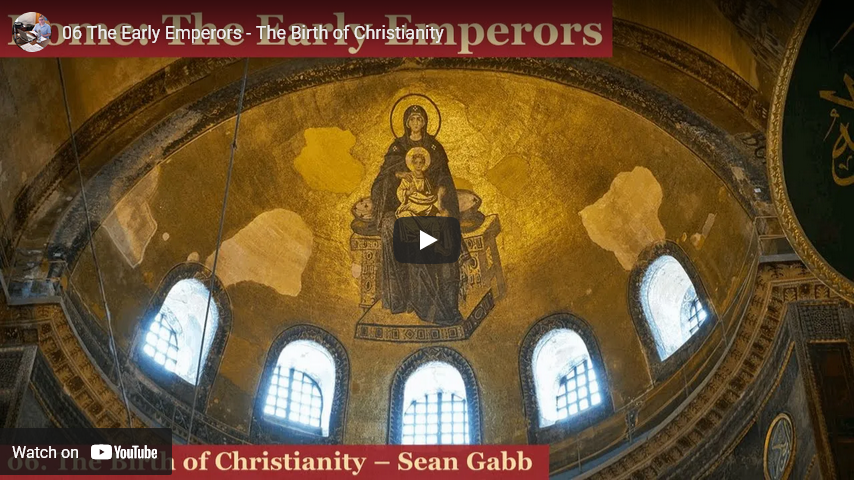
Roman Republic to Empire 04 Slavery in the Roman Republic and Empire

Filed under: Economics, Europe, Greece, History, Italy — Tags: , , , , — Nicholas @ 04:00

seangabb
Published 5 Feb 2021

[Update 2023-03-02 – Dr. Gabb took down the original posts and re-uploaded them.]

Here is the fourth lecture, which discusses the nature and extent of slavery in the Roman Empire. It begins with legal definitions and the attempted justifications by philosophers, then proceeds, via the use of slaves as workers in all occupations, including as sex objects, to the great slave revolts of the Late Republic. There is also a section on the valuation of slaves.

In this series, Sean Gabb will explain how the Roman Constitution was transformed, in just over a century, from an oligarchical republic with strong elements of democracy to a divine right military dictatorship.
(more…)

March 12, 2022

QotD: Defining an empire

Filed under: Europe, Government, Greece, History, Quotations — Tags: , , , , — Nicholas @ 01:00

… an empire is a state where the core ruling population exercises control and extracts resources from a periphery which is composed of people other than the core group (linguistically/culturally/ethnically/religiously distinct). So an empire is a state where one set of people (the core) extract resources (typically by force) from another set of people (the periphery).

That definition goes back to the root of the word in Latin: imperium, literally meaning a command or control; imperium comes from the Latin verb imperio (lit: “to order or command”). Thus imperium was a sphere of command over others. In Roman politics, this could mean an individual had the authority to command an army or to set up courts (consuls, praetors and dictators had this sort of imperium), but the Romans understood their empire as a sort of command exercised by the Senate and People of Rome over non-Roman people, thus they called that too imperium – an imperium of the Roman people (imperium populi Romani), crucially over the non-Roman people; once cannot, after all, have imperium over one’s self. An imperium of the Roman people must be an imperium over someone else.

Contrary to the venerable Wikipedia, empire does not require a monarchy. Rome was an empire while it was still a Republic, and France continued to hold an empire after it stopped being a monarchy. Athens, famously, converted the Delian League into an Athenian Empire (the Greek word used is ἀρχή (“arche“, pronounced ar-KHAY) while it was still, internally, a democracy. Often, when discussing the internal politics of these states (especially for Rome and France) we will distinguish between a period of “empire” and “republic” to note the shift from a republic to a monarchy or vice-versa, but that sort of nomenclature should not be taken to disguise the fact that, for instance, the Roman Republic in 150 B.C. was very much possessed of an empire, while still functioning as a republic.

Empire, I should note, seems to be one of – if not the – dominant form of large-scale human social organization since at least the bronze age (which is to say: since as far back as our sources let us see clearly). Ideas like loose federations of states (e.g. the EU) or nation-states are relatively new; in many cases, our modern nation-states are merely the consolidated form of what were originally empires of various sizes (e.g. China, Russia, but also France (see: Crusade, Albigensian), etc.). We don’t think about them that way anymore, because the steady application of state power created the shared culture that subsequently formed the foundation for the nation […] In many respects, empire is normal (which, please note, does not mean it is good), whereas this modern world composed primarily of nation-states is an unusual aberration.

Bret Devereaux, “Collections: Why Are There No Empires in Age of Empires?”, A Collection of Unmitigated Pedantry, 2019-11-22.

March 1, 2022

Mycenaean Greece

Filed under: Architecture, Europe, Greece, History, Science — Tags: , , , , — Nicholas @ 04:00

Thersites the Historian
Published 25 Jan 2018

In this video, I look at the Mycenaean civilization in Greece, which lasted from 1600-1100 BCE.

What was lost when the Library of Alexandria burned?

Filed under: Africa, Books, Education, Greece, History — Tags: , , , , — Nicholas @ 02:00

Kings and Generals
Published 18 Nov 2021

⚔️Myth of Empires is out in Early Access on Steam, check it out and make sure to wishlist it https://click.fan/KingsGenerals-MoE

Kings and Generals’ historical animated documentary series on the history of Ancient Civilizations and Ancient Greece continue with a video on the Library of Alexandria, as we ask what was lost when the library burned.

Support us on Patreon: http://www.patreon.com/KingsandGenerals or Paypal: http://paypal.me/kingsandgenerals … We are grateful to our patrons and sponsors, who made this video possible: https://docs.google.com/document/d/1o…

The video was made by animator Waily Romero and illustrator Simone González, while the script was researched and written by David Muncan. This video was narrated by Officially Devin (https://www.youtube.com/user/OfficiallyDevin).

✔ Merch store ► teespring.com/stores/kingsandgenerals
✔ Podcast ► Google Play: http://bit.ly/2QDF7y0 iTunes: https://apple.co/2QTuMNG
✔ Twitter ► https://twitter.com/KingsGenerals
✔ Instagram ► http://www.instagram.com/Kings_Generals

Production Music courtesy of EpidemicSound

#Documentary #AncientGreece #Alexandria

February 25, 2022

Total War NOW – WAH 053 – February 1943, Pt. 2

World War Two
Published 24 Feb 2022

Germany declares total (unconditional war) putting its economy on a full war footing over three years into the war. Given the unconditional war they are already waging, and the resistance and opposition they now face, it’s unclear what it shall mean.
(more…)

February 23, 2022

QotD: Debunking the “Spartan one-man-army” myth

Filed under: Europe, Greece, History, Military, Quotations — Tags: , , , , — Nicholas @ 01:00

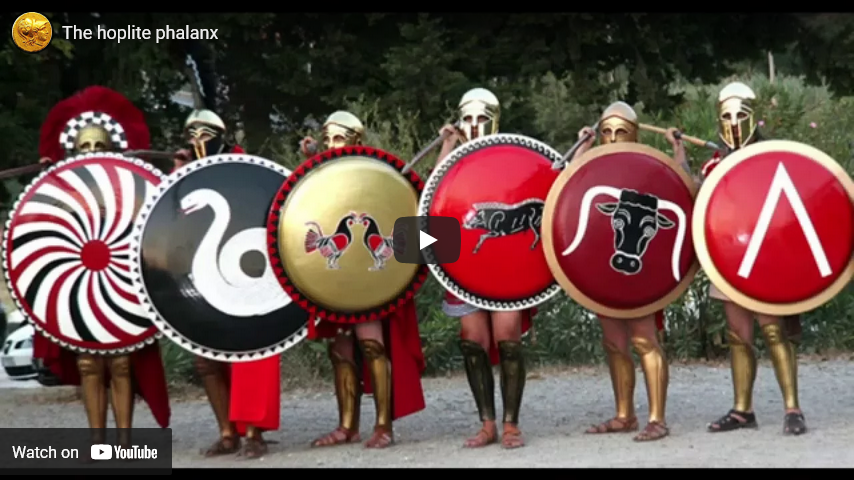
the Spartans, like all hoplites, were oriented very strongly towards group combat. The one-man-army is simply not how they fought, nor how they ever intended to fight.

Well, ok, perhaps they fought in groups, but were individually better at it. There is something to this. Multiple sources – most notably Xenophon stresses the greater degree of physical fitness that the Spartiates display (Xen. Lac. 4.5, 5.9). The Spartiates were rich after all, so they were well fed and able to build muscle accordingly; they also had a pretty active life-style (mostly things like sport-hunting) and kept athletically active. Chances are the average Spartiate was thus larger and fitter than the average hoplite – although again, the other Lakedaemonians in the phalanx (perioikoi, hypomeiones, mothakes, neodamodes, even helots fighting as hoplites) would probably balance out this effect to at least some degree (more strongly as time went on and the number of Spartiates shrunk!)

But what about martial skills and combat expertise? The fact is, there isn’t much evidence for a Spartan military training regime – certainly nothing like what the Romans had, or even what later Hellenistic Greek poleis set up. We’ve already discussed the agoge and you will note that at no point did swordsmanship, spear use, shield use, or anything of the like come up. There is, to be fair, some mock battles with fennel stalks in place of spears and some war-dances which may have served to mimic combat, but the agoge isn’t a training program, it’s an indoctrination program. Plutarch and Xenophon – who describe it – are quite clear on this: the point is to produce men who are obedient to the laws and subservient to the community (Xen. Lac. 2.10-11; Plut. Lyc. 25.3). Any advantages to military quality are evidently secondary (e.g. Xen. Lac. 2.7).

Xenophon himself notes – in the words of Cyrus (who he presents as an ideal ruler) – that hoplite-style warfare in close-combat required little practice (Xen. Cyrop. 2.1.9-16). And I want to stress two things about this statement: first that Xenophon had seen a lot of hoplite battle when he knew this and was in a position to know and second that he had also seen a lot of Sparta. It is hard to imagine Xenophon – with his Laconophilia – saying that practice for hoplites was unimportant if the Spartans had relied on it heavily. Nevertheless, there he is, saying that all of the movements a hoplite actually needed to perform – blocking with the shield, striking with spear or sword – were instinctive and did not need to be taught or practiced.

Plato provides our first solid evidence for the hoplomachia – practice drills in hoplite warfare – but immediately suggests through the person of Laches that the Spartans, specifically do not practice it (Plat. Lach. 182d-183a), because they think it doesn’t work. There is clearly some practicing with arms in Sparta as elsewhere in Greece (see J. K. Anderson, Military Theory and Practice in the Age of Xenophon (1970), 84-93 for the best discussion of the evidence; note also Wheeler, “Hoplomachia and Greek Dances in Arms” (1982)), but it never approaches the formal weapons drills we see from the Romans, or the complex fighting systems of the late Middle Ages. Nor does Sparta appear to be meaningfully exceptional in this regard; they seem to be exactly as tutored – or untutored – as all the other Greeks.

Nor may we rely on the assumption that the Spartan has more battle experience than his foes. The fact is that Greek poleis went to war fairly regularly and that they tended to bring most of their hoplite class out to battle when they did and as such most Greeks of the hoplite class from anywhere will have likely experienced combat. The Spartans are not unique in this and it is not clear that Sparta fights more often – they murder helots more often, sure, but this is hardly effective preparation for open battle.

(The contrast with Rome is again instructive. Sparta is intermittently at war, but the Roman Republic is continuously at war for all but six years out of five centuries, with the average Roman citizen probably spending upwards of seven years under arms – and this is before the professionalization of the legion. The average Roman free-holding farmer (the technical term is assidui) of the Middle Republic might truthfully have considered Leonidas and his 300 as amateurish by comparison.)

So what can we conclude? Well, the Spartiates are probably, on the whole, better nourished and fitter than their average opponent. If they have an edge in weapons training, it is fairly small – some sort of martial arts experts or superlative weapon-masters they are not. Which, of course they aren’t; the way they fight doesn’t require them to be. Hoplite fighting was never about individual martial excellence or skill, but about holding a position in the formation, supporting and being supported in turn by the shields of the men around you. The hoplite didn’t need to be a spear-master and evidently – we must agree with Xenophon – gained little from becoming so.

Bret Devereaux, “Collections: This. Isn’t. Sparta. Part VI: Spartan Battle”, A Collection of Unmitigated Pedantry, 2019-09-20.

February 21, 2022

D-Day – The Biggest Trick in History – WW2 Special

Filed under: Africa, Britain, Europe, Germany, Greece, History, Italy, Military, USA, WW2 — Tags: , , , , , — Nicholas @ 04:00

World War Two
Published 17 Feb 2022

It’s 1943, the preparations for D-Day have already begun: deceive the Wehrmacht. Here at TimeGhost, we have begun to prepare our D-Day for 2023, and we want you to join us! Find out how in the pinned comment.
(more…)

February 11, 2022

The Peloponnesian War: Athens vs. Sparta (Context and Overview)

Filed under: Europe, Greece, History, Military — Tags: , , , , , — Nicholas @ 02:00

Thersites the Historian
Published 28 Oct 2021

In this lecture, I cover Greek history from 478-404 BCE with an emphasis on the Peloponnesian War. This is intended as a primer on the topic and I devote more time to establishing the context and causes of the war than I do going through the details of conflict itself.

Patreon link: https://www.patreon.com/thersites

PayPal link: paypal.me/thersites

Discord: https://discord.gg/QCaXXFr

Brave Browser: https://brave.com/noa557

Twitter link: https://twitter.com/ThersitesAthens

Minds.com link: https://www.minds.com/ThersitestheHis…

Steemit/dtube link: https://steemit.com/@thersites/feed

BitChute: https://www.bitchute.com/channel/jbyg…

February 10, 2022

QotD: Classical Greek Polis governance

Filed under: Europe, Government, Greece, History, Quotations — Tags: , , , — Nicholas @ 01:00

Before we dive in, I want to give a brief primer on the basics of how nearly all Greek poleis – Athens, Sparta, Corinth, Thebes, Plataea, Tegea, whatever – are structured, because it’ll help in understanding Sparta. (Reminder: the polis, sometimes called a city-state, is the basic unit of Greek governance – these are all independent micro-states).

The standard ingredients of a Greek polis are an assembly of all adult citizen males (often called an ekklesia, meaning “assembly”), a smaller advisory committee (frequently called a boule), and then a set number of elected officials who carried out the laws of the other two (magistrates). I’ve given the common names for these components, but they often have different names in different poleis.

Those basic units don’t change from a democracy (like Athens) to an oligarchy (like Corinth) or even a tyranny (like Syracuse) – the type of government just reflects the division of power between them, and the method of selection. In a democracy, like Athens, the ekklesia will have most of the power, being able to overrule the boule or the magistrates. Often the members of the boule can come from a wide range of wealth classes or even be randomly selected.

In an oligarchy, power is generally focused in the magistrates – drawn from the upper-crust of society – and a smaller boule, with the ekklesia having much less power to restrain them. Alternately, the ekklesia may be restricted in size to only a wealthy subset of the citizenry. In a tyranny, a single person (the tyrant) is able to gain control of the system, through a mix of demagoguery, charisma and well-placed cronies. Even under a tyranny, the basic three-part system still exists, it is simply subverted and controlled by one person (much like how some modern dictatorships have all of the institutions of a democracy – courts, elections, etc – but all of the power is still in one set of hands and the elections are shams).

I want to note this up front because it is important to recognize that the existence of a popular assembly does not make a Greek polis a democracy, nor does the existence of a powerful magistrate make it a tyranny. As we’ll see, Sparta has an assembly, it is just laughably weak; it also has two very powerful magistrates, but their power is strongly checked. What matters is the division of power between these parts. I also wanted to start here because Sparta follows this basic model, but with some interesting variations. Knowing what the normal model looks like will make it easier to spot the variations that are unique to Sparta.

Bret Devereaux, “Collections: This. Isn’t. Sparta. Part V: Spartan Government”, A Collection of Unmitigated Pedantry, 2019-08-29.

February 8, 2022

Roman Republic to Empire: 01 Mistress of the Mediterranean

Filed under: Europe, Greece, History, Italy, Military — Tags: , , , , , , , — Nicholas @ 04:00

seangabb
Published 21 Jan 2021

[Update 2023-03-02 – Dr. Gabb took down the original posts and re-uploaded them.]

In 120 BC, Rome was a republic with touches of democracy. A century later, it was a divine right military dictatorship. Between January and March 2021, Sean Gabb explored this transformation with his students. Here is one of his lectures. All student contributions have been removed.
(more…)

January 29, 2022

Miscellaneous Myths: King Midas

Filed under: Greece, History, Humour — Tags: , — Nicholas @ 02:00

Overly Sarcastic Productions
Published 22 Oct 2021

Ahh, Midas. Shockingly one of the least Problematic ancient greek kings, and certainly one of the funniest to read about. Bizarrely good at surviving direct confrontations with temperamental gods!

PARTIAL TRACKLIST: Starfall, Flight of the Silverbird, Sky Becomes Water, Starfall

“Sneaky Snitch” Kevin MacLeod (incompetech.com)
Licensed under Creative Commons: By Attribution 3.0
http://creativecommons.org/licenses/b…

Our content is intended for teenage audiences and up.

PATREON: https://www.Patreon.com/OSP

PODCAST: https://overlysarcasticpodcast.transi…

DISCORD: https://discord.gg/osp

MERCH LINKS: http://rdbl.co/osp

OUR WEBSITE: https://www.OverlySarcasticProductions.com
Find us on Twitter https://www.Twitter.com/OSPYouTube
Find us on Reddit https://www.Reddit.com/r/OSP/

« Newer PostsOlder Posts »

Powered by WordPress