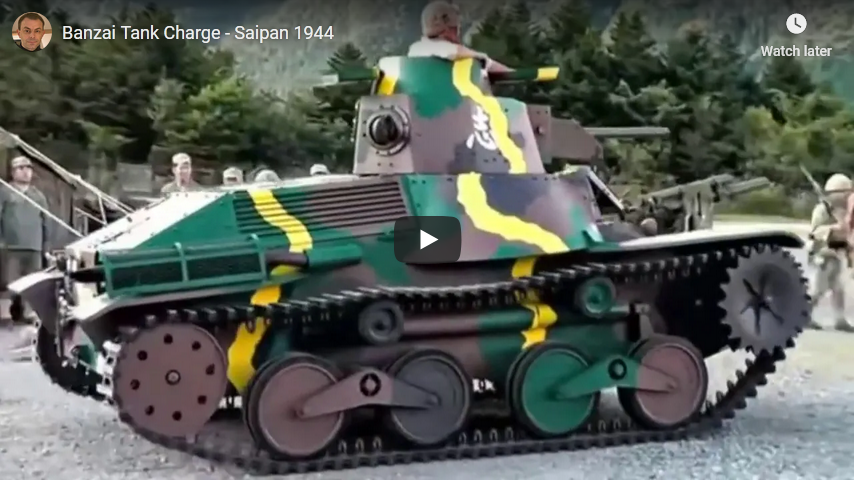
The story of the largest tank battle of the Pacific Campaign on the island of Saipan.
Dr. Mark Felton is a well-known British historian, the author of 22 non-fiction books, including bestsellers Zero Night and Castle of the Eagles, both currently being developed into movies in Hollywood. In addition to writing, Mark also appears regularly in television documentaries around the world, including on The History Channel, Netflix, National Geographic, Quest, American Heroes Channel and RMC Decouverte. His books have formed the background to several TV and radio documentaries. More information about Mark can be found at: https://en.wikipedia.org/wiki/Mark_Fe…
Disclaimer: All opinions and comments expressed in the ‘Comments’ section do not reflect the opinions of Mark Felton Productions. All opinions and comments should contribute to the dialogue. Mark Felton Productions does not condone written attacks, insults, racism, sexism, extremism, violence or otherwise questionable comments or material in the ‘Comments’ section, and reserves the right to delete any comment violating this rule or to block any poster from the channel.
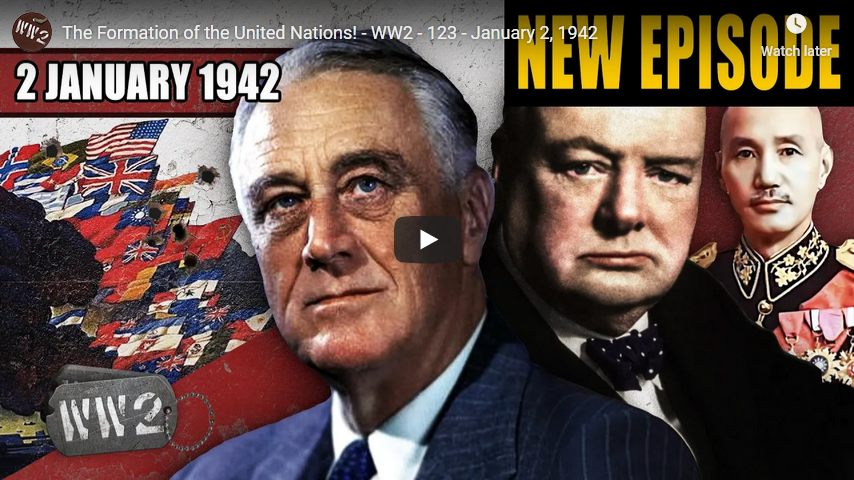
At the ongoing Arcadia Conference, 26 nations sign the Declaration of the United Nations. Otherwise it is very much a week of motion and changes in motion: in the USSR the Soviets are on the move in the center and the Crimea, the Japanese are slowing their movement in China, the Americans are finishing their movement in the Philippines, and the Axis are moving backward in North Africa. The Luftwaffe also decides that Malta must be eliminated as a base for the Allies.
Written and Hosted by: Indy Neidell
Director: Astrid Deinhard
Producers: Astrid Deinhard and Spartacus Olsson
Executive Producers: Astrid Deinhard, Indy Neidell, Spartacus Olsson, Bodo Rittenauer
Creative Producer: Maria Kyhle
Post-Production Director: Wieke Kapteijns
Research by: Indy Neidell
Edited by: Iryna Dulka
Sound design: Marek Kamiński
Map animations: Eastory (https://www.youtube.com/c/eastory)
Colorizations by:
– Julius Jääskeläinen – https://www.facebook.com/JJcolorization/
– Mikolaj Uchman
Sources:
– Election1960 from Wikimedia
– Battleship by Anand Prahlad from the Noun Project
– Supermarine Spitfire by Joel Wisneski from the Noun Project
– Afrrs from Wikimedia
– National Portrait Gallery
– Bundesarchiv
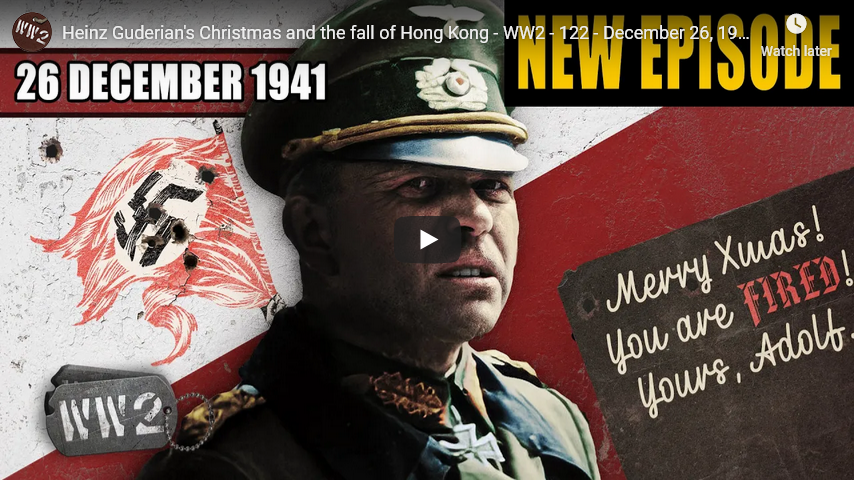
The Japanese offensives and advances in Southeast Asia and the Pacific continue unabated and both Hong Kong and Wake Island fall. British and American leaders begin the Arcadia Conference to decide just how they are going to fight this war together, and there are more changes made in the German High Command on the Eastern Front, even as the Soviets make advances there.
Written and Hosted by: Indy Neidell
Director: Astrid Deinhard
Producers: Astrid Deinhard and Spartacus Olsson
Executive Producers: Astrid Deinhard, Indy Neidell, Spartacus Olsson, Bodo Rittenauer
Creative Producer: Maria Kyhle
Post-Production Director: Wieke Kapteijns
Research by: Indy Neidell
Edited by: Iryna Dulka
Sound design: Marek Kamiński
Map animations: Eastory (https://www.youtube.com/c/eastory)
Sources:
– IWM: FE 203
– Battleship by Anand Prahlad from the Noun Project
– Man by Milinda Courey from the Noun Project
– prisoner by Luis Prado from the Noun Project
– bockelsound from freesound.org
Overly Sarcastic Productions
Published 25 Dec 2020
Journey to the West Kai, episode 5: Fishy Business and Mountaineering Madness!
Danger! Intrigue! Sandy fights a carp! Pigsy gets two makeovers! Monkey reunites with several old frenemies, and Tripitaka gets less screentime than the horse!
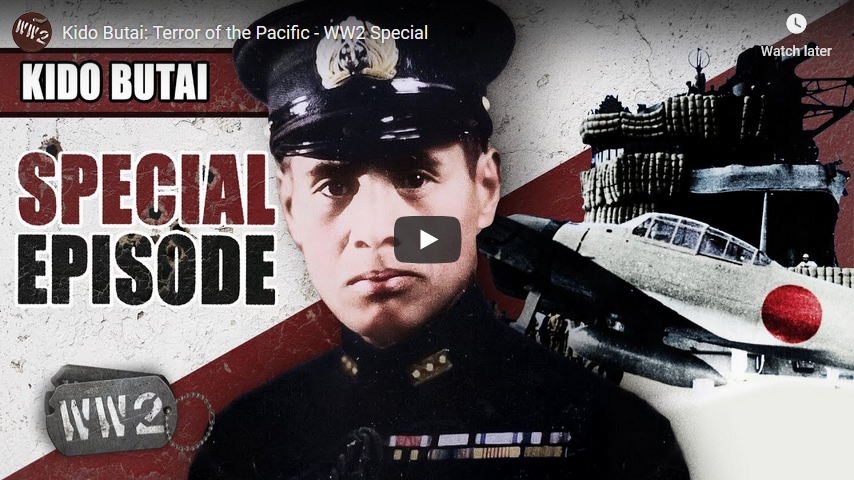
Kido Butai was the fleet that launched the surprise attack on the US Pacific Fleet at anchor at Pearl Harbor and followed that up with a string of victories in 1942. But how was it commanded, both as a whole and in the high and even mid level command? Today we’ll look at that.
Hosted by: Indy Neidell
Written by: Markus Linke and Indy Neidell
Director: Astrid Deinhard
Producers: Astrid Deinhard and Spartacus Olsson
Executive Producers: Astrid Deinhard, Indy Neidell, Spartacus Olsson, Bodo Rittenauer
Creative Producer: Maria Kyhle
Post-Production Director: Wieke Kapteijns
Research by: Markus Linke
Edited by: Miki Cackowski
Sound design: Marek Kamiński
Map animations: Eastory (https://www.youtube.com/c/eastory)
Soundtracks from the Epidemic Sound:
Jo Wandrini – “Dragon King”
Rannar Sillard – “March Of The Brave 4”
Yi Nantiro – “Watchman”
Philip Ayers – “The Unexplored”
Johannes Bornlof – “The Inspector 4”
Mandala Dreams – “Pacific Shores”
Phoenix Tails – “At the Front”
Philip Ayers – “Trapped in a Maze”
The Japanese make gains in Malaya, Burma, Hong Kong, Borneo, and the Philippines. The Allies also have trouble in the Atlantic and the Mediterranean, where they are beginning to seriously suffer from a lack of capital ships. The Soviet Red Army is advancing, though, and Stalin takes personal control of planning for the upcoming counteroffensive, while Adolf Hitler takes personal control of the German Army.
Written and Hosted by: Indy Neidell
Director: Astrid Deinhard
Producers: Astrid Deinhard and Spartacus Olsson
Executive Producers: Astrid Deinhard, Indy Neidell, Spartacus Olsson, Bodo Rittenauer
Creative Producer: Maria Kyhle
Post-Production Director: Wieke Kapteijns
Research by: Indy Neidell
Edited by: Miki Cackowski
Sound design: Marek Kamiński
Map animations: Eastory (https://www.youtube.com/c/eastory)
Sources:
Bundesarchiv
IWM MH 26392, WPN 298, K 2204, FL 20432, A 12126, A 9257, FL 1203, E 3469E
Mil.ru
Narodowe Archiwum Cyfrowe
Picture of Mark Young, courtesy of National Portrait Gallery
Soundtracks from the Epidemic Sound:
Phoenix Tail – “At the Front”
Reynard Seidel – “Deflection”
Skrya – “First Responders”
Hakan Eriksson – “Epic Adventure Theme 4”
Philip Ayers – “The Unexplored”
Max Anson – “Ancient Saga”
Rannar Sillard – “March Of The Brave 9”
Johannes Bornlof – “Death And Glory 2”
Johan Hynynen – “Dark Beginning”
Fabien Tell – “Last Point of Safe Return”
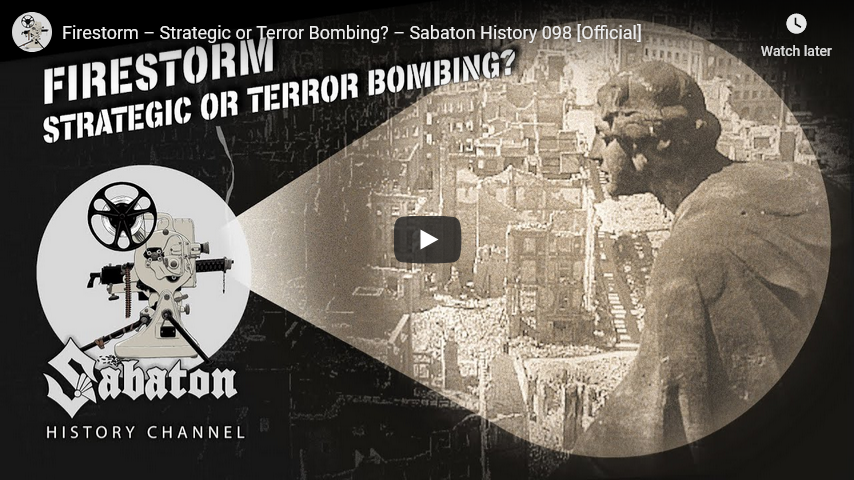
At the end of July 1943, Hamburg burned. A fleet of British heavy bombers had dropped thousands of incendiaries over the city, turning it into a hearth of unprecedented dimensions. Numerous major fires merged together into a single storm of fire. Structures combusted under the immense heat, as strong winds drove the inferno through the streets at rapid speed. Craving for more oxygen, the firestorm sucked human bodies into the flames and immediately incinerated or mummified them. Thousands of others died slowly of carbon monoxide poisoning in their shelters. By the end of the raid, 60% of Hamburg had been burned out and more than 35,000 of its inhabitants were dead. But while the Germans were shocked to disbelief, for the British the firestorm has worked as intended. And this was just the beginning.
Hosted by: Indy Neidell
Written by: Markus Linke and Indy Neidell
Directed by: Astrid Deinhard and Wieke Kapteijns
Produced by: Pär Sundström, Astrid Deinhard and Spartacus Olsson
Creative Producer: Maria Kyhle
Executive Producers: Pär Sundström, Joakim Brodén, Tomas Sunmo, Indy Neidell, Astrid Deinhard, and Spartacus Olsson
Community Manager: Maria Kyhle
Post-Production Director: Wieke Kapteijns
Editor: Karolina Dołęga
Sound Editor: Marek Kamiński
Maps by: Eastory – https://www.youtube.com/c/eastory
Archive: Reuters/Screenocean – https://www.screenocean.com
Sources:
Imperial War Museums: C3677,HU 63075, HU 63089, MH 27517, CL3400, MH 24747,CL3395, MH 24764, CH 6386, CH 6386, CH 6275, CH 15879, C 3371, CH 18371, C 3918, C2367, HU44269, C 4748, PST 14359, C 4973,
Bundesarchiv
National Archives NARA
Icons from the Noun Project: Arrow by 4B Icons, Bomb by P Thanga Vignesh, fire building by dDara, Skull by Muhamad Ulum
All music by: Sabaton
An OnLion Entertainment GmbH and Raging Beaver Publishing AB co-Production.
The Japanese launch attacks all over Southeast Asia and the Pacific, and launch a preemptive surprise attack on the American Pacific Fleet at Pearl Harbor. The war is suddenly much larger. In the USSR, the Germans find themselves now heavily on the defensive after the failure to take Moscow, while in North Africa, Erwin Rommel decides he must withdraw out of Cyrenaica to await reinforcements.
Written and Hosted by: Indy Neidell
Director: Astrid Deinhard
Producers: Astrid Deinhard and Spartacus Olsson
Executive Producers: Astrid Deinhard, Indy Neidell, Spartacus Olsson, Bodo Rittenauer
Creative Producer: Maria Kyhle
Post-Production Director: Wieke Kapteijns
Research by: Indy Neidell
Edited by: Miki Cackowski
Sound design: Marek Kamiński
Map animations: Eastory (https://www.youtube.com/c/eastory)
Sources:
IWM HU 56120, K 1385, HU 675, TR153, HU 81216, WPN 298
NARA
Bundesarchiv
Narodowe Archiwum Cyfrowe
Picture of a victim of starvation during the siege of Leningrad, courtesy of George Shuklin
Picture of Alfred Godwin-Austen, courtesy of Berserker276 https://commons.wikimedia.org/wiki/Fi…
Picture of Harold Cole, courtesy of Cumbria County Archives
Soundtracks from the Epidemic Sound:
Phoenix Tail – “At the Front”
Johannes Bornlof – “Deviation In Time”
Johan Hynynen – “Dark Beginning”
Rannar Sillard – “March Of The Brave 4”
Jo Wandrini – “To War!”
Reynard Seidel – “Deflection”
Wendel Scherer – “Defeated”
Johannes Bornlof – “Death And Glory 3”
Johannes Bornlof – “The Inspector 4”
Hakan Eriksson – “Epic Adventure Theme 3”
Skrya – “First Responders”
Bonnie Grace – “Imperious”
A TimeGhost chronological documentary produced by OnLion Entertainment GmbH.
From the comments:
World War Two
2 days ago (edited)
Five days ago, we covered the Japanese attacks on Pearl Harbor minute by minute in real time over five hours. If you missed that, then check out episode one right here, you’ll love it: https://www.youtube.com/watch?v=Joh2BXPsrXs&t=4s
NOTE: An error snuck through our controls regarding the Japanese casualties at Wake, we are working with YouTube to have it fixed before the video goes public. We apologize for this inconvenience.
Japan attacked a whole variety of places that day, launching massive offensives all over SE Asia and the Pacific. I’ll be covering them here weekly, of course, but for even more coverage, check out our day by day Instagram coverage of the war: https://www.instagram.com/ww2_day_by_day
Comments Off on Hitler Declares War on the USA and the Jews – WW2 – 120 – December 12, 1941
Silk production was one of the biggest secrets of China and one of the most lucrative industries of the age. So it is not a surprise that the Roman emperor Justinian was eager to learn this secret. In this video we will discuss the start of the silk production, its importance and the story of how Justinian managed one of the first industrial thefts in history
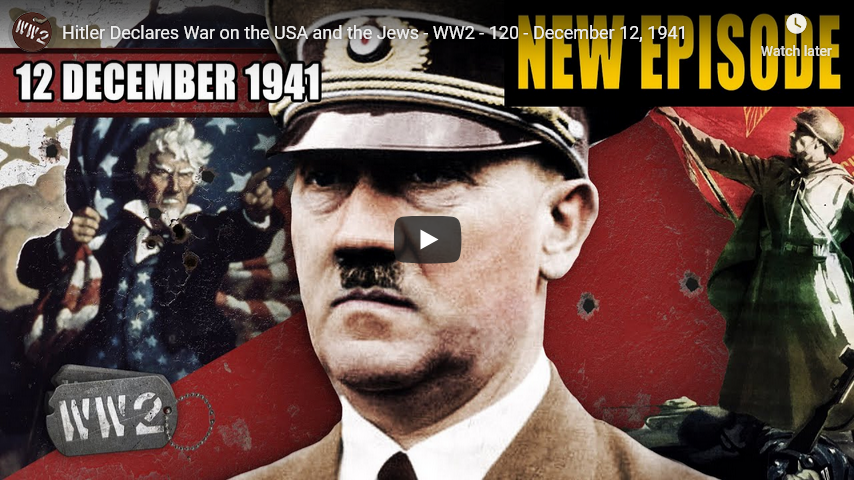
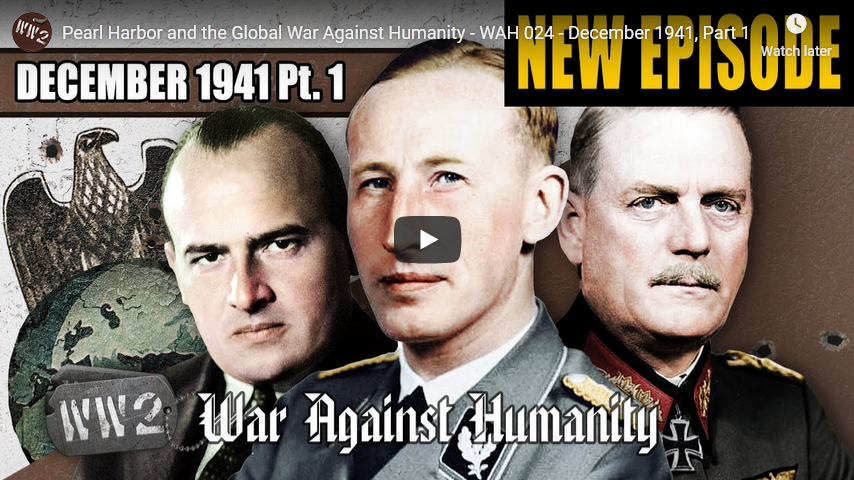
December 1941 marks the shift to a new chapter in the War Against Humanity. New fronts open up, exposing millions more to the horrors of war. Other developments continue their path of continuous escalation.
Sources:
– Yad Vashem: 76CO9, 3150-122, J3065-2, 85DO1, 1427 83, 1007_31,
– Narodowe Archiwum Cyfrowe
– National Archive NARA
– Library of Congress
– Bundesarchiv
– Berlin Gestapo Museum
– United States Holocaust Museum
Soundtracks from epidemic sounds:
– “Guilty Shadows 4” – Andreas Jamsheree
– “For the Many STEMS INSTRUMENTS” – Jon Bjork
– “Remembrance” – Fabien Tell
– “Not Safe Yet” – Gunnar Johnsen
– “London” – Howard Harper-Barnes
– “Moving to Disturbia” – Experia
A TimeGhost chronological documentary produced by OnLion Entertainment GmbH.
From the comments:
World War Two
3 hours ago
Before we get comments about the countries currently participating in World War Two: in December 1941 there are more countries that are still neutral than we list here, but that won’t last, or as Sparty said these are the ones that will REMAIN neutral. They are without a doubt not at war, not occupied, and not in a state of war. All the other ones are – more or less. Mongolia? Has been in a de-facto state of war with Japan since the Manchurian incident. Ethiopia and Iraq? Both occupied, or at least on the lines of contested territory. The South and North American states? They will mostly enter the war later – but we’d argue that already now the Panama declaration ties them to each other to an extent that the fate of the “neutrals” has been complicated by the countries joining the war in December ’41. Now that you know our reasoning behind this, we encourage you to offer any alternative or additional thoughts on this in the comments.
Comments Off on Pearl Harbor and the Global War Against Humanity – WAH 024 – December 1941, Part 1
Overly Sarcastic Productions
Published 18 Feb 2016
Today, Blue discusses recurring themes in history! This one’s the Military Expedition, aka what happens when a powerful military juggernaut gets too big for its britches and starts saying stuff like “too big to fail” unironically.
Blue: If you’re curious about the weird chart/graph thing blue showed during the Napoleon segment, look up Charles Joseph Minard [mentioned here and here], the guy who made it. It’s a really cool chart that shows the size of the army as it traveled across Russia (tan) and back (black). You can see how perilous the journey was based on how narrow the line gets. Graphs are cool.
Comments Off on Historical Models Summarized: The Military Expedition
Powered by World of Warships – https://wo.ws/PearlHarbor – Register now to receive an exclusive bonus!
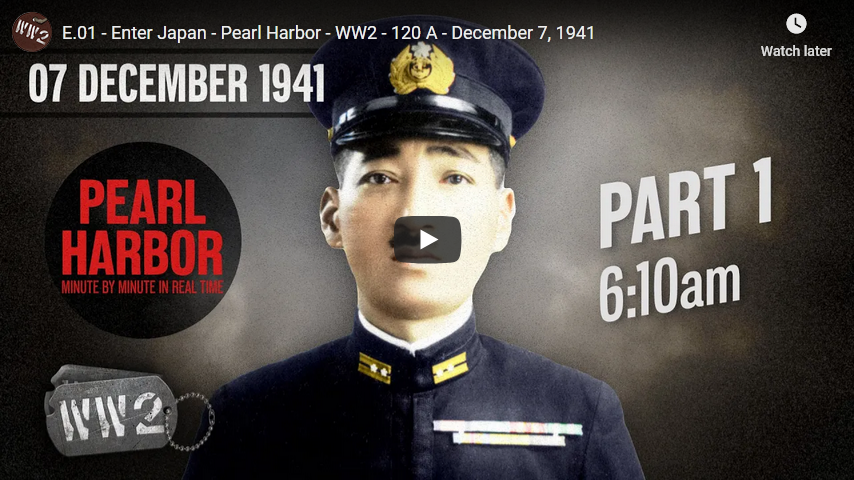
In this episode: Japan’s meticulous planning and preparation made it possible to surprise the Americans at Pearl Harbor. Alert on Oahu is largely nonexistent. It is the deep breath before the plunge.
Hosted by: Indy Neidell
Written by: Spartacus Olsson and Indy Neidell
Directed by: Wieke Kapteijns
Executive Producers: Astrid Deinhard, Indy Neidell, Spartacus Olsson, Bodo Rittenauer
Produced by: Astrid Deinhard and Spartacus Olsson
Co-Producers: Maria Kyhle and Francis van Berkel
Edited by: Iryna Dulka
Set Design by: Astrid Deinhard
Graphic Design by: Mikolaj Uchman
Map Animations by: Daniel Haczyk and Eastory
Assistant Editors: Miki Cackowski, Daniel Weiss, Karolina Dołega
Still Colorizers: Adrien Fillon, Norman Stewart, Jaris Almazani, Daniel Weiss, Mikolaj Uchman, Carlos Ortega Pereira
Research by: Indy Neidell, Spartacus Olsson, Markus Linke, Wieke Kapteijns, Bastian Gaete, Lewis Braithwaite, Tim Smith, Ian Irungu
Sound Design by: Marek Kamiński
Dogfights by: Daniel Weiss, Bastian Gaete, Ian Sowden, Dennis Stepanov
Voices:
Mitsuo Fuchida – Daniel Grieb
Ada Peggy Olsson – Shani Neidell Beard
Iyōzō Fujita – Emi Celis
James Anderson – Emi Celis
Dorinda Stagner – Zora Johnson
Jack Kelley – Ryan Socash
James McClelland – Spartacus Olsson
Phil Rasmussen – Spartacus Olsson
Dan Wentrcek – Dennis Stepanov
Thompson Izawa – Samir Mechel
Robert Isacksen – Ian Sowden
Joseph K. Taussig Jr. – Tim Smith
James Cory – Ryan Tebo
Film colorization by: Ricks Film Restoration
Naval Gameplay by: World of Warships
Archive material provided by: Reuters/Screenocean
A TimeGhost chronological documentary produced by OnLion Entertainment GmbH.
From the comments:
World War Two
1 hour ago (edited)
When we set out to do this crazy project we thought we wanted to try some really new things. As anyone knows that follows us regularly, our first and foremost goal is remembrance — to shine a light on our past and learn form our ancestors’ mistakes and achievements. We try our best to do that with a dedication to facts and details liberated from partisan, or ideological historiography. For this purpose, the attack on Pearl Harbor serves very well. It is a compact event over only a few hours that is spectacular in its nature, tragic in its effect, gripping in its drama, and has tremendous impact on WW2 on all fronts. It is also an event that is often simplified to the point of misunderstanding, has been woven into national mythology, and given rise to some pretty nutty conspiracy myths. Simply put: the Attack on Pearl Harbor is short enough, exciting enough, and misunderstood enough for us to do a limited series like this.
But more than that we also wanted to try some new technical and narrative things. Since we started doing historical documentaries with the Great War in 2014 we have tried to be on the forefront of pioneering new ways of creating historiography for the modern media world. Narratively, we have dedicated ourselves to chronologies, which in historiography is nothing new, but it is new in the world of film documentaries (at least to the level we do it) — so we thought; “heck what if we go down to minute by minute for this” — well we did and it taught us an enormous amount about Pearl Harbor, but also about how we can write. We will get back to that in further comment on the series. As for technology, it truly is technology that enables our work, well any media — for us it is social media, affordable ways to capture film, global virtual remote working spaces, digital research opportunities, digital film archives, and so on.
Two areas we had not been able to venture into was recreation of scenes using computer graphics and colorization of moving images. Using a gaming engine to create animation is also nothing new, but usually very, very expensive because you have to first create the world, the assets and the characters for your recreation. But for Pearl Harbor, World of Warships https://worldofwarships.com and World of Warplaneshttps://worldofwarplanes.com opened an opportunity to do this on a new scale at a cost that is only a fraction of what it usually costs. Along the way we also got to know Ricks Film Restorations (https://bit.ly/ricksfilmresorations and https://www.youtube.com/user/Rick88888888) who use AI technology to enhance and colorize film footage. While both of these technologies are only at the beginning of their potential, we think the results are spectacular. More than anything it has enabled us to enhance the emotional and visual experience for this series to a level we never reached before. Last but not least it enabled us to use the financial contributions of the TimeGhost Army, and World of Warships to create five hours of content for less than 1/50th — only 2% — of what it would cost to do with traditional means.
creatingstuff
In the Name of the entire TimeGhost Team,
Astrid, Indy, Spartacus, and Wieke
Episode Guide:
This is a 10 episode limited series within our weekly coverage of WW2 — to see the immediate events leading up to this day watch episode 119 from December 5, https://youtu.be/DYUzmBuX-6Y. Some of the events covered briefly as they start on this day, such as the invasions in the West Pacific will be covered in more detail in the coming weeks, especially in episode 120K (the 11th episode this week).coming out on December 12.
In The Critic, Zareer Masani debunks a recent book’s claim that British PM Winston Churchill was responsible for the Bengal famine during the Second World War:
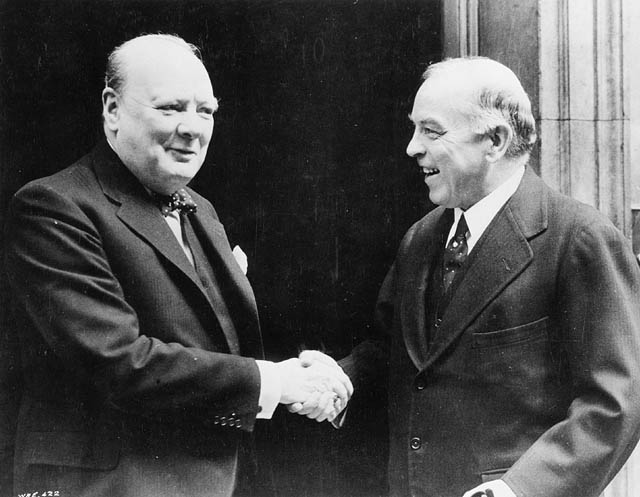
Prime Minister Winston Churchill greets Canadian PM William Lyon Mackenzie King, 1941. Photo from Library and Archives Canada (reference number C-047565) via Wikimedia Commons.
A favourite trope of the current Black Lives Madness and its left-liberal white apologists has been the alleged infamy of Britain’s most cherished hero, Winston Churchill, charged with everything from mere racism to actual genocide. The worst accusation is that of deliberately starving four million Bengalis to death in the famine of 1943.
The famine took place at the height of World War Two, with the Japanese already occupying Burma and invading the British Indian province of Bengal, bombing its capital, Calcutta, and patrolling its coast with submarines.
The famine raged for about six months, from the summer of 1943 until the end of that year, and estimates of its victims range from half a million upwards, depending on whether one includes its indirect and long-term effects. Most famine experts agree that famines can be caused by both nature and human agency, but never by any single individual. So how has a 67-year-old British prime minister in poor health, 5,000 miles away, fighting near-annihilation in a world war, come to be charged with causing such a cataclysmic disaster?
The attempt to lay this at Churchill’s door stems from a sensationalist book by a Bengali-American journalist called Madhusree Mukerjee. As its title, Churchill’s Secret War, indicates, it was a largely conspiracist attempt to pin responsibility on distant Churchill for undoubted mistakes on the ground in Bengal.
The actual evidence shows that Churchill believed, based on the information he had been getting, that there was no food supply shortage in Bengal, but a demand problem caused by local mismanagement of the distribution system. Ironically, his view found unexpected support in a 2010 exchange between Mukerjee and the Nobel Prize-winning economist Amartya Sen, the world’s foremost expert on famine in India.
Commenting in the New York Times, Sen said of Mukerjee, that “she seems satisfied with little information” and that her data came from only two rice research stations, and those in only two out of 27 districts in Bengal. “The analysis I made,” countered Sen, “using data from all districts … indicated that food availability in 1943 (the famine year) was significantly higher than in 1941 (when there was no famine) … There was indeed a substantial shortfall compared with demand, hugely enhanced in a war economy … but that is quite different from a shortfall of supply compared with supply in previous years … Mukerjee seems to miss this crucial distinction, and in her single-minded … attempt to nail down Churchill, she ends up absolving British imperial policy of confusion and callousness.”
Comments Off on Churchill and the Bengal Famine of 1943
The History Guy: History Deserves to Be Remembered
Published 22 Apr 2019
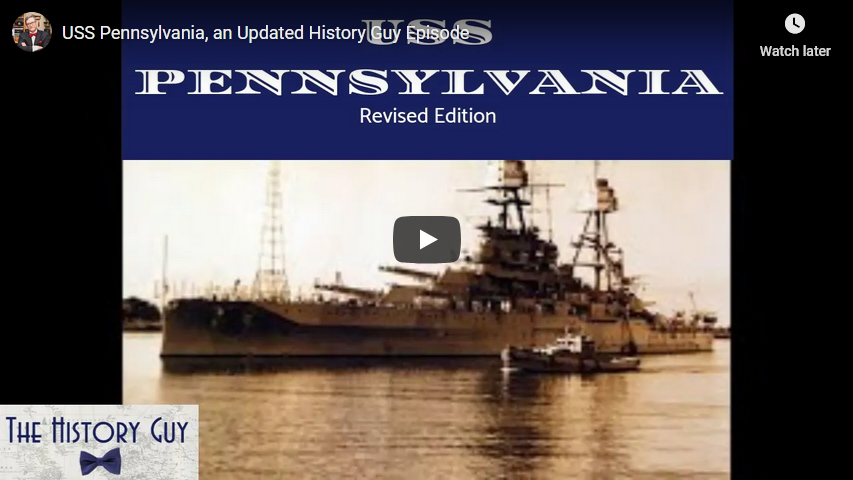
USS Pennsylvania was in dry dock when the attack came at Pearl Harbor. The History Guy remembers part of her history that may have been forgotten.
This episode was originally posted December 7, 2017. It has been updated to correct some errors in the original, and new footage of USS Pennsylvania has been added.
This is original content based on research by The History Guy. Images in the Public Domain are carefully selected and provide illustration. As images of actual events are sometimes not available, images of similar objects and events are used for illustration.
All events are portrayed in historical context and for educational purposes. No images or content are primarily intended to shock and disgust. Those who do not learn from history are doomed to repeat it. Non censuram.
The History Guy: History Deserves to Be Remembered is the place to find short snippets of forgotten history from five to fifteen minutes long. If you like history too, this is the channel for you.
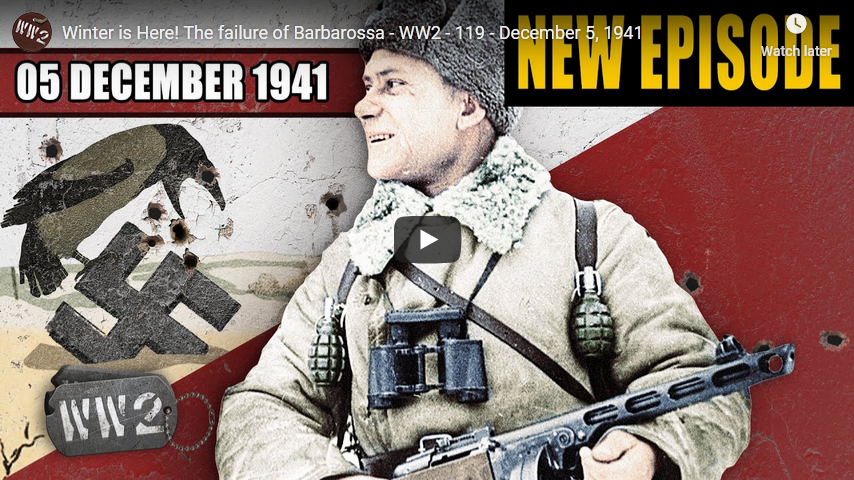
The Wehrmacht is halted by the Red Army at the gates of Moscow. Not only that, but a Red Army counteroffensive begins pushing the Germans back decisively. The Germans are also beginning to withdraw from their siege of Tobruk in North Africa. Japan, however, is advancing all over the Pacific, sending troop transports into the South China Sea, though it is unclear just whom Japan plans to attack. The Japanese are also — in top secrecy — sending a force of aircraft carriers to soon attack the American Pacific fleet at anchor at Pearl Harbor.
Written and Hosted by: Indy Neidell
Director: Astrid Deinhard
Producers: Astrid Deinhard and Spartacus Olsson
Executive Producers: Astrid Deinhard, Indy Neidell, Spartacus Olsson, Bodo Rittenauer
Creative Producer: Maria Kyhle
Post-Production Director: Wieke Kapteijns
Research by: Indy Neidell
Edited by: Miki Cackowski
Sound design: Marek Kamiński
Map animations: Eastory (https://www.youtube.com/c/eastory)
Sources:
RIA Novosti #2410
Bundesarchiv
IWM A 10499, A 6784, CH 11140
Visuotinė-lietuvių-enciklopedija
Yad Vashem 5705/34
from the Noun Project: low temperature by The Icon Z, Skull by Muhamad Ulum
Soundtracks from the Epidemic Sound:
Johan Hynynen – “Dark Beginning”
Johannes Bornlof – “Death And Glory 3”
Reynard Seidel – “Deflection”
Johannes Bornlof – “Deviation In Time”
Hakan Eriksson – “Epic Adventure Theme 4”
Johannes Bornlof – “The Inspector 4”
Rannar Sillard – “March Of The Brave 4”
Fabien Tell – “Last Point of Safe Return”
Bonnie Grace – “Imperious”
Max Anson – “Maze Heist”
Gunnar Johnsen – “Not Safe Yet”
Jon Bjork – “Force Matrix”