Quotulatiousness

August 5, 2019

More on the still-damaged diplomatic relationship between India and Canada

Filed under: Cancon, India, Politics — Tags: , , , , , , — Nicholas @ 03:00

Ted Campbell quotes from a recent article in the Hindustan Times about the not-yet-healed damage in the diplomatic world between Justin Trudeau’s government and the Indian government of Narendra Modi:

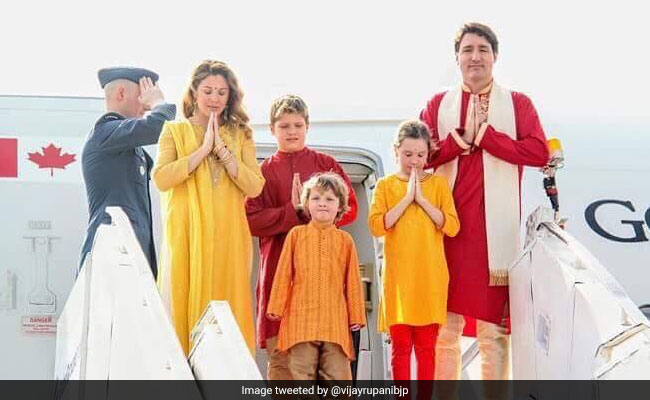
Justin Trudeau and family during India visit
Image via NDTV, originally tweeted by @vijayrupanibjp

In the influential Hindustan Times, Toronto based journalist Anirudh Bhattacharya writes … “in an astonishing attack that will not help heal fraught ties between India and Canada, the former top advisor to the North American nation’s Prime Minister has accused the Indian Government of sabotaging Justin Trudeau’s visit to India in February 2018 to favour his political opponents [and] This scathing statement is in the forthcoming book, Trudeau: The Education of a Prime Minister, written by senior Canadian journalist John Ivison. The author [Ivison] confirmed to the Hindustan Times that Butts’ comment came during an interview.” The article adds that “Indian diplomats didn’t comment on the matter because it is so politically charged and the Canadian Government has yet to respond to questions from HT on its stand on the incendiary remark from Butts.”

So, while some pundits forecast that the return of Gerald Butts would reignite the whole SNC-Lavalin/Jane Philpott and Jody Wilson-Raybould scandal, it appears that the damage will be deeper and we will get a chance to revisit the disaster that Justin Trudeau and Chrystia Freeland visited upon Canadian foreign policy in 2018. India is a rising great power; it helps to contain China in new “Western Approaches:” the Arabian Sea, Indian Ocean and the Bay of Bengal. India is a growing trading power; it is a HUGE potential market for Canadian goods and services. India is one of the top three providers of new Canadians ~ and that’s where our problems with India originated. Someone in the Trudeau PMO thought (since thinking was the problem that probably lets Justin Trudeau off the hook) that it would be a good idea for Prime Minister Trudeau to attend a Khalsa Day parade in Toronto back in April 2017. I explained, back at the time of the India trip fiasco, why that was a mistake and how Jason Kenney had already set the example of doing it right. Now Khalsa Day, also known as Vaisakhi, is an important festival for Sikhs, it marks their New Year. But the festivities, especially in Toronto where 300,000 Sikhs live, are, sometimes, taken over or interrupted by Sikh separatists who advocate violent revolution in India. Jason Kenney saw that in 2012 and he stormed off a stage and berated his hosts, in public for trying to use him to undermine Canadian foreign policy, which valued, as it should, good relations with India. But, in 2017 all the Trudeau PMO (headed by Gerald Butts and Katie Telford) could see were all those Sikh voters. Neither the PMO team nor new Canadian foreign minister Chrystia Freeland was able to prevent Trudeau from being used as a photo-op prop by avowed Sikh separatists … there is no indication that anyone tried although, even though, given the bureaucracy’s corporate memory of events in 2012, I would be amazed in alarms were not sounded.

August 3, 2019

We finally get an explanation for Justin Trudeau’s diplomatically catastrophic India tour

Filed under: Cancon, Government, India, Media, Politics — Tags: , , , , — Nicholas @ 03:00

A few days ago, I noted on social media:

This is exactly the sort of suave, diplomatic polish that will smooth over all the damage in the Canada-India relationship. This is a quote from PM Trudeau’s right-hand man in John Ivison’s new book:

“We walked into a buzzsaw — (Narendra) Modi and his government were out to screw us and were throwing tacks under our tires to help Canadian conservatives, who did a good job of embarrassing us,”

http://thepostmillennial.com/out-to-screw-us-butts-blames-indian-pm-for-trudeaus-disastrous-trip/ #JustinTrudeau #India #fiasco #books #GeraldButts #NarendraModi #diplomacy

I figured this had to be some kind of new variant of the old “modifed limited hangout“, but it’s so potentially damaging to an already badly frayed relationship that there had to be more to it … possibly a lot more to it. No rational senior official would say something like that unless there was a much worse revelation that it was intended to camouflage. But whatever it was would have to be “recall the High Commissioner” bad to justify that kind of self-inflicted diplomatic wound.

Justin Trudeau and family during India visit
Image via NDTV, originally tweeted by @vijayrupanibjp

Brian Lilley is similarly puzzled, but he has a simpler explanation: it’s that familiar combination of the Trudeau unwillingness to take responsibility, an over-developed blame-casting habit, and Trudeau’s own frequently demonstrated love of wearing costumes:

It’s one thing for Butts to think those things, another to voice them in a way that he knows will be made public. It’s also the most tone-deaf assessment of the trip I’ve seen since Sophie Trudeau went on TV and blamed the staff for those outfits.

I mean think about that trip, the two things that got Trudeau in trouble were the invite of the terrorist to dinner and the outrageous outfits. Both of those amount to self-inflicted wounds.

At least Butts admits the photos of Trudeau and his family were a problem.

“Nobody would remember any of that had it not been for the photographs. We should have known this better than anybody — in many ways we’d used this to get elected. The picture will overwhelm words. We did the count — we did forty-eight meetings and he was dressed in a suit for forty-five of them. But give people that picture and it’s the only one they’ll remember,” Butts told Ivison.

[…]

The simple fact of the matter is that the trip to India was a disaster, the kind Trudeau and his team weren’t used to dealing with. So now a year and half later they are still looking to lay the blame anywhere but where it belongs.

With themselves.

June 3, 2019

The “Miss India” controversy

Filed under: History, India, Media — Tags: , , , — Nicholas @ 05:00

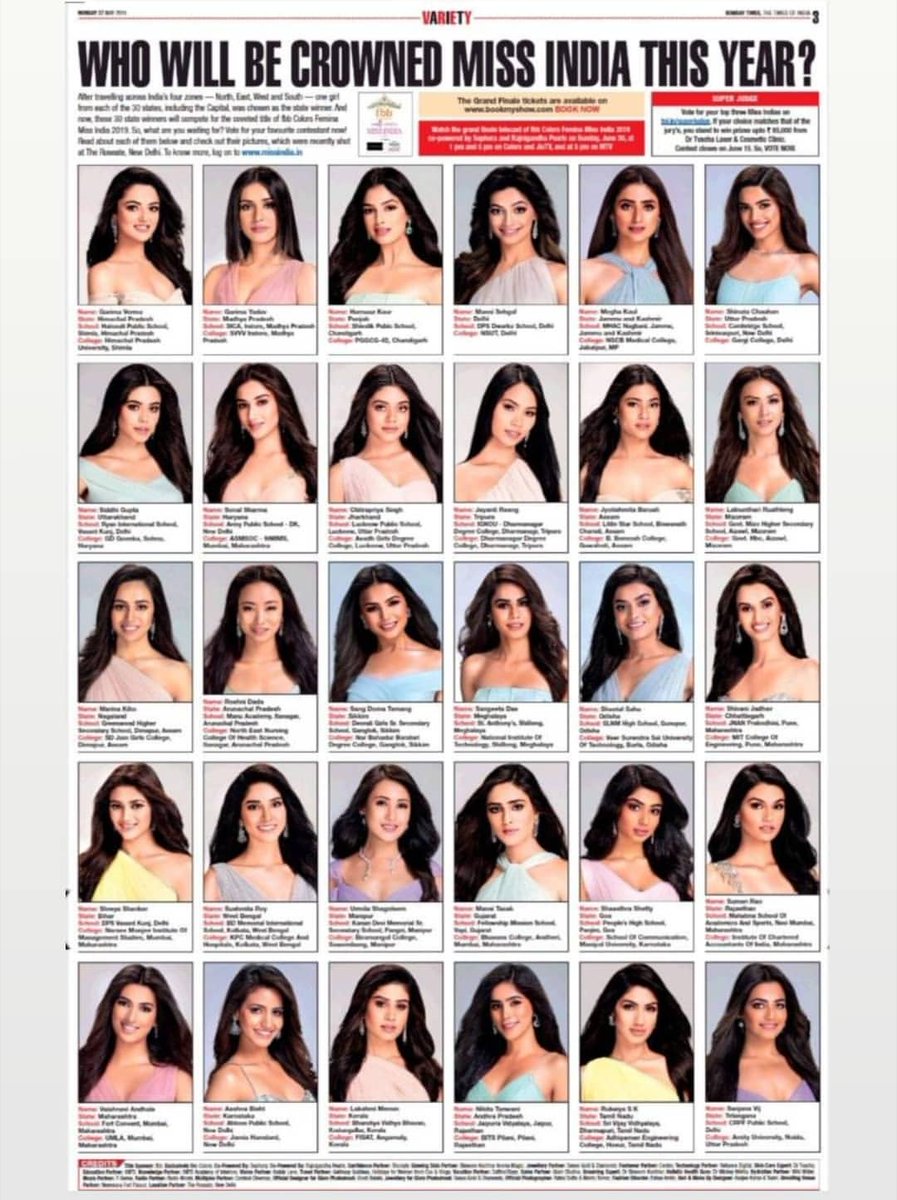
The Times of India published an image of the Miss India competition finalists that drew heavy condemnation on social media:

Tim Worstall explains at least some of the reasons why these young women don’t seem to resemble the majority of Indians:

To start with a question – doesn’t anyone read Jane Austen any more? For that is all that is needed to understand why all the finalists in this year’s Miss India contest seem to have the same rather pale and white complexion. Certainly, rather paler and whiter than the general run of the mill complexion seen across India.

We can also offer a Marxist interpretation – it’s a class thing, innit?

[…]

Yes, India does have that caste issue, it is true that higher castes are generally associated with lighter skins colours, lower with darker. There are even those who would insist that the caste system exists in order to maintain that dominance of the fairer skinned over the darker, something that has worked well in doing so for millennia.

And yet, Jane Austen. Apologies, the various heroines blur into a montage of Emma Thompson and Keira Knightley for me but then that’s just an expression of my masculinity, not bothering with chick flicks. But there is a scene where the sisters are fussing over their bonnets as they go out for a walk. Be careful – Lizzie? – or you might get freckles and then what man would want you? As one blessed with such melanin enhancement myself, finding it most attractive in others, why this obsession? Because a porcelain complexion was a signifier of social status.

Not because of the racial obsessions of the times – we are talking of an era when a thoroughly dark skin could make you a chattel slave, a white one not. But because a porcelain white skin was a signifier of social status therefore a porcelain white skin was a sign of social status.

70 to 80 percent of the population worked hard, outside. That meant being tanned. Only the rich did not need to do so. Thus only the rich were that pasty white which is the fate of the English gene pool when consistently out of the Sun. White was a symbol of social status not because it was white but because it meant “not farm labour”.

Of course, in the English and later European context, that dynamic started to change during the Industrial Revolution, as more and more “working class” work was done indoors and pale skin slowly declined as an indicator of wealth and privilege and instead tanned skin assumed that role (only the wealthy could waste time being outdoors, in the sun).

So, what will happen in India? Presently the country is what, still 50% of the people labouring in the fields? Something we know is declining as a portion and we expect to get to something like the English situation in a few decades, no? 6 to 8% compound GDP growth rates cause that sort of thing. 98% of all will be working under fluorescent strip lights, not under the Sun. Having both the leisure and the money to gain a tan will be a marker of social status and thus will be desired.

As to when this happens the switch really didn’t take that much time in England. Certainly in the 1930s that paleness was still highly desired. By the 1960s it was changing. Today tanning lotions sell in vast volumes, skin whiteners to the indigene English not a single drop.

When will we know the change is happening in India? It’ll not be airbrushed and photoshopped pictures of Miss India contestants that are that first marker. The day someone opens a tanning salon in an Indian urban centre and doesn’t immediately go bust will be that signifier that the great change is under way.

May 27, 2019

Victoria & Abdul, a film about “the brown John Brown”

Filed under: Britain, History, India, Media — Tags: , — Nicholas @ 05:00

Mark Steyn on the 2017 movie Victoria & Abdul:

As I mentioned on the radio yesterday, May 24th 2019 marks the bicentennial of Queen Victoria. So it would seem appropriate to have a bit of cinematic Victoriana for our Saturday movie date. Her Majesty was an important and consequential figure in almost every corner of the world, and once upon a time the biopics reflected that. But she was to a degree unknown and unknowable, which offers great opportunities to the contemporary biographical sensibility. And so the most notable films of the last two decades belong to a sub-genre of their own: the Queen-Empress and the men who caught the eye of a lonely and isolated woman in the long decades of her widowhood. John Madden’s Mrs Brown (1997) is about the Queen’s relationship with her ghillie; Stephen Frears’ Victoria & Abdul (exactly twenty years later, 2017) is about the Queen’s relationship with her munshi.

Queen Victoria (1819-1901) portrait by Bassano, 1882.
Photo via Wikimedia Commons

If you don’t know what a ghillie is, well, it’s a Scots Gaelic word for a Highland chief’s attendant on a fishing or hunting trip. If you don’t know what a munshi is, hey, relax: Nobody in the Royal Household does either, and so they’re a little taken aback to find that a Hindu waiter brought over to add a bit of imperial exotica to the Golden Jubilee in 1887 has suddenly been promoted to the hitherto unknown position of “Munshi and Indian Clerk to the Queen-Empress”.

A court favorite is always resented by less-favored courtiers – for whatever reason suffices. In Mrs Brown (the below-stairs mocking name for her ghillie-smitten Majesty), the favorite, John Brown, is resented for being a big brawny bit of Highland rough. In Victoria & Abdul, which begins four years after the Highland fling’s sudden death, the new favorite, Abdul Karim, is resented because his insinuating Moghul and Persian airs are regarded as ludicrously above his station.

Yet they all get what’s going on: As one lady-in-waiting at Balmoral titters, Abdul is “the brown John Brown”.

To confirm that we are in the realm of sequel, the Queen in both films is played, splendidly and sympathetically, by Judi Dench, and the supporting characters are largely identical, too – from Henry Ponsonby, the Queen’s Private Secretary, to her long-serving Lady of the Bedchamber, Lady Churchill. As in Mrs Brown, the latter screenplay is disfigured by solecisms. In the earlier film, the script cannot quite decide whether the Private Secretary is “Sir Henry” or “Mr Ponsonby”. In the sequel, Judi Dench sighs that, “I have almost a billion citizens” – not a sentence she would ever have uttered: she had almost a billion subjects – and, as wily old Éamon de Valera would later remark in another context, the concept of “citizenship” was all but unknown in the British Empire. One of her last major legislative acts was to give Royal Assent to the Australian constitution – which she found to be in very poor taste, as the word “Commonwealth” reminded her of Oliver Cromwell.

May 25, 2019

India’s “Modi generation”

Filed under: China, Economics, India, Politics — Tags: , , , — Nicholas @ 05:00

Mihir Swarup Sharma discusses the demographic, political, and social impact of India’s most influential generation:

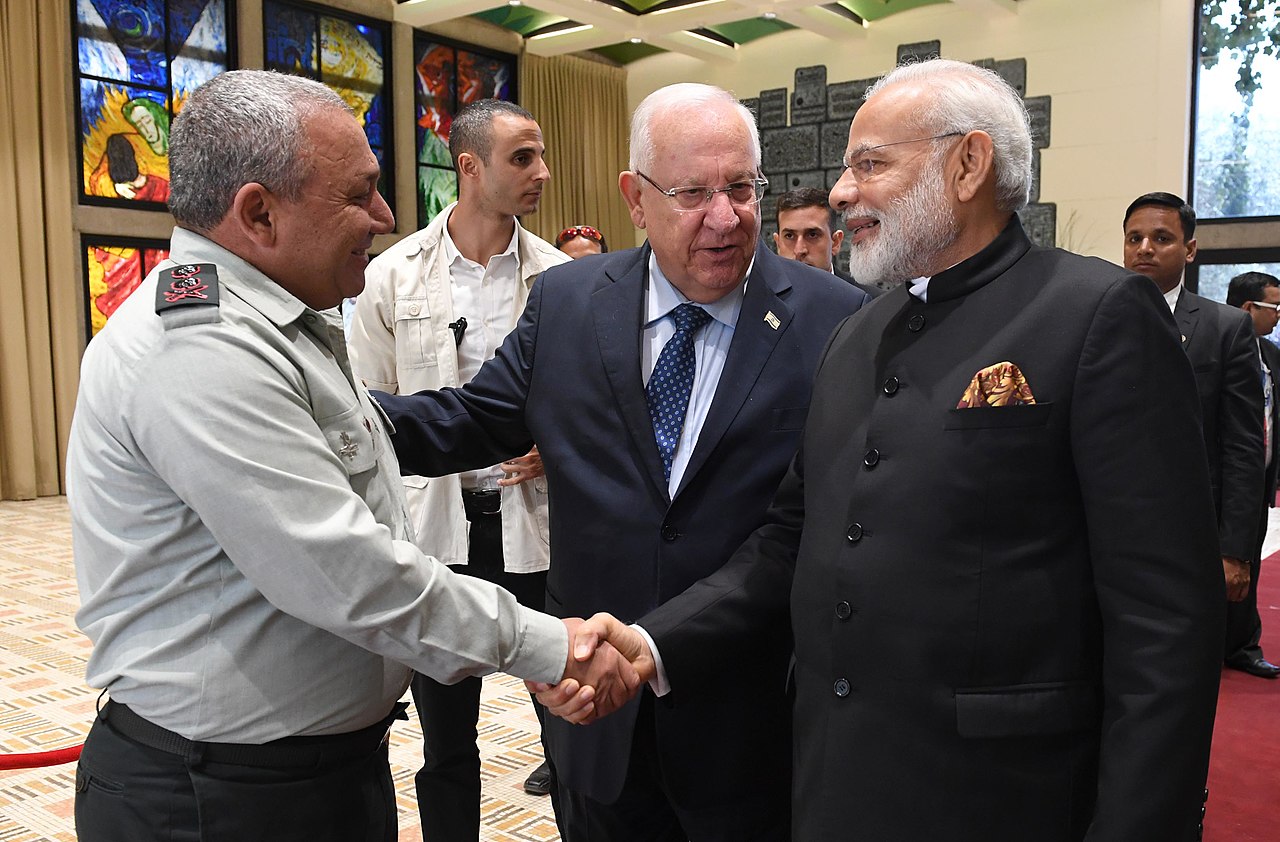
Israeli President Reuven Rivlin and IDF Chief of General Staff Gadi Eizenkot meet with Indian Prime Minister Narendra Modi, in Jerusalem, July 5, 2017.
Photo by Mark Neyman / GPO via Wikimedia Commons.

The Modi generation, which is and will be India’s most influential ever, will reshape this country the way that other demographic bulges — think of the US’ Baby Boomers — have done so elsewhere. Their India will be substantively different, in terms of domestic and global politics, than that which has come before.

What might this India look like? First, it will be impatient. Young people are less willing to wait for national glory. In the People’s Republic of China, the rule for the country, set by Deng Xiaoping, was to “bide your time and hide your strength”. Xi Jinping’s China, where the agenda is being set to appease a generation of young single men, has abandoned Deng’s maxim. This will be even more true for India, which is after all a democracy that must respond to the most powerful voting bloc in its history. It will be impatient about economics as well. Young Indians expect a better life soon. Today they are willing to give Modi some more time to achieve it. But, in the years to come, that patience will run out.

Second, it will be aggressive. India can no longer “hide its strength”. That was the lesson we must take from the political salience in this election of Balakot, of the promise by the ruling party to enter their houses and kill India’s enemies. A national machismo is the natural consequence of a bulge of young, unemployed and unemployable men. India is perhaps less able to sustain this aggressiveness than, say, China. But the times in which India would be able to absorb terrorist attacks, for example, without a major pushback have passed.

Third, it will be a risk-taker. Young people have a belief in their own invincibility, and Indian policy will be forced to reflect this. Others might argue demonetisation was a foolish mistake; but what matters to many voters is that Modi took a risk, and according to them in a good cause. The Balakot air strike on Pakistan may not have achieved a fundamental strategic transformation of the India-Pakistan relationship (though some experts disagree) but it played well politically because it was not just a demonstration of strength as a nation, but an example of a tolerance to risk. In this sense, the notion of Indian leadership has become one of risk-taking; Manmohan Singh was pilloried for caution and “silence”, Modi is considered an epochal leader because he takes risks.

May 12, 2019

QotD: The British Army between the wars

Filed under: Britain, History, India, Military — Tags: , , , , — Nicholas @ 01:00

In the nineteenth century the British common soldier was usually a farm labourer or slum proletarian who had been driven into the army by brute starvation. He enlisted for a period of at least seven years – sometimes as much as twenty-one years – and he was inured to a barrack life of endless drilling, rigid and stupid discipline, and degrading physical punishments. It was virtually impossible for him to marry, and even after the extension of the franchise he lacked the right to vote. In Indian garrison towns he could kick the “niggers” with impunity, but at home he was hated or looked down upon by the ordinary population, except in wartime, when for brief periods he was discovered to be a hero. Obviously such a man had severed his links with his own class. He was essentially a mercenary, and his self-respect depended on his conception of himself not as a worker or a citizen but simply as a fighting animal.

Since the war the conditions of army life have improved and the conception of discipline has grown more intelligent, but the British army has retained its special characteristics – small size, voluntary enlistment, long service and emphasis on regimental loyalty. Every regiment has its own name (not merely a number, as in most armies), its history and relics, its special customs, traditions, etc., etc., thanks to which the whole army is honey-combed with snobberies which are almost unbelievable unless one has seen them at close quarters. Between the officers of a “smart” regiment and those of an ordinary infantry regiment, or still more a regiment of the Indian Army, there is a degree of jealousy almost amounting to a class difference. And there is no question that the long-term private soldier often identifies with his own regiment almost as closely as the officer does. The effect is to make the narrow “non-political” outlook of the mercenary come more easily to him. In addition, the fact that the British Army is rather heavily officered probably diminishes class friction and thus makes the lower ranks less accessible to “subversive” ideas.

But the thing which above all else forces a reactionary view-point on the common soldier is his service in overseas garrisons. An infantry regiment is usually quartered abroad for eighteen years consecutively, moving from place to place every four or five years, so that many soldiers serve their entire time in India, Africa, China, etc. They are only there to hold down a hostile population and the fact is brought home to them in unmistakeable ways. Relations with the “natives” are almost invariably bad, and the soldiers – not so much the officers as the men – are the obvious targets for anti-British feeling. Naturally they retaliate, and as a rule they develop an attitude towards the “niggers” which is far more brutal than that of the officials or business men. In Burma I was constantly struck by the fact that the common soldiers were the best-hated section of the white community, and, judged simply by their behaviour, they certainly deserved to be. Even as near home as Gibraltar they walk the streets with a swaggering air which is directed at the Spanish “natives.” And in practice some such attitude is absolutely necessary; you could not hold down a subject empire with troops infected by notions of class-solidarity. Most of the dirty work of the French empire, for instance, is done not by French conscripts but by illiterate Negroes and by the Foreign Legion, a corps of pure mercenaries.

To sum up: in spite of the technical advances which do not allow the professional officer to be quite such an idiot as he used to be, and in spite of the fact that the common soldier is now treated a little more like a human being, the British army remains essentially the same machine as it was fifty years ago.

George Orwell, “Democracy in the British Army”, Left, 1939-09.

May 2, 2019

Chicken Tikka Masala | Basics with Babish

Filed under: Food, Humour, India — Tags: — Nicholas @ 02:00

Binging with Babish
Published on 28 Mar 2019

Enter offer code “Babish” at Squarespace.com for 10% off your first purchase, or visit: http://smarturl.it/BWBsquarespace

One of my favorite curries is the beloved chicken tikka masala. You can make this dish at home by making your own curry powder and tikka masala sauce.

Shopping List:
+ For the curry powder:
1 stick cinnamon
1 whole nutmeg
2 dried bay leaves
1 Tbsp whole cloves
2 Tbsp cumin seeds
3 Tbsp coriander seeds
1 Tbsp cardamom
1 tsp red pepper flakes

+ For the chicken tikka masala marinade:
1 cup full fat yogurt
2 inches ginger, grated
2 garlic cloves, grated
1 Tbsp of the homemade curry powder (above)
Kosher salt
Freshly ground pepper
Drizzle of olive oil
3 boneless, skinless, chicken breasts (cut into 1-inch cubes)

+ For the tikka masala sauce
2 inches ginger, grated
1/2 small yellow onion, finely minced
2 cloves garlic, grated
1 small bird’s eye chili, finely minced
2 Tbsp vegetable oil
1 Tbsp tomato paste
1 heaping Tbsp homemade curry powder (above)
1 28-ounce can of crushed tomatoes
Pinch of white sugar
3/4 cup heavy cream

Optional: serve with long grain basmati rice and cilantro garnish

Special Equipment:
Spice grinder or coffee grinder

H/T to Victor for the link.

April 29, 2019

Banning single-use plastics won’t make much (if any) difference

Filed under: China, Environment, India, Pacific — Tags: , , , — Nicholas @ 03:00

My local high school is suddenly all about the proposed ban on single-use plastics — where student-made posters used to proclaim their dedication to gender equality, they’re now all about the evils of plastics. It’s almost like it’s a co-ordinated campaign that originated somewhere else…

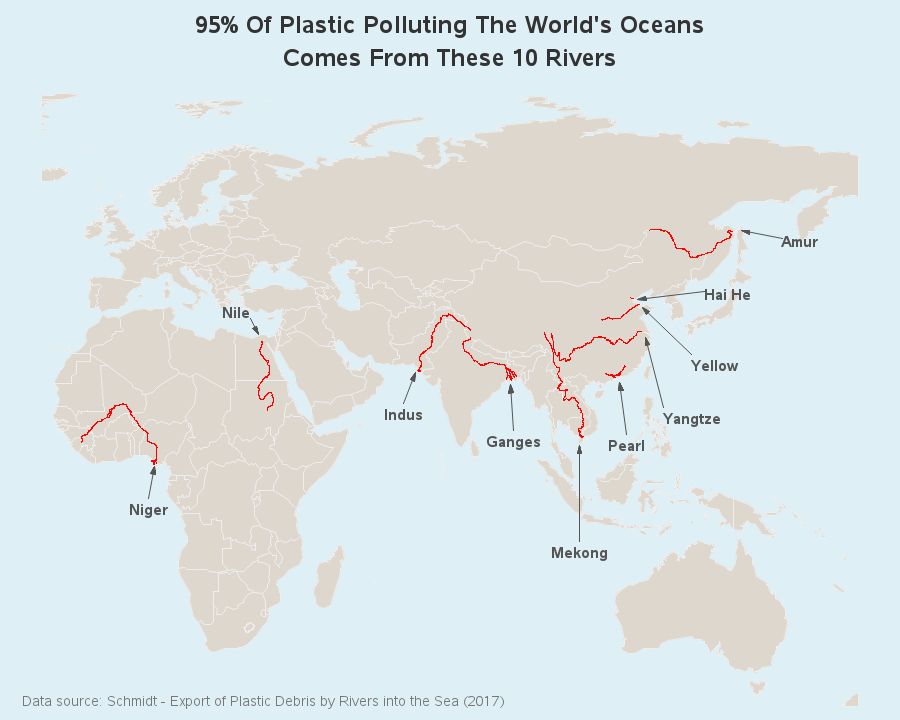
But despite the students’ new-found environmental awareness, the ban they favour would make little or no difference to plastic items ending up in the oceans, because the vast majority of the plastic there comes from only ten rivers, none of them in North America (this is from a World Economic Forum report). Jason Unrau reports on his trip up the Yangtze River in China twenty years ago that illustrates the breadth of the problem:

Beginning in Shanghai in the summer of 1999, I boarded a large flat-bottom boat with around 300 other passengers. It would be the first of about a dozen different vessels, that over two weeks ferried me 2500 kilometres to Chongqing.

After taking my first meal in the ferry’s mess hall, served in a Styrofoam box, I searched everywhere for a garbage can. There were none – passengers simply tossed their garbage overboard and without an alternative, I joined in the littering.

The banks of the Yangtze are home to more than 200 million Chinese who treat the waterway as commuter corridor and as I soon discovered, a dump. I took the trip to get a glimpse the fabled Three Gorges, before a hydro-electric project and dam would change the watershed forever. As my trip progressed, however, so did my treatment of this historic river as trash receptacle.

The closer I got to Chongqing, the narrower the river became and the smaller the ferries got. About 10 days into the trip, I exited the dining hall of a different vessel to engage in the daily ritual of reckless Styrofoam abandonment, but to my surprise there was a garbage bin.

Delighted at the prospect that my littering ways on the Yangtze were through, enthusiastically I added my box to a near overflowing bin. As if on cue a kitchenhand exited the dining hall, gathered up the bag and heaved the entire thing overboard.

Like I experienced and begrudgingly participated in creating, the World Economic Forum’s report describes “rivers of plastic” – its analyses of respective outputs and comparisons to garbage island and other samples, could be traced back to their source.

According to the economic forum eight of these rivers are in Asia: the Yangtze; Indus; Yellow; Hai He; Ganges; Pearl; Amur; Mekong; and two in Africa – the Nile and the Niger.

April 15, 2019

Why Are Brits So Obsessed with Tea? – Anglophenia Ep 30

Filed under: Britain, History, India — Tags: — Nicholas @ 02:00

Anglophenia
Published on 3 Jun 2015

Anglophenia’s Kate Arnell looks back at the moments in history that made Britain a tea-drinking nation.

April 13, 2019

History Summarized: Steel (Feat. “That Works”)

Overly Sarcastic Productions
Published on 12 Apr 2019

More from Matt & Ilya on “That Works”: https://bit.ly/2D0A6qk

More about steel from Shadiversity:
— “When Was Steel Invented” https://bit.ly/2uSwcvh
— “The Riddle of Steel” https://bit.ly/2G6TB28
— “The Oldest Steel Sword” https://bit.ly/2VvWVZZ

CORRECTION from 12:10 — The back of a Katana after differential hardening process is a lower-carbon STEEL, but it is still Steel rather than Iron. My mistake. The higher-carbon content Martensite forms the cutting edge, and low-carbon steel forms the spine.

BLUE’S BOOK: Philosophicalphridays.com

PATREON: https://www.Patreon.com/OSP

April 7, 2019

Epic Moments in History – The 9 Lives of Alexander the Great

Filed under: History, India, Middle East, Military — Tags: , , , , , — Nicholas @ 02:00

Invicta
Published on 4 Sep 2017

Alexander the Great is one of the most famous historical figures of all time. Yet many are unaware of the 9 times he cheated death over the course of his epic campaigns into the east!

Support future documentaries: https://www.patreon.com/InvictaHistory
Twitter: https://twitter.com/InvictaHistory

Video Credits:
Research – Invicta
Script: Invicta
Narration – Invicta
Artwork – Robbie McSweeney (https://www.artstation.com/artist/rob…)

Bibliography:
Alexander the Great by Phillips Freeman
The Campaigns of Alexander by Arrian

Music: “Rome: Total War OST” by Jeff van Dyck
“Total War: Rome II OST” by Richard Beddow

March 31, 2019

QotD: Gandhi’s not-so-non-violent followers

Filed under: History, India, Quotations, Religion — Tags: , , , , , — Nicholas @ 01:00

… it is not widely realized (nor will this film tell you) how much violence was associated with Gandhi’s so-called “nonviolent” movement from the very beginning. India’s Nobel Prize-winning poet, Rabindranath Tagore, had sensed a strong current of nihilism in Gandhi almost from his first days, and as early as 1920 wrote of Gandhi’s “fierce joy of annihilation,” which Tagore feared would lead India into hideous orgies of devastation — which ultimately proved to be the case. Robert Payne has said that there was unquestionably an “unhealthy atmosphere” among many of Gandhi’s fanatic followers, and that Gandhi’s habit of going to the edge of violence and then suddenly retreating was fraught with danger. “In matters of conscience I am uncompromising,” proclaimed Gandhi proudly. “Nobody can make me yield.” The judgment of Tagore was categorical. Much as he might revere Gandhi as a holy man, he quite detested him as a politician and considered that his campaigns were almost always so close to violence that it was utterly disingenuous to call them nonviolent.

For every satyagraha true believer, moreover, sworn not to harm the adversary or even to lift a finger in his own defense, there were sometimes thousands of incensed freebooters and skirmishers bound by no such vow. Gandhi, to be fair, was aware of this, and nominally deplored it — but with nothing like the consistency shown in the movie. The film leads the audience to believe that Gandhi’s first “fast unto death,” for example, was in protest against an act of barbarous violence, the slaughter by an Indian crowd of a detachment of police constables. But in actual fact Gandhi reserved this “ultimate weapon” of his to interdict a 1931 British proposal to grant Untouchables a “separate electorate” in the Indian national legislature — in effect a kind of affirmative-action program for Untouchables. For reasons I have not been able to decrypt, Gandhi was dead set against the project, but I confess it is another scene I would like to have seen in the movie: Gandhi almost starving himself to death to block affirmative action for Untouchables.

From what I have been able to decipher, Gandhi’s main preoccupation in this particular struggle was not even the British. Benefiting from the immense publicity, he wanted to induce Hindus, overnight, ecstatically, and without any of these British legalisms, to “open their hearts” to Untouchables. For a whole week Hindu India was caught up in a joyous delirium. No more would the Untouchables be scavengers and sweepers! No more would they be banned from Hindu temples! No more would they pollute at 64 feet! It lasted just a week. Then the temple doors swung shut again, and all was as before. Meanwhile, on the passionate subject of swaraj, Gandhi was crying, “I would not flinch from sacrificing a million lives for India’s liberty!” The million Indian lives were indeed sacrificed, and in full. They fell, however, not to the bullets of British soldiers but to the knives and clubs of their fellow Indians in savage butcheries when the British finally withdrew.

Richard Grenier, “The Gandhi Nobody Knows”, Commentary, 1983-03-01.

March 14, 2019

Tyler Cowen’s tips on visiting India

Filed under: Food, India — Tags: — Nicholas @ 05:00

Although the blog post is nearly a month old, I completely missed it when it was first posted. It’s called “How to travel to India”, but it’s really more about how to get the best of your visit while you’re there. I’ve never been to India (and it seems unlikely I’ll ever get to visit), but from reading the accounts of other visitors, Tyler has some excellent advice here:

4. Every single part of India is interesting and worth visiting, as far as I can tell after five trips. That said, I find Bangalore quite over-visited relative to its level of interest.

5. My favorite places in India are Mumbai, Chennai, Rajasthan, and Kolkaata. Still, I could imagine a rational person with interests broadly similar to my own having a quite different list.

6. India has the best food in the world. It is not only permissible but indeed recommended to take all of your meals in fancy hotel restaurants. Do not eat the street food in India (and I eat it virtually everywhere else). It is also permissible to find two or three very good hotel restaurants — or even one — and simply run through their menus. You won’t be disappointed.

7. Invest in a very, very good hotel. It is affordable, and you will need it, and it will be a special memory all its own.

8. Being driven around in the Indian countryside is terrifying (and I have low standards here, I do this all the time in other non-rich countries). If it were safer, I would see many more parts of India. But it isn’t. So I don’t.

I’ve posted this before, and it doesn’t really relate to Tyler’s travel tips, but I still find it amusing:

India as seen by a cool Bangalorean

March 12, 2019

9 British Dishes Everyone Should Try – Anglophenia Ep 2

Filed under: Britain, Food, History, India — Tags: , — Nicholas @ 02:00

Anglophenia
Published on 22 May 2014

British food has a bad reputation, but Siobhan Thompson’s here to set the record straight, offering nine tasty U.K. dishes that will quiet the naysayers.

Visit the Anglophenia blog at http://www.bbcamerica.com/anglophenia

Photos via Fotolia.

Follow Anglophenia on Twitter: http://www.twitter.com/anglophenia
Follow Siobhan Thompson on Twitter: http://www.twitter.com/vornietom

March 4, 2019

QotD: Gandhi and the partition of India

Filed under: History, India, Quotations — Tags: , , , — Nicholas @ 01:00

Anyone who wants to wade through Gandhi’s endless ruminations about himsa and ahimsa (violence and nonviolence) is welcome to do so, but it is impossible for the skeptical reader to avoid the conclusion — let us say in 1920, when swaraj (home rule) was all the rage and Gandhi’s inner voice started telling him that ahimsa was the thing — that this inner voice knew what it was talking about. By this I mean that, though Gandhi talked with the tongue of Hindu gods and sacred scriptures, his inner voice had a strong sense of expediency. Britain, if only comparatively speaking, was a moral nation, and nonviolent civil disobedience was plainly the best and most effective way of achieving Indian independence. Skeptics might also not be surprised to learn that as independence approached, Gandhi’s inner voice began to change its tune. It has been reported that Gandhi “half-welcomed” the civil war that broke out in the last days. Even a fratricidal “bloodbath” (Gandhi’s word) would be preferable to the British.

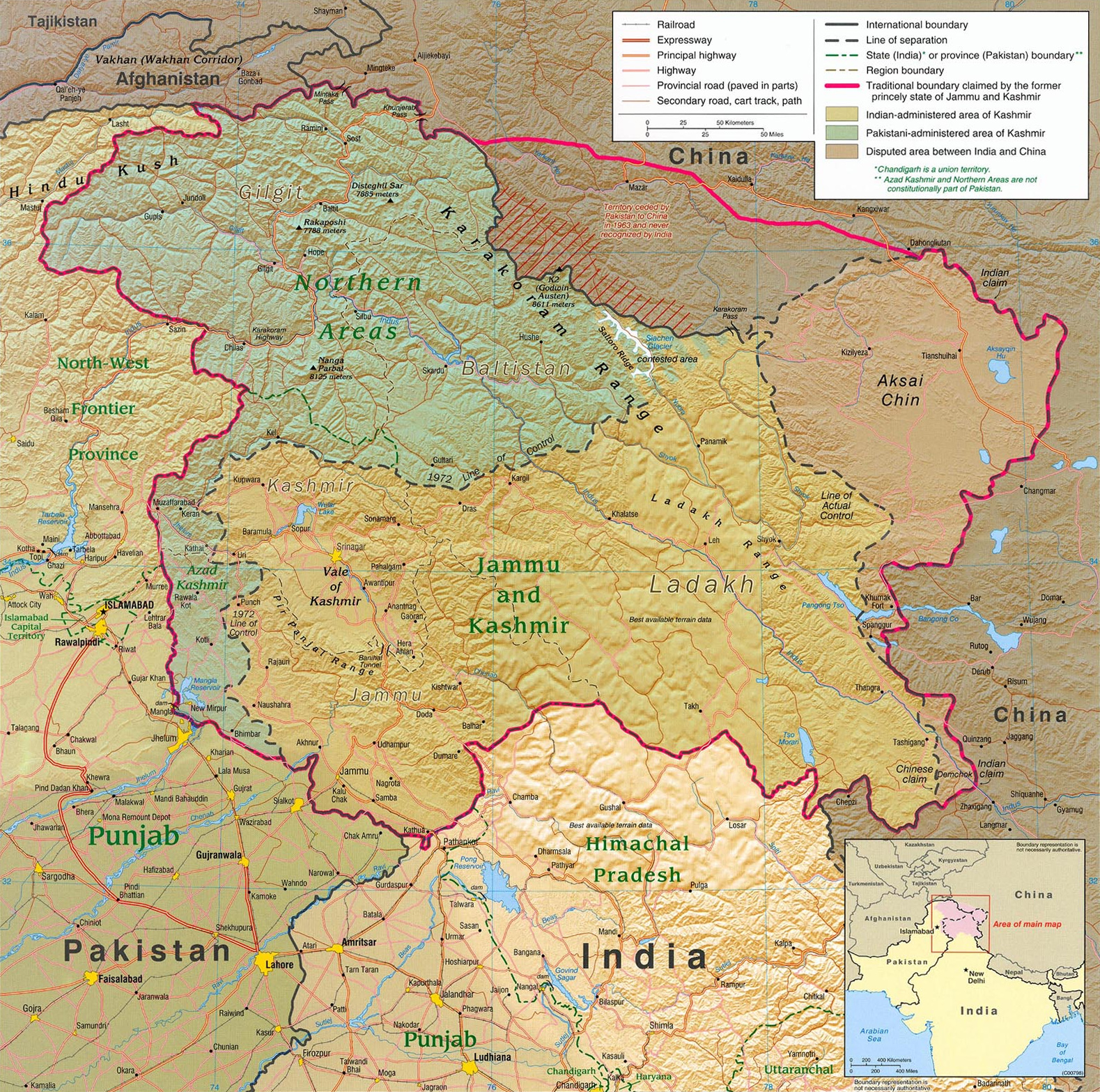
And suddenly Gandhi began endorsing violence left, right, and center. During the fearsome rioting in Calcutta he gave his approval to men “using violence in a moral cause.” How could he tell them that violence was wrong, he asked, “unless I demonstrate that nonviolence is more effective?” He blessed the Nawab of Maler Kotla when he gave orders to shoot ten Muslims for every Hindu killed in his state. He sang the praises of Subhas Chandra Bose, who, sponsored by first the Nazis and then the Japanese, organized in Singapore an Indian National Army with which he hoped to conquer India with Japanese support, establishing a totalitarian dictatorship. Meanwhile, after independence in 1947, the armies of the India that Gandhi had created immediately marched into battle, incorporating the state of Hyderabad by force and making war in Kashmir on secessionist Pakistan. When Gandhi was assassinated by a Hindu extremist in January 1948 he was honored by the new state with a vast military funeral — in my view by no means inapposite.

Richard Grenier, “The Gandhi Nobody Knows”, Commentary, 1983-03-01.

« Newer PostsOlder Posts »

Powered by WordPress