John Carter was really impressed with a recent self-published novel by Frank Kidd, and takes the time to set up the real-life situation the novel imagines being kinetically addressed:
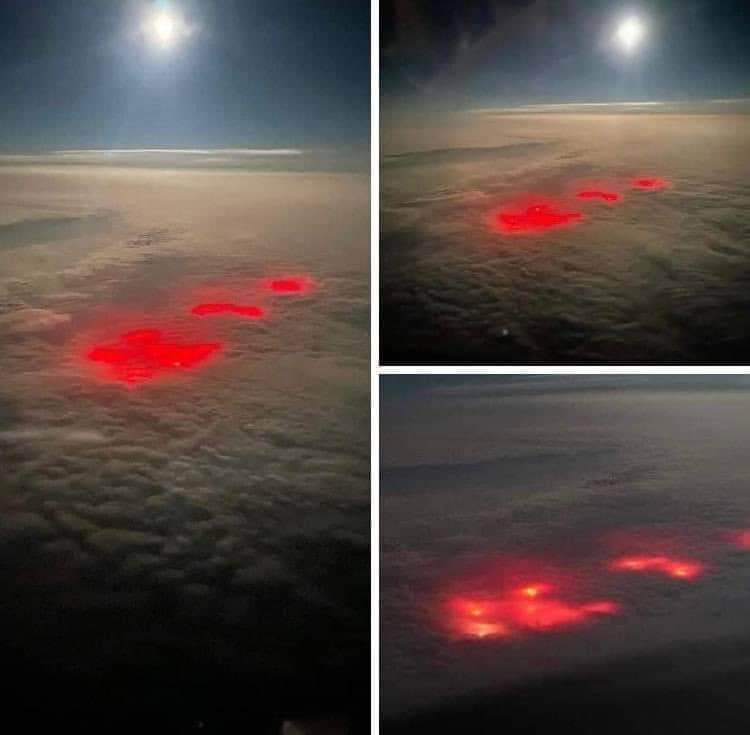
A few years ago a photograph taken by a pilot over the Pacific went viral. It showed a mysterious red glow spreading ominously out over the water.
Initially people thought it was aliens, and to be fair, they weren’t far off. The glow belonged to the closest thing humanity has yet invented to a Tyranid hive fleet: a Chinese fishing fleet raping the seas in search of seafood. The glow is from huge banks of LEDs, which the ships use to draw marine life to the surface, where they trawl it up with nets. Much, maybe even most of the indiscriminate catch is discarded.
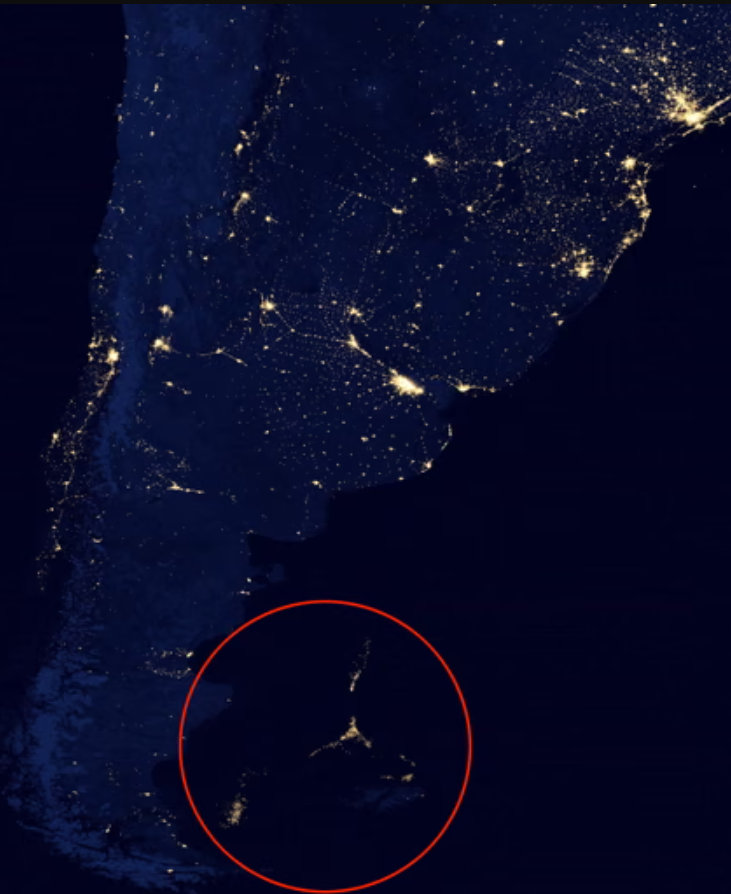
China has over half a million fishing vessels. Their vast fleets comprise thousands of ships, and can often be seen from orbit.
The triangular lights inside the red circle are a Chinese fishing fleet.
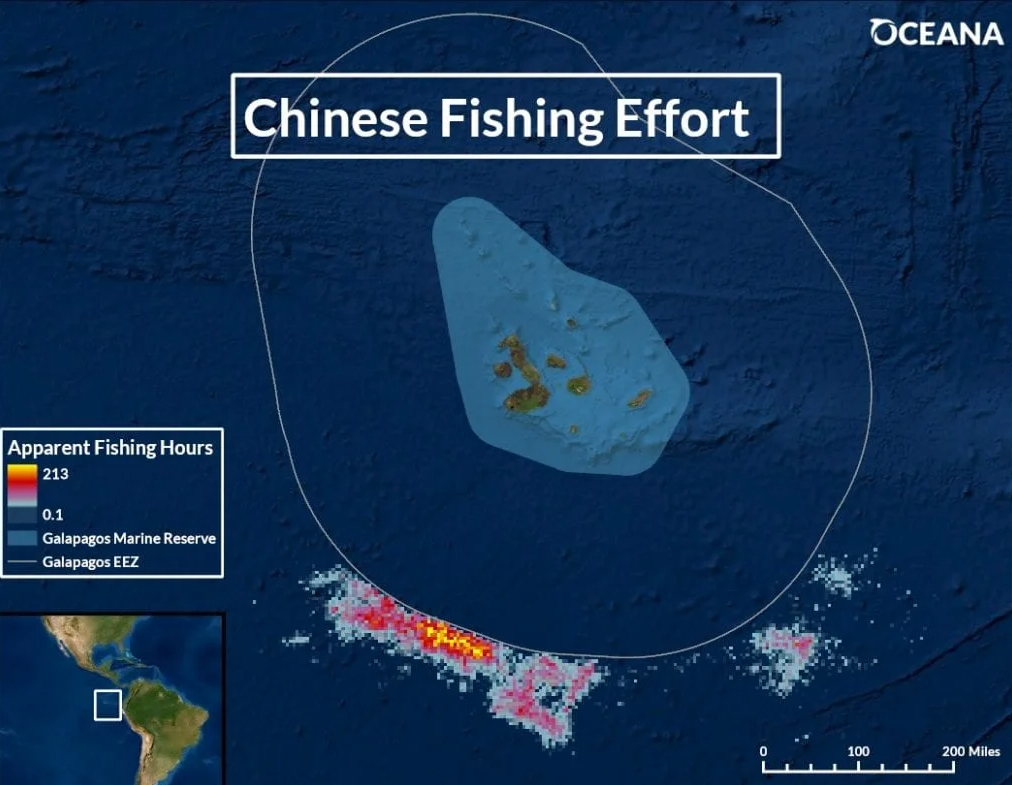
China has long since eaten its way through its own territorial waters, and therefore sends its fleets out into the rest of the world’s oceans. As a rule marine life is much more abundant close to the shore, since this is where most of the nutrients are. Fishing in another country’s territorial waters is illegal under international law. The Chinese do not care. Their fleets park just on the edge of a country’s Economic Exclusion Zone, and then turn off their Automatic Identification System transponders so that they can sneak inside and poach. Turning off an AIS transponder is also illegal: maritime law requires these to be activated at all times, for collision avoidance and search and rescue. Organizations which track this regularly observe Chinese ships on EEZ borders disappearing from the AIS network, and reappearing a few hours later on the right side of the border.
Here we see the scum pillaging the ocean around the Galapagos. Yeah. I know. Billions must die.
The consequences for local fishermen are disastrous: the Chinese scoop up all the fish, and lead the local fisheries towards ecosystem collapse. When they’re done pillaging they just move on, leaving an oceanic wasteland in their wake.
Environmental groups generally don’t seem very bothered about this, perhaps because the ocean is a CO2 sink whether or not there are fish in it, and the only thing that matters about the environment is how much carbon is in the air. National governments are reluctant to take action, because they are often dependent upon Chinese investment for their economic growth. The only people who really seem to care are fishermen and Internet racists.
This is the set-up for Frank Kidd‘s immensely satisfying debut mercenary novel, Once Upon A Time In Argentina.