Quotulatiousness

April 7, 2022

Republic to Empire: The Triumph of Caesar

Filed under: Europe, History, Italy, Military — Tags: , , , , , , , , — Nicholas @ 06:00

seangabb
Published 5 Mar 2021

In 120 BC, Rome was a republic with touches of democracy. A century later, it was a divine right military dictatorship. Between January and March 2021, Sean Gabb explored this transformation with his students. Here is one of his lectures. All student contributions have been removed.
(more…)

April 6, 2022

QotD: Haruspicy and Augury in Roman religious observances

Filed under: Europe, History, Quotations, Religion — Tags: , , , — Nicholas @ 01:00

Perhaps the most important form of divination in Rome was haruspicy (which spell-check insists is not a word, but is). Performed by a haruspex, haruspicy was the art of determining the will of the gods by examining the entrails of animals – particularly sacrificed animals and most commonly (but not exclusively) the liver. The most common thing haruspicy might tell you is if the sacrifice was accepted: a malformed or otherwise ill-omened liver might indicate that the ritual had failed and that the god had refused the sacrifice.

Remember that the do ut des system is essentially one of bargaining with the gods, and the god you are bargaining with always has the option of simply refusing the bargain. This might mean some failure in the mechanics of the ritual (necessitating it be performed again), or that the god had been offended in some way, but it might also mean something more. A lot of sacrificial rituals were done at the outset of important tasks – before battles, political events, etc. What the god might be telling you then with a failed sacrifice is “DO NOT PROCEED”.

The practitioner is given a bit of wiggle room on how to interrupt a failed sacrifice in this way: it might mean “don’t attack at all”, but it might also mean “don’t attack now”. Roman generals, ready to attack, might repeat the same ritual over and over again, like a runner at the start of a race waiting for the “go” signal.

But more information was potentially available, because the exact nature of the liver and its quality might signal more things. In Rome, it was understood that the very best knowledge in this regard came from the Etruscans (an example of how antiquity lends credibility to ritual – Etruscan religion was old even to the Romans, and thus had acquired a strong reputation). The reading of a liver could be complex: we find “liver models” from both Italy and the Near East with guidance on how to interpret different parts of the liver of a sacrificed animal. This could be fairly specific: famously, it was haruspex who warned Caesar about the danger of the Ides of March (Seut. Caes. 81.2).

Another key system for divining the will of the gods in Rome was augury, the reading of the flights of birds (mostly, there are actually other categories of auspicia); doing so is called taking the auspices, and the men who do so are the augurs. Augurs were particularly important in political matters, taking the auspices for elections and the like. Unfavorable auspices could invalidate even a consular election: the gods get a vote too.

Bret Devereaux, “Collections: Practical Polytheism, Part III: Polling the Gods”, A Collection of Unmitigated Pedantry, 2019-11-08.

April 3, 2022

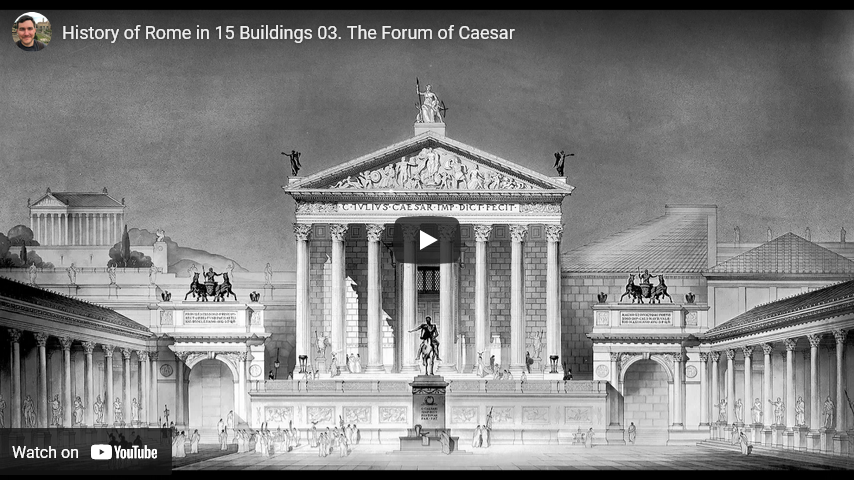
History of Rome in 15 Buildings 03. The Forum of Caesar

Filed under: Architecture, Europe, History, Italy — Tags: , , , , — Nicholas @ 02:00

toldinstone
Published 27 Sep 2018

In this third episode of our History of Rome, focused on the Forum of Julius Caesar, we discuss (as might be expected) Julius Caesar, the last and greatest of the generals who reshaped the Roman Republic in their own image. Caesar dominates the stage, but there are walk-on bits for a crew of pirates, forty trained elephants, and Cleopatra.

If you enjoyed this video, you might be interested in my book Naked Statues, Fat Gladiators, and War Elephants: Frequently Asked Questions about the Ancient Greeks and Romans. You can find a preview of the book here:

https://toldinstone.com/naked-statues…

If you’re so inclined, you can follow me elsewhere on the web:

https://www.reddit.com/r/AskHistorian…
https://www.instagram.com/toldinstone/

To see the story and photo essay associated with this video, go to:
https://toldinstone.com/the-forum-of-…

Thanks for watching!

March 26, 2022

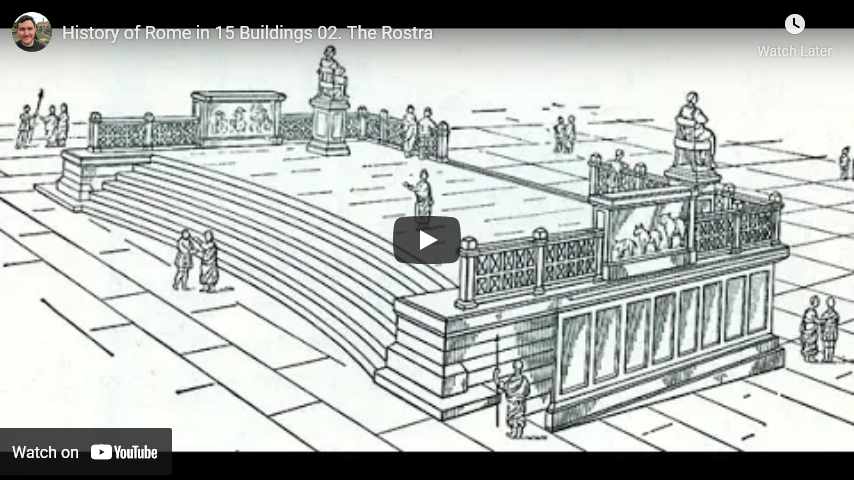
History of Rome in 15 Buildings 02. The Rostra

Filed under: Architecture, Europe, History — Tags: , , , , , — Nicholas @ 02:00

toldinstone
Published 2 Oct 2018

This second episode of our History of Rome presents the Rostra, the speaking platform in the Roman Forum, as a key to understanding the turbulent world of the Late Republic. It focuses on the career of Cicero, Rome’s greatest orator, who was successively applauded and impaled on the Rostra.

If you enjoyed this video, you might be interested in my forthcoming book Naked Statues, Fat Gladiators, and War Elephants: Frequently Asked Questions about the Ancient Greeks and Romans.

You can find a preview of the book here:

https://toldinstone.com/naked-statues…

If you’re so inclined, you can follow me elsewhere on the web:

https://www.reddit.com/r/AskHistorian…
https://www.instagram.com/toldinstone/

To see the story and photo essay associated with this video, go to:
https://toldinstone.com/the-rostra/
Thanks for watching!

March 19, 2022

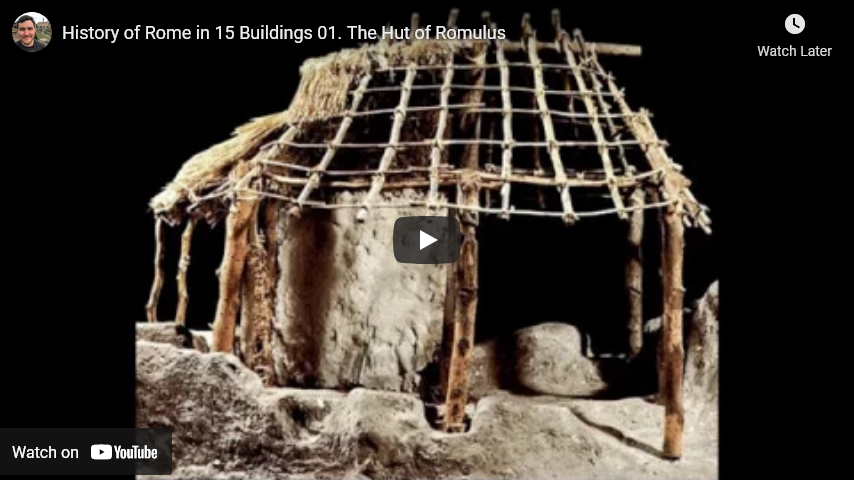
History of Rome in 15 Buildings 01. The Hut of Romulus

Filed under: Architecture, Europe, History — Tags: , , — Nicholas @ 02:00

toldinstone
Published 27 Sep 2018

This first episode of my History of Rome in Fifteen Buildings discusses the origins of Rome in relation to the enigmatic and frequently-rebuilt structure known as the Hut of Romulus. Along the way, we’ll encounter a floating phallus, a remarkably accommodating she-wolf, and, of course, the homicidal demigod who founded the city of Rome.

If you enjoyed this video, you might be interested in my forthcoming book Naked Statues, Fat Gladiators, and War Elephants: Frequently Asked Questions about the Ancient Greeks and Romans.

https://toldinstone.com/naked-statues…
If you’re so inclined, you can follow me elsewhere on the web:

https://www.reddit.com/r/AskHistorian…
https://www.instagram.com/toldinstone/

To see the story and photo essay associated with this video, go to:
https://toldinstone.com/the-hut-of-ro…
Thanks for watching!

February 28, 2022

Roman Republic to Empire 03 Inequality and Corruption

Filed under: Europe, History, Italy, Military — Tags: , , , , , , — Nicholas @ 04:00

seangabb
Published 5 Feb 2021

[Update 2023-03-02 – Dr. Gabb took down the original posts and re-uploaded them.]

Here is the third lecture, which describes the decay of the Roman Constitution as a result of changes in patterns of land tenure in Italy after the Second Punic War, and as a result of the flood of foreign money into Rome from military victories and war indemnities and bribes.
(more…)

February 20, 2022

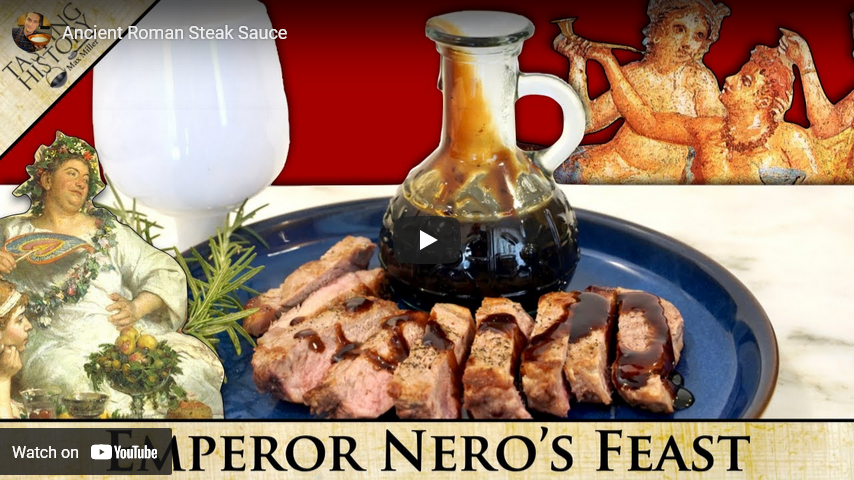
Ancient Roman Steak Sauce

Filed under: Europe, Food, History — Tags: , , , , , — Nicholas @ 02:00

Tasting History with Max Miller
Published 9 Nov 2021

Support the Channel with Patreon ► https://www.patreon.com/tastinghistory
Merch ► crowdmade.com/collections/tastinghistory
Instagram ► https://www.instagram.com/tastinghist…
Twitter ► https://twitter.com/TastingHistory1
Tiktok ► TastingHistory
Reddit ► r/TastingHistory
Discord ► https://discord.gg/d7nbEpy

Send mail to:
Tasting History
PO Box 766
Burbank, CA 91503

LINKS TO INGREDIENTS & EQUIPMENT**
Sony Alpha 7C Camera: https://amzn.to/2MQbNTK
Sigma 24-70mm f/2.8 Lens: https://amzn.to/35tjyoW
Flor de Garum: https://amzn.to/3EEXs27
Saba: https://amzn.to/3EHnz8G
Long Pepper: https://amzn.to/3EK3oqq
Juniper Berries: https://amzn.to/3GLB8FP

LINKS TO SOURCES**
De re coquinaria (Apicius): https://amzn.to/3BIidI8
A Taste of Ancient Rome by Ilaria Giacosa: https://amzn.to/3nZ7PqV

**Some of the links and other products that appear on this video are from companies which Tasting History will earn an affiliate commission or referral bonus. Each purchase made from these links will help to support this channel with no additional cost to you. The content in this video is accurate as of the posting date. Some of the offers mentioned may no longer be available.

Subtitles: Jose Mendoza – IG @worldagainstjose

PHOTO CREDITS
Apicius: By Bonho1962 – Own work, CC BY-SA 3.0, https://commons.wikimedia.org/w/index…
Domitian: By I, Sailko, CC BY 2.5, https://commons.wikimedia.org/w/index…
Cartwright, Mark. “Mushrooms, Roman Mosaic.” World History Encyclopedia, 23 Jan 2016. Web. 01 Nov 2021.
Agrippina crowning her young son Nero: By Carlos Delgado, CC BY-SA 3.0, https://commons.wikimedia.org/w/index…

#tastinghistory

February 16, 2022

Roman Republic to Empire 02 The Carthaginian Curse

Filed under: Europe, History, Italy, Military — Tags: , , , , , , , — Nicholas @ 04:00

seangabb
Published 5 Feb 2021

[Update 2023-03-02 – Dr. Gabb took down the original posts and re-uploaded them.]

Here is the second lecture, which describes the vindictive treatment of Hannibal and Carthage, and explains this in terms of how the Second Punic War destabilised both Italy and the Roman Constutition. Between January and March 2021, Sean Gabb explored this transformation with his students. Here is one of his lectures. All student contributions have been removed.
(more…)

February 8, 2022

Roman Republic to Empire: 01 Mistress of the Mediterranean

Filed under: Europe, Greece, History, Italy, Military — Tags: , , , , , , , — Nicholas @ 04:00

seangabb
Published 21 Jan 2021

[Update 2023-03-02 – Dr. Gabb took down the original posts and re-uploaded them.]

In 120 BC, Rome was a republic with touches of democracy. A century later, it was a divine right military dictatorship. Between January and March 2021, Sean Gabb explored this transformation with his students. Here is one of his lectures. All student contributions have been removed.
(more…)

February 7, 2022

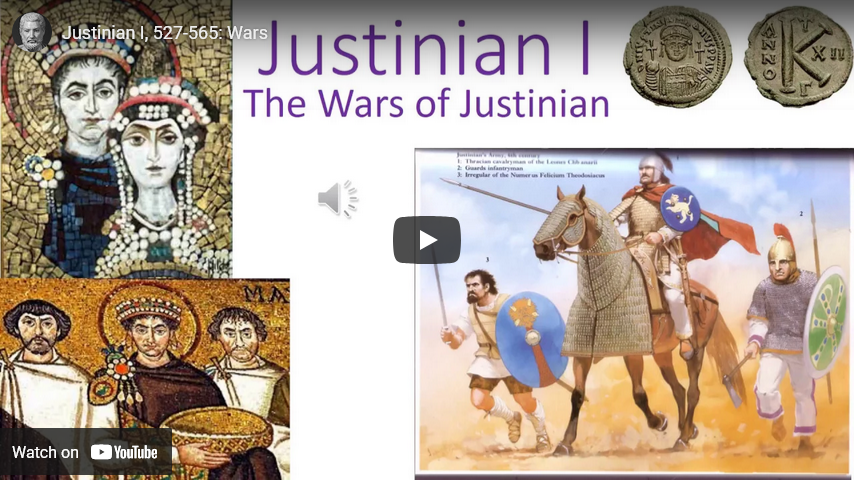
Justinian I, 527-565: Wars

Thersites the Historian
Published 21 Sep 2017

In this video, I look at the wars of conquest waged by the Emperor Justinian and explore whether or not these conflicts advanced the long-term interests of the Byzantine state.

February 5, 2022

City Minutes: The Roman Empire

Overly Sarcastic Productions
Published 4 Feb 2022

The funny thing about Empire is that ~*Rome*~ includes far more than just the City of Rome. Spread out across every corner of the Mediterranean — and then some — Roman Civilization was always adapting to local circumstances and changing over time. Today we’ll look at 5 cities that show the diversity of just how much “Rome” could really mean in the days of the empire.

The Great Cities In History by John Julius Norwich, “A Wonder of the World – Ephesus” from The Great Tours: Greece and Turkey, from Athens to Istanbul by John R. Hale, “Ephesus”, “Leptis Magna”, “Roman Britain”, “Pompeii” from World History Encyclopedia https://www.worldhistory.org/ephesos/, https://www.worldhistory.org/Lepcis_Magna, https://www.worldhistory.org/Roman_Britain, https://www.worldhistory.org/pompeii/. “Ephesus”, “Leptis Magna” “London”, “Pompeii” from Britannica https://www.britannica.com/place/Ephesus, https://www.britannica.com/place/Leptis-Magna, https://www.britannica.com/place/Lond…, https://www.britannica.com/place/Pompeii. I also have a degree in Classical Studies.

Chapters:
0:00 — Rome
0:58 — Ephesus
2:00 — Leptis Magna
3:03 — Londinium
4:12 — Pompeii
5:17 — Conclusion

Our content is intended for teenage audiences and up.

PATREON: https://www.Patreon.com/OSP

PODCAST: https://overlysarcasticpodcast.transi…

DISCORD: https://discord.gg/osp

MERCH LINKS: http://rdbl.co/osp

OUR WEBSITE: https://www.OverlySarcasticProductions.com
Find us on Twitter https://www.Twitter.com/OSPYouTube
Find us on Reddit https://www.Reddit.com/r/OSP/

January 22, 2022

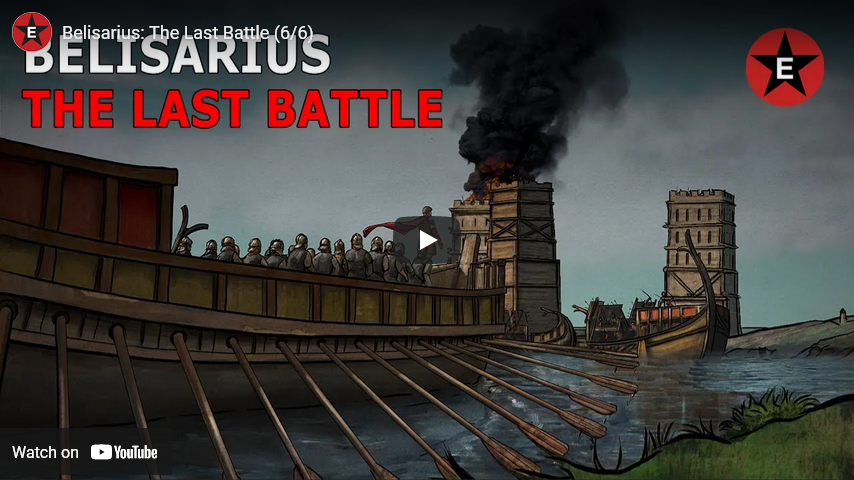
Belisarius: The General & The Eunuch

Filed under: Europe, History, Italy, Military — Tags: , , , , — Nicholas @ 06:00

Epic History TV
Published 21 Jan 2022

Download Fishing Clash for FREE and play today! https://fishingclash.onelink.me/dkOM/…

Big thanks to Legendarian for Total War: Attila gameplay footage, check out his YouTube channel here: https://www.youtube.com/channel/UCOI2…

Big thanks also to our series consultant Professor David Parnell of Indiana University Northwest, who you can follow on Twitter here: https://twitter.com/byzantineprof

Total War: Attila gameplay footage used with kind permission of Creative Assembly – buy the game here: https://geni.us/qDreR

Support Epic History TV on Patreon from $1 per video, and get perks including ad-free early access & votes on future topics https://www.patreon.com/EpicHistoryTV

🎨 Original artwork by Miłek Jakubiec https://www.artstation.com/milek

📚 Recommended reading (as an Amazon Associate I earn from qualifying purchases):
📖 Procopius, History of the Wars https://geni.us/L3Pgc
📖 The Wars of Justinian by Michael Whitby https://geni.us/Xxrd3
📖 Rome Resurgent by Peter Heather https://geni.us/ZFoU1
📖 The Armies of Ancient Persia: the Sassanians by Kaveh Farrokh https://geni.us/jMQo3z
📖 Late Roman Cavalryman AD 236–565 (Osprey) by Simon MacDowall https://geni.us/XMGl

👕 Buy EHTV t-shirts, hoodies, mugs and stickers here! teespring.com/en-GB/stores/epic-histo…

🎶 Music from Filmstro: https://filmstro.com/?ref=7765
Get 20% off an annual license with this exclusive code: EPICHISTORYTV_ANN

#EpicHistoryTV #RomanEmpire #EasternRomanEmpire #Justinian #Belisarius #ByzantineEmpire #Romans #Ostrogoths

January 8, 2022

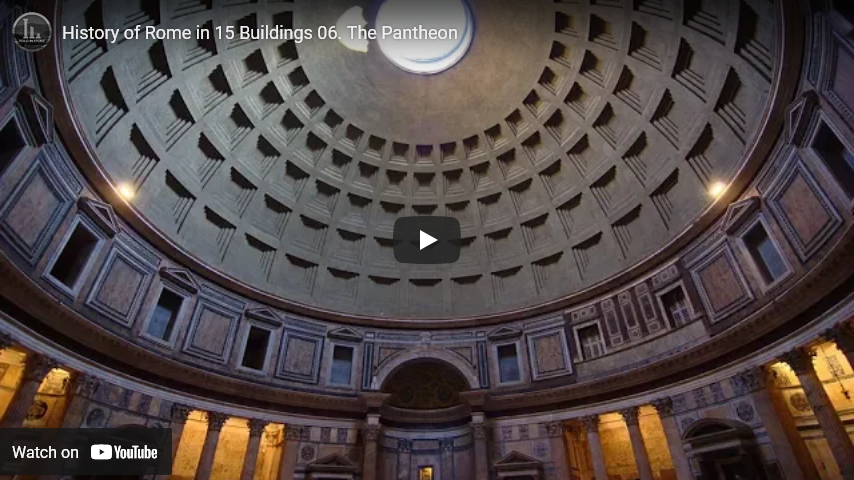
Antique Antics: The Pantheon

Overly Sarcastic Productions
Published 7 Jan 2022

It’s a good dome, simple as that.

SOURCES & Further Reading: The Great Courses lectures: “The Most Celebrated Edifice – The Pantheon” from Understanding Greek and Roman Technology by Stephen Ressler, and “Roman Art and Architecture” from The Roman Empire: From Augustus to The Fall of Rome by Gregory Aldrete. “The Pantheon” by Chris Legare via ATouchOfRome https://www.atouchofrome.com/the_pant…. Additionally, I have a university degree in Classical Studies.

Our content is intended for teenage audiences and up.

PATREON: https://www.Patreon.com/OSP

PODCAST: https://overlysarcasticpodcast.transi…

DISCORD: https://discord.gg/osp

MERCH LINKS: http://rdbl.co/osp

OUR WEBSITE: https://www.OverlySarcasticProductions.com
Find us on Twitter https://www.Twitter.com/OSPYouTube
Find us on Reddit https://www.Reddit.com/r/OSP/

January 3, 2022

How did the Greeks and Romans count Years?

Filed under: Europe, Greece, History, Middle East — Tags: , , , — Nicholas @ 04:00

toldinstone
Published 31 Dec 2021

The AD/CE system we use to date the year was introduced — more or less by accident — during the Middle Ages. Before its invention, the classical world used a wide range of dating systems.

Please consider supporting this channel on Patreon:
https://www.patreon.com/toldinstone

If you liked this video, you might also enjoy my book Naked Statues, Fat Gladiators, and War Elephants: Frequently Asked Questions about the Ancient Greeks and Romans:

https://www.amazon.com/Naked-Statues-…

If you’re so inclined, you can follow me elsewhere on the web:
https://www.reddit.com/r/AskHistorian…
https://www.instagram.com/toldinstone/
https://www.goodreads.com/author/show…

Chapters:
0:00 Introduction
0:51 Ancient Greek Calendars
1:42 Counting by Olympiads
2:22 The Seleucid Era
2:56 Consular Dating
3:26 Ab Urbe Condita
4:28 Indictions
4:56 Christian Chronology
5:40 Anno Domini
7:00 Conclusion

December 27, 2021

Celebrating Saturnalia with Cato’s Globi

Filed under: Europe, Food, History — Tags: , , , , , — Nicholas @ 04:00

Tasting History with Max Miller
Published 15 Dec 2020

Help Support the Channel with Patreon: https://www.patreon.com/tastinghistory
Tasting History Merchandise: crowdmade.com/collections/tastinghistory

Follow Tasting History here:
Instagram: https://www.instagram.com/tastinghist…
Twitter: https://twitter.com/TastingHistory1
Reddit: r/TastingHistory
Discord: https://discord.gg/d7nbEpy

LINKS TO INGREDIENTS & EQUIPMENT**
Canon EOS M50 Camera: https://amzn.to/3amjvwu
Canon EF 50mm Lens: https://amzn.to/3iCrkB8
Safflower Oil: https://amzn.to/39Lcsiz
Spelt Flour: https://amzn.to/3ggzPBO
Poppy Seeds: https://amzn.to/37DyG3q
Pokemon plushie: www.pokemoncenter.com

LINKS TO SOURCES**
De Agricultura by Cato the Elder: https://amzn.to/3qxL5P5
Saturnalia by Macrobius: https://amzn.to/39N6Pkb
The Twelve Ceasars by Seutonius: https://amzn.to/39MQBat
**Amazon offers a small commission on products sold through their affiliate links, so each purchase made from this link, whether this product or another, will help to support this channel with no additional cost to you.

Subtitles: Jose Mendoza

GLOBI
ORIGINAL 2ND CENTURY BC RECIPE (From De Agricultura by Cato the Elder)
Globi to be made thus: Mix the cheese and spelt in the same way. Make as many as desired. Pour fat into a hot copper vessel, and fry one or two at a time, turning them frequently with two sticks, and remove when done. Coat with honey, sprinkle with poppy-seeds, and serve.

MODERN RECIPE
INGREDIENTS
– 1 Cup (240g) Ricotta Cheese
– 1 Cup and 1 tablespoon (120g) Spelt, Durum or other whole grain flour
– 1 Quart (1 L) of fat or oil
– 1/3 Cup (80ml) Honey
– Poppy Seeds

METHOD
1. Mix the cheese and flour in a large bowl, then form it into balls about 1 inch across. This recipe should make 12-15 balls.
2. Heat the oil over a high heat until it reaches 350°F (175°C). Turn heat to medium and fry two to three balls at a time, turning every 10 to 15 seconds with tongs. At 60 seconds, begin to check the color; once they are a golden brown (60-90 seconds) take them out and set them on a wire rack over paper towels to drain. Repeat until all of the globi are fried.
3. Dip the dried globi in honey (heating the honey can help if it is too thick). Then sprinkle with poppy seeds and serve.

PHOTO CREDITS
Saturn: By inconnu – User:Jean-Pol GRANDMONT (2011), CC BY 3.0, https://bit.ly/39OKgLF
A Statue of Chronos: By Rufus46 – Own work, CC BY-SA 3.0, https://bit.ly/3giv9eH
Pileus: By Marie-Lan Nguyen (2009), CC BY 2.5, https://bit.ly/3osYo1l
Roman Collared Slaves: Ashmolean Museum, CC BY-SA 2.0 https://bit.ly/36OoIgz
Candles Oberflacht: Landesmuseum Württemberg, CC BY-SA 3.0 https://bit.ly/2Lf9yZp
Roman Figurines: Carole Raddato from FRANKFURT, Germany, CC BY-SA 2.0 https://creativecommons.org/licenses/…

#tastinghistory #saturnalia #globi #romancooking

« Newer PostsOlder Posts »

Powered by WordPress