Historia Civilis
Published 17 Dec 2016Io, Saturnalia!
Patreon | http://historiacivilis.com/patreon
Donate | http://historiacivilis.com/donate
Merch | http://historiacivilis.com/merch
Mailing List | http://historiacivilis.com/mailinglist
Twitter | http://historiacivilis.com/twitter
Website | http://historiacivilis.comMusic is:
“I //\\ I,” by Discount Fireworks
December 18, 2021
Saturnalia
December 12, 2021
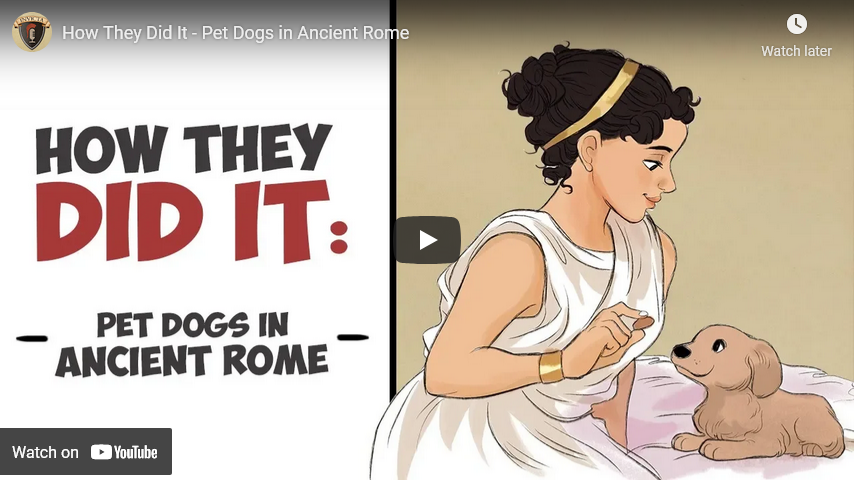
How They Did It – Pet Dogs in Ancient Rome
Invicta
Published 12 Sep 2018Our history with man’s best friend stretches far into the past. Today we take a look at the lives of dogs in ancient Rome; how they named, trained, and raised them.
Bibliography:
Xenophon and Arrian: On Hunting (1999) translated by A. A. Phillips and M. M. Willcock
Metamorphoses Book III by Ovid
Names of Dogs in Ancient Greece by Adrienne Mayor
Greek and Roman Household Pets by Francis D. LazenbyArtwork:
Beverly Johnson (https://www.behance.net/bevsi)Music:
“Strings and Drums Comedy” by 8th Mode Music
“Emotional” by 8th Mode Music#RomanHistory
#HowTheyDidIt
December 11, 2021
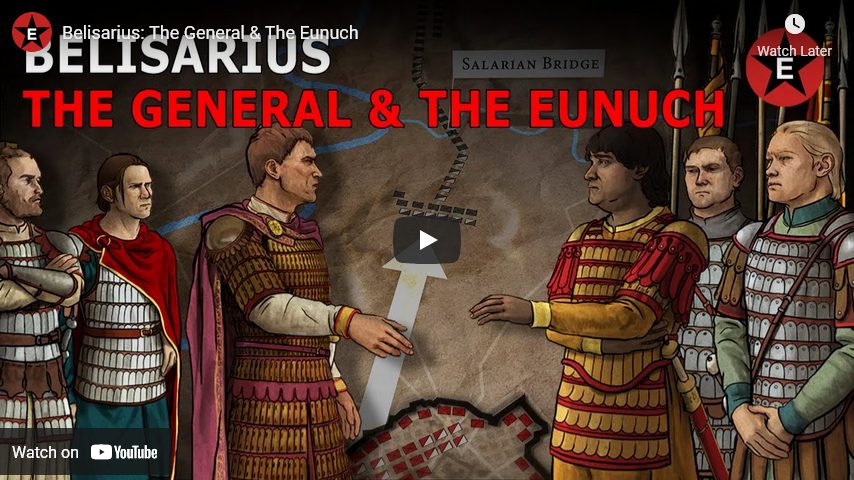
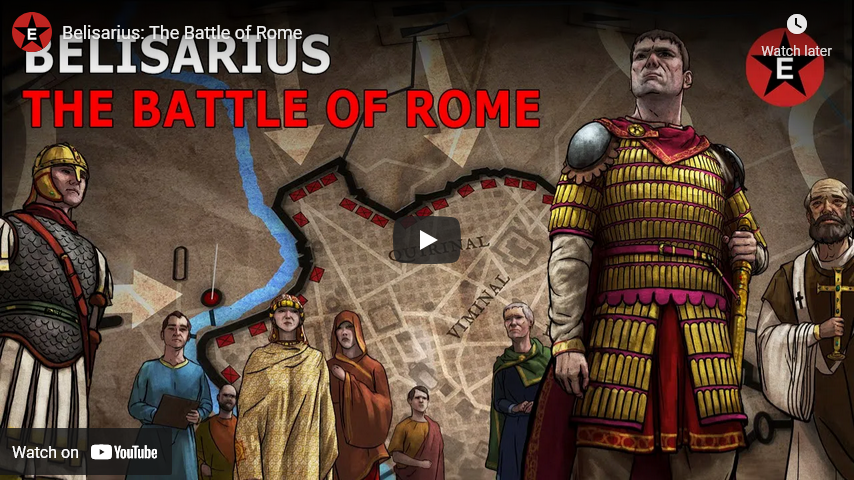
Belisarius: The Battle of Rome
Epic History TV
Published 10 Dec 2021Thank you to our sponsor Private Internet Access.
Get the Epic History TV special offer using this link: https://www.privateinternetaccess.com…Big thanks to Legendarian for Total War: Attila gameplay footage, check out his YouTube channel here: https://www.youtube.com/channel/UCOI2…
Thanks also to our series consultant Professor David Parnell of Indiana University Northwest, who you can follow on Twitter here: https://twitter.com/byzantineprof
Total War: Attila gameplay footage used with kind permission of Creative Assembly — buy the game here: https://geni.us/qDreR
Support Epic History TV on Patreon from $1 per video, and get perks including ad-free early access & votes on future topics https://www.patreon.com/EpicHistoryTV
🎨 Original artwork by Miłek Jakubiec https://www.artstation.com/milek
📚Recommended reading (as an Amazon Associate I earn from qualifying purchases):
📖 Procopius, History of the Wars https://geni.us/L3Pgc
📖 The Wars of Justinian by Michael Whitby https://geni.us/Xxrd3
📖 Rome Resurgent by Peter Heather https://geni.us/ZFoU1
📖 The Armies of Ancient Persia: the Sassanians by Kaveh Farrokh https://geni.us/jMQo3z
📖 Late Roman Cavalryman AD 236–565 (Osprey) by Simon MacDowall https://geni.us/XMGl👕 Buy EHTV t-shirts, hoodies, mugs and stickers here! teespring.com/en-GB/stores/epic-histo…
🎶Music from Filmstro: https://filmstro.com/?ref=7765
Get 20% off an annual license with this exclusive code:EPICHISTORYTV_ANN#EpicHistoryTV #RomanEmpire #EasternRomanEmpire #Justinian #Belisarius #ByzantineEmpire #Romans
December 2, 2021
QotD: The quickening pace of change
One of the toughest things to get across to History students is the pace of change. Students hate it, but the “memorize this list of dates” approach actually helps — one can’t help but notice that your list of “the 20 most significant dates” for, say, the medieval period covers a millennium, while that same list for the Roman Empire covers maybe a century. Even there, though, most people could be forgiven for mistaking 50 AD for 150 AD, or even 250 AD (even archaeologists generally consider it a success if they can date something to within a century, I’m told).
But nobody would mistake 1790 for 1890, let alone 1990. A Roman of the late Republic (100 BC) could still get around ok if you time-warped him into the late Empire (300 AD). Time warp a guy from 1790 into 1890, though, and he’d think he was on Mars. (Zap him into 1990, and he’d think he’d died and gone to Hell). The pace of change accelerated exponentially starting in about 1400; by the Industrial Era it was a blur.
Which is why I’m terrified right now. We feel like change is happening at light speed. As a Historian, I can promise you — it’s at least Warp 6, and the dilithium crystals are nowhere near to overloading.
Severian, “Faster and Faster”, Rotten Chestnuts, 2019-02-01.
November 1, 2021
QotD: Latin
Any English speaker who calls Latin easy is either a genius or a fool. It is a synthetic Indo-European language that communicates in ways very different from English. Nouns are divided into at least five classes, each of which has five or six or seven cases – singular and plural – to express meanings that we express by adding prepositions. Pronouns have their own declensions. Except for the perfect passive tenses, verbs are generally inflected. Because the Classical grammar is a snapshot of a language in rapid and profound change, there are duplications and irregularities everywhere. The future tense, in particular, is broken, and has been reconstructed in every language I know that descends from Latin. Add to this an elaborate syntax, an indifference to what we regard as a normal order of words, and a vocabulary that is naturally poor, but expanded by allowing most common words to bear different meanings that must usually be inferred from their context.
This being said, anyone who denies the language is worth learning is a barbarian who deserves to live in the illiterate swamp that we nowadays call civilisation. Without denying the importance of the Greeks, Rome stands at the origin of our literature and law and religion. Latin was, until the late seventeenth century, the normal language of learning and international communication. Directly or indirectly, Latin has given English around sixty per cent of its words. I am not sure if anyone can write English well who is ignorant of Latin. I do not believe anyone can appreciate or notice the full register of our own classical literature without some knowledge of Latin. A further point is that, even today, a qualification in Latin is taken as proof of general intelligence. In short, Latin is a struggle, but a struggle worth undertaking.
Sean Gabb, “A Review of Latin Stories (2018)”, Sean Gabb, 2018-12-23.
October 12, 2021
QotD: Titus Livius, better known as Livy
Livy’s life (roughly 59 BC to about 17 AD) spanned the most consequential period in the thousand-year history of ancient Rome. He witnessed the last decades of the crumbling old Republic and the rise in its place of the imperial autocracy we know as the Roman Empire. He was in his early twenties when the last great defender of the republican heritage, Cicero, was assassinated by a henchman of the tyrant Marc Antony. Livy observed the entirety of the reign of the first Emperor, Augustus. He is best known for his history of Rome, Ab Urbe Condita, described both in his day and in ours with such terms as “monumental” and “magisterial”.
What little we know of the man himself suggests he was somehow financially well-off, independent, and reclusive. He was schooled in rhetoric, philosophy, and history. He never served in any public position, though apparently, he personally knew Augustus. Writing his massive history of Rome absorbed his adult life.
Though Romans at the time of his writing held his work in high regard, we know that some parts of Livy’s historical accounts were surely based on minimal records, old and dubious oral stories, and even legend. After all, he wrote 2,000 years ago about people and events of as much as eight centuries before his time. “I hope my passion for Rome’s past has not impaired my judgment,” he opined in his introduction to Ab Urbe Condita, “for I do honestly believe that no country has ever been greater or purer than ours or richer in good citizens and noble deeds.”
“The old Romans,” wrote Livy of his countrymen before the beginning of the Republic, “all wished to have a king over them because they had not yet tasted the sweetness of freedom.” But then in 508 BC, Romans mounted a truly historic revolution of both ideas and governance. They overthrew the monarchy and established a new order that ultimately included a Senate of nobles, popularly elected Assemblies, the dispersion of centralized power, term limits, a constitution, due process, habeas corpus, and the widest practice of individual liberty the world had yet seen. Before they lost it all less than five centuries later, they experienced a remarkable rise and fall. […]
From Livy, we learn about Rome’s pivotal wars against the Carthaginians, the Samnites, and other peoples of the Italian Peninsula. He also informs us of the rivalry between Sulla and Marius, the tumultuous last days of the Republic as strong men fought each other for power, the murder of Julius Caesar, and the self-serving machinations of Augustus. Livy celebrated the courage of his ancestors; in fact, he originated the phrase, “Fortune favors the brave,” which is still used commonly today as a maxim and a motto.
Lawrence W. Reed, “Lessons from Livy on How Great Civilizations Rise and Fall”, Foundation for Economic Education, 2021-06-28.
September 24, 2021
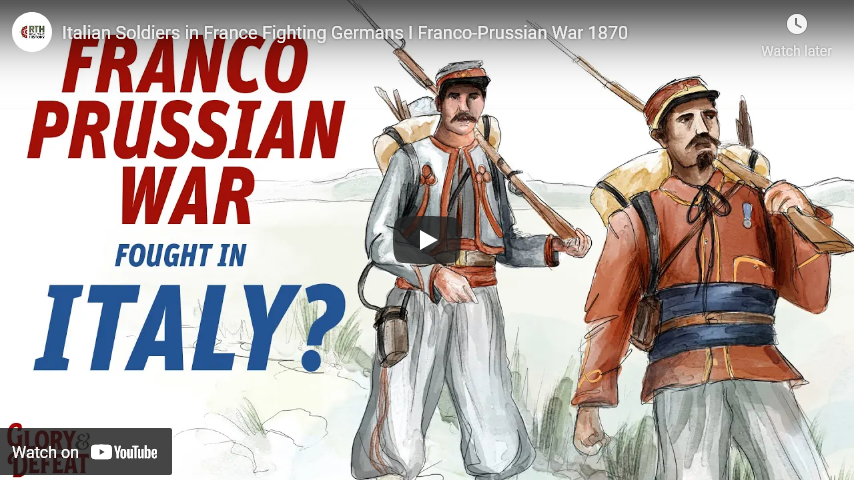
Italian Soldiers in France Fighting Germans I Franco-Prussian War 1870
Real Time History
Published 23 Sep 2021Sign up for Curiosity Stream and get Nebula bundled in and SAVE 26%: https://curiositystream.com/realtimehistory
While the Franco-Prussian War was raging in France, another armed conflict to the south was reaching its conclusion. The unification of Italy was not yet complete in the eyes of Italian nationalists because Rome and the Papal State still held out. After the defeat at Rome, the Papal Zouaves went on to France to fight the Prussians.
» THANK YOU TO OUR CO-PRODUCERS
John Ozment
James Darcangelo
Jacob Carter Landt
Thomas Brendan» OUR PODCAST
https://realtimehistory.net/podcast – interviews with historians and background info for the show.» LITERATURE
Arand, Tobias: 1870/71. Die Geschichte des Deutsch-Französischen Krieges erzählt in Einzelschicksalen. Hamburg 1870Bunnenberg, Christian: “Granaten sammeln. Totenkult und Tourismus auf den Schlachtfeldern”, in: 1870/71 – Der deutsch-französische Krieg und die Gründung des Kaiserreiches, ZEITGeschichte 4 (2020), S. 97.
Fiori, Simonetta: “Porta Pia. Roma libera e italiana”, in: La Repubblica v. 19.9.2020. o. S.
Pilant Paul: “La population messine pendant le siège de 1870”. In: La Révolution de 1848 et les révolutions du XIXe siècle, Tome 33, Numéro 158, Septembre-octobre-novembre 1936. pp. 141-175.
Plessner, Helmuth: Die verspätete Nation. Über die politische Verführbarkeit bürgerlichen Geistes. Kohlhammer, Stuttgart 1959
Seibt, Gustav: Rom oder Tod. Der Kampf um die italienische Hauptstadt. Berlin 2001
» SOURCES
Bazaine, François Achille: L’Armée du Rhin depuis 12. Août jusqu’ au 29. Octobre 1870. Paris 1872Braun, Lily (Hrsg.): Kriegsbriefe aus den Jahren 1870/71 von Hans v. Kretschman. Berlin 1911
Crombrugghe, Ida de: Journal d’une infirmière. Paris 1871
» OUR STORE
Website: https://realtimehistory.net»CREDITS
Presented by: Jesse Alexander
Written by: Cathérine Pfauth, Prof. Dr. Tobias Arand, Jesse Alexander
Director: Toni Steller & Florian Wittig
Director of Photography: Toni Steller
Sound: Above Zero
Editing: Toni Steller
Motion Design: Philipp Appelt
Mixing, Mastering & Sound Design: http://above-zero.com
Maps: Battlefield Design
Research by: Cathérine Pfauth, Prof. Dr. Tobias Arand
Fact checking: Cathérine Pfauth, Prof. Dr. Tobias ArandChannel Design: Battlefield Design
Contains licensed material by getty images
All rights reserved – Real Time History GmbH 2021
September 21, 2021
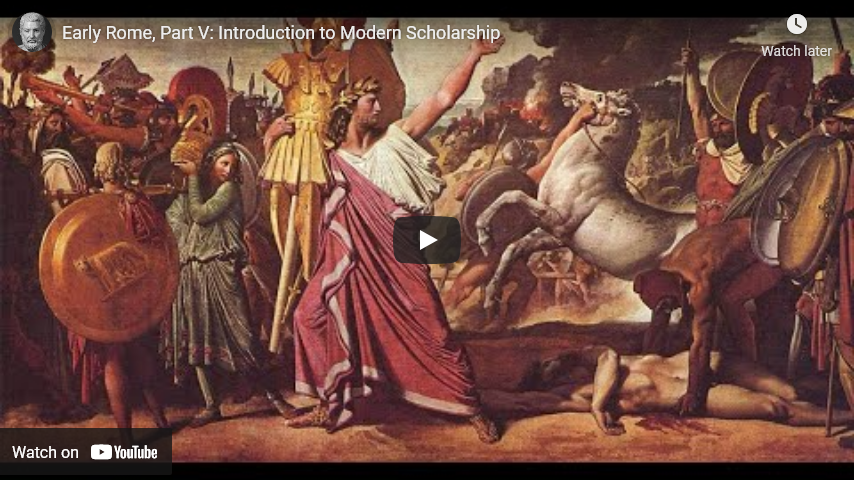
Early Rome, Part V: Introduction to Modern Scholarship
Thersites the Historian
Published 6 Sep 2021In this video, we look at what modern scholars tend to think about early Rome and some of the ways in which they approach this fraught topic.
Patreon link: https://www.patreon.com/thersites
PayPal link: paypal.me/thersites
Discord: https://discord.gg/QCaXXFr
Brave Browser: https://brave.com/noa557
Twitter link: https://twitter.com/ThersitesAthens
Minds.com link: https://www.minds.com/ThersitestheHis…
Steemit/dtube link: https://steemit.com/@thersites/feed
BitChute: https://www.bitchute.com/channel/jbyg…
September 13, 2021
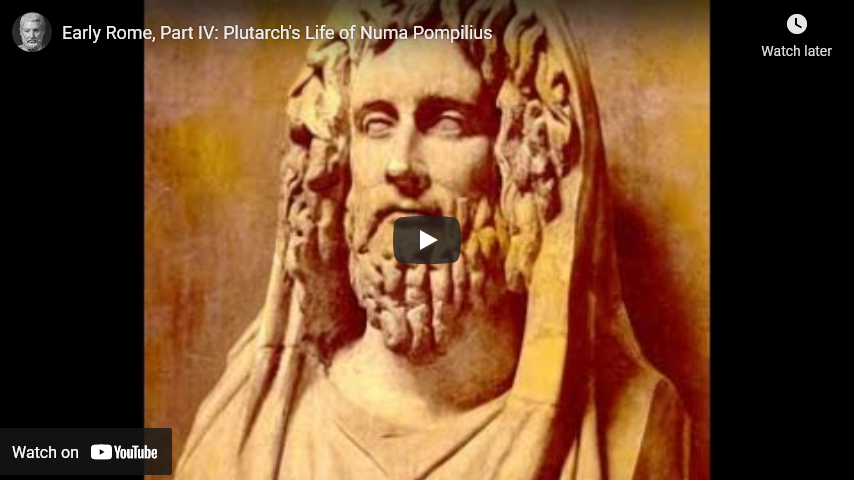
Early Rome, Part IV: Plutarch’s Life of Numa Pompilius
Thersites the Historian
Published 5 Sep 2021In this video, we look at how the philosopher Plutarch dealt with early Rome when he covered the life and times of Numa Pompilius, the most significant of Rome’s cultural heroes.
Patreon link: https://www.patreon.com/thersites
PayPal link: paypal.me/thersites
Discord: https://discord.gg/QCaXXFr
Brave Browser: https://brave.com/noa557
Twitter link: https://twitter.com/ThersitesAthens
Minds.com link: https://www.minds.com/ThersitestheHis…
Steemit/dtube link: https://steemit.com/@thersites/feed
BitChute: https://www.bitchute.com/channel/jbyg…
September 12, 2021
Early Rome, Part III: Livy and the Roman Tradition of Early Rome
Thersites the Historian
Published 5 Sep 2021Here, I examine Livy’s Book I with an emphasis on the tradition that he worked in and his agenda for undertaking such a massive and ambitious project.
Patreon link: https://www.patreon.com/thersites
PayPal link: paypal.me/thersites
Discord: https://discord.gg/QCaXXFr
Brave Browser: https://brave.com/noa557
Twitter link: https://twitter.com/ThersitesAthens
Minds.com link: https://www.minds.com/ThersitestheHis…
Steemit/dtube link: https://steemit.com/@thersites/feed
BitChute: https://www.bitchute.com/channel/jbyg…
September 7, 2021
Early Rome, Part II: Dionysius of Halicarnassus and the Greek Tradition of Early Rome
Thersites the Historian
Published 4 Sep 2021In this video, I provide an analysis of the opening sections of Dionysius of Halicarnassus’ History of Rome, discussing where his place in the historiographical tradition and the goal of his work.
Patreon link: https://www.patreon.com/thersites
PayPal link: paypal.me/thersites
Discord: https://discord.gg/QCaXXFr
Brave Browser: https://brave.com/noa557
Twitter link: https://twitter.com/ThersitesAthens
Minds.com link: https://www.minds.com/ThersitestheHis…
Steemit/dtube link: https://steemit.com/@thersites/feed
BitChute: https://www.bitchute.com/channel/jbyg…
September 6, 2021
Early Rome, Part I: The Historical Problem of Studying Early Rome
Thersites the Historian
Published 2 Sep 2021In this video, I discuss why early Rome is difficult to study and preview the upcoming episodes in this series.
Patreon link: https://www.patreon.com/thersites
PayPal link: paypal.me/thersites
Discord: https://discord.gg/QCaXXFr
Brave Browser: https://brave.com/noa557
Twitter link: https://twitter.com/ThersitesAthens
Minds.com link: https://www.minds.com/ThersitestheHis…
Steemit/dtube link: https://steemit.com/@thersites/feed
BitChute: https://www.bitchute.com/channel/jbyg…
April 17, 2021
Neoclassical Architecture
Overly Sarcastic Productions
Published 16 Apr 2021You asked, I deliver: the Neoclassicism tangent receives the full-video spotlight it deserves. But there’s plenty more architectural and art-historical analysis where that came from. So if this kind of thing seems fun, please comment and let me know!
SOURCES & Further Reading: Francesco’s Venice by Francesco Da Mosto, A History of Venice by John Julius Norwich, “Renaissance Architecture” via Britannica, and many many many hours spent staring at buildings in Italy.
This video was edited by Sophia Ricciardi AKA “Indigo”. https://www.sophiakricci.com/
Our content is intended for teenage audiences and up.
PATREON: https://www.Patreon.com/OSP
PODCAST: https://overlysarcasticpodcast.transi…
DISCORD: https://discord.gg/osp
MERCH LINKS: http://rdbl.co/osp
OUR WEBSITE: https://www.OverlySarcasticProductions.com
Find us on Twitter https://www.Twitter.com/OSPYouTube
Find us on Reddit https://www.Reddit.com/r/OSP/
March 24, 2021
How They Did It – Declaring War in Ancient Rome
Invicta
Published 24 Aug 2018The Romans were often at war but have you ever stopped to consider how exactly that was announced. Turns out the Romans had a complicated ritual associated with declarations of war aimed at making their casus belli apparent before the gods. I hope you enjoy this documentary on ancient government and religion!
Sources:
History of Rome Book I by Titus Livius
Handbook to Life in Ancient Rome by Lesley Adkins
The Rise of Rome by Anthony EverittMusic:
“Quirky Comedy” by 8th Mode Music#RomanHistory
#HowTheyDidIt
February 17, 2021
The Rise of Rome – How Italy Was Conquered
Invicta
Published 4 Aug 2018Let’s talk about the rise of the Roman Republic in its early years, specifically how the diverse communities across Italy were united! If you love this time period, I suggest you take a look at the “Rise of Rome” DLC coming out soon for Rome II Total War. I’ll be showing off gameplay on the 2nd channel.
Literary Sources:
“The Rise of Rome” by Anthony Everitt
“Early Roman Warrior” by Osprey Publishing
“The Roman Army” by Chris McNab
“Uniforms of the Roman World” by Kevin F. Kiley
“The Archaic Community of the Romans” by Robert E. Palmer#RomanHistory
#RiseofRome