Quotulatiousness

June 21, 2022

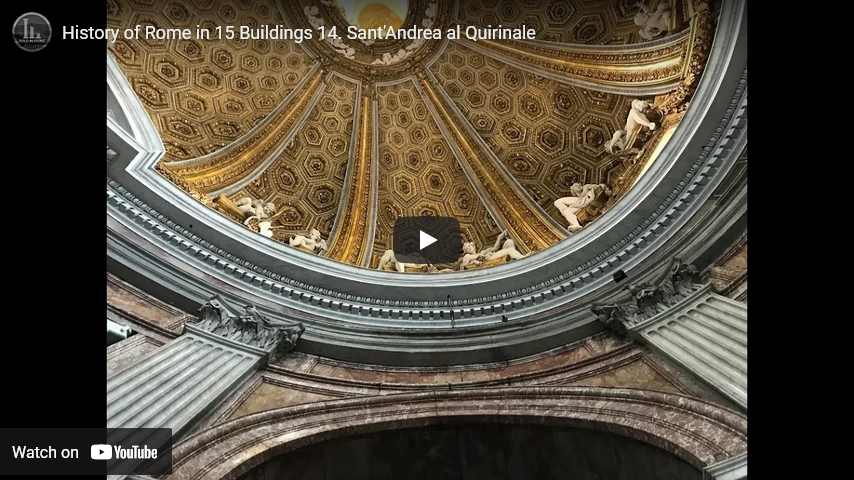
History of Rome in 15 Buildings 14. Sant’Andrea al Quirinale

Filed under: Architecture, History, Italy, Religion — Tags: , , , — Nicholas @ 02:00

toldinstone
Published 2 Oct 2018

Coke vs. Pepsi. Kramer vs. Kramer. Alien vs. Predator. Everyone loves a rivalry – and so, discussions of art and architecture in Baroque Rome never fail to mention the antagonism between the ebullient Gianlorenzo Bernini and grim Francesco Borromini. This fourteenth episode in our History of Rome follows suit.

To see the story and photo essay associated with this video, go to:
https://toldinstone.com/santandrea-al…

June 14, 2022

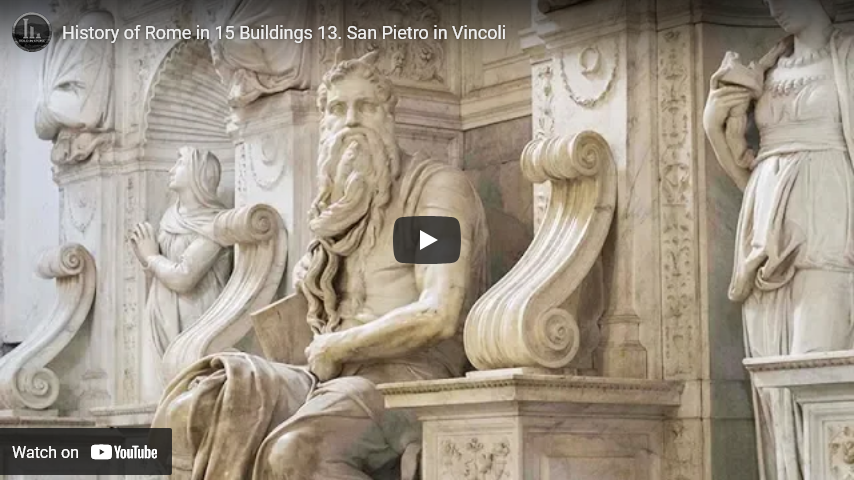
History of Rome in 15 Buildings 13. San Pietro in Vincoli

Filed under: Architecture, History, Italy, Religion — Tags: , , , , , — Nicholas @ 02:00

toldinstone
Published 2 Oct 2018

Speech stands at the threshold of the compressed lips. Righteous indignation is written in the lines of the set jaw. The presence of God blazes forth from the eyes. As a work of art, Michelangelo’s Moses is nothing short of awe-inspiring. It sits, however, in the cramped central niche of a rather underwhelming wall tomb, ringed by smaller statues ranging in quality from mediocre to incompetent. This thirteenth episode in our History of Rome discusses the creation of the Moses, and the circumstances that brought it to the church of San Pietro in Vincoli.

To see the story and photo essay associated with this video, go to:
https://toldinstone.com/san-pietro-in…

June 10, 2022

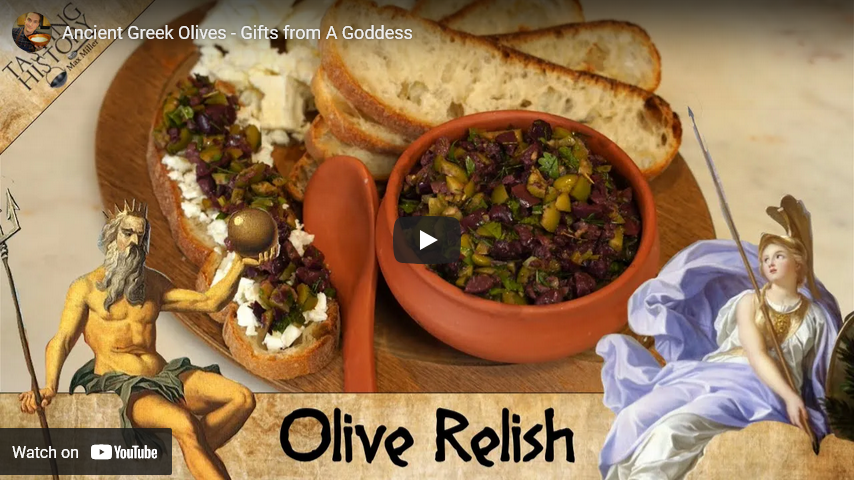
Ancient Greek Olives – Gifts from A Goddess

Filed under: Europe, Food, Greece, History — Tags: , , , , , , — Nicholas @ 02:00

Tasting History with Max Miller
Published 1 Jun 2021

Help Support the Channel with Patreon: https://www.patreon.com/tastinghistory
Tasting History Merchandise: crowdmade.com/collections/tastinghistory

Follow Tasting History here:
Instagram: https://www.instagram.com/tastinghist…
Twitter: https://twitter.com/TastingHistory1
Tiktok: TastingHistory
Reddit: r/TastingHistory
Discord: https://discord.gg/d7nbEpy

Tasting History’s Amazon Wish List: https://amzn.to/3i0mwGt

LINKS TO INGREDIENTS & EQUIPMENT**
Sony Alpha 7C Camera: https://amzn.to/2MQbNTK
Sigma 24-70mm f/2.8 Lens: https://amzn.to/35tjyoW
Dried Rue: https://amzn.to/3yErUqH
Terracotta Bowls with Spoons: https://amzn.to/3wLkEIb

LINKS TO SOURCES**
De Agricultura by Cato the Elder: https://amzn.to/3bP20H6
De Re Rustica by Columella: https://amzn.to/3fkN99z
“Defense in the Matter of the Olive Stump” by Lysias
Varro the Agronomist: https://amzn.to/3fkhG7l
Aristotle’s Politics: https://amzn.to/3vkHMNj

**Some of the links and other products that appear on this video are from companies which Tasting History will earn an affiliate commission or referral bonus. Each purchase made from these links will help to support this channel with no additional cost to you. The content in this video is accurate as of the posting date. Some of the offers mentioned may no longer be available.

Subtitles: Jose Mendoza

PHOTO CREDITS
Trapitum: Carole Raddato from FRANKFURT, Germany, CC BY-SA 2.0 https://creativecommons.org/licenses/…, via Wikimedia Commons
Akhenaten, Nefertiti and their children: By Neoclassicism Enthusiast – Own work, CC BY-SA 4.0, https://commons.wikimedia.org/w/index…
Amphora with Palm Trees: By Sharon Mollerus – Amphora with Palm Trees, Mycenaean, 15th century BC., CC BY 2.0, https://commons.wikimedia.org/w/index…
Procession fresco from Knossos: By ArchaiOptix – Own work, CC BY-SA 4.0, https://commons.wikimedia.org/w/index…
The Olive tree of Vouves: By Eric Nagle – https://www.reddit.com/r/europe/comme…, CC BY-SA 4.0, https://commons.wikimedia.org/w/index…
Reconstruction of the palace at Knossos: By Mmoyaq – Own work, CC BY-SA 3.0, https://commons.wikimedia.org/w/index…
The soldiers of Xerxes I: By A.Davey – This file has been extracted from another file: Xerxes detail ethnicities.jpg, CC BY 2.0, https://commons.wikimedia.org/w/index…
Lysias: By Coyau / Wikimedia Commons, CC BY-SA 3.0, https://commons.wikimedia.org/w/index…
Bouleuterion: By Zigomar – Own work, CC BY-SA 3.0, https://commons.wikimedia.org/w/index…

#tastinghistory #olives #ancientgreece

June 7, 2022

History of Rome in 15 Buildings 12. Santa Maria in Trastevere

Filed under: Architecture, History, Italy, Religion — Tags: , , , , — Nicholas @ 02:00

toldinstone
Published 2 Oct 2018

Wanted: candidate for Pope. Must be a good fundraiser, effective administrator, and shrewd politician. Deep pockets a must. Sanctity negotiable.

The medieval papacy lies at the heart of this twelfth episode of our History of Rome, in which we discuss the catastrophic schism that created the church of Santa Maria in Trastevere.

To see the story and photo essay associated with this video, go to:
https://toldinstone.com/santa-maria-i…

May 31, 2022

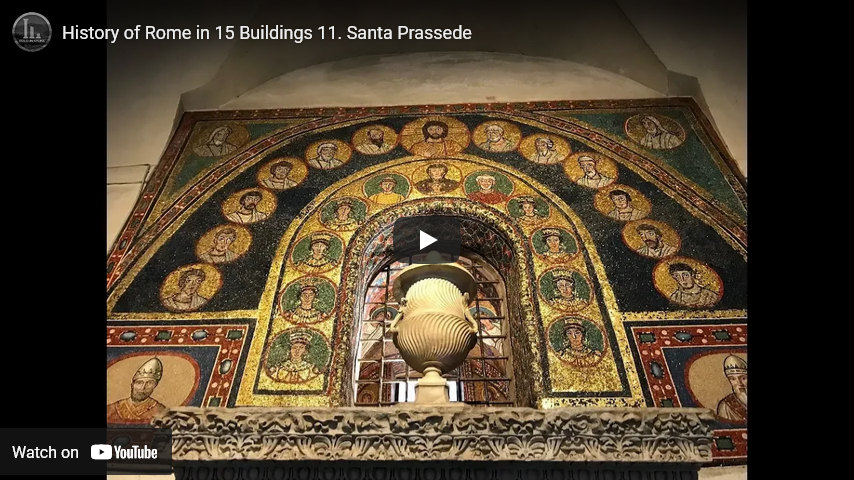
History of Rome in 15 Buildings 11. Santa Prassede

Filed under: Architecture, History, Italy, Religion — Tags: , , , , — Nicholas @ 02:00

toldinstone
Published 2 Oct 2018

After Leo III crowned Charlemagne Holy Roman Emperor in 800, Europe had two notional leaders: the pope and the emperor. In theory, they were the twin pillars of a well-ordered Christian society. In practice, they were usually at each other’s throats. One product of their rivalry was the ninth-century church of Santa Prassede, the subject of this eleventh episode in our history of Rome.

To see the story and photo essay associated with this video, go to:
https://toldinstone.com/santa-prassede/

May 24, 2022

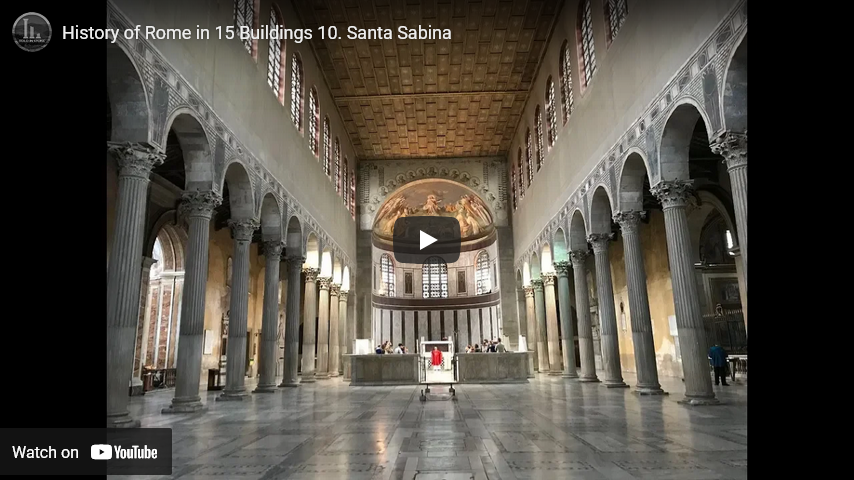
History of Rome in 15 Buildings 10. Santa Sabina

Filed under: Architecture, Europe, History, Military, Religion — Tags: , , , , — Nicholas @ 02:00

toldinstone
Published 2 Oct 2018

Through some combination of military disasters, barbarian migrations, social change, and dynastic bad luck, the Western Roman Empire collapsed in the fifth century. In this tenth episode of our History of Rome, focused on the church of Santa Sabina, we will consider some of the implications of this crisis.

If you enjoyed this video, you might be interested in my book Naked Statues, Fat Gladiators, and War Elephants: Frequently Asked Questions about the Ancient Greeks and Romans. You can find a preview of the book here:

https://toldinstone.com/naked-statues…

If you’re so inclined, you can follow me elsewhere on the web:

https://www.reddit.com/r/AskHistorian…
https://www.instagram.com/toldinstone/

To see the story and photo essay associated with this video, go to:
https://toldinstone.com/santa-sabina/

Thanks for watching!

QotD: Portuguese art and creative genius

Filed under: Business, Europe, Germany, History, Quotations — Tags: , , , , , — Nicholas @ 01:00

If Portugal weren’t such an old nation (but maybe it’s a second childhood) I’d call them the college kid of Europe. They can’t quite get their act straight, but they can be startlingly, amazingly creative. One of the things I’ve talked about here is how many of my brother’s cohort, coming of age at a time when there were NO jobs took up some kind of craft work, from making jewelry to (I used to covet them) making elaborate, hand painted wooden dragon mobiles and selling all of this. Looking back at that pre-EU time when it was relatively easy to set up a stall (illegal, of course) in downtown Porto, I realize most of the stuff on offer was downright artistic, and often incredibly creative when you realized what materials they were working with.

Then the economy recovered, they got jobs, a lot of them connected to or linked to government and all of that stopped. And of course with the EU there are no illegal stalls. I mean Papiere, bitte and all that.

And somehow, perhaps because the new generation knows they have all sorts of “benefits” and “support” coming to them and have never felt the bite of chaos, the crafts and arts in the stores are either startlingly mundane or bizarre. I’m still rather puzzled by entire “scenes from life” (including one that was an operating room) sculpted with penises instead of humans. I mean … who even buys that? Okay. We know who buys that. But do the German tourists and their nostalgie de la boue think they’re tapping into something uniquely “uninhibited and free”, some kind of wild Portuguese sexuality? Raises eyebrow. The Portuguese have been civilized land long before the Germans traded their furs for a place as Roman soldiers. And sure, the Romans could be startlingly and inappropriately sexual (I call to mind a mural, not out of place in a Roman middle class home that had monkeys copulating with children) but it didn’t mean that the culture was “free”, rather that they had different rules. Frankly, the sixties attempt to erase history has corrupted real art and … well, everything else.

Which is kind of the college student thing. Chaos and free time allows you to be very creative, but then you’re not organized enough to parlay that into a career. (I mean, if they’re destined to be the touristic “warm port” of Europe, perhaps they should consider letting real art flourish. Or even encouraging it. Grants for small businesses and young people. It beats the jobs that don’t exist. Just demand they be actually creative and accomplished, instead of giving grants for art that my kids could do at age two and about as interesting.

Sarah Hoyt, “The Ancient Enemy”, According to Hoyt, 2019-04-05.

May 23, 2022

QotD: The adoption of Astrology by the Greeks and Romans

Perhaps the most influential form of divination to arrive in the Roman world from the East was astrology. Systems for divining the will of the gods and the course of the future emerged in both Egypt and Mesopotamia c. 2000 B.C. and were thus both very ancient when Alexander the Great conquered both in the late fourth century. From there, astrology, practiced by professional experts, moved into the Greek and then Roman world, though Roman elites were often deeply ambivalent about this foreign method of divination; both Cato and Cicero express doubts (of course, the Roman practice of haruspicy was also foreign in that it was Etruscan, but this adoption had been sanctified by long use in Roman tradition and was thus mostly beyond reproach). Nevertheless, it is clear that this form of divination become common, with the writer, geographer and astronomer Ptolemy (c. 100-170 A.D.) even producing a long explication of the practice of astrology in his Tetrabiblos.

This portability is not restricted merely to divination. Herodotus’ suspicion that quite a bit of Greek religion might have come from somewhere else has merit, though Anatolia, not Egypt, appears to be the main source (see: M.L. West, The East Face of Helicon (1999); and for the person already writing this comment, yes I am aware of Bernal’s Black Athena and no I am not convinced, nor are many specialists in the field). The Romans were open about importing gods from Greece and make a clear distinction between gods worshiped in traditional Roman manner and those imported from Greece (a quite small number) and thus whose rituals followed ritus graecus – rituals in Greek fashion.

In other cases, the foreign practice was modified to fit the culture it arrived in. The Romans adopted the cult of Cybele, an Anatolian goddess, during the dark days of the Second Punic War (the Senate made that decision based on a consultation with the Sibylline books, a written source of oracular prophecy we can talk about another day). Cybele was called Magna Mater (“Great Mother”) in Rome, and it seems made some modifications to her rituals, in particular possibly limiting the role of the Galli (eunuch priests) whose rituals and style seemed decidedly “unRoman” (though I should note that the scholarship here is contested and the issue and evidence complex).

The normal technical term for this kind of religious borrowing is syncretism, and it is a sort of interweaving of religious traditions that polytheisms both ancient and modern are exceptionally capable of. It is simply not hard to add one more god or one more ritual into a religious system that already assumes the existence of innumerable gods.

Bret Devereaux, “Collections: Practical Polytheism, Part III: Polling the Gods”, A Collection of Unmitigated Pedantry, 2019-11-08.

May 17, 2022

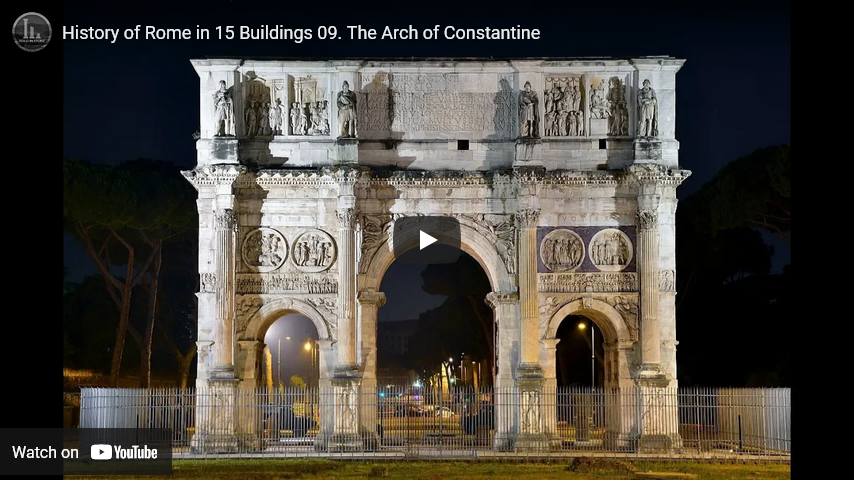
History of Rome in 15 Buildings 09. The Arch of Constantine

toldinstone
Published 27 Sep 2018

The many statues and reliefs from older monuments integrated into the Arch of Constantine – the focus of this ninth episode of our History of Rome – advertise the continuity of traditional Roman values into the fourth century. The Arch’s inscription, however, alludes to the religious revolution set in motion by the first Christian emperor.

If you enjoyed this video, you might be interested in my book Naked Statues, Fat Gladiators, and War Elephants: Frequently Asked Questions about the Ancient Greeks and Romans. You can find a preview of the book here:

https://toldinstone.com/naked-statues…

If you’re so inclined, you can follow me elsewhere on the web:

https://www.reddit.com/r/AskHistorian…
https://www.instagram.com/toldinstone/

To see the story and photo essay associated with this video, go to:
https://toldinstone.com/the-arch-of-c…

QotD: Slavery

Filed under: History, Liberty, Quotations, USA — Tags: , , , — Nicholas @ 01:00

There is no doubt, if you read history, that people in the past treated other people very badly. We still do, too, but I guess it’s much more awful when society is not quite so affluent and when being on the bottom can mean starving to death. It is impossible to read history, particularly primary sources, and not to be horrified.

But part of that is that we’re imposing our values on the past. Look, history is looked at backwards, while we live forward. Take slavery (I don’t want it.) Yes, it was a horrible institution. It was also pervasive in human history, and as far as we can tell pre-history, world without end. Hell, still is as well, considerably less of the world than it was, but in Africa it’s pretty much still a thing, and not just in Arab countries.

Romans had complex rules to deal with it, and lived in fear of slave revolts.

It required mental gymnastics, because it was obvious to anyone that slaves were as human as their masters, and so a complex set of rules and philosophical separations were instituted and once any idea of the equality of man (or that man ought to be equal before the law (and G-d) the whole thing was doomed, sooner or later.

Americans tend to have a bizarre idea that slavery was always by race. I blame public school. I don’t know if it’s deliberately obscured, to emphasize the specialness of racial victimhood, or just because race and slavery are so associated in American history that it overshadows everything else. (Yes, again, is it malice or stupidity? Perhaps we should formulate an axiom that sufficiently advanced stupidity is indistinguishable from malice.)

Men and women of all colors were enslaved throughout history. Heck, in the peninsula, in the long centuries in which it was a frontier between Christian and Moor, the slaving went on both ways. […]

Roman slaves were often blond, and the citizens often of African origin. But even there, it wasn’t tied to race. (Though celts were apparently in general fairly cheap, from what I can figure.)

So. All of us have slave ancestors. ALL OF US. All of us have slave owners in our ancestry.

Even in the US — though rare — there were black slave owners. And if you’re going to parse quadroons and octaroons who might very well be slaves, you’re going to assume race is one-drop but only for non-white races.

Sarah Hoyt, “I Am Myself Alone”, According to Hoyt, 2019-02-25.

May 10, 2022

History of Rome in 15 Buildings 08. The Baths of Caracalla

Filed under: Architecture, Europe, History — Tags: , , , , — Nicholas @ 02:00

toldinstone
Published 27 Sep 2018

Every day, ten thousand bathers and over a million gallons of water were funneled through the Baths of Caracalla, the subject of this eighth episode in our History of Rome. The astonishing scale of the Baths indicates the power of two Roman obsessions: imperial propaganda and public bathing.

If you enjoyed this video, you might be interested in my book Naked Statues, Fat Gladiators, and War Elephants: Frequently Asked Questions about the Ancient Greeks and Romans. You can find a preview of the book here:

https://toldinstone.com/naked-statues…

If you’re so inclined, you can follow me elsewhere on the web:

https://www.reddit.com/r/AskHistorian…
https://www.instagram.com/toldinstone/

To see the story and photo essay associated with this video, go to:
https://toldinstone.com/the-baths-of-…

Thanks for watching!

May 5, 2022

Belisarius: The Last Battle

Epic History TV
Published 29 Apr 2022

Thank you to our video sponsor Displate. Get exclusive discounts on metal posters, including original EHTV artwork, using this link:
https://displate.com/epichistorytv?ar…

Big thanks to Legendarian for Total War: Attila gameplay footage, check out his YouTube channel here: https://www.youtube.com/channel/UCOI2…

Big thanks also to our series consultant Professor David Parnell of Indiana University Northwest, who you can follow on Twitter here: https://twitter.com/byzantineprof

Total War: Attila gameplay footage used with kind permission of Creative Assembly – buy the game here: https://geni.us/qDreR

Support Epic History TV on Patreon from $1 per video, and get perks including ad-free early access & votes on future topics https://www.patreon.com/EpicHistoryTV

🎨 Original artwork by Miłek Jakubiec https://www.artstation.com/milek

📚Recommended reading (as an Amazon Associate I earn from qualifying purchases):
📖 Procopius, History of the Wars https://geni.us/L3Pgc
📖 The Wars of Justinian by Michael Whitby https://geni.us/Xxrd3
📖 Rome Resurgent by Peter Heather https://geni.us/ZFoU1
📖 The Armies of Ancient Persia: the Sassanians by Kaveh Farrokh https://geni.us/jMQo3z
📖 Late Roman Cavalryman AD 236–565 (Osprey) by Simon MacDowall https://geni.us/XMGl

👕 Buy EHTV t-shirts, hoodies, mugs and stickers here! teespring.com/en-GB/stores/epic-histo…

🎶Music from Filmstro: https://filmstro.com/?ref=7765
Get 20% off an annual license with this exclusive code: EPICHISTORYTV_ANN

“Rites” by Kevin MacLeod https://incompetech.filmmusic.io/song…
License: https://filmmusic.io/standard-license

#EpicHistoryTV #RomanEmpire #EasternRomanEmpire #Justinian #Belisarius #ByzantineEmpire

April 26, 2022

History of Rome in 15 Buildings 06. The Pantheon

Filed under: Architecture, Europe, History, Religion — Tags: , , — Nicholas @ 02:00

toldinstone
Published 27 Sep 2018

The sixth building in our History of Rome, the Pantheon, epitomizes the most stable Roman building material and the most restless Roman emperor – concrete and Hadrian, respectively. This episode discusses the peculiarities of both in some detail.

If you enjoyed this video, you might be interested in my book Naked Statues, Fat Gladiators, and War Elephants: Frequently Asked Questions about the Ancient Greeks and Romans. You can find a preview of the book here:

https://toldinstone.com/naked-statues…

If you’re so inclined, you can follow me elsewhere on the web:

https://www.reddit.com/r/AskHistorian…
https://www.instagram.com/toldinstone/

To see the story and photo essay associated with this video, go to:
https://toldinstone.com/the-pantheon/

Thanks for watching!

April 19, 2022

History of Rome in 15 Buildings 05. The Colosseum

toldinstone
Published 27 Sep 2018

Six lions fighting eight tigers! A troupe of performing elephants! Executions, accompanied by a full orchestra! Twelve gladiatorial combats, guaranteed to the death! So might a day of games at the Colosseum, the subject of our fifth episode, be advertised. No monument better encapsulates Roman imperialism – or its costs.

If you enjoyed this video, you might be interested in my forthcoming book Naked Statues, Fat Gladiators, and War Elephants: Frequently Asked Questions about the Ancient Greeks and Romans. You can find a preview of the book here:

https://toldinstone.com/naked-statues…

If you’re so inclined, you can follow me elsewhere on the web:

https://www.reddit.com/r/AskHistorian…
https://www.instagram.com/toldinstone/

To see the story and photo essay associated with this video, go to:
https://toldinstone.com/the-colosseum/

Thanks for watching!

April 10, 2022

History of Rome in 15 Buildings 04. Ara Pacis

Filed under: Architecture, Europe, History — Tags: , , , , , — Nicholas @ 02:00

toldinstone
Published 27 Sep 2018

Augustus dominates this fourth episode of our History of Rome, which uses the Ara Pacis Augustae (Altar of the Augustan Peace) to discuss the first emperor’s reign, reforms, and propaganda. I also threw in a gripping description of the Battle of Actium.

If you enjoyed this video, you might be interested in my book Naked Statues, Fat Gladiators, and War Elephants: Frequently Asked Questions about the Ancient Greeks and Romans. You can find a preview of the book here:

https://toldinstone.com/naked-statues…

If you’re so inclined, you can follow me elsewhere on the web:

https://www.reddit.com/r/AskHistorian…
https://www.instagram.com/toldinstone/

To see the story and photo essay associated with this video, go to:
https://toldinstone.com/ara-pacis/

Thanks for watching!

« Newer PostsOlder Posts »

Powered by WordPress