
@BillyJingo
I get the feeling you’re the kind of guy who secretly rooted for Mr Potter.@Iowahawkblog
George Bailey: whines for a public bailout of his grossly mismanaged financial institutionMr Potter: reinvigorates boring small town by developing exciting nightlife district
David Burge (@Iowahawkblog), Twitter, 2022-11-16.
December 24, 2024
QotD: The real hero of It’s A Wonderful Life
Comments Off on QotD: The real hero of It’s A Wonderful Life
December 22, 2024
“It’s a major award!”
We’ve been fans of the movie A Christmas Story for many years, but I hadn’t heard this particular detail from winery owner Martin Malivoire’s end-of-year newsletter:
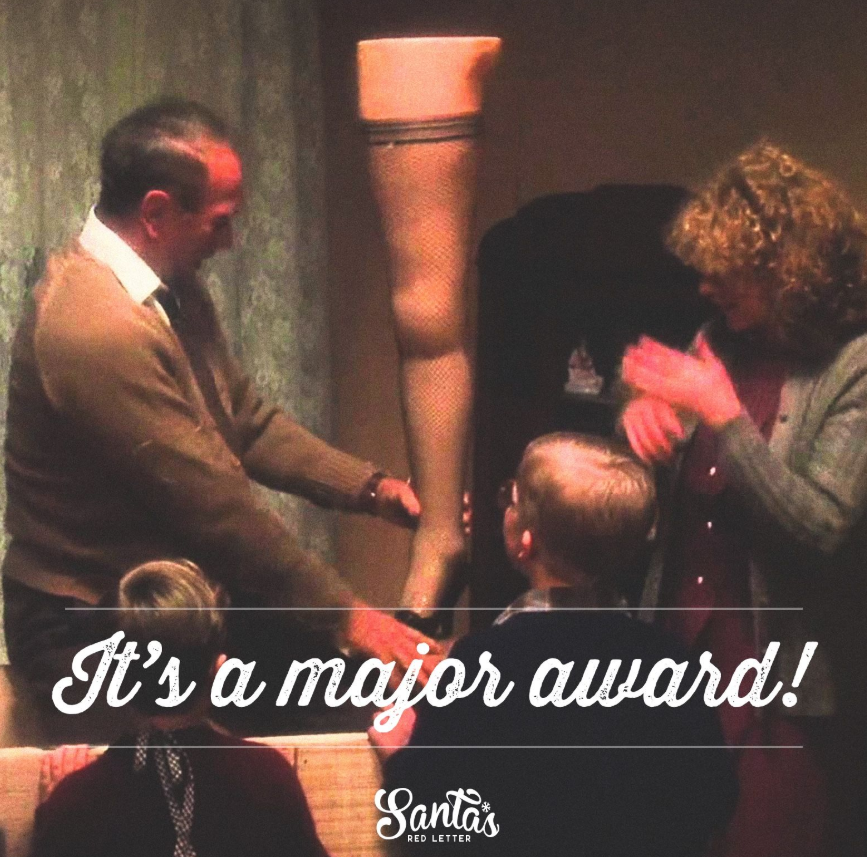
The Legacy of the Lamp!
As you may already know, in the years before I put my name on a winery, my profession was related to the motion picture industry.
In a pursuit spanning forty years, I collaborated with many great people. Few were as rewarding to work with as the late Bob Clark.
He was a seasoned and visionary film director, and it was at Bob’s suggestion that I undertook an unlikely project, one whose memory became the most enduring of my pre-winery career: the leg lamp made famous by the holiday film, A Christmas Story.
Why do I say “unlikely”? My expertise was in Special Effects, which I designed and executed for motion pictures, television and stage. Frequently these were loud and dramatic; I engineered fires, explosions, crashes and the like. Prop-making was a little outside my usual practice, but I happily agreed to build this one for my friend.
With a jolly demeanor and a sly smile, Bob handed me a napkin, bearing a sketch of a flamboyant light fixture. The rest is history.
A suitably proportioned young woman was hastily recruited to model for a leg mold, which was no small task, as it required immersing her entire leg, from big toe to navel, in quick-setting plaster.
From the mold, we cast a series of translucent plastic lamps. Each had to be individually crafted to the specific requirements of a scene and uniquely, meticulously illuminated by our Director of Photography. Accordingly, not one of the fixtures was a complete, C.S.A. anointed, “plug-in, switch-on”, and as Ralphie reminisces, “bask in the soft glow of electric sex” lamp.
Nonetheless, the illusion was a success. The presence of the lamp brought elements of levity, the ridiculous, fantasy and nostalgia to the film, magnified by the Director himself. Bob, as narrator, gave his own warm voice to Ralphie’s childhood memories, and made them ours.
When production wrapped, the lamps had nowhere to go. I stored them in Toronto, and for years they adorned the windows of my studio. However, the film company still owned them and when I was told to dispose of these props, I complied, leaving nothing behind.
As movies go, A Christmas Story was what we call “a sleeper”. It drew modestly on release, but grew in popularity year after year, to join the ranks of modern Christmas Classics.
We did not foresee this, nor did we foresee that of all the images generated by this now-iconic movie, the leg lamp would become its most-remembered, most-cherished, and most-copied Christmas symbol, launching a huge industry of luminous celebrations and decorative reproductions.
If we had known … well, I’m certain I’m not the only one who would have rushed back to rescue those fishnet stocking-clad plastic leg lamps from a Cherry Street dumpster.
No, I do not receive any royalties, but it gives me pleasure to see how many folks today own a modern copy of our original creation.
If you’re among them, may it light this Christmas and many more to come … and if you don’t have a leg lamp of your own, I hope that by sharing this story I’ve left you with a smile.
Comments Off on “It’s a major award!”
December 16, 2024
QotD: Movie and video game portrayals of generalship in pre-modern armies
This is also true, of course, in films. Our friend Darius III from Alexander (2004) silently waves his hand to mean “archers shoot!” and also “chariots, charge!” and then also “everyone else, charge!” Keeping in mind what we saw about the observation abilities of a general on horseback, you can well imagine how able Darius’ soldiers will have been to see his hand gestures while they were on foot from a mile or so away. Yet his army responds flawlessly to his silent arm-gestures. Likewise the flag-signalling in Braveheart‘s (1995) rendition of the Battle of Falkirk: a small banner, raised in the rear is used to signal to soldiers who are looking forward at the enemy, combined with a fellow shouting “advance”. One is left to assume that these generals control their armies in truth through telepathy.
There is also never any confusion about these orders. No one misinterprets the flag or hears the wrong orders. Your unit commanders in Total War never ignore or disobey you; sure the units themselves can rout, but you never have a unit in good order simply ignore your orders – a thing which happened fairly regularly in actual battles! Instead, units are unfailingly obedient right up until the moment they break entirely. You can order untrained, unarmored and barely armed pitchfork peasant levies to charge into contact with well-ordered plate-clad knights and they will do it.
The result is that battleplans in modern strategy games are often impressive intricate, involving the player giving lots of small, detailed orders (sometimes called “micro”, short for “micromanagement”) to individual units. It is not uncommon in a Total War battle for a player to manually coordinate “cycle-charges” (having a cavalry unit charge and retreat and then charge the same unit again to abuse the charge-bonus mechanics) while also ordering their archers to focus fire on individual enemy units while simultaneously moving up their own infantry reserves in multiple distinct maneuvering units to pin dangerous enemy units while also coordinating the targeting of their field artillery. Such attacks in the hands of a skilled player can be flawlessly coordinated because in practice the player isn’t coordinating with anyone but themselves.
Bret Devereaux, “Collections: Total Generalship: Commanding Pre-Modern Armies, Part II: Commands”, A Collection of Unmitigated Pedantry, 2022-06-03.
Comments Off on QotD: Movie and video game portrayals of generalship in pre-modern armies
November 23, 2024
They just can’t stop themselves from taking the MAGA bait
Kat Rosenfield in UnHerd discusses the inability of American leftists from rising to the (obvious) trolling from pranksters on the right:
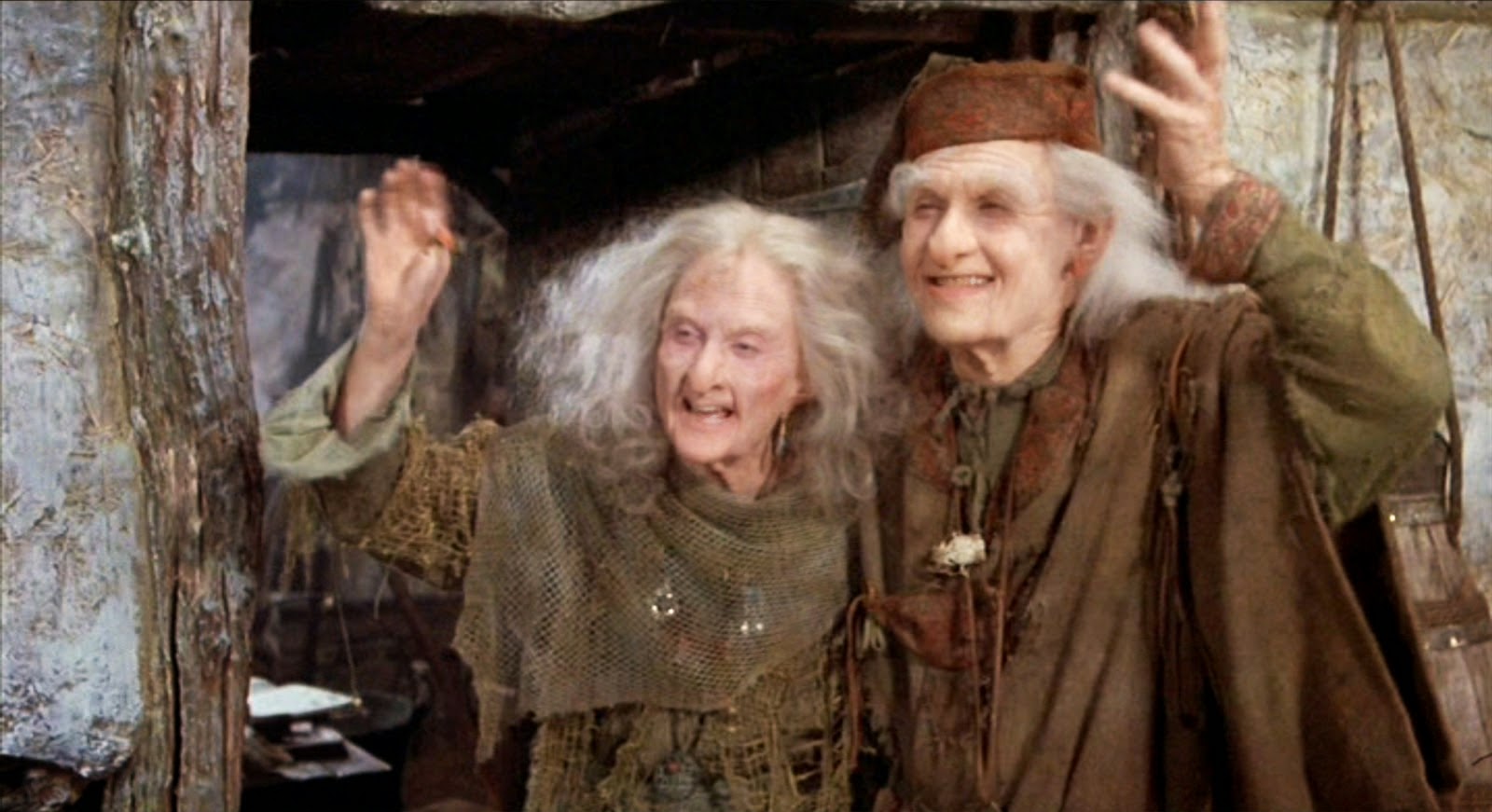
Carol Kane and Billy Crystal as Valerie and Miracle Max in The Princess Bride, 1987.
The current state of the American political discourse is best understood through the lens of the 1987 movie The Princess Bride — or more specifically, one scene therein. It’s the part where Miracle Max is decompensating over the insistence of his wife, Valerie, on saying the word, “Humperdinck”, the name of the movie’s evil prince, who is also Max’s most loathed nemesis.
“Why would you say that name!” he screams.
“What? Humperdinck!?” she shrieks back, gleefully.
One gets the sense that these two do this a lot — her Humperdincking, him screaming, which only makes her Humperdinck harder. That this problem has two obvious solutions only illuminates its intractability. Valerie could stop saying the name, but then again, Max could also choose not to react to its every utterance as if he’s been electrocuted. That neither of them are making different choices suggests that something about this dynamic serves them both.
I thought of this scene when the first “Your body, my choice” post from a male Trump voter skittered insect-like across my timeline in the wake of the election — closely followed by a handful of “My body, his choice” remixes by savvy OnlyFans models hoping to cash in on the moment. This crude riff on the feminist war cry that once defined the battle for abortion rights was akin to an inaugural shout of “Humperdinck!”, designed explicitly to trigger a meltdown among liberals. And lo: if you do an internet search for the phrase now, around 5% of the results are of people posting it and 95% are critics freaking out in response. “Women need to be kept safe from the ‘your body, my choice’ peddlers,” The Guardian announced, while CNN warned: “Attacks on women surge on social media following election”. And The New Yorker, for whom the phrase is a harbinger of a “coming era of gender regression”, described it as “A New Rallying Cry for the Irony-Poisoned Right”.
The phrase “irony-poisoned” in that last headline — which graces an essay by Jia Tolentino — struck me as an especially savvy bit of rhetoric. It functions as a preemptive strike against the obvious counterpoint to all this panic. Namely: “your body my choice” is a repulsive thing to say, but also the furthest thing from a legitimate threat.
The men behind these posts are not rapists-in-waiting, announcing their intent to commit sexual violence; they are trolls, gleefully trolling away in the hope of making people Mad Online. But if Tolentino knows this is bait (and she clearly does), she nevertheless cannot help taking it, hook, line, and sinker. The piece is imbued with a near-religious sense of horror at seeing the feminist catechism of “my body my choice” twisted by nonbelievers into something unfathomably malignant. This is beyond distasteful; it is heretical. And unlike the provocations in which the millennial Left once delighted, back in the days when one measly crucifix soaked in urine could trigger a weeks-long meltdown among religious conservatives, this little joke (Tolentino argues) is simply not funny.
November 13, 2024
QotD: The 1990s
Consider that if we really do live in a computer simulation, then everything the #wokesters are always going on about is actually true. Everything really IS a “social construction”, because “society” was literally constructed. All that stuff about “systemic racism” is true, too, because again, we’re dealing with a design. Nothing evolves organically inside The Matrix, because there’s nothing organic in there at all. It’s ALL on purpose …
… and you, #wokester, are the only one who can see it. Unlike Karl Marx, who was able to see beyond his class situation enough to say that no one can see beyond his class situation, because reasons, you, #wokester, can do it because you’re Neo. That, too, is built into the system. It’s an endless recursion … but one that entails that you, and you alone, are special, on purpose.
That, kameraden, was the 1990s. Even those movies our author mentioned — Beverly Hills Cop III, Lethal Weapons 3 and 4 — weren’t just copies of copies, they were ironic, snarky commentaries on copies of copies. See also Scream, which was a “deconstruction” of every slasher picture ever made. If you can’t beat ’em, join ’em … but since both beating ’em and joining ’em entail making a sincere effort and sincerity is forbidden, all you can do is mock ’em. That’s what “deconstruction” is, one long polysyllabic mockery of the very idea of excellence. It’s the perfect philosophy for people who know themselves to be mediocre but have been told from day one that they’re special.
See also the tv show Friends, where five ludicrously attractive people and David Schwimmer all pretend to be just normal folks (who happen to live in 3,000 square foot apartments in Manhattan) — each episode is “the one that’s just like The Brady Bunch, but snarky”. Or Seinfeld, which was deliberately designed to be a grating mockery of stuff like The Odd Couple. All snarky mockeries of the very concept of sincerity.
See what I mean? That’s normal now, which is why the 90s must be dragged into an alley and shot, for Western Civ’s sake.
Severian, “Why the 90s Was the Worst Decade Ever”, Rotten Chestnuts, 2021-07-04.
Comments Off on QotD: The 1990s
November 3, 2024
Ancient Sparta Historian Breaks Down 300 Movie | Deep Dives
History Hit
Published Jul 8, 2024Ancient Greek historian Roel Konijnendijk takes a deep dive into the historical accuracy of one of the most iconic and ridiculous depictions of the Spartans – 300 (2006).
00:00 Introduction
00:33 Spartan Society and Customs
02:34 Xerxes’ Messenger
06:56 The Ephors, the Oracle and the Carneia
10:30 The 300
15:39 The Persian Fleet
16:14 Thermopylae, the “Hot Gates”
17:17 Spartan Battle Technique
19:12 The Persian Army
24:42 Xerxes
28:28 Ephialtes
32:01 Dilios – Why Did the Spartans Stay?
34:18 The Final Stand
38:44 Aftermath of Thermopylae and Delios
40:53 Movie Quotes: Fact or Fiction?
(more…)
Comments Off on Ancient Sparta Historian Breaks Down 300 Movie | Deep Dives
October 19, 2024
Trope Talk: Train Fights!
Overly Sarcastic Productions
Published Jun 28, 2024Everyone pack your bags, do your hand-stretches and file this one under “trope talks that could easily be bingo cards”! Today let’s talk about that oh-so-spectacular staple of setpieces, the marvelous Train Fight!
(more…)
Comments Off on Trope Talk: Train Fights!
October 16, 2024
Roman Historian Rates 10 Ancient Rome Battles In Movies And TV | How Real Is It? | Insider
Insider
Published Jun 18, 2024Historian Michael Taylor rates depictions of ancient Rome in Gladiator, Spartacus, and Indiana Jones and the Dial of Destiny.
(more…)
Comments Off on Roman Historian Rates 10 Ancient Rome Battles In Movies And TV | How Real Is It? | Insider
October 4, 2024
Star Trek – “From Quoting Shakespeare to Diversity Woman’s Hour”
Every week, Substack helpfully compiles a list of posts that might be of interest to me, like this one by Isaac Young, discusses the fading phenomenon of Star Trek. (Disclaimer: I was a huge fan of the original TV series, but stopped watching the various Star Trek TV shows late in the Next Generation era and haven’t seen much after that … this essay covers parts of the canon that are largely terra incognita for me.)
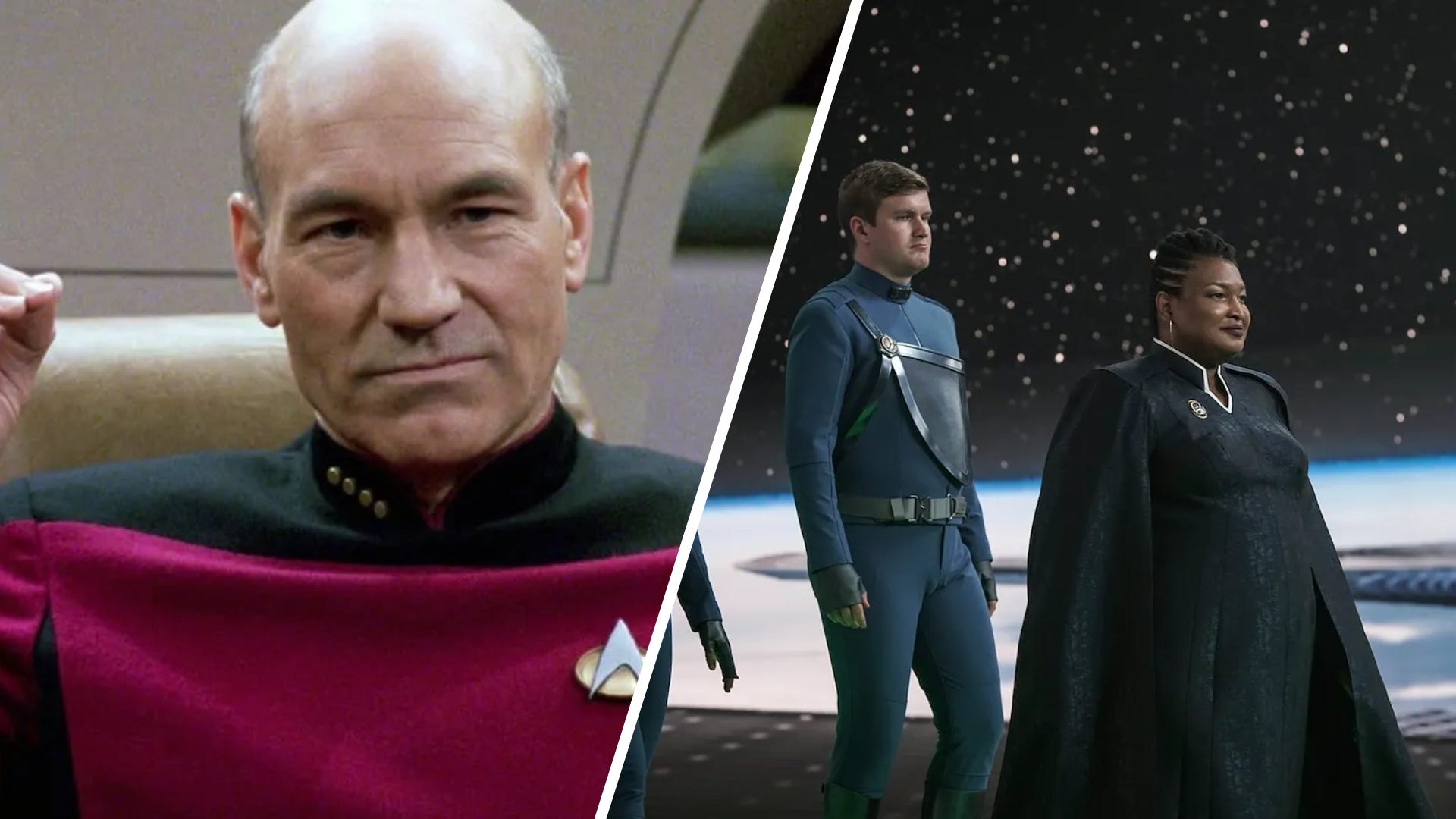
In order to understand what a thing is, I believe you must first understand how it dies. Endings are the most important part of a story because they are the culmination of everything that came before. They dictate the legacy and the memory. It is through the ending that we can finally put the body of work in its proper context. What is Romeo and Juliet if we cut the final act out, and can you really understand the play if you stop just before their suicide? So therefore, in order to understand this franchise, I have to begin this essay with Star Trek‘s suicide.
Whatever we make of the heroism of James T. Kirk, the high-minded principles of Jean-Luc Picard, and the reactionary realism of Benjamin Sisko, we have to come to grips with the tragic reality that those things did not last. They were discarded for feminism, queerness, and diversity. And what do those things mean? Modern Star Trek has been quite clear about that. It’s about emasculated men and raging girlbosses. It’s about celebrating every sexual appetite except the one that produces functional families. It’s about fetishizing racial revenge and elevating mediocrity at the expense of excellence.
You’ll find Star Trek has never been more vulgar, more profane, more debauched. It’s small-minded in everything from the cast to production values to the storytelling. It’s about lecturing to the untouchables about their privilege and holding victimhood as the highest virtue. All those tiny elements which we ignored or snickered at in previous shows became the substance of their successors, while those parts we loved about Star Trek — the parts that made it great — were left behind or turned into nostalgia-bait.
The awkward reality of being a normal person from twenty years ago is that every franchise and IP has stabbed you in the back — viciously. And yet despite this, I still harbor a great love for the films and tv series of yesteryear. If I hadn’t, I wouldn’t be writing this essay. It is out of a great sense of love and admiration that I am dedicating this piece, and that is how I want readers to understand my review. I’m not here to tell you Star Trek was evil or anything like that. I’m here to tell you that Star Trek was great — brilliant even, but the rot was there from the beginning.
Looking back, what should I say was the core of Star Trek? Or rather, what was the nature of Star Trek? Was it in those ephemeral elements which turned out to only be in passing? Or was it those elements which had been there from the beginning, and are only now being noticed, like flesh peeling away to reveal the bones of a rotting corpse? And to continue this metaphor, what should I make of this bloated, festering body when its soul has clearly long departed?
But how can I judge old Trek for the new? How can I possibly analyze this franchise with this lens when it has clearly fallen to ideologically captured writers? Surely this once beloved series will course correct once Hollywood hears all the negative feedback from fans.
I don’t know who still believes that anymore, but I feel obligated to address this criticism for that one person who still doesn’t understand how we got here. The world didn’t suddenly turn crazy in 2016. Wokeness is not an aberration or an anomaly, but the logical endpoint of liberalism. It is egalitarianism, personal freedom, and materialism taken to their natural conclusions. It is Star Trek‘s values as they actually operate in the real world.
I can look at franchise, see it as a product of the Left, and reliably chart its degeneration through understanding those values and their decline. Star Trek isn’t bad because it fell to a bad writer’s room or predatory corporate interests. It’s bad because we’re currently in a culture-wide crisis that is affecting every form of media entertainment.
If there is one thing I want to get across in this essay, it’s that what we’re witnessing is the real Star Trek as it springs from its stated values. This is the most honest the series has ever been. Once you strip away the Shakespeare, the heroic characters, the sci-fi concepts, the witty banter, and all the moral framing, this rot is what you’ll find underneath. It’s always been there. The bad news is that Star Trek as the political propaganda it has always been is quite ugly. The good news is that those things which made Star Trek great, those things which reached for the good, the true, and the beautiful—those things are eternal. And they aren’t going to die with Star Trek.
September 20, 2024
QotD: The Matrix, Harry Potter and “The One Pop Culture Thing”
That certainly seems to be the appeal of The Matrix, and indeed The Matrix stopped being The One Pop Culture Thing very quickly, I hypothesize, because it made “intellectualizing” it too easy. The Matrix is pretty much just Jean Baudrillard: The Movie, and while that’s fun and even useful — Baudrillard did have a point, despite it all — it’s just too clever … by which I mean, The Matrix did too much of the heavy lifting, so that you don’t get too many Very Clever Persyn points for noting that we’re all, just, like, simulations in other people’s minds, dude. Descartes can go fuck himself; Keanu Reeves has solved the mind-body problem with kung fu.
Also, Baudrillard-lite is everywhere now. We’re all Postmodernists, in the same way we’re all Marxists, so even the kids who slept through most of their one required Humanities course has at least vaguely heard of this stuff. A show like True Detective, on the other hand, hearkens back to much older philosophy — as tiresome as the wannabe-Foucaults were back in the late 1980s, as a culture we’ve pretty much forgotten about them, so the brooding wannabe existentialist douchebag seems new now. I just googled up “best true detective quotes”. Here’s a small sampling:
This is a world where nothing is solved. You know, someone once told me time is a flat circle. Everything we’ve ever done or will do, we’re gonna do over and over and over again.
Also:
… to realize that all your life, all your love, all your hate, all your memory, all your pain, it was all the same thing. It was all the same dream you had inside a locked room — a dream about being a person. And like a lot of dreams, there’s a monster at the end of it.
That “flat circle” thing is a direct quote from Schopenhauer, I’m pretty sure, and the idea of “eternal recurrence” came from Vedic philosophy via him to Nietzsche. Here, for instance, the Manly Mustache Man summarizes the plot of True Detective, season 1:
What, if some day or night a demon were to steal after you into your loneliest loneliness and say to you: “This life as you now live it and have lived it, you will have to live once more and innumerable times more; and there will be nothing new in it, but every pain and every joy and every thought and sigh and everything unutterably small or great in your life will have to return to you, all in the same succession and sequence — even this spider and this moonlight between the trees, and even this moment and I myself. The eternal hourglass of existence is turned upside down again and again, and you with it, speck of dust!”
Would you not throw yourself down and gnash your teeth and curse the demon who spoke thus? Or have you once experienced a tremendous moment when you would have answered him: “You are a god and never have I heard anything more divine.” If this thought gained possession of you, it would change you as you are or perhaps crush you. The question in each and every thing, “Do you desire this once more and innumerable times more?” would lie upon your actions as the greatest weight. Or how well disposed would you have to become to yourself and to life?
Here again, I don’t blame the average HBO viewer for having their minds blown by this (or at least pretending to), but people with PhDs should damn well know better. This is existentialism for dummies, but since they spent most of their off hours in grad school reading Harry Potter …
Severian, “The One Pop Culture Thing”, Rotten Chestnuts, 2021-09-16.
Comments Off on QotD: The Matrix, Harry Potter and “The One Pop Culture Thing”
September 18, 2024
D-Day 80th Anniversary Special, Part 1: Paratroopers, with firearms expert Jonathan Ferguson
Royal Armouries
Published Jun 5, 2024This year marks the 80th anniversary of D-Day, the Allied invasion of France which took place on 6th June 1944. From landing on the beaches of Normandy, the Allies would push the Nazi war machine and breach Hitler’s Atlantic Wall.
To commemorate this, we’re collaborating with Imperial War Museums to release a special two-part episode as Jonathan will look at some of the weapons that influenced and shaped this historic moment in history.
Part 1 is all about the “tip of the spear”, the Paratroopers.
0:00 Intro
0:55 STEN MK V
1:40 History of the Sten
3:00 Mark V Details
6:23 Usage in D-Day
8:38 M1A1 Carbine
10:38 M1A1 Details
14:09 Usage in D-Day
15:01 ACME ‘Cricket’ Clicker
17:31 The Longest Day
19:30 Outro[NR: I’m glad Jonathan discussed that bloody clicker scene in The Longest Day … it bugged me the very first time I watched the movie as a young army cadet in the mid-1970s.]
(more…)
Comments Off on D-Day 80th Anniversary Special, Part 1: Paratroopers, with firearms expert Jonathan Ferguson
September 15, 2024
My Man Godfrey (1936) with William Powell and Carole Lombard
The Film Detective
Published Nov 15, 2018During the height of the Great Depression, a scavenger hunt party game brings a pair of spoiled sisters, Irene and Cornelia Bullock (Carole Lombard and Gail Patrick) to a city dump looking for a “forgotten man”. They find down-and-out hobo Godfrey Parks (William Powell), who accompanies one of the sisters back to the party to be presented as a scavenger hunt find, and ends up warily accepting her offer to become the family butler. Irene falls for Godfrey, but is unaware of his mysterious past. Nominated for six Academy Awards, My Man Godfrey might be the screwiest of all screwball comedies.
Director: Gregory La Cava
Writers: Morrie Ryskind, Eric Hatch
Starring: William Powell, Carole Lombard, Alice Brady, Gail Patrick, Eugene Pallette, Jean Dixon
Comments Off on My Man Godfrey (1936) with William Powell and Carole Lombard
September 13, 2024
Fiction should have heroes, not merely the morally ambivalent “heroes” modern writers prefer
Tom Knighton is nostalgic for some of the books and movies of his youth, which often had an actual hero you could root for:
Somewhere along the way, fiction started changing.
In my childhood, the nihilism that seems to be so common today wasn’t really a thing. We had grand adventures with heroes who might not have been perfect but were still heroes.
Today, we have a lot of fiction where no one is really the good guy. Rings of Power has been trying to humanize the orcs, making all the good races of Middle Earth darker than they were. Game of Thrones saw just about every truly heroic character killed while so many of the despicable characters lasted until the end.
And that’s a problem. Why?
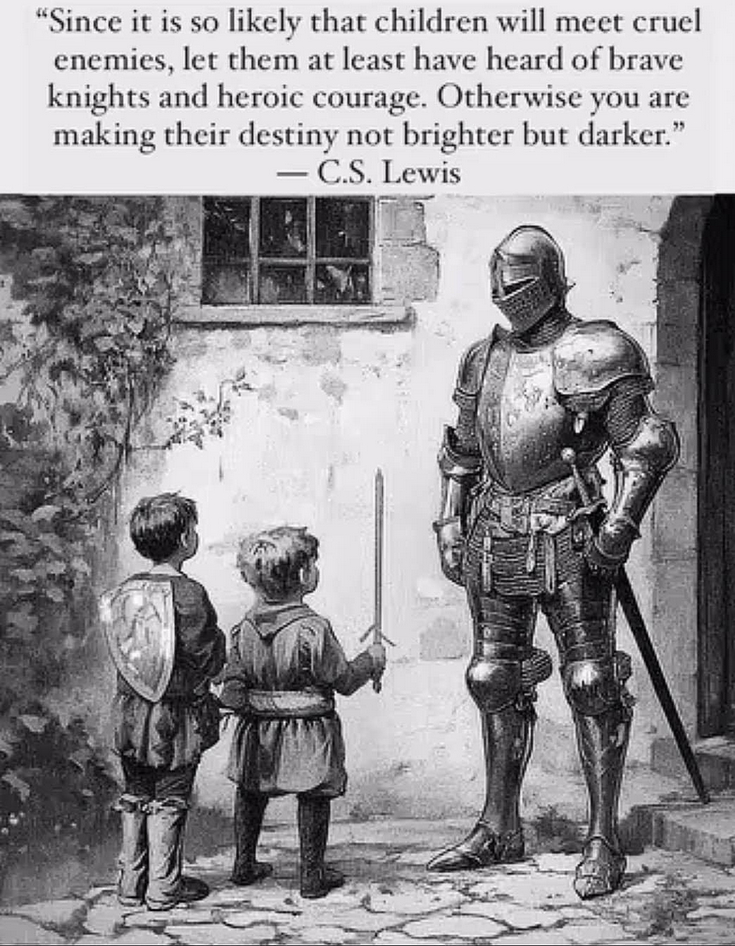
Well, let’s start with this bit from C.S. Lewis:
Now, I grew up in the era of Rambo and John McClain. I had tough-guy heroes and I also had those that were just regular folks thrust into bad situations.
But there were always good guys and there were always dark forces at work.
The world is more muddied than that, sure, but entertainment doesn’t have to reflect reality perfectly. I mean if that were true, how did Lord of the Rings do so well? Elves and orcs and uruk-hai aren’t exactly real, now are they? Neither are hobbits, Jedi, terminators, or any of a million other fictional creations.
Yet what existed in all of those stories were good guys fighting to put down the evil that arose.
As Lewis argues, it taught my generation and those before and right after mine that cruel enemies can be defeated.
Today, though, we see all too many stories where the enemies prevail, where good fails to triumph over evil, and evil is allowed to remain.
For a while, there was a certain amount of shock value to that. This was when this was the exception rather than a normal thing you would see. It was that moment at the end when you realize the good guy lost despite their best efforts, that revealed at the end that the hero who sacrificed himself to kill the bad guy failed to actually kill him.
Comments Off on Fiction should have heroes, not merely the morally ambivalent “heroes” modern writers prefer
September 11, 2024
⚔️Parry! ⚔️Parry! 🗡️Thrust! 🗡️Thrust! GOOD!
Jill Bearup
Published Jun 3, 2024They’re MEN. They’re men in TIGHTS (tight tights!) Please enjoy the extended edition of this video with many random digressions that will mostly be cut for the public version 😀
00:00 Robin Hood: Men in Tights
00:50 The Plot, It Goeth Thusly
03:03 Prince of Thieves/Men in Tights/Maid Marian and Her Merry Men
04:50 What kind of fight do you like?
06:19 Setup for the ending fight
07:03 The Prince of Thieves fight
07:38 The Adventures of Robin Hood fight
07:53 FIGHT!
08:53 My favourite thing (compare and contrast)
10:03 The first phrase
10:39 The second phrase
11:24 The third phrase
11:43 The fourth phrase
12:29 The fifth phrase
12:40 and FIN
13:13 I love it, I really do
14:17 Book chat
15:52 Men hitting each other with sticks
17:40 Matching vibes
18:46 Just Stab Me Now audiobook update
(more…)
Comments Off on ⚔️Parry! ⚔️Parry! 🗡️Thrust! 🗡️Thrust! GOOD!
QotD: The preposterous tactics of George R.R. Martin’s Dothraki nomads
As a description, it is hard for this to be very much wrong because it is so very vague, but the attentive reader will note that Jorah’s assertion that there are “so many” must be wrong for either Eurasian Steppe Nomads or Great Plains Native Americans, both of whom were routinely outnumbered by settled enemies, often dramatically so. Let’s put a pin in that, though, because of course while Martin gives only vague description of Dothraki warfare, the show, Game of Thrones, shows it to us on screen quite vividly.
We see a bit of Dothraki warfare in S6E9 when Daenerys’ Dothraki charge down the Sons of the Harpy at Mereen, but the really sustained look at how they fight has to wait for S7E4 and the Loot Train Battle and S8E3 and the Battle of Winterfell, both of which, happily, we have already discussed! In all three cases, the Dothraki do exactly the same thing. They charge, in a pell-mell rush, while giving high-pitched war-calls. While some of the Dothraki may fire arrows on the approach (they have them stand up to do this, which is not how actual Mongols or Native Americans fired from horseback; it looks cool and is stupid, like most of Game of Thrones season 7 and 8), they otherwise charge directly into contact and begin fighting from horseback with their arakhs as the primary weapon.
This is not how horse-borne nomads fought.
As we’ve discussed repeatedly before, the key weapon for Steppe nomads was the bow, shot from horseback at high speed (on this, note May, “The Training of an Inner Asian Nomad Army” JMH 70 (2006) and Mongol Art of War (2007)). Thus the crucial maneuver was the caracole, where the rider approaches the target at high speed, firing arrows as he goes, before making an abrupt turn (it is actually the turn that is technically called a caracole, but the whole tactic goes by this name) and retreating, before trying again. Pulling this tactic off en masse required a great deal of both individual skill at horsemanship and archery, but also quite a lot of group cohesion and coordination, since a collision of horses at speed is very likely to be fatal for everyone – humans and horses – involved.
This tactic can then be repeated – charge and retreat, charge and retreat – until the psychological toll on the defender becomes too great and they either break and retreat or else charge out to try to catch “retreating” nomads. In either case, it was at that moment when the Steppe nomads could press home and destroy the disorganized enemy. These tactics were brutally effective, but they were also a necessary casualty control measure. Shock combat – that is massed melee combat in close quarters – is simply far too lethal for low-population nomadic societies to sustain in the long-term on the regular (a hoplite battle might result normally in c. 10% casualties for instance (but note this discussion of that figure) – think of what that would mean in a society where 100% of adult males participate in each battle – you’d run out of men pretty quickly!).
And fascinatingly, we can actually see that calculus play out in North America, where the arrival of firearms, which suddenly make pitched “missile exchange” battles (especially on foot) as lethal as shock combat (it seems notable that the introduction of musketry into Old World warfare did not come with a significant increase or decrease in battlefield lethality, at least until the rifled musket – on that, see B. Gibbs, The Destroying Angel (2019), but also note E.J. Hess, The Rifle Musket in Civil War Combat: Reality and Myth (2008)), the pitched battle vanishes. It was simply too lethal to be a viable option in the long term for societies with low population density and very high military participation rates.
Instead, the raid came to dominate warfare on the Great Plains, with mass-casualty events generally being restricted to situations where a raiding party caught an enemy group unawares (McGinnis, op. cit., 45-6, 57-9). To be clear, that’s not to say the Great Plains Native Americans were peaceful, after all the goal of all of this raiding was to cause one of those rare mass-casualty surprise attacks and – as McGinnis notes again and again, warfare was part of the Plains Native American way of life, as the social status of males was directly and powerfully tied to success in war.
In short, the need to keep lethality relatively low is one of the most important factors which shaped nomadic horse-borne warfare, both on the Steppe and on the Great Plains. And here is where I think that even Martin’s description – which could, if read with friendly eyes, be taken as a description of the Steppe caracole described above – falls short: the Dothraki are dangerous because they are so many. But actual nomadic warfare was fundamentally conditioned by the shortage of men created by the low population density of the Steppe or the Great Plains. This weakness could be somewhat made up for by making every male into a warrior, but only if casualty rates remained low. A war of attrition with settled peoples would wear the nomads out quickly, which is why such attritional warfare was avoided (unless you are the Mongols, who use the sedentary armies of conquered states, notably using the armies of Northern China to conquer Southern China; that said, Drogo is clearly not Chinggis Khan or any such sort of Khal-of-Khals)
So where does this model of warfare come from? Well, when it comes to the show, we needn’t actually look far, because the creators tell us. The director of the episode, Matt Shakman, noted in an interview that his primary reference for the Dothraki charge was John Ford’s Apache attack in his 1939 film Stagecoach (you can see the scene he means here). And in the S7 special feature, “Anatomy of a Scene: The Loot Train Attack”, David Benioff notes that the charge “definitely got a bit of that western feel” while VFX producer Steve Kullback says, of the battle, it’s “sort of like Cowboys and Indians”.
In Stagecoach (1939), the Apache aren’t a real humanized culture, but an elemental force of destruction. Their charge at the titular stagecoach is essentially mad and heedless of all losses (in the same featurette, Camilla Naprous, Game of Thrones‘ horse master, describes the Dothraki as “they’re just these absolute mad men on horses”, in case you thought that connection was only subtext). The position of “Indians” as particularly “rapey” is also explicit in Stagecoach, where the one of the white male defenders of the coach saves his last bullet to spare the one woman, Mrs. Mallory, from being captured and raped by the approaching cavalry [NR: I think Dr. Devereaux means “Indians” here, but given the historic reputation of the cavalry …] (the concern about white women being raped by non-white men being a paramount fixation of early American film; see also The Birth of a Nation (1915); or, you know, don’t.) And the tactics (or lack thereof) of the Dothraki, charging madly forward with no order or concern for safety, also map neatly on to Stagecoach‘s Apache attack (and not on to actual Apache attacks).
I don’t think this lazy use of old Western tropes is limited to merely the show, however. Having written this far, I find myself convinced that there is a longer article or perhaps a video-essay waiting to be written by a different sort of scholar than myself – that is, a film historian – on how Martin’s depiction of the Dothraki and their world is fundamentally rooted in the racist tropes of the Hollywood Western and its portrayal of Native Americans in a frontier environment where, as Sergio Leone put it, “life has no value“. Quite a lot of parallels with Martin’s Dothraki emerge after even a brief overview of the representation of Native Americans in film. The emphasis on taking captives (especially white women) to no apparent purpose besides sexual violence, the distinctive “screaming” of Dothraki warfare (which, yes, Native Americans used a range of intimidating war cries, but so did basically everyone else in the pre-modern world, so why are the Dothraki the only ones who do it in Westeros?), its lack of tactics or order, and – as we’ve discussed already – the grossly simplified form of dress all seem to have their roots in racist Hollywood depictions of Native Americans. The Dothraki Sea is, essentially a “Cavalry and Indian Story” with the cavalry removed.
That is not a pure creation of Benioff and Weiss. The show simply takes that subtext and makes it text.
Bret Devereaux, “Collections: That Dothraki Horde, Part IV: Screamers and Howlers”, A Collection of Unmitigated Pedantry, 2021-01-08.
Comments Off on QotD: The preposterous tactics of George R.R. Martin’s Dothraki nomads


