Quotulatiousness

August 1, 2024

The Rarest 1911: North American Arms Co

Filed under: Cancon, History, Military, USA, Weapons, WW1 — Tags: , , , , , — Nicholas @ 02:00

Forgotten Weapons
Published Apr 22, 2024

In the summer of 1918, the US government wanted to increase production of M1911 pistols, but all current manufacturers were working at capacity. So they looked to issue new contracts, and someone realized that the Ross rifle factory was a potential option. Now, the Ross Rifle Company was bankrupt by this time, and its factory lay essentially abandoned. So in June of 1918, two Canadian lawyers by the names of James Denison and Edmond Ryckman incorporated the North American Arms Company Ltd in Quebec, signed a contract to manufacture 500,000 1911 pistols for the US, and then leased the Ross factory for a term of 18 months. Whether they would have been successful in producing pistols at scale is unknown, because their contract was cancelled on December 4, 1918 before any deliveries were made. With the end of the war, arms requirements plummeted, and pretty much all ongoing weapons contracts were cancelled, not just this one. However, parts for 100 pistols had been produced, and these were assembled and sold commercially after the contract was cancelled.
(more…)

July 23, 2024

Trudeau announced new submarines for the RCN … don’t assume he’s really serious

Filed under: Cancon, Government, Military, Weapons — Tags: , , , , , — Nicholas @ 03:00

At The Hub, J.L. Grantastein explains why Trudeau’s hasty commitment under pressure from our exasperated NATO allies is not likely to be met, and almost certainly not to be met fully:

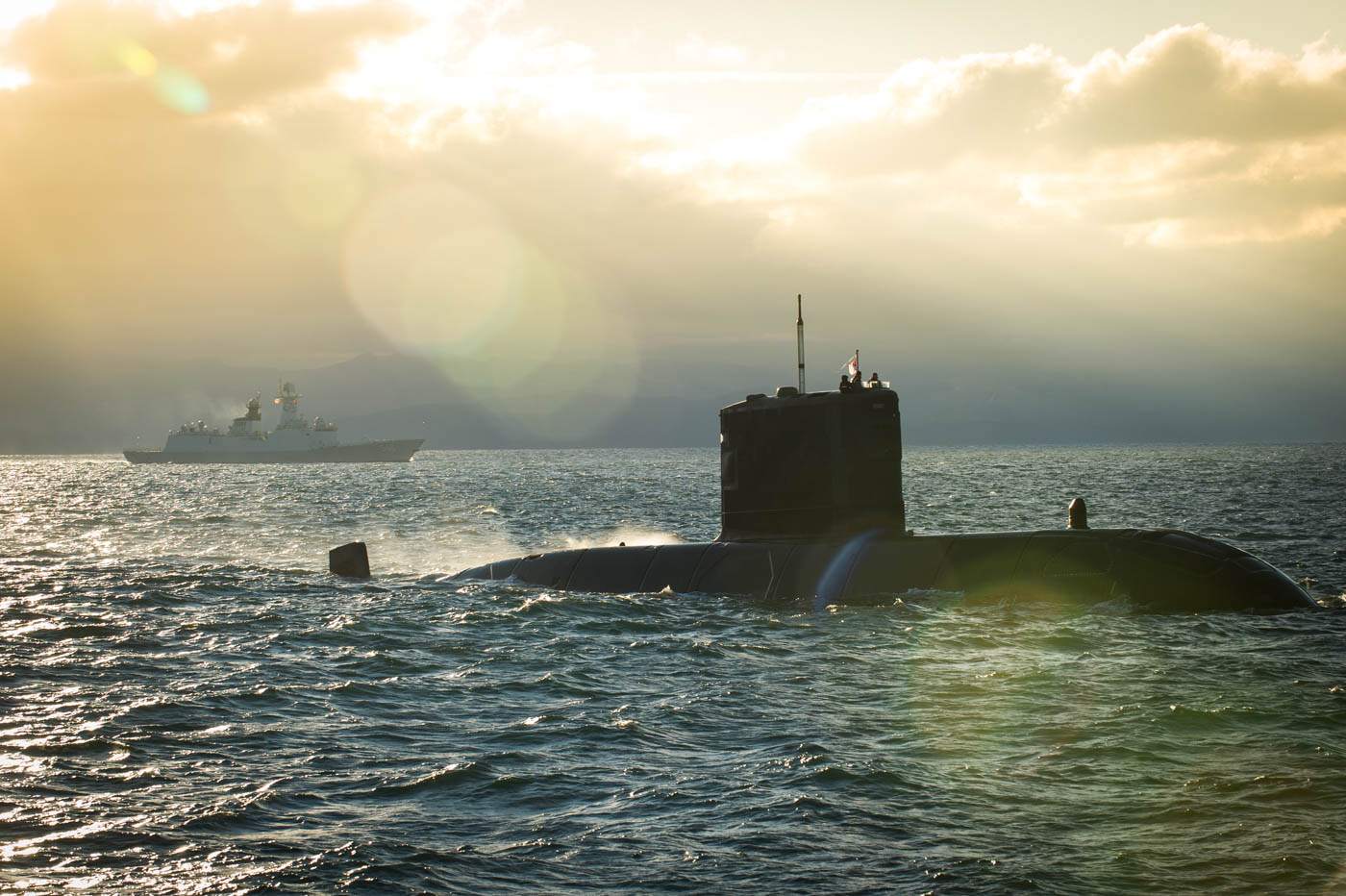
HMCS Chicoutimi escorts Peoples Liberation Army (Navy) ships visiting Victoria on behalf of the Chinese military, 13 December 2016.
Photo: Cpl Carbe Orellana, MARPAC Imaging Services, ET2016-0468-03 ©2016 DND-MDN CANADA

Canada has no capacity to construct submarines, and the country’s shipyards are struggling to build destroyers, icebreakers, and supply ships. This means that submarines will need to be purchased from European or Asian shipyards with experience in building them. (There will be a certain irony if the RCN, having fought against U-boats in two world wars, ends up with German submarines.)

As of Trudeau’s announcement, let us be clear, no submarine design has been selected, and naval officers are said only to have been engaged in seeking the best models for the RCN. Given Canada’s broken defence procurement system, this is unlikely to be a quick process. The RCN may soon know what it wants but the bean counters will rule as they always do, and orders most likely will not be placed for at least three to five years.

Few expect that the Liberals will be in power in 2027, and if the Conservatives do form the government, it is worth noting that Pierre Poilievre has refused to commit to a date for Canada to meet its 2 percent pledge. New subs may not be an idea the Tories will accept.

If an old or new government does decide to continue with a submarine program, it is certain that a new conventional sub will cost at least $1 billion, many millions more to make it strong enough to operate for long periods in the Arctic, and millions more for its torpedoes, missiles, other weapons, radars, and electronic systems. The costs involved all but guarantee that 12 submarines are a pipedream — the RCN will be lucky to get four to six. Trudeau did not offer a timetable in his remarks, but it is highly unlikely that even a single submarine would be ready to go to sea before the early 2030s and the last by the 2040s.

Then there is the problem of manning a fleet of underwater vessels. The RCN has four Victoria-class boats now. These subs, purchased used from the Royal Navy, have not worked well, are constantly undergoing expensive repairs, and scarcely leave the dock. In other words, the crews have relatively little sea-going experience, the RCN is short of sailors already, and experienced mechanics and skilled technicians are in even shorter supply. Each sub will need more than sixty officers and sailors, and there must be at least three times that number on leave, on courses, or in training to support each crew.

There is little point in acquiring new submarines if there are no crews to sail in them, and with the fifteen new destroyers planned and just beginning construction, the senior service’s personnel needs must be a top priority. That need will not be met until the Canadian Armed Forces’ problems with recruitment are fixed, and that problem has bedevilled the military for decades. (I served on a Department of National Defence Special Committee in 1995 that advanced recommendations to improve recruiting, but nothing changed. Nothing has improved in the three decades since.)

Note that referring to the navy as “the senior service” is only appropriate when talking about Britain’s Royal Navy. The Royal Canadian Navy was established in 1910, long after the Canadian Army came into existence. I’m sure members of the RCN won’t mind if you make that mistake, however.

May 15, 2024

Canada’s Minister of National Defence says new submarines are “inevitable”

Filed under: Cancon, Government, Military — Tags: , , , , — Nicholas @ 05:00

Bill Blair regrets earlier comments that some read as weakening the government’s already feeble commitment to re-equipping the Royal Canadian Navy’s submarine branch:

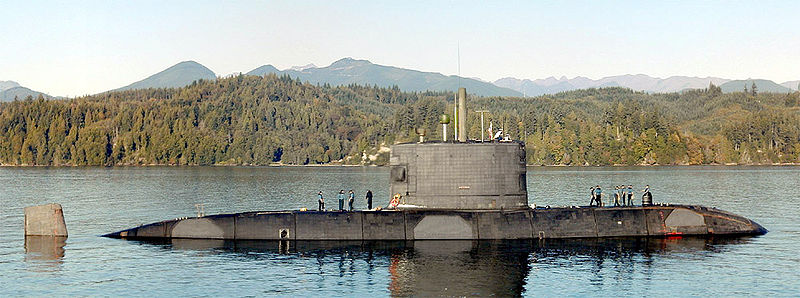
HMCS Victoria, one of the four submarines currently in service with the Royal Canadian Navy. She was originally commisioned into the Royal navy as HMS Unseen in 1991 and re-commissioned as HMCS Victoria in 2000.
Image via Wikimedia Commons.

Bill Blair, the federal defence minister, made a rare admission of Liberal fallibility in Washington on Monday when he said he regrets using the word “explore” when talking about renewing Canada’s submarine fleet.

Ottawa’s recent defence policy update said the government will “explore options for renewing and expanding the submarine fleet”, a form of words that was criticized for lacking urgency.

“It’s certainly not my intention to be wishy-washy. What I’ve tried to articulate very, very clearly and strongly in the document is, we know we have to replace our submarine fleet, and we’re going to do that,” Blair said.

Replacing the four Victoria-class subs is necessary, he said. “It is, I might suggest, inevitable.”

That is absolutely the case, if Canada is committed to maintaining its submarine capability. The Victoria-class subs date back to the late 1980s and are due to be taken out of service at the end of the 2030s.

Submarines are seen as a crucial defence against incursion by hostile powers, as the polar ice melts and opens up northern waterways. The Northwest Passage is forecast to be the most efficient shipping route between Asia and Europe by 2050.

But Blair admits “there is a lot of work to do”, not least convincing his cabinet colleagues of the “business case for the capability”.

“One of the greatest challenges of being a defence minister is to secure funding and the second one is actually spending it”, he said on Monday.

He gave a sense of the struggles around the cabinet table last month in a speech in Ottawa, where he admitted: “I had to sort of keep on pushing my issue forward about the importance and the need to invest in defence”. He made it sound as if he was a lone voice in the wilderness.

[…]

Retired captain Norman Jolin recently wrote an analysis for the Naval Association of Canada that noted if Canada wants to maintain submarine capability, it needs to place a contract with a proven builder by 2027 at the latest. He said the lack of domestic submarine-building capacity means there is neither the time nor resources to even think about a made-in-Canada solution.

The typical procurement process takes 18 years to get from cabinet approval to delivery, which would mean if an order was placed tomorrow, we wouldn’t get new subs until 2042.

Based on that timeline, “it is clear that the decision to replace the submarines is considerably overdue,” Jolin wrote.

There’s little chance that this will move closer to completion during the remaining life of the current government, with an election due before the end of 2025, and Blair is already on the record emphasizing how little the Liberals would relish spending any money on military equipment even in good economic times. Oddly, the fact that there are no domestic shipyards currently capable of building submarines may be a positive — building the RCN’s ships in Canadian yards always means that each ship costs much more than if the hull is built in a foreign shipyard. Canada doesn’t have the facilities and trained workforce to build naval vessels, so every time a new class of ships is needed, the cost of building/refurbishing the shipyards and hiring and training-from-scratch a new workforce balloons the total cost of the program.

May 4, 2024

Bill Blair – “I couldn’t make a defence policy argument to meet that spreadsheet target of two per cent”

Filed under: Cancon, Military, Politics — Tags: , , , , — Nicholas @ 03:00

I don’t find it at all surprising that Canada’s current Minister of National Defence hasn’t been able to persuade Justin Trudeau and the rest of cabinet that we should live up to our treaty commitments to our NATO allies. I do find it surprising that he’s allowed to say anything on the topic that implies criticism of Justin’s tame ministers:

This week, Defence Minister Bill Blair made a rare admission for a federal cabinet minister: He said he keeps trying to get the rest of cabinet to fund the Canadian military to NATO standards, but nobody’s biting.

“Don’t get me wrong. It’s important, but it was really hard (to) convince people that that was a worthy goal,” Blair said in a Wednesday address to the Canadian Global Affairs Institute, a foreign affairs think tank.

Blair was speaking specifically about boosting Canadian defence spending to the NATO standard of two per cent of GDP, which he referred to as a “magical threshold”.

“Nobody knows what that means, they didn’t know how much that is and they didn’t know what we were going to spend money on, so I couldn’t make a defence policy argument to meet that spreadsheet target of two per cent,” he said.

Only a few years ago, it was pretty typical for NATO members to fall well short of the two-per-cent threshold. In 2018, for instance, Canada spending 1.23 per cent of GDP on defence put it roughly on par with Germany, The Netherlands and Portugal, among others.

But Russia’s all-out invasion of Ukraine in 2022 sparked a massive defence-spending boost among the alliance. Germany, most notably, greenlit a massive rearmament plan with the specific goal of hitting the NATO threshold.

According to a 2023 report by the NATO Secretary General, Canada is the only member of the alliance to fail on both spending metrics tracked by the organization: The two-per-cent threshold, and the requirement that at least one-fifth of the defence budget be spent on equipment.

This is a perennial sticking point in Canada’s NATO membership. In February, both NATO Sec.-Gen. Jens Stoltenberg and U.S. ambassador to Canada David Cohen publicly chastised Canada for failing to deliver on its military commitments. Years earlier, U.S. president Donald Trump said Canada was “slightly delinquent” when it came to its NATO funding.

April 23, 2024

KICKING IT TO THE MOON? Canada’s Military Procurement: A history of broken promises

Filed under: Cancon, Military, Politics — Tags: , , , , , — Nicholas @ 04:00

Esprit de Corps Canadian Military Magazine
Published Apr 22, 2024

The Liberal government have finally released their long awaited Defence Policy Update which promises billions of dollars in increased spending for the CAF. Critics wonder if such promises are worth the paper they are printed on. History says that when it comes to military budgets, promises are made to be broken. Good Grief.
(more…)

April 21, 2024

Canada’s latest unlikely-to-meet-expectations defence update

Filed under: Cancon, Government, Military — Tags: , , , , — Nicholas @ 05:00

In The Line, Michael Den Tandt considers the Trudeau government’s most recent update to Canada’s defence plans (where the cynic might be tempted to read “plans” as “vague gestures toward treaty obligations with no real intent to do more”):

… Among the more intriguing findings is that no likely economic path has China overtaking the United States in terms of global influence, between now and 2040. And all likely paths project a sharp decline in global population growth over the same period, including in China.

This is worrying, because declining population growth is a precursor to declining economic power, which in turn means declining military might, and also a tendency to lash out. As the American political scientist Michael Beckley has noted, there is a lengthy historical pattern of rising powers becoming expansionist when their initial economic boom slows. In a prolonged multipolar interregnum between the U.S.-led order that followed the Second World War, and whatever comes next, threats will continue to multiply. A capable military is essential to national survival.

Which brings us back to the federal defence update, and its raft of new spending, with $8.1 billion in additional funding by 2029-30, by which time Canada’s military spending will reach just under 1.8 per cent of GDP, with steady increases adding up to $72.3-billion by 2043-44. Commitments include ramping up recruitment, revamping procurement, new subs for the Arctic, tactical helicopters, new vehicles and long-range missiles, drones, a new Canadian Cyber Command, and more. There is a laudable commitment to developing reserves of ammunition.

The commitment — as was a prior promise, from 2022, to spend $38 billion on NORAD modernization over 20 years — is all to the good.

But the elephant in the room, when it comes to federal defence commitments, is that we’ve seen these before, from both major governing parties, with disappointing results. The purchase of new fighters for the Royal Canadian Air Force was first announced in July of 2010. The rebuild of the Royal Canadian Navy’s surface combatants, replacements for the 1980s-era frigates, was first announced in the fall of 2011. We don’t yet have either new fighter jets or new surface combatants. And the vast majority of funding outlined in the updated policy statement will be up to future governments. Net incremental new spending in 2024-25 is just $612 million.

There was a historical moment, not long ago, when Canadian military preparedness advanced at a wartime pace — when Canadian soldiers were fighting and dying in Afghanistan. From 2005 through 2010, the governments of Canada, initially Liberal, then Conservative, set about getting our soldiers the kit and equipment they needed. In short order the CAF acquired Chinook helicopters, Boeing C-17s and Hercules C-130 transports, and more. It is possible.

The great risk in building up Canada’s defences at a leisurely, peacetime rate, is that the days of leisurely, peacetime stability are over. The update can be counted as progress. But it needs a major infusion of urgency.

April 18, 2024

On The Line with General Wayne Eyre, commander of the Canadian Armed Forces

Filed under: Bureaucracy, Cancon, Government, Military — Tags: , , , — Nicholas @ 04:00

The Line
Published Apr 16, 2024

General Wayne Eyre served for decades in the Canadian Army, including as its commander, before being promoted to Chief of the Defence Staff in 2021. During his time as Canada’s top soldier, he has overseen not only a series of challenges inside the Canadian military, but also a rapid deterioration in the geopolitical environment. The world is a more dangerous place, and Gen. Eyre has been unusually outspoken in noting that Canada needs to do more to be ready for what’s coming.

In this conversation with The Line‘s Matt Gurney, the general provides his take on the state of the world today, shares his thoughts on the recently announced Defence Policy Update, and talks about why he is encouraged by some of what he is already seeing change with Canada’s military readiness.

On The Line is The Line‘s newest podcast, featuring longer interviews by either Jen or Matt with someone who is currently in the news or able to speak to something topical (or, sometimes, simply fun and interesting). We are still getting it up to speed, but Line listeners and viewers can expect an episode weekly by next month, at the latest.

To never miss an episode of either On The Line or The Line Podcast, sign up today to follow us on YouTube, on the streaming app of your choice and, of course, at ReadtheLine.ca, home of The Line. Like and subscribe!

Please note: This interview was recorded on Friday, before the Iranian attack on Israel.

March 28, 2024

Justin Trudeau never misses an opportunity to make a performative announcement, even if it harms Canadian interests

Canadian Prime Minister Justin Trudeau made an announcement last week that the Canadian government was cutting off military exports to Israel … except that Canada buys more military equipment from Israel than vice-versa:

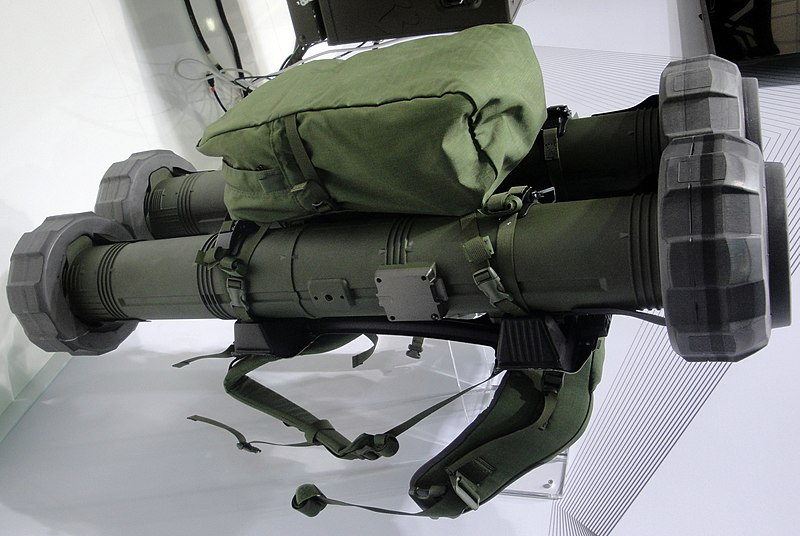
Israeli Spike LR2 antitank missile launchers, similar to the ones delivered to the Canadian Army detachment in Latvia in February.
Wikimedia Commons.

When the Trudeau government publicly cut off military exports to Israel last week, the immediate reaction of the Israeli media was to point out that Canada’s military was far more dependent on Israeli tech than was ever the case in reverse.

“For some reason, (Foreign Minister Melanie Joly) forgot that in the last decade, the Canadian Defense Ministry purchased Israeli weapon systems worth more than a billion dollars,” read an analysis by the Jerusalem Post, which noted that Israeli military technology is “protecting Canadian pilots, fighters, and naval combatants around the world.”

According to Canada’s own records, meanwhile, the Israel Defense Forces were only ever purchasing a fraction of that amount from Canadian military manufacturers.

In 2022 — the last year for which data is publicly available — Canada exported $21,329,783.93 in “military goods” to Israel.

This didn’t even place Israel among the top 10 buyers of Canadian military goods for that year. Saudi Arabia, notably, ranked as 2022’s biggest non-U.S. buyer of Canadian military goods at $1.15 billion — more than 50 times the Israeli figure.

What’s more — despite Joly adopting activist claims that Canada was selling “arms” to Israel — the Canadian exports were almost entirely non-lethal.

“Global Affairs Canada can confirm that Canada has not received any requests, and therefore not issued any permits, for full weapon systems for major conventional arms or light weapons to Israel for over 30 years,” Global Affairs said in a February statement to the Qatari-owned news outlet Al Jazeera.

The department added, “the permits which have been granted since October 7, 2023, are for the export of non-lethal equipment.”

Even Project Ploughshares — an Ontario non-profit that has been among the loudest advocates for Canada to shut off Israeli exports — acknowledged in a December report that recent Canadian exports mostly consisted of parts for the F-35 fighter jet.

“According to industry representatives and Canadian officials, all F-35s produced include Canadian-made parts and components,” wrote the group.

March 12, 2024

The recently admitted “death spiral” for the Canadian Armed Forces is nothing new

Filed under: Bureaucracy, Cancon, History, Military — Tags: , , , , , , — Nicholas @ 04:00

“Shady Maples” outlines just a few of the historical procurement fuckups Canada’s armed forces have had to work through, showing that the recent admission that the armed forces are in a “death spiral” by MND Bill Blair is almost “situation normal” for the troops:

The Canadian Armed Forces are fucked. By this term of art, I mean that the CAF:

  1. are in dire circumstances; and
  2. are being used for such aggressive political gratification that it’s practically perverse.

You don’t have to take my word for it. The Minister of National Defence made the following remarks last week:

    because, the bottom line is the Canadian Armed Forces must grow. We’re short a lot of people. Almost 16,000 in our regular forces and reserves.

If that wasn’t bad enough, he added:

    more than half of our trucks, more than half of our ships and more than half of our planes are not available for service because they are in need of parts and repair. We’re going to have to do better.

Translation: we are fucked.

The MND’s remarks come eleven months after the CDAI published an open letter on the state of national security and defence:

    Years of restraint, cost cutting, downsizing and deferred investments, have meant that Canada’s defence capabilities have atrophied. Our military capabilities are outdated and woefully inadequate to protect our landmass and maritime approaches. We have also fallen short in meaningful contributions to burden sharing for the collective defence and security of our allies and partners.

Translation: we have been fucked for awhile.

More recently, the Vice Admiral Tophsee made waves on the RCN’s official YouTube channel by stating the obvious:

    Colleagues and Shipmates, the RCN is facing some very serious challenges right now that could mean we fail to meet our Force Posture and Readiness commitments in 2024 and beyond. La situation est grave mais nos problèmes ne sont pas uniques et je sais que l’aviation et l’armée sont confrontées a des défis similaires. [The situation is serious, but our problems are not unique, and I know that the Air Force and the Army are facing similar problems.]

Translation: we will be fucked for the foreseeable future.

He then shows that this sort of thing has been part-and-parcel of Canada’s delusionary approach to national defence since the year before Confederation. Canada’s WW1 army was sent off with fantastically bad equipment — from rifles to web gear, from automobiles to artillery ammunition — all scandals of the day that no lessons were learned from.

Soldiers and officers at the tactical level will readily tell you that these headlines are only surprising because senior leaders are finally saying the quiet part out loud: the CAF is undermanned, under-equipped, under-trained, and unprepared. We know this because we live it every day: situation normal, all fucked up. But you don’t need a source or a leak to learn about our deplorable state of readiness. Here is a link to DND’s 2023 audit and evaluation reports. They paint a bleak picture: we have insufficient equipment and what we have keeps breaking. We have insufficient personnel to match with commitments, and we are struggling to recruit, train, and retain more. Go have a look at the reports, they lay it all out.

February 22, 2024

Trump’s crude, threatening rhetoric on NATO’s cheapskates is … right

Filed under: Cancon, Europe, Military, Politics, USA — Tags: , , , , , — Nicholas @ 05:00

In The Line, Philippe Lagassé joins all right-thinking people in condemning Donald Trump’s campaign trail threats to not defend NATO’s freeloaders if they’re attacked by, say, Vladimir Putin:

Donald Trump recently called into question the core principle of the North Atlantic Treaty Organization (NATO). As a collective defence alliance, NATO operates on the principle that an attack against one member is an attack against all. This principle is enshrined in Article 5 of the NATO agreement. Although Article 5 allows each ally to respond as they see fit, there’s an understanding that allies have an obligation to defend each other.

On the campaign trail, Trump declared that, if elected, he wouldn’t defend NATO allies if they’ve failed to spend two per cent of their Gross Domestic Product (GDP) on defence. Not only that, he said he’d encourage Russia to attack these allies. As Trump reiterated last week: “Look, if they’re not going to pay, we’re not going to protect, okay?” These comments raised serious concerns within NATO. Jens Stoltenberg, NATO Secretary General, warned that Trump is striking at the underlying logic of the alliance. The Secretary General stressed that “We should not undermine the credibility of NATO’s deterrent”.

What should we make of Trump’s threat? On the one hand, it’s clearly dangerous and evidence that a second Trump presidency could shake the foundations of the alliance. We should rightly be worried and condemn such reckless rhetoric. On the other hand, this is classic Trump. His approach to international politics can best be understood as “mobster diplomacy”. He demands personal loyalty as the head of the “family” of Western liberal democracies. When it comes to trade deals, he echoes Don Corleone in making offers that partners can’t refuse. As for alliances, he sees them as a protection racket. When it comes to NATO allies, his message is simple and direct: “Nice country you have there … pity if something happened to it”.

Allied leaders and academics can protest that the two per cent target isn’t a payment to the United States; it’s a measure of the relative amount allies spend on their own militaries, not a fee they owe Washington. While true, it’s a waste of breath to point this out. Trump and his supporters don’t care. They see most allies as freeloaders who’ve been coasting on American military power for too long. And you know what? They’re not wrong. That’s the rub for those who are understandably horrified by Trump’s comments. Far too many NATO allies, including Canada, have been content let the United States carry a heavy defence spending burden, while we focus on other priorities. That’s what Trump is ultimately getting at here, however menacingly.

Canada has been particularly unwilling to pay its agreed share, actually cutting the military budget late last year while many of our European allies were increasing theirs. We’re habitually the ones who slip out of the room when it’s our turn to buy a round, militarily speaking.

December 26, 2023

Canada is the unchallenged international champion of “the gesture” and “the pose”, yet always manages to be out of the room when the bill needs to be paid

Sorry for being several days behind on this, but Matt Gurney‘s message — while necessary and timely — does not have a “best-before” or an expiration date … it’s going to be valid for a long time to come:

On the military front, Canada has actually made some meaningful investments since that speech was given. We have announced deals for new transport and refuelling jets — desperately needed and long overdue. We more recently announced a plan to sole-source new surveillance planes, also desperately needed and long overdue. We also, just this week, announced that we are procuring a fleet of large, long-ranged, armed surveillance drones, to patrol our remote air and sea frontiers, after a mere two decades of mulling it over.

There ends the good news, sadly. Most of these procurements are many years away from actually being in service. And even once we have them, as good as the new equipment will be, the biggest problem for the military today is a crippling personnel shortage. The military is, to be blunt, a disaster. Far worse than is generally known. I’ve been covering military and defence issues for longer than I care to recount, and I can tell you plainly, dear readers, that the level of panicked leaking and lamenting coming out of the Canadian Armed Forces is like nothing I’ve ever seen. We don’t have the troops, sailors and aircrew to meet even basic obligations. Training is falling behind. The in-service availability of equipment and vehicles is appallingly low for lack of trained maintenance personnel and money for spare parts and equipment.

This is showing up in operations. The army doesn’t have enough soldiers to meet every commitment. The air force has cut back on operations. The navy’s top admiral is openly speaking, in public, about the crisis in his service.

We at The Line often talk about the Canadian love of talking about inputs instead of outputs. It’s easier to say “Our government has committed X dollars over Y years to address Societal Problem Z” than it is to actually ever have to answer to the public about why Z is somehow still getting worse. New procurements are an input; the desired output is a functional Canadian Armed Forces, capable of meeting its domestic obligations, honouring our treaty commitments and also being prepared for any unexpected contingencies. We do not have that military today. We cannot have that military for years. It would take massive investments and sustained effort to begin fixing this problem.

That is not happening. Hell, we took Anita Anand, one of Justin Trudeau’s better ministers and replaced her with Blair, a man for whom that has never been said. I can tell you with certainty that our allies, and our senior military commanders, had no trouble reading between those lines. Trudeau thought the military mattered, briefly, but then he stopped thinking that, and here we are.

So, 14 months out from Freeland’s speech and on the military front, well … Merry Christmas, or something?

But wait! There’s more!

Freeland’s speech also talked about other ways Canada could support its allies, and democracies in general. Some of it was vague and aspirational — hard to measure or follow-up on. But she was specific about two things: providing our threatened allies and the democracies broadly with a stable, democratic and reliable source of critical strategic resources. Energy, for example. And minerals.

Fourteen months later, how are we doing on those fronts?

I’m not an expert in either area, but I know experts in both. Andrew Leach is an energy and environmental economist at the University of Alberta (I literally copied that bio right off his webpage there). He is also, simply put, one of the smartest guys on the energy file in this country. I called him this week and found him grading papers, which is probably why he was so willing to talk with me. I explained to him what I was doing with the Brookings speech, and asked him if there was anything he could point to over the last 14 months as signs that we’d gotten serious and were doing as Freeland had said we would and must.

Nope!

“By any metric, it’s worse today,” Leach said. Two months ago, he noted, the Supreme Court ruled against the Trudeau government’s energy policies. “Now, there are no clear processes to get approvals for anything,” he added, except, somewhat ironically, pipelines, whose approvals process wasn’t included in the court ruling. I asked him if this was something the Trudeau government had done to itself, or if it was a victim of happenstance, and he said that some of the legislation they were dealing with dated back to the Harper era — before their time — but that in general, the Trudeau government hadn’t handled this well. “They messed up. They assumed they had powers they didn’t have, and didn’t make the arguments for those powers. They didn’t think about the framing. They had to earn that. They didn’t.”

October 29, 2023

Arguments for not buying military kit “off the shelf”

Filed under: Britain, Bureaucracy, Cancon, Military, Technology, USA, Weapons — Tags: — Nicholas @ 05:00

Sir Humphrey provides some of the reasons why it’s not a simple economic case for a nation’s military procurement to buy “off the shelf” equipment even from a close ally:

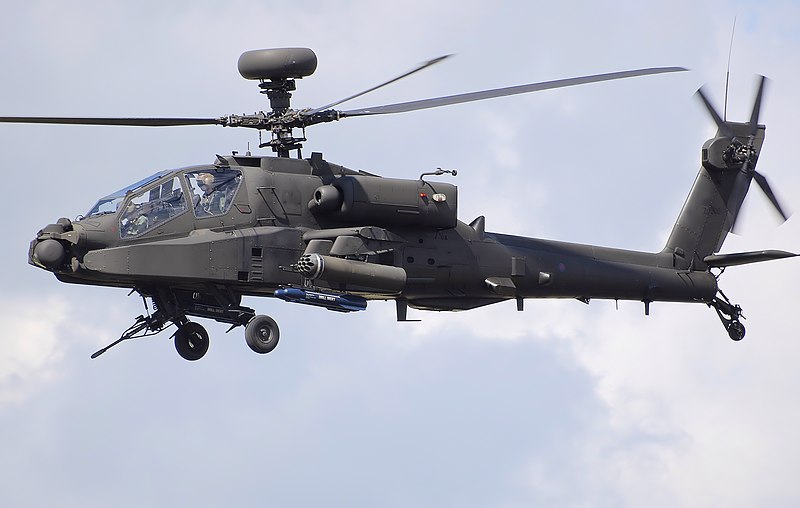
Not all kit needs to be or can be domestically sourced. The British army uses Apache attack helicopters which are licensed from the original US manufacturer.
Westland Apache WAH-64D Longbow helicopter (UK Army registration ZJ206) displays at Kemble Air Day 2008, Kemble Airport, Gloucestershire, England in June 2008.
Public domain photograph by Adrian Pingstone.

The arguments for buying American are on the face of it reasonable. The US produces good quality equipment able to meet many UK defence needs. There is a strong supply chain in place, ensuring that there are plenty of spare parts in the system to draw on when needed, and at cheaper cost due to bulk buying. The equipment is usually designed to be interoperable with NATO partners, so it can be integrated to work alongside allies and with existing equipment. It can be delivered quickly, it works and lots of other people use it, so why shouldn’t the UK? There are in fact many good reasons why the UK should not exclusively buy American.

Earlier this month, we looked at the Canadian Surface Combatant (CSC) program and why the Canadian Armed Forces never seemed to get the same “bang for the buck” that our American or British allies seem to manage. Here, Sir Humphrey points out that even the British military has to make procurement decisions that weigh cost and convenience with some very significant national security concerns:

To start with, US kit is designed by US companies to meet US requirements, not British ones. This may sound obvious but there is a dangerous view some put forward that “off the shelf” means the UK could just buy something and use it. There is no such thing as “off the shelf” unless you want it as it comes in its US version, with no modifications, changes or installation of British equipment. The moment you do this, you’ve created a UK variant with its own bespoke requirements and supply needs, for which you are dependent on the US defence industry to support – and there is no guarantee that this can or will happen. From the outset you have lost operational sovereignty and control over your military equipment.

Buying from the US means the UK would need to request a Foreign Military Sale (FMS) case through the US government, seeking legislative approval to purchase the equipment. If, for example, the UK wanted to buy a new tank, it would be reliant on US government approval to do so, not just for the initial purchase, but for all spares buy thereafter. The way that FMS works is that it sets out approval not just for purchase, but sets a schedule for spare parts purchases, services, and upgrades, all of which are done at the time and schedule set by US government and industry, and not the British government. This means that the UK would lose control over when to purchase spares or upgrades and would be forced to buy to a foreign governments timetable. This is why FMS is so successful for the US – it offers cheap entry prices but makes a killing in the long-term spares and support market. To buy from the US means to accept that you are handing over control of your spares and logistics chain to a foreign power who determines the timing of when and what you buy. This is fine in small doses but if you buy exclusively from the US, suddenly means you’ve got no control over how you want to support your armed forces.

The next challenge is the integration work needed to make things work for the UK. One of the risks of buying a foreign design is that you lack operational sovereignty over the design and its internal contents. Equipment supplied by the US will often come with a variety of sealed, tamper proof boxes containing US government-controlled technology that cannot be accessed by the purchasing nation. As the operator, you do not have full control over your military equipment, you don’t know what is necessarily in the boxes, and you are reliant on the US to fix issues with them. By contrast any equipment designed and built in the UK means that the MOD has full control and sovereignty over it to open it up, modify, adapt or change it to meet British needs. To buy US means accepting we cannot change a design without a foreign nations’ approval, which in turn means exposing our own sensitive military technology and equipment to the US, to conduct trials to ensure it can work with the US provided equipment. This represents an astounding loss of sovereign control on advanced weapon systems and means potentially giving the US defence industry insight into UK capabilities that manufacturers may want to keep commercially sensitive.

October 18, 2023

Why the Canadian Surface Combatant (CSC) program will cost so much more than equivalent US or British ships

Filed under: Business, Cancon, Military — Tags: , , , , , — Nicholas @ 03:00

In The Line, Philippe Lagassé outlines the Canadian Surface Combatant (CSC) program — the next-generation front-line combat ships for the Royal Canadian Navy intended to replace the current Halifax-class frigates and the already retired Iroquois-class destroyers:

Building warships is an expensive business, especially if you’re getting back into it after a few decades. Take the Canadian Surface Combatant (CSC). Fifteen CSCs will be built at Halifax’s Irving Shipbuilding to replace Canada’s current frigates and decommissioned destroyers. According to a 2022 study by the Parliamentary Budget Officer (PBO), the CSC acquisition will cost $80.2 billion. Given that defence inflation is well above regular inflation, and that regular inflation is running hot, that number isn’t going to go down.

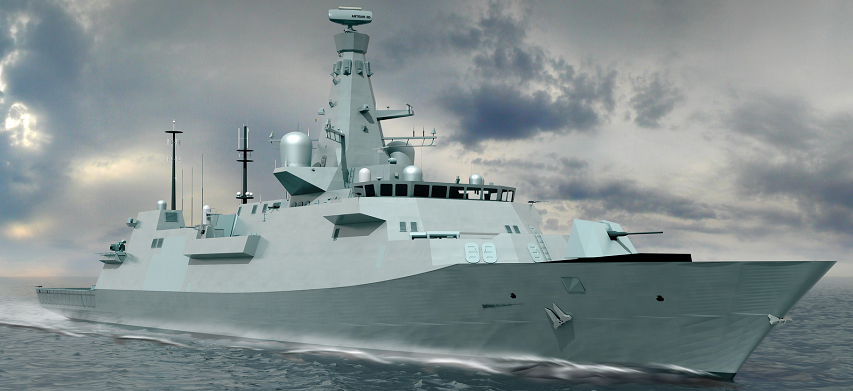
Canada’s CSC will be a variant of the Type 26 Global Combat Ship originally designed for the Royal Navy. The Canadian variant includes significant changes to the original Type 26 design, notably to the combat systems. With the estimated per unit cost of each ship topping $5.6 billion, the National Post‘s John Ivison warns that the CSC is out of control. Ivison notes that the United States Navy (USN) acquired its Constellation-class frigates for $1.66 billion. Why, he understandably asks, is Canada paying so much for the CSC, and to what end?

The Canadian government always views major military purchases for the Canadian Armed Forces primarily as regional economic development projects and always attempts to get all or at least a major part of the construction done in Canada. To most people this sounds sensible: big military equipment acquisitions mean a lot of money being spent, so why shouldn’t most of that money be spent inside Canada? The answer, in almost every case, is that it will be significantly more expensive because Canadian industry doesn’t regularly produce these ships/planes/helicopters/tanks, so a lot of money will need to be spent to construct the factories or shipyards, import the specialized equipment, hire and train the workforce, etc., and no rational private industry will spend that kind of money unless they’re guaranteed to be repaid (plus profit).

Ordinary items for the Canadian military like clothing, food, non-specialized vehicles (cars, trucks, etc.) may carry a small extra margin over run-of-the-mill stuff, but it will generally be competitive with imported equivalents. Highly specialized items generally won’t be competitively priced exactly because of those specialized qualities. The bigger and more unusual the item to be purchased, the less economic sense it makes to buy domestically.

There are also the conflicting desires of the elected government (who generally want to target the spending to electoral districts or regions that benefit “their” voters), the permanent bureaucracy (who want to ensure that programs last a long time to ensure jobs within the civil service), and the military procurement teams (who have a tendency to over-optimistically estimate up-front and long-term costs because they want to get the procurement process underway … it’s tougher to stop something already in-process than one that still needs formal approval).

Once there’s a budget and capabilities are identified, the requirements for individual projects are prepared. It’s here that the comparison with lower cost, off-the-shelf alternatives runs into difficultly. The USN has lots of different types of ships that do lots of specific things. The above-mentioned Constellation-class is one of many different types of warships that the USN will sail, each with specific mission sets and roles. The Canadian military has only been directed to acquire fifteen CSCs, but the government expects the CAF to do a variety of missions at sea — not as many as the USN, of course, but still a good number. Canada has other military ships, including the Arctic Offshore Patrol Vessels (AOPS) also being built by Irving, but the CSC will be Royal Canadian Navy (RCN)’s primary expeditionary platform. Canadian defence planners, therefore, need those 15 ships to be capable of undertaking various missions and roles. Compounding this challenge are technological changes and the ever-evolving threat. The requirements for the CSC need to be continuously updated, and in some cases expanded, to keep pace with these developments, too.

An artist’s rendition of BAE’s Type 26 Global Combat Ship, which was selected as the Canadian Surface Combatant design in 2019, the most recent “largest single expenditure in Canadian government history” (as all major weapon systems purchases tend to be).
(BAE Systems, via Flickr)

On purely economic grounds, it would often make sense to add Canada’s order on to existing US, British, or other allied military orders to benefit from the economies of scale … but pure economic benefits don’t rank highly on the overall scale of importance. There’s also the understandable desire of the government to buy fewer items with wider capabilities as the government’s requirements for the military change with time and circumstance.

Were Canadian defence planners too cavalier in their requirements and design modifications? Maybe. Looking at it from their perspective, though, we should appreciate that they thinking about capabilities for a ship that Canada will use until the 2100s.

Doubts about the CSC are going to keep multiplying. The per unit costs can only increase so much before people start seriously discussing reducing how many of them will be built. You can be sure that some within government are already asking “Why 15? Why not 12?” Serious concerns are also being raised about whether the defence budget can afford to maintain CSC and keep them technologically up to date after the fleet is introduced. Given the CAF’s personnel recruitment troubles, moreover, it’s unclear if the RCN will have enough sailors to operate the full fleet. The first CSC that hits the water, furthermore, will have all sorts of kinks and problems that will need to be sorted out. That’s standard for first ships off the line, but you can be sure that every failing will be met with handwringing and charges of incompetence.

To address these concerns, the government must let DND/CAF better explain what the CSC is designed to do and why it needs to do it. Simply telling Canadians that it’s the right ship isn’t enough when it’s easy to point to lower-cost alternatives. As well, the government needs to be far more transparent about estimates of costs and what’s driving them. Political and public support for the CSC shouldn’t be taken for granted, and growing concerns about the program can’t be simply brushed away.

July 18, 2023

Seaplanes? How 1940s. No, we’re seeking to “leverage emerging technologies” instead

Filed under: China, India, Japan, Military, Pacific, Technology, USA — Tags: , , , — Nicholas @ 04:00

CDR Salamander wonders about a modern need for military sea rescue capability that the US Navy filled with flying boats and seaplanes during the Second World War, then supplemented with helicopters during Korea and Vietnam. For ocean search-and-rescue in a combat environment in the present or near future, what are the USN’s plans?

I will be the first person to admit that good, well-meaning, and informed people can disagree with seaplanes in general or the US-2 specifically, but they have to engage the conversation. Directly argue the requirement or offer realistic alternatives.

This does neither. If anything is demonstrates the narrowness of thought and fragility of substance used in opposition.

What an patronizingly toxic stew that answer is. I highly doubt Lung typed out that answer himself, so my commentary below is not directed at him personally, but … and it is what comes after the “but” that counts — but at the three-digit J or N code that extruded that from the random acquisitions professional statement subroutine from ChatGPT.

Let’s give that answer a full Fisking;

  • “The Indo-Pacific operational environment has evolved significantly since World War II”:
  • Let me check my WWII Pacific chart, my Vietnam War era globe, and GoogleEarth … and … no. The geography has not changed. The distances have not changed. The requirement of thousands of years to take and hold territory or eliminate your enemy from access to it has not changed. All the little islands, regardless of what Al Gore and John Kerry say, are still there. As we are seeing in the Russo-Ukrainian War, a million PPT slides saying so does not change the fundamentals of war.

    Sentence one is invalid.

  • “The employment of seaplanes today would not meet the operational demands and current threat scenario.”

    Is there an operational demand for us to rescue downed airmen and to be able to reach remote islands without airfields? Yes. Does your “current threat scenario” run from Northern Japan through to Darwin, Australia? Yes.

    Sentence two is invalid.

  • “However, we support the continuous development of new and innovative solutions that may provide solutions to logistical challenges.”
  • So, you define “new” as something that only exists on PPT slides? By “continuous development” you mean never matures as a design that goes into production. By “innovative” you mean high on technology risk. Undefined program risk. Unknown design risk. No known production line or remote estimate to IOC, much less FOC when we know that the next decade is the time of most danger of the next Great Pacific War.

    Sentence three is irresponsible and professionally embarrassing given the history of transformational wunderwaffe this century.

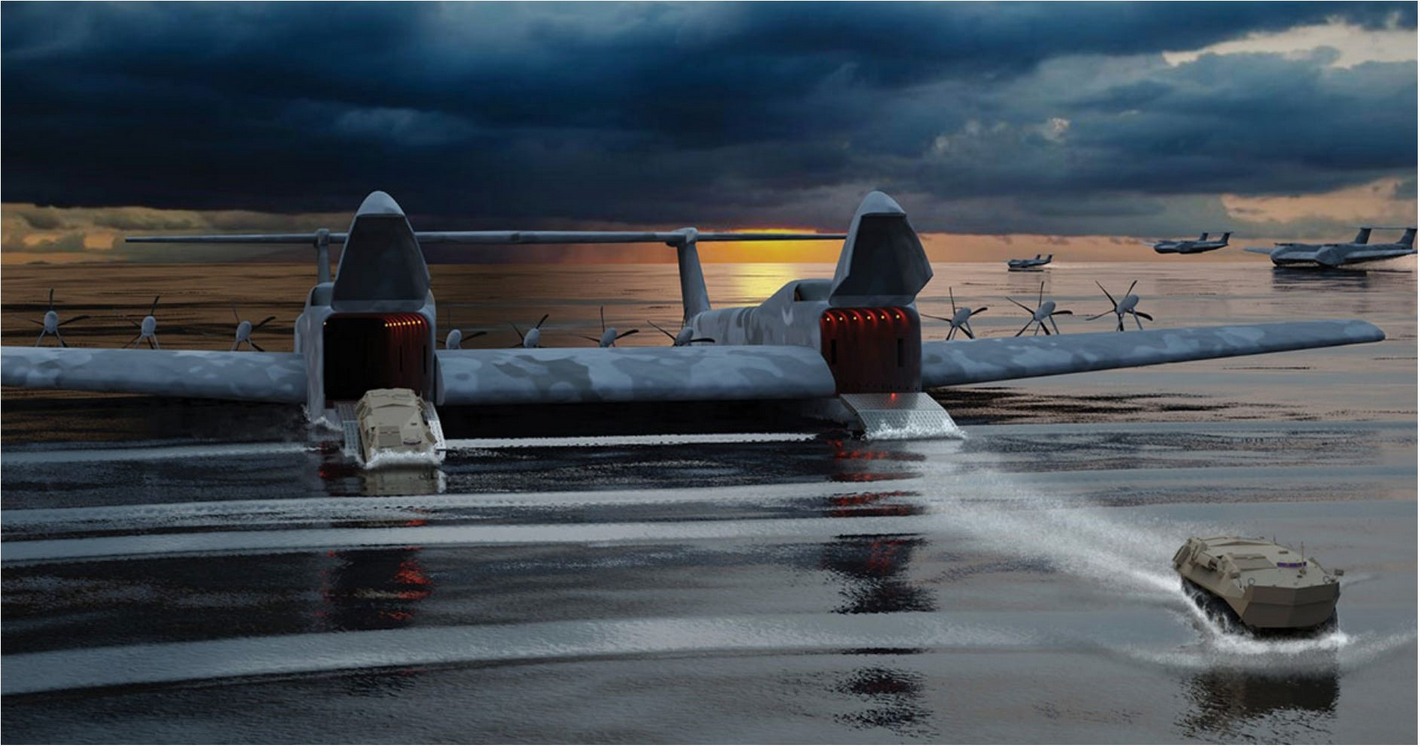
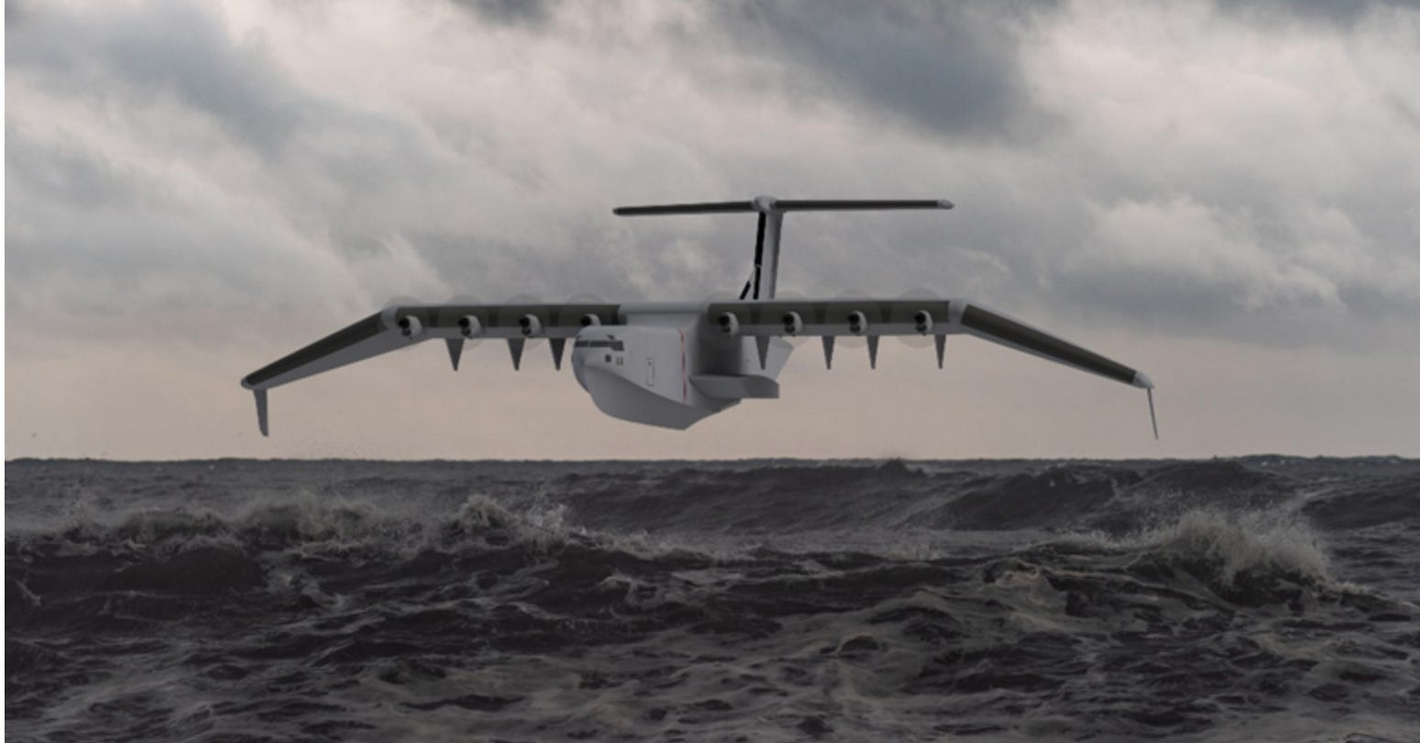
  • “As an example, DARPA’s Liberty Lifter X-Plane seeks to leverage emerging technologies that may demonstrate seaborn strategic and tactical lift capabilities.”
  • Well, goodness, we will have to micro-Fisk this gaslighting horror show of a sentence. To start with, they are talking about either this from General Atomics;

    … that could only be used on a very few select beaches under ideal weather in a completely permissive environment and could only be used for one specific mission and nowhere any possible hostile aircraft or ground forces. Also looks like we’d need a whole new engine and a small town’s worth of engine mechanics to maintain the maintenance schedule on those engines.

    Then we have this offspring of an accidental mating of the Spruce Goose with the Caspian Sea Monster idea from Aurora Flight Sciences;

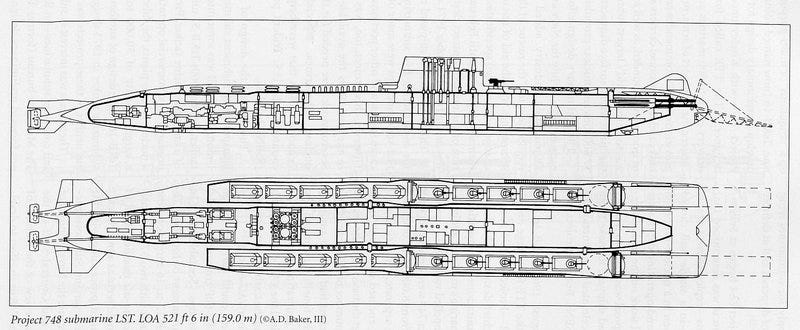
    I give the odds of either one of those taking to the air prior to 2035, if ever, on par with a return of the submarine LST of Cold War fame (deck gun not included).

    Let’s get back to the wording of that dog’s breakfast of a final sentence. Feel slimy reading it? You should;

  • “seeks to leverage” — that is just a way of saying, “hope in magic beans.” Gobbledegook.
  • “emerging technologies” — oh, you mean something that hasn’t left the computer, white board, or PPT slide.
  • “that may demonstrate” — so, even if our magic beans managed to fuse unobtainium with Amrita, we’re not really sure if the strip mining of strange blue creatures’s holy sites and drilling holes in the soft pallet of whale-like thing will result in something of use.
  • “strategic and tactical lift capabilities” — I’m sorry, an eight or ten-engined aircraft that any goober with a 1960s-era iron-sighted RPG-7 could target at maximum range is going do anything “tactical” — especially at the expected price of those things and the resulting precious few that wind up displacing water. Oh, and you admit that it will only be used for cargo, so it can’t do the full range of possible missions the US-2 can … just cargo. On just a few beaches that are fully surveyed ahead of time. At the right tide. In the right weather. In a 100% safe and permissive environment.
  • The final sentence is a caricature.

Rep. Austin Scott (R-GA) should feel at least mildly insulted by this reply. It was a serious question given a canned answer that, slightly modified, could have been provided at any time in the last quarter century by the lethargically complacent maintainers of the suboptimal habits of the mistakingly entitled acquisitions nomenklatura

May 26, 2023

CH-124 Sea King; Legendary ASW helicopter and example of a deeply flawed defense procurement process

Filed under: Cancon, Government, History, Military, USA, Weapons — Tags: , , , , — Nicholas @ 04:00

Polyus
Published 21 May 2023

The Sea King was a legendary aircraft in the history of the Royal Canadian Navy. It filled the role of hunter and killer in the Cold War against Soviet submarines. By the mid-90s the situation had changed and their retirement seemed eminent. How naive. The process of finding a replacement for this workhorse would be an election promise by government after government for over 30 years. Its replacement, the CH-148 Cyclone, became operational in 2018. This allowed the 55 year old workhorses to finally retire.
(more…)

« Newer PostsOlder Posts »

Powered by WordPress