… I am going to borrow an idea from Stephen Biddle’s Military Power (2004). Biddle identifies what he calls the “Modern System” of combat (though I am going to treat it a bit more broadly than he does). In short, it’s a set of tactics and operational art that emerged out of the First World War and were refined in the European theaters (East and West) of the Second, to cope with the tremendous potency of industrialized firepower which had fundamentally reshaped war. Rather than relying on fixed positions for defense and dense shock-formations (“shock” here – think “bayonets, grenades and trench-knives”), the modern system relies on cover-and-concealment for survivability and maneuver in the offense (go around, not through your opponent’s overwhelming firepower). Adroit use of terrain on the tactical level is a key component of the system, which in turn requires both extensive training of junior officers and NCOs and devolving quite a bit of command agency down to them so that they can make local decisions (compare to, for instance, linear tactics which leave virtually no decision-making to the individual rifleman).
The modern system assumes that any real opponent can develop enough firepower to both obliterate any fixed defense (like a line of trenches) or to make direct approaches futile. So armies have to focus on concealment and cover to avoid overwhelming firepower (you can’t hit what you can’t see!); since concealment only works until you do something detectable (like firing), you need to be able [to] move to new concealed positions rapidly. If you want to attack, you need to use your own firepower to fix the enemy and then maneuver against them, rather than punching straight up the middle (punching straight up the middle, I should note, as a tactic, was actually quite successful pre-1850 or so) or trying to simply annihilate the enemy with massed firepower (like the great barrages of WWI), because your enemy will also be using cover and concealment to limit the effectiveness of your firepower (on this, note Biddle, “Afghanistan and the Future of Warfare” Foreign Affairs 82.2 (2003); Biddle notes that even quantities of firepower that approach nuclear yields delivered via massive quantities of conventional explosives were insufficient to blast entrenched infantry out of position in WWI.)
That means that modern system forces are focused on cover and concealment in defense, but on mobility – often very rapid mobility – in attack. The doctrines that developed to operationalize variations on the modern system (Bewegungskrieg, Deep Battle, AirLand Battle, and so on) all relied (intentionally or not) on pushing the tempo of an attack beyond the ability of a defender to coordinate a defense, on the theory that this would produce tactical and even operational collapse. That theory, it turns out, works very well, but it comes with some costs (I should note here I am stretching the definition of Biddle’s “modern system” a bit and also glossing over a lot of detail in maneuver warfare doctrines).
The thing is, embracing the Modern System is hard. Actually pulling this off requires a relatively high degree of training. It also requires delegating a lot of authority down to lower officers and NCOs. You need both because individual small units need to keep moving and maneuvering even when they may not have time to get direct orders from above, and they need the freedom to respond to local conditions and utilize local terrain, often down to the squad or fireteam level. In turn, that means it is really hard to do if your common soldiers are undertrained, simply illiterate, or if (as in an authoritarian regime) you can’t trust your officers with any kind of independence. Modern authoritarian “coup-proofing” makes it practically impossible to actually implement the modern system effectively (which is part of why most tin-pot dictators produce such poor military performance; though note that not all authoritarian regimes need to coup-proof in this way).
It’s also expensive. Getting the mobility to pull this off on the operational level means mechanizing almost everything in your army, so that the infantry and artillery can keep up with the advance units and so that the logistics can keep up with them. Doing that requires a lot of command sophistication, but it also just requires a ton of hardware. Everything needs to be motorized, mechanized and portable, and then all of that needs to be tied into radio communications, GPS, and so on. And because you’re delegating authority down to smaller and smaller units, those units need all of that expensive communications, and so on. All of that hardware costs a fortune.
But – and this is the core of Biddle’s argument – when modern system armies encounter armies that have not implemented the modern system in conventional pitched battle, the result is generally a crushingly one-sided affair. That’s going to matter a lot for the analysis going forward: so far, it doesn’t seem possible to hold territory (meaning not fighting as guerillas, but actually engaging in positional warfare in the Maoist sense) with a non-modern system army against a modern system army. Non-modern system armies that try get pretty badly wrecked. The 1991 Iraq war is the traditional case study in just how badly wrecked: the coalition (using the modern system) took 292 KIA; 776 WIA compared to the Iraqi Army (without the modern system) suffering 25,000+ KIA and 75,000+ WIA. That stunning lopsidedness is going to matter a lot for the argument going forward.
Bret Devereaux, “Collections: Why Don’t We Use Chemical Weapons Anymore?”, A Collection of Unmitigated Pedantry, 2020-03-20.
April 23, 2022
QotD: The “Modern System” of combat
April 16, 2022
How to Make a Royal Marines Officer: Part 2 (1989)
Royal Marines
Published 13 Sep 2012First transmitted in 1989, this is the second part of a programme that follows the progress of 29 men who want to be Royal Marine officers. The remainder of those hoping to be Royal Marine officers face their toughest test.
From the comments:
Nick B
5 years ago (edited)
Richard Van der Horst (honour sword winner) rose to become a Lt Col and commanding officer of the SBS. He was widely expected to be fast tracked to General and command of all UK special forces. Tragically he died in a diving training accident in Norway in 2005.
April 15, 2022
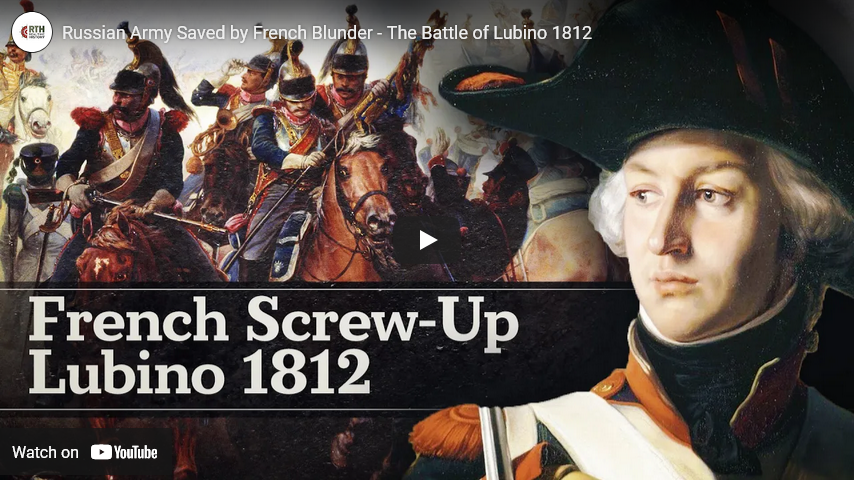
Russian Army Saved by French Blunder – The Battle of Lubino 1812
Real Time History
Published 14 Apr 2022Support us on Patreon: https://patreon.com/realtimehistory
French general Junot and Emperor Napoleon I had a bit of a history by the time of the 1812 campaign. Even though Junot has been in Napoleon’s service for years, he hadn’t been promoted to Marshal. At the Battle of Lubino (Battle of Valutino-Gora) Junot stands idly by as the Grande Armée is missing their best chance yet to win a decisive victory over the Russians. To the north, at Polotsk the French and Russians are also clashing.
» THANK YOU TO OUR CO-PRODUCERS
John Ozment, James Darcangelo, Jacob Carter Landt, Thomas Brendan, Kurt Gillies, Scott Deederly, John Belland, Adam Smith, Taylor Allen, Rustem Sharipov, Christoph Wolf, Simen Røste, Marcus Bondura, Ramon Rijkhoek, Theodore Patrick Shannon, Philip Schoffman, Avi Woolf,» SOURCES
Boudon, Jacques-Olivier. Napoléon et la campagne de Russie en 1812. 2021.
Lieven, Dominic. Russia Against Napoleon. 2010.
Maag, Albert. De Schicksale der Schweizerregimente in Napoleons I. Feldzug nach Russland 1812. 1900.
Rey, Marie-Pierre. L’effroyable tragédie: une nouvelle histoire de la campagne de Russie. 2012.
Zamoyski, Adam. 1812: Napoleon’s Fatal March on Moscow. 2005.» OUR STORE
Website: https://realtimehistory.net»CREDITS
Presented by: Jesse Alexander
Written by: Jesse Alexander
Director: Toni Steller & Florian Wittig
Director of Photography: Toni Steller
Sound: Above Zero
Editing: Toni Steller
Motion Design: Toni Steller
Mixing, Mastering & Sound Design: http://above-zero.com
Digital Maps: Canadian Research and Mapping Association (CRMA)
Research by: Jesse Alexander
Fact checking: Florian WittigChannel Design: Simon Buckmaster
Contains licensed material by getty images
Maps: MapTiler/OpenStreetMap Contributors & GEOlayers3
All rights reserved – Real Time History GmbH 2022
April 12, 2022
How to Make a Royal Marines Officer: Part 1 (1989)
Royal Marines
Published 13 Sep 2012First transmitted in 1989, this is the first part of a programme that follows the progress of 29 men who want to be Royal Marine officers. After arriving at Commando Training Centre, Devon, they find that their fortitude is tested to the very limits as they undertake the All Arms Commando Course to earn their green berets.
April 2, 2022
Lessons from Operation Unifier — Canada’s military training mission in Ukraine (2015-present)
In The Line, Paul Wells talks to Lieutenant Colonel Melanie Lake, Royal Canadian Engineers, who commanded Operation Unifier from March to September, 2021:
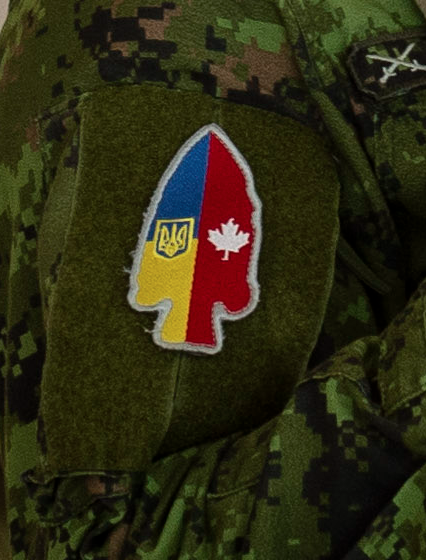
Operation Unifier shoulder patch for Canadian troops in Ukraine.
Detail from a photo in the Operation Unifier image gallery – https://www.canada.ca/en/department-national-defence/services/operations/military-operations/current-operations/operation-unifier.html
Lake has had a hell of a career, as high-ranking soldiers usually have, though I cover soldiers rarely enough that I always manage to be surprised. She’s from Churchill Falls, Labrador and has a degree in chemical engineering from the Royal Military College. She served three tours in Afghanistan, including one collecting HUMINT, or human intelligence — interviewing Afghans in Kandahar for information on the insurgency. Later she led an explosives-clearance operation at Winisk, ON, way up north on Hudson Bay, where a DEW Line outpost had been shut down so quickly in the 1960s that large quantities of TNT had been left buried too close to the ground for comfort. This involved a lot of camping and trying to figure out how to explode only those parts of the landscape they wanted to explode, while trying not to explode one another. Canadian Forces Rangers worked with Lake’s team, keeping polar bears away. She really is a problem solver.
Lake confirmed both of my hunches about Op Unifier, at least in part. She sees a Ukrainian army that is performing well for specific important reasons, and a Russian army that is having serious trouble its commanders should have expected. She does think she and her colleagues in Op Unifier and other Western training missions — the United States, United Kingdom and Lithuania — can take some satisfaction in contributing to the substantial improvement of the Ukrainian defence effort since 2014. But she was careful to put a low ceiling over that effect.
“Certainly what the training missions provided have helped,” she said. “But I want to be really careful about taking credit for the performance that we’re seeing right now. We can’t teach courage. And [the Ukrainians] are showing that in spades.”
Where did training help? “The area where I think we had a really big influence is in helping them understand or institutionalize the idea of mission command. And decentralized decision-making — pushing authority and decision-making power down to lower levels. And helping them build a professional senior NCO corps. Those are things that, you know, when you look at the old Soviet system were certainly non-existent.”
Let’s unpack this. “Mission command” is a term of art in Western militaries. It holds commanders, down to quite junior levels, accountable for results while leaving them wide latitude to decide methods. How junior? “Senior NCO” refers to sergeants — career soldiers who’ve risen from the enlisted ranks and who are responsible for a section, which is between 6 and 20 soldiers. Canadian doctrine, American doctrine, NATO standards dictate that it should be routine for higher echelons to trust a section sergeant to figure out how to accomplish a task, and that’s something the Canadians have passed on to their Ukrainian colleagues.
The Russians haven’t built that trust into their system. This is an understatement. “A lot of what you’re seeing on the Russian side — you know, we keep talking about these general officers who are getting picked off, because they’re so far forward. They have no decentralized decision-making and their communication chain is breaking down. So you’ve got these generals going forward, way too far forward, trying to sort things out. And they’re just getting picked off left, right and centre. So training matters. Training matters an awful lot.”
To an Ottawa political reporter in the Trudeau era, there is a metaphor here as big as a billboard about what happens when too much decision-making is too centralized. But maybe just this once, I’ll resist the urge to jump in, more than I just did, and I’ll let Lake keep telling her story.
April 1, 2022
Russia’s Fighting Retreat 1812 – Battles of Mogilev and Vitebsk
Real Time History
Published 31 Mar 2022Support our Napoleon Series on Patreon: https://patreon.com/realtimehistory
The two Russian western armies are trying to join up to mount a defense against Napoleon’s invasion of Russia. But the speed of the French advance, particularly Marshal Davout and Marshal Murat, are putting pressure on the Russians. And so late July sees a series of battles at Mogilev/Saltanovka and Vitebsk/Ostrovno. Meanwhile the Russian 3rd Observation Army is dangerously close to the border of the Duchy of Warsaw — the Austrians under Schwarzenberg and Reynier’s Corps need to stand and fight around Kobryn.
» THANK YOU TO OUR CO-PRODUCERS
John Ozment, James Darcangelo, Jacob Carter Landt, Thomas Brendan, Kurt Gillies, Scott Deederly, John Belland, Adam Smith, Taylor Allen, Rustem Sharipov, Christoph Wolf, Simen Røste, Marcus Bondura, Ramon Rijkhoek, Theodore Patrick Shannon, Philip Schoffman, Avi Woolf,» SOURCES
Becker, Carl August. Tagebuch 28.03.1812-21.09.1812 (Beiträge zur sächsischen Militärgeschichte zwischen 1793 und 1815). Ed Joerg Titze, 2019.
Boudon, Jacques-Olivier. Napoléon et la campagne de Russie en 1812. 2021.
Durova, Nadezhda. Cavalry Maiden. Journals of a Female Russian Officer in the Napoleonic Wars. 1990.
Holzhausen, Paul. Die Deutschen in Russland 1812. Leben und Leiden auf der Moskauer Heerfahrt. Berlin 1912.
Lieven, Dominic. Russia Against Napoleon. 2010.
Rey, Marie-Pierre. L’effroyable tragédie: une nouvelle histoire de la campagne de Russie. 2012.
Zamoyski, Adam. 1812: Napoleon’s Fatal March on Moscow. 2005.
[Additional Russian resources listed on the YouTube description]» OUR STORE
Website: https://realtimehistory.net»CREDITS
Presented by: Jesse Alexander
Written by: Jesse Alexander
Director: Toni Steller & Florian Wittig
Director of Photography: Toni Steller
Sound: Above Zero
Editing: Toni Steller
Motion Design: Toni Steller
Mixing, Mastering & Sound Design: http://above-zero.com
Digital Maps: Canadian Research and Mapping Association (CRMA)
Research by: Jesse Alexander, Sofia Shiorogova
Fact checking: Florian WittigChannel Design: Simon Buckmaster
Contains licensed material by getty images
Maps: MapTiler/OpenStreetMap Contributors & GEOlayers3
All rights reserved – Real Time History GmbH 2022
March 22, 2022
“The Unkillable Soldier” – Adrian Carton de Wiart – Sabaton History 109 [Official]
Sabaton History
Published 21 Mar 2022Adrian Carton de Wiart fought in a variety of wars over more than forty years, and he was wounded … again and again and again, and yet he always came back for more. This episode is his sometimes ridiculous but always interesting and incredible story.
Support Sabaton History on Patreon: https://www.patreon.com/sabatonhistory
Listen to “The Unkillable Soldier” on the album The War To End All Wars: https://music.sabaton.net/TheWarToEnd…
Watch the Official Music Video of “The Unkillable Soldier” here: https://www.youtube.com/watch?v=b4vj_…
Watch more videos on the Sabaton YouTube channel: https://www.youtube.com/user/Sabaton
Listen to Sabaton on Spotify: https://sabat.one/Spotify
Official Sabaton Merchandise Shop: http://bit.ly/SabatonOfficialShopHosted by: Indy Neidell
Written by: Markus Linke and Indy Neidell
Directed by: Astrid Deinhard and Wieke Kapteijns
Produced by: Pär Sundström, Astrid Deinhard and Spartacus Olsson
Creative Producer: Maria Kyhle
Executive Producers: Pär Sundström, Joakim Brodén, Tomas Sunmo, Indy Neidell, Astrid Deinhard, and Spartacus Olsson
Community Manager: Maria Kyhle
Post-Production Director: Marek Kaminski
Editor: Iryna Dulka
Sound Editor: Marek Kaminski
Archive: Reuters/Screenocean – https://www.screenocean.com
Colorization:
– Julius Jääskeläinen – https://www.facebook.com/JJcolorization/Sources:
National Army Museum, London
IWM HU 94459, Q 4511, Q 7105, Q 3140, IWM 32, IWM 162, IWM Q 68300, IWM 130-09+10
National Library of Scotland
All music by: SabatonAn OnLion Entertainment GmbH and Raging Beaver Publishing AB co-Production.
© Raging Beaver Publishing AB, 2019 – all rights reserved.
March 13, 2022
QotD: The Kaiser’s army and their Auftragstaktik innovations
They started developing it before WWI, but proof of concept was in the trenches, and it succeeded spectacularly. It’s hard to exaggerate just how outmanned and outgunned the Germans were in that conflict, and I don’t have the exact numbers to hand, but one especially fearsome measure was “artillery density”. On the German side, the preparatory barrage before an attack averaged, at best, something like 1 shell per square foot (this is from memory, so doubtless incorrect, but you get the idea). The Allies achieved something like one shell per square inch, and there you have it …
… or there you should’ve had it, if the Allies had anything close to German-level command-and-control. But they didn’t. British WW1 memoirs, especially, are full of the kinds of ludicrous fuckups that Joseph Heller wouldn’t dare put in his novels. Robert Graves (yeah, I know, not the world’s most trustworthy source) had an especially funny scene where his company got this elaborate set of orders to move to such-and-such coordinates, build an elaborate strongpoint (laid out in minute detail), then move on to some other coordinates and do something else, again spelled out to the nth degree.
Those coordinates were, of course, a mile and a half behind enemy lines.
Or consider that silly movie 1917. If you haven’t seen it, don’t. If you have, and you know a little bit about WWI, you’ll remember how ludicrous the premise was. You don’t need to send a squad, Saving Private Ryan-style, to get a message to a distant dugout where they’re waiting to jump off for an attack. For one thing, there’s this little gadget called a “radio”, and by 1917 they were portable enough to get there. But even if not, there’s this other gadget called a “telephone”, and any C-and-C bunker anywhere along the line would have one, no matter how fast the advance was moving. Finally, even if they didn’t have either of those, the supporting artillery park sure as hell would’ve — just ring them up and call off the preparatory barrage, and I promise you, none of those troops would’ve moved an inch, even if it meant shooting Colonel Sherlock Holmes right in his prissy, pencil-mustached mug.
If you know a bit more about WWI, that kind of ludicrous, plot-ruining stupidity seems like the most accurate thing in the movie, because that kind of bullshit happened all the time. Telephone wires were always getting cut by shellfire, for instance, and since none of the red tabs [staff officers] back at the base would dream of seeing the situation for themselves, field soldiers were always getting scads of contradictory orders, sent at bewildering times. More than one advance was held up by frontline troops having to send runners back to check the orders of other runners, which had been countermanded by yet other runners, coming up with telephone messages …
The guys in the opposing trenches, meanwhile, were just getting on with it. Graves again (and again, I know), quoting from memory, wondered what the High Command would’ve done had they known that for the better part of a year, the entire sector opposite the Royal Welch Fusiliers had been held by no one higher than a corporal.
Severian, “Auftragstaktik: Logic and Anti-Logic”, Founding Questions, 2021-11-18.
March 8, 2022
The Battle of Flamborough Head – Nice Ship, I’ll Take It
Drachinifel
Published 28 Aug 2019Today we look at John Paul Jones’ most famous battle, where the quality of not giving up no matter the odds shines through in a big way!
Want to support the channel? – https://www.patreon.com/Drachinifel
Want a shirt/mug/hoodie – https://shop.spreadshirt.com/drachini…
Want a medal? – https://www.etsy.com/uk/shop/Drachinifel
Want to talk about ships? https://discord.gg/TYu88mt
Want to get some books? www.amazon.co.uk/shop/drachinifel
Drydock Episodes in podcast format – https://soundcloud.com/user-21912004
March 5, 2022
Battle of Quebec | Animated History
The Armchair Historian
Published 10 Feb 2019Sources:
1775: A Good Year for Revolution, Kevin Phillips100 Decisive Battles: From Ancient Times to the Present, Paul K. Davis
Warfare In The Ninteenth Century, David Gates
Battles of The Revolutionary War 1775-1781, W.J. Wood
A Guide to the Battles of the American Revolution, Theodore P. Savas & J. David Dameron
Cracking the AP U. S. History Exam, 2018 Edition, Princeton Review
Music:
“Epic Battle Speech” by Wayne Jones
“Elegy” by Wayne Jones
“All This – Scoring Action” by Kevin MacLeod is licensed under a Creative Commons Attribution license (https://creativecommons.org/licenses/…)
Source: http://incompetech.com/music/royalty-…
Artist: http://incompetech.com/“Hero’s Theme” by Twin Musicom is licensed under a Creative Commons Attribution license (https://creativecommons.org/licenses/…)
Source: http://www.twinmusicom.org/song/280/h…
Artist: http://www.twinmusicom.org“And Awaken – Stings” by Kevin MacLeod is licensed under a Creative Commons Attribution license (https://creativecommons.org/licenses/…)
Source: http://incompetech.com/music/royalty-…
Artist: http://incompetech.com/“Big Horns Intro 2” by Audionautix is licensed under a Creative Commons Attribution license (https://creativecommons.org/licenses/…)
Artist: http://audionautix.com/“Faceoff” by Kevin MacLeod is licensed under a Creative Commons Attribution license (https://creativecommons.org/licenses/…)
Source: http://incompetech.com/music/royalty-…
Artist: http://incompetech.com/“Long Note Two” by Kevin MacLeod is licensed under a Creative Commons Attribution license (https://creativecommons.org/licenses/…)
Source: http://incompetech.com/music/royalty-…
Artist: http://incompetech.com/“Cortosis – Scoring Action” by Kevin MacLeod is licensed under a Creative Commons Attribution license (https://creativecommons.org/licenses/…)
Source: http://incompetech.com/music/royalty-…
Artist: http://incompetech.com/“Long Note Three” by Kevin MacLeod is licensed under a Creative Commons Attribution license (https://creativecommons.org/licenses/…)
Source: http://incompetech.com/music/royalty-…
Artist: http://incompetech.com/Victoria II. Copyright © 2018 Paradox Interactive AB. www.paradoxplaza.com
Antonio Salieri, “Twenty six variations on La Folia de Spagna”
London Mozart Players
Matthias Bamert, as conductor

February 16, 2022
Germany’s dual economy during WW2 (and why Himmler would have succeeded Hitler if the Nazis had won WW2)
At Founding Questions, Severian looks at the way the Nazi economy was actually two entities — the “wartime” economy and the effectively separate SS economy under the control of Heinrich Himmler:
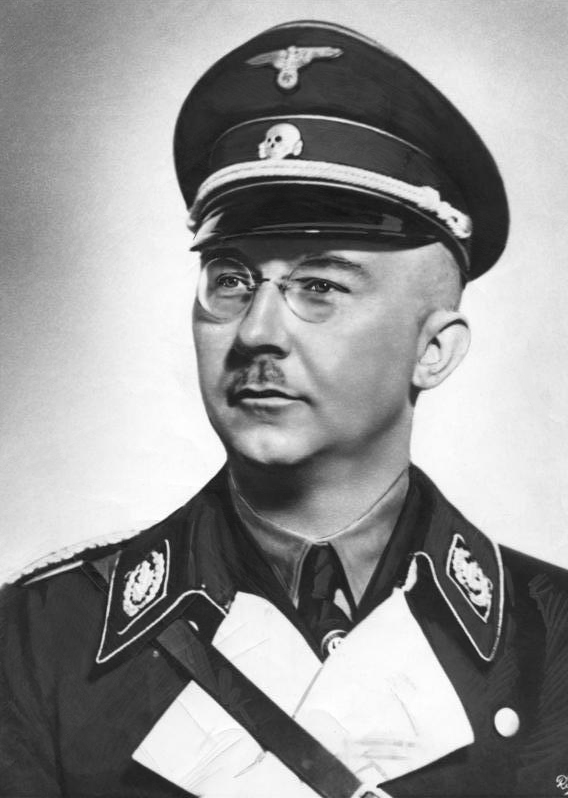
Reichsführer SS Heinrich Himmler, 1938.
German Federa Archive via Wikimedia Commons.
Here’s where the Nazis really blew it. “Nazism” should really be called “Hitlerism”, as it was a true cult of personality; there was no ideology without the specific individual man. That’s the tension at the heart of any collectivist ideology — somebody’s got to be The Boss, however temporarily — but Nazi Germany suffered it worse than most. Had the Nazis won the war, the bloodbath at the top would’ve been as spectacular per capita as the war itself. As thoroughgoing Social Darwinists, they only had one possible principle of succession …
Let’s provisionally call that the first consequence of an ideology in power: The personal is the political and vice versa. That seems trite, I realize, but I’m putting it here to emphasize its literalness – in an ideological state, building your own “affinity”, Bastard Feudalism-style, just IS politics. There’s no other possible political activity. And as much as the Nazis seemed to have screwed it up by going all in on the Fuhrerprinzip at the very top, their out-and-proud Organizational Darwinism (for lack of a better term) made them super-efficient at the lower levels.
Let’s bring Khrushchev back in. In many ways, he’s the Soviet Himmler. He was one of Stalin’s right hand men throughout the war, but somehow didn’t get tagged as a major player in the succession crisis until it was too late for all the other contenders for the purple to take effective countermeasures. In the same way, Hitler did announce a successor, sort of. In fact he did it twice: Before the war, it was Rudolf Hess; during the war, Hermann Goering. Neither of those guys had anything approaching the power Himmler had, but like Khrushchev, his personality was such that the other bigshots couldn’t help overlooking him. Just as the rest of the Politburo couldn’t wrap their heads around the idea of this uncouth quasi-Ukrainian peasant being a major threat, so the rest of the Nazi leaders couldn’t help seeing Himmler as this fussy little file clerk.
It’s a hell of a trick, and I’ll admit, I’m buffaloed. Even if Himmler (Khrushchev) was one hell of an actor, and the egos on the other top Nazis (Soviets) were gravity-defying, they still should’ve been able to see that this fussy little file clerk had some seriously hard boys working for him. Reinhard Heydrich was as ruthless a fuck as was ever born, and Himmler kept him in check. Ditto barbarians like Odilo Globocnik and Erich von dem Bach-Zelewski — they don’t come any nastier than those two, yet Himmler managed them easily. What other conclusion can you possibly draw about Himmler, other than that he was nastier than all of them put together? And yet, apparently, nobody did …
The only explanation for this that I can think of is the Nazis’ ideologization of governmental structures. As opposed to the Soviet experience, where the Party and the Bureaucracy were supposed to be, and often actually were, distinct. After some disastrous experiments with demoting technical experts to field hands, and vice versa, the Russian Communists learned that ideological correctness and “soviet power” does not, in fact, obviate the need for stuff like math. (See also: Mao’s backyard blast furnaces). So the Soviets made sure to separate what they called the “technical intelligentsia” from the Party. The head honcho at Gosplan, Gossnab, etc. would be a Party hack from way back, of course, but the actual brainworkers wouldn’t be. I don’t know just how many of them had Party membership cards, or if any of them did, but nobody I know of rose through the Party’s ranks via Gosplan.
Once a Gosplanner, always a Gosplanner. The technical intelligentsia got all kinds of perks in the Soviet system, but one thing they did not do was get perks inside the Party. You can be a technical expert, or you can be an up-and-coming Party man, but you can’t be both.
The Nazis did the exact opposite of that. The way the Third Reich actually functioned is still opaque in a lot of ways (especially to non-specialists), and of course the pressures of wartime forced a lot of ad hoc measures, but it seems like the SS was supposed to be a sort of All-Purpose Expert Corps. Not only did they have their own army and intelligence service, but they had their own economy — the brief history of the Third Reich makes a lot more sense when you realize that half or more of the official Reich economy was hamstrung by the informal but very real SS economy, operating largely (but far from exclusively) through the labor camps.
Indeed, the SS had their own administration. As incredible as it seems, the Nazis had no grand plan for what to do once they’d conquered Europe. Himmler did, at least as far as the East was concerned, and he tried his damnedest to put it into action in Poland (which is why the General Government was so legendarily brutal). Hitler apparently thought in terms of Germany’s lost late 19th century colonies, when he bothered to think about it at all … which wasn’t often. In his typical Fuhrer-riffic style, he just ignored the problem, trusting to Organizational Darwinism to sort it out …
… which is where the All-Purpose Experts of the SS stepped in. The General Government, for instance, was headed by a civilian lawyer, Hans Frank, but the day to day governance largely fell to the SS, because that’s who stepped up. Poland was an occupied zone, with vital war industries, but it was far behind the front for most of the war; the army couldn’t waste vital manpower garrisoning it. Thus the SSPF (the SS and Police Leader) stepped in, drawing manpower as needed from a wide variety of sources — the camp guards, the Wehrmacht (when garrison troops were available, and when they could wrangle them from the various army commanders), the civilian police, the “General SS”, and so on.
The details aren’t nearly as important as the big picture, which is: Unlike the technical intelligentsia in the Soviet Union, members of the SS could climb to the highest ranks of the Party. Indeed they were expected to: the SS was rapidly becoming a Party-within-the-Party at the outbreak of the war, not least because Himmler awarded a “ceremonial” SS rank to anyone who mattered politically in the various departments. The savvier guys refused the “honor,” of course, because they didn’t want to be subordinate to Himmler, even ceremonially, but many didn’t. Which meant that had the Nazis won the war, not only would Himmler have been the next Fuhrer, but the SS would’ve closed ranks, essentially taking over The Party — they’d be the Inner Party, as opposed to the “mere Nazis” of the Outer Party.
QotD: The fall of Kabul was “a margin call”
Kabul was a margin call. From now on, America may well be obliged to “pay cash”, viz., deploy combat capable formations of sufficient size to engage and win if we want anyone to take us seriously. A token “speedbump” force or a promise of “over the horizon” support — which is the majority of what the U.S. military now does — isn’t going to reassure any friends or deter any adversaries. At least not anyone who is paying attention.
Our adversaries will be emboldened. It is not so much that America’s military reputation has been irretrievably damaged, but the lessons that the Vietnamese, the Hmong, and now the Afghans have learned so painfully cannot fail to be appreciated by us or by the wider world. It appears that America (not the military, but America herself) has lost her stomach for a real fight. Americans taught the world the same lesson about the British Empire during the Revolutionary War (although Britain recovered enough to build her “second empire”), it would be foolish to fail to now see ourselves through that particular historical prism.
Garri Benjamin Hendell, “The Day After Kabul”, The Angry Staff Officer, 2021-11-02.
January 22, 2022
Belisarius: The General & The Eunuch
Epic History TV
Published 21 Jan 2022Download Fishing Clash for FREE and play today! https://fishingclash.onelink.me/dkOM/…
Big thanks to Legendarian for Total War: Attila gameplay footage, check out his YouTube channel here: https://www.youtube.com/channel/UCOI2…
Big thanks also to our series consultant Professor David Parnell of Indiana University Northwest, who you can follow on Twitter here: https://twitter.com/byzantineprof
Total War: Attila gameplay footage used with kind permission of Creative Assembly – buy the game here: https://geni.us/qDreR
Support Epic History TV on Patreon from $1 per video, and get perks including ad-free early access & votes on future topics https://www.patreon.com/EpicHistoryTV
🎨 Original artwork by Miłek Jakubiec https://www.artstation.com/milek
📚 Recommended reading (as an Amazon Associate I earn from qualifying purchases):
📖 Procopius, History of the Wars https://geni.us/L3Pgc
📖 The Wars of Justinian by Michael Whitby https://geni.us/Xxrd3
📖 Rome Resurgent by Peter Heather https://geni.us/ZFoU1
📖 The Armies of Ancient Persia: the Sassanians by Kaveh Farrokh https://geni.us/jMQo3z
📖 Late Roman Cavalryman AD 236–565 (Osprey) by Simon MacDowall https://geni.us/XMGl👕 Buy EHTV t-shirts, hoodies, mugs and stickers here! teespring.com/en-GB/stores/epic-histo…
🎶 Music from Filmstro: https://filmstro.com/?ref=7765
Get 20% off an annual license with this exclusive code:EPICHISTORYTV_ANN#EpicHistoryTV #RomanEmpire #EasternRomanEmpire #Justinian #Belisarius #ByzantineEmpire #Romans #Ostrogoths
1842 Retreat From Kabul
The History Guy: History Deserves to Be Remembered
Published 22 Sep 2021On January 13, 1842, a single man on horseback approached the British garrison at Jalalabad, where soldiers were waiting for a retreating army of several thousand. Exhausted, the man had part of his skull shaved off by a sword and his horse was so exhausted that it would soon perish. As he was brought into the walls of the city the lone man was asked where the rest of the army was. “I am the army,” he replied. Thus ended a disastrous retreat from Kabul, where a British force of some 4,500 soldiers and thousands of civilians was almost entirely destroyed.
This is original content based on research by The History Guy. Images in the Public Domain are carefully selected and provide illustration. As very few images of the actual event are available in the Public Domain, images of similar objects and events are used for illustration.
You can purchase the bow tie worn in this episode at The Tie Bar:
https://www.thetiebar.com/?utm_campai…All events are portrayed in historical context and for educational purposes. No images or content are primarily intended to shock and disgust. Those who do not learn from history are doomed to repeat it. Non censuram.
Find The History Guy at:
Patreon: https://www.patreon.com/TheHistoryGuy
Please send suggestions for future episodes: Suggestions@TheHistoryGuy.netThe History Guy: History Deserves to Be Remembered is the place to find short snippets of forgotten history from five to fifteen minutes long. If you like history too, this is the channel for you.
Awesome The History Guy merchandise is available at:
https://teespring.com/stores/the-hist…Script by JCG
#history #thehistoryguy #Afghanistan

December 30, 2021
The Cursus Honorum of the late Roman Republic
At Founding Questions, Severian notes that the Cursus Honorum — the formal “career path” for ambitious men in the late Roman Republic was a remarkably effective process … that ended up being a victim of its own success:
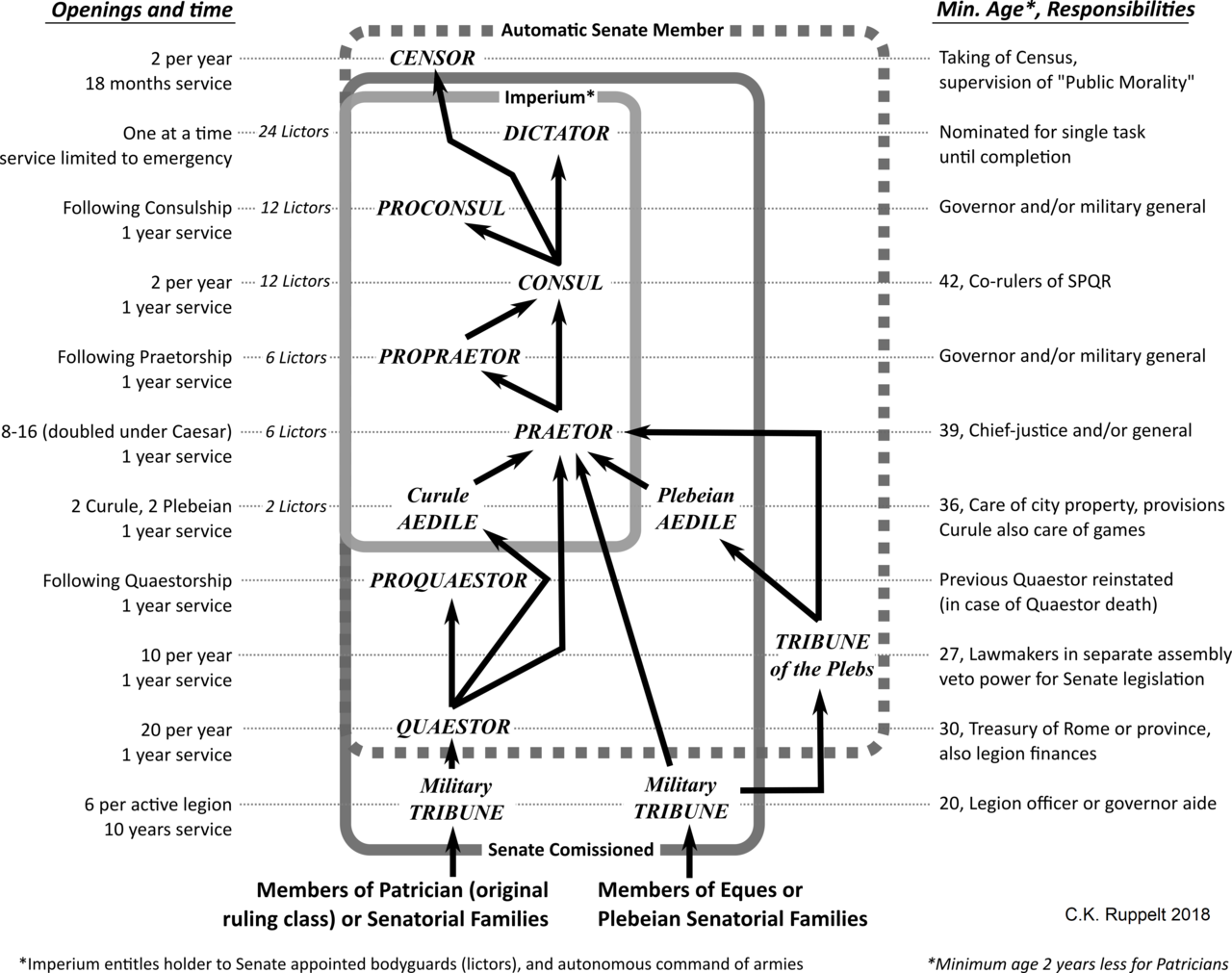
Ahhh, God bless the autists at Wiki, they’ve got it down to a chart:
This is from Caesar’s time, and since one of this blog’s main themes is the confusion between process and outcome, let’s put it right up front: This system, the cursus honorum, was designed to produce men like Julius Caesar …
… and you can take that in either sense.
Caesar is one of the most mulled-over men in history, but nobody seriously doubts that he was at least competent at pretty much everything. Maybe he didn’t make the big list of “Greatest Pontifices Maximi” (or however the Latin goes), but he wasn’t a disgrace to the toga, either. If it was a public function in the Late Roman Republic, Caesar was at least decent at it.
And that’s what the cursus honorum was designed to do. It was a three-fer: It gave you competent public officials, but it also gave young ruling class men some seasoning. Most importantly, it was a way of nurturing talent that also hedged against the Peter Principle. If you want to argue that that makes it a four-fer, go nuts, but the point is, it was a pretty good system … up to a point, and if you’re a regular reader, you know what that point is: The Dunbar Number, at which point relationships become too complex to be managed personally, and bureaucratic structures replace them.
One wishes later governments had something like this — if a guy starts out as a quaestor and discovers he can’t handle it, he’ll bring that knowledge with him to the Senate. (Of course, if he can’t even manage to get elected to that, he’ll know full well his level of talent, and he’ll sit down and shut up on the Senate’s back benches). Note too that the bottom rung is military service — since at that time legionaries were all militia, the voters got a good look at you where it really matters, right from the beginning.
By the time a man reaches the top, then, he has intimate experience of ALL the public offices. Not only that, but he’s well known to everyone who matters, since in between the various offices he’s in the Senate, making connections (or out in the provinces, making other — but no less valuable — connections). A consul, then, is pretty much by definition omnicompetent. He did a good enough job in all the previous public offices that he didn’t disqualify himself for the top slot. Also, he’s been thoroughly vetted — everyone who matters, at pretty much every level of society, has had a good look at him (or, at worst, has a good friend who has had a good look at him).
Obviously it wasn’t a perfect system. Rome had her share of inept consuls, because people are people and sometimes “promotion to your level of incompetence” means “promotion to the very top job”. But for the most part it worked well, and even if a guy turned out to be a dud as consul, well, what can you do? Everyone had at least a reasonable expectation that he’d be able to handle it, which is pretty much the best one can consistently achieve in human affairs. Not only that, but because of the candidate’s long experience and careful vetting, you had a much better than average chance of getting a real winner …
… a man like Caesar, who is at minimum competent at everything, and outstanding at lots of things.