Extra Credits
Published on 17 Dec 2018Join the Patreon community! http://bit.ly/EMPatreon
Krampus’s name is growing popular in the United States, but most of us don’t really know what he does OR that he is partners with St. Nicholas himself. He is in fact just one of many Christmas demons…
December 19, 2018
Krampus – Christmas Demon – Extra Mythology
November 16, 2018
The Victors & The Vanquished I THE GREAT WAR Epilogue
The Great War
Published on 15 Nov 2018G.J. Meyer: A World Undone
Martin Gilbert: The First World War
Peter Hart: The Great War
David Zabecki: The German Spring Offensives
Alexander Watson: Ring of Steel
Robin Neillands: Western Front Generals
November 10, 2018
Emperor Karl’s last attempt for peace, 1917
Part of a post at Essays in Idleness from last month by David Warren:
As we approach the centenary of the Great Armistice, I see the plastic poppies circulating from the little boxes in the liquor stores. My thoughts turn to war qua war. Though sometimes necessary, it is not a good thing (“bad for children and animals” as the peaceniks say); and given the ambiance of our high-tech weaponry, little heroism is left to raise the tone. Contemporary battles are not confined to the soldiers, as once they could be. The devastation of cities and towns, the routine destruction of infrastructure, the civilian suffering that follows from that, must match or quite exceed ancient incidents of rapine.
While I’ve never thought war should be avoided at all costs, I recognize that the cost is very high. Opportunities for peace should not be overlooked, even while the carnage is in progress.
When, for instance, the newly-enthroned Emperor Karl of Austria-Hungary — “fanatic” Catholic Christian — discreetly proposed a separate peace to the allies in the spring of 1917, his agents were rebuffed, outed, and mocked. The Americans were coming to tilt our fortunes, the Germans were distracted overrunning the Russians, and while the Western Front was in catastrophic stasis, our nationalist politicians could now hope to utterly crush the foe. They would demand unconditional surrender.
The incident haunts my historical imagination. This was a serious opportunity to restore something close to the status quo ante, while resolving casus belli (very much plural) from Belgium and Alsace to Serbia and Constantinople on the principle of sweet reason. Drowned in the gunfire was this Blessed Karl’s expressly Christian plea. In an instant the decision was made, in the West, to persist till millions more were slain, and the conditions were assembled for international violence and totalitarianism through the next seventy years.
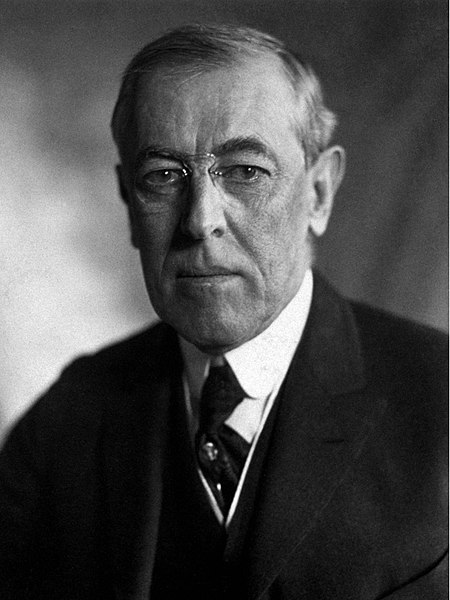
The gentlemen I call “the three stooges of the apocalypse” — Wilson, Lloyd George, Clemenceau — were all modern politicians, whose nationalist ideals were now buttressed by the vast democratic constituencies of countries at war, goaded on by the screaming headlines of a paper mass media. They wanted a New Europe, a New World Order, in which antiquated empires and all the sleepy old aristocratic polities would be smashed and replaced — with modern, ethically homogenous, democratic States. The consequences were unforeseeable to them, wrapped in their flags and the rhetoric of liberté, égalité, fraternité.
It was a war to end all wars! … Both the malice and the naivety were astounding.
November 9, 2018
Revolution in Germany – Armistice in Austria I THE GREAT WAR Week 224
The Great War
Published on 8 Nov 2018Unrest within the German Empire is spreading, resentment against the war, the hunger and the elites is turning into revolutionary action and with a mutiny in Kiel the wheels begin to turn quickly. Austria signs an armistice, the Macedonian Front collapses, Romania might enter the war again and the new German political leaders send a delegation through the lines in France. Their goal: An Armistice.
November 2, 2018
Austria-Hungary Disintegrates – The Ottoman Empire Leaves the War I THE GREAT WAR Week 223
The Great War
Published on 1 Nov 2018The Ottoman Empire has been on the retreat in the Middle East since the renewed British offensive in September and now, as the allies are threatening the Turkish heartland and also Constantinople, the Ottoman Empire calls for an armistice. The Armistice of Mudros is signed as the remaining Central Powers also struggle to keep their Empires together.
October 26, 2018
Italy Attacks – The Battle of Vittorio Veneto I THE GREAT WAR Week 223
The Great War
Published on 25 Oct 2018After the Battle of the Piave, the Italian front had been relatively quiet and stable. But just as unrest and instablity spread through the Austro-Hungarian Empire, the Italian Army and its allies attack along the whole front. From Monte Grappa and across the Piave, the Austro-Hungarians are caught off guard.
October 23, 2018
Austria During World War 1 I THE GREAT WAR Special
The Great War
Published on 22 Oct 2018The Austrian part of the dual monarchy that was the Austro-Hungarian Empire experienced the war quite distinctly and the inner political machinations directly influenced the outbreak of the war.
October 19, 2018
The Battle of the Selle – Ludendorff Resigns I THE GREAT WAR Week 221
The Great War
Published on 18 Oct 2018As the Germans are retreating further and further during the Battle of the Selle, Erich Ludendorff – the German Quartermaster General, one half of Germany’s military dictatorship and mastermind behind the last big German offensive in spring 1918 – resigns under pressure by the Kaiser and the Reichstag. The German upper class realizes that their days might be numbered if the war continues in the current form and Austria-Hungary’s Emperor Karl has the same epiphany.
October 11, 2018
Steyr StG 77, aka the AUG
Forgotten Weapons
Published on 21 Sep 2018http://www.patreon.com/ForgottenWeapons
Today’s rifle is not quite an Austrian military StG-77, but it is virtually identical. This is one of the commemorative rifles sold by Steyr, which has been rebuilt with military parts and is a registered dealer sample machine gun (which is why I can show you the complete full-auto functionality in the trigger group.
The AUG (Armee Universal Gewehr) was one of the wave of bullpup-style military rifles developed and adopted in the 1970s, along with the British SA80 and French FAMAS F1. The AUG embodied a number of very forward-looking elements in its design, including extensive use of polymers (including the entire fire control group), a completely modular barrel, and standard integrated optical sight (albeit one considered obsolete today). Mechanically, the rifle’s operating mechanism is a derivative of the Armalite AR-18, as are many other service rifles from this period.
Special thanks to Bear Arms in Scottsdale, AZ for providing this rifle for video!
If you enjoy Forgotten Weapons, check out its sister channel, InRangeTV! http://www.youtube.com/InRangeTVShow
October 9, 2018
Serbia Before World War 1 I THE GREAT WAR Special
The Great War
Published on 8 Oct 2018Serbia’s recent history before the outbreak of World War 1, was already shaped by internal struggles and external conflicts. It had fought countless wars with neighbors and rivals in changing alliances culminating in the two Balkan Wars 1912 and 1913.
September 24, 2018
Drafting – Poetry – Georg von Trapp I OUT OF THE TRENCHES
The Great War
Published on 22 Sep 2018Chair of Wisdom Time!
September 23, 2018
30 Years War | 3 Minute History
Jabzy
Published on 28 Oct 2015Thanks to Xios, Alan Haskayne, Lachlan Lindenmayer, William Crabb, Derpvic, Seth Reeves and all my other Patrons. If you want to help out – https://www.patreon.com/Jabzy?ty=h
September 16, 2018
QotD: Austria’s share of the Nazi legacy
This ambiguity, or (to put it less kindly) dishonesty, if it really exists, replicates in symbolic fashion the attitude of Austria to its historical record in the 1930s and 40s. Officially, Austria was a victim of Nazi aggression; in reality, it was an enthusiastic participant in Nazi crimes. But whatever crimes Austrians as individuals committed during the war, they committed them as Germans, not as Austrians. They were responding only to force majeure; the Austrian state was not implicated.
Suspicion of Austria runs deep, and with good reason. Everyone thinks (though it cannot be proved or disproved) that Kurt Waldheim, the former Secretary-General of the United Nations, was elected president of the country not in spite of his Nazi past, but because of it. The Austrians claim that they insisted on voting for him because they resented the hypocritical reaction of the outside world to his candidature – surely, they said, powers with the combined intelligence resources of the United States, the Soviet Union, Britain and France must have known of his Nazi past when they accepted him as Secretary-General, so why should the Austrians themselves not accept him as President? Once again the Austrians were able to conceive of themselves as the injured party in the whole business.
Even the Austrian prohibition of Holocaust denial, under which the British Nazi-supporting historian David Irving was (in my view wrongfully) imprisoned until he recanted, or at least pretended to recant, is ambiguous. On the one hand, of course, it is a recognition of the moral monstrosity of what the Nazis did, and of the Austrians’ special responsibility for it; but on the other, it implies a deep mistrust of the Austrian people, who (it must have been feared by those who framed the law) might recant their anti-Nazism if they could.
Of course, there have been Austrians who were deeply disgusted by their countrymen. The greatest Austrian writer of the post-war period, Thomas Bernhard, inserted a famous clause in his will that repays reflection. He ordered that, for the duration of his legal copyright after his death, nothing he had ever written, including his plays, should ever be published or performed:
within the borders of the Austrian state, however that state
describes itself. I categorically emphasize that I want to have
nothing to do with the Austrian state and I safeguard myself
concerning my person and my work not only against every
interference but also against every approach by this Austrian
state to my person and my work for all time to come.‘For all time to come:’ that is a pretty strong injunction, implying as it does that the Austrian soul, or whatever you want to call it, is so tainted by its original sin, or sins, that it is irrecoverably and irremediably evil.
Theodore Dalrymple, “Austria and Evil”, New English Review, 2008-05.
August 26, 2018
Italians in AH Army – Military Missions I OUT OF THE TRENCHES
The Great War
Published on 25 Aug 2018Chair of Wisdom Time!
August 7, 2018
The Tide Is Turning I THE GREAT WAR Summary Part 14
The Great War
Published on 6 Aug 2018After 4 years of global war, there are signs that the war of attrition is over and the situation is shifting in favor of the Allies.