Quotulatiousness

July 27, 2020

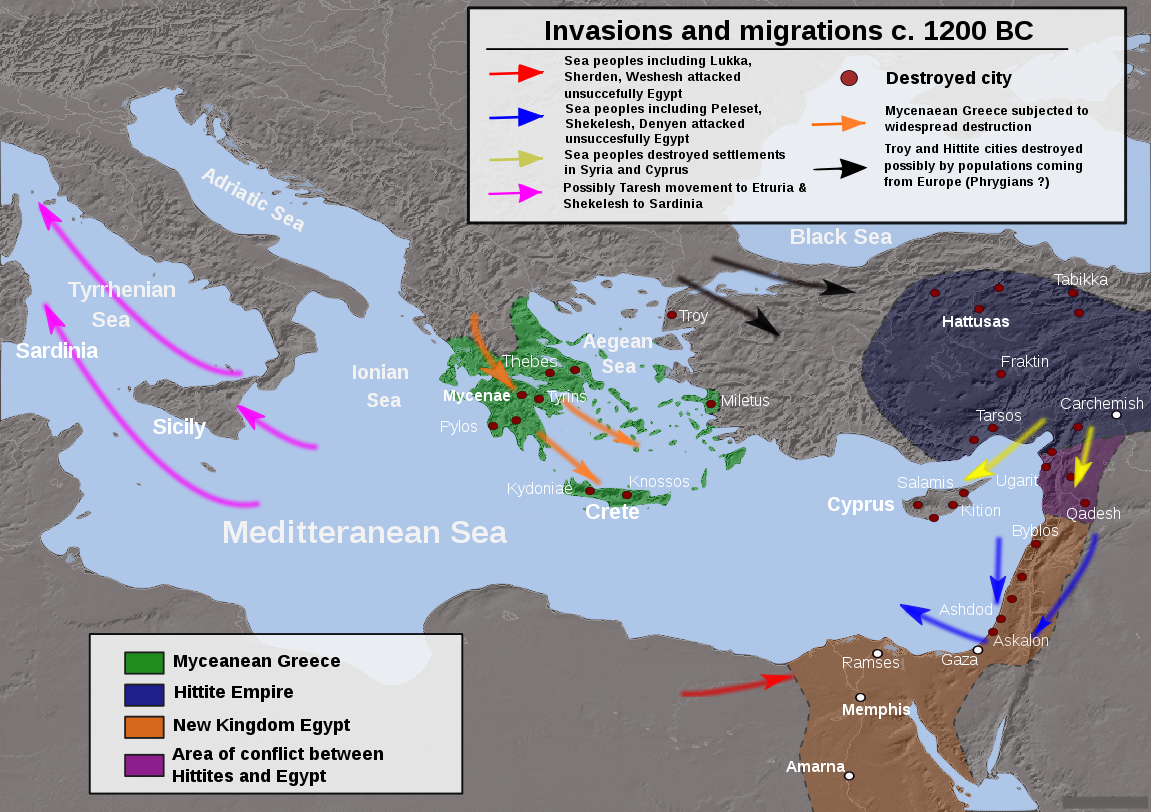
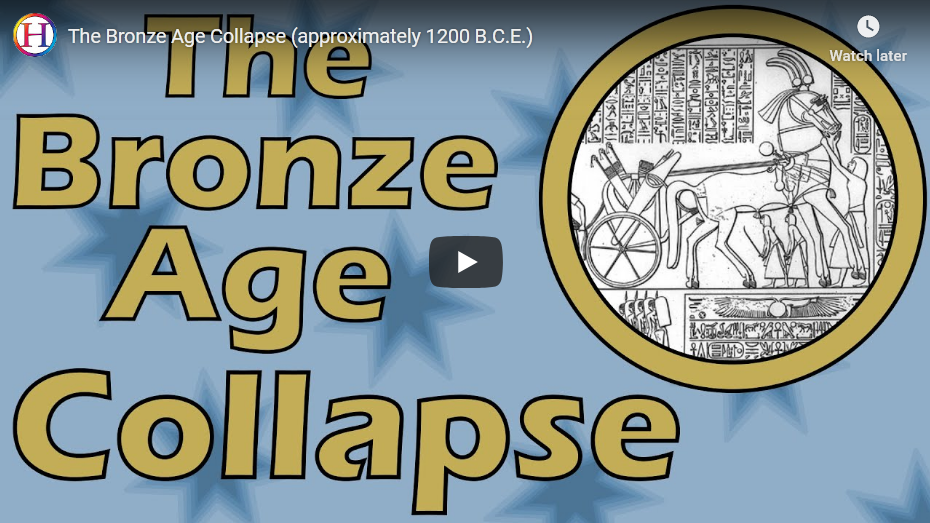
The Bronze Age Collapse (approximately 1200 B.C.E.)

Historia Civilis
Published 25 Jul 2020

Just casually thinkin bout the end of the world. No, no reason, why?

Patreon | http://patreon.com/HistoriaCivilis
Donate | http://www.paypal.com/cgi-bin/webscr?…
Merch | teespring.com/stores/historiacivilis
Twitter | http://twitter.com/HistoriaCivilis
Website | http://historiacivilis.com

Sources:
The Medinet Habu Inscription | https://bit.ly/2Ba2Lvf
David O’Connor & Stephen Quirke, Mysterious Lands | https://amzn.to/3jdQOWu

Eric H. Cline, 1177 B.C.: The Year Civilization Collapsed | https://amzn.to/2ClWgpO
Robert Drews, The End of the Bronze Age: Changes in Warfare and the Catastrophe ca. 1200 B.C. | https://amzn.to/2CkJ7NC
Paul Kriwaczek, Babylon: Mesopotamia and the Birth of Civilization | https://amzn.to/2Wra8G4
Oliver Dickinson, The Aegean From Bronze Age to Iron Age: Continuity and Change Between the Twelfth and Eighth Centuries B.C. | https://amzn.to/3h8ar0r

Music:
“Mell’s Parade,” by Broke For Free
“Sad Cyclops,” by Podington Bear
“Infados,” by Kevin MacLeod
“Heliograph,” by Chris Zabriskie
“Deluge,” by Cellophane Sam

We are a participant in the Amazon Services LLC Associates Program, an affiliate advertising program designed to provide a means for us to earn fees by linking to Amazon.com and affiliated sites.

From the comments:

ka v
1 day ago
I got Sea People Return in the December slot of my 2020 Apocalypse bingo card.

June 30, 2020

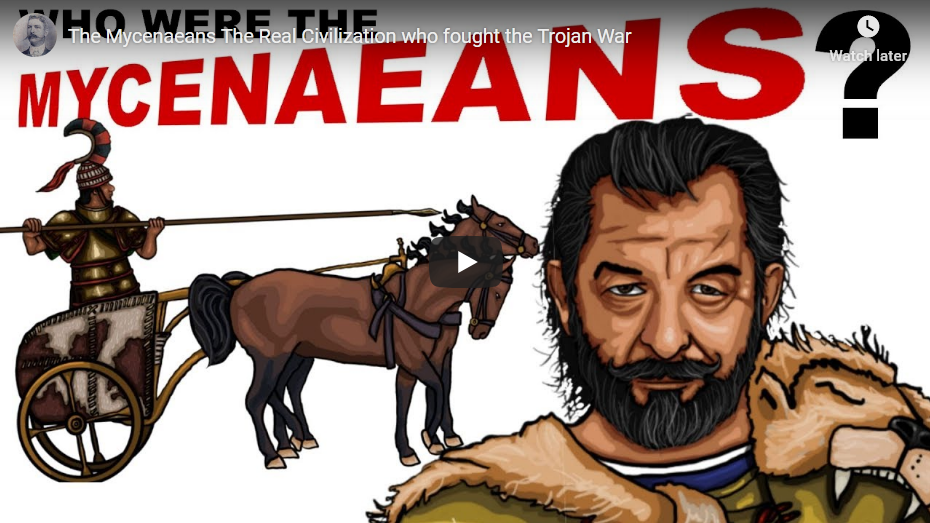
The Mycenaeans – The Real Civilization who fought the Trojan War

Filed under: Europe, Greece, History, Middle East — Tags: , , , , , — Nicholas @ 06:00

Epimetheus
Published 2 Nov 2018

The true ancient civilization behind the Trojan war (The Iliad and Odyssey – the Greek and Trojan heroes Agamemnon, Hector, and Achilles), the Mycenaeans. The history of how they interacted with the Bronze Age world including the Egyptians and the Hittites. From the early days with the Minoans to the Trojan War and the Sea Peoples. Rediscover this lost civilization.

Help my 1 man team of me to make more videos like this, so I can have better equipment and software to make you better content. https://www.patreon.com/Epimetheus1776

I draw, write, edit, research and narrate I love it and hope to make many more videos in the future with your help. Thank you πŸ™‚

June 22, 2020

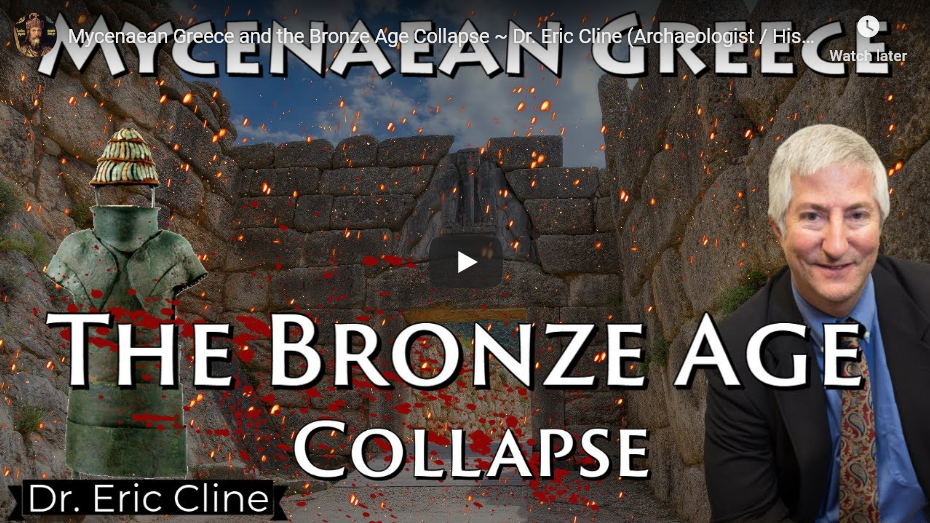
Mycenaean Greece and the Bronze Age Collapse ~ Dr. Eric Cline (Archaeologist / Historian / 1177 BC)

Filed under: Europe, Greece, History, Science — Tags: , , , — Nicholas @ 04:00

The Study of Antiquity and the Middle Ages
Published 20 Jun 2020

In this video we briefly discuss the Bronze Age Collapse and none other than Mycenaean Greece and what contributed to the Greek Dark Ages. Did the Sea Peoples invade? Was there an internal rebellion like a peasant revolt? Drought, Earthquakes and Famine? We cover a variety of topics which also includes debunking the Dorian Invasion. We also take a look at migrations and depopulations of major centers as populations moved elsewhere during this calamity.

Support Dr. Eric Cline at the links below!

Personal web page: https://ehcline.com

GW pages:
https://cnelc.columbian.gwu.edu/eric-…
https://anthropology.columbian.gwu.ed…
https://gwu.academia.edu/EricCline

Archaeology and the Iliad: The Trojan War in Homer and History
https://www.amazon.com/dp/B001EI3IVU?…

The History of Ancient Israel: From the Patriarchs Through the Romans
https://www.amazon.com/dp/B001JHT8CY?…

Image credits: Manna Nader, Gabana Studios Cairo

Hittite 3D City and intro footage credits: 3D reconstruction of Imperial Hittite Karkemish by Giampaolo Luglio, Turco-Italian Archaeological Expedition to Karkemish directed by NicolΓ² Marchetti (University of Boologna)

KARKEMISH (Carchemish) 1300 BC (3D) -The Southern Capital of the Empire Hittite

https://youtu.be/RsTdoY__F4U

Music Attribution: Herknungr – Megaliths | Dark Neolithic Meditive Shamanic Ambient Music https://youtu.be/oc8FQwNjPu0

June 19, 2020

QotD: We call it the Corded Ware culture, not the Battle Axe culture to make it less interesting to boys

Filed under: History, India, Quotations, Science — Tags: , , , , — Nicholas @ 01:00

India played a large role in the development of European conceptions of race. In 1786 British judge William Jones delivered a lecture in Calcutta suggesting that Sanskrit, Greek, and Latin were all descended from the same lost language, a ghost tongue now called Proto-Indo-European.

Jones went on to hypothesize that an ancient invasion of Dravidian-speaking India by Proto-Indo-European-speaking Aryans from Iran could help explain the curious distribution of language, skin color, and caste within the Hindu world today.

Jones’ ideas had unfortunate influence. Reich writes:

    To the Nazis and others, the distribution of the Indo-European language family, linking Europe to India … spoke of an ancient conquest moving out of an ancestral homeland, displacing and subjugating the peoples of the conquered territories, an event they wished to emulate.

Hitler thus culturally appropriated the Hindu swastika.

Since 1945, the notion of Aryan invaders has been unsurprisingly unpopular.

In Europe, anthropologists have promoted the “pots not people” theory to argue that trade and changes in fashion must explain why Corded Ware pots suddenly showed up all over Europe about 4,900 years ago. (So did battle axes; indeed, early scientists called this the Battle Axe Culture. But that sounded too awesome. Hence, more recent academics renamed it after its pottery style to make these brutal barbarians sound dweebier and thus less interesting to boys.)

In India, the notion of Hindu culture as a giant conspiracy by Aryan invaders to enshrine their descendants at the top of the social order for the rest of eternity perhaps struck a little too close to home.

Steve Sailer, “Reich’s Laboratory”, Taki’s Magazine, 2018-03-28.

June 16, 2020

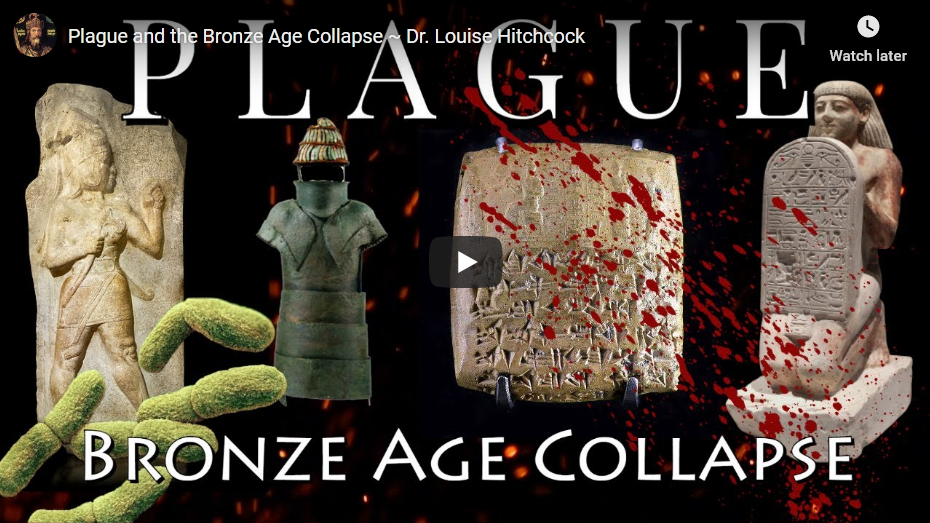
Plague and the Bronze Age Collapse ~ Dr. Louise Hitchcock

The Study of Antiquity and the Middle Ages
Published 16 May 2020

Ladies and Gentlemen, welcome to the series NAUE II SWORDS, GERMS, & IRON brought to us by none other than Dr. Louise Hitchcock and this episode is going to be about plague and the Bronze Age collapse. This episode will also be drawing on modern parallels such as “What Covid-19 Can Tell Us About the Bronze Age (12th cent) Collapse?”

It will dive into the Bronze Age and discuss was plague a contributing factor in decline of the Bronze Age and the birth of the Iron Age? How familiar were the ancient peoples with plague and epidemics and what do the ancient literary sources tell us? From discussing plague in ancient Mesopotamia to the Philistine Plague to a Hittite King who falls prey to a deadly disease we explore new thoughts, theories and research involving a period that we all love and a subject that could not be more relevant and that is plague.

Check out the awesome work of Dr. Hitchcock at these links below!

Academia profile where you can access her work that is free to the public. https://unimelb.academia.edu/LouiseHi…

Get her books here!

Aegean Art and Architecture: https://global.oup.com/ukhe/product/a…
Minoan Architecture: A Contextual Analysis: http://www.astromeditions.com/books/b…
Theory for Classics: https://www.routledge.com/Theory-for-…
DAIS: The Aegean Feast https://www.peeters-leuven.be/detail….
Tell It In Gath: Studies in the History and Archaeology of Israel. Essays in Honor of Aren M. Maeir on the Occasion of his Sixtieth Birthday https://www.zaphon.de/epages/83179382…

Follow her on Twitter: https://twitter.com/ashlarblocks

To support the channel, become a patron and make history matter!

Patreon: https://www.patreon.com/the_study_of_…

Donate directly to paypal: https://paypal.me/nickbarksdale

Enjoy history merchandise? Check out our affiliate link to spqr emporium! http://spqr-emporium.com?aff=3
*disclaimer, the link above is an affiliate link which means we will earn a generous commission from your magnificent purchase, just another way to help out the channel! join our community!

twitter: https://twitter.com/nickbarksdale
instagram: https://www.instagram.com/study_of_an…

Image credits: Manna Nader, Gabana Studios Cairo

Hittite 3D City and intro footage credits: 3D reconstruction of Imperial Hittite Karkemish by Giampaolo Luglio, Turco-Italian Archaeological Expedition to Karkemish directed by NicolΓ² Marchetti (University of Boologna)

KARKEMISH (Carchemish) 1300 BC (3D) – The Southern Capital of the Empire Hittite https://youtu.be/RsTdoY__F4U

Music Attribution: Herknungr – Megaliths | Dark Neolithic Meditive Shamanic Ambient Music https://youtu.be/oc8FQwNjPu0

Footage of Ugarit Credit goes to Ruptly. Video Title : Syria: Ancient city of Ugarit freed from Islamic State control https://youtu.be/XKzbk0PFvg0

May 4, 2020

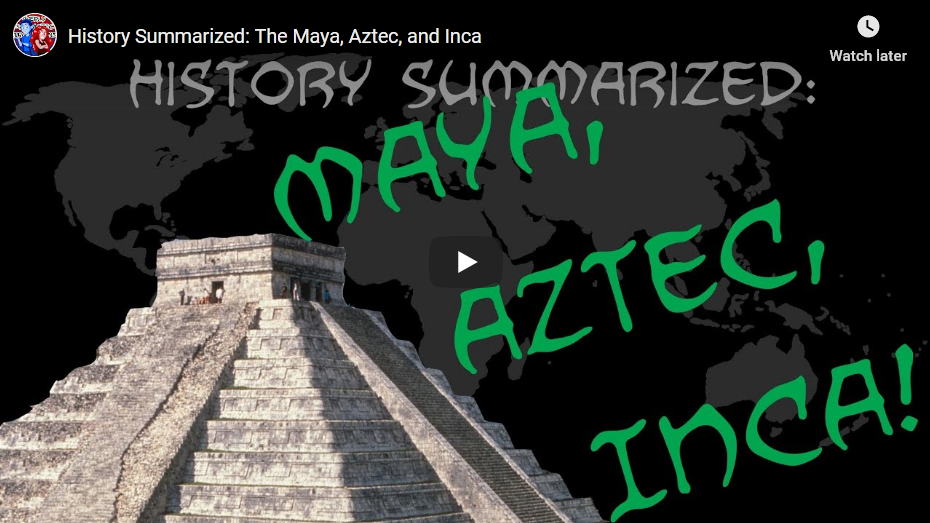
History Summarized: The Maya, Aztec, and Inca

Overly Sarcastic Productions
Published 29 Jul 2017

Human sacrifice, smallpox, and the Spanish empire … that’s the whole story, right? Haha, eheh, hehe, HA, not even close! The civilizations of Mesoamerica are fascinating in their own right, and very distinct from each other too! Step on in and I’ll learn you a thing or two.

Also no spoilers, but next time, I’m covering the Iroquois Confederation! Ok, maybe that was exactly a spoiler. [Reposted here.]

This video was produced with assistance from the Boston University Undergraduate Research Opportunities Program.

PATREON: www.patreon.com/user?u=4664797

MERCH LINKS:
Shirts – https://overlysarcasticproducts.threa…
All the other stuff – http://www.cafepress.com/OverlySarcas…

Find us on Twitter @OSPYouTube!

April 7, 2020

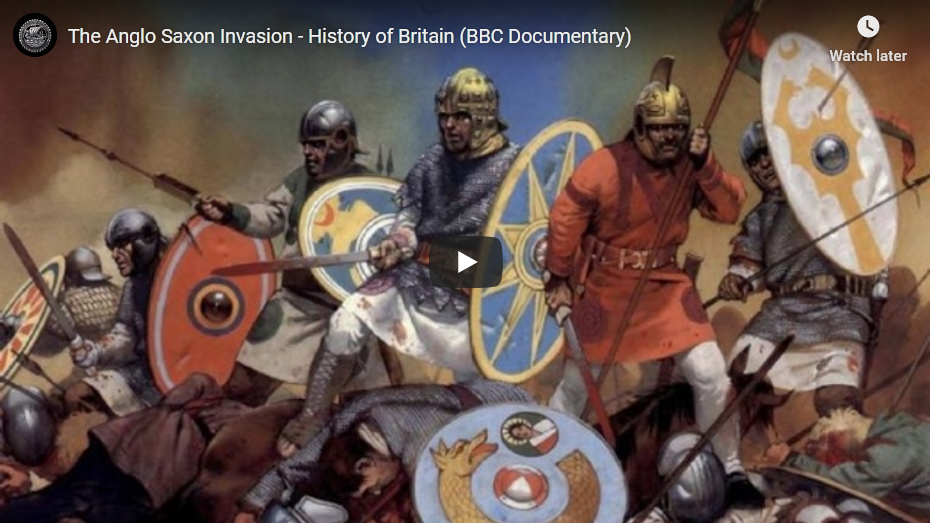
Britain AD: The Invasion That Never Was – The Anglo-Saxon Invasion (BBC Documentary)

Filed under: Britain, Europe, History, Science — Tags: , , , — Nicholas @ 04:00

Johnny66
Published 21 Jun 2015

A well-considered documentary by the noted scholar, Dr Francis Pryor. The names Cerdic, Ceawlin, Cedda and Caedwalla are not exactly Germanic in origin? Cerdic’s father, Elesa, has been identified by some scholars with the Romano-Briton Elasius, the “chief of the region,” met by Germanus of Auxerre.

March 22, 2020

Sargon of Akkad: History’s First Emperor?

Filed under: History, Middle East, Science — Tags: , , — Nicholas @ 02:00

History Time
Published 31 Oct 2017

A brief look at Sargon of Akkad, an Akkadian whose conquests of the Sumerian plain have led many scholars to cite him as one of the earliest, if not the earliest emperors in history. Agree? Disagree? Comment below!

Music:-
“Assyrian Fortress” by Derek & Brandon Fiechter

If you liked this video and have as little as a dollar to spare then please consider supporting me on Patreon for more and better content in the future: http://www.patreon.com/historytimeUK

Are you a budding artist, illustrator, cartographer, or music producer? Send me a message! No matter how professional you are or even if you’re just starting out, I can always use new music and images in my videos. Get in touch! I’d love to hear from you.

I’ve also compiled a reading list of my favourite history books via the Amazon influencer program. If you do choose to purchase any of these incredible sources of information, many of which form the basis of my videos, then Amazon will send me a tiny fraction of the earnings (as long as you do it through the link) (this means more and better content in the future) I’ll keep adding to and updating the list as time goes on:-
https://www.amazon.com/shop/historytime

I try to use copyright free images at all times. However if I have used any of your artwork or maps then please don’t hesitate to contact me and I’ll be more than happy to give the appropriate credit.

December 16, 2019

QotD: The Great Pestilence of 1348

Filed under: Britain, Health, History, Quotations — Tags: , , , , — Nicholas @ 01:00

Long I have been curious about the Great Pestilence that trimmed the population of Britain and Europe by a third or more, in the fourteenth century. I make too much of it; the plague was a recurring event for centuries before and after. I notice from the tabloids that it is returning, through Africa this time. I know there will be pestilence to come, when we will all think it terribly important. It rivetted attention, I’m sure, in the autumn of 1348, and through the summer of 1349. And yet within a generation it is hardly mentioned.

England, below the Ribble and Tees, is special, thanks to the Domesday Book of the invading, tax-loving Normans, and their general propensity to good record-keeping. The towns and villages ennumerated in 1086 can be traced to the present day; nineteen in twenty are still there. Having figures to start, and through the parish books later, we can track an economic and demographic history with an accuracy possible in no other country. We can know, for instance, of the population boom through the twelfth and thirteenth centuries, which had slackened well before the “Black Death.” And with that boom, impressive advances in farming, technology, and building, as today. Nothing conduces to technical improvement, as a bit of crowding.

This proportion I cited β€” the nineteen-in-twenty (or more) β€” which I have from reading in economic history mostly years ago, fascinates my attention. We know large tracts were depopulated, we find the archaeological evidence easily enough. They were planting rye within the walls of Winchester, and many other towns. Everywhere, they had elbow-room again. Our deep ecologists would have been pleased β€” those who think life on this planet would be better had a few billion souls not been born. As Christianity, and environmentalism, are mortally opposed, and the fourteenth century was overwhelmingly Christian, I expect complaints of overpopulation were differently expressed at the time. Mostly it would have been moaning from younger brothers about the distribution of inherited land.

Always, there have been younger brothers. Always, there have been survivors. What delighted me was the speed with which all the vacant places were filled. As we’ve seen, too, after ghastly wars, demography abhors a vacuum.

David Warren, “Death the real illusion”, Essays in Idleness, 2017-11-04.

December 2, 2019

QotD: Evidence of markets in classical civilizations

Filed under: Economics, Europe, Greece, History, Quotations — Tags: , , , , — Nicholas @ 01:00

If someone were to claim that market behaviour was peripheral to life in eighteenth century England, it would be easy to laugh at him. This is not to say the claim has not been or will not be made. But if it were made, it could be refuted with a mass of government and private statistics, of newspaper reports and law reports, of high literature, of sermons, speeches and letters, of descriptive and analytical surveys, of biographies and novels, and of physical remains. Ludicrous claims can always be based on selective and misread evidence. In this case, the weight of the evidence must be decisive.

If we turn, however, to the ancient world, the evidence must almost always be indecisive. Very few ancient writings have survived. Obviously, two thousand years are a long time; and ancient civilisation did collapse. Add to this that far fewer documents relating to economic matters were produced or could be preserved than has been the case with us. There was no printing: everything had to be copied by hand. The best writing material was papyrus, which was both expensive and fragile. The normal writing materials for accounts and administrative documents were waxed tablets, which were scraped and reused, and thin wooden sheets, which were thrown away once they had served their purpose.

The literary remains of Greece and Rome which have come down to us through generations of copying and recopying are the products of a rather snobbish culture, and contain little direct information about economic behaviour. The great writers, as Finley observes, do seem to have lacked the conceptual framework for intelligent discussion of finance and commerce. Even otherwise, these were matters they regarded as beneath the notice of history. Thucydides, for example, gives full discussion to the political causes of the Peloponnesian War, but says nothing of what we know from the archaeological evidence was the complete Athenian displacement of Corinth in the pottery markets of the Western Mediterranean world.

During the past century or so, the rubbish dumps of Egypt have revealed a mass of the everyday documentation we have for no other area of the ancient world. There are tax records, and commercial correspondence, and administrative commands, among much else. The problem here is that Egypt was always an exception. From its earliest history, its geography opened it to capture and exploitation by rent-seeking Γ©lites. The Pharaohs were worshipped as gods and given whatever they demanded. The Ptolemies organised the country into one gigantic state enterprise and used the proceeds for making a big noise in the Hellenistic world. The Roman Emperors kept up the monopolies and requisitions, treating Egypt as their personal property, and so far as possible isolating it from the rest of the Empire. The documentary evidence, therefore, we have from Egypt may not be representative of the ancient world as a whole.

But this, plus the material archaeology, is all we have. And if we want to know anything for economic motivations and behaviour, we must press the evidence we have as hard as we can. The history of the ancient world is, in many important respects like a mosaic that has been broken up with many of its tiles thrown away. The whole must be reconstructed from the parts remaining. It is a difficult enterprise, but it can be attempted.

If there is little direct, there is much indirect evidence. This is scattered through the surviving body of ancient literature. It consists of casual remarks, illustrations to arguments, even comments that are in themselves foolish. It is a question of looking for this evidence, and of knowing how to use it.

An interesting example of how evidence can be extracted and used comes not from our own ancient world, but from pre-Columbian South America. Deirdre McCloskey has looked at the geographical distribution of Mayan obsidian tools. She notes that, the farther from the sources of their obsidian, the smaller was the ratio of blade weight to cutting length. She comments:

    By taking more care with more costly obsidian the blade makers were earning better profits; as they did by taking less care with less costly obsidian.

What we have here, then, is evidence that illiterate, stone age toolmakers were at least as conscious of opportunity cost as any Victorian mill owner, and rather more so than the average socialist planner of the next century. So long, of course, as this is evidence β€” this is, so long as the tools are distributed as claimed β€” we have empirical reason for doubting the Polanyi claim that,

    previously to our time no economy has ever existed that, even in principle, was controlled by markets…. Gain and profit made on exchange never [before the nineteenth century] played an important part in human economy.

Sean Gabb, “Market Behaviour in the Ancient World: An Overview of the Debate”, 2008-05.

November 17, 2019

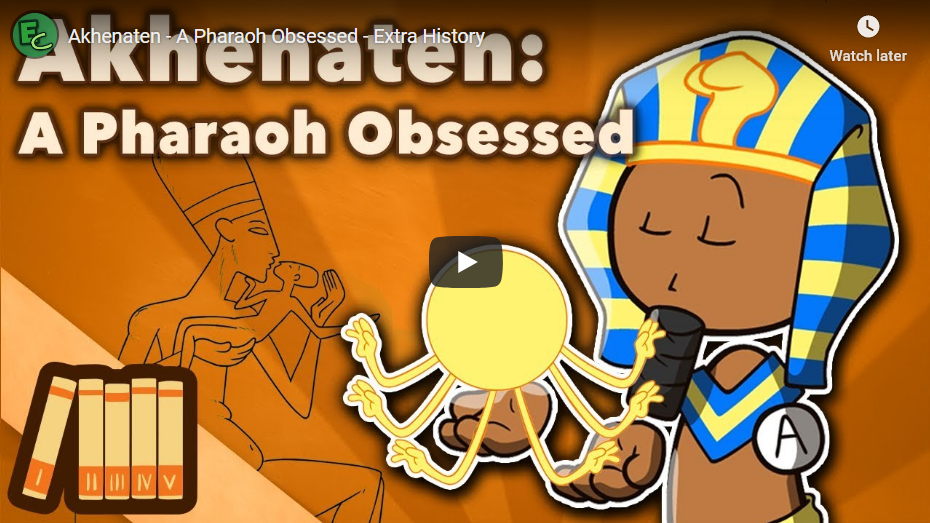
Akhenaten – A Pharaoh Obsessed – Extra History

Filed under: History, Middle East, Religion — Tags: , , — Nicholas @ 06:00

Extra Credits
Published 16 Nov 2019

Join us on Patreon! http://bit.ly/EHPatreon

A revolutionary dreamer or a tyrannical despot? That is a question at the heart of Akhenaten’s rule, a pharaoh so unusual, that his successors tried and almost successfully erased him from the historical records. You may know his more famous wife, Queen Nefertiti but Akhenaten was a fascinating ruler. He went against the grain of almost all of Egyptian traditions including trying to establish a monotheistic religion and unite the Upper and Lower Kingdoms of Egypt.

November 13, 2019

Conclusions from a mock battle

Filed under: History, Military — Tags: , , , — Nicholas @ 02:00

Lindybeige
Published 19 Jul 2013

Re-enactment is a form of experimental archaeology.

http://www.LloydianAspects.co.uk

November 12, 2019

Building Angkor – The “Lost” City – Extra History – #5

Filed under: Asia, Environment, France, History, Religion — Tags: , , , , — Nicholas @ 04:00

Extra Credits
Published 8 Nov 2019

Join us on Patreon! http://bit.ly/EHPatreon

After its decline, Angkor had become the Ancient, Lost City so prominent in our pop culture. Just one problem: Angkor was neither ancient (having declined around the same time as Hundred Years War) nor lost (people still lived there!). That didn’t stop the European visitors from trying to invent all kinds of stories for how this city could possibly exist, and stealing parts of the temple to bring back home. But despite all the hardships Angkor faced, it managed to become a national symbol for Cambodia and still remains to this day.

October 30, 2019

Homer, the Trojan War & the Late Bronze Age Collapse

Filed under: Europe, Greece, History, Middle East, Military — Tags: , , , , , , — Nicholas @ 05:00

History Time
Published 20 Mar 2018

This is the first in a new series I will be producing on the Late Bronze Age Collapse.

If you enjoyed this video and would like to see more then please consider supporting me on Patreon:-
https://www.patreon.com/historytimeUK (every dollar helps)

Are you a budding artist, illustrator, cartographer, or music producer? Send me a message at petekellywriter@gmail.com No matter how professional you are or even if you’re just starting out, I can always use new music and images in my videos. Get in touch! I’d love to hear from you.

I’ve compiled a reading list of my favourite history books via the Amazon influencer program. If you do choose to purchase any of these incredible sources of information then Amazon will send me a tiny fraction of the earnings (as long as you do it through the link) (this means more and better content in the future) I’ll keep adding to and updating the list as time goes on:-
https://www.amazon.com/shop/historytime

I try to use copyright free images at all times. However if I have used any of your artwork or maps then please don’t hesitate to contact me and I’ll be more than happy to give the appropriate credit.

October 21, 2019

Building Angkor – Temple City – Extra History – #2

Filed under: Architecture, Asia, History, Religion — Tags: , , , , — Nicholas @ 04:00

Extra Credits
Published 19 Oct 2019

Join us on Patreon! http://bit.ly/EHPatreon

Let’s take a little tour around Suryavarman II crowning achievement, the temple that took only 33 years to complete, while Europeans were taking centuries to build their cathedrals. With a two mile long wall, gates large enough to allow elephants to pass and steps so steep that the average person needed to climb them like a ladder, Angkor Wat’s every feature was made to be impressive. But what lies at the heart might be surprising…

« Newer PostsOlder Posts »

Powered by WordPress