Quotulatiousness

October 24, 2020

Andrew Sullivan on the potentials of therapeutic use of psilocybin

Filed under: Europe, Greece, Health, History, Religion — Tags: , , , , , — Nicholas @ 05:00

In the last free edition of his Weekly Dish newsletter — and probably the last time I’ll be able to link to it — Andrew Sullivan discusses the medical trials and legalization initiatives for psilocybin along with some of the history of its use in the Elusinian Mysteries in ancient Greece:

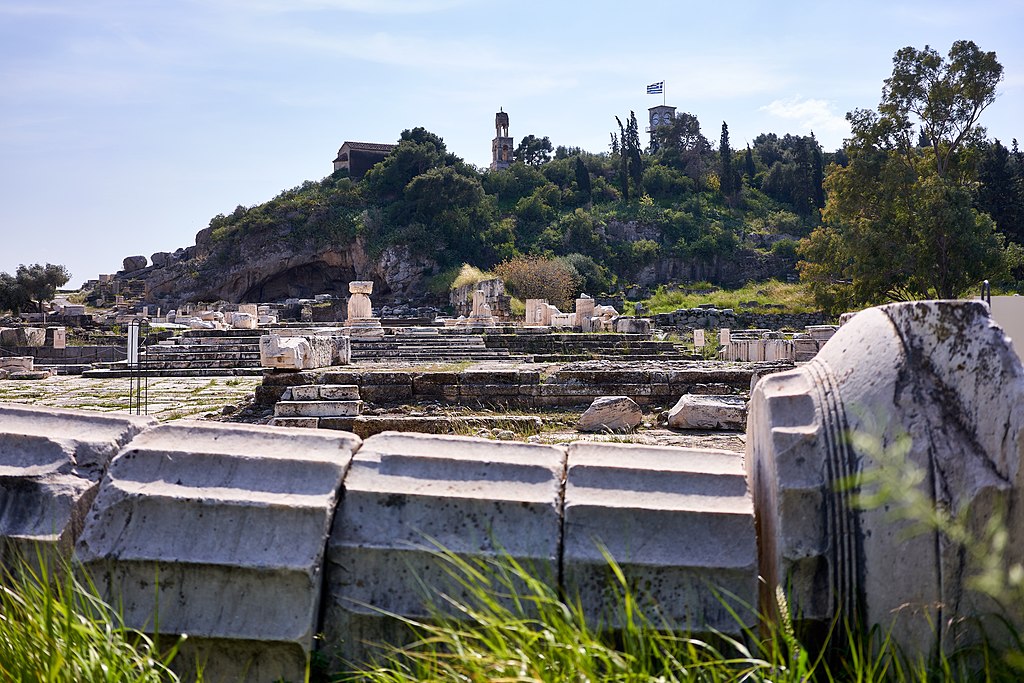
At the archaeological site of the Sanctuary of Demeter at Eleusis. The information board on the left stands on what was once the courtyard of the sanctuary. Over the staircase behind it stood the Greater Propylaea. Next to the cavern in the background stood the Sanctuary of Pluto (who abducted Persephone, Demeter’s daughter). The cavern represents the entrance to the Underworld. The path to the left of the cavern leads to the Telesterion where the faithful were initiated to the Eleusinian mysteries. The brown building up on the hill (left) is a church dedicated to the Virgin Mary (Church of Panagitsa Mesosporitissa) and stands over the area of the Telesterion.
Photo by George E. Koronaios via Wikimedia Commons.

There are many ways in which this election might portend the future, but there’s a seemingly small issue — only on the ballot in Oregon and the District of Columbia — that’s a sleeper, it seems to me, and worth keeping an eye on. It’s the decriminalization of naturally-occurring psychedelics, in particular, psilocybin, the psychoactive ingredient in some mushrooms which have long been dubbed “magic.”

This doesn’t come out of the blue. Huge strides have been taken in the last few years in the decriminalization of cannabis, with 33 states allowing medical use, of which 11 allow recreational as well. The FDA recently greenlit clinical trials for psilocybin as a “breakthrough therapy” for depression — with some wildly impressive results. Books like Michael Pollan’s magisterial How To Change Your Mind have helped shift the reputation of psychedelics from groovy, counter-cultural weirdness to mature, spiritual, and regulated mental health treatment. Ketamine — previously a party drug and an animal tranquilizer — has shown more promise as an anti-depressant than any therapy since the mid-1990s.

The familiar worry, of course, is that we might be ushering in an era of wild drug experimentation, with unforeseen and unknowable results. Some people fear that relaxing some of the legal restrictions on things that grow in nature could lead to social disruption or higher levels of addiction or worse. The great popularizer of psychedelics, Aldous Huxley, gave us a somewhat sobering description of what might be our future in Brave New World, and many in the West have been terrified of these substances for quite a while.

But new research suggests that this shift toward integrating psychedelics into a healthy, responsible life for Westerners may not be new at all. It would, in fact, be a return to a civilization that used these substances as a bulwark of social and personal peace. New literary investigations of ancient texts, new — and re-examined — archeological finds, and cutting edge bio-chemical technology that can detect and identify substances in long-buried artifacts, suggest that deploying psychedelics would, in fact, be a return to a Brave Old World we are only now rediscovering.

We’ve long known that human knowledge of psychedelic aspects of nature goes back into pre-history; and use of them just as far. But perhaps the most surprising find in this new area of research is that sacred tripping was not simply a function of prehistoric religious rituals and shamanism, but an integral, even central part, of the world of the ancient Greeks. The society that remains the basis for so much of Western civilization seems to have held psychedelics as critical to its vision of human flourishing. And that vision may have a role to play in bringing Western civilization back into balance.

A breakthrough in understanding this comes in the form of a rigorously scholarly new book, The Immortality Key: The Secret History of the Religion With No Name, by Brian Muraresku. What he shows is the centrality of psychedelic use for the ancient Greeks, in an elaborate and mysterious once-in-a-lifetime ceremony at the Temple of Eleusis, a short distance from Athens. We’ve long known about this temple of the Mysteries, as they were known, and the rite of passage they offered — because it’s everywhere in the record. Many leading Greeks and Romans went there, including Plato and Marcus Aurelius. Here is Cicero, no less, in De Legibus:

    For it appears to me that among the many exceptional and divine things your Athens has produced and contributed to human life, nothing is better than those Mysteries. For by means of them we have been transformed from a rough and savage way of life to the state of humanity, and been civilized. Just as they are called initiations, so in actual fact we have learned from them the fundamentals of life, and have grasped the basis not only for living with joy, but also for dying with a better hope.

October 21, 2020

Aryan invasion, migration theory (Truth or fiction) India documentary

Filed under: History, India, Science — Tags: , , , , — Nicholas @ 02:00

Epimetheus
Published 24 Jan 2018

Aryan invasion, migration theory (Truth or fiction) India documentary

Epimetheus on Patreon
https://www.patreon.com/Epimetheus1776

David Frawley Aryan invasion videos
https://www.youtube.com/watch?v=qych3…
https://www.youtube.com/watch?v=jyz_S…

Tags:
Aryan invasion india, india history, indian history, documentary, history of india, india,history, india documentary, hindi, 2018, ancient india, indus valley civilization, 5,000 Years History of India documentary, Aryan migration theory, Aryan invasion theory, indo-aryan, indo Aryan migration

October 19, 2020

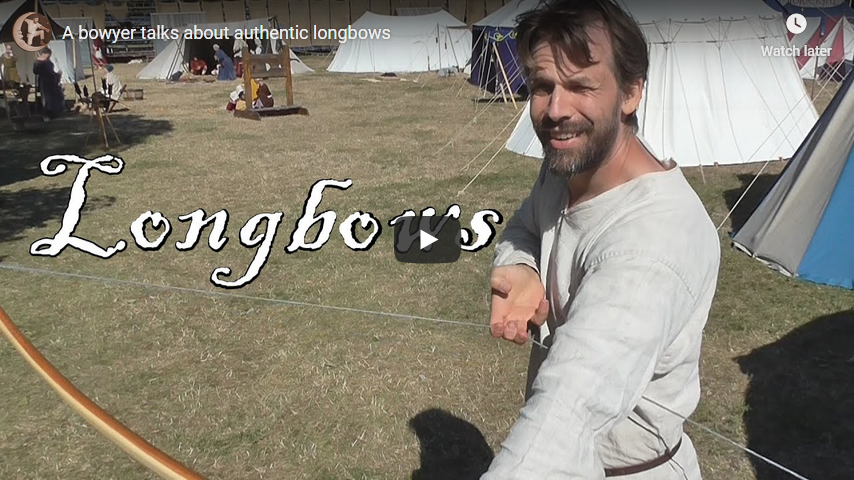
A bowyer talks about authentic longbows

Filed under: Britain, Europe, History, Military, Weapons — Tags: , , , , — Nicholas @ 04:00

Lindybeige
Published 10 Sep 2016

Shot in Visby. I talk to Swedish bowyer Henrik Thurfjell about bows, asking stupid questions so that he sounds comparatively clever.
Support me on Patreon: https://www.patreon.com/Lindybeige

He talks about wood, of hunting, of string, and of bear fat. Many people in the comments have suggested exotic meanings for the mark on the side of the yew bow. The comparatively mundane truth is that the symbol is a combination of the Norse runes for H and T – the bowyer’s initials.

Thanks to Johan Käll for showing me round the re-enactors’ camp.

Picture credits:
By the Mary Rose Trust, CC BY-SA 3.0, https://commons.wikimedia.org/w/index…
By Mary Rose Trust – Mary Rose Trust, CC BY-SA 3.0, https://commons.wikimedia.org/w/index…
By Mary Rose Trust – Mary Rose Trust – official webpage, CC BY-SA 3.0, https://commons.wikimedia.org/w/index…
By Own scan. Photo by Gerry Bye. Original by Anthony Anthony. – Anthony Roll as reproduced in The Anthony Roll of Henry VIII’s Navy: Pepys Library 2991 and British Library Additional MS 22047 With Related Documents ISBN 0-7546-0094-7, p. 42., Public Domain, https://commons.wikimedia.org/w/index…
By the Mary Rose Trust, CC BY-SA 3.0, https://commons.wikimedia.org/w/index…

Buy the music – the music played at the end of my videos is now available here: https://lindybeige.bandcamp.com/track…

Lindybeige: a channel of archaeology, ancient and medieval warfare, rants, swing dance, travelogues, evolution, and whatever else occurs to me to make.

▼ Follow me…

Twitter: https://twitter.com/Lindybeige I may have some drivel to contribute to the Twittersphere, plus you get notice of uploads.

website: www.LloydianAspects.co.uk

October 10, 2020

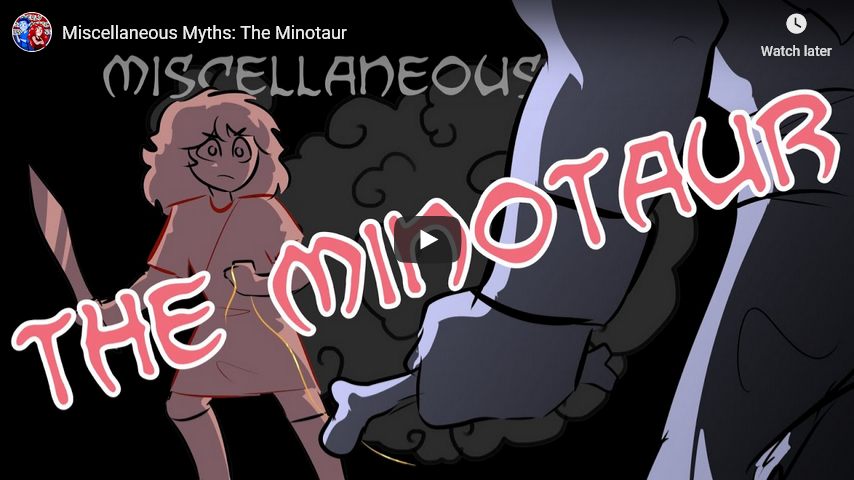
Miscellaneous Myths: The Minotaur

Filed under: Europe, Greece, History, Humour — Tags: , , , , — Nicholas @ 06:00

Overly Sarcastic Productions
Published 9 Oct 2020

Ah, Theseus. Athens’ favorite trash man. Let’s talk about someone a little more interesting — literally anyone involved in this story will do.

Good news, I found the 1080P button! Bad news, the minute differences in image resolution are now threatening my sanity.

Our content is intended for teenage audiences and up.

PATREON: https://www.Patreon.com/OSP

DISCORD: https://discord.gg/kguuvvq

MERCH LINKS: http://rdbl.co/osp

OUR WEBSITE: https://www.OverlySarcasticProductions.com
Find us on Twitter https://www.Twitter.com/OSPYouTube
Find us on Reddit https://www.Reddit.com/r/OSP/

When Vikings Met Native Americans: The Voyage of Thorvald Erikson

Filed under: Americas, Cancon, History — Tags: , , , , , , — Nicholas @ 04:00

Atun-Shei Films
Published 9 Oct 2020

Happy Leif Erikson Day! After Leif’s discovery of unknown lands to the west of Greenland, his brother Thorvald set off on an expedition of his own. Thorvald’s voyage, as related in the medieval Icelandic text The Saga of the Greenlanders, marks the first time in recorded history that Europeans came face-to-face with Native Americans. In this video, I regale you with this tale of adventure, exploration, and cultural collision. And for some reason, I spend about a third of the video talking about a bowl, a coin, and some yarn made of goat hair.

Support Atun-Shei Films on Patreon ► https://www.patreon.com/atunsheifilms

Leave a Tip via Paypal ► https://www.paypal.me/atunsheifilms (All donations made here will go toward the production of The Sudbury Devil, our historical feature film)

Buy Merch ► teespring.com/stores/atun-shei-films

#LeifErikson #Vinland #History

Original Music by Dillon DeRosa ► http://dillonderosa.com/
Reddit ► https://www.reddit.com/r/atunsheifilms
Twitter ► https://twitter.com/atun_shei

~REFERENCES~

[1] Magnus Magnusson & Hermann Pálsson. The Vinland Sagas: The Norse Discovery of America (1965). Penguin Books, Page 59-61

[2] Sîan Grønlie. The Book of the Icelanders / The Story of the Conversion (2006). Viking Society for Northern Research, Page 4

[3] Ingeborg Marshall. “Beothuk Transportation” (1998). Heritage Newfoundland and Labrador https://www.heritage.nf.ca/articles/a…

[4] Patricia Sutherland. Dorset-Norse Interactions in the Canadian Arctic (2000). Canadian Museum of Civilization, Page 2-9

September 7, 2020

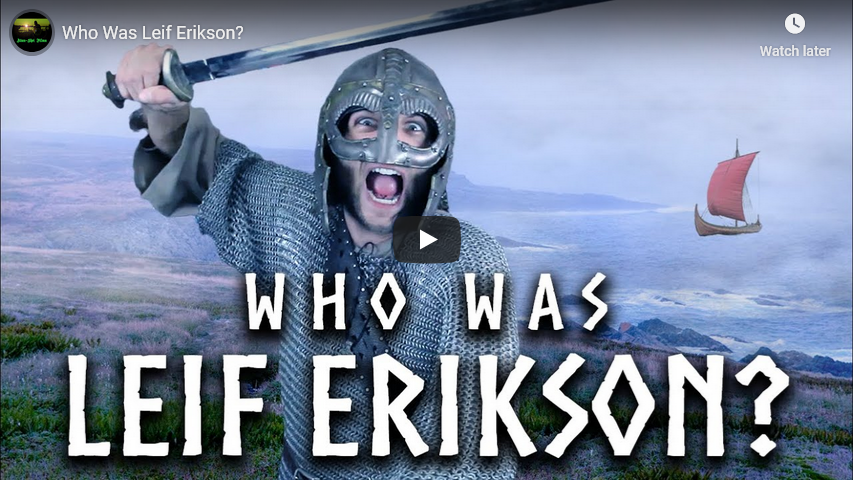
Who Was Leif Erikson?

Atun-Shei Films
Published 9 Oct 2019

Happy Leif Erikson Day! Allow me to regale you with the saga of the daring Viking who sailed to North America five hundred years before Columbus (that hack) and called it Vinland. We all know his name and his famous deeds – but what sort of man was Leif Erikson?

Support Atun-Shei Films on Patreon ► https://www.patreon.com/atunsheifilms

#LeifErikson #Viking #History

Watch our film ALIEN, BABY! free with Prime ► http://a.co/d/3QjqOWv
Reddit ► https://www.reddit.com/r/atunsheifilms
Twitter ► https://twitter.com/alienbabymovie
Instagram ► https://www.instagram.com/atunsheifilms
Merch ► https://atun-sheifilms.bandcamp.com

September 5, 2020

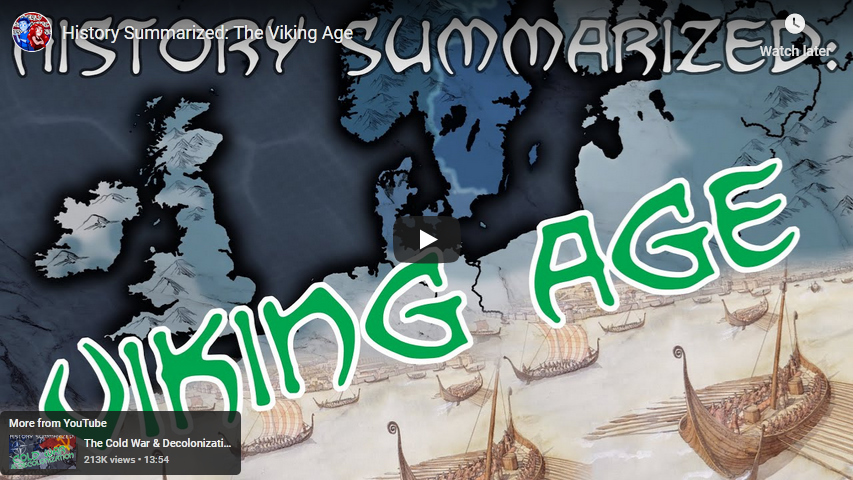
History Summarized: The Viking Age

Overly Sarcastic Productions
Published 4 Sep 2020

The Vikings are enjoying a new wave of enthusiasm in popular culture, but these seafaring Norsemen are still quite clearly a misunderstood force in medieval European history. So let’s take a wide look at the European world during The Viking Age!

Check out Yellow’s livestreams over at https://Twitch.tv/LudoHistory

SOURCES & Further Reading: The Vikings by Walaker Nordeide and Edwards, Vikings: A Very Short Introduction by Richards, Age of the Vikings and The Conversion of Scandinavia by Winroth, The Vikings By Harl via The Great Courses, The Viking World by Graham-Campbell, The Viking Way by Price.

This video was edited by Sophia Ricciardi AKA “Indigo”. https://www.sophiakricci.com/

Our content is intended for teenage audiences and up.

DISCORD: https://discord.gg/kguuvvq

PATREON: https://www.Patreon.com/OSP

MERCH LINKS: https://www.redbubble.com/people/OSPY…

OUR WEBSITE: https://www.OverlySarcasticProductions.com
Find us on Twitter https://www.Twitter.com/OSPYouTube
Find us on Reddit https://www.Reddit.com/r/OSP/

From the comments:

Ludohistory
23 hours ago (edited)
Thanks so much for having me on and letting me help out! It was a lot of fun (even if I talked a little too fast sometimes)! To clarify a piece that I know I did cover too briefly — missionary trips to Scandinavia occurred in Denmark around 823, on the orders of Louis the Pious, and in Sweden in 829, when Ansgar, a Frankish monk, traveled to the town of Birka, where he found a very small Christian community, probably mostly enslaved or formerly enslaved people, and converted a couple of Norse people, including the town prefect. (The graveyard for that town, incidentally, is where the 10th century “female warrior” that made waves a few years ago was buried).

There’s a lot we didn’t get a chance to talk about about the diaspora and its ending, so if there’s anything you all are curious on or find unclear, let me know here or on twitter 🙂

Finally, if you liked this, all the VODs for my personal streams (where I try to ramble about history in games) can be found by clicking on my name, and tomorrow I’ll be streaming CKIII on twitch (link in the description)!

August 27, 2020

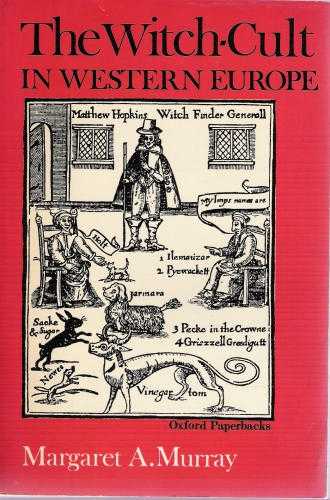
Margaret Murray’s highly influential The Witch-Cult in Western Europe

Filed under: Books, Britain, History, Religion — Tags: , , , , , , — Nicholas @ 03:00

In First Things, Francis Young discusses the impact Murray’s work had when it was published in the 1920s:

Just under a century ago, in 1921, one of the strangest books ever to be published by Oxford University Press appeared in print: The Witch-Cult in Western Europe by Margaret Alice Murray. By today’s academic standards — in fact, even by the standards of the 1920s — Murray’s book was filled with transparent flaws in methodology and research. Furthermore, the book’s author (a leading Egyptologist) was not qualified to write it. The few scholars then working on the history of European witchcraft dismissed Murray’s contribution. Yet in spite of this, The Witch-Cult in Western Europe became an instant hit and captured the imaginations of readers. Within three decades, the book had not only profoundly influenced cultural understandings of witchcraft, but also directly led to the rise of neopaganism and the foundation of a new religion, Wicca, that today has millions of adherents throughout the world.

Margaret Alice Murray (1863–1963) was born and brought up in British India — an upbringing that, as with so many Anglo-Indians of the nineteenth century, may have opened her mind to interests beyond Victorian culture. Determined to pursue a career of her own at a time when opportunities for women were limited, Murray tried out both nursing and social work before entering the progressive University College London in 1894, where she studied Egyptology under W. Flinders Petrie. Murray rapidly rose through the academic ranks, and by 1914, she was effectively running the Egyptology department. Her impressive achievements in advancing knowledge of ancient Egypt and higher education for women have, however, been largely overshadowed by her decision to take a detour into writing about European witchcraft.

In The Witch-Cult in Western Europe, Murray seized on some unusual testimonies in 16th-century Scottish witch trials to elaborate a radical theory: She claimed that what medieval and early modern people called witchcraft was, in fact, the last traces of a pagan fertility cult that originated in the Neolithic period. The witch trials of the 15th–17th centuries represented Christianity’s last attempt to stamp out this cult, which was practiced in secret covens (groups of thirteen people) who worshipped a horned god (who was mistaken for the devil). Knowledge of this cult was passed through families or, occasionally, to new initiates, but kept secret from the outside world.

Murray’s use of a single set of problematic sources from one country (Scotland) to argue that a previously unnoticed religion had existed since prehistory failed to meet basic historiographical and anthropological standards of research. She was given to making huge conceptual leaps on the basis of contentious interpretations of meager evidence. Using a small range of hostile trial records designed to discredit women accused of witchcraft (along with testimonies extracted under torture), Murray reconstructed what she believed were real religious practices lurking behind the demonological construct of the Witches’ Sabbath. In so doing, she brought together traditions of interpretation honed by the anthropologist Sir James Frazer (1854–1941), the author of The Golden Bough, and the French historian Jules Michelet (1798-1874). Murray followed Michelet in arguing that those accused of witchcraft were not the innocent victims of trumped-up charges, but were in fact adherents of a subversive cult; and she followed Frazer in her belief that prehistoric religious beliefs, associated with fertility, had survived into recent times.

August 25, 2020

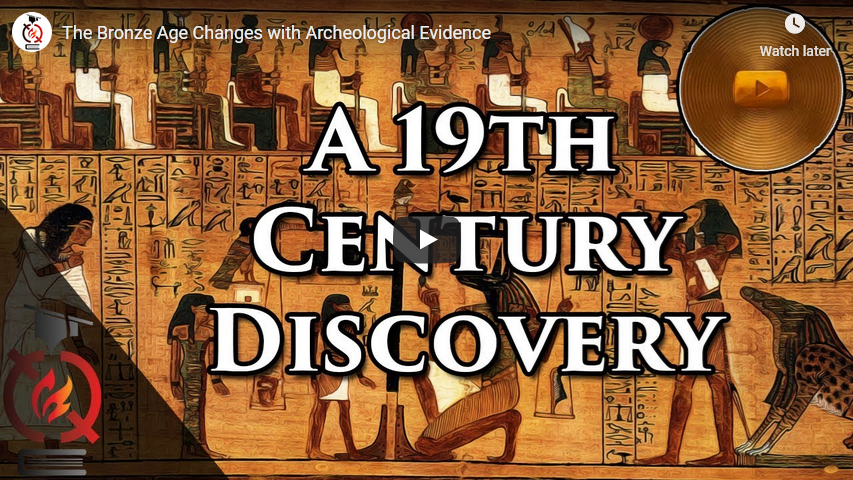
The Bronze Age Changes with Archeological Evidence

Filed under: Architecture, History, Middle East, Science, Technology — Tags: , , , , — Nicholas @ 04:00

The Cynical Historian
Published 22 Feb 2019

Check out the full collaboration playlist here: https://www.youtube.com/playlist?list…

Up until the 19th century, the Bronze Age was merely a time of legends, where the Bible and Iliad told fantastic tales of brutality and triumph. But archeology changed that, and that’s what I want to talk about today, how the Bronze Age was rescued from legend.
————————————————————
references:
Stephen L. Dyson, “Archaeology and Ancient History,” in A Companion to Ancient History, edited by Andrew Erskine (Malden, Mass.: Blackwell Publishers, 2002), 59-66. https://amzn.to/2PCf04X

Marie-Henriette Gates, “Archeology and the Ancient Near East: Methods and Limits,” in A Companion to the Ancient Near East, edited by Daniel C. Snell (Malden, Mass.: Blackwell Publishers, 2005), 65-79. https://amzn.to/2BrsBqO

Alan B. Lloyd, “Chronology,” in A Companion to Ancient Egypt, vol. 1, edited by Alan B. Lloyd (Malden, Mass.: Blackwell Publishers, 2010), xxxii-xliii. https://amzn.to/2LqGZnM

John Marincola, “Historiography,” in A Companion to Ancient History, edited by Andrew Erskine (Malden, Mass.: Blackwell Publishers, 2002), 13-22. https://amzn.to/2PCf04X

John Van Seters, “Historiography in Ancient Israel,” in A Companion to Western Historical Thought, edited by Lloyd Kramer and Sarah Maza (Malden, Mass.: Blackwell Publishers, 2002), 15-34. https://amzn.to/2PAC5Vz

Tim Whitmarsh, “Ancient History through Ancient Literature,” in A Companion to Ancient History, edited by Andrew Erskine (Malden, Mass.: Blackwell Publishers, 2002), 77-86. https://amzn.to/2PCf04X
————————————————————
Support the channel through PATREON:
https://www.patreon.com/CynicalHistorian
or pick up some merchandise at SpreadShirt:
https://shop.spreadshirt.com/cynicalh…

LET’S CONNECT:
Discord: https://discord.gg/Ukthk4U
Twitter: https://twitter.com/Cynical_History
————————————————————
Wiki: The Bronze Age is a historical period characterized by the use of bronze, and in some areas proto-writing, and other early features of urban civilization. The Bronze Age is the second principal period of the three-age Stone-Bronze-Iron system, as proposed in modern times by Christian Jürgensen Thomsen, for classifying and studying ancient societies.

An ancient civilization is defined to be in the Bronze Age either by producing bronze by smelting its own copper and alloying with tin, arsenic, or other metals, or by trading for bronze from production areas elsewhere. Bronze itself is harder and more durable than other metals available at the time, allowing Bronze Age civilizations to gain a technological advantage.

Copper-tin ores are rare, as reflected in the fact that there were no tin bronzes in Western Asia before trading in bronze began in the third millennium BC. Worldwide, the Bronze Age generally followed the Neolithic period, with the Chalcolithic serving as a transition. Although the Iron Age generally followed the Bronze Age, in some areas (such as Sub-Saharan Africa), the Iron Age intruded directly on the Neolithic.

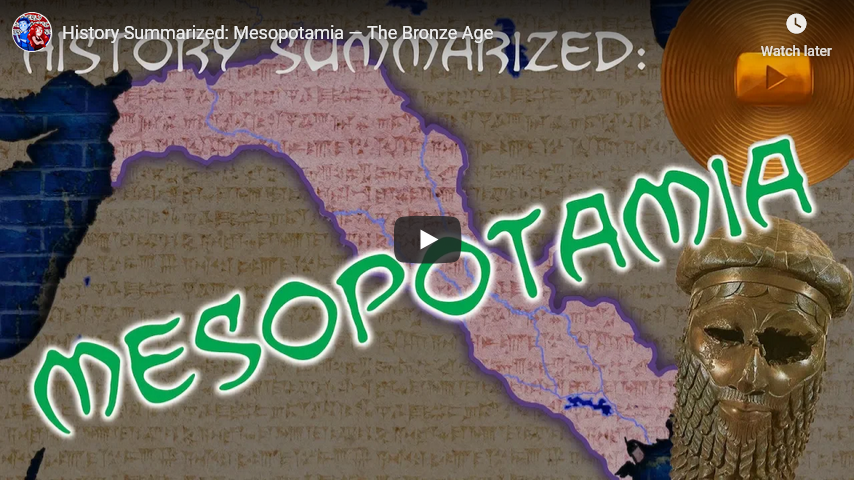
Bronze Age cultures differed in their development of the first writing. According to archaeological evidence, cultures in Mesopotamia (cuneiform script) and Egypt (hieroglyphs) developed the earliest viable writing systems
————————————————————
Hashtags: #history #TheBronzeAge #archeology #BronzeBonanza

August 24, 2020

MATERA – James Bond and the City of Beige

Filed under: Architecture, Books, Europe, History, Italy — Tags: , , , — Nicholas @ 04:00

Lindybeige
Published 23 Aug 2020

Get your first audiobook and a monthly selection of Audible Originals for free when you try Audible for 30 days visit https://www.audible.com/lindybeige or text lindybeige to 500 500.

Matera is an city in Italy which has suddenly become famous. It is rather special and here I describe why.

Support me on Patreon: https://www.patreon.com/Lindybeige

Buy the music – the music played at the end of my videos is now available here: https://lindybeige.bandcamp.com/track…

Buy tat (merch):
https://outloudmerch.com/collections/…

Lindybeige: a channel of archaeology, ancient and medieval warfare, rants, swing dance, travelogues, evolution, and whatever else occurs to me to make.

▼ Follow me…

Twitter: https://twitter.com/Lindybeige I may have some drivel to contribute to the Twittersphere, plus you get notice of uploads.

My website:
http://www.LloydianAspects.co.uk

August 11, 2020

David Warren offers an unusually contrarian view of the Bronze Age collapse

Filed under: History, Humour, Middle East, Science — Tags: , , , , , — Nicholas @ 05:00

Sea Peoples? Faugh, Mr. Warren isn’t buying any of that old rope. It wasn’t earthquakes, famine, plagues, or even multiple waves of heavily armed undocumented immigrants landing on the shores … it was mere “progress”:

Migrations, invasions and destructions during the end of the Bronze Age (c. 1200 BC), based on public domain information from DEMIS Mapserver.
Map by Alexikoua via Wikimedia Commons.

When did the Bronze Age end, and the Iron Age begin? The ages of plastic, silicon, and graphene may have succeeded even the latter, but I’m still not comfortable with iron. Neither were the Cypriots, nor the Egyptians, incidentally — some thirty-something centuries back. Before even that, iron was freely available in a globalized world. I once took a modified fishing boat from Cyprus to Mersin; I wouldn’t encourage swimming it. But the voyage is not far, and too quick with a motor. Even in a row boat, it would have been easy to smuggle ferrous materials, either way.

Yet for centuries, such “highly sophisticated” societies as those of Cyprus and Egypt, stuck with copper and bronze; with gold and silver adornments. The rest of the world might have been with the progressive agenda, but they were not. I speculate that they didn’t like the way iron rusts; there’s something cheap about it. But whatever the objection, they stood their ground. There are old iron objects to be found in both places, but few.

Much later, when the “lifestyle” advocates for the new fashionable metal had won out, and the tide of iron was flooding, it is interesting that the craftsmanship of objects is relaxed. Even ceramics become dull, boring, repetitious; skills are forgotten. We have craftsmen who obviously don’t give a damn any more, just like today. We have the encroaching realm of “productivity,” quantity. Soon these places are easy to knock over, by the conquering savages always lurking about.

We have conservative societies, overwhelmed by technology; and no longer trading on their own terms. In the larger Minoan sphere, we have barbarization. Dynastic Egypt will survive only in Coptic fragments. Greeks, Romans, and finally Arabs will be trashing the place. Ancient civilizations fall.

I regret “progress.” We should resist it heart and soul.

July 28, 2020

Roman kit: featuring armour, swords, spears, artillery, rations, deckchairs, and of course shoes

Lindybeige
Published 27 Jul 2020

Go to https://expressvpn.com/lindybeige and find out how you can get three months free.

A video of re-enactors and their Roman kit. Sorry about the wind noise.

Support me on Patreon: https://www.patreon.com/Lindybeige

Here’s a link to the Ermine Street Guard – Britain’s foremost imperial Roman re-enactment group: http://www.erminestreetguard.co.uk

Was your re-enactment group featured? Ask for a link here!

Buy the music – the music played at the end of my videos is now available here: https://lindybeige.bandcamp.com/track…

Buy tat (merch):
https://outloudmerch.com/collections/…

Lindybeige: a channel of archaeology, ancient and medieval warfare, rants, swing dance, travelogues, evolution, and whatever else occurs to me to make.

▼ Follow me…

Twitter: https://twitter.com/Lindybeige I may have some drivel to contribute to the Twittersphere, plus you get notice of uploads.

My website:
http://www.LloydianAspects.co.uk

July 27, 2020

The Bronze Age Collapse (approximately 1200 B.C.E.)

Historia Civilis
Published 25 Jul 2020

Just casually thinkin bout the end of the world. No, no reason, why?

Patreon | http://patreon.com/HistoriaCivilis
Donate | http://www.paypal.com/cgi-bin/webscr?…
Merch | teespring.com/stores/historiacivilis
Twitter | http://twitter.com/HistoriaCivilis
Website | http://historiacivilis.com

Sources:
The Medinet Habu Inscription | https://bit.ly/2Ba2Lvf
David O’Connor & Stephen Quirke, Mysterious Lands | https://amzn.to/3jdQOWu

Eric H. Cline, 1177 B.C.: The Year Civilization Collapsed | https://amzn.to/2ClWgpO
Robert Drews, The End of the Bronze Age: Changes in Warfare and the Catastrophe ca. 1200 B.C. | https://amzn.to/2CkJ7NC
Paul Kriwaczek, Babylon: Mesopotamia and the Birth of Civilization | https://amzn.to/2Wra8G4
Oliver Dickinson, The Aegean From Bronze Age to Iron Age: Continuity and Change Between the Twelfth and Eighth Centuries B.C. | https://amzn.to/3h8ar0r

Music:
“Mell’s Parade,” by Broke For Free
“Sad Cyclops,” by Podington Bear
“Infados,” by Kevin MacLeod
“Heliograph,” by Chris Zabriskie
“Deluge,” by Cellophane Sam

We are a participant in the Amazon Services LLC Associates Program, an affiliate advertising program designed to provide a means for us to earn fees by linking to Amazon.com and affiliated sites.

From the comments:

ka v
1 day ago
I got Sea People Return in the December slot of my 2020 Apocalypse bingo card.

June 30, 2020

The Mycenaeans – The Real Civilization who fought the Trojan War

Filed under: Europe, Greece, History, Middle East — Tags: , , , , , — Nicholas @ 06:00

Epimetheus
Published 2 Nov 2018

The true ancient civilization behind the Trojan war (The Iliad and Odyssey – the Greek and Trojan heroes Agamemnon, Hector, and Achilles), the Mycenaeans. The history of how they interacted with the Bronze Age world including the Egyptians and the Hittites. From the early days with the Minoans to the Trojan War and the Sea Peoples. Rediscover this lost civilization.

Help my 1 man team of me to make more videos like this, so I can have better equipment and software to make you better content. https://www.patreon.com/Epimetheus1776

I draw, write, edit, research and narrate I love it and hope to make many more videos in the future with your help. Thank you 🙂

June 22, 2020

Mycenaean Greece and the Bronze Age Collapse ~ Dr. Eric Cline (Archaeologist / Historian / 1177 BC)

Filed under: Europe, Greece, History, Science — Tags: , , , — Nicholas @ 04:00

The Study of Antiquity and the Middle Ages
Published 20 Jun 2020

In this video we briefly discuss the Bronze Age Collapse and none other than Mycenaean Greece and what contributed to the Greek Dark Ages. Did the Sea Peoples invade? Was there an internal rebellion like a peasant revolt? Drought, Earthquakes and Famine? We cover a variety of topics which also includes debunking the Dorian Invasion. We also take a look at migrations and depopulations of major centers as populations moved elsewhere during this calamity.

Support Dr. Eric Cline at the links below!

Personal web page: https://ehcline.com

GW pages:
https://cnelc.columbian.gwu.edu/eric-…
https://anthropology.columbian.gwu.ed…
https://gwu.academia.edu/EricCline

Archaeology and the Iliad: The Trojan War in Homer and History
https://www.amazon.com/dp/B001EI3IVU?…

The History of Ancient Israel: From the Patriarchs Through the Romans
https://www.amazon.com/dp/B001JHT8CY?…

Image credits: Manna Nader, Gabana Studios Cairo

Hittite 3D City and intro footage credits: 3D reconstruction of Imperial Hittite Karkemish by Giampaolo Luglio, Turco-Italian Archaeological Expedition to Karkemish directed by Nicolò Marchetti (University of Boologna)

KARKEMISH (Carchemish) 1300 BC (3D) -The Southern Capital of the Empire Hittite

https://youtu.be/RsTdoY__F4U

Music Attribution: Herknungr – Megaliths | Dark Neolithic Meditive Shamanic Ambient Music https://youtu.be/oc8FQwNjPu0

« Newer PostsOlder Posts »

Powered by WordPress