The English comedian, Harry Enfield, made a return to the BBC between 2007 and 2012. Compared to his more observation-based comedy in the early ’90s, there was clearly a more reactionary turn in his 2000s work. Targets included a multitude of establishment celebrities and pompous television presenters, Eastern European immigrants, the band U2, and, most brutally of all, upper-middle-class liberals.
Enfield was doing what all court jesters should do: delivering uncomfortable truths to those in power. The jester’s often painful or embarrassing jibes can be taken in good faith and acted upon, ignored, or worse. The idea is to convey what everyone outside the court is thinking and how the ordinary person perceives those with power and influence. While Enfield’s work of this era certainly merits a more focused analysis, here I’d like to zoom in on one sketch based on a favourite Enfield target, the show Dragons’ Den.
Enfield excoriates the ludicrously pompous panel of wealthy, high-status business owners and their seeming right to supreme arrogance justified simply by their wealth. In one skit, Enfield and Paul Whitehouse arrive to pitch an idea as bumbling English entrepreneurs trying to get the “Dragons” to invest in their concept called “I can’t believe it’s not custard”. The Dragons, also played by Enfield and Whitehouse, sneer and spit venom at the Englishmen and their stupid idea, swiftly sending them away with no investment whatsoever.
The two white men later return, adorned in black-face and Jamaican accents with a pitch called “Me kyan believe it nat custard” and the Dragons fall at their feet, showering them with money. They then begin to compete with each other in sycophantically grovelling, fearful that the least enthusiastic of them will be deemed racist.
The sketch hits like a thunderbolt because Enfield holds up a mirror to a particular class of people, saying, “This is what you are!” We, as the common folk, take great delight in this lampooning because we know it to be a painful, somewhat grotesque truth. In an ocean of noise, it is a clear, bright signal that something is not right.
It is both a commentary on multiculturalism and a critique of those with power and influence. Yet, for some reason, this sketch lands harder than, say, a Spitting Image sketch in the 1980s targeting Margaret Thatcher’s economic policies. There is a sense that an agreed-upon lie is being teased out into the glare of daylight and unceremoniously prodded and kicked about. The morality of the pretentious Dragons is a sham, and as such, their status is deflated before us.
Enfield revealed, in that single clip, the inherent fragility of the managerial classes dedicated to propagating via “virtue signalling” the values of the multicultural state. The millionaires of the Dragons’ Den panel adopt the attitudes and worldview of brutal free-market meritocrats, with the only subject of interest to them being whether or not a product or service is worthy of investment. Enfield implied that this worldview was a lie, a charade, and that they were no more outside of the central multicultural metanarrative than a Guardian journalist. The Dragons’ Den panel, and therefore neoliberalism, was not an alternative or competitor, but rather subordinate to the politically correct dogma of the age.
From the perspective of Britain’s liberal elite, Enfield committed a multitude of sins against them and their values, which probably explains why, after his show was shuffled off to BBC 2 to die, they never allowed themselves to be confronted with such lampooning ever again. The external frame from which people can gaze back into the general narrative would be kept permanently locked out.
Yet, this also marked a transition from a Blairite neoliberalism, in which the justification for mass immigration was to infuse British society with fresh energy and dynamism, into a more stagnant form wherein the upholding of the multicultural order became its own justification.
Morgoth, “How Multiculturalism Consumes Everything”, Morgoth’s Review, 2025-10-04.
January 12, 2026
QotD: The death of satire
January 11, 2026
“The Paradox of Indifference”
Kulak describes the experiences of crafting takes for the gaping maw of social media and getting … nothing. You might as well not have bothered — we all know how that works, don’t we? But sometimes you catch lightning in a bottle and your post goes viral and then you get the worst kind of feedback:
People don’t show up to comment “No one gets it”, “Another miss”, “You aren’t funny”, “You’re wasting your life on Twitter” [as they tweet at you], “No one loves you”, “You never get laid”, “you’re a whore”, “you know nothing about BDSM Romance in Desert Storm, nor how that relates to the Czech Surrealism”, “No one cares”
When you are actually wasting your time and getting no traction, Not a soul alive is going waste their own time EVEN MORE-SO to sit there and commentate your embarrassment and failure.
Think about it, No matter how much Jehovah’s Witnesses or street preachers are wasting their lives and no one is listening, you’d be wasting your life even more so to sit there trying to persuade them of that fact.
Indeed the ONLY times you’ll EVER get comments like these … Is when you ARE getting traction.
It’s really amazing! Countless times you’ll tweet or post something you thought was clever, insightful, drole, important, philosophically or spiritually relevant … And nothing.
Then one of them Moon-Shoots, takes off to 6, 8, 10 MILLION impressions, 10s of thousands of likes …, thousands of retweets … And suddenly THAT ONE you start getting “No one cares”.
I’ve seen THOUSANDS of comments, “No one cares” “you’re weird for caring” all on the same tweet, RETWEETS from accounts with a MILLION followers “Who cares what this person thinks!? No one’s listening to them” They tweet out to a million people.
YOU DO!
Otherwise you would have just kept scrolling.
Its actually really remarkable the amount of effort, collective work, and social organization that goes into this.
I’ve seen Tweets with THOUSANDS OF COMMENTS, getting hundreds of retweets and hundreds of comments that “No one cares” … Sometimes these retweets themselves get comments and conversations going in circles “These people really think we care what they think?”, “I know right? They’re obsessed with us, as if we care” and if you’re looking closely you can actually see various followers of the people who “don’t care”, Comment themselves that they “don’t care” beneath their favorite E-Celebrity “not caring” that they also “don’t care”, and then follow their way back to your original tweet to say “We don’t care”, before Retweeting you themselves to say “God, these people. They actually think we care!?”
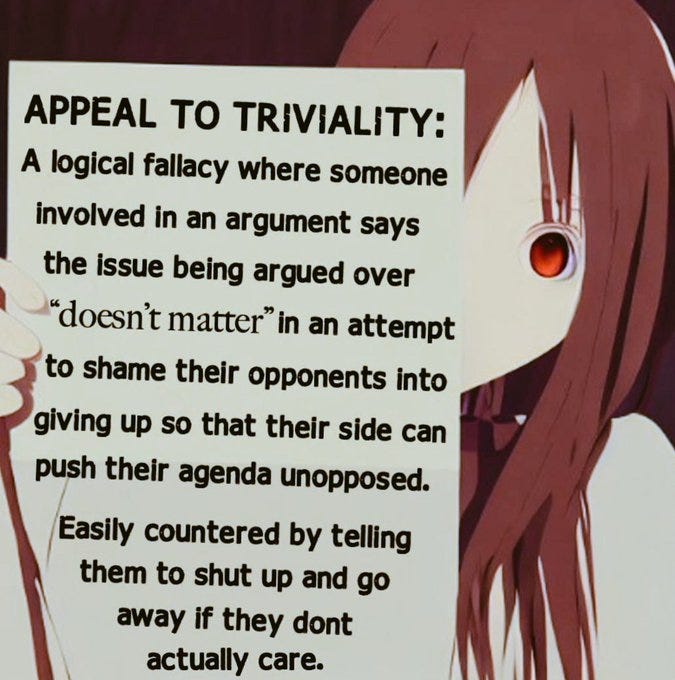
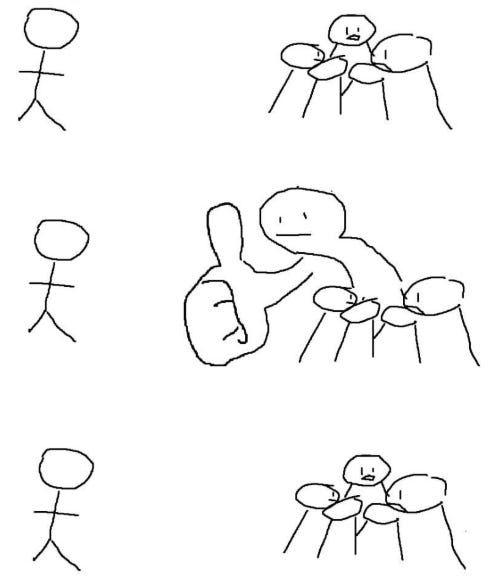
Indeed there’s an entire MEME FORMAT — the only meme as far as I can tell the left has ever successfully created for themselves — That exists solely to express that they “don’t care”
“Giant Thumb Guy”, Look at us Cool people in our group collective, and you outside it, and how we just barely acknowledge you then go back to ignoring you.
You see you can tell it’s a leftist meme format because they didn’t use any wojaks or existing memes … Also it’s poorly constructed and uses a redundant three panel format that has been on its way out in memes since 2015.
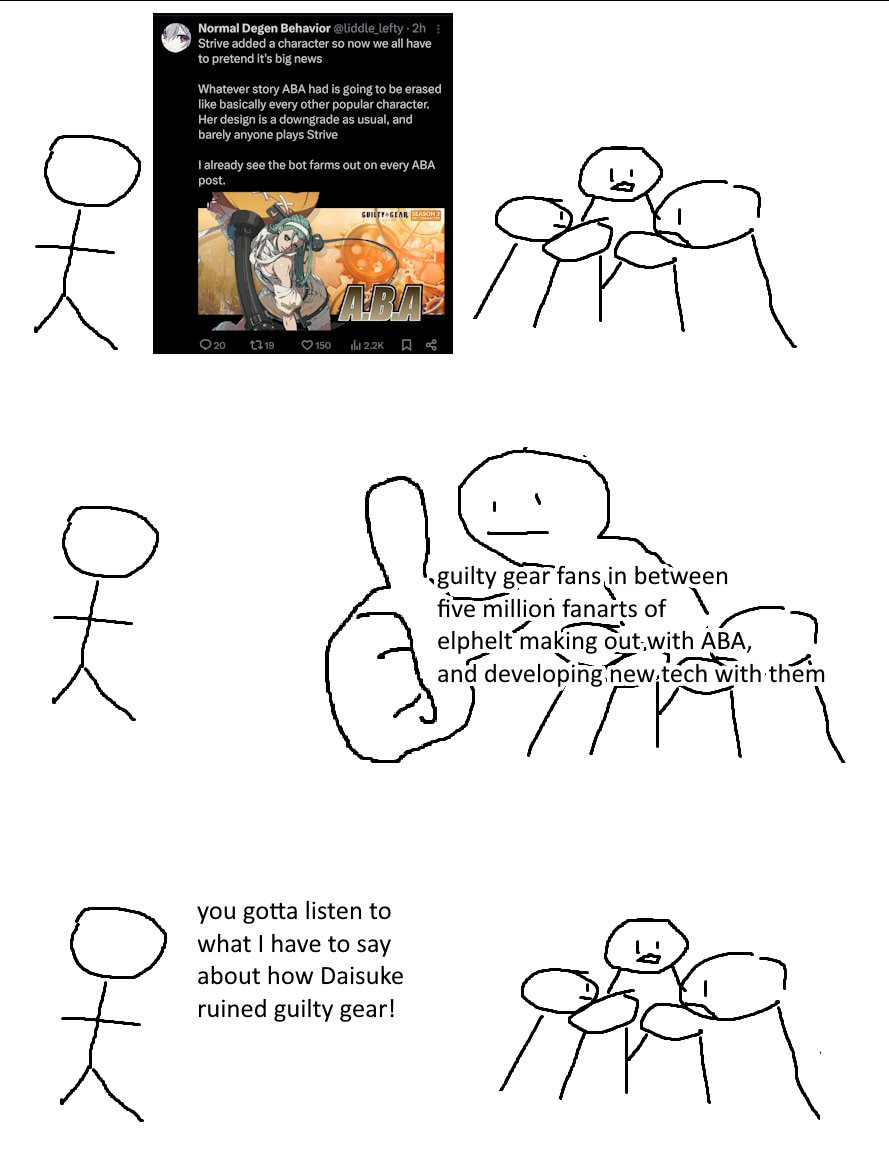
I’ve seen various leftists create elaborate Photoshops of this meme … Just to respond how little they care, because that’s what you do when don’t care.
Now admit it, Can you tell a redditor created this? Look at the alt-text that came embedded in the image. (No I don’t actually know what Guilty Gear is…but we’ll be charitable and assume its just a fun and well enough written game and not barely concealed porn)
And of course other times their innate violent impulses infect the meme:
Because escalating immediately from words to threats of violence shows how cool and unconcerned you are.
“But Kulak!?” I hear you say, in a bout of inner-Redditor cleverness, “You’re a hypocrite! You clearly care too! You’ve written this entire piece so far just going on about how you don’t care, about them not caring, about your thing that you did that they didn’t care about!!! Would you have done that if you don’t care?! A-Ha! We got you!”
Ugh … Of course I care. This is fascinating. My anthropological instincts are tickled to the core!
Simply fascinating.
My working hypothesis is that leftists, a wide cross-section of women, effeminate men, the SSRI’d, men who’ve suffered genital trauma, the unintelligent, the weak willed, and just generally those of poor inner conviction, reason, hormonal health, and disagreeable virtue (but then I’ve repeated myself many times now) … Interpret their emotions and ideas via a complex communicative social environment they maintain with each-other.
Their minds and reasoning depends on a group, or longhouse, or “Community”, or “friends” … whereas the superior Chad, Chadette, Chud, and Chudette western autists are able to forgo, for extended periods, any need for such a social mental framework or even forego such “friends” and “community” entirely.
Thus, like the apex predators they are, these noble solitary creatures are able to rely upon their own superior reason and judgement. Inside of you are two wolves … and one of them is fallacious and gay, and the superior rational man should ignore him.


It’s a long post and covers a lot of territory, so do read the whole thing.
Nazis Are the Big Losers – Rise of Hitler 26, October-December 1932
World War Two
Published Jan 10, 2026Adolf Hitler and the Nazi Party are forced to hit the campaign trail yet again for yet another round of elections. All this campaigning has seriously drained their finances, so they expect it to do some real good. Unfortunately for them, the November elections are very disappointing for the Nazi Party, and they lose a lot of seats in the Reichstag. Adolf Hitler is still demanding that President Hindenburg make him Chancellor, but the President still refuses time and again, although Hindenburg does have his hands full with two other Chancellors — Franz von Papen and Kurt von Schleicher, and their endless political intriguing.
(more…)
Iran in the news
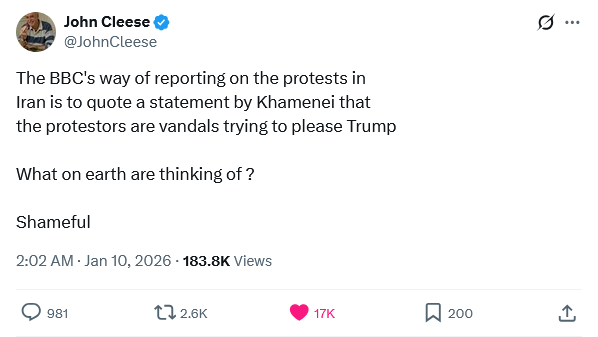
There’s a major upheaval going on in Iran, but the western media seem to be incapable of covering it with any depth — or in far too many cases, at all — even though it’s exactly the sort of thing they used to be very interested in. On the social media site formerly known as Twitter, Tahmineh Dehbozorgi provides useful context:
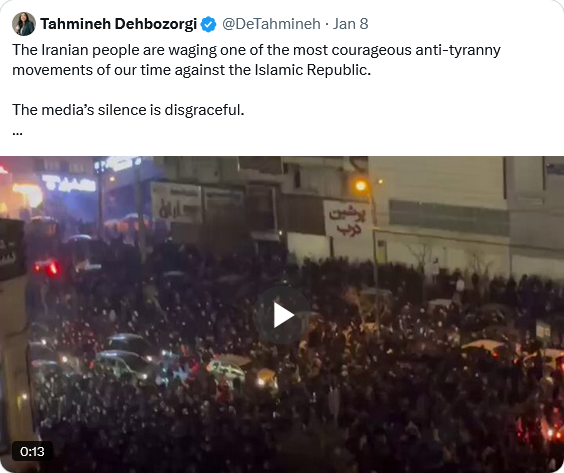
The Western liberal media is ignoring the Iranian uprising because explaining it would force an admission it is desperate to avoid: the Iranian people are rebelling against Islam itself, and that fact shatters the moral framework through which these institutions understand the world.
Ideally, to cover an uprising is not just to show crowds and slogans. It requires answering a basic question: why are people risking death? In Iran, the answer is simple and unavoidable. The people are rising up because the Islamic Republic of Iran has spent decades suffocating every aspect of life — speech, work, family, art, women, and economic survival — under a clerical system that treats liberty as a crime. There is no way to tell that story without confronting the nature of the regime.
Western media refuses to do so because it has fundamentally misunderstood Islam. Or worse, it has chosen not to understand it.
Islam, in Western progressive discourse, has been racialized. It is treated not as a belief system or a political ideology, but as a stand-in for race or ethnicity. Criticizing Islam is framed as an attack on “brown people”, Arabs, or “the Middle East”, as if Islam were a skin color rather than a doctrine.
This confusion is rooted in historical illiteracy. Western liberal media routinely collapses entire civilizations into a single stereotype: “all Middle Easterners are Arabs”, “all Arabs are Muslim”, and “all Muslims are a monolithic, oppressed identity group by white European colonizers”. Iranians disappear entirely in this framework. Their language, history, and culture — Persian, not Arab; ancient, not colonial; distinct, not interchangeable — are erased.
By treating Islam as a racial identity rather than an ideology, Western media strips millions of people of their ability to reject it. Iranian protesters become unintelligible. Their rebellion cannot be processed without breaking the rule that Islam must not be criticized. So instead of listening to Iranians, the media speaks over them — or ignores them entirely.
There is another reason the Iranian uprising is so threatening to Western media is economic issues.
As you know, Iran is not only a religious dictatorship. It is a centrally controlled, state-dominated economy where markets are strangled, private enterprise is criminalized or co-opted, and economic survival depends on proximity to political power. Decades of price controls, subsidies, nationalization, and bureaucratic micromanagement have obliterated the middle class and entrenched corruption as the only functional system. The result is not equality or justice. It is poverty, stagnation, and dependence on government’s dark void of empty promises.
Covering Iran honestly would require acknowledging that these policies are harmful. They have been tried. They have failed. Catastrophically.
This is deeply inconvenient for Western media institutions that routinely promote expansive state control, centralized economic planning, and technocratic governance as morally enlightened alternatives to liberal capitalism. Iran demonstrates where such systems lead when insulated from accountability and enforced by ideology. It shows that when the state controls livelihoods, non-conformity becomes existentially dangerous. That lesson cannot be acknowledged without undermining the moral authority of those who advocate similar ideas in softer language.
Western liberal media prefers not to hear this. Acknowledging it would require abandoning the lazy moral categories that dominate modern discourse: oppressor and oppressed, colonizer and colonized, white and non-white. Iranian protesters do not fit. They show that authoritarianism is not a Western invention imposed from outside, but something many societies are actively trying to escape.
That is what terrifies Western liberal media. And that is why the Iranian people are being ignored.
So the silence continues.
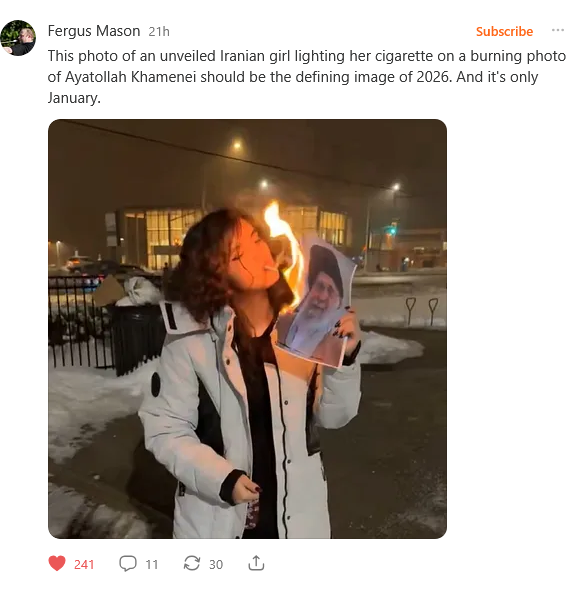
On Substack Notes, Fergus Mason shares what might be the most iconic photo of the young year:
Update, 12 January: Welcome, Instapundit readers! Have a look around at some of my other posts you may find of interest. I send out a daily summary of posts here through my Substack – https://substack.com/@nicholasrusson that you can subscribe to if you’d like to be informed of new posts in the future.
Paul Sellers’ Thickness Guide | Paul Sellers
Paul Sellers
Published 19 Sept 2025Often in our woodworking projects, we might need many repeat cuts that guide our planes to give stock of precise thicknesses, and I make guides just like this one to give me the precision I need.
They are quick and simple to make, and you can change the thickness of the strips to match the thicknesses you need.
To access the Thickness Guide drawing follow: https://paulsellers.com/thicknessing-guide-drawing-and-cutting-list/
——————–
(more…)
QotD: The limits of foreign policy realism
Instead realism is the view that international politics is fundamentally structured by the fact that states seek to maximize their power, act more or less rationally to do so, and are unrestrained by customs or international law. Thus the classic Thucydidean formulation in its most simple terms, “the strong do what they will, the weak suffer what they must”,1 with the additional proviso that, this being the case, all states seek to be as strong as possible.
If you accept those premises, you can chart a fairly consistent analytical vision of interstate activity basically from first principles, describing all sorts of behavior – balancing, coercion, hegemony and so on – that ought to occur in such systems and which does occur in the real world. Naturally, theory being what it is, neo-realist theory (which is what we call the modern post-1979 version of this thinking) is split into its own sub-schools based on exactly how they imagine this all works out, with defensive realism (“states aim to survive”) and offensive realism (“states aim to maximize power”), but we needn’t get into the details.
So when someone says they are a “foreign policy realist”, assuming they know what they’re talking about, they’re not saying they have a realistic vision of international politics, but that they instead believe that the actions of states are governed mostly by the pursuit of power and security, which they pursue mostly rationally, without moral, customary or legal constraint. This is, I must stress, not the only theory of the case (and we’ll get into some limits in a second).
The first problem with IR Realists is that they run into a contradiction between realism as an analytical tool and realism as a set of normative behaviors. Put another way, IR realism runs the risk of conflating “states generally act this way”, with “states should generally act this way”. You can see that specific contradiction manifested grotesquely in John Mearsheimer’s career as of late, where his principle argument is that because a realist perspective suggests that Russia would attack Ukraine that Russia was right to do so and therefore, somehow, the United States should not contest this (despite it being in the United States’ power-maximizing interest to do so). Note the jump from the analytical statement (“Russia was always likely to do this”) to the normative statement (“Russia carries no guilt, this is NATO’s fault, we should not stop this”). The former, of course, can always be true without the latter being necessary.
I should note, this sort of “normative smuggling” in realism is not remotely new: it is exactly how the very first instances of realist political thought are framed. The first expressions of IR realism are in Thucydides, where the Athenians – first at Corinth and then at Melos – make realist arguments expressly to get other states to do something, namely to acquiesce to Athenian Empire. The arguments in both cases are explicitly normative, that Athens did not act “contrary to the common practice of mankind” (expressed in realist dog-eat-dog terms) and so in the first case shouldn’t be punished with war by Sparta and in the latter case, that the Melians should submit to Athenian rule. In both cases, the Athenians are smuggling in a normative statement about what a state should do (in the former case, seemingly against interest!) into a description of what states supposedly always do.
I should note that one of my persistent complaints against international relations study in political science in general is that political scientists often read Thucydides very shallowly, dipping in for the theory and out for the rest. But Thucydides’ reader would not have missed that it is always the Athenians who make the realist arguments and they lost both the arguments [AND] the war. When Thucydides has the Melians caution that the Athenians’ “realist” ruthlessness would mean “your fall would be a signal for the heaviest vengeance and an example for the world to meditate upon”2 the ancient Greek reader knows they are right, in a way that it often seems to me political science students seem to miss.
And there’s a logical contradiction inherent in this sort of normative smuggling, which is that the smuggling is even necessary at all. After all, if states are mostly rational and largely pursue their own interests, loudly insisting that they should do so seems a bit pointless, doesn’t it? Using realism as a way to describe the world or to predict the actions of other states is consistent with the logical system, but using it to persuade other states – or your own state – seems to defeat the purpose. If you believe realism is true, your state and every other is going to act to maximize its power, regardless of what you do or say. If they can do otherwise than there must be some significant space for institutions, customs, morals, norms or simple mistakes and suddenly the air-tight logical framework of realism begins to break down.
That latter vision gives rise to constructivism (“international relations are shaped by ideology and culture”) and IR liberalism (“international relations are also shaped by institutions, which can bend the system away from the endless conflict realism anticipates”). The great irony of realism is that to think that having more realists in power would cause a country to behave in a more realist way is inconsistent with neo-Realism which would suggest countries ought to behave in realist ways even in the absence of realist theory or thinkers.
In practice – and this is the punchline – in my experience most “realists”, intentionally or not, use realism as a cover for strong ideological convictions, typically convictions which are uncomfortable to utter in the highly educated spaces that foreign policy chatter tends to happen. Sometimes those convictions are fairly benign – it is not an accident that there’s a vocal subset of IR-realists with ties to the CATO Institute, for instance. They’re libertarians who think the foreign policy adventures that often flew under the banner of constructivist or liberal internationalist label – that’s where you’d find “spreading democracy will make the world more peaceful” – were really expensive and they really dislike taxes. But “we should just spend a lot less on foreign policy” is a tough sell in the foreign policy space; realism can provide a more intellectually sophisticated gloss to the idea. Sometimes those convictions are less benign; one can’t help but notice the realist pretensions of some figures in the orbit of the current administration have a whiff of authoritarianism or ethnocentrism in them, since a realist framework can be used to drain imperial exploitation and butchery of its moral component, rendering it “just states maximizing their power – and better to be exploiter than exploited”.
One question I find useful to ask of any foreign policy framework, but especially of self-claimed realist frameworks is, “what compromise, what tradeoff does this demand of you?” Strategy, after all, is the art of priorities and that means accepting some things you want are lower priority; in the case of realism which holds that states seek to maximize power, it may mean assigning a high priority to things you do not want the state to do at all but which maximize its power. A realism deserving of the name, in applied practice would be endlessly caveated: “I hate, this but …” “I don’t like this, but …” “I would want to do this, but …” If a neo-realist analysis leads only to comfortable conclusions that someone and their priorities were right everywhere all along, it is simply ideology, wearing realism as a mask. And that is, to be frank, the most common form, as far as I can tell.
That isn’t to say there is nothing to neo-realism or foreign policy realists. I think as an analytical and predict tool, realism is quite valuable. States very often do behave in the way realist theory would suggest they ought, they just don’t always do so and it turns out norms and expectations matter a lot. Not the least of which because, as we’ve noted before, the economic model on which realist and neo-realist thinking was predicted basically no longer exists. To return to the current Ukraine War: is Putin really behaving rationally in a power-maximizing mode by putting his army to the torch capturing burned out Ukrainian farmland one centimeter at a time and no faster? It sure seems like Russian power has been reduced rather than enhanced by this move, even though realists will insist that Russia’s effort to dominate states near it is rational power-maximizing under offensive realism.
Bret Devereaux, “Fireside Friday, June 27, 2025 (On the Limits of Realism)”, A Collection of Unmitigated Pedantry, 2025-06-27.
- Thuc. 5.89.
- Thuc. 5.90.
January 10, 2026
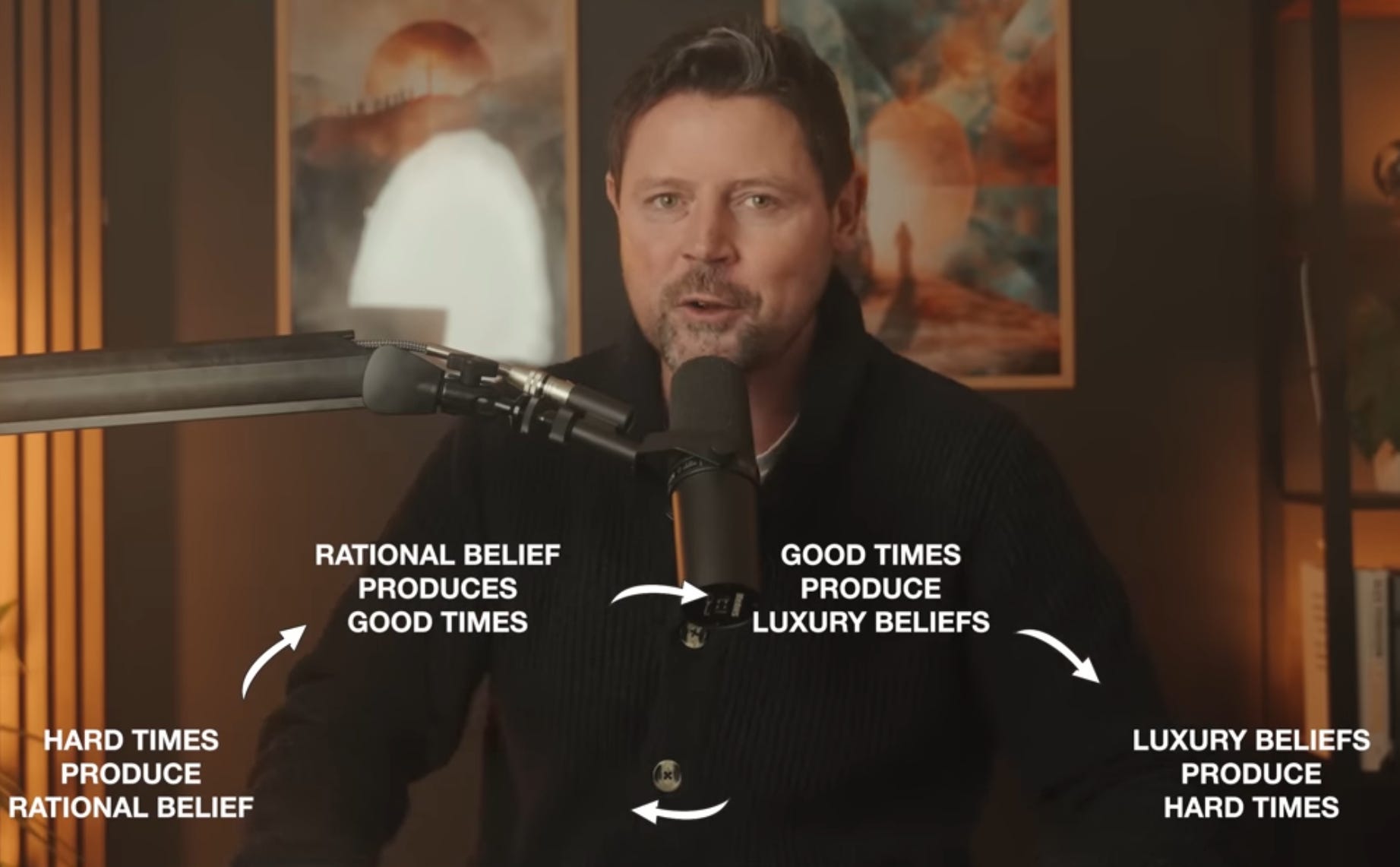
Luxury beliefs thrive when there is no personal cost for embracing them
Lorenzo Warby on the inevitable result of well-to-do people espousing luxury beliefs when there is no feedback mechanism to inform them of the negative impact of those beliefs:
Look at anyone making consequential decisions. Ask the question: what penalty do they suffer if they are wrong? That is, what are the consequences for them if they adopt a belief that is not true; if they make a decision hostile to human flourishing; if they retard the operation of the organisation or society around them.
For a horrifying number of people in our modern, highly bureaucratised, highly regulated, highly taxed, highly subsidised societies, the answer is: nothing. Nothing happens to them if they are wrong.
Note, this is different from the question of: did you follow the correct process? It is relatively easy for failure to follow the correct processes to have consequences. The what-if-you-are-wrong question also applies to: what if you follow the correct process and are wrong?
Source. A luxury belief is a belief insulated from reality-tests that there are social motives to adopt — e.g. as shared status play; as a resource or power grab — that imposes costs on others (typically, lower down the social scale).
The question of being wrong has lots of layers. Something can simply block good things from happening, but those good things’ lack of happening is typically invisible.
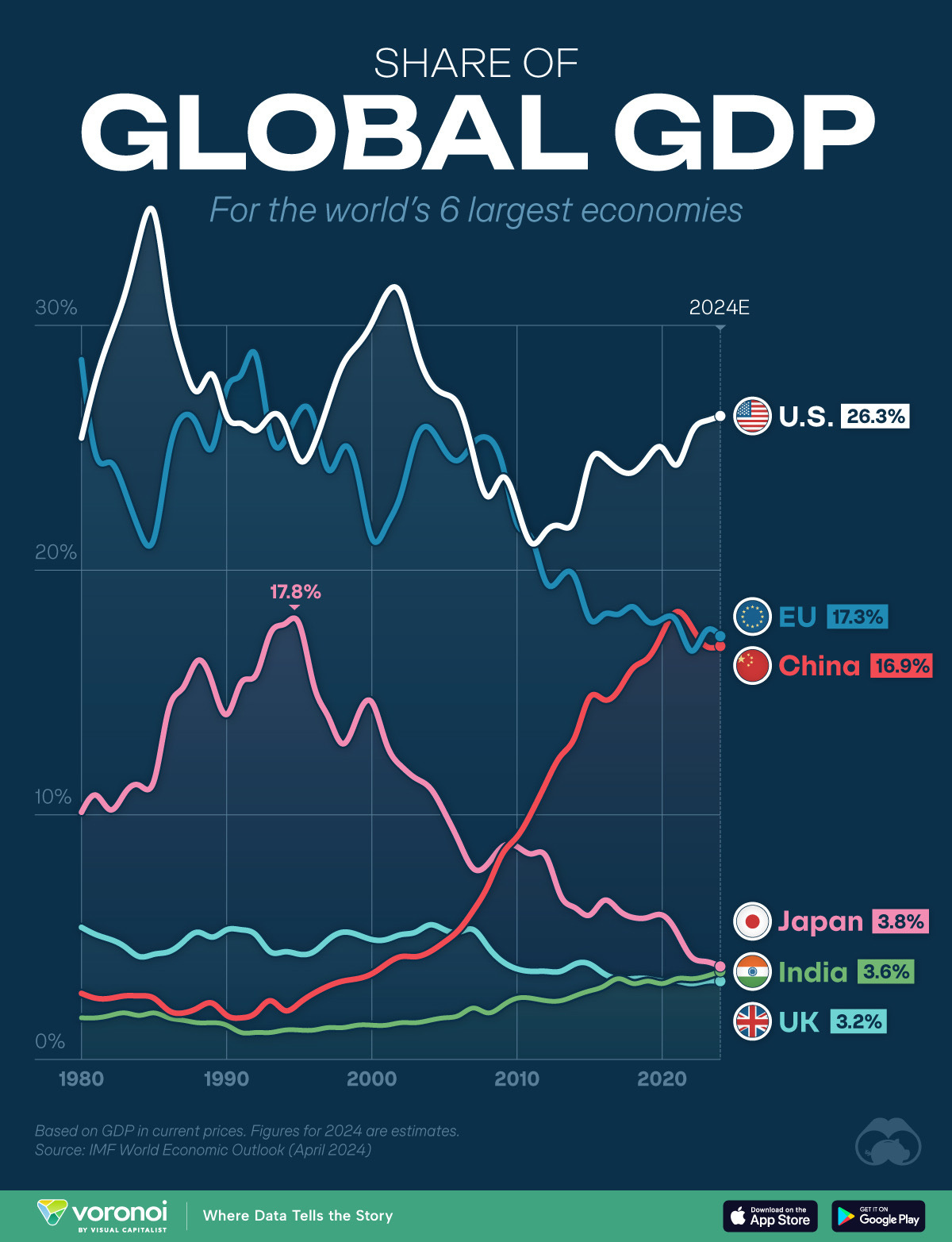
Economic stagnation is a normal condition of human societies, in large part because what is blocked from happening is invisible. Such has become more visible in the world since the 1820s, as mass prosperity has been demonstrated to be an achievable thing. Compare, for example, the post-2008 economic performance of the UK and much of the EU with, say, the US. But such is more visible only by comparison with other societies—we cannot directly observe good things that are blocked from happening.
Source. Japan shows the compounding effects of economic stagnation. Those of us who can remember the 1980s commentary on how the US needed to copy Japan can enjoy the irony and suggest caution about similar commentary re: China.
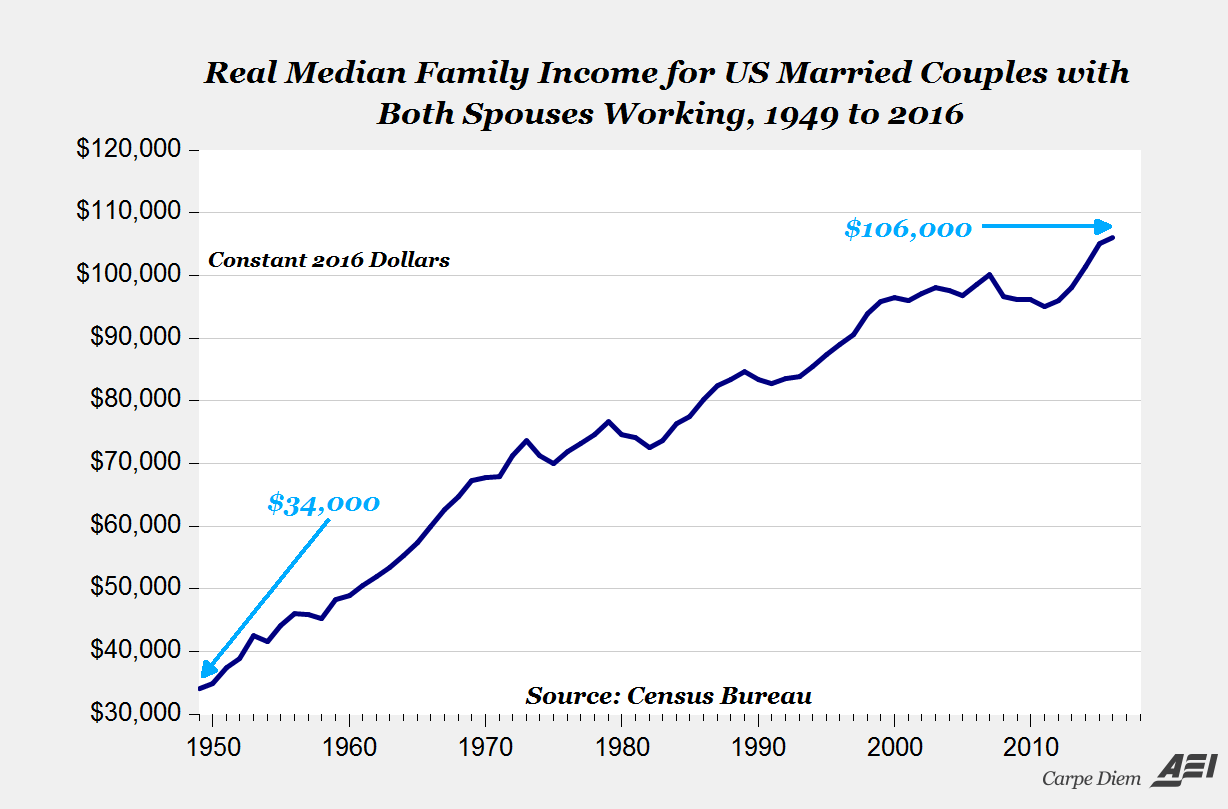
Even in the US, comparing the path of median incomes in different postwar periods shows that there has been a fair bit of blocking of good things from happening.
Moreover, comparison does not always resonate. People can not bother to compare or think that the comparisons do not apply. This time will be different has a great deal of wish-fulfilment appeal.
Across so much of modern societies, the what-are-the-consequences-of-being-wrong? question has the horrifying answer of no consequences to the person being wrong. (Real consequences, but very delayed, is not much better.)
I have already discussed this no consequences for being wrong with regard to the universities. But the same point applies across much of the non-profit world, the apparatus of the welfare state, etc. It applies intensely to UN bodies.
Why Greenland of all places?
President Trump’s renewed interest in Greenland seems inexplicable to most of us, unless it’s part of his notorious 51st state plan to further encircle Canada (forget I said that, the Liberals might use it to scare the boomers again…). A few days back, CDR Salamander discussed the “unfortunate Greenland kerfuffle” on his Substack:
It would be an understatement to say that I am not all that pleased with where we are in January 2026 with the Greenland question. This would not have been the productive path I would have recommended because, in the end, this is a very serious issue.
Sure, in the first few months of 2025, the meme-ish nature of it all was fun and funny … but only to a point.
In 2026, Denmark is not going to sell or otherwise transfer Greenland to the USA like they did with the now-U.S. Virgin Islands a bit more than a century ago.
However, before we go further, if you have a knee-jerk reaction to support or oppose anything or any topic because DJT is involved, please repress that feeling until at least the end of the post. It isn’t productive, enlightening, or good for your health — so give it a rest for a bit until we are done, then you can carry on as before.
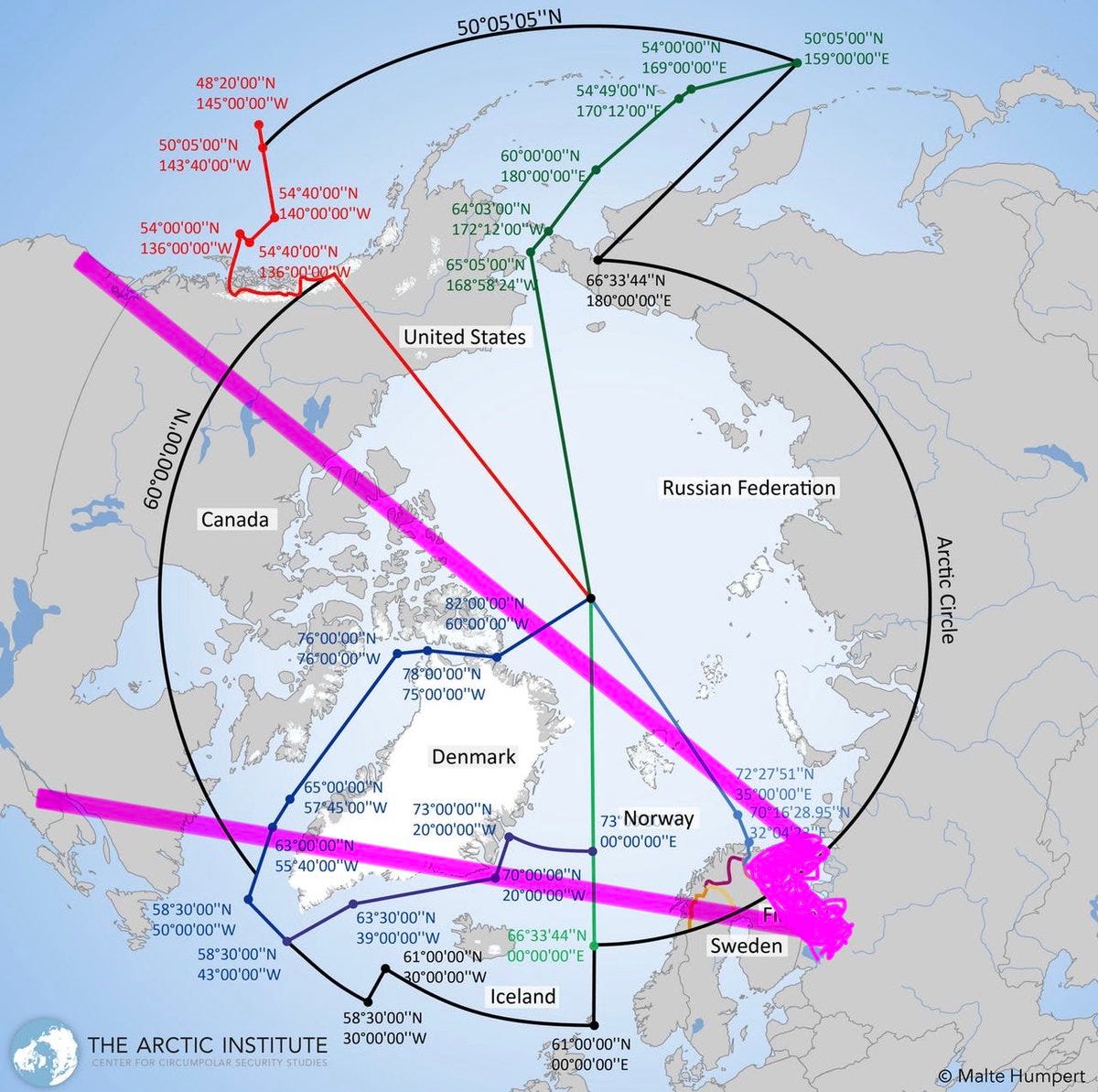
Next, let’s do as we should in most things: let’s go to the chartroom.
Object Zero’s crayon work on the Arctic Institute’s map is superb to illustrate that point.
The Europeans have whipped themselves into an almost comical lather over it all. Having lived with their NATSEC nomenklatura for years, I’m not shocked. They tend to be very narrowly read, get their ideas about the USA from NYT, WaPo, the usual suspects in East Coast Universitlandia, and their nomenklatura is worm-ridden with the same people who opposed Cold War NATO efforts to counter the Soviet Union’s militarism and supported every anti-USA trend of the fiscal quarter, etc. It is always 1968 or 1983 with these people.
Unhelpful to trans-Atlantic cooperation has been an almost gleeful approach to triggering these people who never thought DJT would come back to power, and from 2020-24 acted like it. The vengeful and bitter are fighting with the frag-pattern hitting everyone else.
Behind that triggering and, at least from this side of the pond, trolling, is a very serious security concern in the high north that Greenland is, literally, right in the middle of.
At The Conservative Woman, Jonathon Riley wonders if Greenland is worth more than the NATO alliance:

Satellite view of Greenland, Iceland, and parts of Northern Canada.
NASA/Ames Research Center, 17 May, 2005.
Greenland is the world’s largest island, (just) contiguous with Canada, and geographically part of North America. It was colonised by Denmark in the tenth century but the Norse settlements, which farmed sheep and cattle, died out during the mini-ice age of the medieval period, not long before the rediscovery of America by Columbus.
The majority of the population is now Inuit with only about 10 per cent being Nordic. Following a 1979 referendum, Denmark granted Greenland home rule and in 2008, self-government increased further. Denmark retains control of citizenship, security, finance and foreign affairs. Greenland joined the EU with Denmark but has since left. As a self-governing part of Denmark, it remains a member of Nato.
Greenland sits astride an area of great strategic importance. First, the Arctic ice is retreating as the result of an entirely natural process of cyclical warming – nothing to do with so-called man-made “climate change”. This will end when the world enters the next ice age, which is long overdue.
As the Arctic ice retreats, ships can sail through the north-east and north-west passages, sought for so long by explorers. This means not only that transit times can be reduced but also that the Russian “shadow fleet” of unregistered oil tankers engaged in moving sanctioned oil can more easily dodge interception, as is happening to Venezuelan oil tankers.
Second, Greenland probably has reserves of oil, coal and gas concealed beneath the ice cap, but exploration has been slow and difficult, for obvious reasons. Estimates put Greenland fourth in terms of likely reserves in the Arctic region.
Third, in Greenland’s territorial waters in the Arctic Ocean there are huge reserves of fish, shrimp, whales and seals – valuable food resources especially for China and Japan.
Finally, there is the matter of fresh water, an increasingly scarce commodity in many parts of the world. The Greenland ice sheet holds about 10 per cent of the world’s fresh water.
It is therefore easy to see why both the Russians and the Americans see Greenland as a valuable asset. Donald Trump made aggressive noises about “acquiring” Greenland during his first presidential term and has now made further remarks, perhaps emboldened by his successes in Iran and Venezuela.
Special envoy Jeff Landry has been appointed to examine how the US could acquire Greenland. The means so far mentioned have included diplomacy, a territorial purchase – the US has done this before in its history, for example Louisiana and Alaska – or a lease agreement.
The problem here is that the Greenlanders and the Danes are having none of it. Danish Prime Minister Lars Lokke Rasmussen told the BBC: “As long as we have a kingdom consisting of Denmark, the Faroe Islands and Greenland, we cannot accept actions that undermine our territorial integrity”. Rasmussen is on solid legal ground, as the UN Charter specifically states that frontiers must not be changed by force.
In his weekly post, Andrew Sullivan says that Trump is conducting a “Viking foreign policy” (trigger warning: contains Andrew Sullivan):
A Short Tour of Roman London
Scenic Routes to the Past
Published 19 Sept 2025The ruins of Londinium – London’s Roman predecessor – are not spectacular. But they are extremely interesting …
0:00 Introduction
0:40 City walls
1:47 St. Magnus the Martyr
2:26 Monument to the Great Fire
3:12 Leadenhall Market
4:10 London Mithraeum
6:19 Bank of England
7:08 Guildhall Amphitheater
8:14 The Gherkin
QotD: The United Nations
David Warren, “The nuts, & Bolton”, Ottawa Citizen, 2005-09-17.
January 9, 2026
Instead of “regime change” … “regime decapitation”
At Postcards from Barsoom, John Carter considers the startling return of military competence and the ongoing echoes of the decapitating attack on Venezuela:
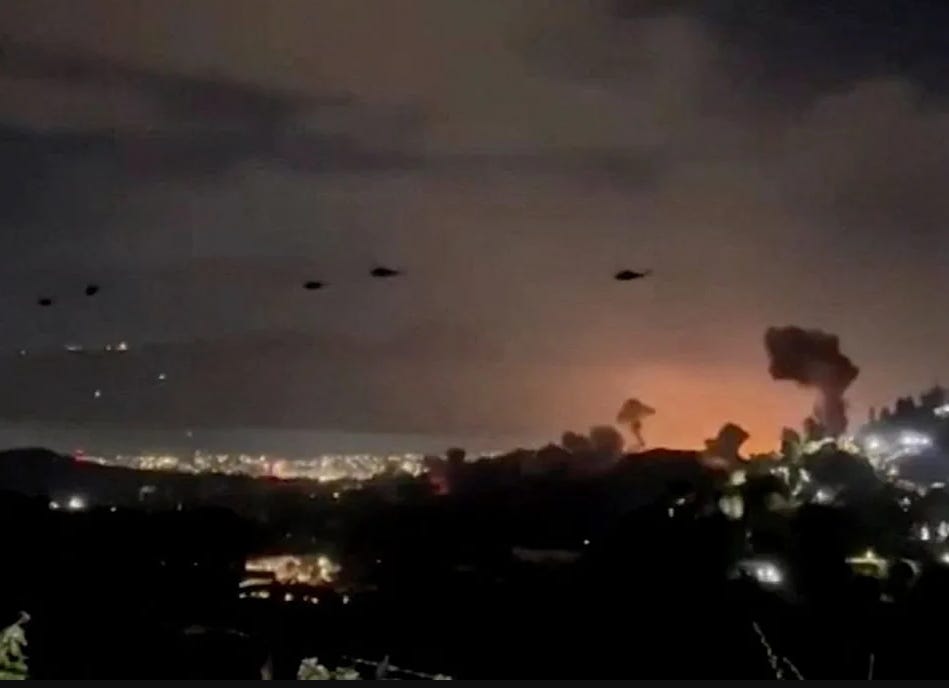
Photo from Postcards from Barsoom
In the age of simulations and simulacra, every action is also a symbol. Within the hyperreality of discourse the semiotic content of a public event is primary to its physical, political, or economic import. This is true of war as much as anything else; war in this age takes place first and foremost in the psychic realm, at the level of meaning, of hermeneusis. Warfare is psychological, not only in the sense of bolstering morale or breaking the will of the enemy to fight, but in the more fundamental sense of affecting the minds of those caught up in its spectacle by inserting new ideas that change the way that they think. This is most effective, as any magician or hypnotist or marketing executive will tell you, when those effects are left implicit, that they might operate directly upon the collective subconscious, in the shadow realm of instinct and intuition from which all political impulse springs.
With that in mind we might ask, in the spirit of an augur inquiring after the flight of a dove at daybreak, a circling hawk at high noon, or the cold gaze of a crow in the gloaming, what is the meaning of the Caracas raid? We do not need to assume that the meaning we look for in this action is intentional, though we should not rule this out, either; what matters is how the act will manifest symbolically, how it will be interpreted in the minds of onlookers, which it will do regardless of intention.
The superficial import of the action is clear enough. America has seized control of Venezuela’s vast oil reserves, the largest in the world, and at a stroke applies crippling pressure to the economies of China, Iran, and Cuba (who were Venezuela’s best grey-market customers), as well as to the economies of its adversary Russia and its wayward sibling Canada (both of which depend for their prosperity upon high oil prices). Both China and Russia have been deprived of a key New World ally, and thus the Monroe Doctrine is reasserted, and foreign powers pushed out of Washington’s sphere of influence. A hostile communist government has been decapitated, opening the way for the millions of Venezuelans displaced by Bolivarian tyranny, refugees whose presence has destabilized Venezuela’s neighbours for many years now, to return home.
To be sure, there is still great uncertainty. Hugo Chavez’ tomb may have been destroyed, but his Bolivarian regime is still largely intact, his apparatchicks remain in control of Venezuela’s state apparatus and military, and his terrorist colectivos still control the streets of Caracas.
Trump’s declaration that America now owns Venezuela’s oil feels a bit premature. Can one really claim control, without boots on the ground? I confess that it is not at all clear to me exactly how this is all supposed to work. Perhaps it is meant to function through pure intimidation: whoever ends up assuming power in Venezuela, they will know that if they don’t do as they’re told, they might be next, and perhaps will not be given the grace of an arrest and a show trial but simply executed without warning by drone; meanwhile, America offers itself as the sole legitimate customer for Venezuela’s sole marketable product, while providing its oil industry engineers to rebuild (and assume control of) infrastructure fallen into disrepair following Chavez’ nationalization and subsequent decades of neglect and mismanagement. Trump holds out one hand in an offer of assistance and mutual benefit, while holding back his other curled in a mailed fist, a threat made plausible by the fact that he just punched them hard in the mouth.
Still, all of this is nothing more than realpolitik, the hard edges of power in the material world.
The real meaning, the symbolic importance, lies deeper. It is not measured in dollars or barrels of oil. It is a message.
So what is that message?
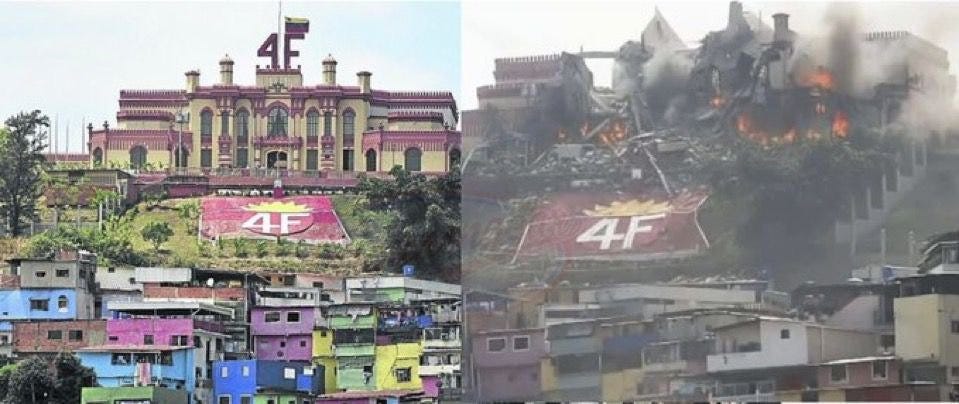
And some of the recipients of that message should be paying especially close attention:
Mass third world invasion is a choice. Economic sabotage in the name of preventing the weather from changing is a choice. Ruining the lives of young men with DEI is a choice. Blackwashing our history and mythology is a choice. Predatory taxation is a choice. Overregulation is a choice. Brainwashing the young to hate themselves is a choice. Yasslighting the young women into choosing girlbossery over family is a choice. Sacrificing the lives of the young to the fears of the old during the COVID lockdowns was a choice.
Allowing the incompetent to run things in the name of ‘social justice’ is a choice, and the contrast between the litany of inept fumbles that has resulted in and the smooth professionalism on display in the Caracasian raid has thrown the consequences of that choice – and the consequences of its alternative – into sharp relief.
And all we have to do to reverse the decline is decapitate the beast, put the right men in charge, and everything will follow naturally from there. Nature will begin to heal, as surely as Yellowstone’s ecology repaired itself once wolves were returned to their rightful place at the predatory apex.
That is why leaders across the Western world are squealing so loudly.
Canadian liberals, for example, are not actually worried that a Delta Force team will rappel down from an MH-47G Chinook Special Operations Helicopter to blackbag Prime Minister Mark Carney from 24 Sussex Drive, Ottawa, Ontario, K1M 1M4, and not only because the inadequate security of the traditional prime minister’s domicile has motivated Carney to instead take up residence at Rideau Cottage, 1 Sussex Drive, where he is usually home by 9 pm with his wife Diana. The concern is much more general: that the beleaguered Canadian people, along with those of the rest of the rotting West, will look at the remarkable results obtained by regime decapitation in the United States, and start getting ideas.
Want to fix the United Kingdom, and make Great Britain again? Sweep the traitors of the Labour Party out of Parliament, remove that pusillanimous android Two-Tier Queer from power, put Nigel Farage and 300 Reform MPs in their place, and watch as they invoke the doctrine of parliamentary supremacy to cast off three decades of Blairite Fabianism in a Great Repeal Act that frees the British state to remigrate the foreign invaders, rebuild the country’s industry, and revive the British military.
Want to fix Europe? Cast down the old women in Brussels – they have no popular legitimacy in any case – and remove their creatures, like Macron or Merz, who keep their peoples yoked to the suicidal EUrocracy. Raise up nationalists in their place – Le Pen, the AfD – and watch as Europe’s natural creative genius and martial spirit reasserts itself. No more Net Zero incapacitating industry, no more European Court of Human Rights preventing invaders from being remigrated, no more Digital Services Act censoring the Internet, no more micromanagerial bureaucratic overregulation strangling the economy.
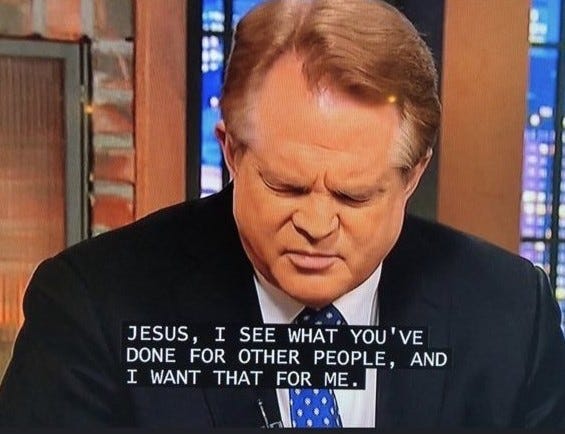
Mark Carney’s play-acting on the international stage
There is no way that Canada can make itself economically independent of the United States, no matter how much wishcasting power is exerted to persuade anti-American boomers who habitually vote Liberal. Our entire economy is oriented to serve the vast market to our south, and we’ve been freeloading on our own military because the Americans have been willing to take up the slack and — until recently — not castigate our leaders for their fecklessness. It was bad under Justin Trudeau, but it’s actually gotten worse under Mark Carney’s leadership. Trudeau was performative and loved to play to the world media, but Carney seems to actually believe that he can reverse the entire direction of the Canadian economy by jetting around the world and bad-talking Donald Trump. The Canadian economy has been stalled for ten years now, and if Trump finally loses patience with our idiotic elites, it’ll go into free-fall.
On the social media site formerly known as Twitter, James E. Thorne points out just how few cards Carney actually has in his hand:
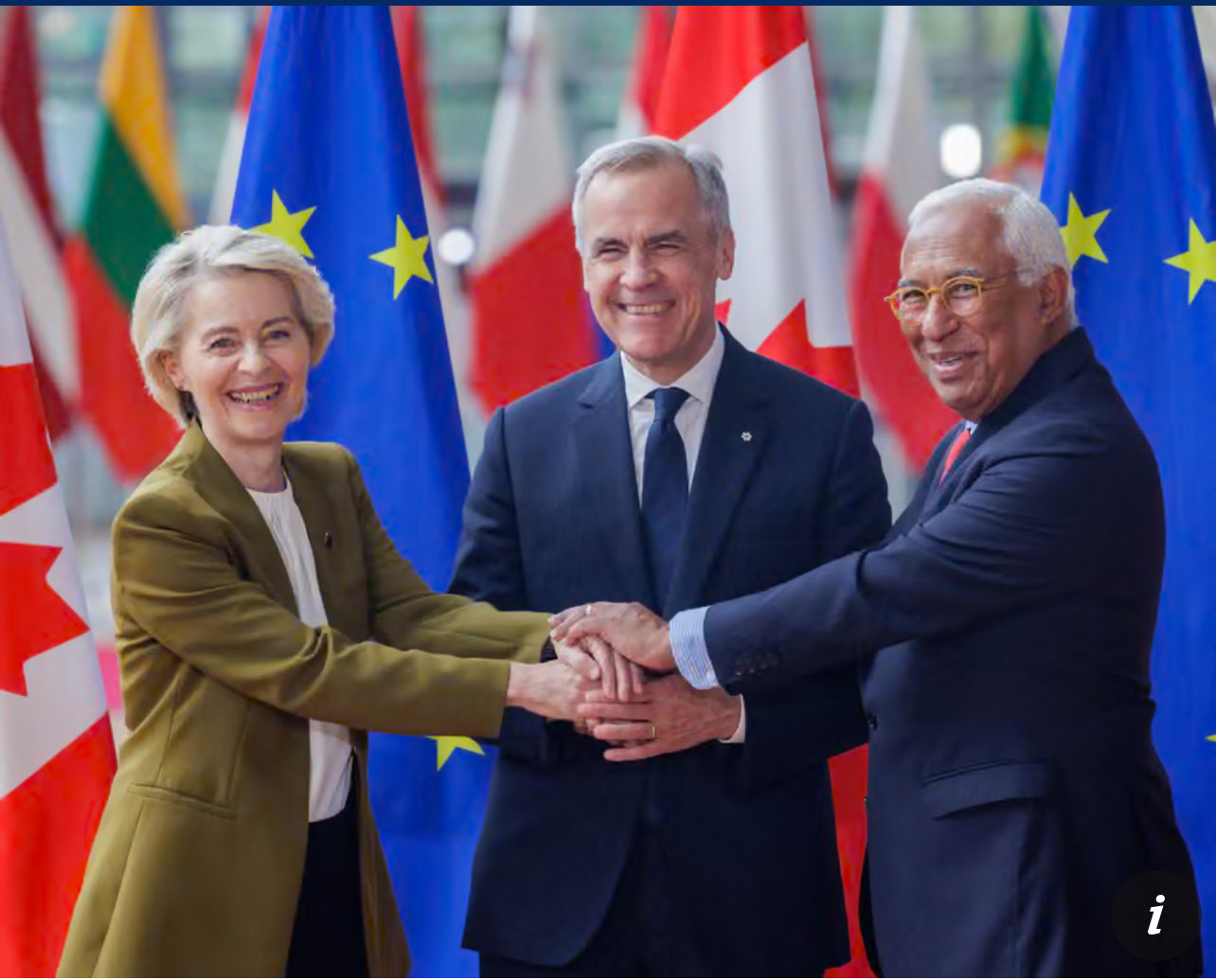
Mark Carney’s and Canada’s Dangerous Refusal to Face Reality.
Mark Carney and most Canadians are behaving as if Canada is an independent pole in a multipolar order, when the world he actually inhabits is a hierarchy being brutally clarified by Washington. Trump’s revamped National Security Strategy and the “Trump Corollary” — asserted through the seizure of Nicolás Maduro and open threats toward Cuba and Colombia, make plain that the United States now treats the Western Hemisphere as an American security estate, not a debating society among equals.
In that framework, Canada is not a co-author of the rules. It is a dependency inside the U.S. sphere, structurally lashed to American markets, finance and supply chains. AND after decades without a serious sovereign industrial or energy strategy, Canada is at best a weak Middle Power, that has for decades squandered its competitive advantage through proformative politics and virtue signalling.
In this era, the Western Hemisphere is now a “secure production platform” for American industry and technology, defined not by territorial control but by ownership, access and compliance. The Trump doctrine logic is clear and blunt yet internally coherent: if the Western Hemispheres natural resources and supply chains are secured, the economic and geopolitical dividends will follow.
Carney’s answer to the Trump Doctrine, however, remains the same “City-of-London” orthodoxy that produced him: more proformative political grandstanding, more process, more declarations, more meetings, and more boondoggles.
The Greenland consulate, rhetorical red lines over annexation, the flying around the world, and ritual protests against U.S. action in Venezuela all presume that we still live in the post WWII rules based order. We do not! Will live in the era of the Trump Doctrine, and no we can’t wait it out. And in this era, Greenland will not be allowed to be under the influence of Russia or China.
Thucydides warned that “the strong do what they can and the weak suffer what they must”. Carney’s tragedy is that he quotes the rules-based order while presiding over a country whose economic structure is colonial and whose security ultimately depends on the very power he is theatrically chastising. Posturing without power is not prudence. It is provocation without a plan. And yes it’s dangerous.
The irony is that Carney understands all of this perfectly well, which only sharpens the question: what, exactly, is he doing by posturing as a rules-based equal in a hierarchy where he knows Canada lacks the hard power to back his stance?
The Official American Boy Scout Rifle: Remington 4-S
Forgotten Weapons
Published 15 Aug 2025The scouting concept exploded into the American culture after 1907, with a multitude of local, regional, and national organizations setting up in the years before World War One. Among these was the American Boy Scouts, founded by William Randolph Hearst. In 1913 they adopted the Remington 4-S as their official rifle, a .22 Short caliber rolling block. It was initially sold directly and exclusively to Scouts for $5, although it was quickly added to the general Remington catalog.
This rifle was intended to be used for both target shooting and also military style drill. To that end, it had military-style furniture, a stacking swivel, and a bayonet lug with miniature bayonet. About 1500 of these were made in 1913, which was the only year of production. In 1914, probably having failed to make the hoped-for sales numbers, Remington renamed the gun the “Military Model” to expand its sale beyond just the American Boy Scouts.
Oh, and note that this was not the Boy Scouts of America! The ABS would have a series of legal fights with the BSA over naming rights, which the BSA finally won in the early 1920s. The ABS was never a very large organization, and it faded away entirely in the 1920s. The BSA opted not to have an official rifle, as it was shying away from firearms at the time after a couple well-publicized shooting accidents.
(more…)
QotD: “My goal is to get paid for having fun”
True multi genre authors are rare. I’ve done really well in a bunch of different genres because I’m good at recognizing what people enjoy about those, and then giving them what they want, with my own spin on it. I can tweak it, but I shouldn’t break it.
“What if your childhood heroes are really losers and here’s a new girl boss? OOOOH SO EDGY.” That kind of shit bores me.
Far too many authors are pretentious shit heads who climb up their own ass thinking they need to “subvert” expectations, but they’re really not brilliant enough to pull that off. They’re just crapping on the stuff that made people like those genres to begin with. They’re not nearly as clever as they think they are.
Me? I’m happy to be a pulp hack. If I’m writing epic fantasy, I’m going to do the big, deep, thematic, emotional, stuff (and Saga of the Forgotten Warrior rocks) and if I’m doing progression fantasy then it’s going to be fun and adventure and scrappy nobodies trying to make it in the world and becoming heroes along the way. American Paladin is a dark and gritty vigilante story (with monsters in it). And Monster Hunter is urban fantasy soaked in testosterone and gun oil (that’s next for 2026). I’ve done sci-fi. I’ve done horror. I’ve done comedy. I’ve done thrillers. Hell, I’ve done stuff like Hard Magic where good luck pinning down what the hell genre that is … alternate history, hard boiled, pulp noir, super heroes? Hell if I know.
My goal is to get paid for having fun. 😀
Larry Correia, The social media site formerly known as Twitter, 2025-10-08.
January 8, 2026
Minnesota in the news
Like most people, I don’t normally pay much attention to news from Minnesota unless it involves my favourite NFL team. Thus far, thank goodness, the Vikings seem to have avoided being entangled in the latest scandals, starting with YouTuber Nick Shirley’s exposé of blatant fraud in daycare centres in and around Minneapolis that triggered Governor Tim Walz to end his re-election campaign. On the social media site formerly known as Twitter, Andrew Neil summarizes the situation so far:
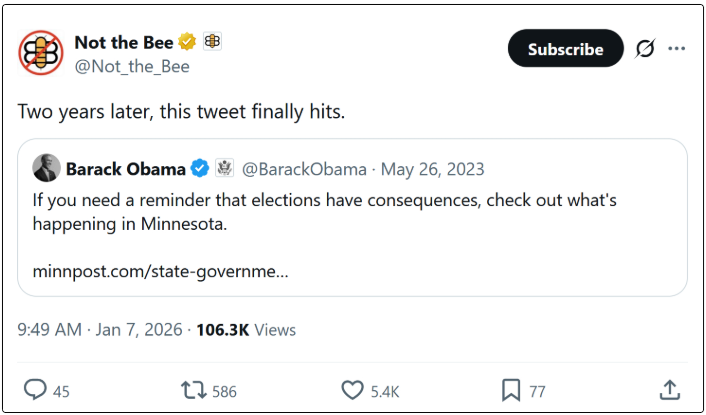
The usual suspects have been claiming on X that the Minnesota fraud scandal is no big deal and that it was racist to place Somalis at the centre of it. They lie. Some facts:
The fraud scandals in Minnesota are a very big deal, involving (so far) the theft of over $1 billion in taxpayer funds across multiple schemes, primarily from federal and state programmes meant for child nutrition, autism services and daycares during and after the COVID-19 pandemic.
Federal prosecutors have already charged almost 100 people. Dozens convicted or pleading guilty. Investigators suggest the total could exceed $9 billion in fraudulent claims.
It is already the largest pandemic-related fraud case in US history, with money siphoned off for personal luxuries like expensive cars and real estate, rather than the intended recipients — like low-income children.
The majority of those charged (around 85 out of 98 defendants in the core cases) are Somali-American. Why? Because the fraud often involved networks of Somali-owned “nonprofits” and businesses inflating claims or billing for nonexistent services.
Governor Tim Walz labeled the scandal being inflamed by “white supremacy” In fact, systemic fraud was enabled by his state’s lax controls. Walz now so discredited he won’t run for Governor again. His political career is over. How this bozo ever passed Kamala Harris’ vetting procedures to be her running mate is a mystery.
At PJ Media, Matt Margolis discusses the latest Nick Shirley video release:
Shirley’s new video dials things up to 11.
David Hoch, co-founder of Minnesotans for Responsible Government, joined him on the ground in Minneapolis, revealing an insane truth: this fraud hits hundreds of billions nationwide. Minnesota’s slice? At least $80 billion. Layers of shell companies obscure the cash trail, including 1,200 medical transport outfits in the area that do nothing while collecting taxpayer dollars.
Hoch swears by his evidence. “I have been to many of these transportation companies, and I’ve been time-stamping my photographs for a whole year at one facility in Minneapolis, and those vans in that parking lot had not moved one inch in an entire year. They’re all still sitting there.”
Hoch also revealed a widespread ballot-harvesting operation tied to Somali communities in Minnesota, claiming the scale of the activity is “way beyond anybody’s imagination,” adding that “the state doesn’t even know” and “the feds don’t even know”.
Shirley asked Hoch why a judge would allegedly defer to what he described as the “head of the Somali mafia”. Hoch responded that the influence stems from raw political power. He described the Somali community as a unified voting bloc that has effectively held Minnesota Democrats hostage. “What they say is if you do something to go against our community, we’re gonna vote for, and they all vote together, and there’s ballot harvesting, I’ve seen them do it, that, ‘We’re gonna vote for your opponent, unless you do what we tell you to do’.”
“And so it’s all purely for votes?” Shirley asked.
“Yes,” Hoch replied.
The conversation then turned to Cedar Riverside, a massive apartment complex in Minneapolis. Hoch said it was just one of many similar developments. “You’ve got 20 more just like this around the Twin Cities, and they’re all Somali,” he said. Hoch estimated “probably 100,000 or more people,” claiming they live rent-free and receive taxpayer-funded benefits. “They’re driving a vehicle that you paid for. They’re eating food that you paid for. Everything they do is, is something that you paid for,” he said.
Hoch also described how he claims the voting process works within the bloc. He alleged that a single individual collects ballots for large numbers of residents, with little oversight. “They’ll have one person go there and collect all the ballots and nobody tracks,” Hoch said. He added that apartments can claim inflated numbers of residents: “They could say they have nine people living in an apartment. They’re gonna send them nine ballots,” which are then gathered by a designated collector.
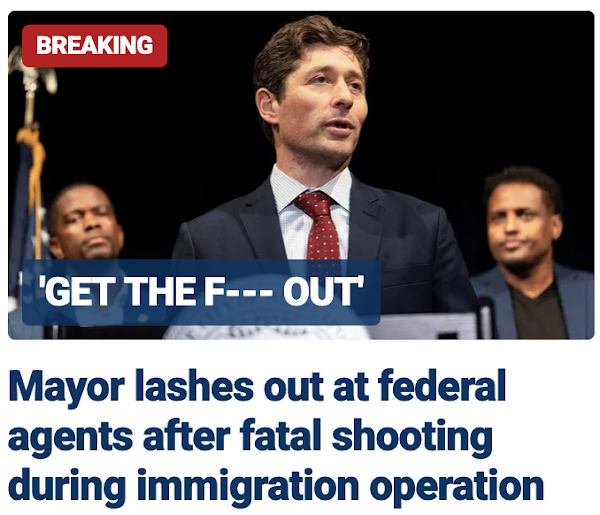
Later on Wednesday, an altercation between organized protesters and law enforcement resulted in the death of a woman after she tried to run down an ICE agent, who shot her in self-defence. The mayor of Minneapolis (Mogadishuapolis?) responded as you might expect:
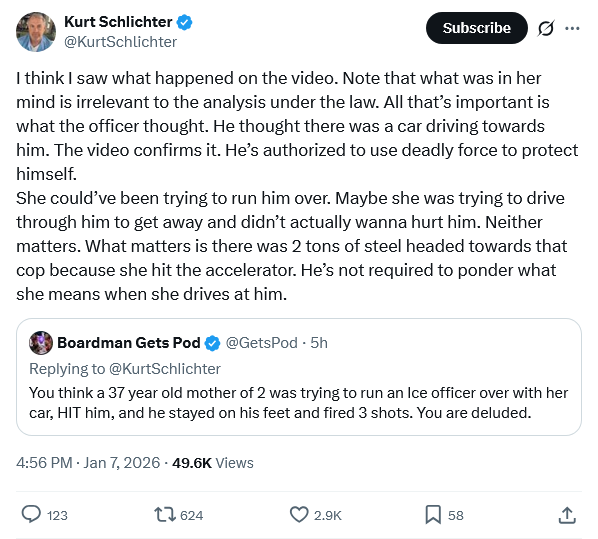
The debate over this incident breaks down on the usual partisan lines. On the social media site formerly known as Twitter, Kurt Schlichter summarizes the pro-law enforcement position:
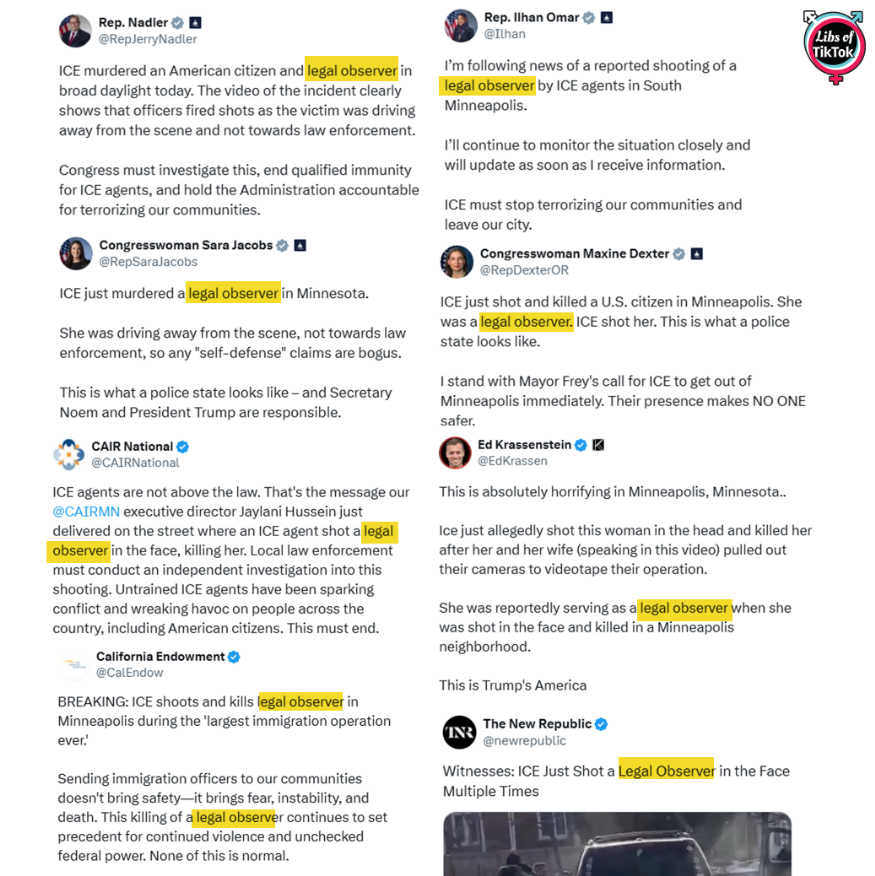
On the other hand, it’s the lockstep belief of the anti-Trump politicians and activists that the agent shot a “legal observer” in the performance of her peaceful, completely legal duties: