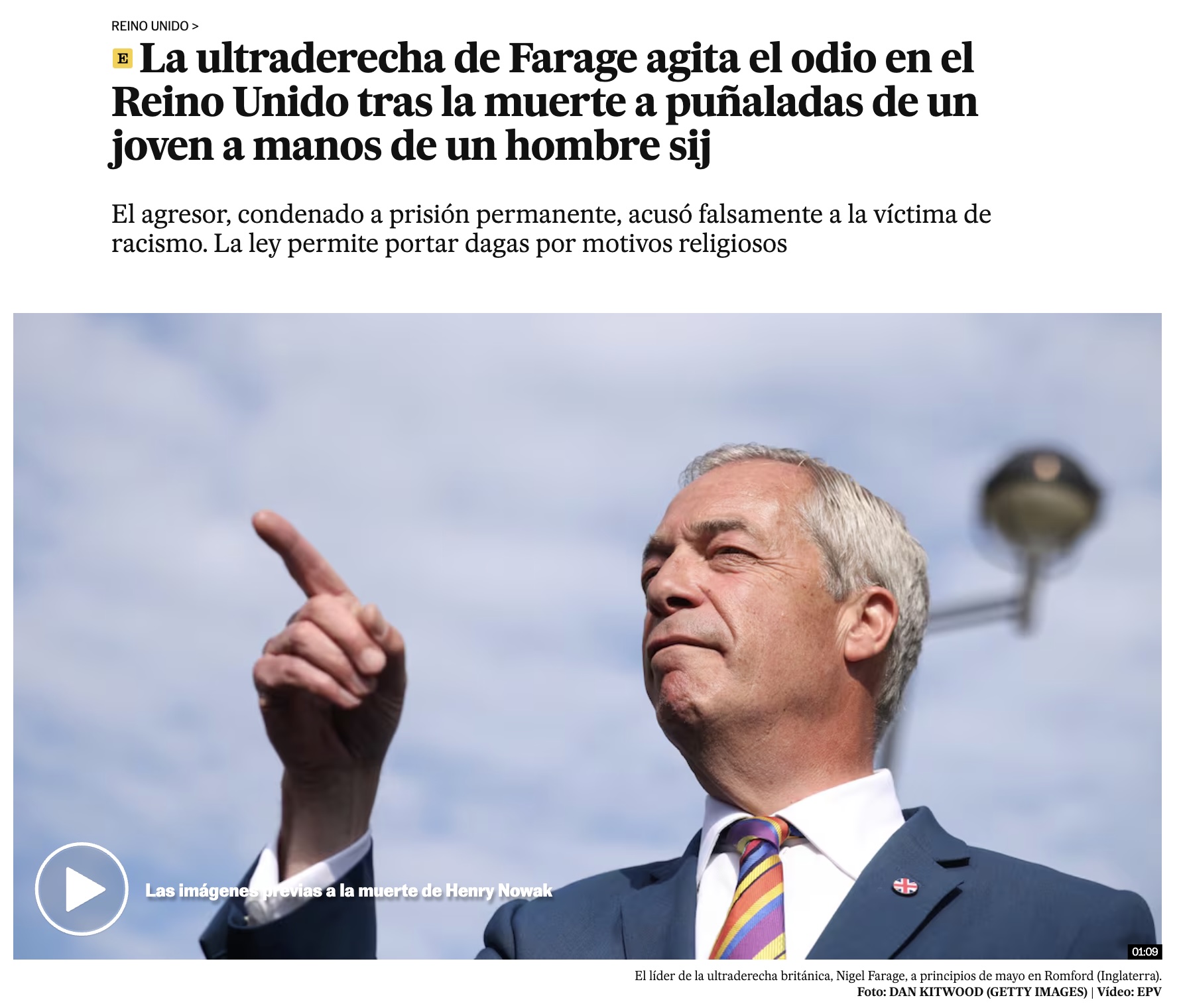
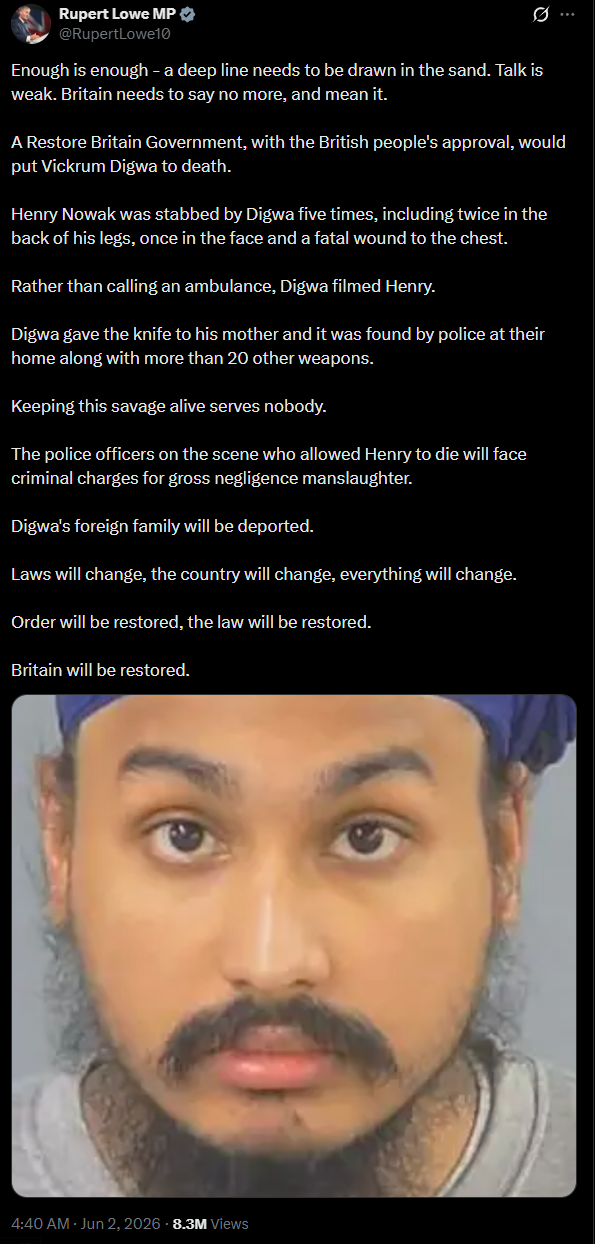
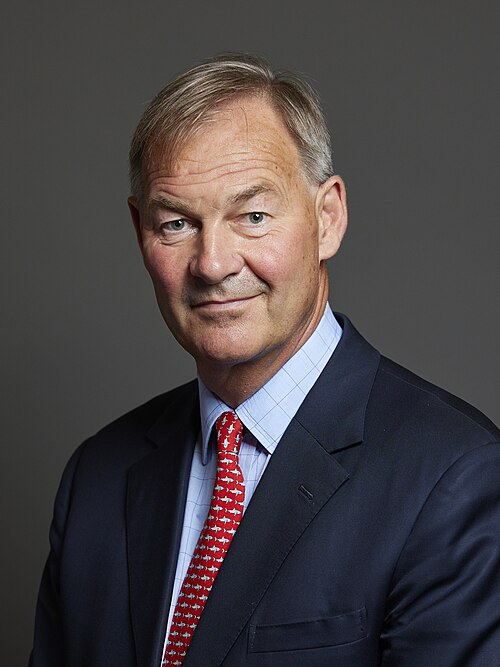
Normally, single seat contests are not all that newsworthy in countries using the Westminster-style of Parliamentary democracy, but the Makerfield by-election in the Manchester region of England seems to be rather more significant. The Labour Party candidate is widely seen as the successor-in-waiting to Sir Keir Starmer (by everyone but Starmer, apparently). The main opposition was expected to be Nigel Farage’s Reform party’s candidate, but the vote on the right is also being contested by Rupert Lowe’s breakaway Restore Britain party. Splitting the vote between Reform and Restore might let an unpopular Labour party win the by-election and start the process of ousting Starmer from Number 10 Downing Street. This might keep Labour in power for another year or so, which is plenty of time to bring in a few hundred thousand “refugees” or enact stricter censorship rules, or any of a number of other hugely unpopular things.
Sean Gabb explains the situation from a libertarian point of view:
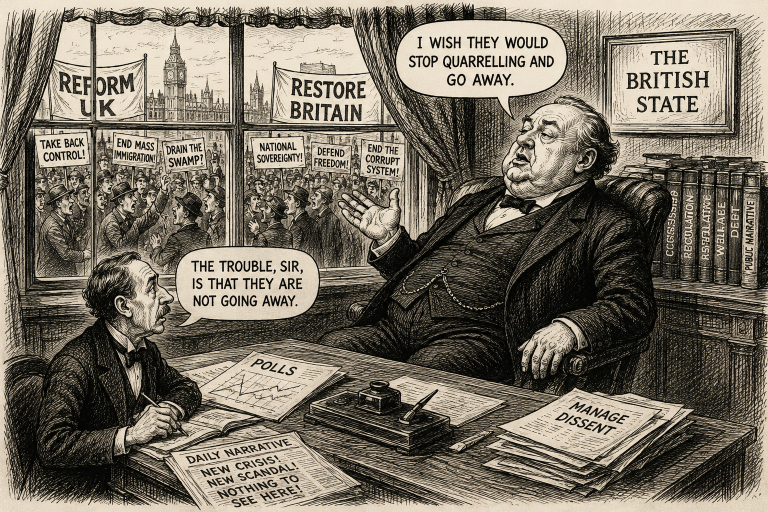
The coming by-election at Makerfield has provoked a familiar argument on the patriotic right. On one side are those who denounce the intervention of Rupert Lowe and his Restore Britain movement. Labour is vulnerable. Reform has a realistic chance of victory. Any division of the anti-Labour vote therefore appears self-indulgent and destructive. Rupert Lowe, they say, may have legitimate grievances against Nigel Farage. He was certainly treated badly by Reform UK. But personal grievances ought to be put aside when the national interest is at stake. If Labour can be defeated, then Labour should be defeated.
On the other side are those who see Nigel Farage as the problem rather than the solution. They argue that Reform UK is little more than a vehicle for containing public anger. Every time popular discontent threatens to escape the boundaries of acceptable politics, Farage appears, gathers up the protest vote, makes a series of compromises, and then leaves the underlying structure untouched. In this view, Rupert Lowe is valuable because he threatens Farage’s position. The sooner Farage is challenged and replaced by a man of greater integrity, the better for the country.
Both positions have a certain logic. Both also rest on assumptions that do not survive contact with political reality.
The first assumption is that Britain stands on the verge of some great political rupture. If only the correct party can gather enough votes, or if only the correct leader can emerge, the existing order will be swept away and replaced with something fundamentally different. Of course, there are examples of such transformations. Russia in 1917 saw the destruction of one ruling class and its replacement by another. Iran in 1979 witnessed the collapse of a monarchy and the rise of a revolutionary theocracy. Similar examples can be found elsewhere. Yet these events were exceptional. They occurred when the existing state apparatus had ceased to function effectively. The old order was no longer capable of commanding obedience. Administrative structures had broken down. The loyalty of key institutions could no longer be relied upon. Under those conditions, revolution became possible.
Britain is not presently in that condition. The country may be badly governed. Its political class may be incompetent. Its institutions may be corrupt and increasingly detached from the interests of the population. None of this amounts to state collapse. Modern Britain remains one of the most centralised and administratively sophisticated states in the world. It possesses powers of surveillance, regulation and information management that previous generations could scarcely have imagined. The police state is often clumsy. It is frequently absurd. It is not, however, weak.
This matters because fantasies of imminent revolution are often based on a misunderstanding of where Britain actually stands. People look at social decay, demographic change, collapsing public services, and widespread public dissatisfaction, and assume that these conditions must shortly produce some decisive confrontation. They forget that highly organised states can survive astonishing levels of dysfunction. The late Soviet Union endured decades of stagnation. The Ottoman Empire acquired the nickname “the sick man of Europe” long before it finally disappeared, and that needed the Great War. It was the same with the Hapsburg Empire. Decay and collapse are not the same thing.
If revolution is improbable, perhaps the answer lies in electoral victory. This is the second assumption behind much of the argument over Makerfield. Perhaps Nigel Farage or Rupert Lowe will eventually enter government through the ballot box. Once there, they will make the necessary reforms. Immigration will be reversed. The bureaucracies will be cut back. The censorship apparatus will be dismantled. Industry will be restored. The country will begin moving in a healthier direction. This belief is less implausible than dreams of barricades and insurrection. But less implausible is not the same as plausible.
The great theorists of elite rule explained the truth of democracy more than a century ago. Gaetano Mosca observed that every society is governed by an organised minority. Vilfredo Pareto described the circulation of elites, whereby personnel change while underlying structures remain. Robert Michels formulated his famous Iron Law of Oligarchy, according to which every large organisation develops a permanent leadership class that becomes increasingly independent of its nominal supporters. These men disagreed about many things. On one point they were united. Democracy changes faces more readily than it changes systems.
The reason is obvious enough. Every viable state possesses a permanent administrative core. Civil servants, judges, regulators, military officers, police officials, academics, media managers and corporate functionaries form an interconnected network of expertise and influence. Governments come and go. This network remains. It possesses continuity, institutional memory, technical knowledge and the immense advantage of permanence. The elected politician arrives promising radical change. The permanent apparatus replies with delay, obstruction, reinterpretation, consultation, procedural complexity, judicial review, regulatory resistance and media hostility. The shock is absorbed. The energy dissipates. The machine grinds on.